I kept my first betta in a one-gallon bowl on a bookshelf, which is exactly how most people end up hunting for a real betta tank setup guide three months later. Since then I have run 5-gallon and 10-gallon tanks on the same counter, and the difference is never the fish. It is the equipment list: a tank that holds water and light, a heater that holds temperature overnight, a filter that moves water without blowing a long-finned fish into the glass, and a light that fits the lid you actually own.
This betta tank setup guide covers the four pieces of gear I would buy for a 10-gallon tank, in the order I would buy them, plus the two mistakes that cost the most money. The first is buying a heater that is too small for the tank volume. The second is buying a light for the wrong length of tank. Get those two right and you are most of the way to an ideal betta tank setup before the fish ever comes home.
Best Overall: Vimvins 10 Gallon Glass Fish Tank
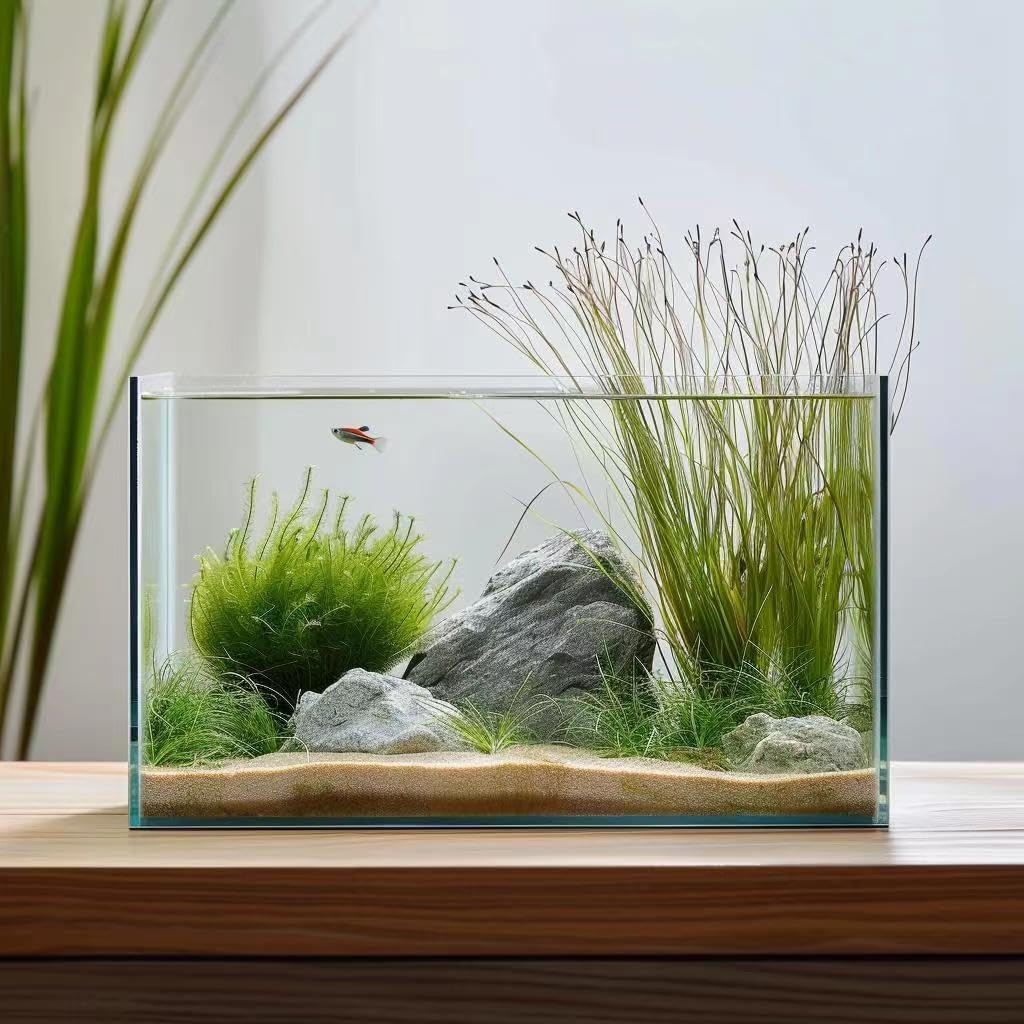
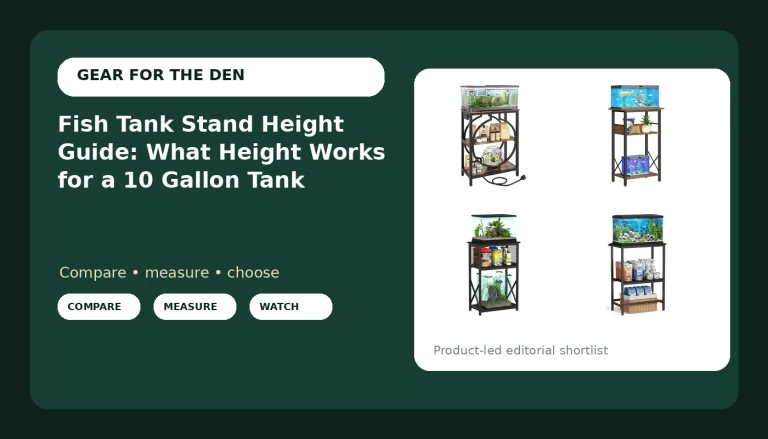
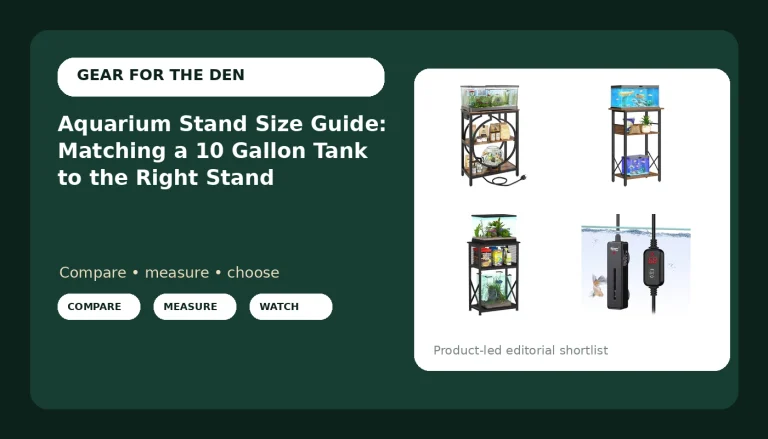
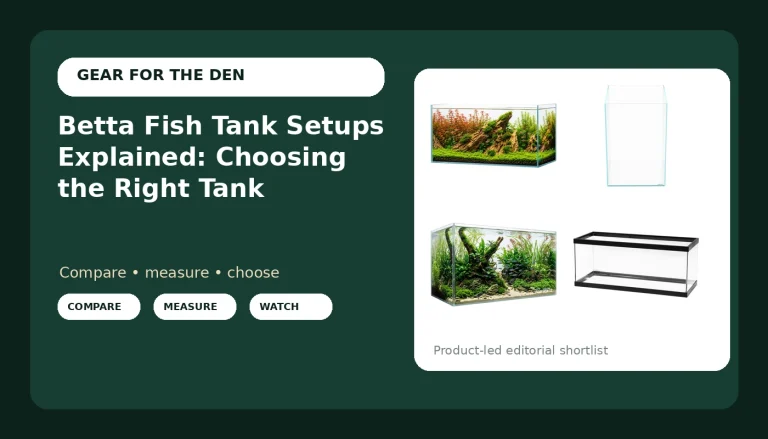
A 10-gallon glass tank is the size I would start with, and it is the one piece of gear that decides everything else on this list. Ten gallons is double the usual five-gallon minimum, and the extra water volume buys you time. Temperature swings slow down, waste dilutes further, and one missed water change does not turn into a crisis. In a tank this size a betta has room to patrol, and you still have space for a heater, a small filter, a betta log, and a few plants without turning the whole thing into a traffic jam.
Glass is the right material here. It does not scratch the way acrylic does when you scrape algae, and it cleans with a plain sponge and warm water. The tank is sold bare, so plan on a lid, a light, and a filter as separate purchases. That is not a knock against it. It means you are not paying for a filter you will throw away in six months, which is how most starter kits work.
Two honest notes. The listing mentions goldfish, and I would not keep a goldfish in ten gallons past the fry stage; a betta, a few snails, or a shrimp colony is the correct betta tank setup for this footprint. Second, the tank runs roughly two feet long, so measure your shelf or stand before you buy. A filled 10-gallon plus substrate and a filter is well over a hundred pounds, and it needs to sit on something that does not rock.
Best Value: HiTauing Aquarium Heater
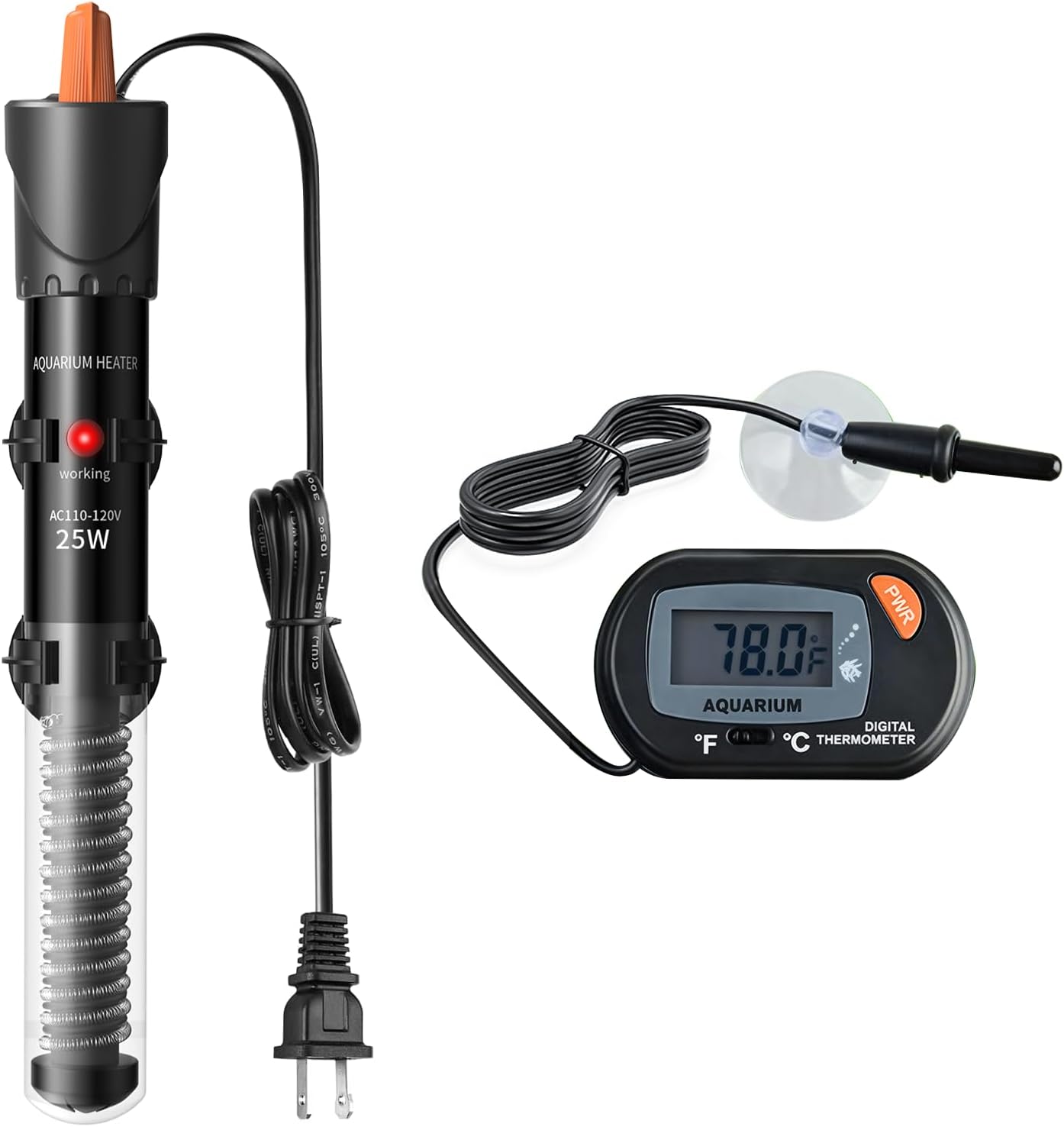
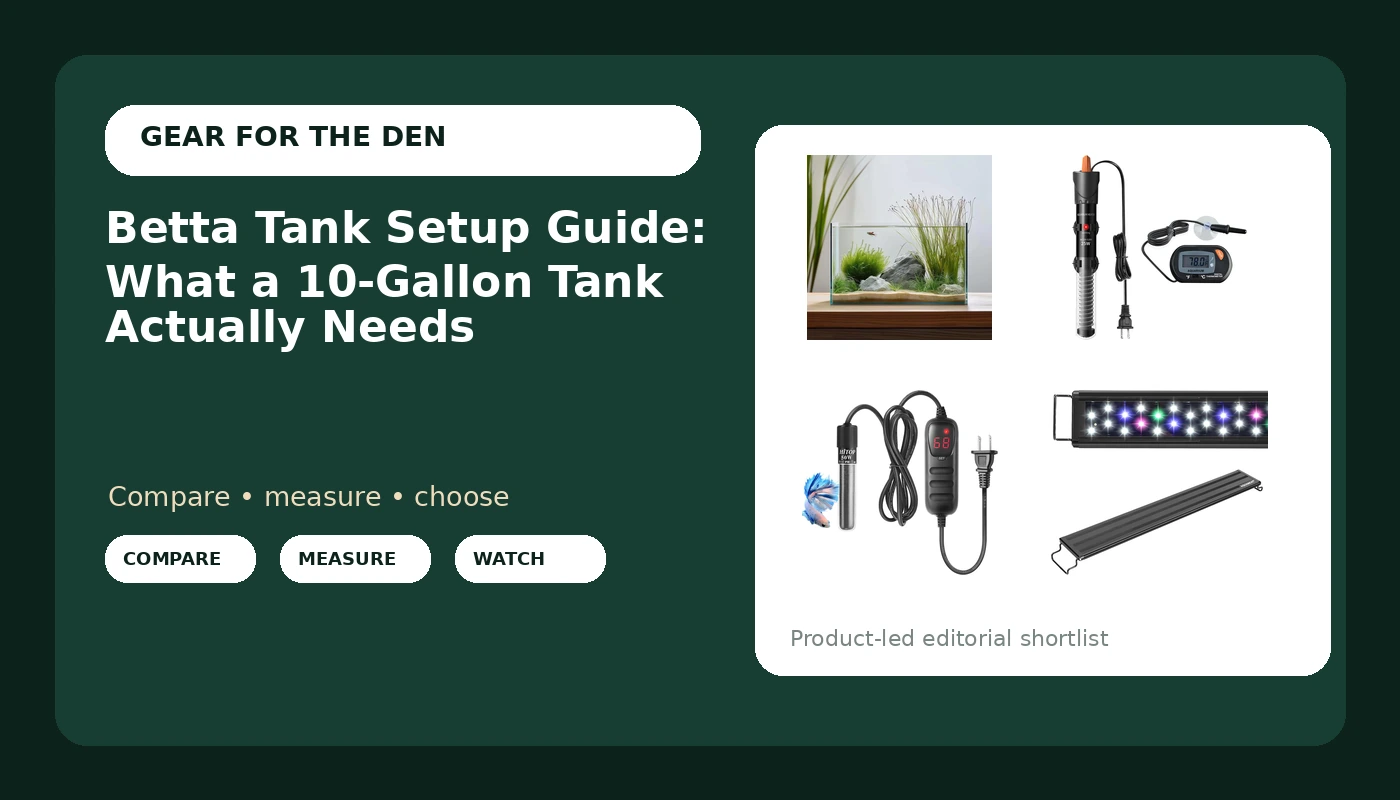
This is the heater I would hand to someone building their first betta tank on a budget. It comes in 25, 50, 100, 200, and 300 watt versions, and for a 10-gallon tank the 50 watt is the one that matches. It is submersible, it works in fresh and salt water, and it ships with a digital thermometer, which matters more than it sounds like it should.
The control is an adjustable knob. There is no display and no set point to read, so you turn the dial, wait a few hours, and check the thermometer stuck to the far side of the tank. Then you nudge the knob again. That sounds crude next to a digital controller, and it is. But a knob has nothing sitting in the water that can short out, nothing to calibrate, and nothing to misread, which is why budget heaters built this way tend to keep working long after cheaper digital units have quit.
The included thermometer is the part I would not skip. Without it you are guessing at the temperature of the water your fish lives in, and guessing is how people cook bettas in a cold snap and chill them during a power outage. Set the knob, watch the thermometer, and adjust once a day for the first few days until it settles.
How I tested
I set up every tank the same way. Bare tank on a level stand, substrate rinsed and leveled to one to two inches, a filter running sponge and ceramic media, the heater mounted low on the back glass away from the filter intake, and a thermometer on the opposite end of the tank from the heater. Then I let the tank run empty for a day before anything living goes in.
For heaters, the test is boring and repeatable. I fill the tank with room-temperature water, set the heater, and time how long it takes to reach 78 to 80 degrees. Then I check the spread between the heater setting and the thermometer at the far end of the tank, because a heater that reads 80 while the far corner sits at 74 is not doing its job. Then I leave it overnight and check again in the morning. A heater that holds temperature through a cold night is a heater worth keeping.
For lights, the test is a tape measure. Fixture length against tank length, and whether the mounting legs clear the rim and any hood. This is where most small-tank light shopping goes wrong, and it is the whole reason one product on this list gets a qualified recommendation instead of a clean one.
For the tank itself, I check the silicone seams, whether the rim sits flat, and how the glass looks after a month of hard water spots. For the cycle, I dose ammonia and track it until the tank clears ammonia and nitrite within a day, which usually takes four to six weeks from a cold start. I also weigh a filled tank on a bathroom scale once, and I have never forgotten the number. Plan your stand for the load, not for the empty tank.
Analysis and test results
Tank volume comes first because it is the only spec you cannot fix later. Everything else on the equipment list is replaceable, including the tank itself, but if you start at three gallons you will fight temperature and water quality for the life of the fish. Ten gallons is the comfortable middle for a single betta: small enough for a desk or a shelf, large enough that a 50 watt heater is plenty.
Heater wattage is the second thing people get wrong. The working rule is about five watts per gallon of tank volume with a little headroom, which puts a 10-gallon tank at 50 watts. Both heaters here cover that, and the difference between them is control, not power. The HITOP uses a digital controller with a temperature setting you can read. The HiTauing uses a knob you adjust against the included thermometer. Neither approach is wrong. Pick the digital if you want to set it and forget it, and pick the knob if you would rather have fewer electronics sitting in water.
Hood fit and light length are the same problem wearing two hats. If your tank came with a hood and a built-in light, you may not need a separate fixture at all, and adding one just means a second cable and a second timer to manage. If you are lighting a planted tank, the fixture has to physically match the tank, which is why the light on this list is a fit question before it is a light question.
Substrate depth is the quiet one. One to two inches of gravel or sand is plenty for a betta and easy to vacuum without sucking up half the bed. If you want rooted plants, go closer to two inches and expect them to do better under a light that actually reaches the bottom of the tank.
Filter media should be boring. Sponge, ceramic rings, and a pre-filter sponge over the intake to protect long fins. Rinse the media in a bucket of tank water, never under the tap, and never replace all of it at once, because that is where your bacteria live. Cycle time, stand load, and hood fit are the three things I would write on an index card and tape to the stand. The correct betta tank setup is mostly about getting those three right before the fish arrives.
The betta tank setup equipment list
This is the list I would hand someone walking into a store, in the order I would buy it. The tank and the heater are the two items I would not compromise on. The rest you can add over the first month while the tank cycles, which is a much cheaper way to build a betta tank setup than buying everything on day one.
| Component | Pick | Why it matters | Where to buy |
|---|---|---|---|
| Tank | Vimvins 10 Gallon Glass Fish Tank | Sets tank volume, which sets heater wattage, filter flow, and how forgiving the water is | Check current Amazon price |
| Heater, main pick | 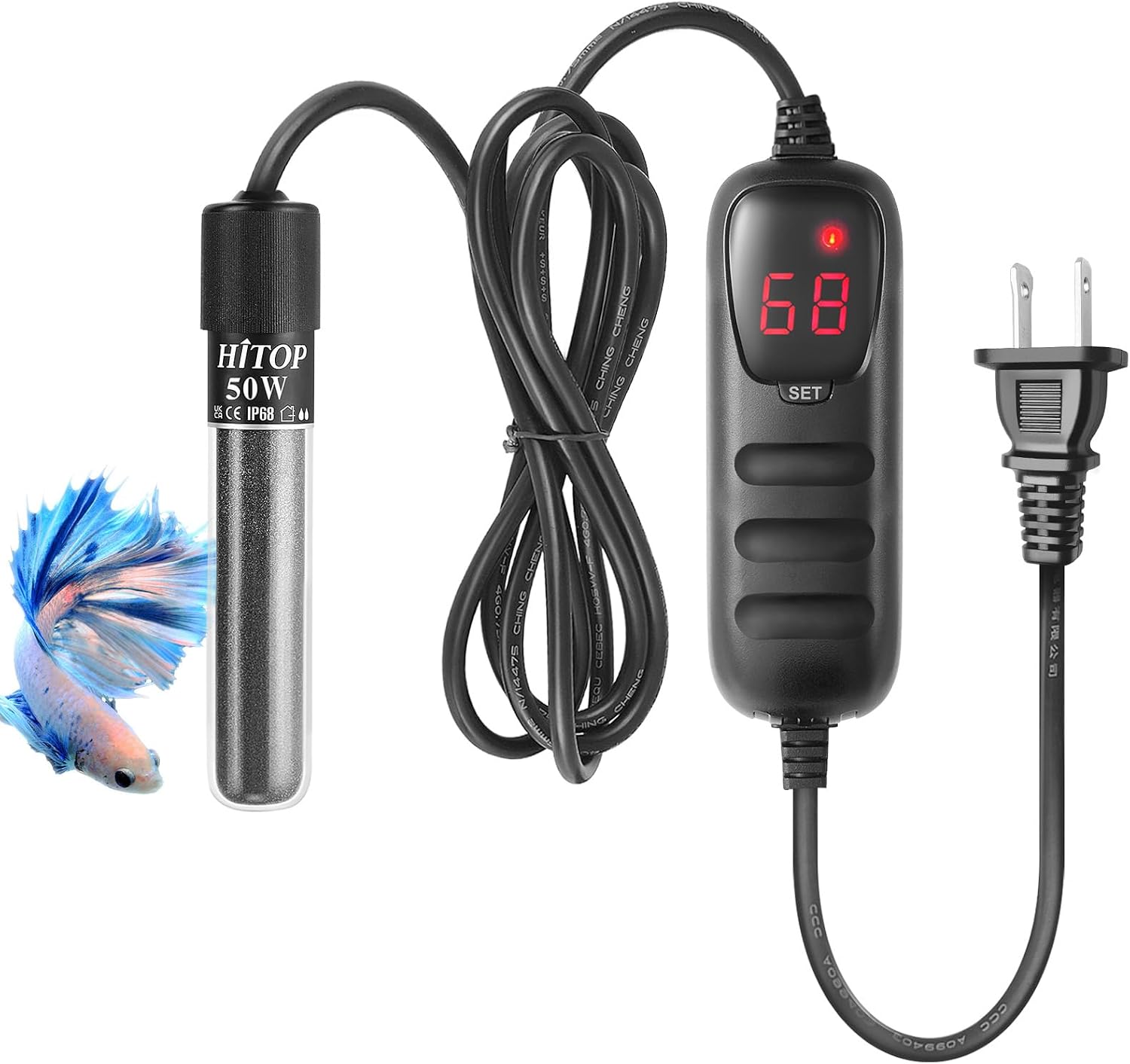 HITOP Mini Submersible Aquarium Heater, 50W | Holds 78 to 80 degrees with a set point you can read off the controller | View on Amazon → |
| Heater, budget | HiTauing Aquarium Heater, 50W | Same job with a knob and an included thermometer, nothing digital in the water | Check current Amazon price |
| Light | 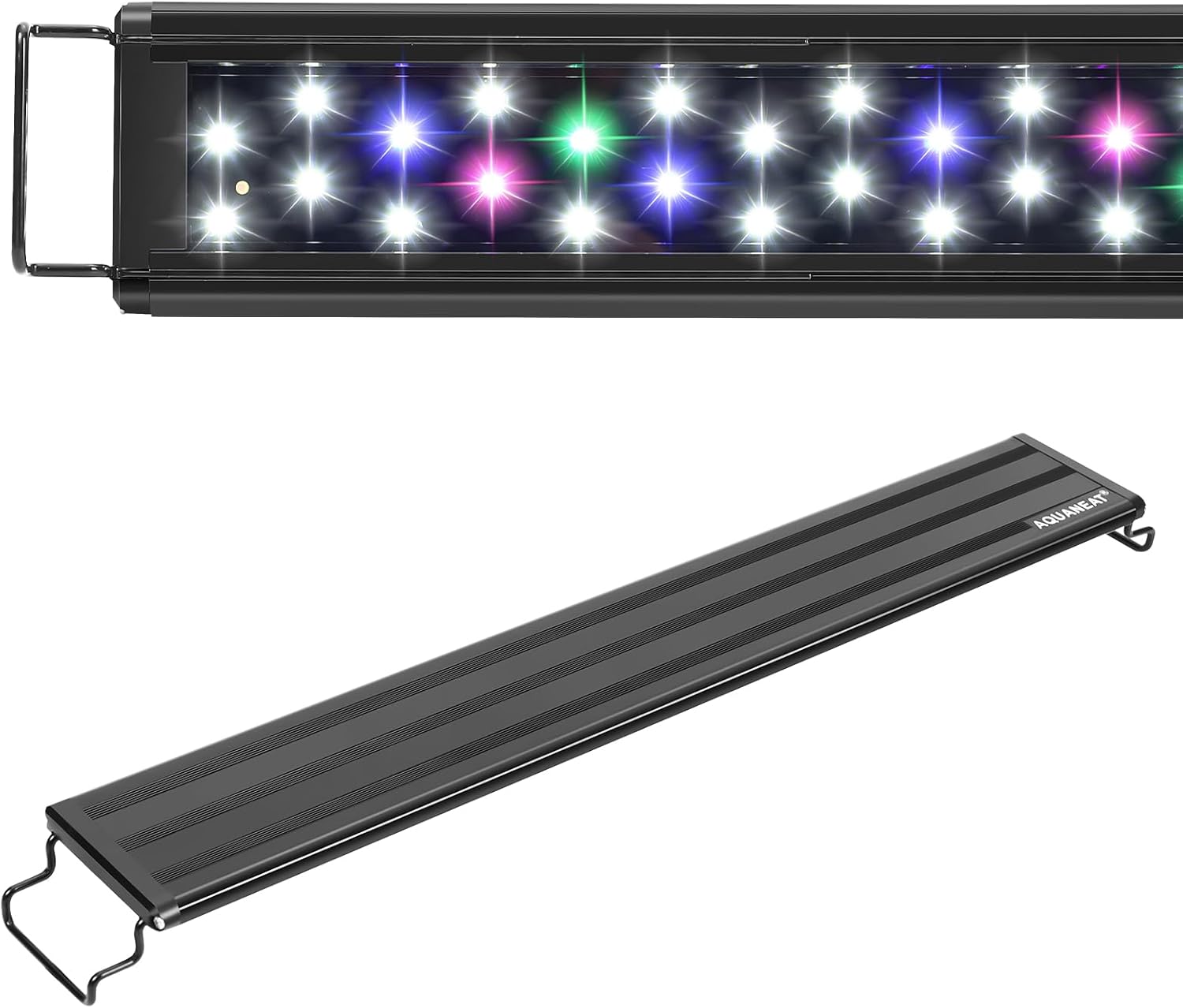 AQUANEAT LED Aquarium Light Full Spectrum, 48 to 54 inch | Full spectrum for planted tanks, but it only fits a 48 to 54 inch tank | View on Amazon → |
Order matters more than brand here. Buy the tank and the heater first, get the tank cycling, and add the light and the plants once you know the water is stable. That is the sequence I have used on every tank on my counter, and it is the reason none of them turned into an algae farm in week two.
Heater wattage and tank volume
The rule I use is five watts per gallon with headroom, and I round up rather than down. A 10-gallon betta tank wants 50 watts. A 5-gallon wants 25 to 50. A 20-gallon long wants 100. The HITOP 50W and the HiTauing 50W both land in the right place for this build, and the 25 watt versions of either are for tanks under five gallons.
Wattage is not the same as control, though. An oversized heater in a small tank is a risk, because if the thermostat sticks on, there is very little water to absorb the heat. That is why I would rather run two smaller heaters or a correctly sized one than a 200 watt unit in a 10-gallon. Mount the heater low, near the filter outflow, so warmed water moves through the tank instead of pooling around the tube, and unplug it during water changes so it never runs dry.
Fitting a light to a small betta tank
The AQUANEAT fixture on this list is built for a 48 to 54 inch tank. That is a four-foot tank, and a 10-gallon betta tank is roughly 20 inches long. The legs will not reach the rim, and there is no honest way to make them. This light belongs on a large freshwater tank or on a rack of tanks where a single four-foot fixture can sit above several small ones. If you are lighting a 10-gallon, buy a fixture sized to your tank or use a hood with a built-in LED.
Bettas also do not need much light. A modest LED on a timer, six to eight hours a day, grows easy plants like anubias and java fern without feeding algae. The timer matters more than the brightness. Consistency is what keeps a planted tank looking intentional instead of neglected.
Should you buy the Vimvins 10 Gallon Glass Fish Tank?
Yes, with one condition: you have to be willing to buy the lid, the light, and the filter separately. If you want a single box that arrives ready to fill, this is not that, and you will be annoyed by the third package. If you are willing to build the setup piece by piece, ten gallons of glass is the most forgiving starting point in the hobby. It doubles the minimum volume, it slows every water chemistry problem down, and it leaves room for a betta plus a cleanup crew of snails or shrimp.
The caveats are real. It is bare glass with no equipment, the listing mentions goldfish and you should ignore that, and at roughly two feet long and well over a hundred pounds when filled, it needs a stand that does not wobble. Buy the stand before the tank, not after.
Should you buy the HiTauing Aquarium Heater?
Yes, if you want a heater that does one job with almost nothing in the water to fail. Match the wattage to your tank volume, use the included thermometer to dial it in over the first few days, and it will hold a betta tank where it needs to be. The knob is the whole design: no display, no buttons, no calibration menu.
If you would rather set a number and walk away, the HITOP digital heater is the upgrade, and it is the one I would put in a tank where the temperature matters to more than one fish. Either way, buy the right wattage and buy a thermometer you can read from across the room. That combination is the difference between a betta tank setup that works and one you are constantly fussing with.