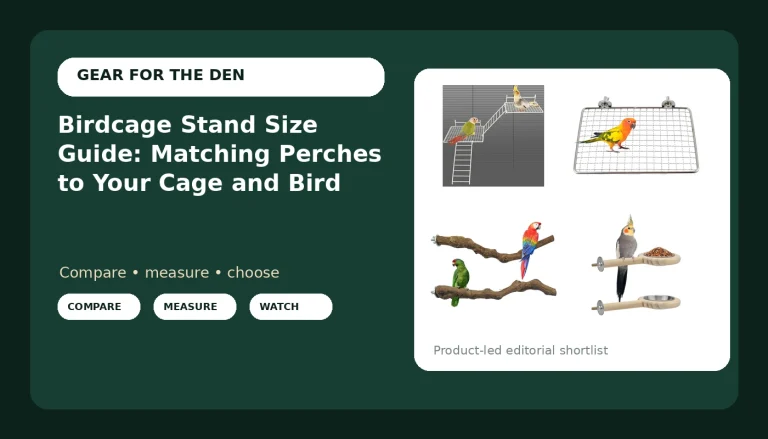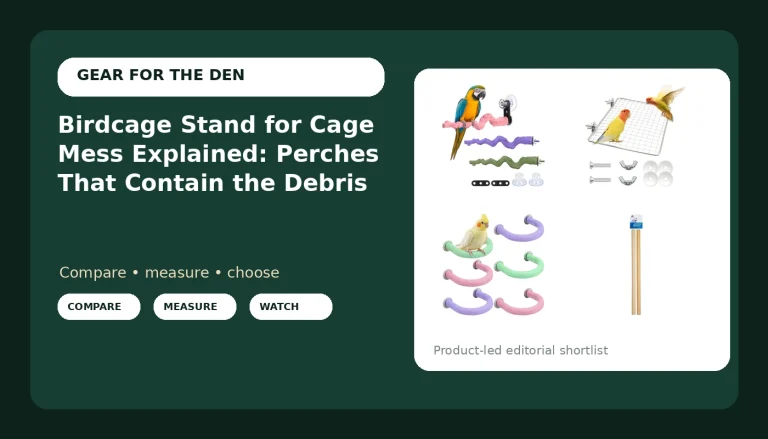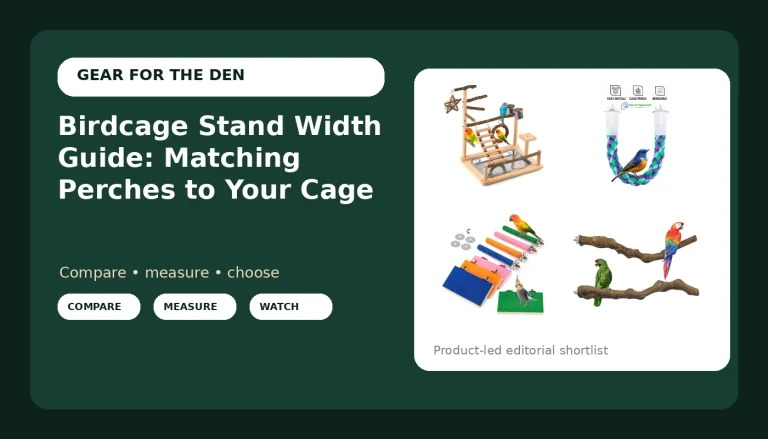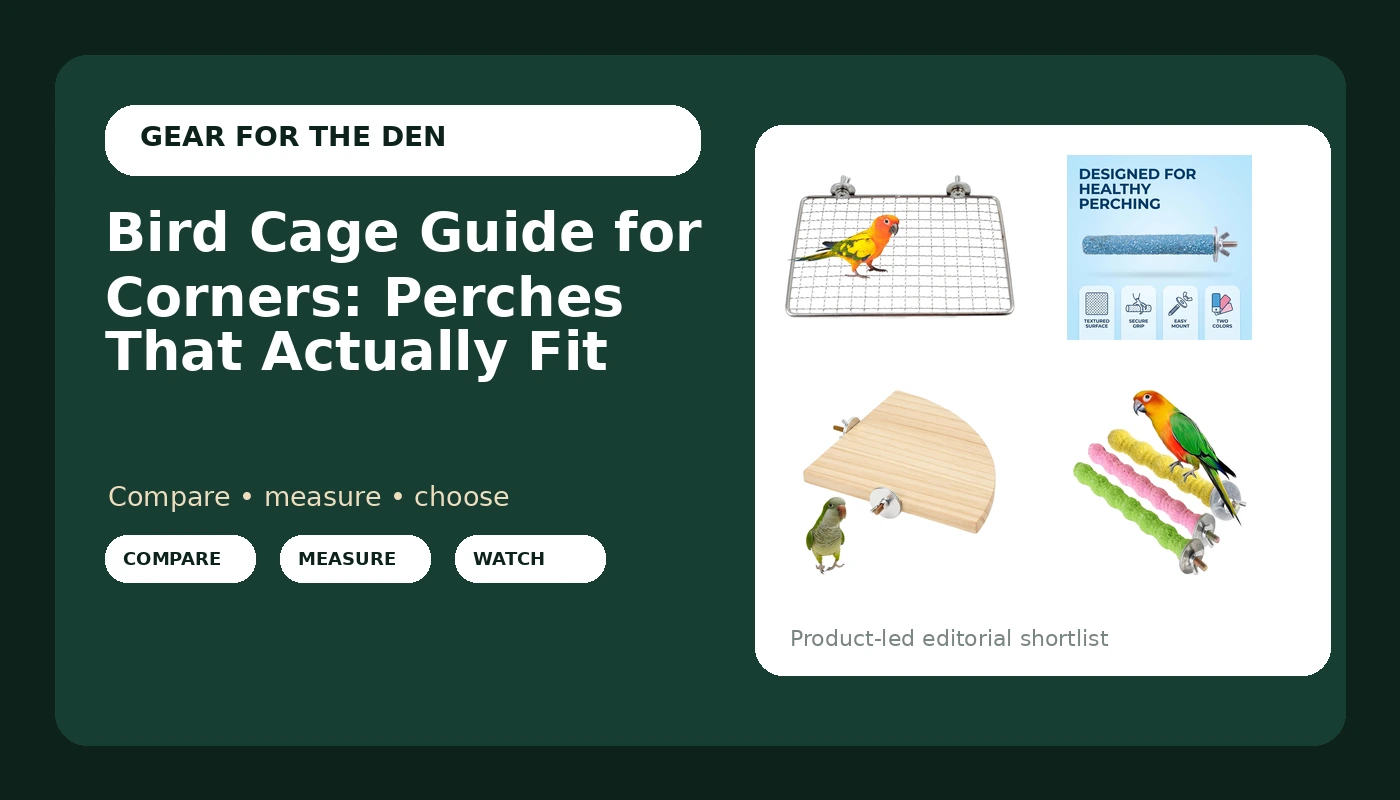
A bird cage guide for corners has to start with an uncomfortable truth: birds do not care where your walls meet. They care about the perch under their feet. A corner is the deadest space in a cage, two walls and a stretch of empty air that nobody uses, until you put something there a small bird will actually stand on. Get that right and the corner becomes the best seat in the house. Get it wrong and you have bought a decoration your bird walks around.
The problem is that corner perches get sold on shape instead of function. A wedge that looks perfect in a product photo can sit too close to the tray, wobble on thin bars, or leave no room for a bird to turn around. This is a bird cage guide for corner spaces first and a shopping list second, and the four perches below are the ones worth measuring your cage for. Each one solves a different corner problem.
Best Overall: MUYG Platform Perch for Parrots, 7.87 x 5.90 Inch Bird Flat Perches Stainless Steel Budgie Stand Shelf Rectangle Anti-Chewing Bird Cage Accessories for Small Cockatiel Budgie
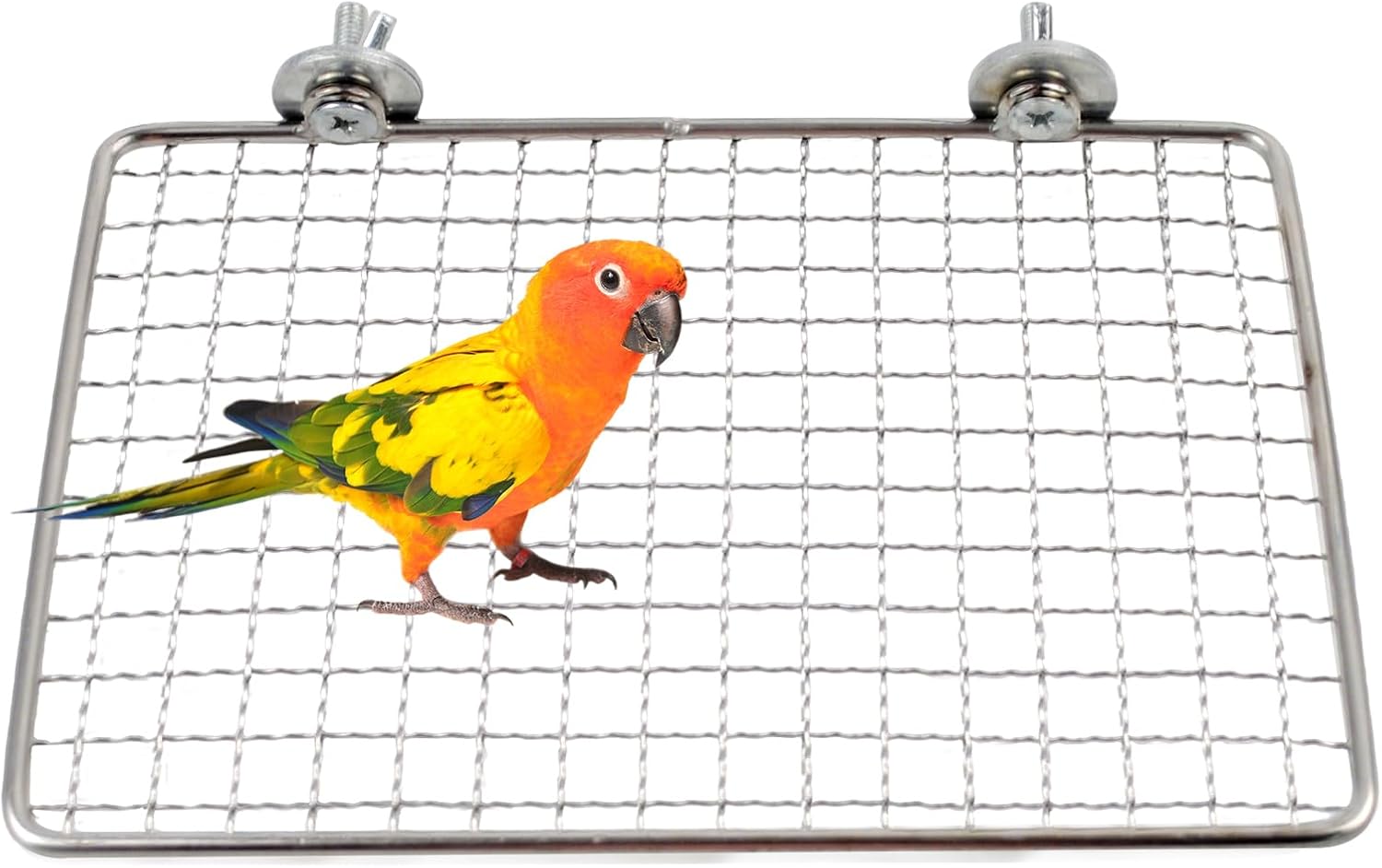
A flat platform wins a corner on geometry alone. Hang a rod perch in the same spot and the bird balances over empty air on both sides, with nothing to brace against when it turns. This platform is a 7.87 by 5.90 inch rectangle, so it gives a small bird something a rod cannot: a surface. Room to turn, room to shuffle sideways, room to lie flat when the mood hits. Parakeets and budgies do not always want to grip. Sometimes they want to sit.
Stainless steel is the right call for a corner, because corners are where birds chew. Anything they can reach gets tested, and the anti-chewing construction here means the perch is not the part that gives out first. The rectangle shape also does not waste the wedge of space where two cage walls meet. It fills it.
Two things to check before you commit. First, bar spacing. A platform is only as good as its grip, and if your cage bars are spaced wider than the bracket can clamp, the whole thing slides down the wall the first time the bird lands hard. Second, cage height. Put the platform high enough that the bird can look down over the room, low enough that the cage ceiling is not in its face, and far enough from the food cup that the bowl stays reachable without the perch becoming a ladder.
For a budgie or a small cockatiel, this is the piece I would build the corner around.
Best Value: 2 Pcs Multi-Color Random Bird Perch Stand Toy Wood Parrot Perch Stand Grinding Claw Sticks Sanded Surface Cage Toy for Parakeets Finches Parakeet Toys Birdcage Accessories
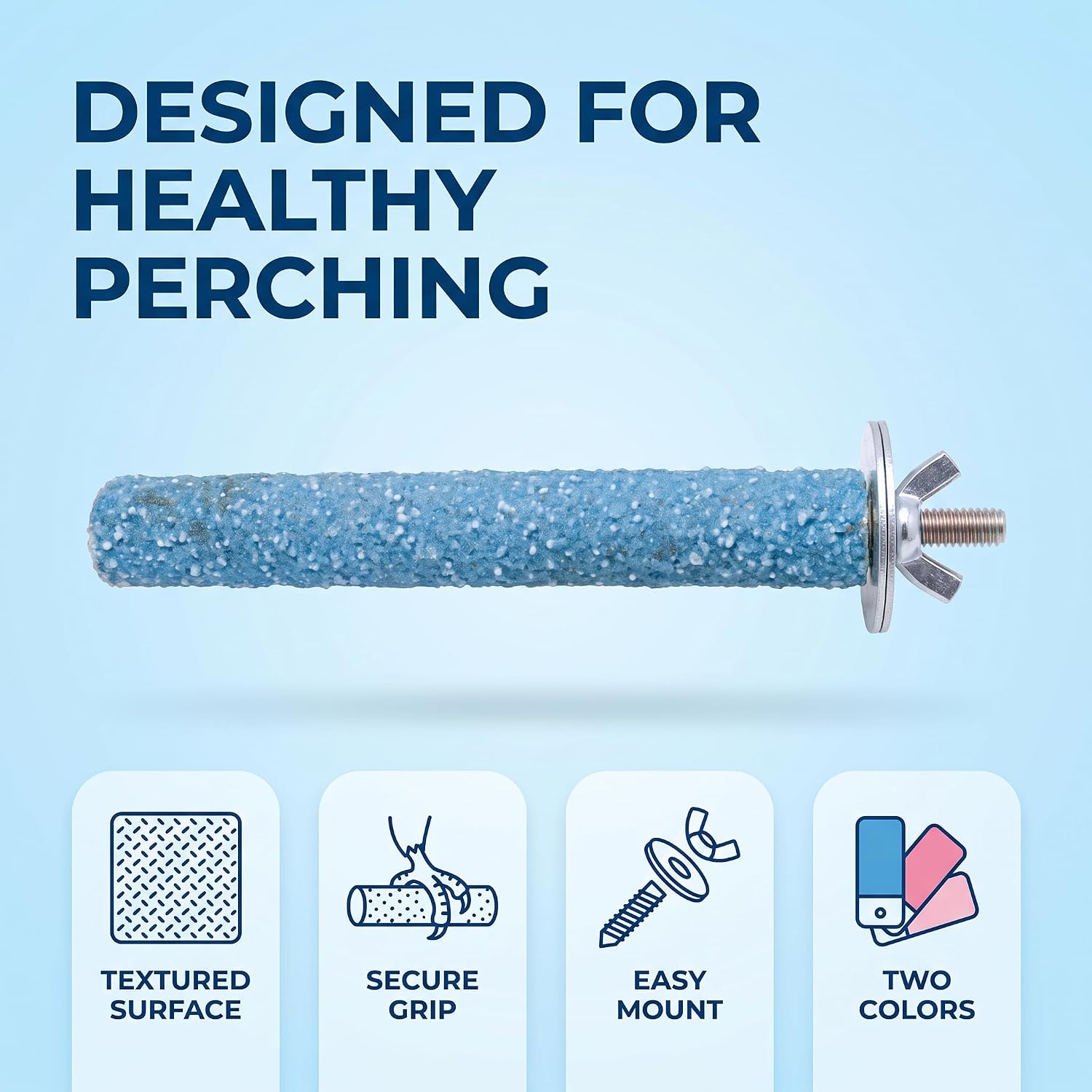
Two perches in one order is the entire argument. The sanded surface is the useful part: it gives claws something to file against, so nails stay shorter between trims. The wood is a natural chew target as well, which matters in a corner where the bird has fewer distractions than it does in the middle of the cage.
Random color is the tradeoff, and it is a real one. If the cage has a color scheme, you are not choosing it. What arrives is what arrives, and the two perches may not match each other.
Use them as approach perches rather than as the corner destination itself. Put one on each of the two walls that feed into the corner so the bird has a route instead of a leap, and the corner platform becomes the end of a path. Two perches also means one can come out for a scrub without leaving a bare cage behind, which is the quiet advantage of buying a pair.
The surface does wear. Sanded wood is meant to be chewed and scraped, so expect it to look rough after a few months. That is the job.
How I tested
A corner perch has one job: stay where you put it, and be usable once it is there. So the test is a set of questions, not a lab bench.
- Mount it in the corner at the height you would actually use, then press down on the far edge. Does it flex, slide, or twist?
- Check the clamp against the bar spacing of the cage. A mount that fits a wide-spaced cage rattles on a narrow one, and the reverse is just as annoying.
- Watch the bird land on it. If the toes wrap around and meet underneath, the perch diameter is too thin. If the bird perches on tiptoe with the foot flat, it is too thick. This is the one flaw a better bracket cannot fix.
- Run a thumb along the edges and check for splinters, then check again after a few weeks of chewing.
- Check what it blocks. A corner perch that sits in front of the food cup or the swing mount has traded one dead space for two awkward ones.
- Clean under it. Everything a bird does ends up on the tray liner, and a perch that has to come out entirely for a wipe-down gets old fast.
That is the whole protocol. No scale, no calipers, no spreadsheet. Just a cage in a corner and a bird that votes with its feet.
Analysis and test results
Flat platforms and rod perches are not competitors. They do different jobs, and the best corner setup uses both.
Rod perches are for travel and grip. A bird's foot wraps around the diameter, and that wrapping is what keeps the tendons healthy. Wood rods with a sanded or rough surface, like the two-pack above and the kathson sticks further down, do double duty as nail files. The catch is that a rod in a corner is a one-position perch. The bird faces one way, and turning around is a shuffle.
Platforms are for standing, turning, and eating. A flat surface lets a small bird sit down, which is how parakeets and budgies actually rest when they are not gripping. In a corner, that is the difference between a space the bird visits and a space the bird lives in.
A few rules worth writing down, none of which need instruments. Perch diameter should let the toes wrap most of the way around without the nails touching the palm. Bar spacing should be tight enough that the mount cannot shift; if it slides with a finger push, it slides under a bird. Cage height placement should put the corner perch in the upper half of the cage, since small birds retreat upward when they are nervous. And if you want the ideal bird cage guide for corners, it comes down to this: one flat platform, two rods, and a perch on every wall so the bird never has to jump blind.
If you want the corner to be more than furniture, put food there instead of in a bowl. Raising foraging difficulty is as simple as scattering a few seeds across a platform, and the corner stops being empty air.
Two more notes. A perch is not a carrier. Carrier size and perch size are separate problems, and a corner platform that lives in the cage should stay in the cage. And a food cup size upgrade is usually a better buy than a second platform, because the bowl is the thing the bird visits most.
The bird cage guide for corners reference table
Everything in this bird cage guide for corners comes down to four options, sorted by what each one does best in a corner.
| Product | Type | Best corner job | Watch out for | Where to buy |
|---|---|---|---|---|
MUYG Platform Perch, 7.87 x 5.90 inch | Flat stainless steel platform | Main corner perch for a budgie or small cockatiel | Bar spacing has to match the bracket | Check current Amazon price |
2 Pcs Multi-Color Random Bird Perch Stand Toy | Two sanded wood rods | Approach perches on the walls leading into the corner | Color is random | Check current Amazon price |
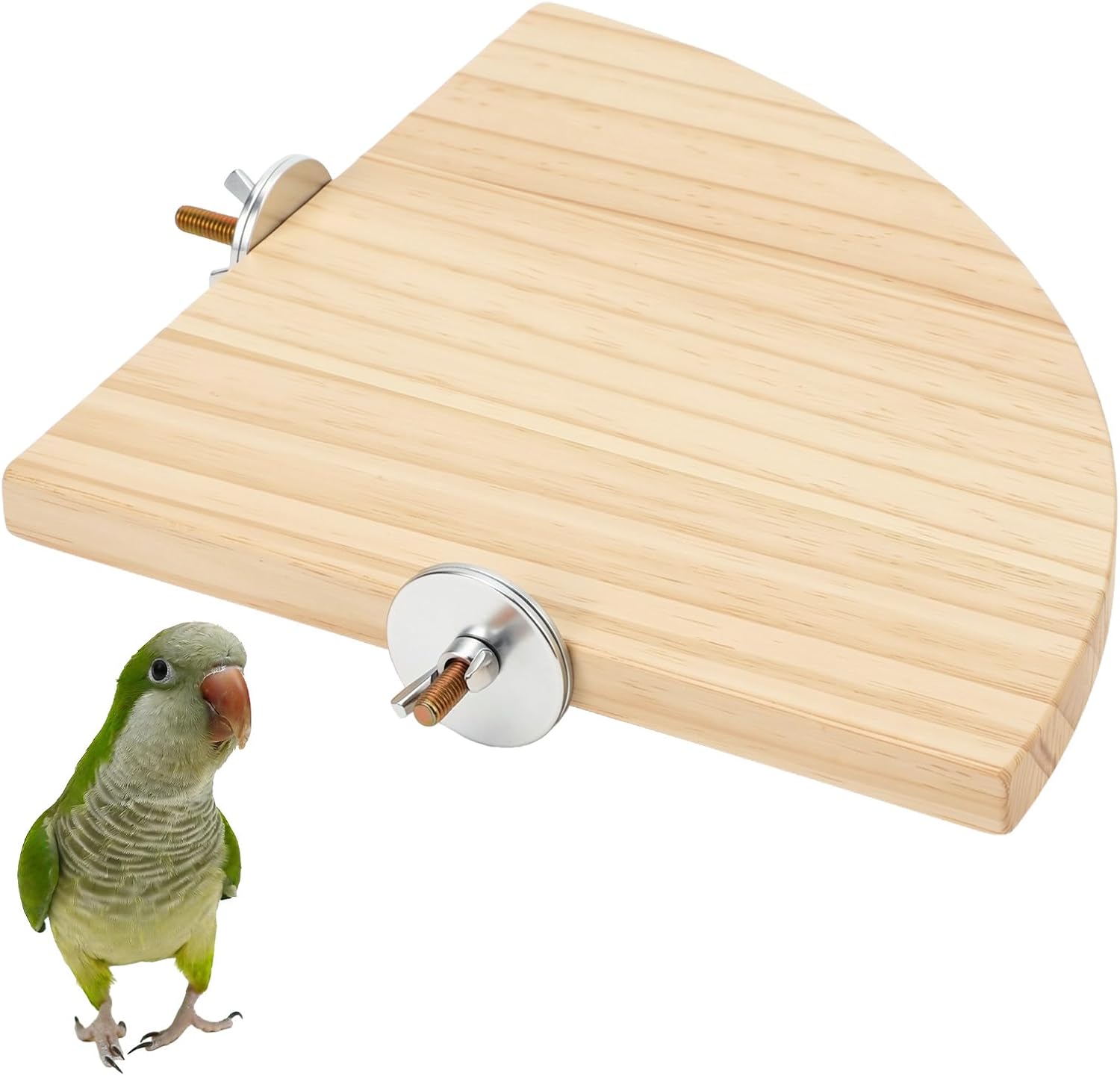 6.7 Inch Fan-Shaped Bird Perch Platform | Fan-shaped natural wood platform | Filling the wedge where two cage walls meet | Also sold for hamsters and gerbils | Check current Amazon price |
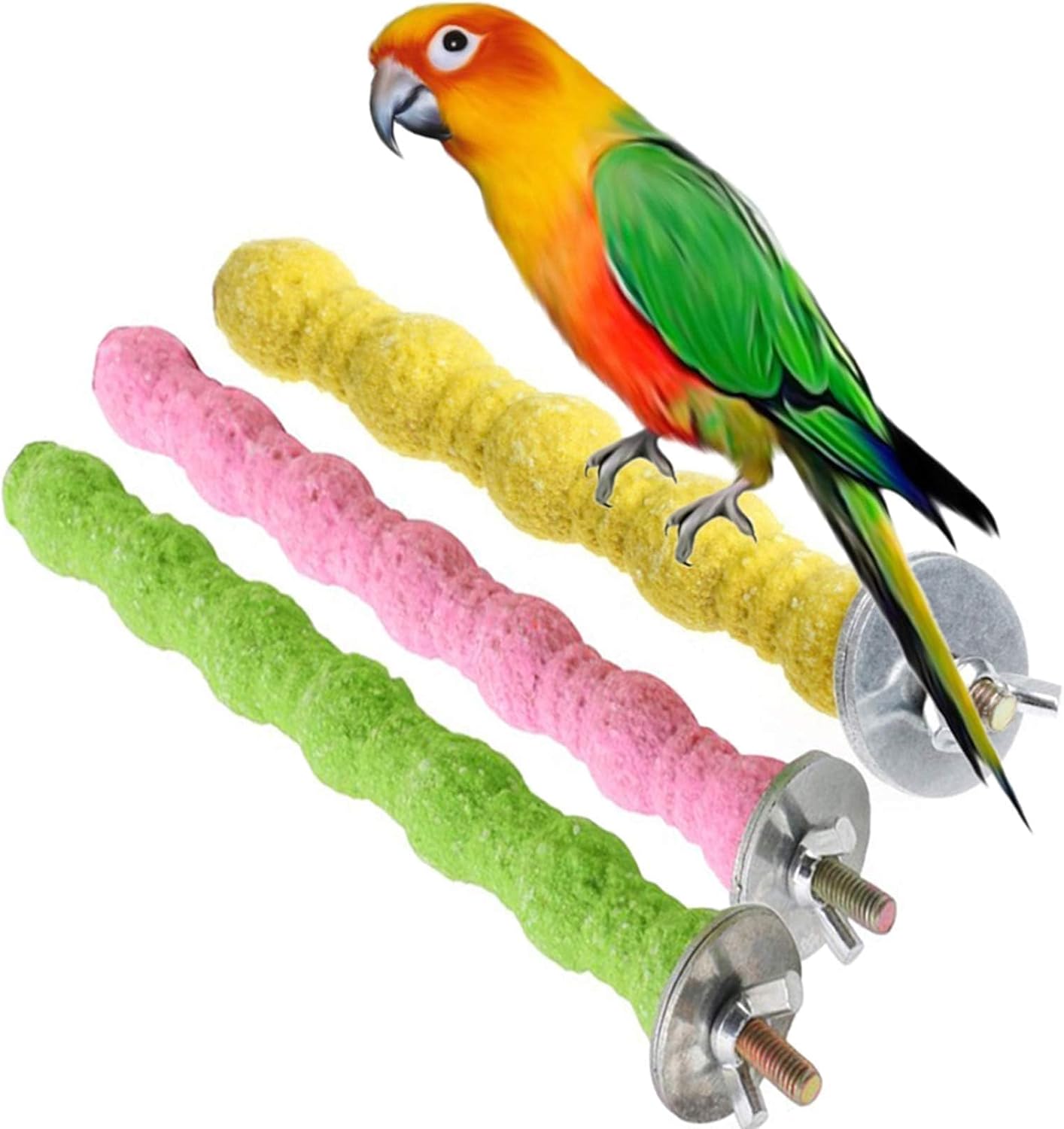 kathson 3PCS Bird Perch Parrot Stand | Three rough-surfaced wood sticks | Nail wear, chewing, and a route into the corner | Random color, 7.87 inch length | Check current Amazon price |
6.7 Inch Fan-Shaped Bird Perch Platform
A bird cage guide for angled corners is really a lesson in wedge shapes, and this is the wedge. The fan profile cuts into the angle where two cage walls meet more efficiently than a rectangle, which means you get standing room without eating into the middle of the cage. Natural wood keeps it chewable, and the flat surface does the same sitting-and-turning job as the platform above, just in a narrower footprint.
The one caveat is in the listing itself: it is also sold for hamsters and gerbils. That does not make it wrong for a parakeet, but it does mean the size suits a small animal, so check the 6.7 inch span against your bird and your bar spacing before you assume it fits. A gerbil and a budgie do not grip the same way.
kathson 3PCS Bird Perch Parrot Stand
Three rough-surfaced natural wood sticks at 7.87 inches each, sold in a random color. The rough surface is the selling point: it gives claws and beak something to work against, which is the job a smooth dowel never does. The wood itself is a chew target, and with three of them you can build an actual route into the corner rather than a single stop.
Three perches also means variety in perch diameter is possible if the sticks differ, and variety is what keeps feet healthy. Set one low, one mid, one high, and let the bird choose. Expect the surface to get chewed down over time. That is what it is for. Color, again, is random, so buy it for the function and not the finish.
Should you buy the MUYG Platform Perch?
Yes, if your cage has a corner that nobody uses. It turns that corner into real floor space for a budgie or small cockatiel, and the flat surface is the part that matters most for a bird that would rather sit than grip. Check bar spacing first, and check that the rectangle will not crowd the food cup.
No, if you are shopping for a nail file. Platforms do not wear claws down the way a sanded rod does. Pair it with one of the wood perches rather than expecting it to do both jobs.
Should you buy the 2 Pcs Wood Bird Perch Stand Toy?
Yes, if you want two perches without thinking about it. The sanded surface does the nail work, the wood gives the bird something to chew, and having a spare means a bare cage is never an emergency. It is also the low-commitment way to find out whether your bird likes a particular corner before you spend real money on a platform.
No, if you care about color, because random means random. And no if you need a flat surface to sit on. A rod is a perch; a platform is a room.