Most people who ask about a 10 gallon vs 20 gallon aquarium are really asking a different question: how much tank can I live with? A 10 gallon fits on a dresser, a desk, or a dorm shelf. A 20 gallon does not, not safely. A 20 gallon forgives a missed water change, and a 10 gallon punishes it within a day or two. Everything else in this decision, from the equipment list to the heater wattage you need, flows out of that single trade between footprint and stability.
Gear for the Den is mostly a dog and cat site, but the freshwater corner gets the same treatment as the rest of the house: what actually works in a small apartment, what survives a busy week, and what you will regret buying six months in. The four products below are the ones I would start a small tank with, and only one of them is a tank. That is deliberate, because the difference between 10 gallon and 20 gallon aquarium builds is mostly about the gear you have to add on top of the glass.
For most first-time keepers, the 10 gallon is the better starting point, and the Vimvins 10 gallon glass tank is the one to buy, because it fits furniture you already own and the 50W heaters below match it almost exactly. Move up to a 20 gallon only when you have a stand rated for the weight and you want a tank that holds its water chemistry steady between water changes.
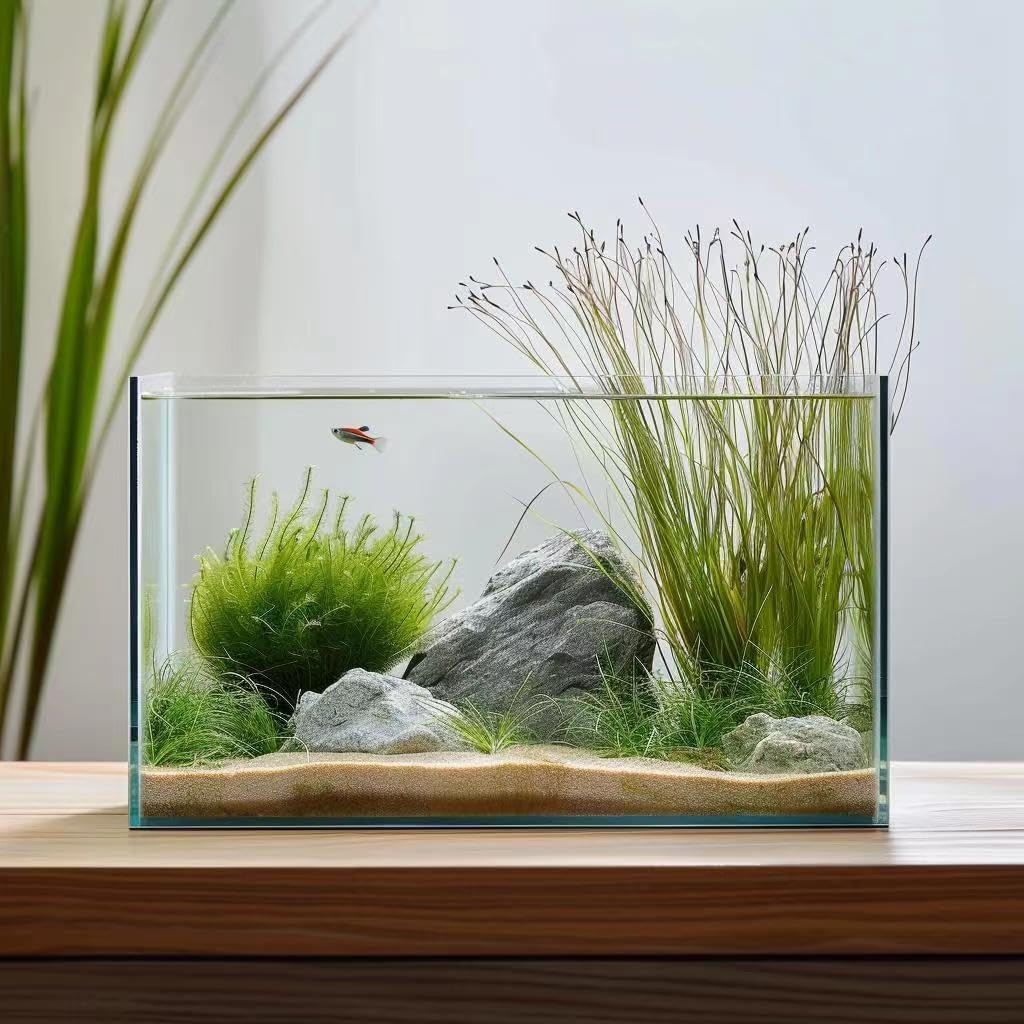
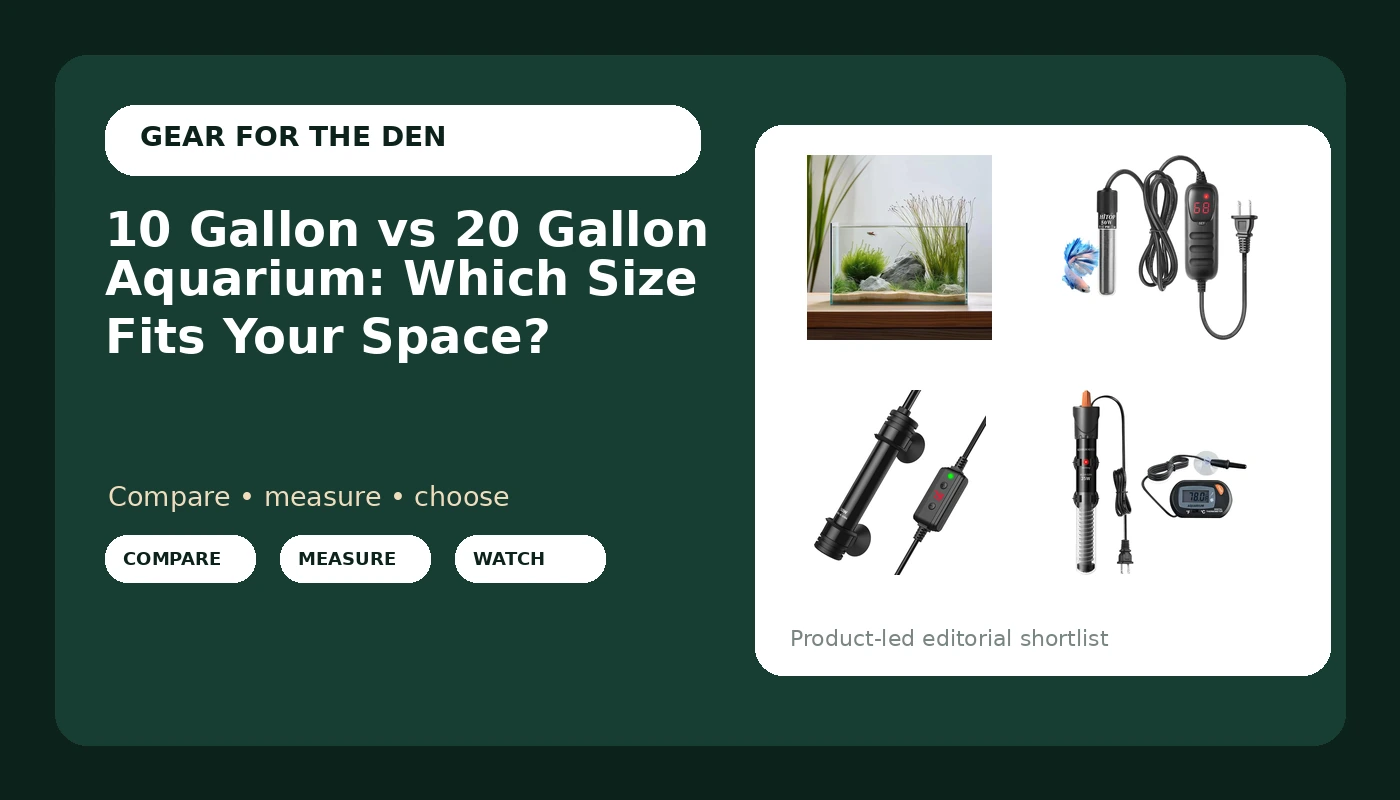
Vimvins 10 Gallon Glass Fish Tank
The only actual tank here, and a 10 gallon footprint fits a desk, a nightstand, or a dorm shelf without a dedicated stand
It caps the build at 10 gallons, so the stocking and the stability of a 20 are off the table
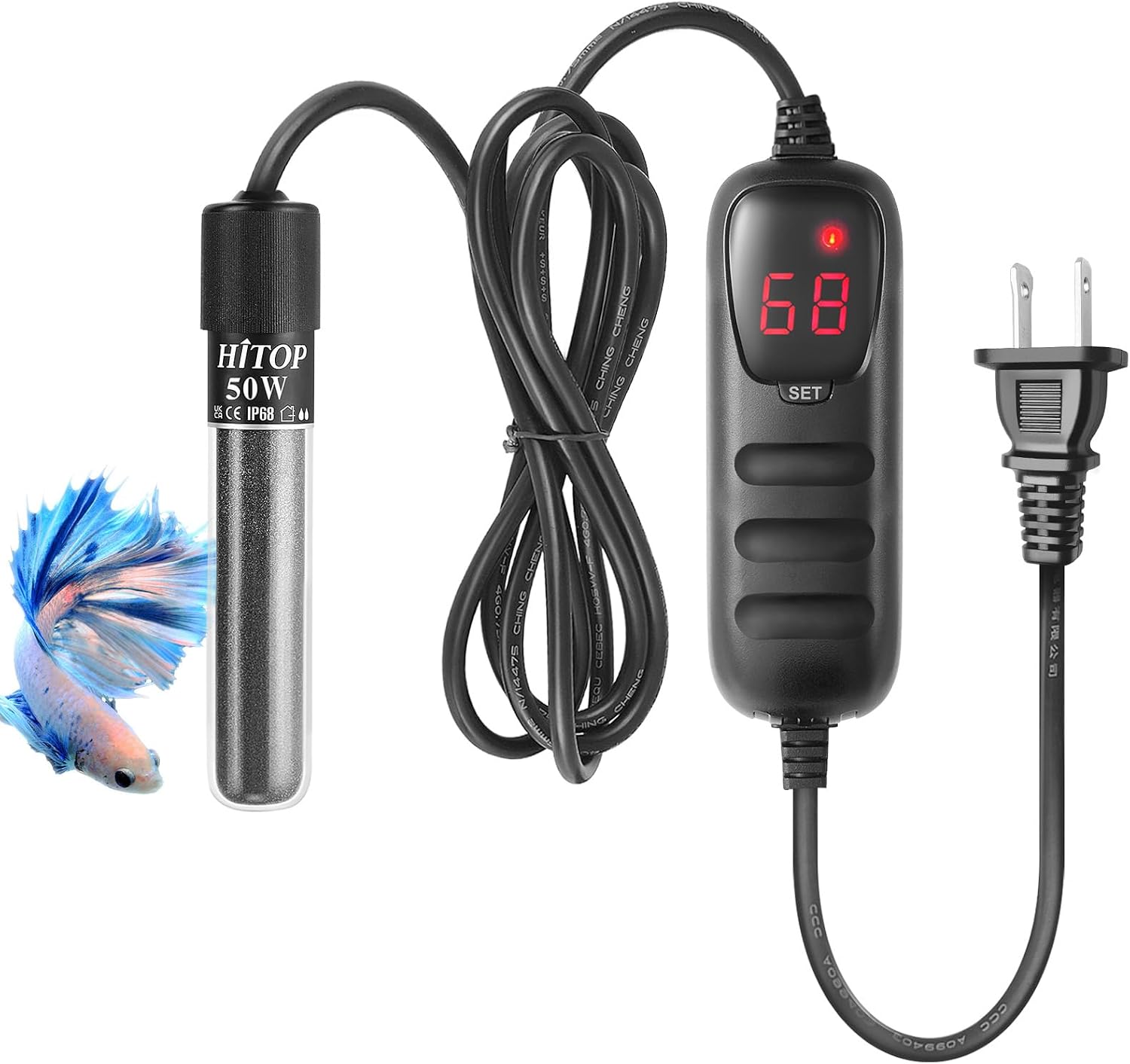
HITOP Mini Submersible 50W Aquarium Heater with Temperature Controller
Digital temperature controller, rated for fresh and salt water, small enough to hide behind plants in a 10
Fixed at 50W, which is right for a 10 gallon and thin for a 20 in a cold room
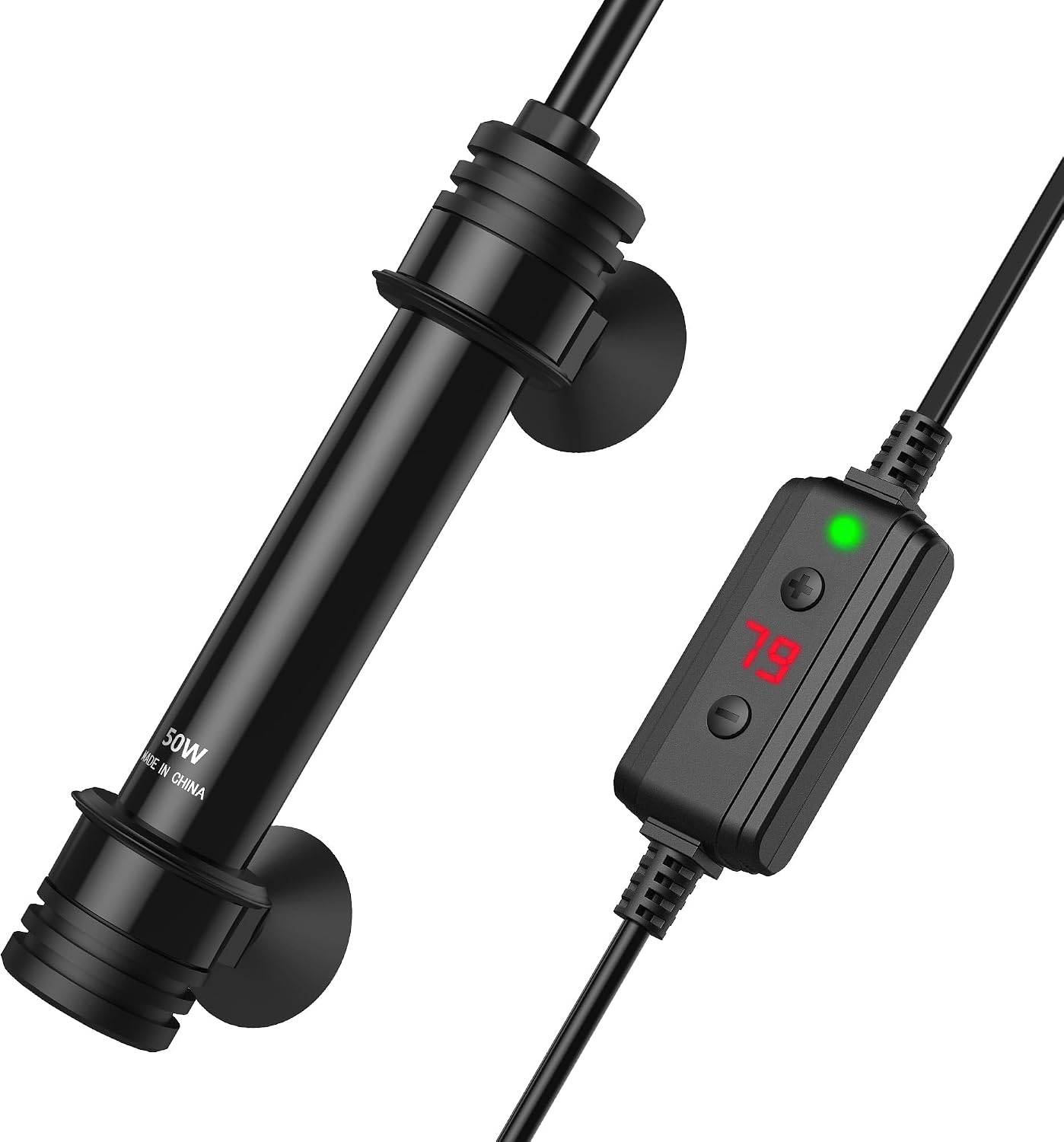
NICREW 50W Aquarium Heater with Temp Controller
Built for 5 to 10 gallon tanks, so the wattage matches a 10 gallon build almost exactly
Same 50W ceiling as the HITOP, and the 5 to 10 gallon rating tells you it is not the 20 gallon answer
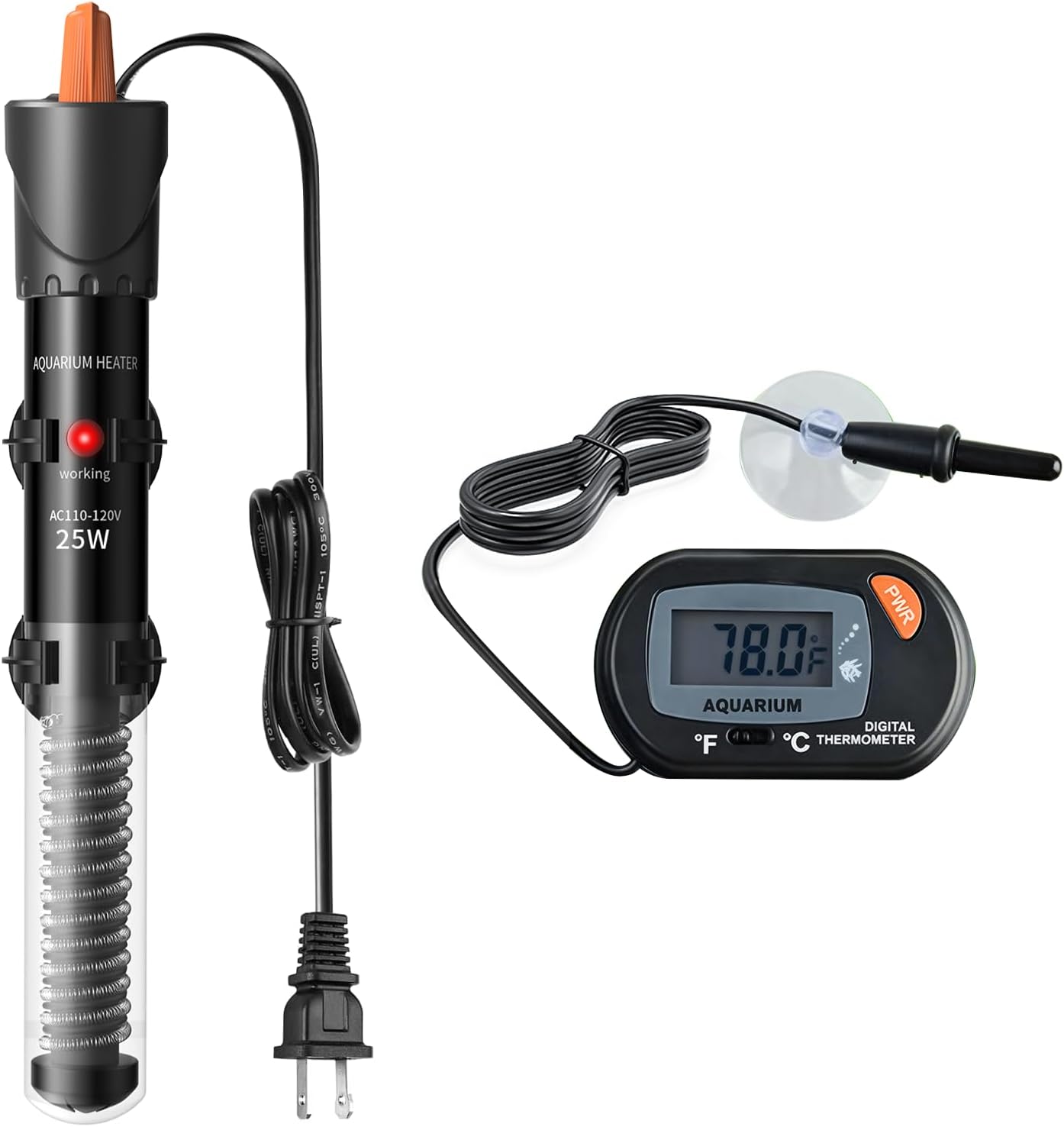
HiTauing Aquarium Heater, 25W to 300W Adjustable
One heater line covers both a 10 and a 20 gallon tank, with an adjustable knob and a separate digital thermometer
A knob is less precise than a digital set point, and the extra thermometer is one more thing to mount
Prices and availability may change.
How the 10 gallon vs 20 gallon aquarium decision actually works
When people frame it as a 20 gallon aquarium vs 10 gallon tank contest, they usually start with the glass and work backward. Do it the other way. Four variables decide this for you: tank volume, the footprint the tank needs, the load your furniture can carry, and how much water you are willing to move on a Sunday afternoon.
Tank volume is the obvious one. Ten gallons is small enough that a modest filter turns the whole volume over many times an hour, and small enough that a two and a half gallon water change is a ten-minute job with one bucket. Twenty gallons doubles the water change, but it also doubles the buffer between your fish and a mistake.
Footprint is where people get surprised. A standard 10 gallon is about 20 inches long and 10 inches deep. A 20 gallon long runs about 30 inches, and a 20 gallon high is closer to 24 inches but noticeably taller. If your plan is a kitchen counter or a nightstand, measure it before you fall in love with the bigger tank, because a tank overhanging a stand by two inches is a leak waiting to happen.
Cycle time is the variable most people underestimate. Both sizes cycle on roughly the same schedule, usually two to six weeks for a fishless cycle with a bottled bacteria start, but a 20 gallon holds its cycle far better when something goes wrong. Skip a water change in a 10 and ammonia can climb fast. Skip one in a 20 and the extra volume dilutes the damage. That is not a license to be lazy with either tank. It is a reason to be honest about which one matches your week.
The last variable is stocking. A 10 gallon is a betta tank, a shrimp tank, or a small school of nano fish. A 20 gallon opens up a community tank with a centerpiece fish and a proper cleanup crew. If you already know you want the community tank, the 10 gallon is a detour, not a starting point.
Tank volume, cycle time, and the water change you will actually do
A 10 gallon tank is not simply a smaller version of a 20 gallon tank, and that is the part of the 10 gallon vs 20 gallon aquarium comparison people miss. The rules are identical. The margin is not.
Water change math is the clearest example. A 25 percent change in a 10 gallon is 2.5 gallons, one bucket and about eight minutes. The same 25 percent in a 20 gallon is 5 gallons, two buckets and a longer walk to the sink. That sounds like an argument for the small tank, and for plenty of people it is. But that same small volume is why a 10 gallon drifts. Feed a little heavy, lose a snail, skip a week, and nitrate climbs in a way you can watch on a test strip. The 20 gallon absorbs the same mistake and gives you a week to correct it.
Cycle time runs on roughly the same clock in both tanks, but the shape of the curve differs. In a 10 gallon the ammonia spike is steeper and the nitrite phase can look alarming. In a 20 gallon the same ammonia from the same fish load is spread across twice the water, so the peak is lower. If this is your first tank and you are cycling with a test kit and a bottle of starter, the 20 gallon is the friendlier classroom.
Evaporation is the quiet cost of the small tank. A 10 gallon with an open top in a dry room can lose a visible amount of water in a week, and every inch of drop concentrates what is left. Top off with fresh water rather than treated salt water in a freshwater tank, and mark the water line so you notice before the filter intake starts sucking air. A 20 gallon loses the same depth, but it takes longer to get there, which is one more reason it is the easier tank to leave alone for a weekend.
The honest summary: a 10 gallon asks for attention more often, and a 20 gallon asks for more space and more money up front. Neither is harder to keep. They are hard in different places.
The equipment list: heater wattage and filter media
The equipment list for a small tank is short, and two items decide whether the build goes well: the heater and the filter media.
Heater wattage follows a simple rule. The usual guidance is 2.5 to 5 watts per gallon, and you pick the higher end when the room runs cold. For a 10 gallon in a normal heated house, a 50W heater is the standard answer. For a 20 gallon in the same room, 100W is the safer pick, and 150W if the tank sits in a cold basement. That is why all three heaters here are worth a look and only two of them are right for a 10 gallon build.
The HITOP Mini is a 50W unit with a digital temperature controller, and it is rated for both saltwater and fresh water. In a 10 gallon it is the right size, and the digital controller means you set a number instead of guessing at a dial. The NICREW 50W is aimed squarely at 5 to 10 gallon tanks, which makes it the closest match to the Vimvins tank if you want a heater designed for exactly that volume. Both are 50W, so both are the wrong call for a 20 gallon in a cold room.
The HiTauing heater is the flexible one. It comes in 25W, 50W, 100W, 200W, and 300W versions with an adjustable knob and a separate digital thermometer, and it is rated for freshwater and saltwater. If you are still deciding between sizes, that range is the practical argument for it: buy the 50W for the small tank now and the 100W if you move up, from the same product line with the same mounting style.
Filter media is the other half of the equipment list. A 10 gallon needs a small hang-on-back filter or a sponge filter driven by an air pump, and the media volume is small, so the bacteria colony that keeps your water safe has less real estate to work with. A 20 gallon can carry a bigger filter with more ceramic media or a second sponge, which means a more resilient colony and more room to add fish slowly. One rule applies to both: rinse media in tank water, never under the tap, because chlorine kills the bacteria you spent a month growing.
A note on the tank itself. The Vimvins 10 gallon is glass, and glass is the right call for a planted tank because you can scrape algae and plant into the substrate without fighting a plastic rim. The listing mentions goldfish, and I would ignore that part. A 10 gallon is a betta, a shrimp colony, or a small group of nano fish. Goldfish need volume and waste capacity that a 10 gallon does not have.
Stand load, hood fit, and substrate depth
Three physical details decide whether a tank works in your home, and they are all boring and all non-negotiable.
Stand load comes first. Water weighs about 8.3 pounds per gallon, so 10 gallons of water is roughly 83 pounds before you count the glass, the substrate, and the filter. A running 10 gallon usually lands somewhere around 110 to 120 pounds. A running 20 gallon lands around 200 to 225. That is the difference between a sturdy dresser and a purpose-built stand. Particleboard furniture that shrugs off a 10 gallon may bow under a 20, and a tank that is not level is a tank that eventually leaks. If you rent and you move often, the 10 gallon is the easier piece of furniture to relocate.
Hood fit is the detail that catches people after the purchase. A 20 gallon comes in two common shapes, long and high, with different footprints and different lid sizes. A hood bought for a 20 gallon high will not fit a 20 gallon long, and neither will fit a 10 gallon. Measure the rim, write the number down, and match it to the lid or hood you order. An open-top tank is fine for many setups, but it evaporates faster and it gives a betta a reason to jump.
Substrate depth matters more in a planted tank. One to two inches is enough for most setups and gives rooted plants something to hold. A single bag of gravel or plant substrate usually covers a 10 gallon at that depth, and a 20 gallon takes two. Go deeper than three inches and you risk compacted, anaerobic pockets, which is the opposite of what you want. If you plan on carpeting plants, stay shallower and accept slower growth, or add root tabs and skip the deep bed entirely.
Where each of these four picks fits
Now the trade-offs, product by product, so you can see how the pieces line up against the 10 gallon vs 20 gallon aquarium question.
The Vimvins 10 gallon glass tank is the anchor. It is a 10 gallon, so it settles the size question by itself. Buy it if your space is a desk, a counter, or a shelf, and if you are honest about doing a small water change every week. Its weakness is not quality, it is the ceiling: 10 gallons limits you to nano fish, a single betta, or shrimp, and no amount of gear fixes that.
The HITOP Mini 50W is the digital option for that tank. The temperature controller is the feature that matters, because a heater with a real set point is easier to trust than a dial you have to check against a separate thermometer. It is also rated for saltwater, which matters if you ever want to try a small marine tank, though a 10 gallon reef is its own project. Its limitation is the fixed 50W, which is correct for 10 gallons and thin for 20.
The NICREW 50W is the specialist. It is built for 5 to 10 gallon tanks, so it lines up almost exactly with the Vimvins. If you want the simplest possible pairing, this is it: a 10 gallon tank and a 50W heater rated for that volume. If you upgrade to a 20 gallon later, this heater stays with the small tank and you buy something bigger.
The HiTauing heater is the one to pick if you are still undecided. Because the line runs from 25W to 300W, the same brand covers a 10 gallon today and a 20 gallon next year. The adjustable knob is less precise than a digital set point, and the included digital thermometer is a separate piece to mount inside the tank, but the range is the point. It is the only pick here that scales with the decision you are trying to make.
Should you buy the 10 gallon or the 20 gallon first?
Here is the test I would apply. If the tank has to sit on furniture you already own, if you move every year or two, or if your budget for the whole build is tight, buy the 10 gallon. It is the cheaper entry, the equipment list is shorter, and a 50W heater covers it without argument.
If you have a stand rated for the weight, a spot that does not get direct sun, and you already know you want a community tank with more than one species, go straight to the 20 gallon. Skipping the 10 saves you from buying a tank twice. The gear cost difference is smaller than people expect, since the filter and heater scale up modestly, and the tank itself is the main line item.
If you genuinely cannot decide between a 10 gallon or 20 gallon aquarium, buy the small one and the HiTauing heater, then keep the box for the tank. A 10 gallon is easy to sell or repurpose as a quarantine tank when you upgrade, and a quarantine tank is something every keeper eventually needs anyway. That turns the smaller purchase into a permanent part of the hobby rather than a mistake.
What I would not do is buy a 20 gallon and set it on a dresser because the footprint happens to fit. Stand load is the one variable in this comparison that fails loudly, and a collapsed tank takes the floor, the furniture, and everything under it with it.
What we are comparing next
The next comparison in this series puts sponge filters against hang-on-back filters in a 10 gallon, because filter media volume is the quiet limit on how many fish a small tank can carry. After that, I want to look at lids and hoods by tank shape, since hood fit is the most common post-purchase mistake I see in aquarium threads.
Both belong in the same conversation as this one. If you get the 10 gallon vs 20 gallon aquarium decision right and then buy the wrong lid, you have still spent a weekend returning boxes. Get the size right first, then the gear.