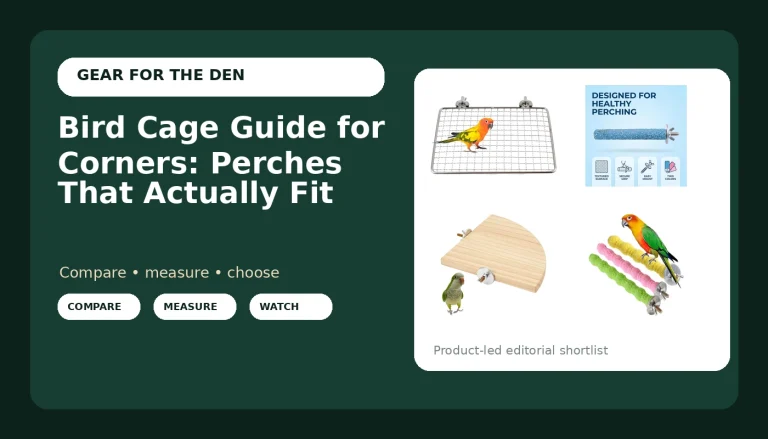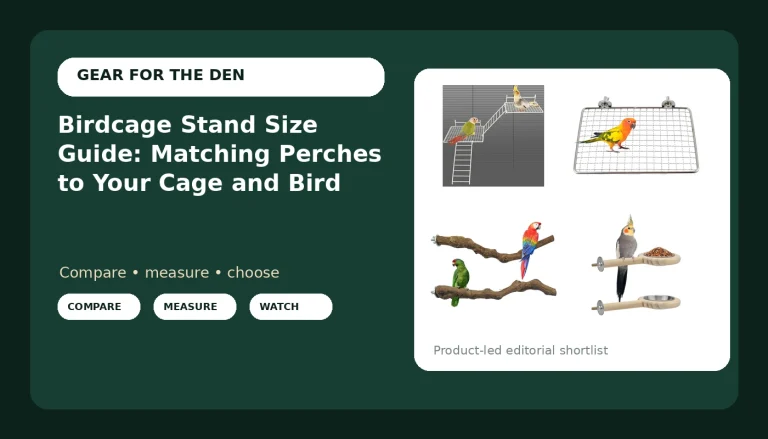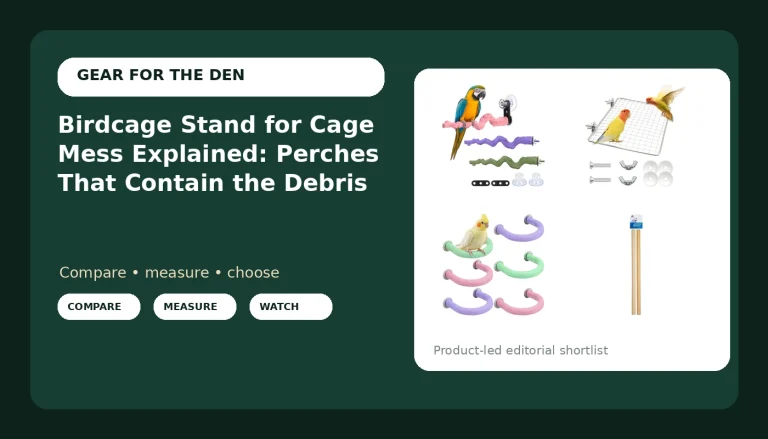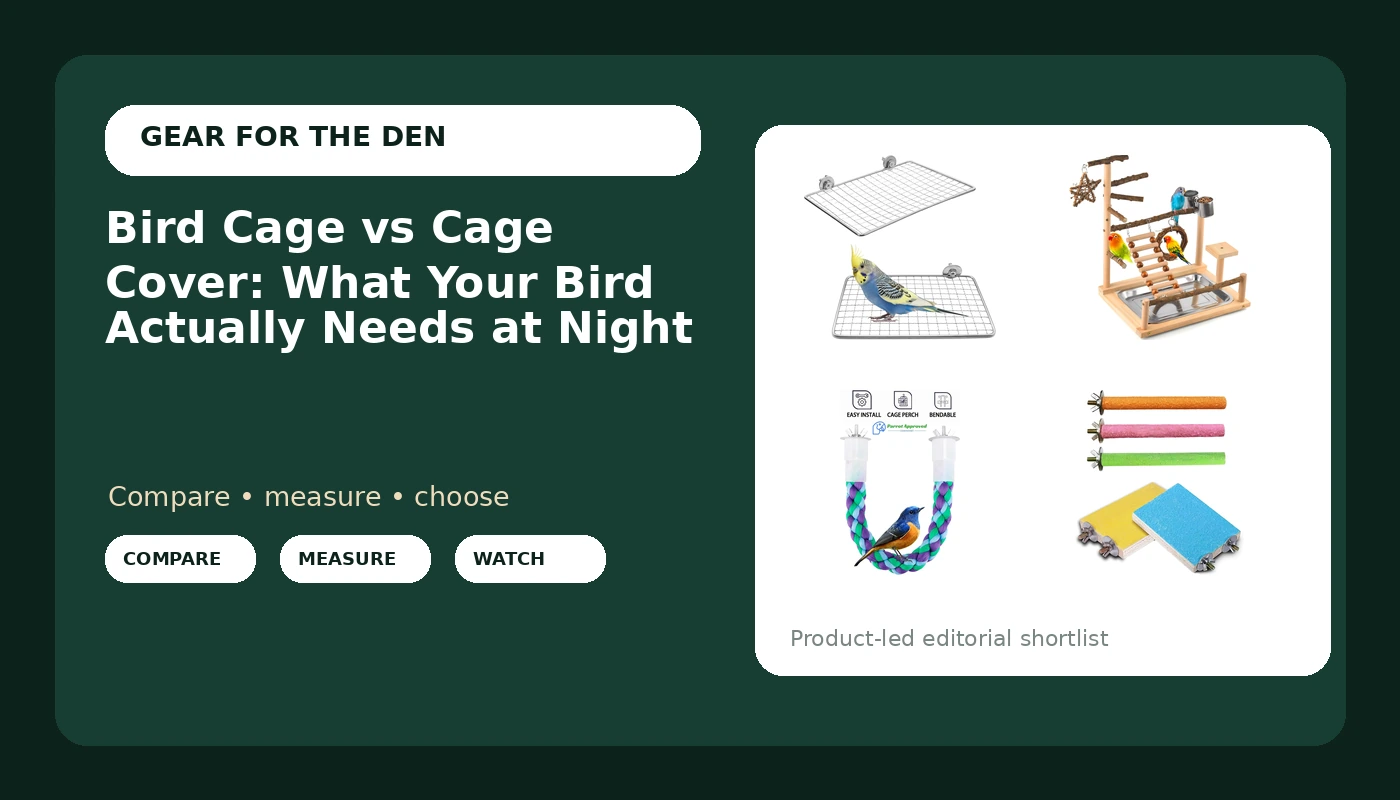
Most bird keepers meet the bird cage vs cage cover question the same way: something is keeping the bird awake, and the fastest available fix looks like a piece of fabric dropped over the top of the cage at dusk. A cover costs very little, takes ten seconds to install, and solves exactly one problem. The cage is where the other nine live: bar spacing wide enough to let a determined lovebird test the gaps, a perch diameter that punishes the soles of the feet, a tray liner that slides out of position, and not enough cage height for a conure to actually climb. This comparison treats both sides honestly, then looks at four cage accessories that decide whether the inside of the cage is worth covering at night.
The short answer: a cover is a sleep aid, and a perch is a daily tool. If you can only change one thing this month, change what the bird stands on. That is not a knock on covers. It is a note about where the returns are.
Every product below is a cage accessory rather than a cage or a cover, and that is deliberate. The furniture is the part of the setup that changes daily life, and it is the part most keepers under-buy. You can drape a towel over a cage tonight and capture most of what a cover does. You cannot improvise a good perch out of a towel.
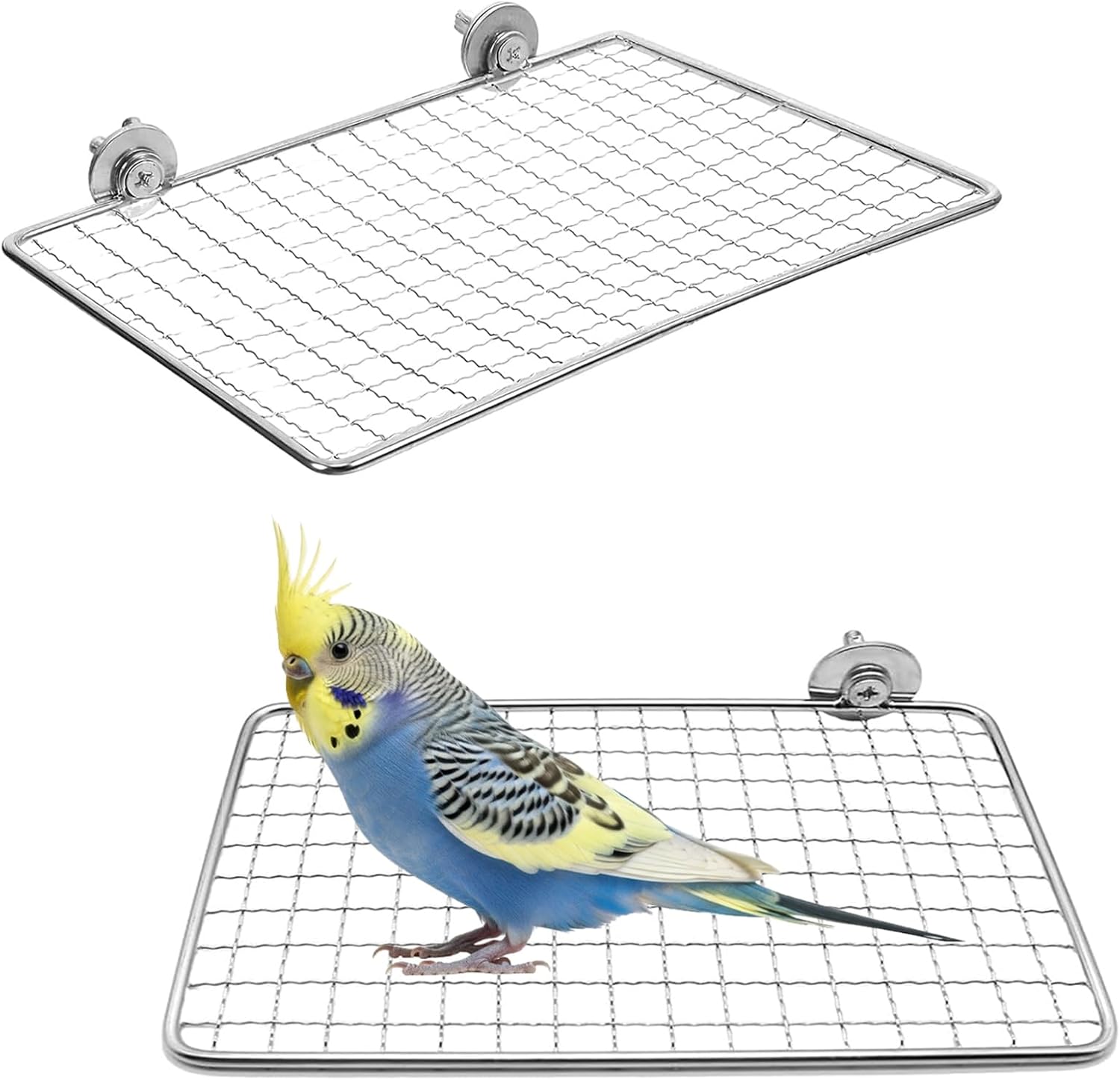
2 Pack Stainless Steel Bird Perch Platform for Cage, 6.3 x 4 in Wire Mesh Resting Stand
Wire mesh wipes clean and the flat 6.3 x 4 in surface gives a conure or cockatiel a real resting spot instead of a dowel
Metal offers nothing to chew, and a bare platform is unforgiving on a cold, drafty night
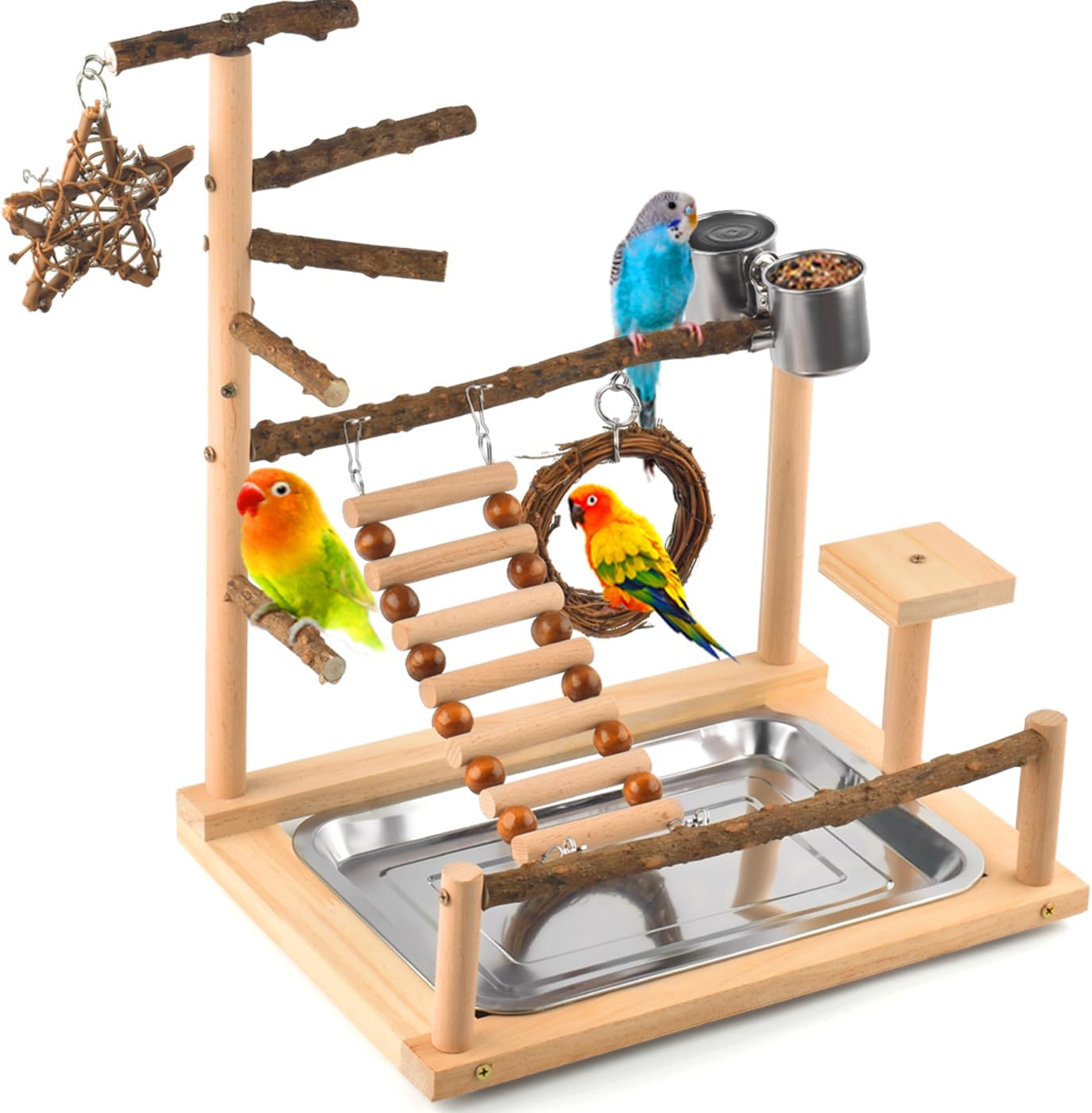
KATUMO Bird Playground – Natural Wooden Perches Parakeet Ladder Conure Swing Bird Cage Accessories with Removable Tray & 2 Stainless Steel Cups
A complete station with a removable tray and two stainless steel cups, so out-of-cage time has a home base
It needs floor or table space, and it does nothing for a bird that spends its day inside a small cage
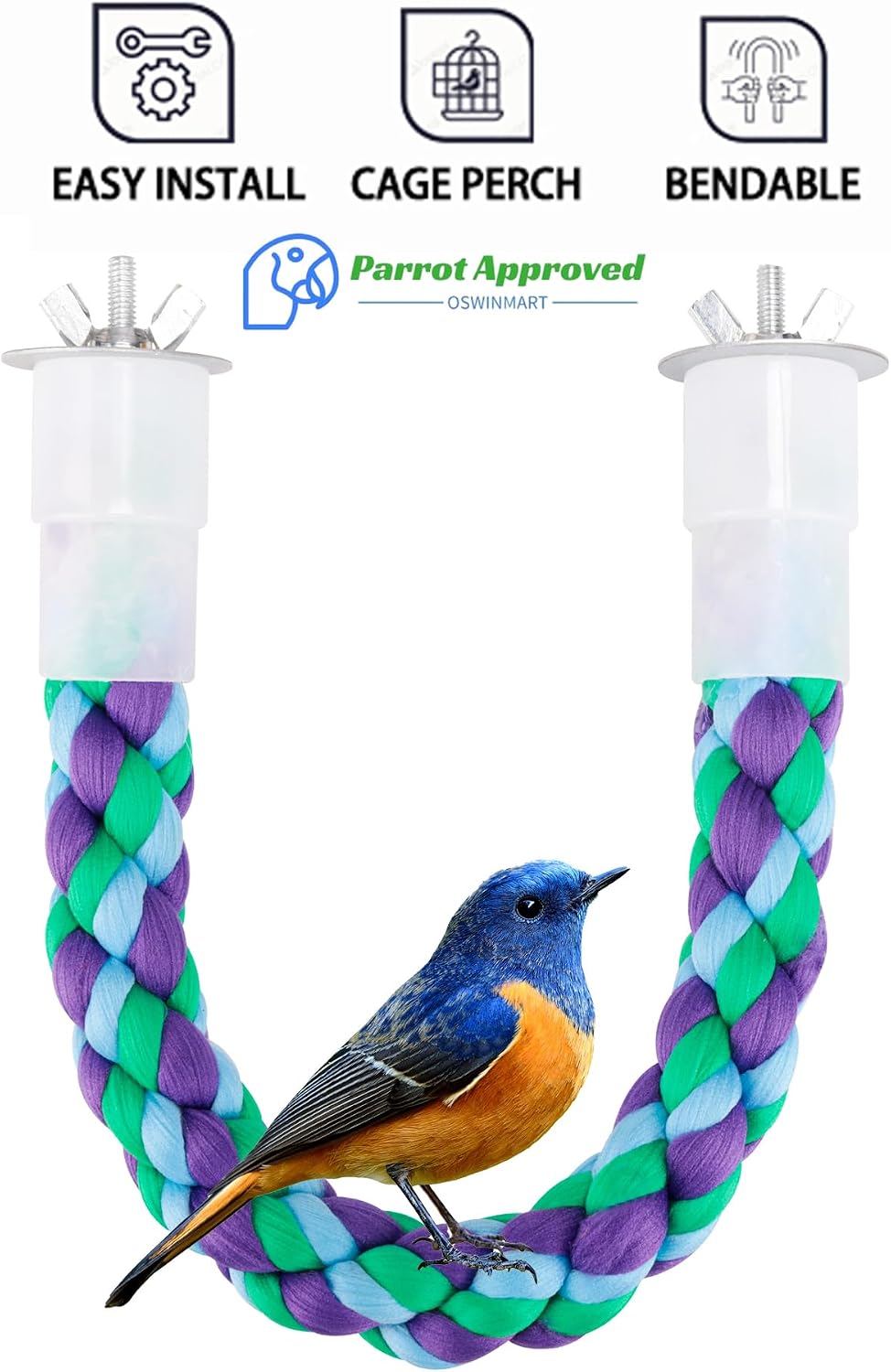
2Pcs 11.8'' Bird Rope Perches, Bendable Climbing Standing Chew Cage Toys
Bendable rope shapes to the bird instead of forcing the foot to match a straight dowel, and two 11.8 inch lengths cover a lot of cage
Rope frays, traps debris in the fibers, and needs replacing sooner than wood or steel
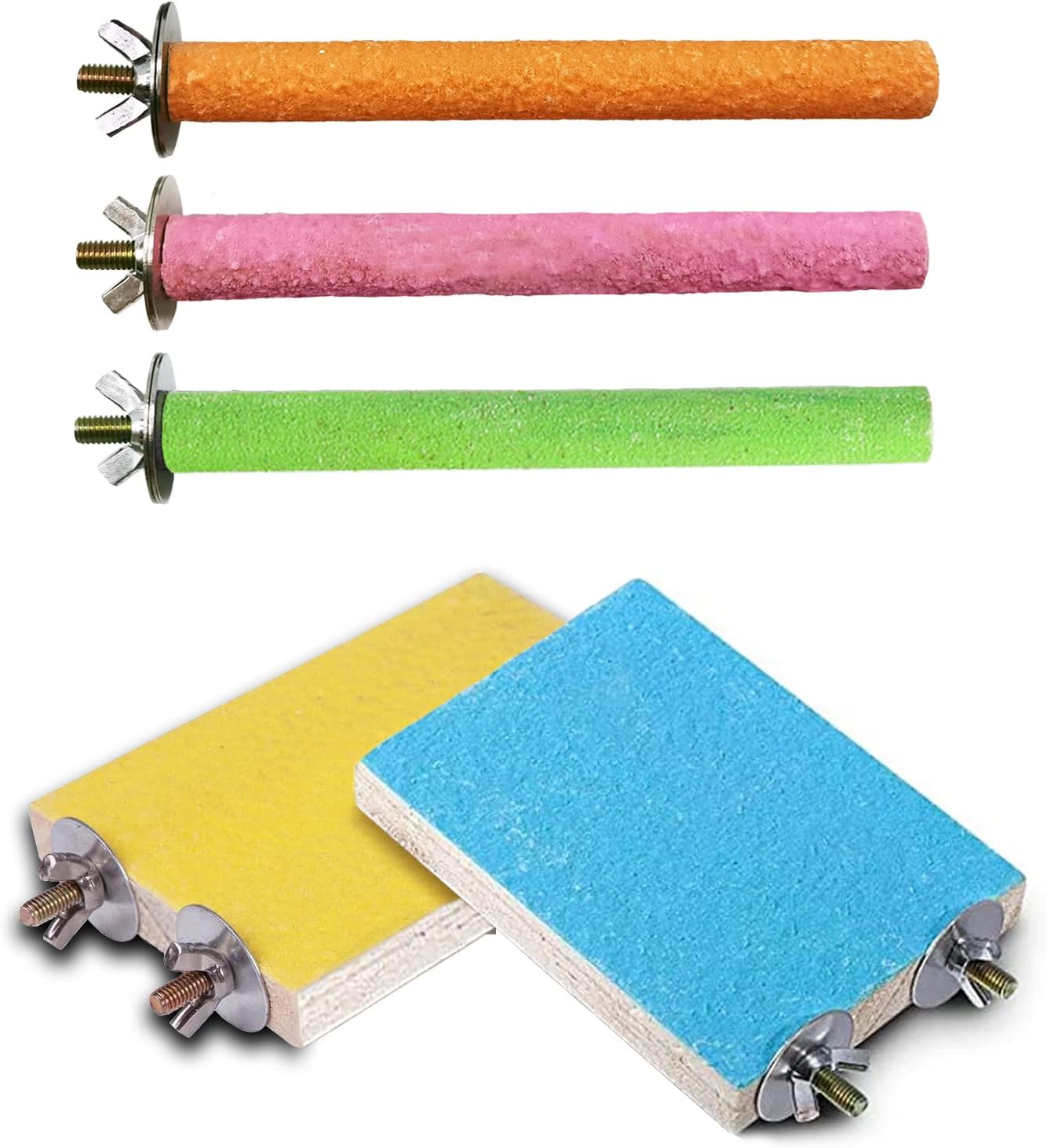
5pcs Bird Perch Stand Platform Natural Wood Parakeet Toys Cage Accessories
Five natural wood pieces for a small outlay, with a texture most parakeets will chew rather than ignore
Wood stains and wears, and five small platforms can crowd a cage that is already short on height
Prices and availability may change.
The bird cage vs cage cover question, answered plainly
Strip the marketing away and the difference between bird cage and cage cover is the difference between habitat and habit. A cover is a habit: you drape it at a consistent hour, the room goes dark, and the bird's sleep cycle settles. A cage is a habitat: it is where the bird spends most of its waking life, and every dimension of it either supports the feet, beak, and curiosity or works against them.
That reframes the cage cover vs bird cage debate as a schedule question rather than a hardware question. If your bird wakes at first light in summer, a cover addresses that directly. If your bird paces the same two inches of dowel all afternoon, darkness at nine in the evening changes nothing about the other fourteen hours. Feather condition, foot health, and boredom are cage problems. Night frights, early waking, and drafty corners are cover problems.
So the honest answer to bird cage or cage cover is usually both, in that order of urgency. Buy the cover when the complaint is sleep. Spend on the inside of the cage when the complaint is anything else, which, in most households, it is.
What to check before you buy cage furniture
Bar spacing is the first filter, and it has nothing to do with the accessory itself. A platform sized for a conure cage can be too large for a parakeet cage, and a perch mounted across the wrong span will sag, rattle, or bow under a bird that shifts its weight.
Cage height matters more than floor area for most small parrots. Vertical room lets a bird climb, and climbing is the exercise that replaces the flight it does not get indoors. Every platform you add eats a little of that height, so a short cage can only take one or two pieces before it starts to feel like a stack of shelves.
Perch diameter should vary on purpose. A single dowel gives the feet one grip and one pressure point all day, which is how calluses and pressure sores start. Offering a flat mesh platform, a bendable rope, and a natural wood piece gives the feet three different contact patterns across the day.
Food cup size and carrier size are the two specs people forget. Cups that are too deep hide food and turn foraging difficulty into an accident rather than a game. A carrier that is too small turns every vet trip into a wrestling match, and no cage accessory fixes that later.
Stainless steel platform perches: the wipe-clean answer
The two-pack of stainless steel platform perches is the most practical pick here, and it is the one I would hand to a first-time conure or cockatiel owner. The surface is wire mesh, so droppings fall through instead of soaking in, and a wipe handles the rest. There is no wood grain to scrub and no fiber to pick clean. The 6.3 by 4 inch footprint is a genuine resting surface, not a toehold, which matters for older birds and for any bird that has spent years on a single dowel.
The trade-off is character. Metal gives a bird nothing to chew, nothing to shred, and nothing to destroy, and some parrots find that boring enough to ignore the platform entirely. Mounting also depends on your bar spacing, so measure before you order.
Rope perches: the bendable middle ground
Two 11.8 inch rope perches solve the geometry problem that wood cannot. You bend the rope into a curve that matches the bird's foot, wrap it around a corner, or hang it as a swing mount, and the bird gets a grip that is soft and slightly irregular. For a bird that has only ever known straight dowels, that curve is the difference between standing and actually resting.
Rope has real costs. The fibers fray, they hold dust and droppings, and a chewed rope perch can develop loose threads that catch a toenail. Expect to replace rope sooner than wood or steel, and inspect it weekly. It is also the easiest of the four to fit into a small cage, because two 11.8 inch lengths can be shaped around whatever space you have.
The KATUMO playground: a station, not a perch
The KATUMO Bird Playground is a different category of purchase. Natural wooden perches, a parakeet ladder, a conure swing, a removable tray, and two stainless steel cups arrive as one unit, which makes it a complete out-of-cage station rather than a piece of cage furniture. The removable tray does the job a tray liner does in a cage: it catches the mess in one place and lifts out for a rinse. The two cups cover food and water without a separate shopping trip.
This is the pick for a bird that already spends hours on a play stand or a tabletop, and the wrong pick for a bird that lives entirely inside a small cage. It also needs floor or table space, and at the top of this group it is the biggest single outlay. Buy it when you want a landing zone, not when you want to fix a crowded cage.
Natural wood platforms: the bundle buy
Five natural wood perch platforms for a small outlay is the value play, and wood is the material most parakeets will actually chew. That matters more than it sounds. Chewing is how a bird occupies its beak, and a perch that doubles as a chew toy earns its space in a way that steel never will.
The catches are maintenance and crowding. Bare wood absorbs moisture, stains, and eventually needs replacing, so plan on it as a consumable rather than a permanent fixture. Five small platforms also add up fast in a cage that is short on height, and natural wood pieces vary in shape, so two from the same pack can feel quite different underfoot. Spread them across two cages, or use two now and keep three in reserve.
Where a cover still earns its place
None of this makes a cover pointless, and the comparison would be dishonest if it pretended otherwise. A cover controls light and, to a lesser degree, drafts and household noise. For a bird that startles at night or wakes with the sunrise, that is a real fix for a real problem, and it costs less than any perch on this list.
What a cover cannot do is change perch diameter, add cage height, or give a bored bird something to do at two in the afternoon. Those are the problems that show up as chewed feathers, sore feet, and a bird that hangs on the bars begging for attention. Treat the cover as the last ten percent of a good setup, not the first ninety.
What I'd buy first
If the complaint is sleep, buy a cover and be done with it. If the complaint is anything else, start with the stainless steel platform two-pack, because it is the cheapest way to give a small parrot a flat, clean, restful surface, and add the bendable rope perches a month later so the feet get a second grip pattern. The natural wood bundle is the third buy, spread across cages or held in reserve, and the KATUMO playground comes last, once the bird is out of the cage often enough to need a station.
That ordering answers the bird cage vs cage cover question better than any single purchase does. The cover handles the night. The perch handles everything the bird does with the rest of its day.