I have never met a bird keeper who regretted buying a birdcage stand wide enough to hold two perches at the right height. The regret always runs the other way: a narrow platform that makes a cockatiel hunch, a smooth dowel that spins underfoot, a ladder that clips on and then swings into the water cup. This birdcage stand wide guide is about the pieces that go inside the cage, the perches, platforms, and ladders that give a small parrot somewhere real to stand, and how to tell which ones will fit before you order.
The questions I ask about every one of them are the same. Will it clear the bar spacing on my cage? Is the perch diameter small enough for a budgie's feet and thick enough that a conure's toes do not wrap all the way around? Does it sit high enough to be used, because cage height matters more than cage width when you are placing a perch. A wide platform is only wide in the abstract until it lands at a level where the bird actually wants to be. Get those three things wrong and the best-made perch in the world becomes cage decoration.
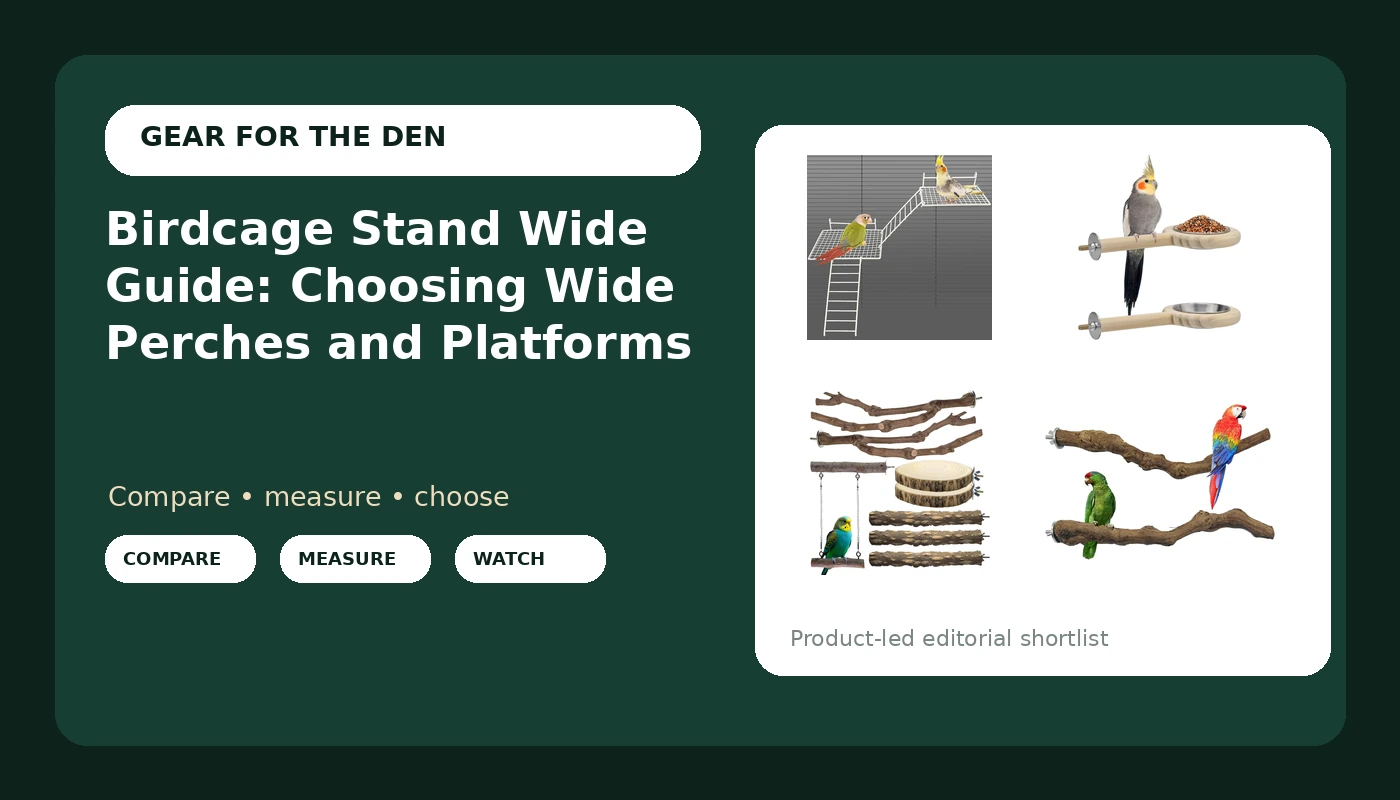
Best Overall: BNOSDM 4 PCS Bird Perches Platform, Stainless Steel Grid Platform for Parakeet Parrot Stand with Climbing Ladder Bird Cage Accessories for Small to Large Birds (White)
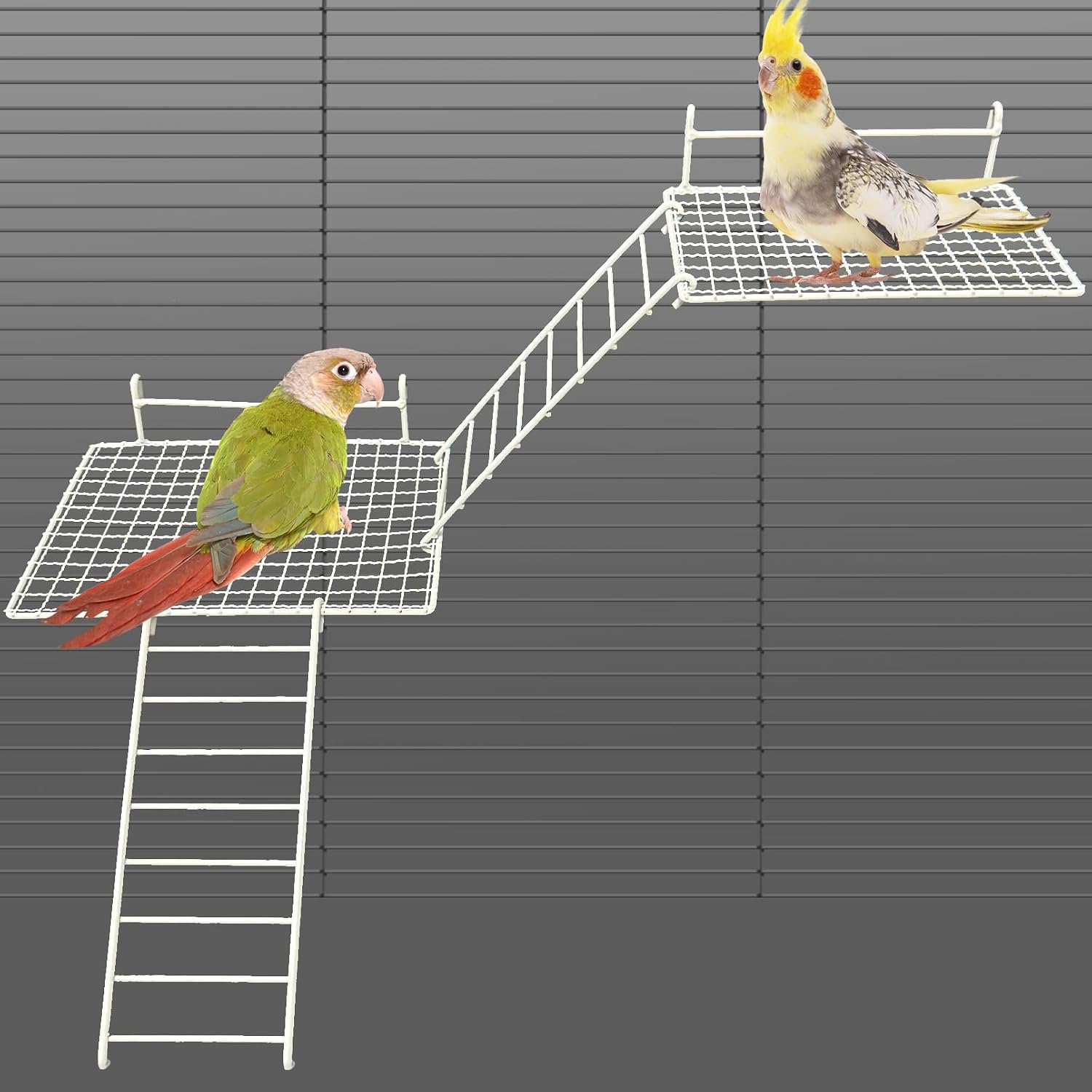
This is the piece I would hand to someone setting up a cage from scratch. You get four platforms, a stainless steel grid surface, and a climbing ladder in the same box, and the white finish keeps it from looking like hardware in a bright room. The grid is the part that earns its place. Hulls, dust, and droppings fall through instead of caking onto a flat surface, so a rinse under the tap handles most of the cleaning and you are not scraping with a putty knife every weekend.
Flat standing surfaces matter more than most new keepers expect. A round dowel asks a bird to grip all day, and a bird that never gets to rest its feet on something level will shift, shuffle, and pick at its toes. A grid platform gives that rest without turning into a surface that stays wet. It also works as a birdcage riser wide enough to lift a food bowl off the floor grate, which keeps pellets out of the tray liner and makes the whole cage easier to wipe down.
The listing covers small to large birds, which is a wide net, and that is deliberate. In a parakeet cage it reads as a generous landing pad with room for two birds. In a conure cage it reads as a proper platform at the height the bird already prefers. The ladder adds a second route up and down, and that matters more than people expect: a bird with only one path between the top perch and the food will guard that path, and a second route takes most of the tension out of a shared cage.
Best Value: KATUMO Bird Perch Feeding Cup Birds Platform Parrot Wood Perch Stand Toy Cage Accessory for Parakeet Lovebird Cockatiel Conure Budgie Small Parrots (L Perch (Pack of 2))
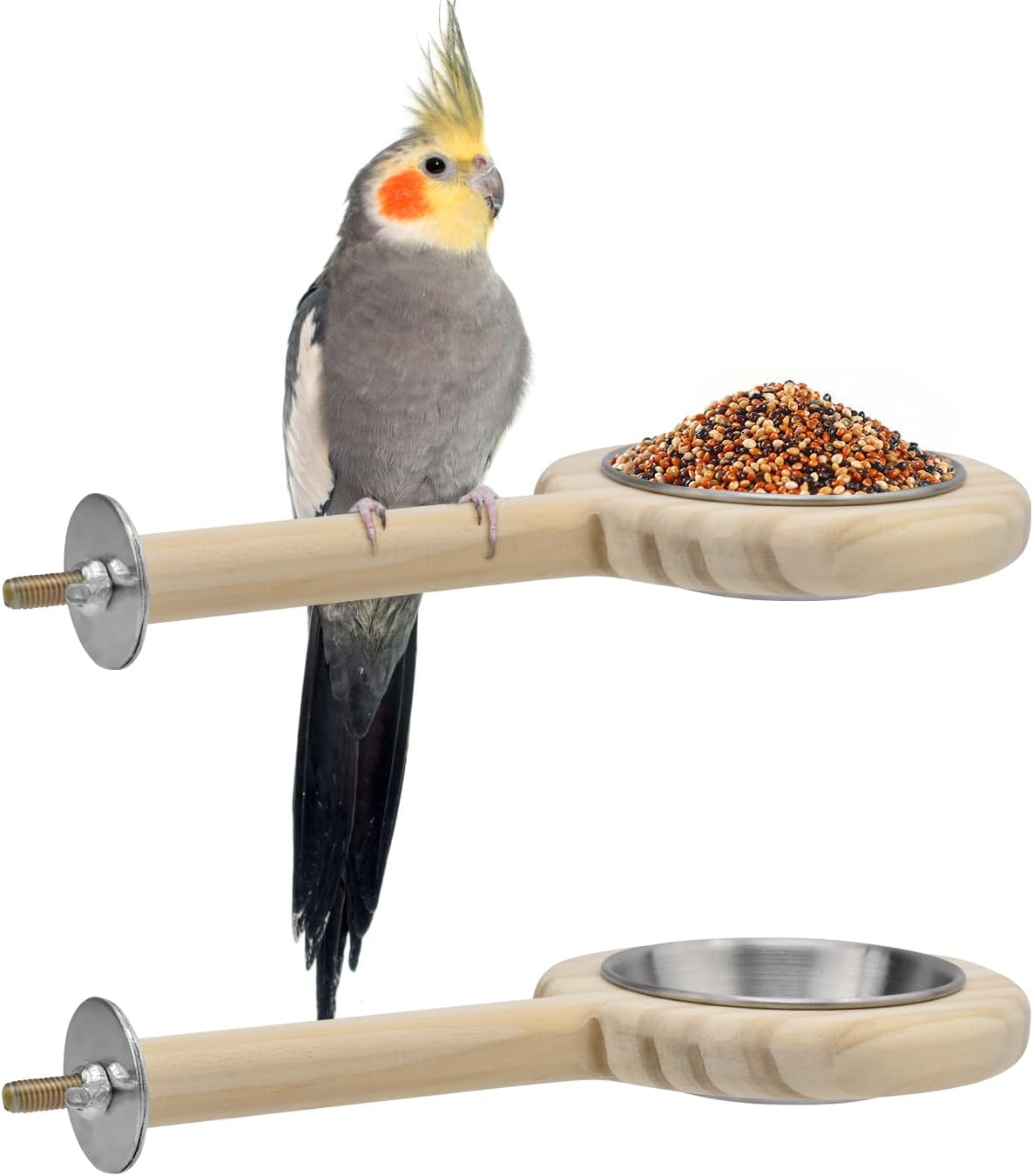
Two perches, each with a feeding cup built into the wood, and that combination is the reason this one sits in the value slot. Food cup size is the detail that decides whether a perch like this works. Too small and a conure empties it in a minute; too deep and a parakeet cannot reach the bottom without leaning off balance. The cup here is set into the wood rather than hanging beside it, so the bird stands over the food instead of stretching for it. Think of it as a birdcage holder wide enough to carry a bowl and a bird at the same time.
Wood is also the right material for a perch that doubles as a bowl holder. It grips a bird's feet, it wears gently against the beak, and it does not go cold the way bare metal does in a drafty room. If you want to raise foraging difficulty, drop a few sunflower seeds into the cup and cover them with pellets, so the bird has to work through the top layer instead of eating off a flat dish. The perch needs no swing mount and no chain, which means no swinging, no clatter against the bars at night, and nothing to unhook when you want to move it.
Two perches also means you can run one high and one low, or keep one for travel. That second use is worth thinking about, because carrier size decides which perch travels with you. A perch with its own cup is the one piece of cage furniture that still does something useful in a carrier, since the bird can eat without a bowl sliding around underneath it.
How I tested
I judge these pieces the way a bird uses them, not the way a listing describes them. Every perch and platform gets mounted in a cage and left there long enough for the novelty to wear off, because the first day tells you nothing. What I watch for is simple: does the bird stand on it, or does it stand next to it.
Then I check the things a bird cannot tell me. I push down on the platform and see whether the mount flexes or slides along the bars. I run a thumb along the wood to feel for splinters and sharp cut ends. I wipe each surface with a damp cloth and see how much comes off, because a perch you dread cleaning is a perch you will not clean.
Fit comes before everything else. I check bar spacing against the mount, cage height against the intended position, and perch diameter against the feet that will use it. A perch that is too thick for a budgie is a perch the bird avoids. A platform that sits too low is a platform that collects droppings and nothing else. None of that shows up in a product photo, and all of it decides whether the thing stays in the cage.
Analysis and test results
Across the four setups, the pattern is consistent. Natural wood wins on grip and beak wear, stainless steel wins on cleaning, and the mount decides whether either one stays where you put it.
The grid platform is the most stable of the group. The surface is flat, the frame is rigid, and the grid drains, which is why it holds up as the everyday platform in a cage. The trade-off is that a flat grid gives a bird nothing to chew, so it needs to sit alongside a wood perch rather than replace one. That is also where the climbing ladder earns its keep, giving the bird something angled to work along instead of a level surface all day.
The two natural wood options cover different jobs. The eight-piece set gives you small perches in a consistent diameter, which is exactly what a parakeet or a cockatiel needs for foot health, and having eight means you can swap out a worn one without rethinking the layout. The grapevine perches are thicker, knobbly, and meant to be chewed, so they wear down and need replacing sooner, and that is the point of buying them.
The perch with the built-in cup is the one I would call genuinely clever, because the food cup and the perch are the same object. Feeding above the floor keeps food out of the tray liner, and it puts the bird at a height where it feels safe eating, which matters in a busy room with a dog walking past the cage.
What separates a perch that stays put from one that rattles comes down to the birdcage mount wide enough to hook over two bars and hold there. A single-bar hook will pivot. A mount with a wing nut, a wide washer, or a bracket that spans two bars will not. That is the most common failure I see in a wide birdcage stand setup, and it is invisible in the product photo. If you are buying a birdcage stand wide enough for several pieces, buy the mount quality first and the finish second.
The birdcage stand wide reference table
Here is the short version, the table I would keep next to the cage while shopping. Counts and sizes come straight from the listings; the notes are what I would tell a friend.
| Setup | What you get | Best for | Notes |
|---|---|---|---|
Stainless steel grid platform | Four platforms and a climbing ladder | Small to large birds | Flat surface, drains and rinses clean |
Wood perch with feeding cup | Two L perches with built-in cups | Parakeets, lovebirds, cockatiels, conures, budgies | Perch and bowl in one piece, nothing to swing |
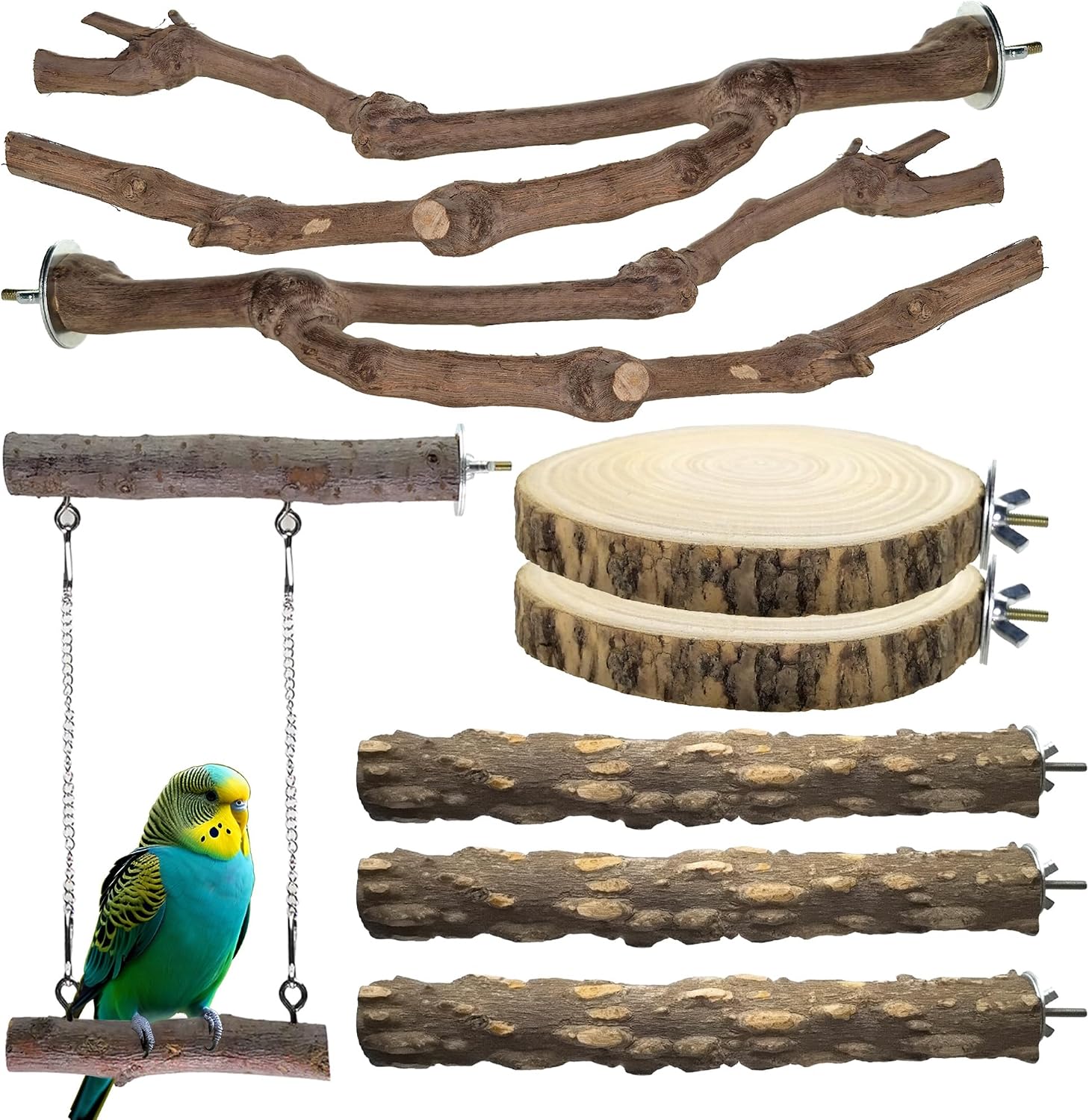 View on Amazon → Natural wood perches | Eight 5.9 inch perches | Parakeets, cockatiels | Small diameter for small feet, easy to swap |
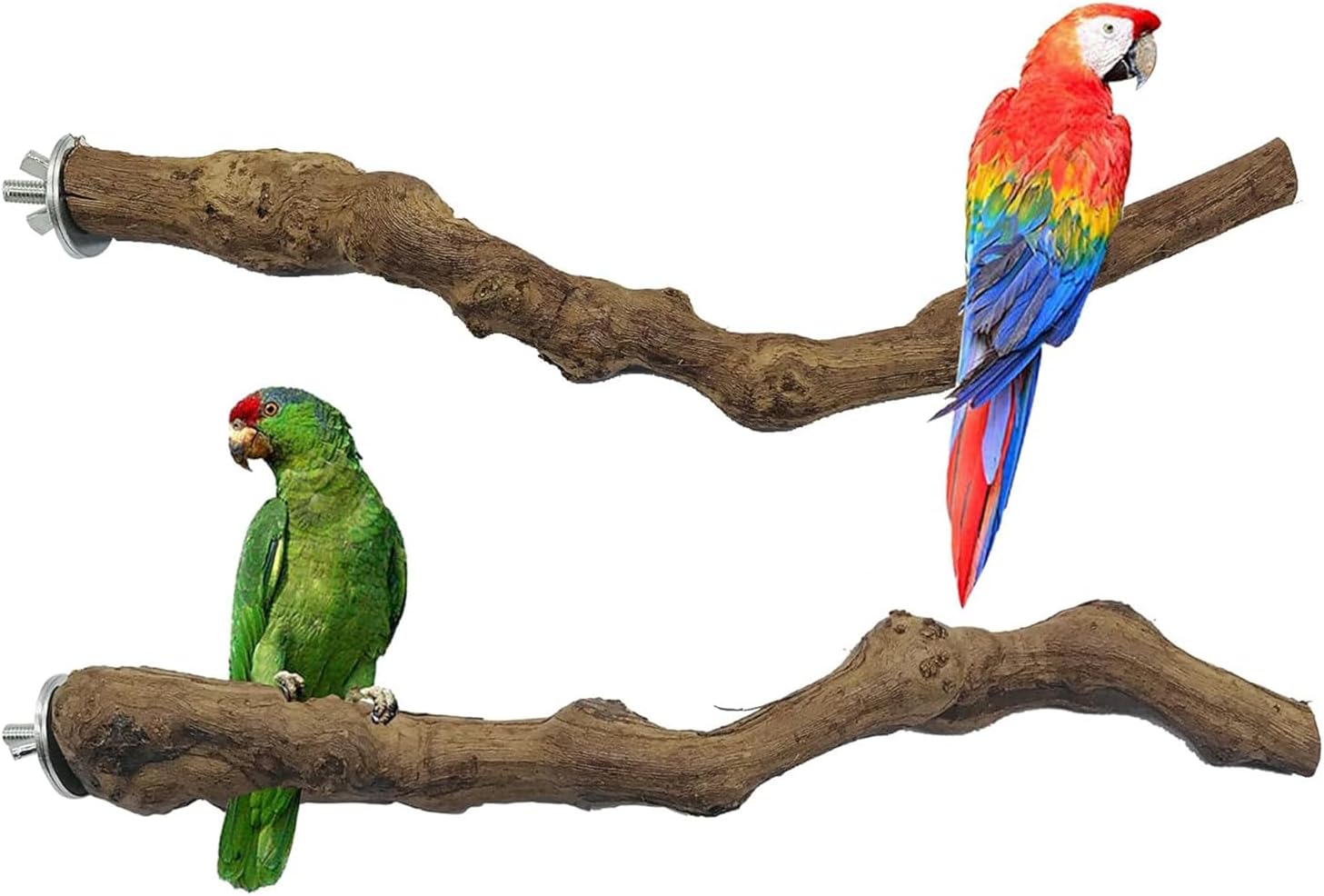 View on Amazon → Grapevine perch forks | Two natural grape stick forks | Cockatiels, parakeets, finches | Chewable, textured, wears down over time |
The pattern in the table is the same one I see in the cage. The wide, flat pieces do the standing. The wood does the gripping and the chewing. Buy one of each and the cage is covered.
Natural wood versus stainless steel grid
Wood grips, insulates, and gives a bird something to chew, which is why it belongs in every cage. Grid cleans, drains, and never needs replacing, which is why it belongs in every cage too. The mistake is choosing one and calling the cage finished.
A bird that lives only on smooth dowels and grid has nothing to wear its beak on and nothing to grip. A bird that lives only on wood is standing on a surface that gets dirty and stays dirty unless you scrub it. Put the grid platform where the bird eats and rests, put the wood perches where it climbs and sleeps, and replace the wood when it is chewed down to a smooth stick.
Where a wide perch should sit in the cage
Placement decides use. A perch at the top of the cage is a sleeping perch. A perch at mid height, near a food cup, is a working perch. Anything near the floor is a perch the bird will ignore, and a birdcage stand wide enough for four pieces does not help if three of them sit below the bird's comfort line.
Leave clearance above the highest perch for a full stretch and a tail. Keep the food cup away from the tray liner so husks fall through the grate instead of into the pan. If you hang a swing, check the swing mount against the perch below it, because a swing that clips the top perch is a swing the bird will not use.
Should you buy the BNOSDM 4 PCS Bird Perches Platform, Stainless Steel Grid Platform for Parakeet Parrot Stand with Climbing Ladder Bird Cage Accessories for Small to Large Birds (White)?
Yes, if you want a flat standing surface in the cage and you are tired of scrubbing dowels. The grid drains, so it rinses clean instead of holding mess, and the ladder gives the bird a second route between the top perch and the food. It is the first thing I would add to a cage that only has smooth perches.
The honest caveat is that a grid gives a bird nothing to chew, so it is half of a setup, not the whole thing. Pair it with a wood perch and the bird gets both a place to rest its feet and something to work its beak against. If you keep a single budgie in a small cage, four platforms is more than you need, and one will sit in a drawer. For a conure, a cockatiel, or a pair of parakeets, it earns the space.
Should you buy the KATUMO Bird Perch Feeding Cup Birds Platform Parrot Wood Perch Stand Toy Cage Accessory for Parakeet Lovebird Cockatiel Conure Budgie Small Parrots (L Perch (Pack of 2))?
Yes, if you want a perch and a bowl in one piece and you are tired of bowls that end up on the floor. The cup is set into the wood, so the bird stands over the food rather than leaning for it, and nothing swings or rattles at night. Two perches in the pack means one can stay high in the cage and one can travel in a carrier.
Skip it if your bird is a food thrower, because an open cup will end up scattered across the tray liner no matter how well it is set. Skip it too if you need a perch for a large bird, since the L size suits small parrots rather than anything bigger. For a parakeet, a lovebird, a budgie, or a cockatiel, it is the cheapest way to solve two problems with one piece of wood.