A budget dog comb guide is only worth reading if it starts with the coat instead of the price tag. I have watched people buy a cheap mat rake, drag it through a soft drop coat, and then wonder why the dog hides under the table every time the drawer opens. The tool was never the problem. The match was.
This is a budget dog comb guide for everyone brushing a shedding undercoat on a Tuesday night, working a knot out from behind an ear, or trying to stay under the cost of a bag of kibble. Four tools, one comparison table, and the coat type notes that decide which one you actually reach for.
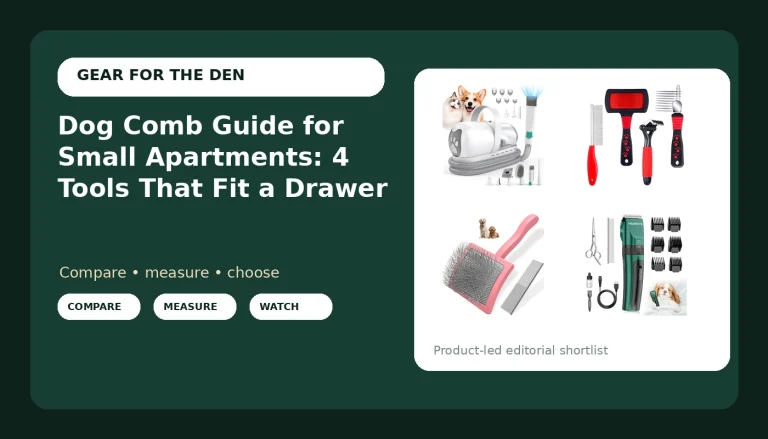
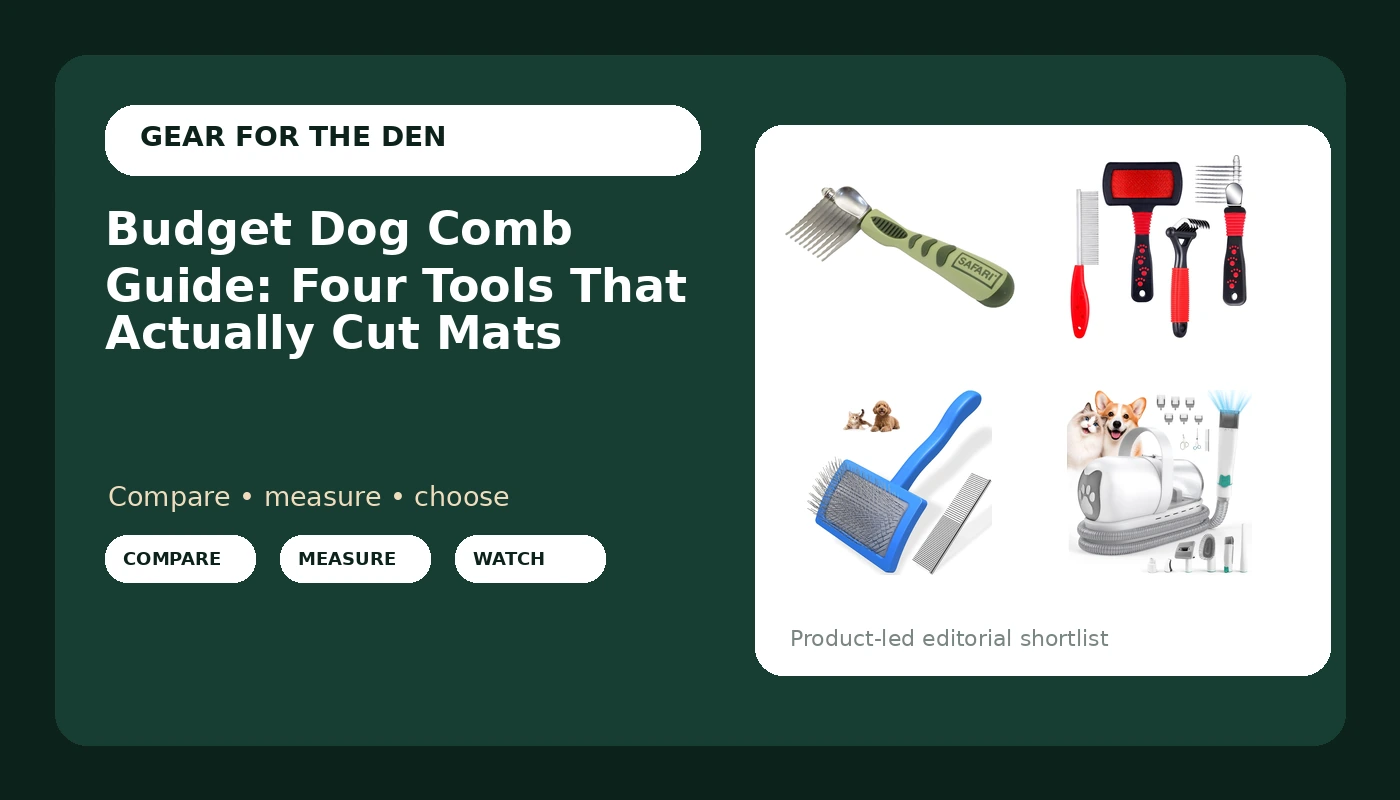
Best Overall: Coastal Pet Safari Dog De-Matting Comb – Serrated Stainless Steel Grooming Tool for Dogs with Medium to Long Hair – Keeps Coats Smooth & Soft – One Size
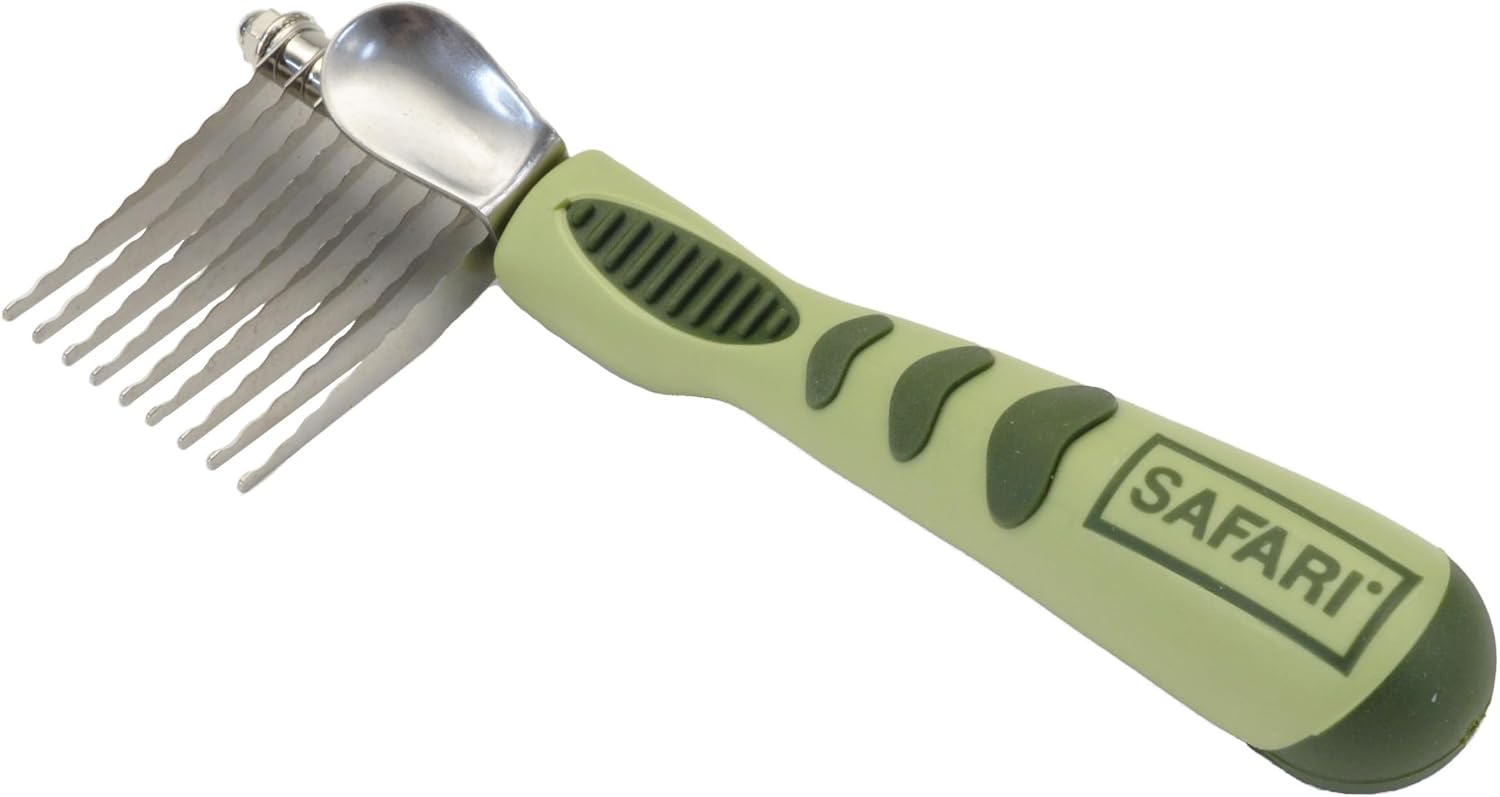
The Safari de-matting comb is the tool I would hand to someone who has never groomed a long coat before. It is a single piece of serrated stainless steel on a molded handle, one size, and the serrations are the whole point. A straight-tooth comb slides over the surface of a knot and polishes the outside of it. A serrated edge catches the tangle and slices it into smaller pieces you can actually comb out.
That difference matters most on medium to long hair, which is exactly the coat type this one is built for. Think spaniels, setters, goldens, collies, and most of the doodle crosses that end up in a kitchen sink on a Sunday.
Work it dry and work it slow. Start at the outer edge of the mat, never at the skin, and take short strokes toward the tip until the knot breaks apart. If you start at the skin and pull, you are not de-matting, you are yanking, and the dog will remember it.
There is no blade guard on this one, so store it where nothing presses against the teeth. A bent tooth on a serrated blade is the fastest way to turn a good tool into a scratchy one. The grip handle is shaped for a full hand, which helps when you are holding a wriggling leg with the other one.
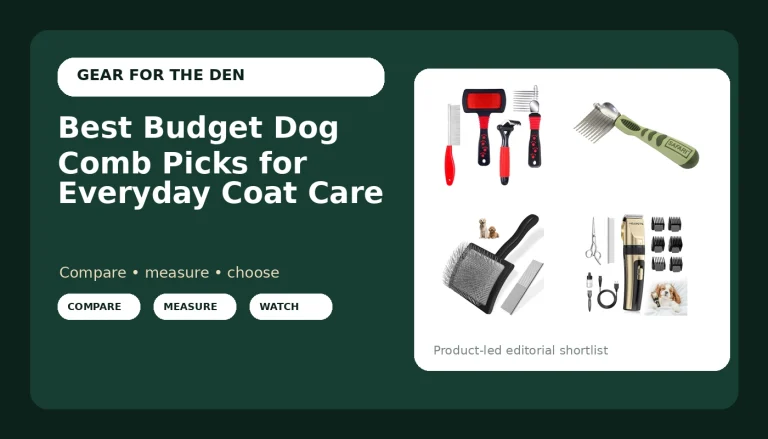
Best Value: Patelai 4 Pcs Dog Dematting Comb, Red and Black Classic Grooming Set
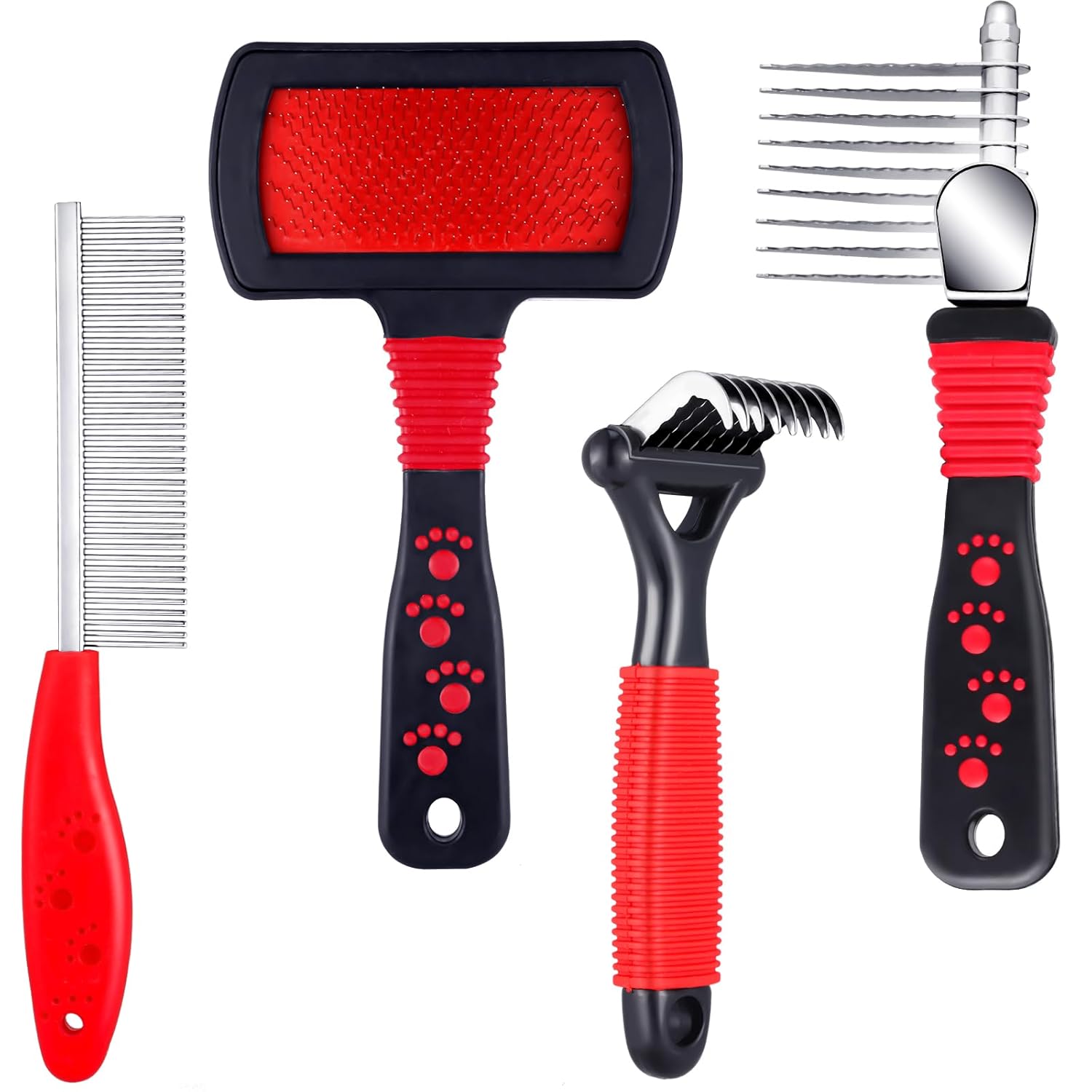
This is the affordable dog comb answer to the question nobody asks out loud: what if I want more than one tool without buying four separate things? Four pieces in red and black, and the set covers the basic shapes most coats need, from a wider comb for the body to a finer one for the legs and face.
The real advantage of a multi-piece set is not variety, it is rotation. One comb is in your hand, one is drying on a towel, one is in the drawer, and one has vanished under the couch where all small pet gear eventually goes. When a tool is never wet and never packed with loose fur, it stays smoother against the coat.
For a low cost dog comb option, this is where I would start with a puppy, a foster dog, or a coat you are still learning. You will not cry if it gets left in the yard.
Two honest notes. The pieces are lighter in the hand than the Safari, so if you are fighting a genuinely packed undercoat on a big dog, you will feel the difference by the third knot. And a four-piece set means four things to keep track of. If you are the kind of person who loses one comb a month, this set is a gift. If you are the kind of person who loses all of them, buy the single best tool and be done.
How I tested
Every tool here was judged against the same routine, and the routine is deliberately boring because that is what real grooming looks like.
First, the dry knot test. I take a felted patch behind the ear or under the collar, the two spots that mat first on almost every long coat, and I see whether the teeth bite into the knot or skate across the top of it. A comb that cannot engage a mat is a finishing tool pretending to be a de-matting tool.
Second, the undercoat pass. On a double-coated dog, the question is whether the tool pulls dead undercoat out of the dense layer without scraping skin. This is where bristle type and tooth spacing matter more than brand.
Third, the wriggle test. A dog that will not stand still tells you everything about a grip handle. If the tool rotates in your hand when the dog shifts weight, you will end up gripping harder and grooming worse.
Fourth, cleanup. Fur packed into a comb is fur that will end up on your floor, so I look at how easily the tool releases what it collects. And on the vacuum kit, I listened for motor noise and checked how the airflow behaved at the head, because those two things decide whether a nervous dog tolerates it at all.
I did not run these tools on a lab bench. I ran them on real coats with real tangles, and the notes below are what changed my mind about which tool goes first.
Analysis and test results
The Safari wins on pure mat-breaking ability, and it wins because of the blade shape rather than any marketing claim. Serrated stainless steel does one job well. It is also the tool with the least forgiveness: catch skin with a serrated edge and the dog will let you know.
The Patelai set wins on coverage per dollar. Four pieces means you can keep a wide-tooth comb for the body and a fine one for the face without buying anything else, and the lighter build is a fair trade for the price.
Coat type is the deciding variable, and it sorts into three rough groups. Short, smooth coats need almost nothing from this list, a rubber curry or a bristle brush will do, and you should not buy a de-matting comb at all. Medium to long coats with a soft texture are the sweet spot for the Safari. Dense double coats, the ones that blow their undercoat twice a year, need a tool that reaches the undercoat layer rather than the guard hairs on top.
The mistake I see most often is treating a de-matting comb as a daily brush. It is not. Serrated teeth are for tangles, not for maintenance. Use a slicker or a wide comb on a healthy coat, and save the de-matting tool for the knots that actually form.
Bathing plays a part too. Shampoos vary widely in oatmeal concentration, and a heavy, creamy formula can leave residue that makes a clean coat feel tacky, which means the next combing drags instead of gliding. Rinse longer than you think you need to, dry completely, and comb before the bath rather than after. Wet mats tighten.
One more thing worth saying plainly: no comb replaces scissors on a mat that has already felted against the skin. If the coat is one solid plate, a groomer is the honest answer, and a budget dog comb is not going to fix it.
Budget Dog Comb Comparison Table
This is the table I would want taped inside a grooming drawer. Coat type is the column that matters, not the price column.
| Tool | Best for | Coat type | Notes |
|---|---|---|---|
Coastal Pet Safari Dog De-Matting Comb | Breaking real knots | Medium to long hair | Serrated stainless steel, single tool, no blade guard |
Patelai 4 Pcs Dog Dematting Comb | A full starter drawer | Most coat types | Four pieces, light in the hand, easy to rotate and dry |
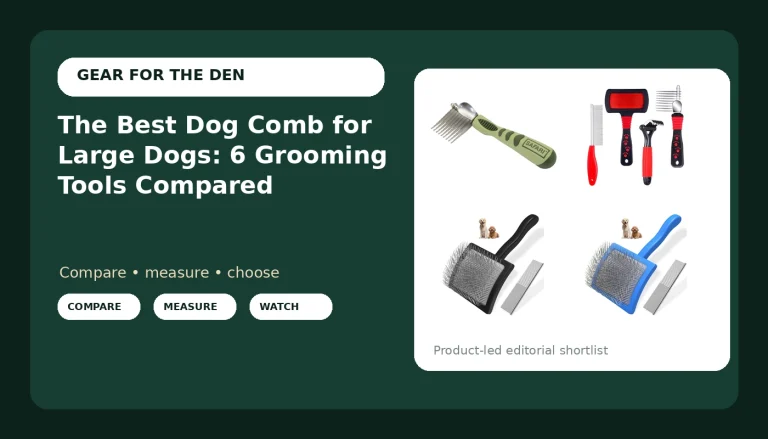
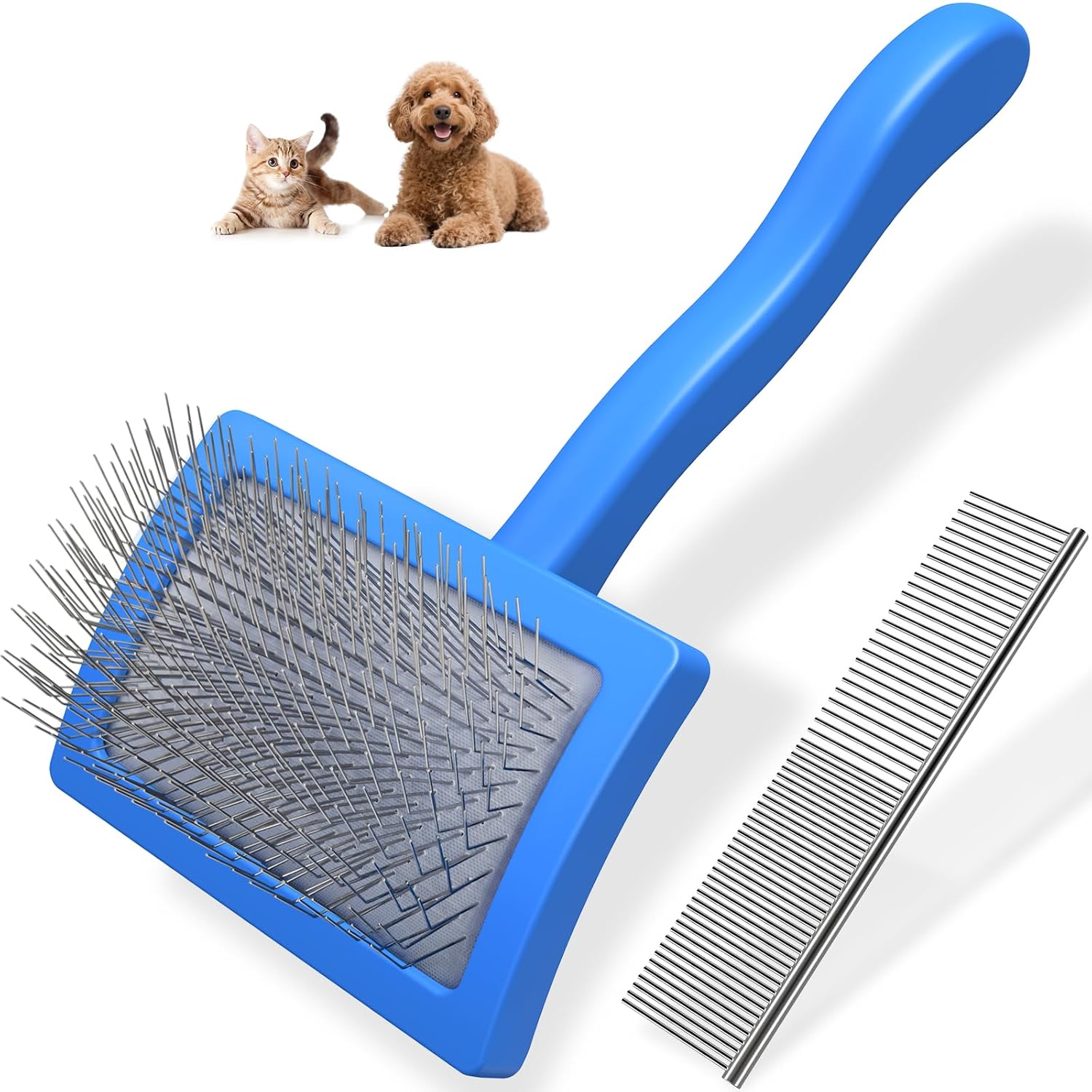 View on Amazon → 2PCS Slicker Brush for Dogs & Pet Comb | Daily upkeep on curly coats | Doodles, poodles, long-haired crosses | Extra long pins, two pieces, blue, medium |
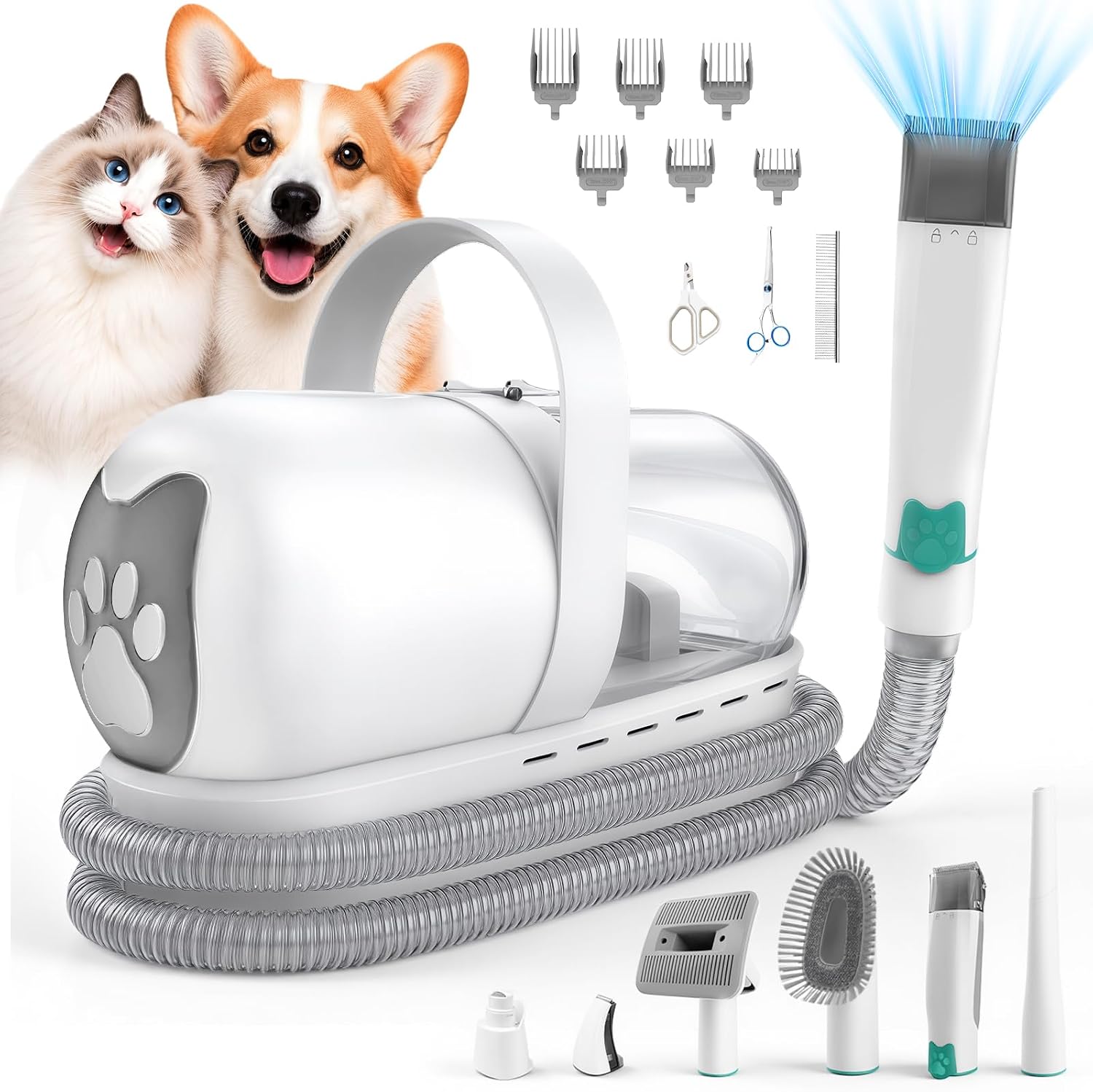 View on Amazon → CLEANPAWS Dog Grooming Vacuum Kit | Heavy shedders and fur cleanup | All breeds and cats | 13000Pa suction, 9-in-1 kit, 1L dust cup |
Read it top to bottom and you have a grooming plan: a daily tool, a de-matting tool, and a way to deal with what comes off.
Slicker brushes and extra long pins
The 2PCS Slicker Brush set is the daily driver on curly and wavy coats, and the extra long pins are the reason. On a doodle or a poodle cross, short pins never reach past the top layer of the coat, so you groom the surface, call it done, and find a felted patch at the skin three weeks later.
Long pins change that. They get down to where the coat actually tangles, and two brushes means one can be drying while the other works. The bristle type here is the classic wire slicker, which is right for loosening surface debris and lifting the coat, but it is not a mat breaker. If the knot is already solid, go back to the serrated comb.
The pin length also means you need to be gentler than you think. Long pins flex, and flexing pins against skin are uncomfortable, so let the brush do the work with light pressure instead of pressing down. A slicker is a finishing and maintenance tool, and treating it that way will keep more coat on the dog.
When a grooming vacuum is worth it
The CLEANPAWS kit is the outlier in this group, and it is the one that stops the fur from landing on your floor in the first place. 13000Pa of suction, a 1L dust cup, and a 9-in-1 kit that includes a nail clipper and a de-matting comb. If you have ever finished a grooming session and then spent twenty minutes vacuuming the couch, you already understand the appeal.
Two specifications matter more than the rest. Motor noise decides whether your dog tolerates it, because a vacuum that spooks the dog is a vacuum that sits in the closet. And airflow at the head decides whether the fur actually lifts off the coat or just gets tickled. A quiet unit with decent airflow will get used weekly. A loud one will not.
It is the most expensive tool on this list by a wide margin, so it only makes sense if shedding is a year-round problem in your house, or if you have more than one animal. For a single short-coated dog, this is overkill. For a husky and two cats, it pays for itself in sanity.
Should you buy the Coastal Pet Safari Dog De-Matting Comb?
Yes, if your dog has a medium to long coat that mats behind the ears, under the collar, or along the tail. The serrated stainless steel blade does the one thing a slicker cannot, which is break a knot apart instead of polishing the top of it, and the grip handle keeps your wrist steady when the dog shifts.
It is not a daily brush and it is not gentle if you use it wrong. Start at the outer edge of the mat, work inward, and stop if the coat is felted to the skin. Used that way, it is the single most useful tool in this budget dog comb guide, and the one I would replace first if it went missing.
Should you buy the Patelai 4 Pcs Dog Dematting Comb?
Yes, if you want options more than you want one perfect tool. Four pieces means a wide comb for the body, a finer one for the legs, and always something clean and dry to pick up next. That rotation is worth more than most people expect, and it makes this the easiest affordable dog comb set to recommend for a first grooming drawer.
Skip it if you are fighting a heavy undercoat on a large dog every week. The lighter build shows up by the third knot, and at that point the Safari is the better single purchase. But as a low cost dog comb set to learn on, to travel with, or to keep in a second bathroom, it earns its place.
If you are still deciding between a comb and a brush for a specific coat, the double coat brush comparison covers the maintenance side, and this table covers the knots.