A long-haired cat does not shed more than a short-haired one so much as it holds on to shed hair longer. That is the reason the search for a cat brush for long haired cats gets complicated: hair that drops off a short coat stays inside a longer one, where it wraps around itself, felts behind the front legs, and collects in the armpits and trousers. This cat brush for long haired cats explained guide sorts the options by what they physically do, using coat length, undercoat, bristle type, comb spacing, and deshedding edge as the vocabulary that matters, rather than the labels printed on the packaging.
Quick answer
A long coat needs two tools, not one. The first has to reach the undercoat, which in practice means a comb or deshedding tool with teeth set close enough together to catch loose fur under the top coat. The second is soft, for the surface coat, the legs, and the face, and for cats that will not tolerate a stiff comb. A deshedding tool with a curve blade and tight V-shaped teeth covers the first job. A softer brush, a wall-mounted groomer, or a grooming glove covers the second. Anything sold as one tool for every part of the job is usually a compromise on the part that matters most.
Four useful options
| Model | Best fit | What stands out |
|---|---|---|
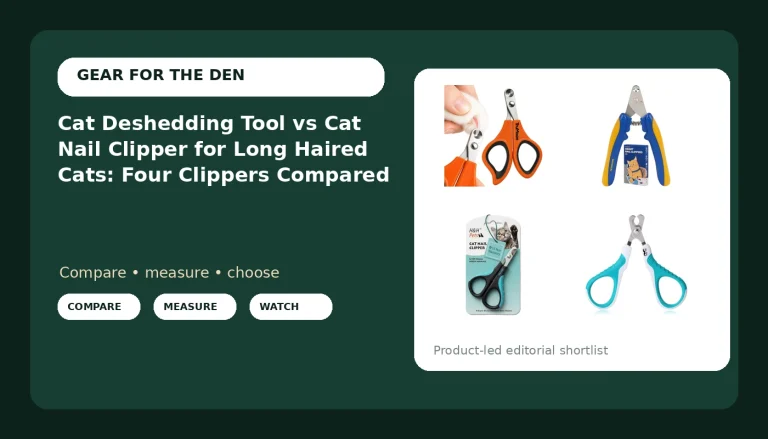
| FurorMeow Pet Deshedding Tool with Curve Blade, Cat Grooming Brush, Tight V-shaped Teeth Shedding Comb for Cats and Dogs (White, Large) | Undercoat work on a dense long coat | Curve blade and tight V-shaped teeth, listed in a large size |
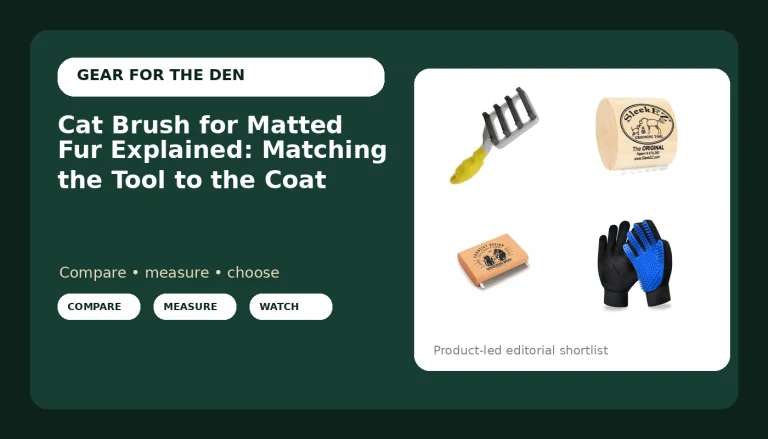
| 2 Pack Softer Self Groomer with Catnip Wall Corner Massage Comb Scratcher Grooming Brush Tool for Long & Short Fur Kitten Cats Dogs (Gray) | Cats that rub against corners on their own | Wall-corner mount, softer bristles, catnip included, two in the pack |
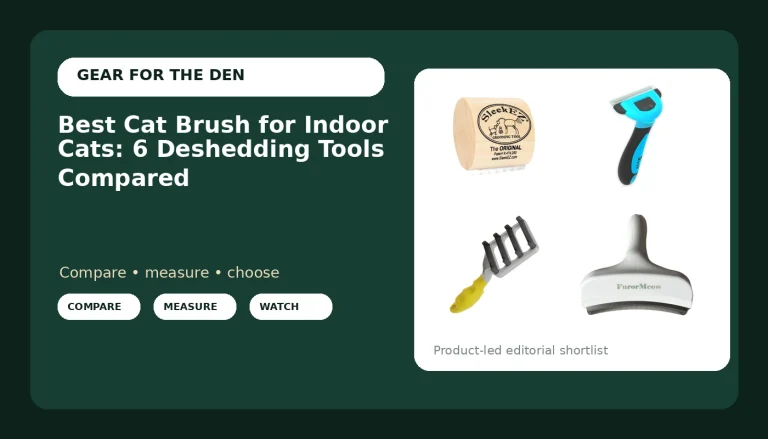
| GJEASE Cat Grooming Glove Brush 2-Pack, Pet Hair Remover Tool | Hands-on finishing and short sessions | Glove form for direct contact, two in the pack |
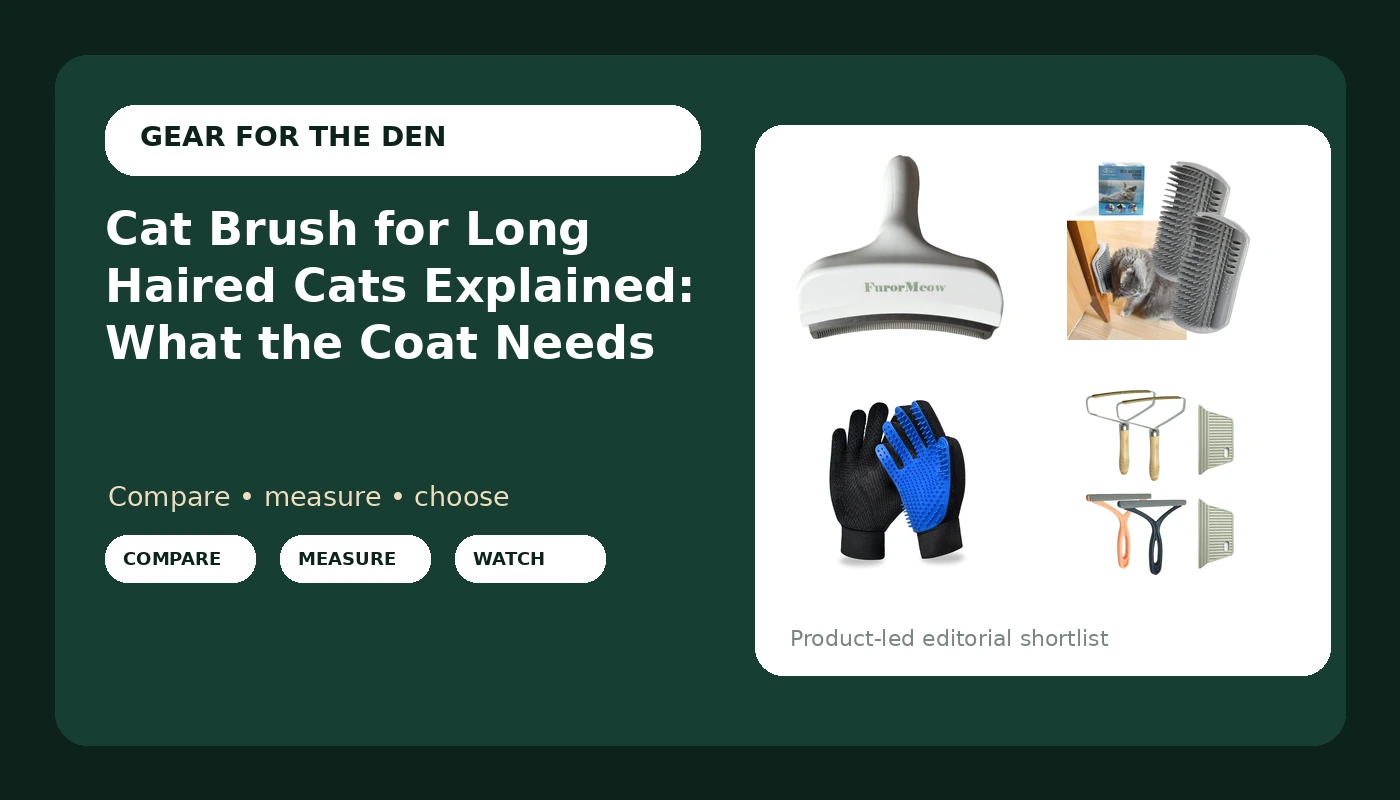
| 6-Pack Pet Hair Removal Tool, Cat Hair Remover Furniture | Hair that already reached the sofa | Six tools in one pack, listed for furniture |
The undercoat tool: FurorMeow Pet Deshedding Tool with Curve Blade, Cat Grooming Brush, Tight V-shaped Teeth Shedding Comb for Cats and Dogs (White, Large)
The case for leading with this kind of tool is simple: the undercoat is where long-haired cats get into trouble. A top coat that looks smooth can hide a felted layer underneath, and once that layer tightens, surface brushing does nothing except polish the outside. Teeth spacing is the part that matters, because the gap between teeth decides what the tool can catch. Too wide and loose undercoat slides straight through; too narrow and the comb drags against skin. The trade-off is patience. A comb takes longer than a brush, it asks the cat to hold still, and it will find mats that a soft brush glides over. That is the point. Finding a mat early is far easier than removing one later, and a tool that reaches the undercoat is the only one that will tell you the truth about the coat.
The wall-mounted option: 2 Pack Softer Self Groomer with Catnip Wall Corner Massage Comb Scratcher Grooming Brush Tool for Long & Short Fur Kitten Cats Dogs (Gray)
A wall groomer solves the handling problem rather than the undercoat problem. Many long-haired cats dislike being held still for a comb but will happily rub their cheeks and shoulders against a corner on their own schedule, which makes this the easiest daily surface removal you can set up. Mount it at roughly shoulder height for the cat, near a favorite resting spot, and let the cat discover it. Two units means one for the main room and one for wherever the cat already scratches. The limitation is worth stating plainly: softer bristles lift loose surface hair and loosen the top coat, but they do not get underneath it. Treat this as the maintenance layer of a routine, not the deep clean, and keep a comb for the days when the coat needs real work.
The hands-on option: GJEASE Cat Grooming Glove Brush 2-Pack, Pet Hair Remover Tool
Glove fit matters more than most buyers expect. A glove that sits loose will slide on the hand and the grooming surface will skid across the coat instead of following it, so the sizing question is not cosmetic. The glove is at its best as a finishing pass after a comb, and as the only option for a cat that panics at the sight of a handle. It is also the most useful tool on the legs, the chest, and the tail, where a rigid comb is awkward to angle. What it will not do is reach the undercoat, and no amount of pressing will change that. Use it for the strokes the cat enjoys, and keep the deeper work with a comb.
The cleanup option: 6-Pack Pet Hair Removal Tool, Cat Hair Remover Furniture
Long-haired cats deposit hair in places the coat never touches: the arm of a chair, a blanket, the passenger seat. Some owners reach for a roller adhesive, which lifts surface hair from fabric quickly and then needs replacing, and some prefer a reusable tool that scrapes hair into a pile you can pick up. Both approaches work on upholstery and neither does anything for the coat. The realistic split is that grooming removes hair at the source and furniture tools remove what already escaped, and a multi-pack makes the second job convenient enough that it actually happens. Keep one wherever the cat sleeps, because that is where the hair will be.
Prices and availability may change. Product images, names, and retailer links are matched to verified listings. No current price, rating, stock status, or measured result is stated here without current evidence.
How to pick a cat brush for long haired cats
Start with the coat, not the catalog. A long-haired cat carries a longer top coat over a denser undercoat, and the two layers behave differently. Shed hair from the undercoat cannot slide free the way it does on a short coat, so it tangles around the longer guard hairs and builds into mats. Every tool has to do one of two jobs: reach under the top coat and pull loose undercoat out, or smooth and separate the top coat so it stops wrapping around itself.
Bristle type is the first thing to check. Stiff metal pins with rounded tips separate the coat. Soft bristles and rubber nubs smooth the surface and suit cats with sensitive skin. Neither one replaces a comb.
Comb spacing is the second. Wide teeth open a coat without pulling, fine teeth catch what a wide comb leaves behind. One spacing rarely does both, which is part of why the ideal cat brush for long haired cats is rarely a single object.
The third is the deshedding edge. Some tools use a blade, some a row of teeth, some a rubber strip. What matters is that the working edge is dull against skin and grabs only loose hair.
Last, look for a nail guard if you are buying a comb with metal teeth. It is a small safety lip on the tips, not a license to press harder.
Coat length, undercoat, and comb spacing
The correct cat brush for long haired cats for your cat is the one matched to the coat on the day you use it, not to the picture on the box. A winter coat, a summer coat, a coat recovering after illness, and a kitten coat all respond differently, and coat length changes with age as well. A kitten that tolerated a soft brush at four months may need a comb by ten months, and a senior cat with thinning skin may need to go back to softer tools. Read the coat before you choose the tool.
Work in this order:
- Begin with a wide-toothed comb on the back, flanks, and chest to open the coat and find mats before anything drags through them.
- Move to the deshedding tool, using short strokes in the direction the coat grows, and lift the tool rather than pulling when it snags.
- Check the teeth after each pass. Hair on the teeth is hair that is no longer in the coat.
- Leave the belly, armpits, and trousers for last, when the cat is relaxed and you are nearly finished.
- Finish with a soft brush, a glove, or a damp hand to smooth the top coat and collect what is loose.
Never work through a tight mat. Mats that sit against the skin need a veterinarian or a professional groomer, not more pressure. If nail trims are also part of your routine, trimming a cat's nails without a fight covers the handling side of that job.
A grooming routine that does not become a wrestling match
Small habits matter more than the tool on the shelf.
- Keep sessions under ten minutes, and shorter for a cat that is new to grooming.
- Stop while the cat is still comfortable. A session that ends calmly is one you can repeat tomorrow.
- Do not use bathing to fix mats. Water tightens a felted coat rather than loosening it.
- Clean the comb, glove, or groomer after each session. Oil and packed fur change how the teeth behave.
- Mount a wall groomer at the cat's shoulder height and let the cat find it, rather than carrying the cat to it.
Which option should you choose?
Choose the FurorMeow Pet Deshedding Tool with Curve Blade, Cat Grooming Brush, Tight V-shaped Teeth Shedding Comb for Cats and Dogs (White, Large) when the coat is dense, the cat tolerates a comb, and the goal is getting loose undercoat out before it mats. Choose the 2 Pack Softer Self Groomer with Catnip Wall Corner Massage Comb Scratcher Grooming Brush Tool for Long & Short Fur Kitten Cats Dogs (Gray) when the cat prefers to set the pace and you want daily surface removal with no handling at all. Choose the GJEASE Cat Grooming Glove Brush 2-Pack, Pet Hair Remover Tool when the cat dislikes combs, or when you want a finishing pass that feels like petting. Choose the 6-Pack Pet Hair Removal Tool, Cat Hair Remover Furniture when the problem has already moved from the cat to the sofa, the bed, and the car seat.
No listing can tell you which tool a particular cat will accept. Coat type, skin sensitivity, and temperament decide that, and a tool that works for one long-haired cat may be rejected by another. If the coat is matted close to the skin, or the skin is red, broken, or sore, that is a veterinary question rather than a gear question.
The bottom line
The practical answer to the cat brush for long haired cats question is that the coat has two layers and the job has two halves. Loose undercoat has to come out with something that reaches it, and the surface coat has to be smoothed with something soft. A curve-bladed deshedding comb handles the first half for most long-haired cats, while a soft brush, a wall-mounted groomer, or a grooming glove handles the second, and a furniture tool handles whatever lands on the sofa in between. Buy for the coat you actually have rather than the coat in the product photo, groom in short and calm sessions, and treat mats tight against the skin as a veterinary matter instead of a brushing problem.