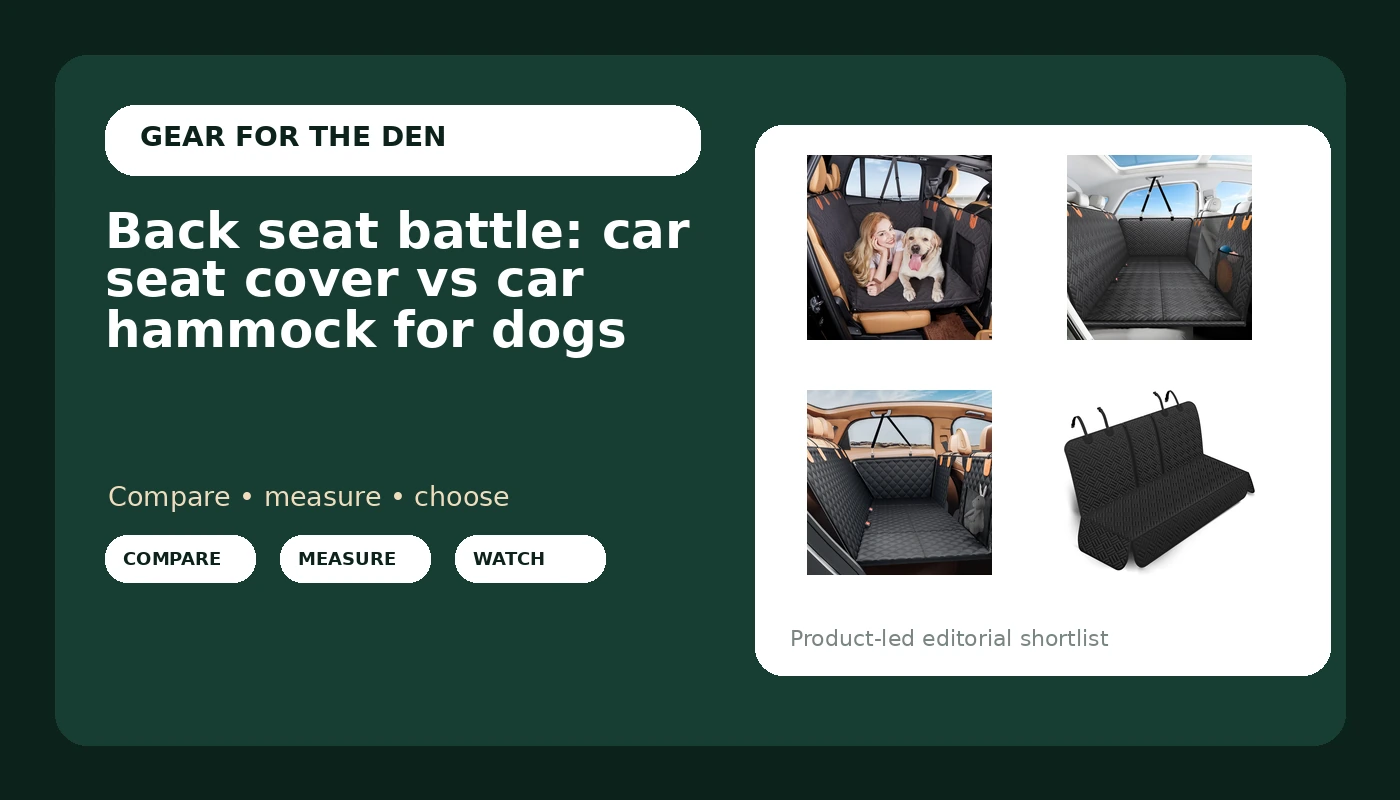
If you have ever watched a dog slide across leather during a hard stop, you already know why the car seat cover vs car hammock question matters. One approach drapes a protective layer over the back seat and lets your dog ride on the cushion. The other hangs a hammock-style barrier between the front and back seats, often with a flat bottom that bridges the footwell. The right answer depends less on marketing language and more on your dog's size, your car's interior, and how much hair, mud, and drool you are willing to clean up.
For most dog owners comparing a car seat cover vs car hammock, a hard-bottom back seat extender is the better default because it gives a large dog a stable platform and still protects the upholstery, while a basic waterproof cover is the lighter, cheaper choice for smaller dogs and quick trips.
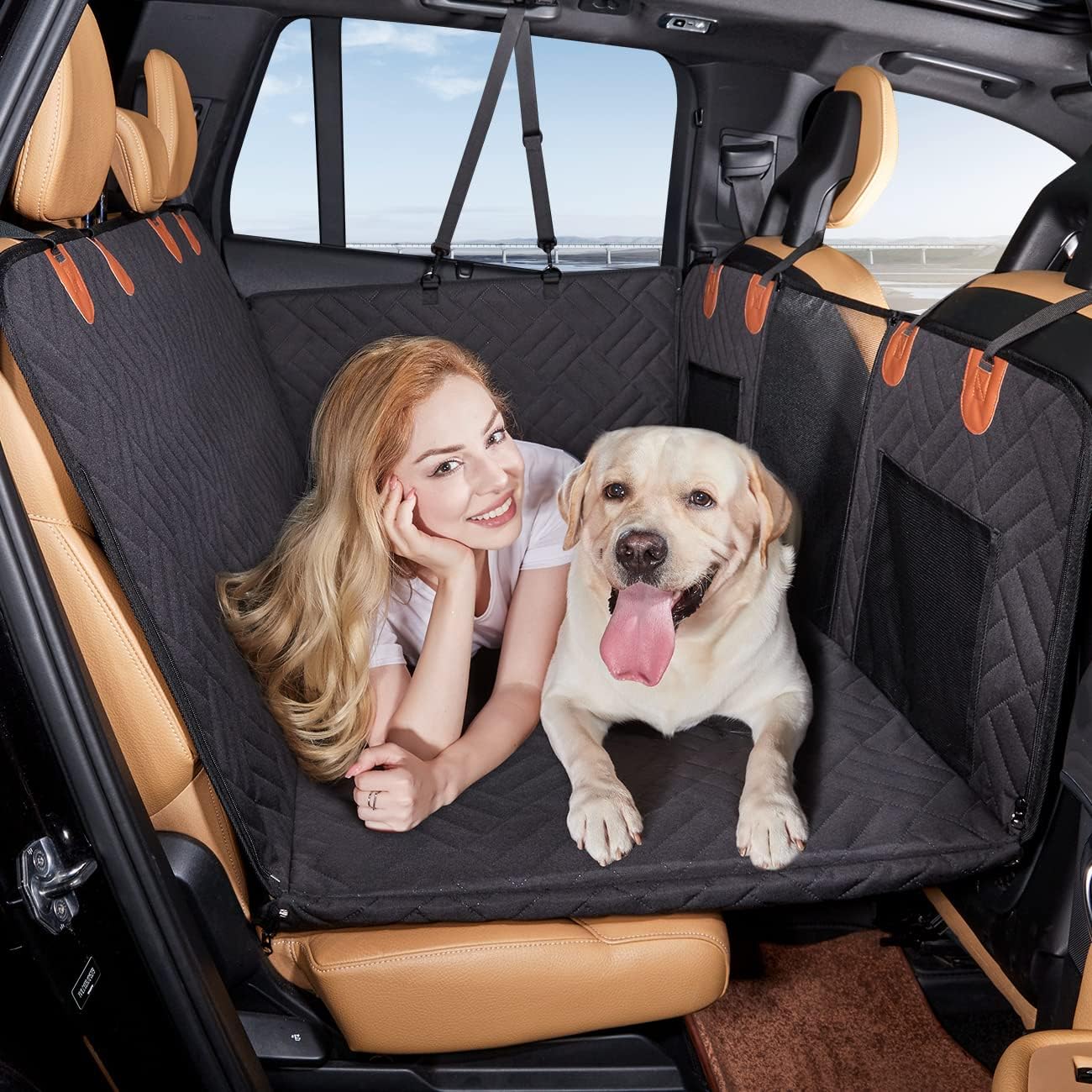
YJGF Hard Bottom Dog Car Seat Cover for Back Seat, Seat Extender for Dogs
Hard-bottom extender design with a dedicated seat extender role for larger dogs
More structure to install, remove, and store than a basic cover
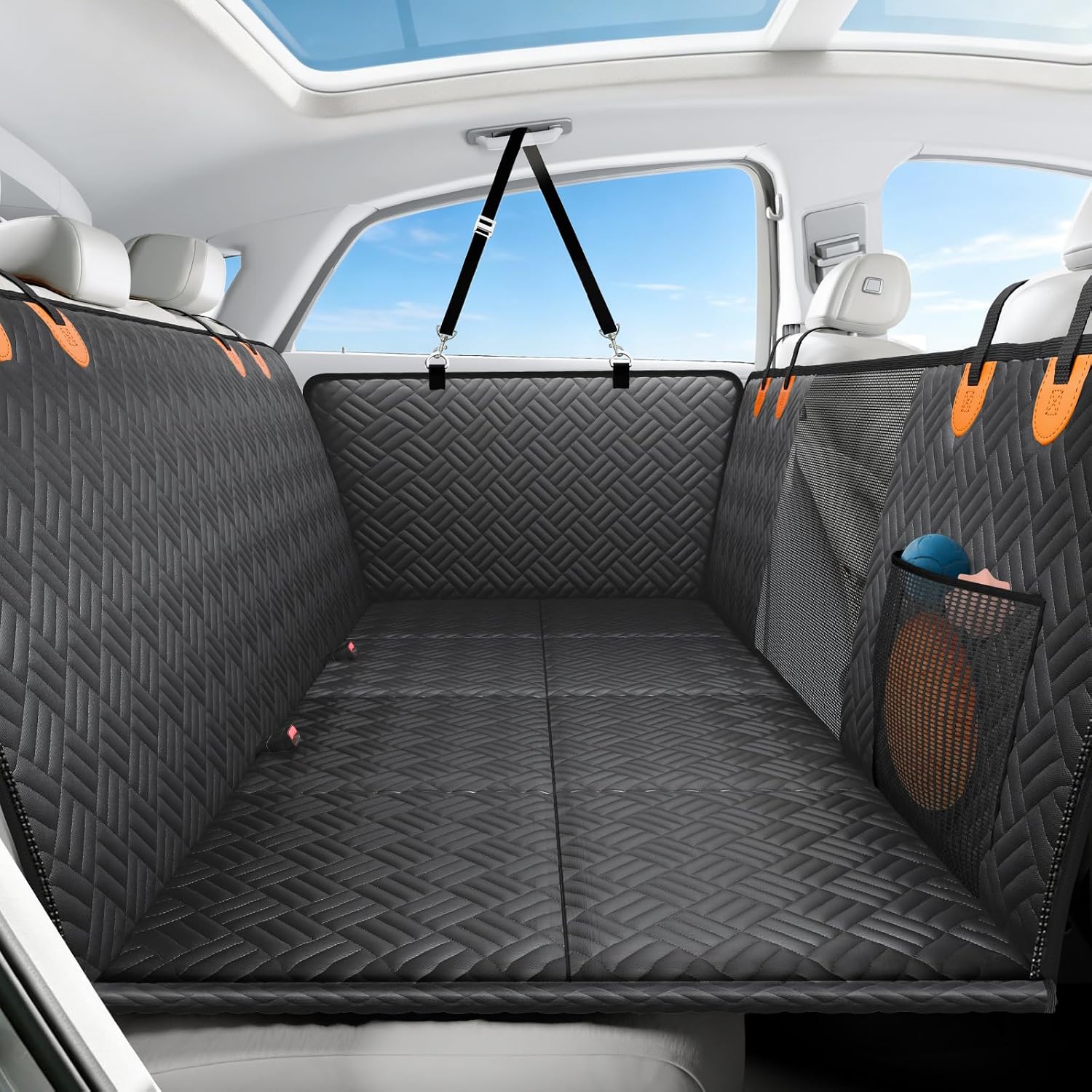
Dog Car Seat Cover for Back Seat, Hard Bottom Back Seat Extender for Dog
Hard-bottom extender layout in a straightforward package
Generic listing name makes it harder to distinguish from similar covers
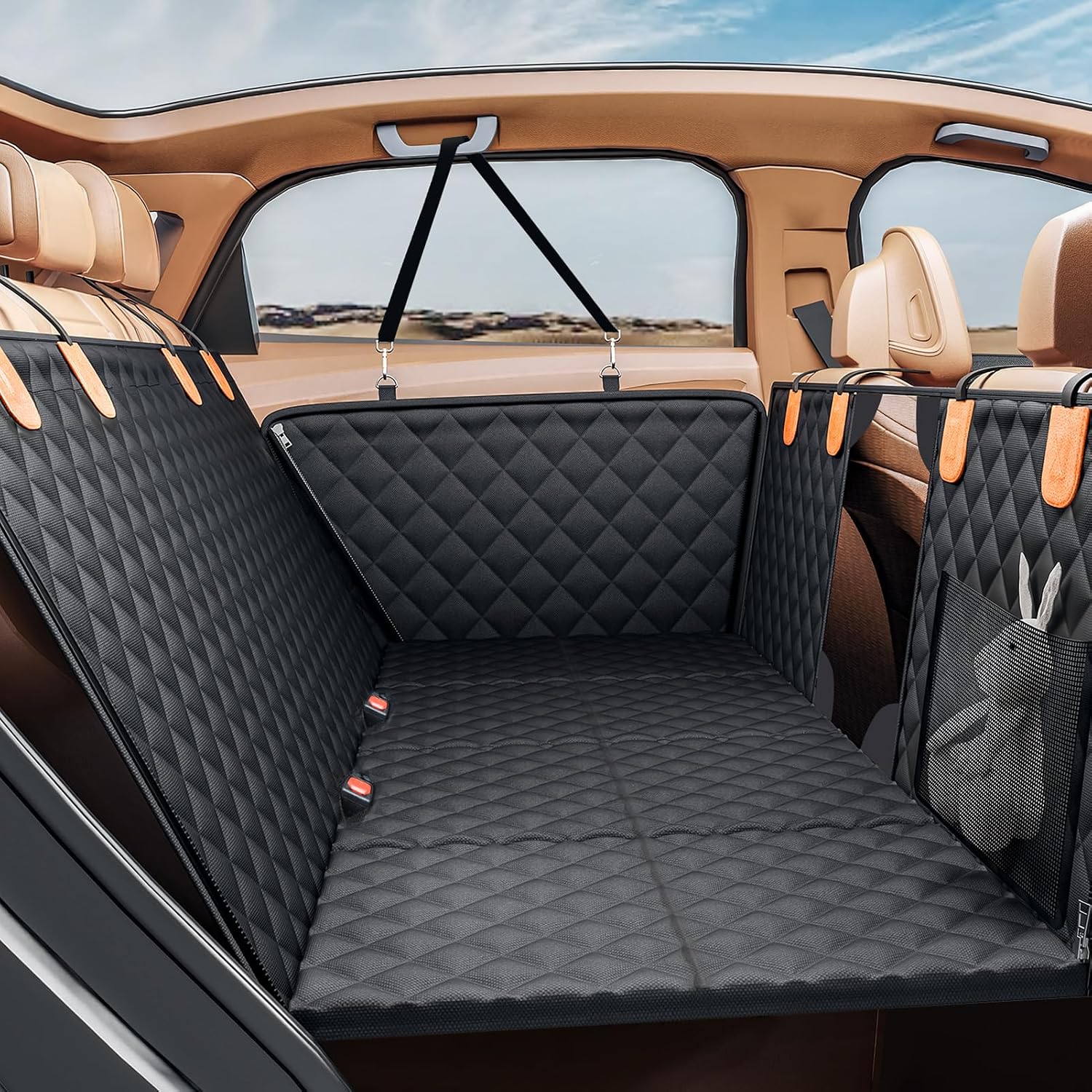
PETICON Dog Car Seat Cover for Back Seat, Hard Bottom Back Seat Extender
Branded option with a hard-bottom extender shape
The listing name does not specify size or color options
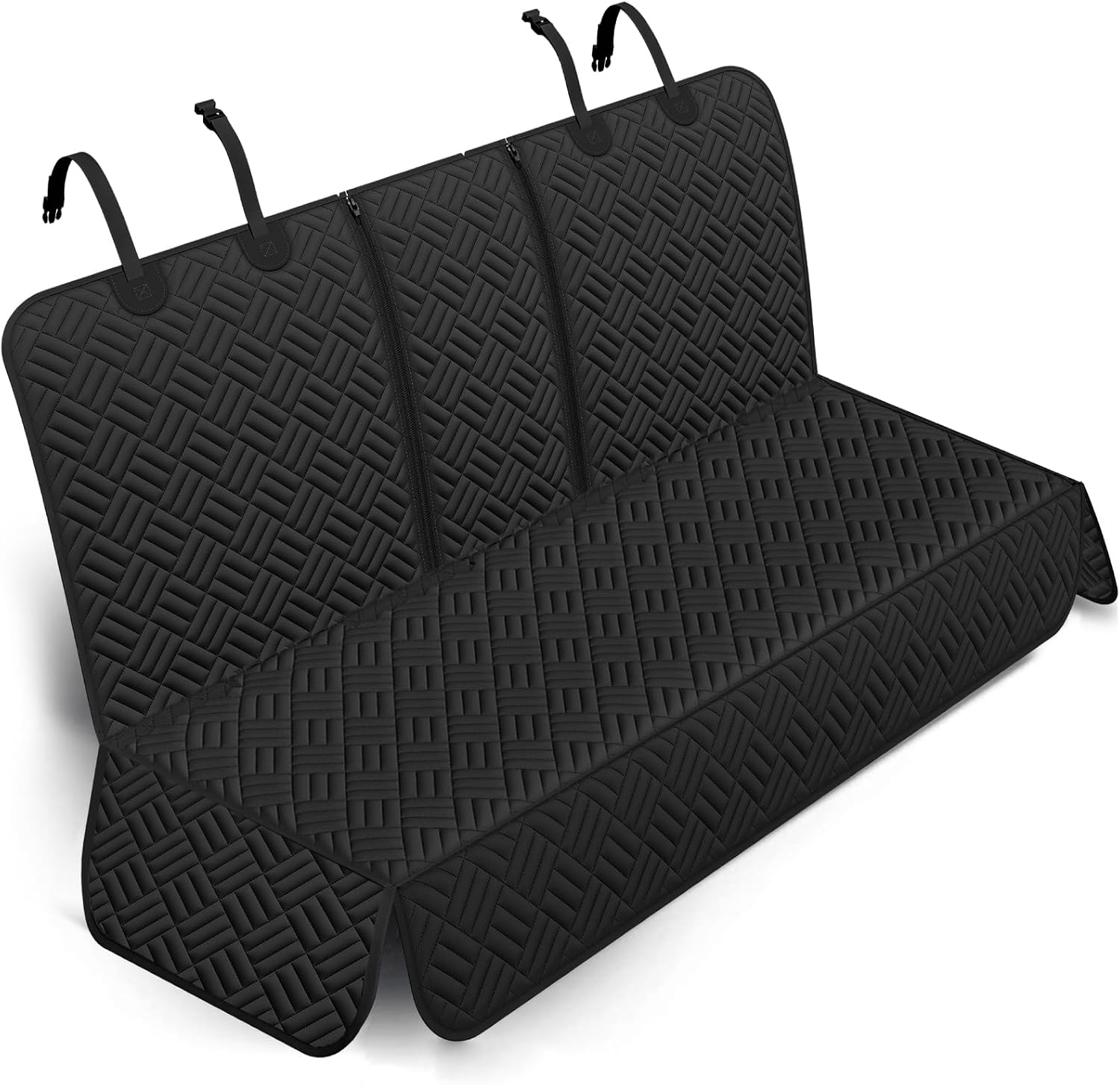
Brlako Dog Car Seat Cover for Back Seat, Waterproof 600D Oxford Protector
Waterproof 600D Oxford barrier that folds and moves easily
No hard bottom, so it does not bridge the footwell or create a flat platform
Prices and availability may change.
Car seat cover vs car hammock: what actually changes in the back seat
A car hammock and a car seat cover are not the same product, even when listings use the words interchangeably. A traditional seat cover is a fitted or semi-fitted layer that sits on top of the rear bench. It protects the upholstery from claws, dirt, and accidents, but it follows the shape of the seat. If your dog steps into the footwell, the cover does not stop them. A hammock-style cover attaches to the front headrests and the rear headrests, then hangs across the gap between the front and back seats. That barrier keeps your dog from sliding into the footwell or climbing into the front. Some hammocks also include a hard bottom panel that turns the whole back area into a flat platform.
The car hammock vs car seat cover choice is really a choice between containment and simplicity. Hammocks offer more containment and often more usable space for a large dog because they bridge the footwell. Covers offer easier installation, easier folding, and less bulk when you need the back seat for passengers. Neither is universally safer. A hammock that fits poorly can sag, and a cover that is not anchored can bunch up under a nervous dog.
For a dog that drools, sheds, or gets carsick, the hammock style usually wins on cleanup because the mess stays in the hammock basin. For a dog that rides calmly and mostly sleeps, a simple cover may be all you need. The hard-bottom models in this comparison sit between those extremes: they protect the seat and create a flat floor, but they are not the same as a soft fabric hammock.
Hard-bottom seat extenders: the flat platform approach
Hard-bottom seat extenders are the most structured option in this comparison. The YJGF Hard Bottom Dog Car Seat Cover for Back Seat, Seat Extender for Dogs is built around a rigid panel that spans the rear seat and the footwell. That design gives a large dog a continuous surface instead of a soft cushion with a hole in the middle. For dogs that pace, turn around, or need to lie flat on long drives, the platform can make the difference between a restless trip and a settled one. YJGF Hard Bottom Dog Car Seat Cover for Back Seat, Seat Extender for Dogs
The Dog Car Seat Cover for Back Seat, Hard Bottom Back Seat Extender for Dog takes the same general idea and presents it as a straightforward hard-bottom extender. The name is generic, but the category is clear: a rigid base, a protective cover, and a shape that fills the back seat footwell. This is the kind of product to consider when you want the platform effect without paying for a brand name. Dog Car Seat Cover for Back Seat, Hard Bottom Back Seat Extender for Dog
The PETICON Dog Car Seat Cover for Back Seat, Hard Bottom Back Seat Extender follows the same hard-bottom formula with the PETICON name attached. It is the same category of product: a structured back seat cover with a rigid lower panel. PETICON Dog Car Seat Cover for Back Seat, Hard Bottom Back Seat Extender
The appeal of a hard bottom is not just comfort. It also keeps the dog from dropping a paw into the footwell when the car turns. A soft cover lets gravity win. A rigid panel spreads the dog's weight and keeps the surface level. That matters most for dogs over 50 pounds, dogs with long legs, and dogs that like to stand up and look out the window. The trade-off is that a hard-bottom extender is a commitment. You need somewhere to store it when it is not installed, and you need to check that it does not interfere with seat belts or cargo space.
All three hard-bottom options share the same basic trade-off. They are bulkier to install and store than a simple cover, and they take up more space when folded. In exchange, they give your dog a stable surface that does not collapse into the footwell. If you have a large dog, a senior dog with joint issues, or a dog that refuses to settle on a soft seat, that stability is the main reason to choose this category.
Waterproof Oxford protectors: the simple barrier approach
The Brlako Dog Car Seat Cover for Back Seat, Waterproof 600D Oxford Protector is the opposite approach. It is a protective barrier, not a platform. The 600D Oxford fabric is a common choice for pet seat covers because it is woven, durable, and water resistant. The waterproof claim matters for muddy paws, spilled water bowls, and dogs that drool on every turn. Brlako Dog Car Seat Cover for Back Seat, Waterproof 600D Oxford Protector
This style is easier to live with in some ways. It folds flat, stores in a trunk pocket, and goes back on quickly when you need it. It is also the easiest to move between vehicles. The limitation is structural. Without a hard bottom, the cover does not bridge the footwell. A dog that steps forward will still find the gap. A dog that likes to stretch out may end up on a surface that slopes into the footwell rather than a flat platform.
For small dogs, calm dogs, and short trips, that trade-off is often fine. For a large dog that needs room to lie down, the lack of a platform is the main drawback. This is why the waterproof Oxford cover works best as a first cover, a backup cover, or a dedicated cover for a second car.
The difference between car seat cover and car hammock in daily use
The difference between car seat cover and car hammock shows up most clearly on a normal Tuesday, not on a road trip. A cover goes on in a minute, wipes clean, and lets you fold the seats down without removing much hardware. A hammock takes a little longer to clip to the headrests, but it contains the dog and the mess in one zone. If your dog sheds heavily, the hammock keeps hair out of the footwell and off the door panels. If your dog is clean and calm, the cover is less fuss.
There is also the passenger question. A hammock that spans the back seat can make the rear bench less usable for people. A cover that lies flat can be folded back or removed quickly when a passenger needs the seat. Hard-bottom extenders sit in the middle: they are more work to remove than a cover, but they create a defined dog zone that is easy to understand.
Another daily difference is how each product handles motion. A soft cover can bunch or slide when a dog shifts weight. A hammock can sway if the straps are loose. A hard-bottom extender can rattle or feel stiff if it is not seated properly. None of these are deal-breakers, but they are the small annoyances that decide whether you leave the product installed or stuff it in the garage.
Fit, installation, and the details that matter
Before you choose, measure your back seat. You need the width between the doors, the depth from the seat back to the seat edge, and the distance from the seat edge to the floor. A hard-bottom extender has to match that footwell depth or it will not sit level. A hammock has to match the width or the sides will sag. A simple cover is more forgiving, but it still needs to clear the headrests and any built-in armrests or cup holders.
Check the attachment points. Most hammocks and covers use headrest straps, seat anchors, or both. If your rear headrests are not removable, look for loops that wrap around the posts rather than clips that need a bar. If you have a split bench, a one-piece cover may block the fold-down armrest or the seat release. If you have child seats installed, a thick hard-bottom panel can make the anchor points harder to reach.
Material matters less than fit. A 600D Oxford cover with loose straps will slide more than a well-anchored basic cover. A hard-bottom extender with the wrong footwell depth will tilt more than a soft hammock. Look for adjustable straps, reinforced stitching at the anchor points, and a surface that can be wiped without soaking through. If the listing does not show the underside, ask how the panel stays in place. If the listing does not show the headrest loops, assume you will need to improvise.
Think about the dog, too. A senior dog with mobility issues may struggle to step up onto a hard platform. A puppy may chew the straps. A dog that wears a harness in the car may need a tether that works with the cover rather than against it. If you are also shopping for walking gear, keep in mind that a car seat cover or car hammock does not change chest strap fit, front clip position, leash length, GPS range, battery life, traction sole, boot sizing, or cooling fabric. Those are separate decisions for the walk itself.
What the trade-offs look like
The clean way to compare these products is to rank what you value most. Protection is table stakes. All four options keep mud, hair, and claws off the upholstery. Stability is where they separate. The hard-bottom extenders from YJGF, the generic hard-bottom model, and PETICON create a flat surface. The Brlako waterproof Oxford protector does not.
Cleanup is another split. A waterproof Oxford cover can be wiped down or hosed off. A hard-bottom extender often has a fabric surface over a rigid panel, so it may need more careful cleaning around the edges. A hammock with a hard bottom can trap crumbs in the seams, but it also keeps mess contained in one area.
Storage and passenger flexibility favor the simple cover. Installation speed favors the cover. Containment and large-dog comfort favor the hammock and the hard-bottom extender. If you are honest about your dog's behavior, the choice usually becomes obvious. A dog that tries to climb into the front seat needs a hammock or a hard-bottom extender with raised sides. A dog that sleeps the whole way needs a cover.
Should you buy a hard-bottom extender or a basic cover first?
If you are buying for one dog and one car, start with the hard-bottom extender if your dog is large, anxious, or prone to pacing. The YJGF version, the PETICON version, and the generic hard-bottom model all deliver the platform design. The flat surface is the feature you will notice every trip.
If your dog is small, calm, or mostly rides short distances, start with the Brlako waterproof Oxford protector. It does the core job, it is easy to store, and it leaves the back seat more usable for passengers. You can always add a hammock later if your dog starts sliding into the footwell or shedding more than you expected.
The mistake to avoid is buying a soft cover for a dog that needs a platform, or buying a bulky hard-bottom extender for a dog that sleeps on the seat and never moves. Match the product to the dog, not to the photo on the listing.
What to consider next
Once the back seat is handled, the next decisions are usually about the walk itself. A dog that rides well in the car may still need a better harness fit, a reflective leash for evening walks, or a cooling mat for summer pavement. Those are separate purchases, and they should be judged on their own terms. The car seat cover vs car hammock question is only about the ride.
If you are still unsure, measure your seat, watch how your dog rides for one week, and write down what actually bothers you. Hair on the seats, a dog in the footwell, a dog in the front seat, and a dog that cannot lie flat are four different problems. Each one points to a different product. The right choice is the one that solves the problem you actually have.