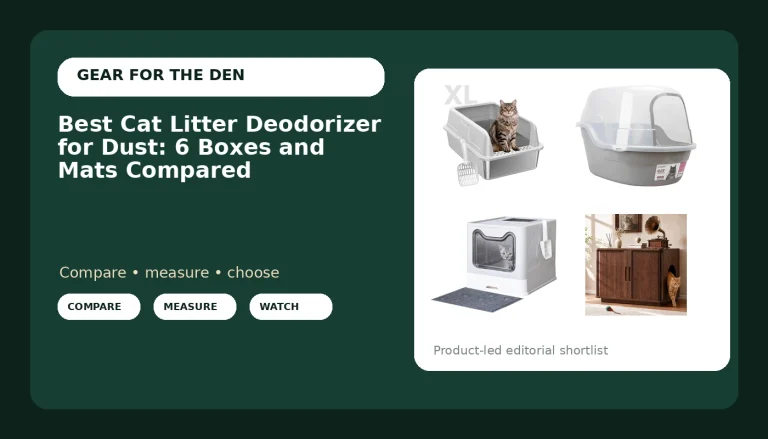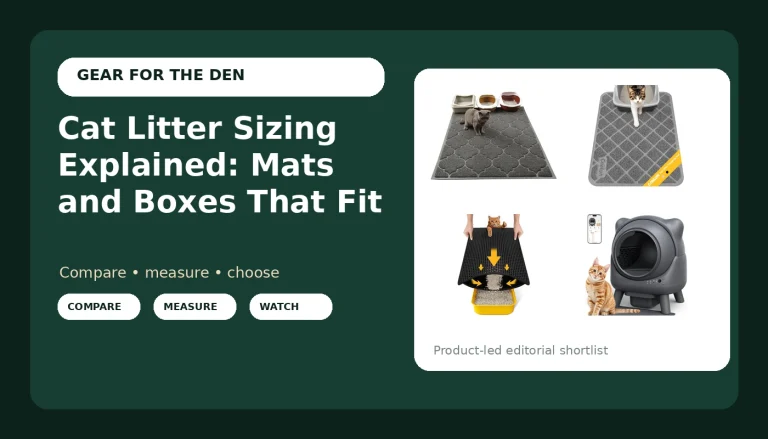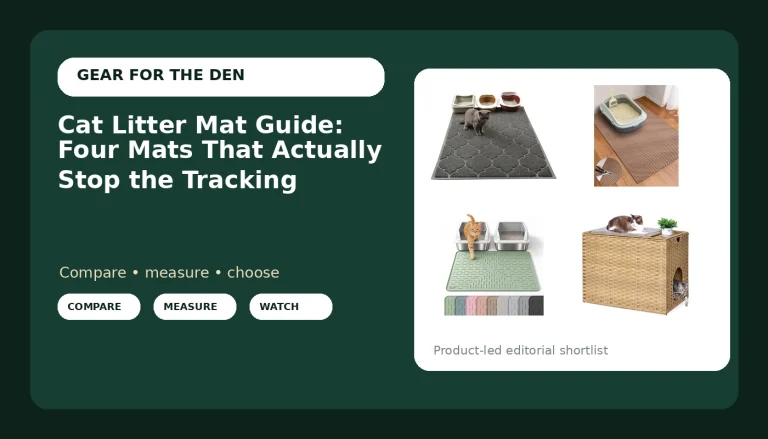
Large cats make large messes. A Maine Coon or a heavy domestic shorthair produces more urine per visit than a small cat, stands taller in the box, and kicks more litter over the rim, so the smell that follows is rarely about the litter alone. That is why a search for the correct cat litter deodorizer for large cats tends to end with questions about furniture, mats, and automatic boxes rather than about a single sprinkle-in powder.
This guide covers what actually controls odor in a home with big cats: box size and entry height, litter depth, clumping speed, mat texture, and how waste is stored between cleanings. The four products below cover the pieces most owners end up buying, and each one solves a different part of the problem.
Quick answer
No single accessory deodorizes a box for a large cat. Odor control comes from a box the cat can turn around in, enough litter depth to bury waste completely, a mat that keeps tracked granules off the floor, and a waste container that seals or gets emptied daily. In a multi-cat home, the largest single upgrade is usually an automatic box that scoops on a schedule, with an enclosure or a mat handling the mess around it. Powders and scented additives mask a smell that scooping would have removed, and they do nothing about the litter that has already been kicked onto the carpet.
Four useful options
| Model | Best fit | What stands out |
|---|---|---|
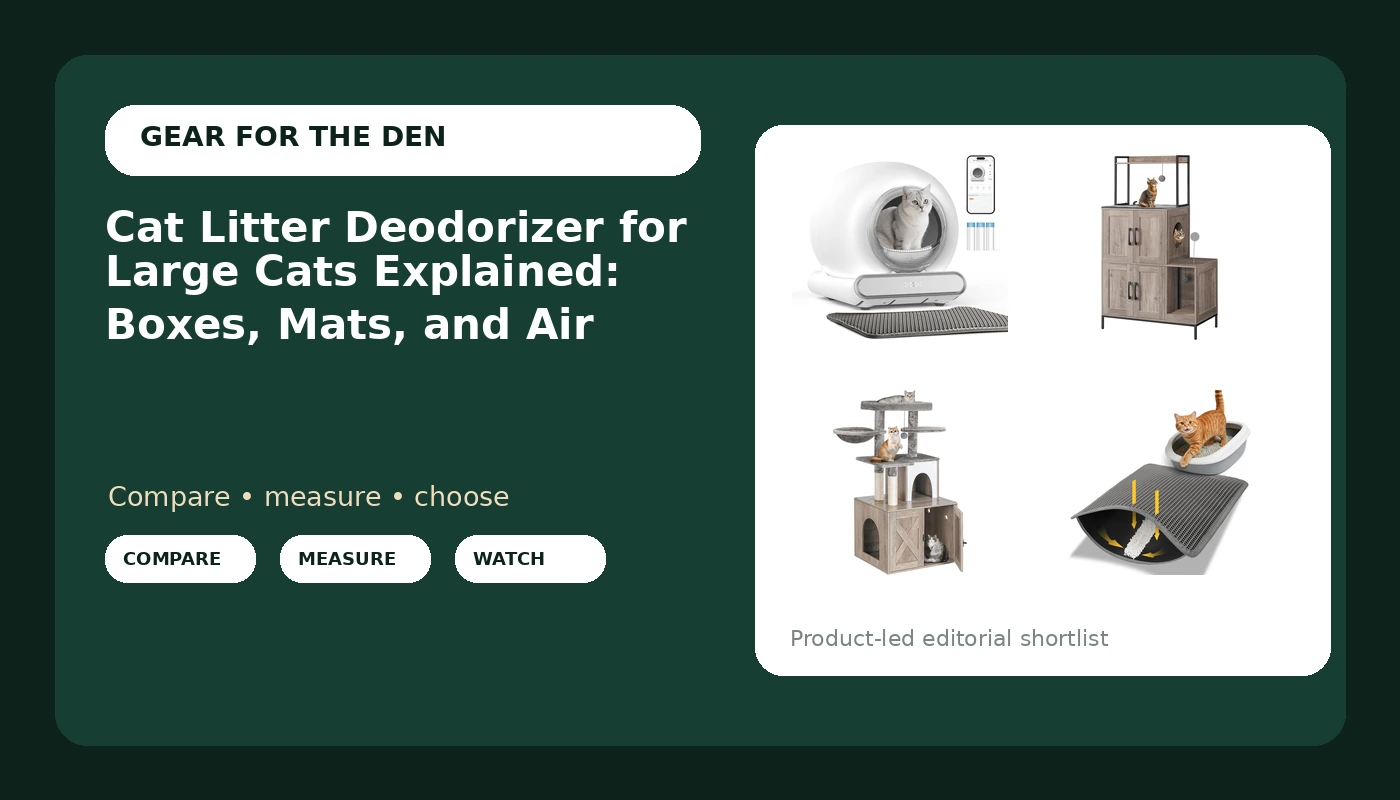
| Self Cleaning Litter Box, Integrated Safety Automatic Cat Litter Box Self Cleaning 65L+9L for Multiple Cats, App Control, Odor Removal, Includes Mat & Liner (3 Rolls) – White | Multi-cat homes that want scooping handled automatically | 65L+9L capacity described for multiple cats, app control, odor removal, and a mat plus three rolls of liners included |
| HOOBRO Cat Litter Box Enclosure Furniture, 2 in 1 Hidden Litter Box Furniture with Shelf, Double Litter Box Cabinet with 2 Dangling Plush Balls and 1 Toy Ball, Greige and Black BG78MW01 | Two cats sharing one piece of furniture | 2 in 1 hidden design with a shelf and a double litter box cabinet |
| Snughome Cat Litter Box Enclosure with Tree Tower and Condo, Hidden Washroom Furniture with Sisal Scratching Post and Soft Plush Perch, Wooden Cat Furniture with Multiple Platforms, Grey | Homes that want the box hidden inside cat furniture | Sisal scratching post, soft plush perch, and multiple platforms |
| Conlun Cat Litter Trapping Mat for Small Spaces, 23.6"x14.6" Space-Saving Litter Box Floor Mat, Hexagon Grids & Anti-Leak Base, Machine Washable, Non-Slip Kitty Matt for Apartment, Gray | Apartments and tight floor space | Hexagon grid texture with an anti-leak base, machine washable and non-slip |
The automatic option: Self Cleaning Litter Box, Integrated Safety Automatic Cat Litter Box Self Cleaning 65L+9L for Multiple Cats, App Control, Odor Removal, Includes Mat & Liner (3 Rolls) – White
An automatic box changes the odor equation because waste leaves the litter bed on a schedule instead of waiting for you to notice it. The trade-offs are real: the unit needs power and a stable app connection, the cat has to accept the motion, and the waste drawer has to be emptied on its own rhythm. Give a large cat time to investigate the new box before you retire the old one, and keep a manual box in place during that transition.
The double-cabinet option: HOOBRO Cat Litter Box Enclosure Furniture, 2 in 1 Hidden Litter Box Furniture with Shelf, Double Litter Box Cabinet with 2 Dangling Plush Balls and 1 Toy Ball, Greige and Black BG78MW01
A cabinet with two compartments lets you run two boxes in one footprint, which matters in a multi-cat home where the usual advice is one box per cat plus one. Check the interior dimensions against your cat before ordering, and confirm the entry height suits a tall cat that stands while it digs. Ventilation and daily scooping still decide how the cabinet smells, because an enclosure hides the box but does not filter it.
The furniture-first option: Snughome Cat Litter Box Enclosure with Tree Tower and Condo, Hidden Washroom Furniture with Sisal Scratching Post and Soft Plush Perch, Wooden Cat Furniture with Multiple Platforms, Grey
This is the option for a household that would rather the box disappear into the cat furniture than sit against a wall. The sisal post and the perch give the cat a reason to spend time in that corner, which can help acceptance. The trade-off is a single litter compartment and a footprint that needs a clear stretch of wall, so measure the room before you commit.
The tracking-control option: Conlun Cat Litter Trapping Mat for Small Spaces, 23.6"x14.6" Space-Saving Litter Box Floor Mat, Hexagon Grids & Anti-Leak Base, Machine Washable, Non-Slip Kitty Matt for Apartment, Gray
Tracking is the part of odor control that has nothing to do with the box itself. Litter that leaves the box gets crushed into carpet and carries the smell of the box across the room, which is why a litter tracking mat guide usually starts with placement rather than material. The trade-off is that a small mat covers a small landing zone, and it needs shaking out and washing on a regular schedule.
Prices and availability may change. Product images, names, and retailer links are matched to verified listings. No current price, rating, stock status, or measured result is stated here without current evidence.
What a cat litter deodorizer for large cats actually has to fix
A cat litter deodorizer for large cats explained in plain terms comes down to three levers: how much litter sits in the box, how fast that litter clumps, and how quickly waste leaves the house. Large cats add a fourth lever, because a box that is too small makes the cat stand in its own waste or hang over the edge, and both spread odor well beyond the pan.
There is no single ideal cat litter deodorizer for large cats, because odor is produced continuously and only removed by scooping, sealing, or ventilation. Box size sets the foundation: the interior should be long enough for the cat to turn around and dig without its head touching the rim. Entry height decides whether a tall cat walks in comfortably or steps over a wall with its litter. Litter depth gives enough material to bury and clump before urine reaches the bottom of the pan, where it is far harder to remove. Clumping speed decides how long ammonia sits in open air, and odor control also depends on how often the waste drawer, bin, or bag leaves the room.
The last piece is airflow. A box tucked into a closed cabinet with no air movement holds odor the way a closed room does, which is why enclosures work best when they are cleaned often and left slightly open when the house is quiet. Adding a scented powder on top of a full pan does not fix any of these levers; it just puts a second smell on top of the first.
Matching box size, entry height, and sensor range
Work through these steps before you buy anything, and write the numbers down so you can compare listings without guessing.
- Measure your cat from the base of the tail to the tip of the nose, then look for interior space longer than that measurement.
- Check the entry height against how your cat enters a box, because a tall cat and an older cat need very different openings.
- Plan the litter depth so the cat can dig and cover without scraping the floor of the pan.
- Choose a litter with a fast clumping speed and scoop at least twice a day, since clumping only helps once waste is out of the box.
- For an automatic box, read the sensor range and the weight limits in the listing, and keep a manual box in place while the cat adjusts.
The order matters. Size and entry first, then litter, then automation. Automation is the only step that changes how often the work happens, and it is also the step a nervous cat is most likely to reject at first, so plan for a slow introduction rather than an overnight swap.
Practical setup for odor control with big cats
- Scoop at least twice a day, and more often in a home with several cats.
- Keep one box per cat plus one, and spread them across different rooms instead of lining them up in a row.
- Wash the box with unscented soap, because scented cleaners add a smell rather than removing one.
- Empty the waste drawer or sealed bin daily, since a full container becomes a room-scale odor source.
- Shake out and wash the mat weekly, and replace the litter completely on a schedule rather than topping it up forever.
A mat texture that traps granules is useful only if you empty it, and the same is true of an enclosure: it hides the box, but it does not clean it. Whatever you add around the box, the scoop is still doing the work.
Which option should you choose?
Choose the Self Cleaning Litter Box when you want scooping handled on a schedule and the household has more than one cat. Choose the HOOBRO Cat Litter Box Enclosure when you need two boxes in one footprint and want them behind cabinet doors. Choose the Snughome Cat Litter Box Enclosure when the box has to share space with cat furniture and a scratching post. Add the Conlun Cat Litter Trapping Mat when tracked litter, not the box itself, is the mess you notice most.
None of these products removes the need to scoop, and none of them substitutes for a box that fits the cat. Dimensions, litter type, and household layout decide the result far more than branding does, so confirm interior measurements and entry openings against your own cat before ordering.
The bottom line
A cat litter deodorizer for large cats is a system, not a spray. Start with a box big enough for the cat to turn around in, fill it deep enough to bury and clump, scoop at least twice a day, and keep the waste out of the room. The Self Cleaning Litter Box covers the scooping on a cycle and describes capacity for multi-cat homes, the HOOBRO and Snughome enclosures hide the setup inside furniture, and the Conlun mat catches the litter that would otherwise travel through the apartment. Match the pieces to your space, and odor control stops being a daily emergency.