Algae appears in nearly every freshwater tank at some point, and the first thing many keepers want to change is the aquarium filter for algae control. That instinct is understandable but incomplete. A filter moves water and holds the media that converts ammonia and nitrite; it does not scrape green film off glass or starve algae of the light and nutrients it uses. When algae keeps returning, the imbalance is usually in light duration, feeding, stocking, or water change routine, with filtration playing a supporting role. This guide covers what the filter genuinely contributes, and what the rest of the tank has to handle.
Quick answer
A different filter rarely fixes an algae problem by itself. If you came here wanting the aquarium filter for algae explained in one line, it is this: the filter manages waste, and waste management is only part of the picture. What fixes algae is a combination of factors, starting with tank volume matched to the fish you keep, a flow rate high enough that water actually passes through every filtration stage, lighting that runs on a fixed schedule instead of whenever someone walks past the tank, and a maintenance routine that removes the nutrients algae feed on. The filter still matters, because it determines how many gallons per hour move through the media and how much debris stays trapped instead of breaking down in the water. When you are starting a new tank, a kit that bundles a tank, pump, and lighting removes one decision. On a tank that already runs, lighting control and stable temperature are usually the higher-value additions.
Four useful options
| Model | Best fit | What stands out |
|---|---|---|
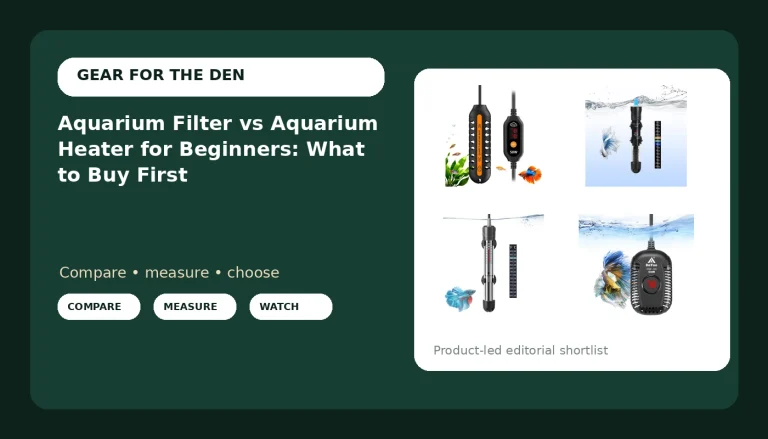
| Coospider 20 Gallon Glass Fish Tank, Aquarium Starter Kit, Simple Self-Cleaning Aquarium with 3-Color LED Lights, with Quiet Filter Pump, with Temperature Monitoring for Fish, Shrimp, Kids Gift Ideas | A first 20 gallon freshwater setup | Tank, three-color LED lighting, filter pump, and temperature monitoring in one bundle |
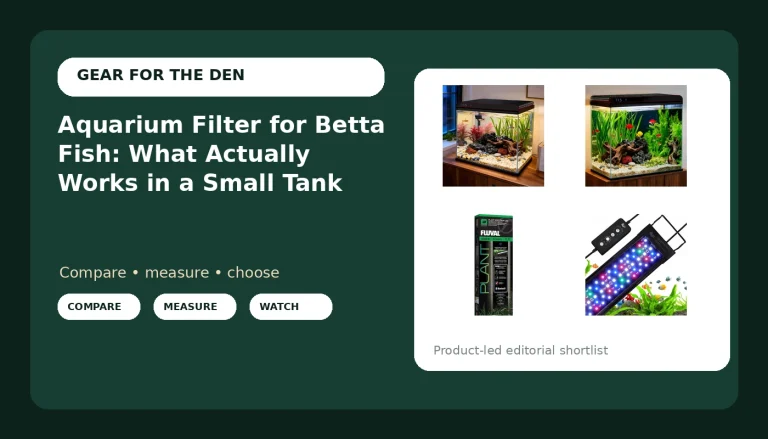
| Coospider 10 Gallon Glass Fish Tank, Aquarium Starter Kit, Simple Self-Cleaning Aquarium with 3-Color LED Lights, Quiet Filter Pump, Temperature Monitoring for Fish, Shrimp, Kids Gift Ideas | Smaller spaces and a lower-volume first tank | The same starter-kit approach in a 10 gallon glass tank |
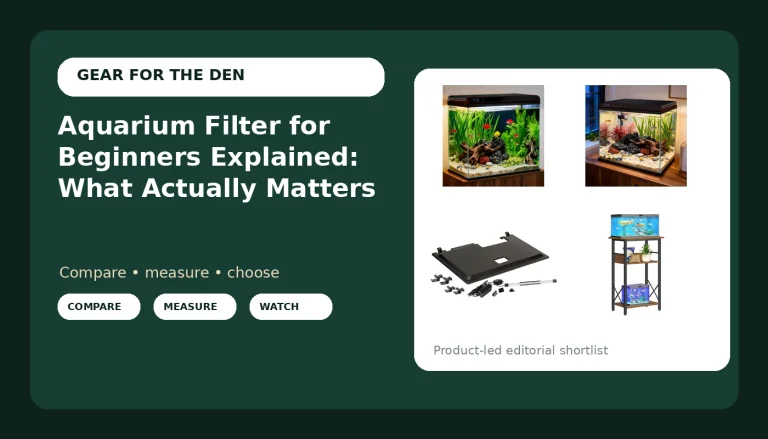
| KINGYEENUO Aquarium Heater 50W, 20 Gallons Tank Submersible Aquarium Heater, Temperature Adjustable, Betta Turtle/Fish Tank Heater, Built-in Thermostat Control, with Extra Sucker Cup | Holding a steady temperature in a tank around 20 gallons | Adjustable setting, built-in thermostat control, submersible body, spare sucker cup |
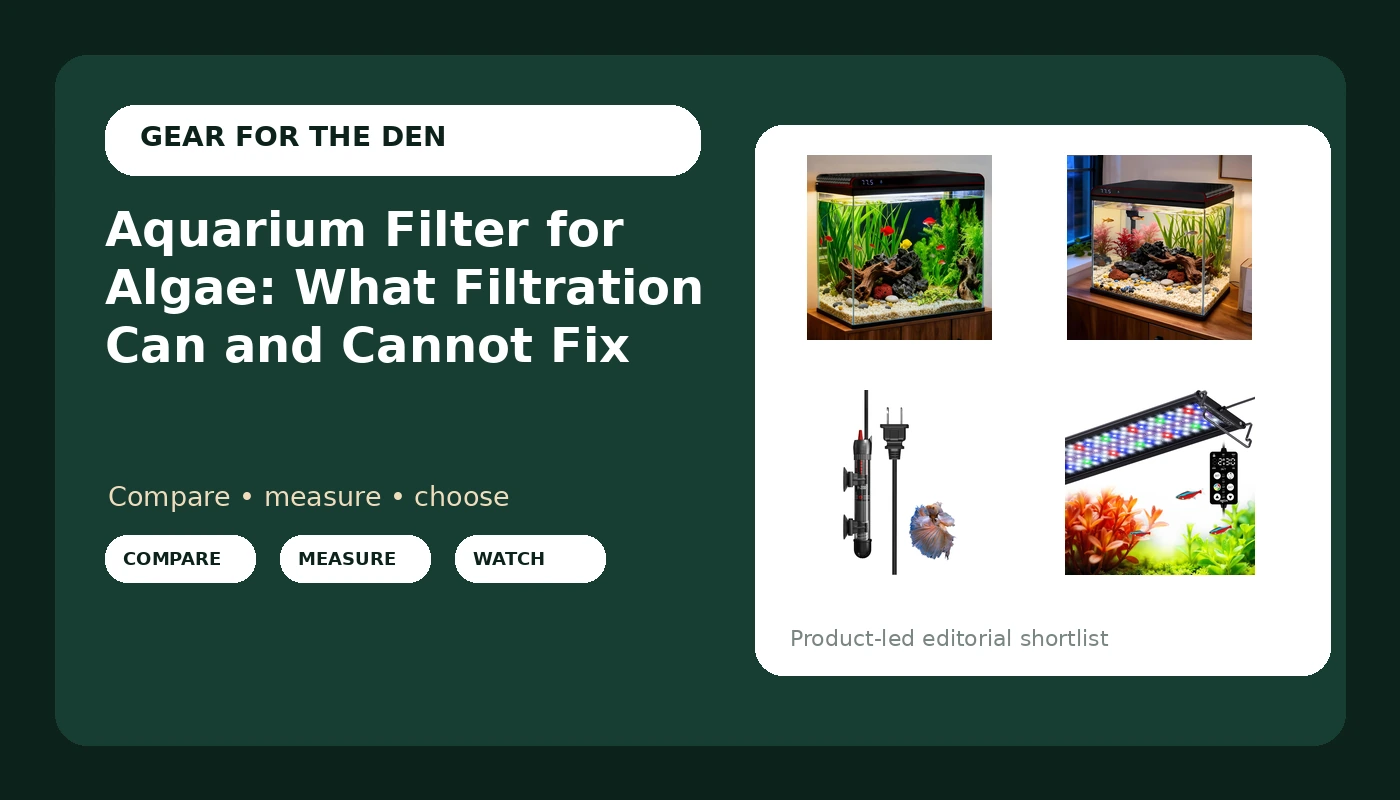
| SEAOURA LED Aquarium Light with 24/7 Timer for 18-24in Fish Tank | Putting lighting on a predictable schedule | A 24/7 timer built into a fixture sized for 18 to 24 inch tanks |
The 20 gallon starter: Coospider 20 Gallon Glass Fish Tank, Aquarium Starter Kit, Simple Self-Cleaning Aquarium with 3-Color LED Lights, with Quiet Filter Pump, with Temperature Monitoring for Fish, Shrimp, Kids Gift Ideas
The trade-off with a bundled kit is choice. Tank volume and the included pump arrive as a package, so the flow rate is whatever the kit provides rather than something you selected. For a 20 gallon tank that is usually workable, because a modest turnover still moves water through the media and past the heater. The bigger variable is you. A 20 gallon tank tolerates a missed water change better than a small one, but it still accumulates nitrate if feeding is generous.
The 10 gallon starter: Coospider 10 Gallon Glass Fish Tank, Aquarium Starter Kit, Simple Self-Cleaning Aquarium with 3-Color LED Lights, Quiet Filter Pump, Temperature Monitoring for Fish, Shrimp, Kids Gift Ideas
Smaller tank volume cuts both ways. A 10 gallon tank is easier to place, cheaper to light, and quicker to empty and refill, which makes frequent partial water changes realistic. That same small volume means one overfeeding session raises nitrate faster and swings temperature more quickly. If you want a tank where algae stays manageable through simple habits, the smaller kit rewards consistency rather than extra equipment.
The temperature control: KINGYEENUO Aquarium Heater 50W, 20 Gallons Tank Submersible Aquarium Heater, Temperature Adjustable, Betta Turtle/Fish Tank Heater, Built-in Thermostat Control, with Extra Sucker Cup
Temperature stability is often overlooked in algae discussions. A tank that swings between warm days and cool nights stresses fish, and a stressed fish plus heavy feeding is a recipe for excess nutrients. Wattage and thermostat range matter more than branding here: a 50W heater is listed for around 20 gallons, and a larger tank would need a higher wattage to hold the same setting. This heater is the smallest item in this group and the easiest one to add to a tank that already has filtration.
The lighting control: SEAOURA LED Aquarium Light with 24/7 Timer for 18-24in Fish Tank
Lighting is where most algae problems are actually decided. The kelvin rating of a fixture describes the color of the light it produces, not how much algae it will cause, but the number of hours it runs each day does. A 24/7 timer makes the photoperiod repeatable, which is what plants and fish respond to, and what keeps a tank from receiving fourteen hours of light because nobody turned it off. If your current light has no timer, adding one is cheaper than replacing a filter.
Prices and availability may change. Product images, names, and retailer links are matched to verified listings. No current price, rating, stock status, or measured result is stated here without current evidence.
What an aquarium filter for algae problem can and cannot fix
Filters do three jobs, and only one of them touches algae directly. Mechanical filtration traps floating debris so it does not break down into dissolved nutrients. Biological filtration houses the bacteria that convert ammonia into nitrite and then into nitrate, which is the compound that accumulates and feeds algae. Chemical media can pull some dissolved compounds out of the water, but it is a supplement, not a cure. None of these stages removes light, and light is the fuel algae cannot do without.
Where the filter does change the outcome is flow. Flow rate, measured in gallons per hour, sets how quickly the whole tank volume passes through the media. A pump that is too small leaves slow-moving corners where debris settles, and those dead spots are where algae tends to start. A pump that is too large for a small tank pushes fish around and can make feeding difficult. Most freshwater setups sit somewhere between four and ten turnovers per hour, with the exact number depending on stocking and how messy the fish are.
Filtration stage order also matters. Water should meet mechanical media before it reaches biological media, so trapped waste does not clog the surfaces the bacteria need. Rinse mechanical media in removed tank water rather than under the tap, because chlorine kills the bacteria you are trying to keep. There is no single ideal aquarium filter for algae control, because the filter is not the variable that decides it. Choosing the correct aquarium filter for algae prevention is really about sizing: the pump should turn the tank over often enough to keep debris moving toward the intake. If flow is steady and media is rinsed on schedule, the filter is doing its job. Everything else is light and nutrients.
Matching light, nutrients, and tank volume to slow algae growth
Algae responds to the same things plants do: light, nutrients, and time. Start with the photoperiod. Six to eight hours of light per day is a common starting point, and it is easier to add an hour than to recover from a tank that has been running on twelve. A timer removes human error from that equation entirely.
Next, look at nutrients. Nitrate and phosphate come from fish waste, uneaten food, and decaying plant matter. Feeding only what the fish finish in a couple of minutes, and siphoning debris during partial water changes, does more for algae control than any media swap. Substrate grain plays a quiet role here: fine gravel and sand trap less waste between the grains, while coarse gravel lets food and droppings sink out of reach.
Tank volume ties it together. The smaller the volume, the less room there is for error, because a fixed amount of waste raises the concentration more. Temperature stability belongs in the same conversation, which is where a thermostat range and a correctly sized heater come in. Fast-growing plants help as well, since they consume the same nutrients algae wants. Keep expectations realistic too: a tank with visible light and fish will grow some algae. The goal is a film you wipe off monthly, not a tank that never sees a green spot.
- Measure the tank's actual volume and note how many gallons per hour the filter is rated for, then check that flow reaches every corner.
- Set the light on a timer at six to eight hours a day and leave that schedule alone for two weeks before changing anything else.
- Feed only what the fish finish in a couple of minutes, and remove leftovers with a net or a siphon.
- Change a portion of the water weekly, siphoning debris from the substrate at the same time.
- Test nitrate periodically and adjust feeding, stocking, or water change size based on what the test shows.
Practical habits that beat equipment swaps
- Wipe the glass and remove algae by hand during water changes, which exports the nutrients instead of recycling them.
- Rinse filter media in tank water, never under the tap, to protect the bacteria that process waste.
- Keep the tank out of direct sunlight, which can add hours of unplanned light every day.
- Add fast-growing plants if stocking allows, because they compete for the same nutrients algae uses.
- Check that the heater holds a steady setting, since temperature swings stress fish and can change appetite.
Which option should you choose?
Choose the Coospider 20 Gallon Glass Fish Tank, Aquarium Starter Kit, Simple Self-Cleaning Aquarium with 3-Color LED Lights, with Quiet Filter Pump, with Temperature Monitoring for Fish, Shrimp, Kids Gift Ideas when you are starting a first freshwater setup and want tank volume, a filter pump, lighting, and temperature monitoring decided for you. Choose the Coospider 10 Gallon Glass Fish Tank, Aquarium Starter Kit, Simple Self-Cleaning Aquarium with 3-Color LED Lights, Quiet Filter Pump, Temperature Monitoring for Fish, Shrimp, Kids Gift Ideas when space is limited or you want a smaller volume that makes weekly partial water changes quick and realistic. Choose the KINGYEENUO Aquarium Heater 50W, 20 Gallons Tank Submersible Aquarium Heater, Temperature Adjustable, Betta Turtle/Fish Tank Heater, Built-in Thermostat Control, with Extra Sucker Cup when your tank sits near room temperature and needs an adjustable, submersible heater with its own thermostat control. Choose the SEAOURA LED Aquarium Light with 24/7 Timer for 18-24in Fish Tank when the algae problem started with an inconsistent light schedule and your tank measures between 18 and 24 inches.
None of these products removes algae on its own, and none of the listings states a measured algae result. Equipment choices set the conditions; feeding, lighting duration, and water changes determine the outcome.
The bottom line
The aquarium filter for algae question has a slightly unsatisfying answer: filtration sets the water quality baseline, and the algae itself is controlled by light and nutrients. Get the flow rate right for your tank volume, run the light on a timer, feed carefully, and change water on a schedule. A starter kit that includes a pump and lighting removes several decisions at once, and if you already own a tank, adding a timer and a stable heater is usually a better use of money than replacing a working filter.