Two cats, three boxes, and a hallway that smells faintly of ammonia: that is the usual starting point for anyone searching cat litter for multiple cats. The litter matters, but it is only one variable in a system. Box size, entry height, litter depth, and how quickly waste leaves the pan change the outcome more than a label on a bag does. Cats are particular about footing and privacy, and in a shared home they compete for both, which is why a box that one cat uses happily can sit untouched once two more cats live in the house. The gear around the litter, the mat under it, the enclosure hiding it, and the machine that scoops it, decides how much litter reaches your floor and how much odor stays in the room. This guide works through those decisions without pretending that one product fixes every household.
Quick answer
The correct cat litter for multiple cats is usually unscented and clumping, because a firm, quick clump leaves less broken debris behind and makes scooping faster when you are doing it several times a day. The larger decision is the setup around the litter: enough boxes, a pan big enough for the largest cat, an entry height that older cats can manage, and a surface that traps what gets kicked out. Automatic boxes, top entry boxes, trapping mats, and furniture enclosures each solve a different part of that problem, and most multi-cat homes combine two or three rather than relying on one. Think of this as cat litter for multiple cats explained from the hardware side first, because the equipment sets limits that litter alone cannot fix.
Four useful options
| Model | Best fit | What stands out |
|---|---|---|
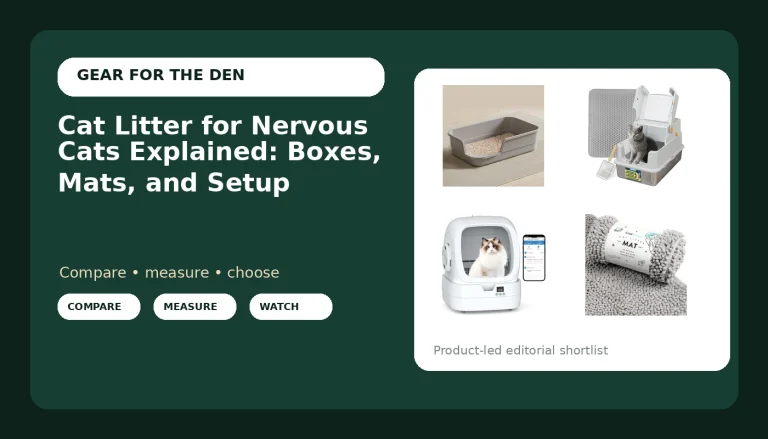
| PetPivot Open Top Self Cleaning Cat Litter Box, Automatic Litter Box with 7 Pairs of Safety Sensors, Anti-Pinch Protection and Easy Access Step for Senior Cats, Dark Grey | Homes where daily scooping slips | Open top automatic cycle, seven pairs of safety sensors, and an easy access step for senior cats |
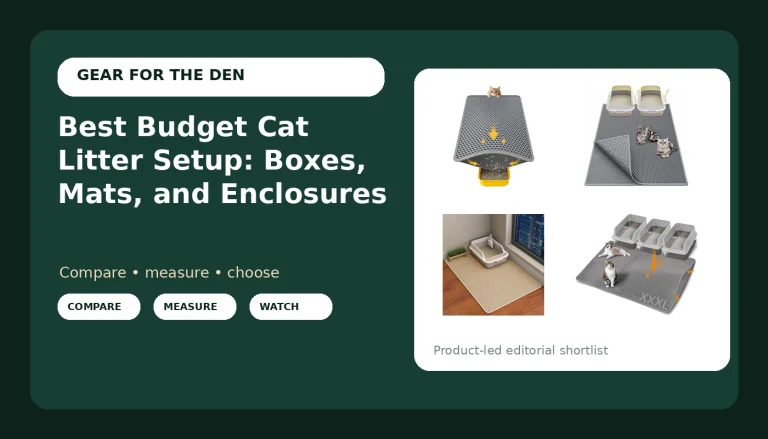
| Cat Litter Mats-Extra Large 47''x36'' Litter Trapping Mat for Cat-XXL Litter box Matt for Floor-2 Layer Catcher Rug for Pet kitty Litterbox-Waterproof Urine Proof,Non-Slip | Floors in front of one or more boxes | Extra large two layer trapping design with a waterproof, non-slip backing |
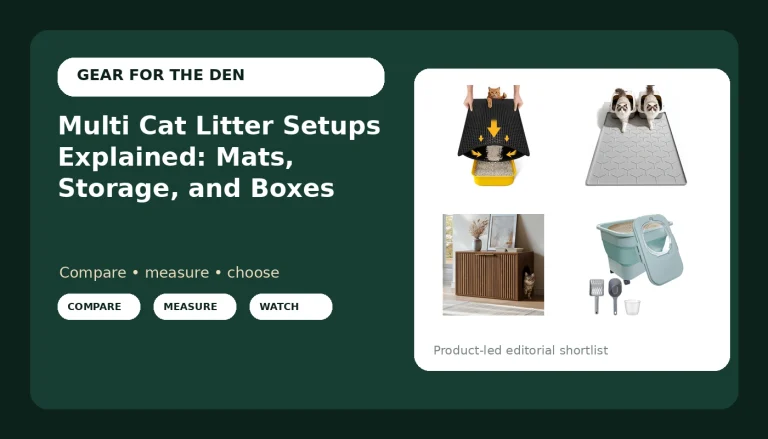
| Kettnjoy Top Entry Cat Litter Box with Lid, Stainless Steel Enclosed Cat Kitty Litterbox, Top Loading Large Metal High Side Litter Pan Tray Box Enclosure Easy Cleaning Anti-Leakage | Cats that kick litter over the side | Top loading entry, stainless steel body, high sides, anti-leakage design |
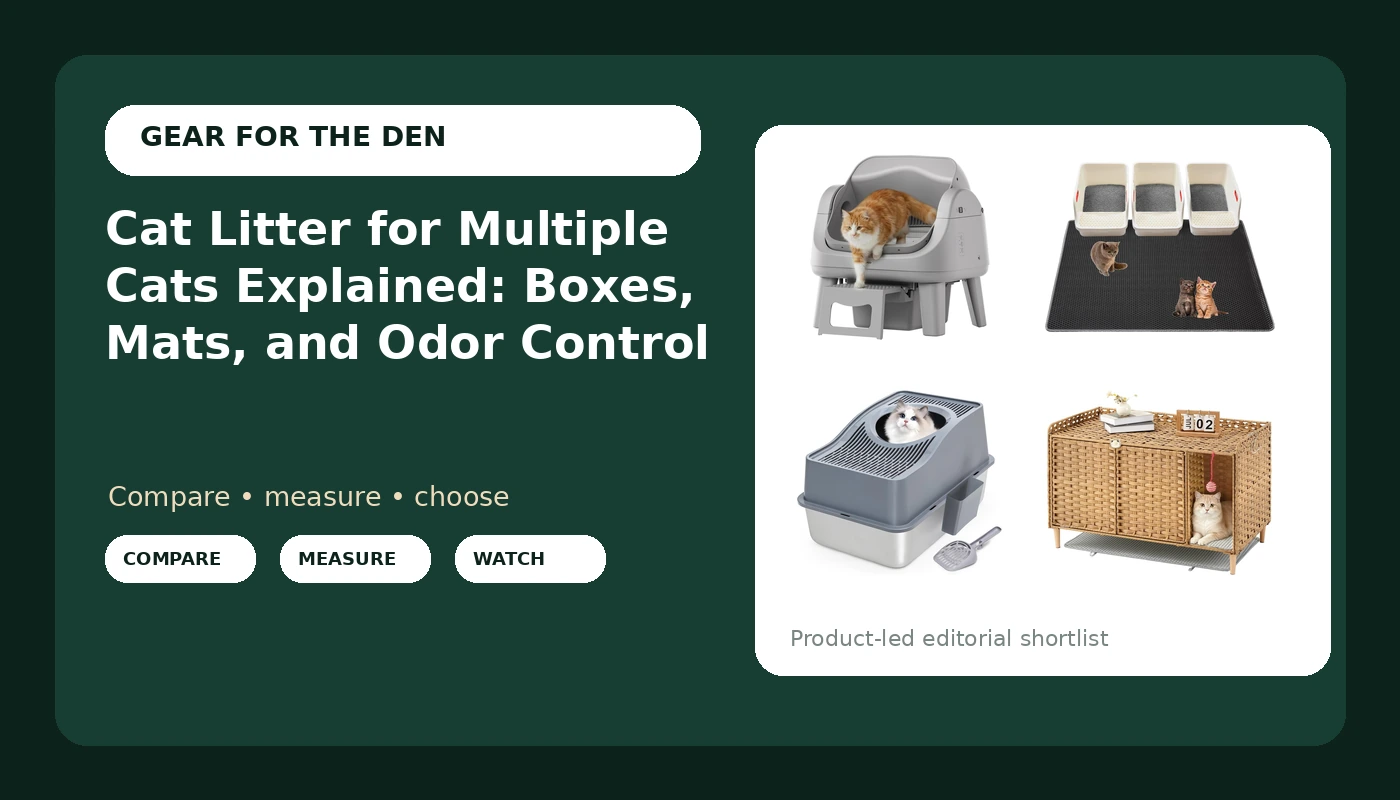
| SETVSON Cat Litter Box Enclosure Furniture,Cat Litter Box Furniture,Natural | Rooms where a box must not look like a box | Furniture style enclosure in a natural finish |
The automatic option: PetPivot Open Top Self Cleaning Cat Litter Box
An automatic box changes the labor math in a busy multi-cat home, but it does not remove maintenance. The waste drawer still has to be emptied on a schedule set by how many cats use the unit, and the sensor range needs a clear area around the box so a cycle is not interrupted partway through. Because the top is open rather than hooded, a cat that dislikes enclosed spaces can still step in from above, and the access step reduces the jump for a cat with stiff joints. Any motorized unit also adds some sound to the room, so placement away from a bedroom is worth considering. Pair it with a mat and most tracked litter stops at the doorway instead of spreading down the hall.
The floor protection: Cat Litter Mats-Extra Large 47''x36'' Litter Trapping Mat
Mat texture is the detail that decides whether tracking gets better or worse. A mat with a deep, layered surface lets granules fall out of the paws and settle below the top layer, where a quick shake returns them to the box. A flat rug or a towel does the opposite, holding a thin film of litter that walks with the cat. In a multi-cat home the mat also has to be big enough that a cat cannot clear it in one leap, which is where the extra large footprint earns its place. Keep the backing dry and shake the mat out rather than washing it every day, since a soaked mat stops trapping and starts holding odor.
The top entry box: Kettnjoy Top Entry Cat Litter Box with Lid
Top entry is a smart shape for a household with a digger, because a cat has to exit upward rather than launching sideways through a doorway. The trade-off is entry height. A cat that can jump to the top without hesitation will use it comfortably; a senior cat or a very large cat may not, and a box that is hard to enter becomes a box that gets avoided. Stainless steel is a practical surface for a shared box, since it does not scratch the way plastic does and a scratched pan is where odor lingers. Litter depth still matters here: two to three inches gives enough material to dig without making the pan heavy to lift for cleaning.
The furniture enclosure: SETVSON Cat Litter Box Enclosure Furniture
An enclosure solves a visual problem, not a cleaning problem, and it can make an odor problem worse if the airflow inside is poor. That means scooping frequency matters more with an enclosure, not less, because the same air sits around the box. Check two measurements before buying: the interior footprint against your box size, and the doorway against the width of your largest cat. It is also worth confirming that your cats will walk into a covered space at all, since a cat that feels trapped inside a cabinet may simply choose the hallway instead. Where the enclosure works, it removes the daily sight of a litter box from a living room.
Prices and availability may change. Product images, names, and retailer links are matched to verified listings. No current price, rating, stock status, or measured result is stated here without current evidence.
How box size and litter depth affect cat litter for multiple cats
The one box per cat plus one rule exists for reasons that have little to do with hygiene: it is about access. In a household with three cats, a single box creates a queue, and the cat at the bottom of the social order is the one most likely to eliminate somewhere else. Box size matters just as much. A pan should be roughly one and a half times the length of the largest cat in the house, measured from nose to the base of the tail, which usually means a box that looks oversized in a store aisle. Shallow pans force cats to stand awkwardly, while deep pans with high sides keep litter in but raise the entry height, and entry height is the detail that decides whether an older cat keeps using the box at all. A senior cat with stiff hips needs a low threshold or a step, not a wall.
Litter depth and clumping speed work together. Two to three inches of unscented clumping litter gives a cat enough material to dig and bury without turning every visit into a landslide. A litter that clumps quickly and firmly produces a solid block you can lift out whole. Slow or crumbly clumps break apart on the scoop and leave small soiled pieces behind, which is how a box starts to smell within a day even when it looks clean. That is the practical case for the ideal cat litter for multiple cats being a simple, unscented, fast clumping product rather than a heavily scented one. Scented litters and deodorizing additives mask the smell for you, not for the cat, and a cat that dislikes the scent may stop covering its waste or start avoiding the box entirely.
Odor control in a multi-cat home is mostly a function of removal frequency, as covered in our guide to cat odor control in multi-cat homes. Every hour a clump stays in the pan is an hour it contributes to the room. Two scoops a day, one in the morning and one in the evening, does more for a shared litter area than any single product on this page. Mat texture, box size, and litter depth all reduce the mess surrounding that routine, but none of them replace it.
A five-step setup for a multi-cat litter area
- Count your cats and add one to get the minimum number of boxes, then place them in at least two separate locations rather than a single row along one wall.
- Measure the largest cat from nose to tail base and choose a box size that gives roughly one and a half times that length, with sides high enough to contain digging.
- Match entry height to the least mobile cat in the house. A low threshold, an approach step, or a top entry box with an easy step all work, but a tall wall does not.
- Choose an unscented clumping litter, fill to two to three inches, and scoop twice daily so clumping speed and odor control stay ahead of the load.
- Add the surrounding gear last: a trapping mat at each box, a waste drawer or sealed bin for scooped clumps, and an enclosure only when the interior footprint fits your box size.
Practical habits that keep a shared litter area usable
- Scoop twice a day and top up litter afterward so depth stays consistent, because a shallow pan after scooping invites misses.
- Shake or vacuum the mat instead of washing it daily, since a dry mat texture traps far more granules than a damp one.
- Empty the waste drawer or sealed bin on a schedule tied to how many cats use the box, not to how full it looks.
- Give every box a clear approach and some airflow, because an enclosure that seals tightly concentrates odor instead of hiding it.
- Watch for avoidance. A cat that stops using a box is telling you about entry height, litter depth, or competition, not about a brand name.
Which option should you choose?
Choose the PetPivot Open Top Self Cleaning Cat Litter Box, Automatic Litter Box with 7 Pairs of Safety Sensors, Anti-Pinch Protection and Easy Access Step for Senior Cats, Dark Grey when your schedule makes twice daily scooping unrealistic and you want the cycle handled automatically with a step that suits an older cat. Choose the Cat Litter Mats-Extra Large 47''x36'' Litter Trapping Mat for Cat-XXL Litter box Matt for Floor-2 Layer Catcher Rug for Pet kitty Litterbox-Waterproof Urine Proof,Non-Slip when the floor in front of one or more boxes is the main mess and you need an extra large two layer surface with a waterproof backing. Choose the Kettnjoy Top Entry Cat Litter Box with Lid, Stainless Steel Enclosed Cat Kitty Litterbox, Top Loading Large Metal High Side Litter Pan Tray Box Enclosure Easy Cleaning Anti-Leakage when a cat kicks litter over the side and you want a metal, high sided, top loading box that wipes clean. Choose the SETVSON Cat Litter Box Enclosure Furniture,Cat Litter Box Furniture,Natural when the box has to live in a shared room and you would rather it read as furniture in a natural finish.
One caveat applies to all four. The listings describe design features, not outcomes in your home. An entry height that suits one cat can be wrong for another, and an enclosure that fits one pan may not fit a larger one. Check dimensions against your cats and your space before buying, and give any change a couple of weeks before deciding that it failed.
The bottom line
The right answer for a multi-cat home is rarely a single product. Start with enough boxes in enough places, sized for the largest cat and reachable by the oldest, filled with unscented clumping litter to a consistent depth, and scooped twice a day. Then add gear where the friction actually is: a trapping mat for tracked litter, a top entry stainless steel box for a cat that kicks, an automatic box where scooping gets skipped, and an enclosure where a box has to disappear into a living room. Get the routine right first, and the hardware simply makes that routine easier to keep.