A nervous cat rarely announces a problem in advance. It hides under the bed, waits for the house to go quiet, then sprints to the box and bolts out again. When that routine breaks down, the setup is usually the first thing worth examining. Choosing cat litter for nervous cats is less about finding a magic brand and more about the whole station: box size, entry height, litter depth, clumping speed, odor control, mat texture, and how predictable the cleaning schedule is. Get those pieces right and a shy cat often settles into a routine without any training at all.
Quick answer
Most nervous cats do best with a large, open box with a low entry, an unscented fine-grain clumping litter at a shallow to moderate depth, and a scooping routine that runs at the same time every day. Covered boxes, automatic units, and trapping mats are not mistakes, but each adds one more thing a cautious cat has to accept. Nothing below is labeled quietest, fastest, safest, or best, because the listings do not support that kind of ranking. What follows is a description of four pieces that fit a calm setup, and the reasoning behind each one.
Four useful options
| Model | Best fit | What stands out |
|---|---|---|
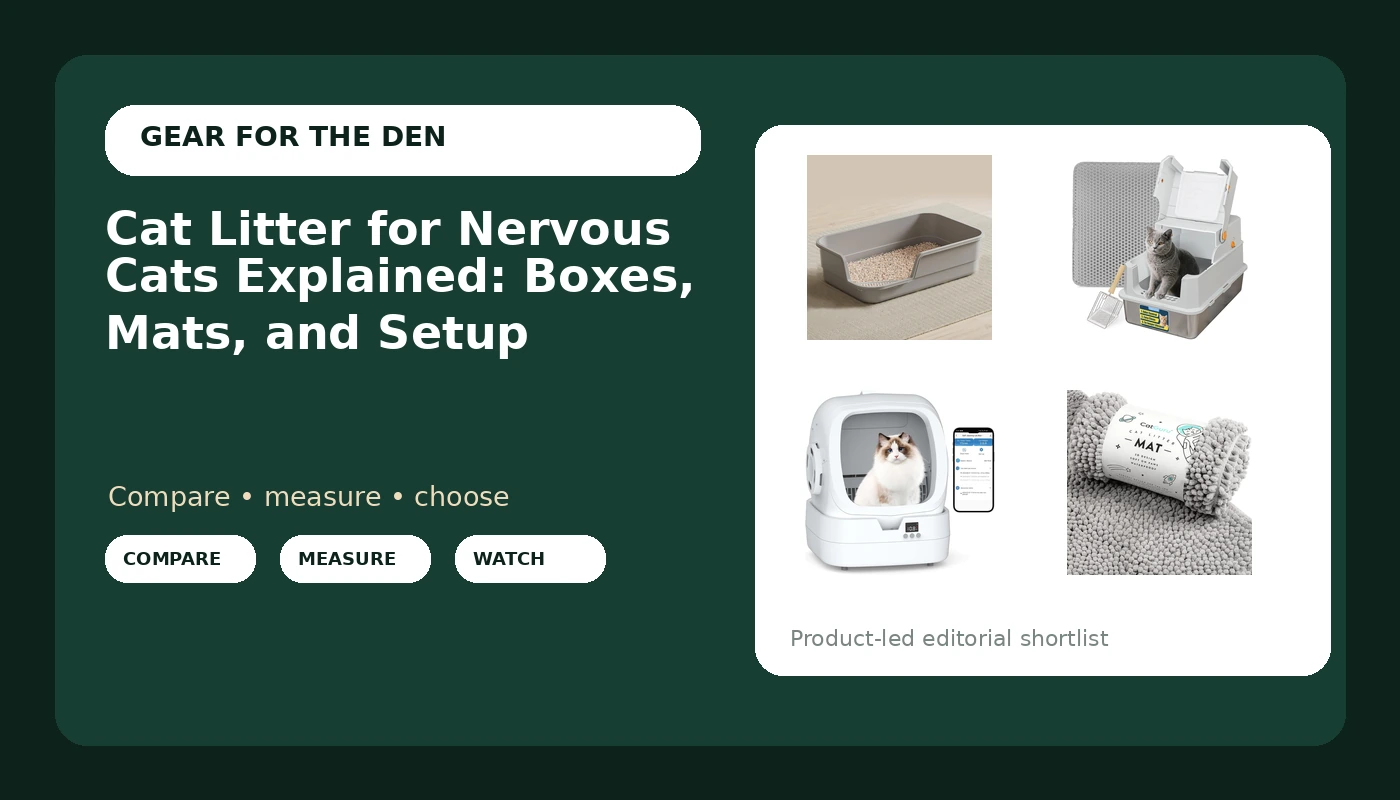
| LoopTime Extra Large Cat Litter Box with High Sides | Shy cats who want to watch the room while they go | Extra large pan with high sides, a low entry, and anti-splashing walls |
| TENTIZON Stainless Steel Cat Litter Box with Lid | Households that want a covered box they can scoop from the top | Stainless steel pan with an enclosed hood, flip top, and included mat and scoop |
| Mintakawa Automatic Cat Litter Box Self Cleaning | Owners who want app control and weight monitoring | Self-cleaning cycle, app control, weight monitoring, listed for medium cats and kittens, assembly required |
| CatGuru Cat Litter Mat | Containing tracked litter around any box above | Waterproof, non-slip, machine washable trapping mat in gray heavy-duty fabric |
The open, low-entry option: LoopTime Extra Large Cat Litter Box with High Sides
The case for an open pan is simple. A nervous cat is at its most vulnerable inside a box, and an open design lets it watch the room and leave in any direction. The LoopTime pan offers a large footprint and a shallow entry, which suits a medium or large cat that dislikes feeling boxed in. High sides and anti-splashing walls cut down on scatter, though a determined digger can still throw litter over the top. Because the pan is open, odor control rests on how often you scoop and how deep the litter sits, so pair it with a mat, keep the litter at a consistent depth, and the box stays easy for a cat to read.
The covered option: TENTIZON Stainless Steel Cat Litter Box with Lid
Covered boxes divide opinion. A hood reduces scatter and gives a cat a dark, enclosed corner, which some shy cats prefer; others feel trapped because they cannot watch the room and there is only one way out. The TENTIZON box addresses two common complaints about hooded pans: the flip top lets you scoop without lifting the whole cover, and a stainless steel pan does not hold odors the way a scratched plastic one can. If your cat has never used a covered box, leave the lid off for the first week and add it once the pan is already a familiar, boring part of the room. A nervous cat that has been startled inside a hooded box may avoid it for weeks.
The self-cleaning option: Mintakawa Automatic Cat Litter Box Self Cleaning
An automatic box solves the human problem of scooping and can help when odor control is the main complaint. It also introduces motion, noise, and a cycle that a nervous cat did not ask for. Because the Mintakawa listing describes the unit as ultra-quiet rather than publishing a measured sound level, treat quiet operation as a claim to check against owner reports before you commit. A slow introduction helps: run the box with the automatic cycle switched off for the first few days so the pan itself becomes normal, then let it cycle while your cat is in another room. Check that the sensor range and entry height suit your cat's size, and empty the waste drawer on a fixed schedule rather than waiting for a smell.
The cleanup option: CatGuru Cat Litter Mat
A mat is the least glamorous part of the setup and one of the most useful. Litter that stays on the floor gets stepped in, tracked through the house, and eventually crunched underfoot, which is its own kind of stress for everyone in the room. The CatGuru mat is a waterproof, non-slip trapping mat with a soft surface, and it is machine washable. Mat texture matters more than most people expect: a nervous cat may refuse to cross a stiff, spiky mat to reach the box, so a softer surface is usually the safer choice. Place it directly in front of the entry so your cat steps onto it on the way out, and shake it out daily before the tracked litter reaches the rest of the floor.
Prices and availability may change. Product images, names, and retailer links are matched to verified listings. No current price, rating, stock status, or measured result is stated here without current evidence.
What cat litter for nervous cats actually changes
There is no single ideal cat litter for nervous cats, because the litter a cat already uses happily is usually the best starting point. What changes for a shy cat is the margin for error. A scented litter, a dusty clay, or a texture that feels sharp underfoot gives a nervous cat one more reason to avoid the box, and avoidance is the behavior you are trying to prevent. An unscented, fine-grain clumping litter is the common default: it feels close to sand, it holds a firm clump so waste does not sit and smell, and clumping speed matters because a soft clump breaks apart under digging and leaves odor behind.
Litter depth is the other half of the equation. Too little litter and the cat cannot cover anything, which many cats find stressful. Too much and a small, senior, or arthritic cat sinks and has to work to climb out. Two to three inches suits a lot of cats, adjusted for how enthusiastically yours digs.
Odor control then comes from routine rather than fragrance. Scoop daily, top up the depth instead of replacing everything at once, and wash the pan with unscented soap. A perfumed litter covers a smell for you and adds one for the cat, which is rarely a trade a nervous cat accepts.
How to set up a calm litter station
Setup matters as much as the litter. Finding the correct cat litter for nervous cats is only half the job if the box sits in a dead-end corner next to a noisy appliance. Work through these five steps before you buy anything else.
- Count the boxes. One per cat plus one extra, so no cat has to wait, guard, or share.
- Pick a quiet spot with two exits. A nervous cat wants to see the room and leave quickly if something startles it.
- Match box size to the cat. Look for a pan roughly one and a half times the length of your cat, with room to turn around.
- Set the entry height. Kittens, seniors, and arthritic cats need a low entry, while a high-sided pan suits a cat that sprays or digs hard.
- Keep litter depth and brand consistent. Two to three inches of unscented clumping litter, topped up rather than swapped.
Practical guidance for a nervous cat
- Introduce changes one at a time, and place a new box beside the old one before removing anything.
- Watch the mat texture. If your cat walks around the mat or jumps over it, try a softer surface or take the mat out for a week.
- Keep the box away from food and water bowls, and away from a washing machine or furnace that can startle a cat mid-visit.
- If you use an automatic box, empty the waste drawer on a fixed schedule and confirm that the sensor range and entry suit your cat's size before you rely on the cycle.
- Clean with unscented soap and water. Perfumed cleaners and harsh disinfectants leave a smell that can put a cat off the box entirely.
Which option should you choose?
Choose the LoopTime Extra Large Cat Litter Box with High Sides when you want a roomy, open pan with a shallow step in and a cat that likes to keep watching the room. Choose the TENTIZON Stainless Steel Cat Litter Box with Lid when you want a covered box that hides waste from view, you can scoop from the flip top, and your cat has already shown it will use a hooded pan. Choose the Mintakawa Automatic Cat Litter Box Self Cleaning when scooping is the bottleneck, you want app control and weight monitoring, and you are willing to introduce the machine slowly with the cycle switched off at first. Choose the CatGuru Cat Litter Mat when tracked litter is the daily annoyance, and place it at the exit of whichever box you pick.
Treat all of this as listing-based description rather than test data. No sound level, cycle time, or capacity figure is stated here because none was measured, and a nervous cat's tolerance is individual. If your cat stops using the box entirely, or shows signs of pain while going, that is a veterinary conversation rather than a gear change. For the tracked-litter side of the problem, see our guide to keeping litter off the floor.
The bottom line
Cat litter for nervous cats explained in one sentence: give the cat a large, quiet, open box with a low entry, fill it with unscented fine clumping litter at a consistent depth, keep the mat soft, and make the cleaning routine so predictable that the box stops being interesting. Most avoidance problems ease when you change one variable at a time and give the cat a week to respond. The four pieces above cover the common parts of that setup, and none of them replaces patience.