A betta in a small tank lives or dies by water movement. Too much current and a long-finned male spends its day pinned against the glass; too little and waste compounds build faster than a weekly water change can fix. That narrow window is why the search for the right aquarium filter for betta fish is less about brand loyalty and more about matching a filter's flow rate to a tank volume that is usually somewhere between five and twenty gallons. This is the aquarium filter for betta fish explained in practical terms: what a filter has to remove, how many gallons per hour a betta can tolerate, and which of the setups below fits a desk, a dorm room, or a kid's bedroom. Lighting appears here too, because a planted betta tank with clean water still looks flat under a weak fixture, and wattage decides whether plants grow or melt.
Quick answer
The correct aquarium filter for betta fish is one with adjustable or gentle flow, room for mechanical and biological media, and a turnover rating that cycles the tank roughly four to six times per hour without pushing a single hard current from one end of the glass to the other. In practice that means a small hang-on-back unit, a sponge filter, or the integrated quiet filter pump that ships inside a starter kit, sized to the tank volume rather than to the fish's reputation. Bettas are labyrinth fish that surface for air, so water quality matters more than surface agitation. Do not assume a bigger filter is the safer choice. A filter rated far above the tank's needs is one of the most common reasons a betta looks stressed in an otherwise well-kept aquarium.
Four useful options
| Model | Best fit | What stands out |
|---|---|---|
| Coospider 10 Gallon Glass Fish Tank, Aquarium Starter Kit, Simple Self-Cleaning Aquarium with 3-Color LED Lights, Quiet Filter Pump, Temperature Monitoring for Fish, Shrimp, Kids Gift Ideas | One betta in a small, self-contained setup | Quiet filter pump, 3-color LED lighting, and temperature monitoring arrive in the same kit |
| Coospider 20 Gallon Glass Fish Tank, Aquarium Starter Kit, Simple Self-Cleaning Aquarium with 3-Color LED Lights, with Quiet Filter Pump, with Temperature Monitoring for Fish, Shrimp, Kids Gift Ideas | A betta with tank mates or a planted layout | The same integrated pump and monitoring approach in a larger glass volume |
| Fluval Plant 3.0 LED Planted Aquarium Lighting, 22 Watts, 15-24 Inches | Planted betta tanks that need genuine light output | 22 watts of planted-oriented output over a 15 to 24 inch tank |
| AQQA LED Aquarium Light, 24/7 & DIY Mode Full Spectrum Fish Tank Light | Budget builds and hands-off scheduling | 24/7 and DIY modes with full spectrum output |
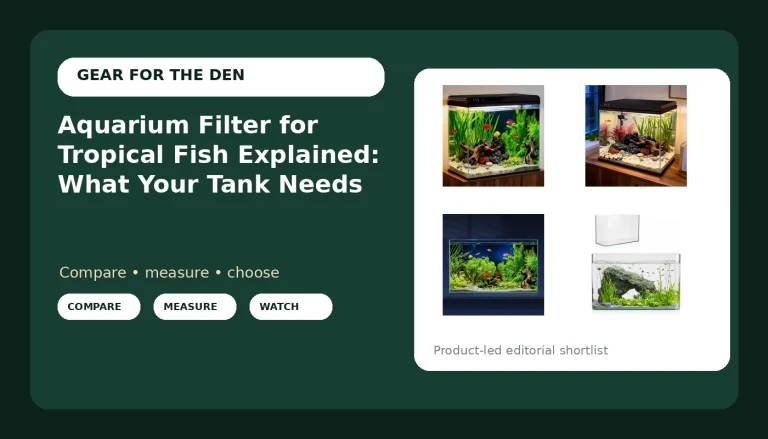
Small tank pick: Coospider 10 Gallon Glass Fish Tank, Aquarium Starter Kit, Simple Self-Cleaning Aquarium with 3-Color LED Lights, Quiet Filter Pump, Temperature Monitoring for Fish, Shrimp, Kids Gift Ideas
The appeal of a kit like this is that the pump, the lid, and the light are already sized to each other, which removes one of the most common beginner mistakes: buying a filter rated for a much larger aquarium. Ten gallons gives a single betta a reasonable water volume to dilute waste, and the included pump moves water gently enough that a long-finned male can swim the length of the glass without fighting a current. Two limits are worth knowing before you buy. The self-cleaning design still requires regular partial water changes, because it reduces maintenance rather than removing it. The built-in 3-color LED lighting is aimed at viewing, so if you want a carpeting plant or a red-leafed species, plan on adding a dedicated fixture later.
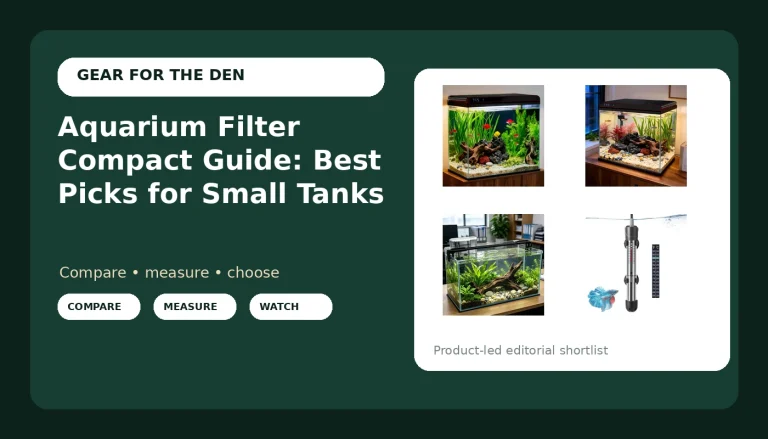
Roomier kit: Coospider 20 Gallon Glass Fish Tank, Aquarium Starter Kit, Simple Self-Cleaning Aquarium with 3-Color LED Lights, with Quiet Filter Pump, with Temperature Monitoring for Fish, Shrimp, Kids Gift Ideas
Twenty gallons is the point where a betta tank stops behaving like a bowl with a pump attached and starts acting like a real aquarium. The larger tank volume buffers temperature swings, dilutes waste between water changes, and leaves room for easy plants or a small group of peaceful tank mates. The same caveats apply here as with the ten gallon version: the integrated pump is quiet and gentle, and the self-cleaning design lowers maintenance rather than eliminating it. If the tank will sit in a bedroom, a quiet pump matters more than a high gallons per hour figure, because a betta does not need aggressive turnover. Pair this kit with a heater you can set to a stable thermostat range and the filtration side of the setup is largely solved.
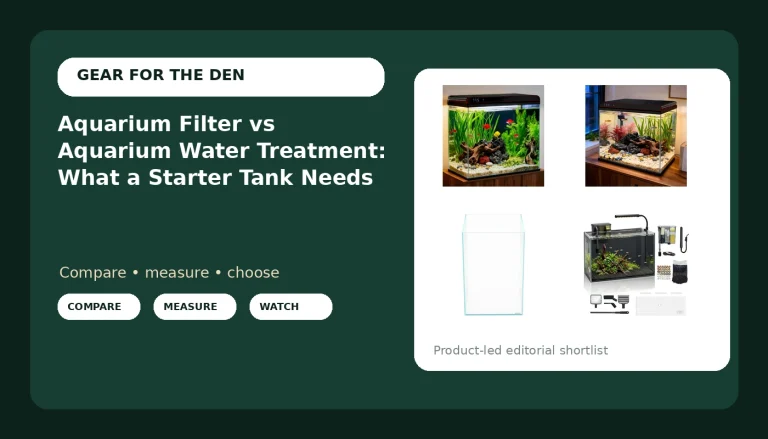
Planted light: Fluval Plant 3.0 LED Planted Aquarium Lighting, 22 Watts, 15-24 Inches
Filtration and lighting solve different problems, but they fail together. A betta tank with excellent water quality and weak light grows pale, leggy plants and looks dim no matter how clean the glass is. This fixture is built specifically for planted aquariums rather than for general viewing, so it is the one to consider when the plants are the priority. Length matters as much as output: it fits tanks between 15 and 24 inches, and a tank outside that span needs a different fixture entirely. When comparing it with the AQQA light below, the useful questions are spectrum and mounting length rather than wattage alone, since two fixtures can draw similar power and still produce very different light.
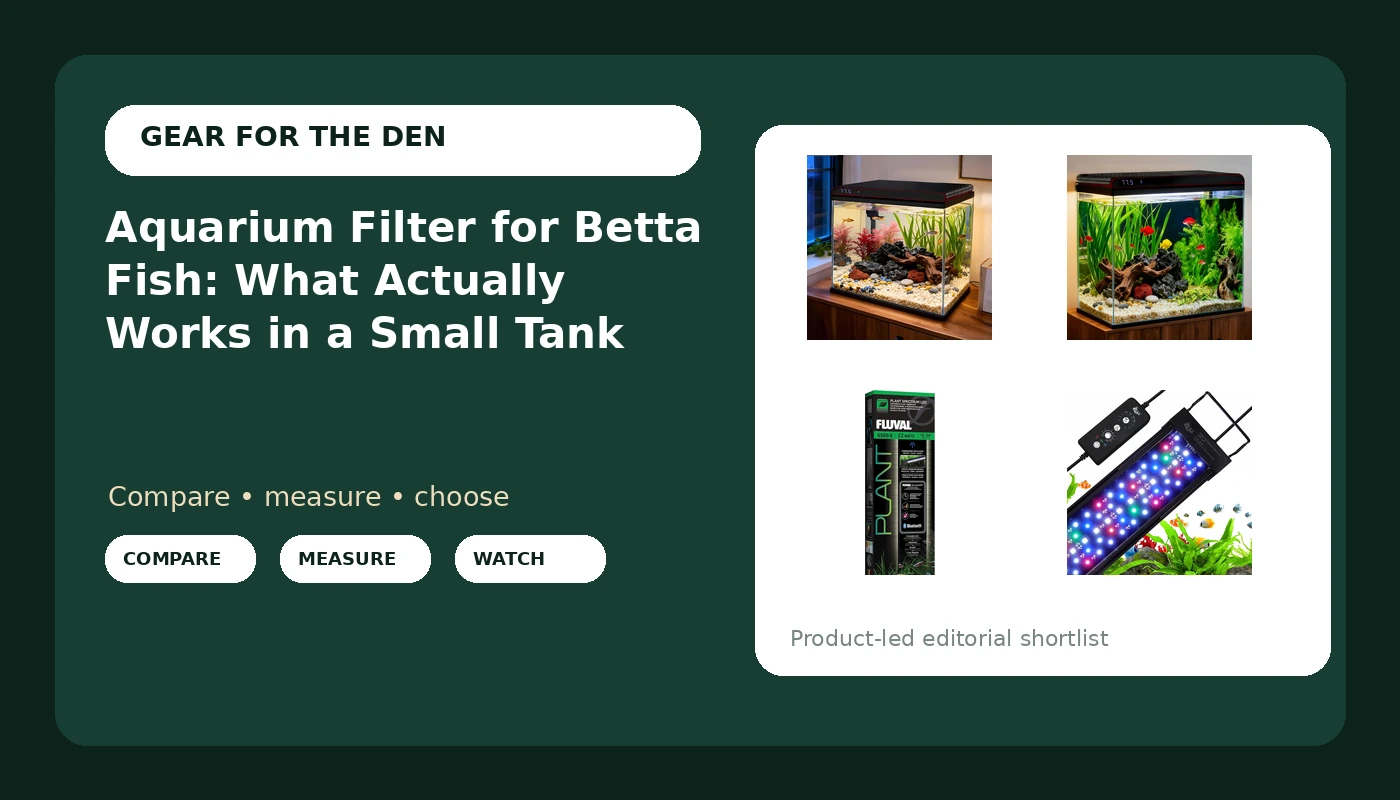
Budget light: AQQA LED Aquarium Light, 24/7 & DIY Mode Full Spectrum Fish Tank Light
The AQQA fixture is the value option in this group, and its two modes are the reason to consider it. A 24/7 mode runs a repeating daily schedule, which suits betta keepers who want the tank to wake and dim on its own without touching a switch, while a DIY mode lets you shape the color mix rather than accept a fixed preset. Full spectrum output covers the wavelengths plants use, so it pairs sensibly with a ten gallon kit and a handful of easy growers. It is not a planted-specific fixture the way the Fluval is, so if you intend to grow light-hungry species, budget for that upgrade instead. Either way, keep the photoperiod reasonable, because light drives algae as readily as it drives plant growth.
Prices and availability may change. Product images, names, and retailer links are matched to verified listings. No current price, rating, stock status, or measured result is stated here without current evidence.
What an aquarium filter for betta fish has to do
A filter does three jobs, and bettas care about all three in different ways. Mechanical filtration traps particles, uneaten food, and plant debris in a sponge, floss, or pad. Chemical filtration, usually carbon or a resin, removes dissolved color and odor, and it is optional in a betta tank. Biological filtration is the one that keeps fish alive: nitrifying bacteria colonize the filter media and convert ammonia into nitrite and then into nitrate, which water changes remove. A unit that only moves water without housing media is a pump, not a filter.
The second job is circulation. A betta's fins are large relative to its body, and the fish evolved in slow, still water. Flow rate is therefore the number that separates a usable filter from an unusable one. The goal is turnover that reaches every corner of the tank without creating a visible current, and the usual shorthand is a filter rated to cycle the tank's water several times per hour, then adjusted down if the fish is being pushed around.
The third job is stability. Tank volume sets how much waste the water can dilute before a water change, and the filter media set the size of the bacterial colony that processes it. A ten gallon tank with a small sponge filter and a light fish load can be very stable, while a twenty gallon tank with an oversized filter and no plants can still swing. Substrate grain matters here too, because a fine substrate holds debris on the surface where it is easy to siphon, while coarse gravel lets food sink into gaps where it decays.
None of this requires expensive equipment. It requires a filter that fits the tank volume, media you rinse in tank water rather than replace, and a routine that keeps the bacterial colony intact.
How flow rate, tank volume, and gallons per hour line up
Turnover math is simple until real hardware enters the picture. A ten gallon tank turned over five times per hour calls for roughly 50 gallons per hour, and a twenty gallon tank calls for about 100. Those figures describe free-flow ratings, though, and media, intake guards, and the height a pump has to push water all reduce actual output. That is why adjustable flow is the single most useful feature on a small-tank filter: it lets you start low and raise the setting only if surface movement is inadequate.
Baffling solves the rest. A pre-filter sponge slipped over a hard-pulling intake slows the draw and keeps shrimp and fry out. Aiming the output across the surface or into the front glass spreads the current instead of firing it down the length of the tank. If a hang-on-back unit still pushes too hard, a strip of filter sponge in the return path is a common, reversible fix.
The companion specs are worth comparing at the same time. A heater with a settable thermostat range keeps the temperature stable, and a light with a sensible kelvin rating and wattage keeps plants growing instead of stretching. Filtration, temperature, and light are three systems, and a betta tank is only as good as the weakest one.
- Measure the actual water volume rather than the advertised tank size, since substrate and decor displace several gallons.
- Decide the turnover you want, usually four to six times the water volume per hour for a single betta.
- Pick the filter type that fits the space: an internal or hang-on-back unit with adjustable flow, or a sponge filter driven by an air pump.
- Set the flow to the lowest level that still moves surface water, then watch the fish for a day before adjusting further.
- Match the supporting gear: a heater with a settable thermostat range, a light sized to the tank length, and media you can rinse instead of replace.
Setting up the filter without stressing the fish
- Rinse new media in tank water, never under tap water, so the bacterial colony survives the first weeks.
- Aim the output across the surface or at the front glass rather than straight down the length of the tank.
- Add a pre-filter sponge to any intake that pulls too hard, which slows the draw and protects small shrimp.
- Leave the filter running during water changes; long shutoffs starve the bacteria of oxygen and flow.
- Check filter and light together once a week, because a clogged pad slows flow and a long photoperiod with poor flow grows algae fast.
Which option should you choose?
Choose the Coospider 10 Gallon Glass Fish Tank, Aquarium Starter Kit, Simple Self-Cleaning Aquarium with 3-Color LED Lights, Quiet Filter Pump, Temperature Monitoring for Fish, Shrimp, Kids Gift Ideas when you want one betta in a compact setup with filtration, lighting, and temperature monitoring already matched to each other. Choose the Coospider 20 Gallon Glass Fish Tank, Aquarium Starter Kit, Simple Self-Cleaning Aquarium with 3-Color LED Lights, with Quiet Filter Pump, with Temperature Monitoring for Fish, Shrimp, Kids Gift Ideas when you want more water volume for tank mates or a planted layout. Choose the Fluval Plant 3.0 LED Planted Aquarium Lighting, 22 Watts, 15-24 Inches when the plants are the priority and your tank measures between 15 and 24 inches. Choose the AQQA LED Aquarium Light, 24/7 & DIY Mode Full Spectrum Fish Tank Light when you want full spectrum output and an automatic daily schedule on a smaller budget.
Filtration, not lighting, decides whether a betta thrives, so if you are choosing between upgrading the filter and upgrading the light, upgrade the filter first. The ideal aquarium filter for betta fish is not the most powerful model on the shelf; it is the one you can dial down to a gentle turnover and keep running with media that stays biologically active. Note also that a starter kit's pump is sized for the tank it ships with, and no flow figure is published here, so check the listing and observe the fish rather than assuming a number.
The bottom line
The right filter for a betta is a gentle one with real media and adjustable flow, matched to a tank volume between five and twenty gallons and supported by a heater you can set to a stable thermostat range. Starter kits like the two Coospider tanks simplify that matching by bundling a quiet pump, lighting, and temperature monitoring, while the Fluval and AQQA fixtures cover the planted side of the setup. Pick the tank size first, dial the flow to the lowest setting that still moves water, and keep the media biologically active. Everything else in a betta tank is easier to correct than a filter that is too strong.