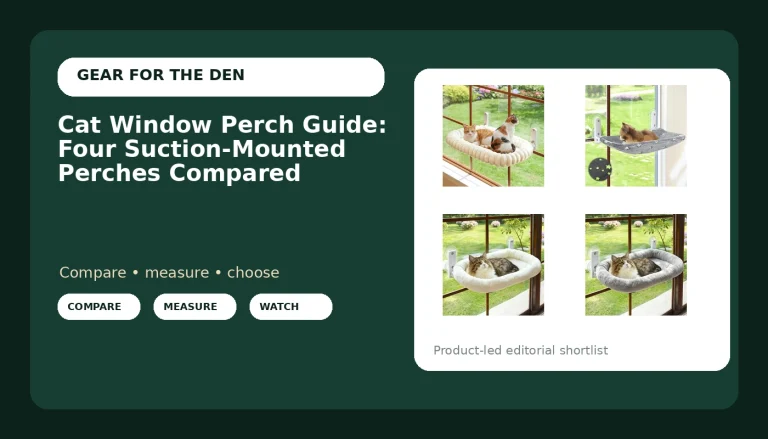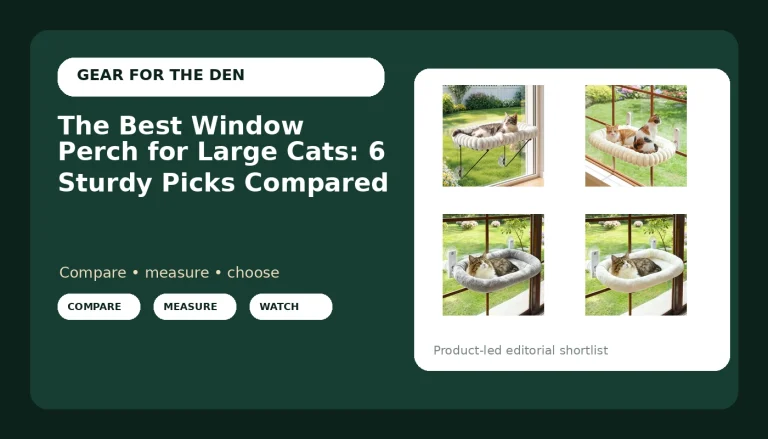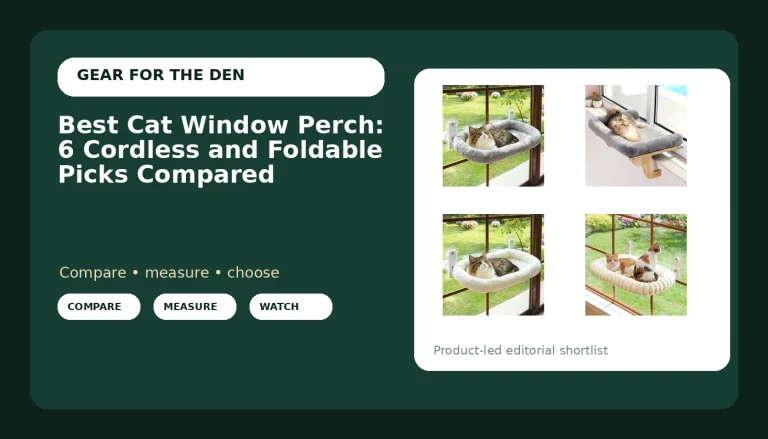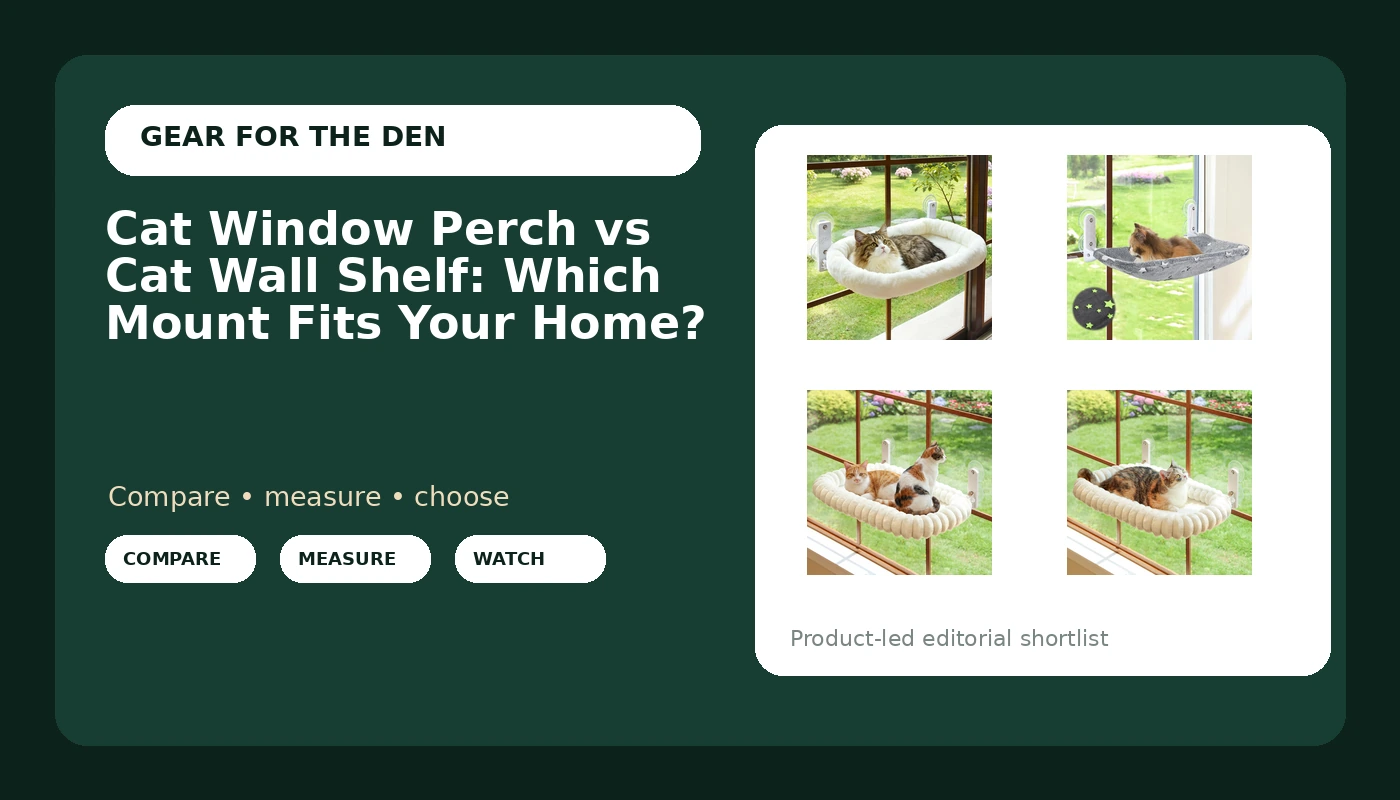
Window perches and wall shelves solve the same problem from opposite directions, and the cat window perch vs cat wall shelf debate usually ends the moment you look at your walls. A window perch hangs on glass, so it needs no drilling, no stud finder, and no conversation with a landlord. A wall shelf screws into framing, so it needs all three. Almost everything else in this category, including platform height, anchor type, and how much weight the mount will hold, follows from that one split.
The short answer: for most renters and most cats, a foldable window perch is the better first buy, because it installs in minutes, moves when you do, and costs a fraction of a mounted wall system. A wall shelf wins only when you own the wall, your cat is heavy, or two cats are competing for the same view.
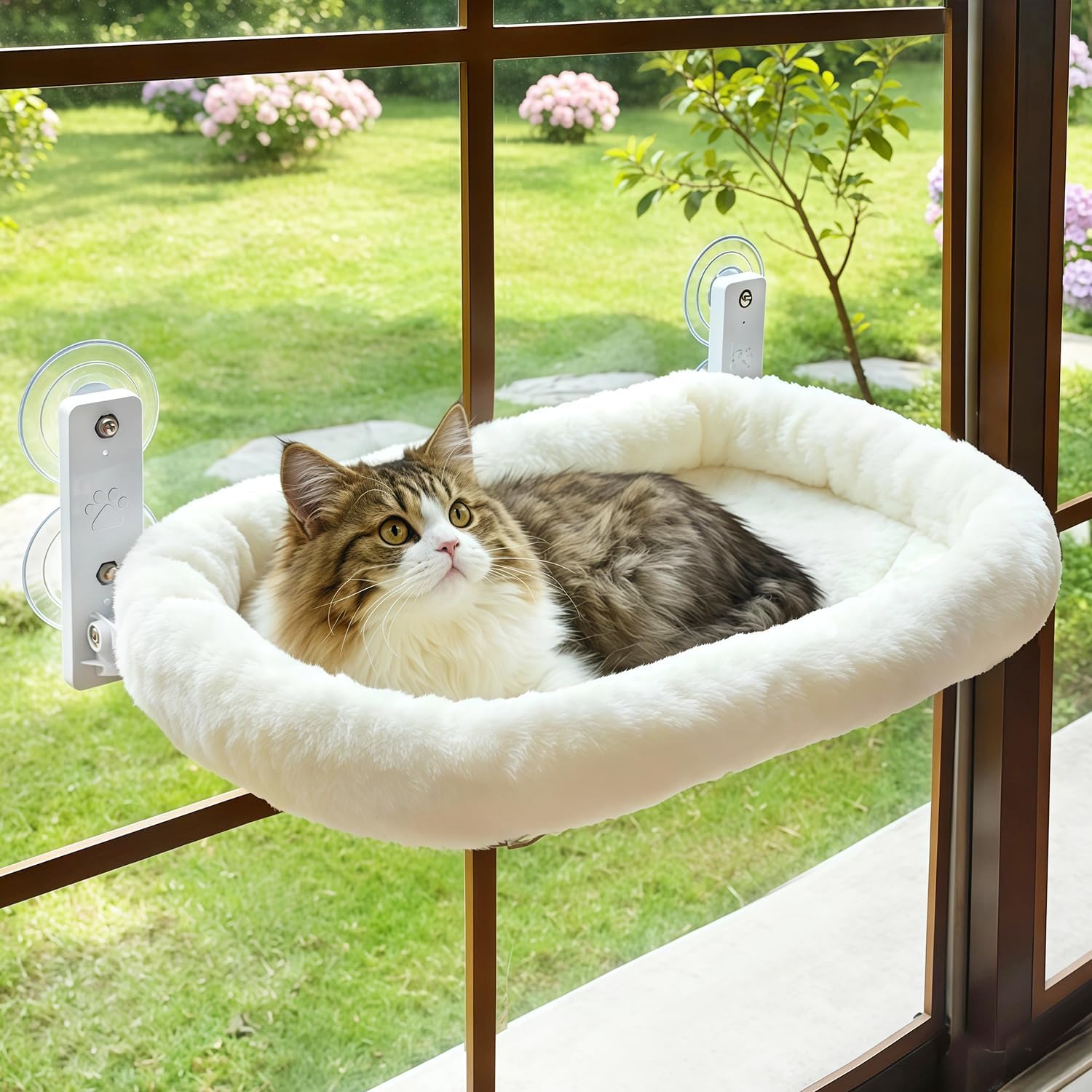
AMOSIJOY Cordless Cat Window Perch with Cushion Bed Metal Frame, L White
The only perch here with a metal frame and a cushion bed instead of a bare sling, and the roomiest sleeping surface of the four
A rigid cordless frame folds down bulkier than a hammock, so it is harder to stash when the blinds need to close
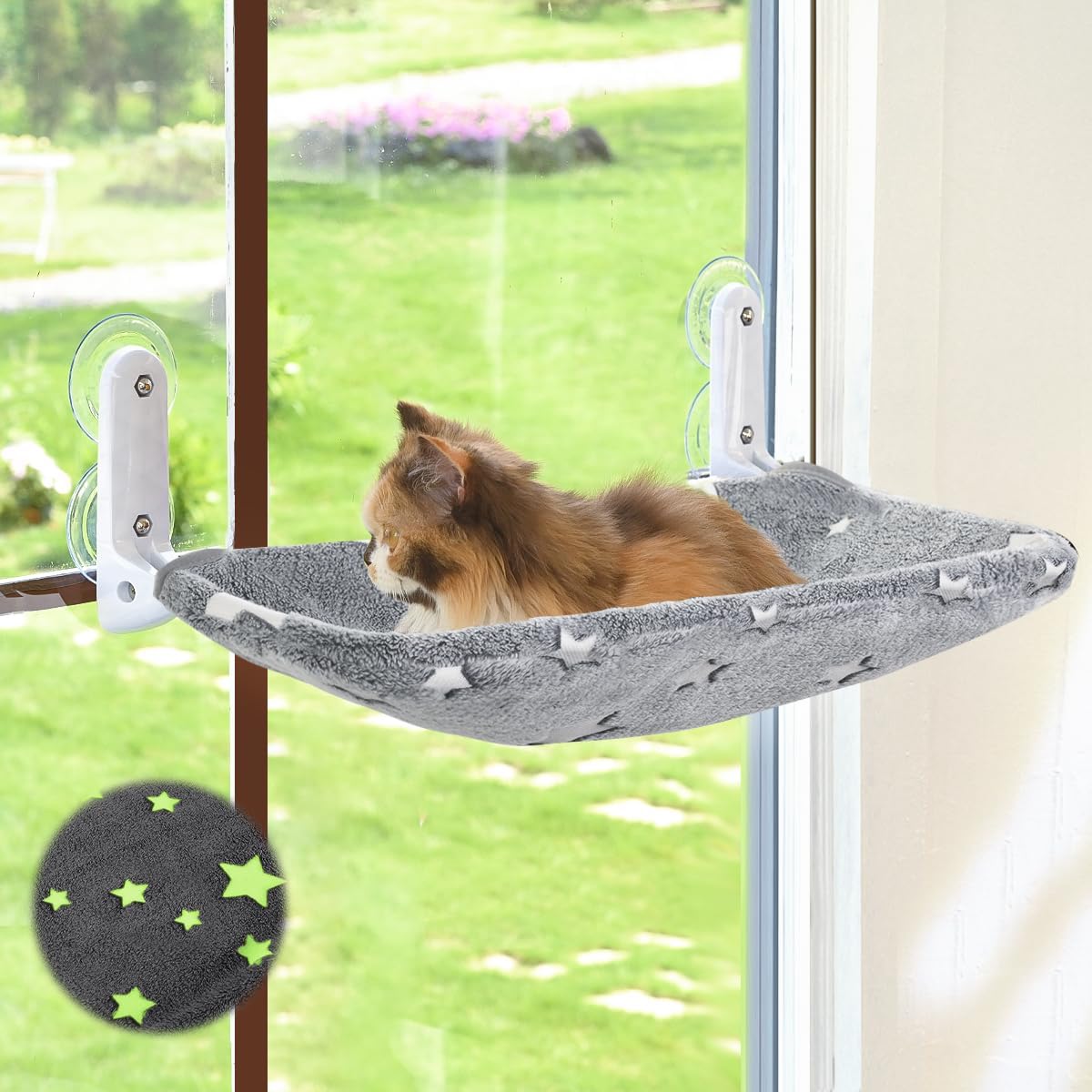
Zoratoo Glow in the Dark Cat Window Perch, Foldable Cordless Pet Hammock, M
Glow-in-the-dark hammock fabric, a foldable cordless frame, and the smallest footprint of the group
Medium perch width and a hammock only, with no padded bed for a senior cat that wants something to step into
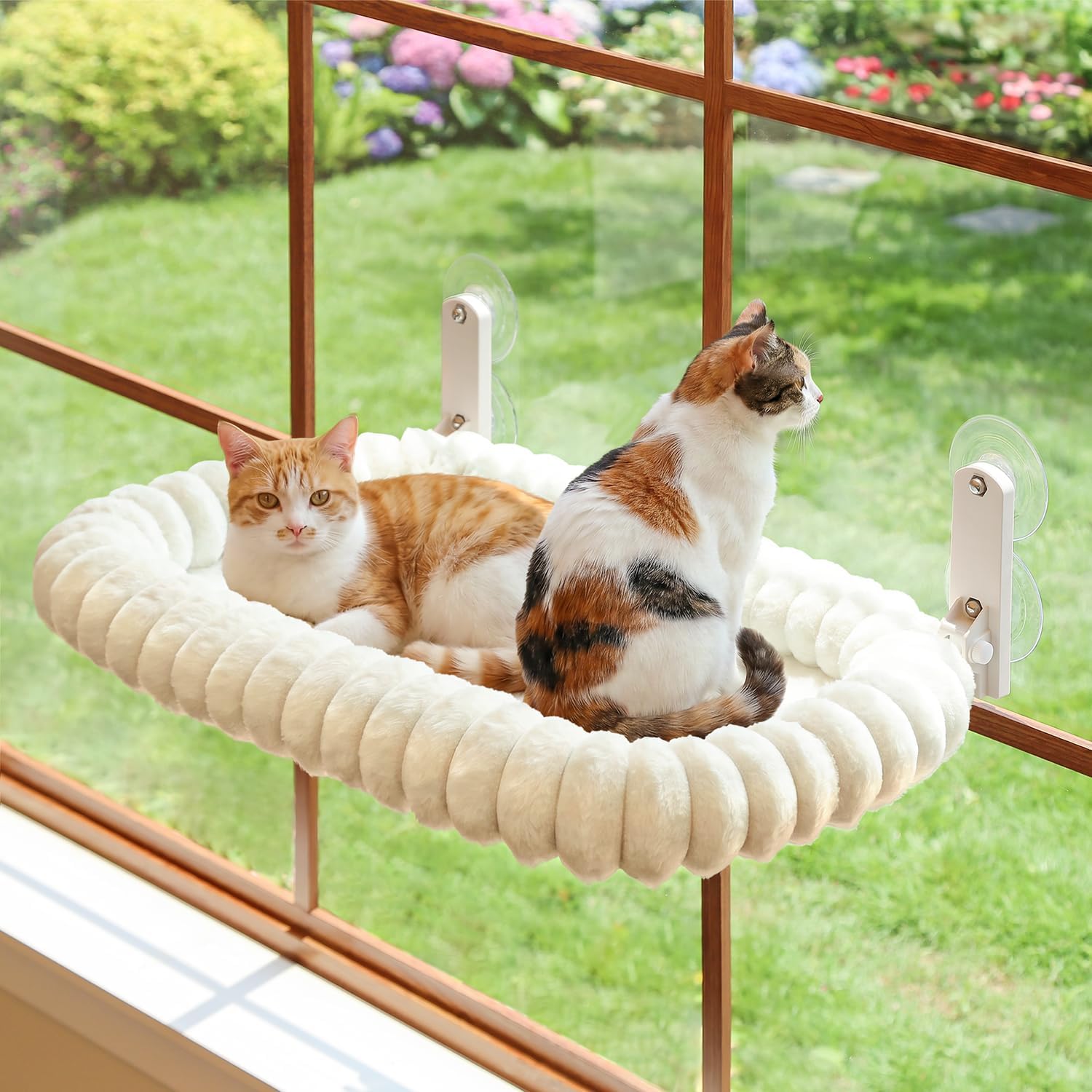
Zakkart SnugCloud Foldable Cat Window Perch (Cream White, L)
The largest SnugCloud, with the deepest sleeping surface for a cat that sprawls
Priced above the AMOSIJOY despite a similar footprint, and it is a hammock rather than a bed
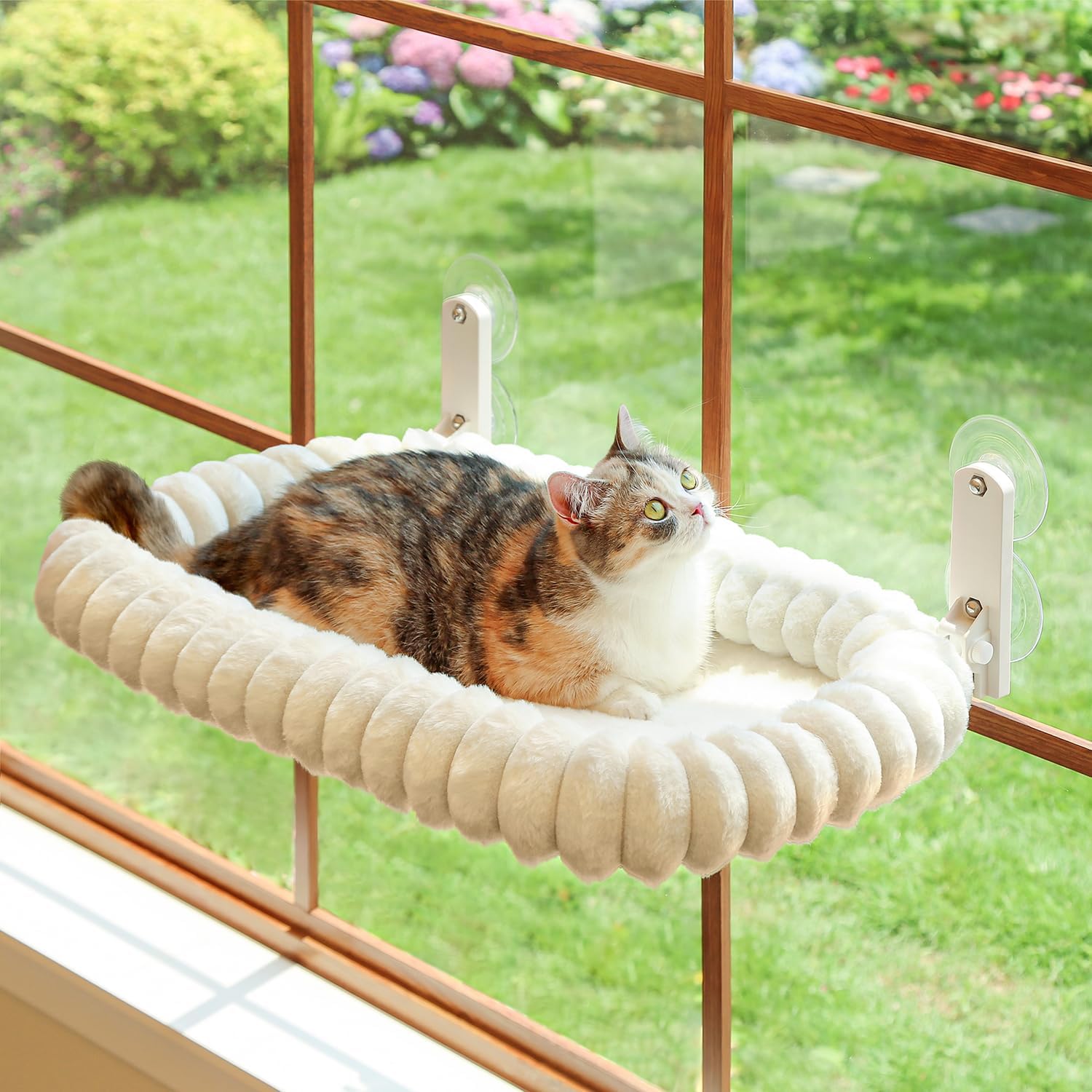
Zakkart SnugCloud Foldable Cat Window Perch (Cream White, M)
The same foldable design as the large version in a size that suits an average cat in a narrow window
Only marginally less than the large, so the bigger size is the stronger value unless space is genuinely tight
Prices and availability may change.
How I judge a window perch
There is no lab test for a cat perch. The cat decides. What you can evaluate before spending anything is the mount, the sleeping surface, and the geometry, and those three things predict almost every complaint an owner ends up having three months in.
Start with the mount. A perch either suctions to glass, braces inside the window recess, or bolts to a wall. Suction cups are the classic design and the one most likely to let go on a cold morning, because the whole thing depends on a vacuum seal against a smooth surface. A cordless frame trades some of that fragility for bulk, since there is more hardware to store when the perch comes down.
Then the sleeping surface. A hammock fabric cradles a cat and lets air move underneath, which matters in summer. A cushion bed with a raised lip gives an older cat something to step into and a place to brace its feet. Neither is better in the abstract, but they suit different cats.
Finally the geometry: perch width, the depth of the sleeping surface, and platform height if you are mounting to a wall rather than a window. A perch that is too narrow for your cat to turn around in gets abandoned within a week, no matter how good the suction cups are.
Anchor type decides more than any spec sheet
The difference between cat window perch and cat wall shelf comes down to anchor type before it comes down to anything else. A window perch is a temporary mount by design. It presses, suctions, or braces. A wall shelf is a permanent mount. It bolts.
Put plainly, cat wall shelf vs cat window perch is a question about permanence, not about comfort. Both give a cat a high, warm, soft place to sleep. Only one of them can be taken down in under a minute.
That distinction has real consequences. Suction mounts need clean glass, a smooth surface, and a reasonable temperature. Tinted film, textured glass, and winter condensation all weaken the seal. Cordless frames dodge the suction problem but need a window recess wide enough to brace against, and they still put the cat's weight on glass. A wall shelf moves the load into studs, which is why a wall shelf can carry a much higher weight limit than any window perch of the same size. If a shelf sits on posts rather than brackets, post diameter and base width matter as much as the anchor itself, because a thin post on a wide platform is a wobble waiting to happen.
The trade-off is damage and commitment. Screw holes are permanent unless you patch and paint them. If you rent, that single fact usually settles the question before the cat gets a vote.
Sizing: platform height, shelf depth, and perch width
Size labels on window perches are not standardized. A medium from one brand can be wider than a large from another, so read the listed dimensions rather than the letter on the box.
Perch width is the number that matters most. A cat needs room to lie flat and to turn around without its back end hanging off the edge. The two Zakkart SnugCloud perches in this comparison are the same design in two sizes, which makes them the easiest pair to reason about: take the large for a big cat or a cat that sprawls, and the medium for an average cat in a narrow window.
Shelf depth and platform height matter more on the wall-shelf side of the decision. A shallow shelf is a standing spot, not a sleeping spot. A high platform needs a route up and a route down, which usually means a second shelf, a cat tree, or a piece of furniture positioned nearby.
Weight limit is the spec people ignore and then complain about. Whatever number the maker lists, treat it as a ceiling for a cat standing still, not a cat landing from a windowsill.
The four perches in this comparison
AMOSIJOY Cordless Cat Window Perch with Cushion Bed Metal Frame, L White. This is the outlier of the group. Visit on Amazon. Where the others are hammocks, this one is a frame with a cushion bed, and the metal construction gives it a more solid feel than a fabric sling. The large size gives a big cat room to stretch out rather than curl. The cost of that is storage: a rigid frame does not fold down as flat as a hammock, so it is less appealing if the perch has to come off the window every time you open the blinds.
Zoratoo Glow in the Dark Cat Window Perch, Foldable Cordless Pet Hammock, M. The budget pick and the novelty pick at once. Visit on Amazon. The glow-in-the-dark hammock fabric is a genuine differentiator if your cat uses the perch after dark, and the foldable cordless frame keeps the footprint small enough for a tight recess. Medium width and a hammock surface are the limits: a large cat will overflow it, and a senior cat that wants a padded bed will not find one here.
Zakkart SnugCloud Foldable Cat Window Perch (Cream White, L). The straightforward large option. Visit on Amazon. Foldable, cordless, and sized for a cat that likes to spread out. Cream white blends into most window trim, which sounds trivial until you are looking at the thing every day. It costs more than the AMOSIJOY without offering a cushion bed, so the value case depends on whether your cat prefers a sling or a bed.
Zakkart SnugCloud Foldable Cat Window Perch (Cream White, M). The same perch in a smaller size. Visit on Amazon. This is the one to pick for a narrow window or a small cat, and it is the closest thing here to a default choice for an average adult cat. The catch is that the large version is only slightly more, so unless space is genuinely tight, sizing up buys noticeably more usable surface for very little.
The cat window perch vs cat wall shelf decision, in plain terms
Choose a window perch when you rent, when you want the perch to move with you, when your cat is average sized, and when the window is already the cat's favorite spot. Window perches are cheap, reversible, and quick to install, and the four models here all fold for storage.
Choose a wall shelf when you own the wall, when you want a climbing route rather than a single sleeping spot, when your cat is heavy, or when you want the perch out of the window entirely. Wall shelves handle more weight, leave the glass clear for blinds and breezes, and can be arranged at several platform heights to create a path rather than a perch.
The mistake is buying a wall shelf for a renter's apartment, or buying a window perch for a cat that keeps testing the mount. Match the anchor type to your situation first, then match the size to your cat.
Multi-cat homes: cat window perch or cat wall shelf
With two or more cats, the question changes. In a multi-cat home the cat window perch vs cat wall shelf question is really about capacity. A single window perch becomes a contested resource, and the cat that loses the race gets nothing. Two perches on the same window is possible but cramped, and two good windows are not always available.
This is where wall shelves earn their keep. A run of shelves at different platform heights lets cats spread out vertically instead of competing for one ledge, and the higher weight limit means a large cat can land on a shelf without you watching the mount. If you have three cats and one good window, one window perch plus a short shelf run beats three perches stacked in the same frame.
If you are staying with window perches, buy two of the same model so neither cat gets the better spot, and put them on windows in different rooms. The Zakkart pair makes that easy, because the large and the medium are the same design in two sizes.
What the specs actually tell you
Weight limit, perch width, and hammock fabric are the three specs that predict whether a perch gets used or ignored. Weight limit tells you the ceiling for the mount. Perch width tells you whether the cat fits. Hammock fabric versus a padded bed tells you whether the surface suits the cat you actually have, not the cat in the marketing photo.
Two more specs rarely make the listing. Anchor type is the whole ballgame for safety, and it is the one thing you cannot change after purchase. Storage matters more than people expect, because a perch that is annoying to remove ends up staying up through a heat wave and a curtain-closing argument.
Carrier size is the odd one out in this list, and it is worth a mention only because these perches fold. A foldable perch that fits in the same bag as your carrier is one you can take to a rental, a friend's apartment, or a weekend away. That is a small perk of the cordless designs here, and a reason a wall shelf never travels.
Clean glass is not optional
If you go with a suction-based perch, the glass is the mount. Wash it, dry it, and press the cups on without touching the sealing edge. Re-seat them if the perch has been off the window for a while, and check them after a cold snap. A perch that has held for six months can still let go during a week of temperature swings, and the cat will not warn you first.
Cordless frames skip the suction issue but still lean on the window recess, so measure the gap before ordering. Wall shelves skip all of it, provided you find a stud.
Should you buy a perch or a shelf first?
Buy the perch first. It costs less, it needs no tools, and it tells you whether your cat actually wants to sit in the window at all. Plenty of cats ignore a window perch because the view is boring or the sill is already comfortable, and learning that for a modest outlay beats learning it after you have drilled four holes in a load-bearing wall.
If the cat takes to the perch, that is your signal to invest in the wall side of the setup. If it ignores the perch, a wall shelf will not fix the problem. A cat tree or a different window will.
What comes next in this category
Foldable cordless designs are the direction the window-perch market is moving, and the four models here show the range: a large hammock, a medium hammock, a bed on a metal frame, and a glow-in-the-dark sling. The natural next step for anyone with wall space is a small shelf run above the window, which turns a single perch into a route and gives a second cat somewhere to go.