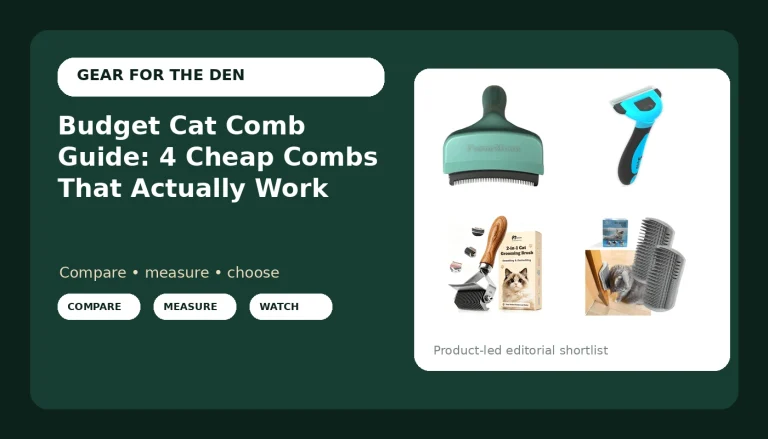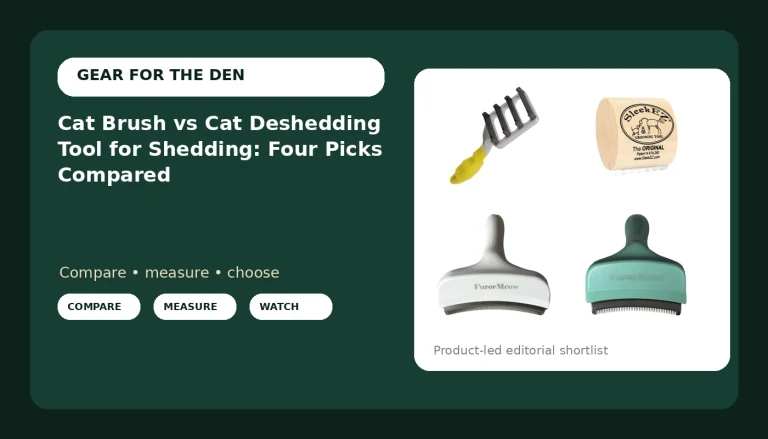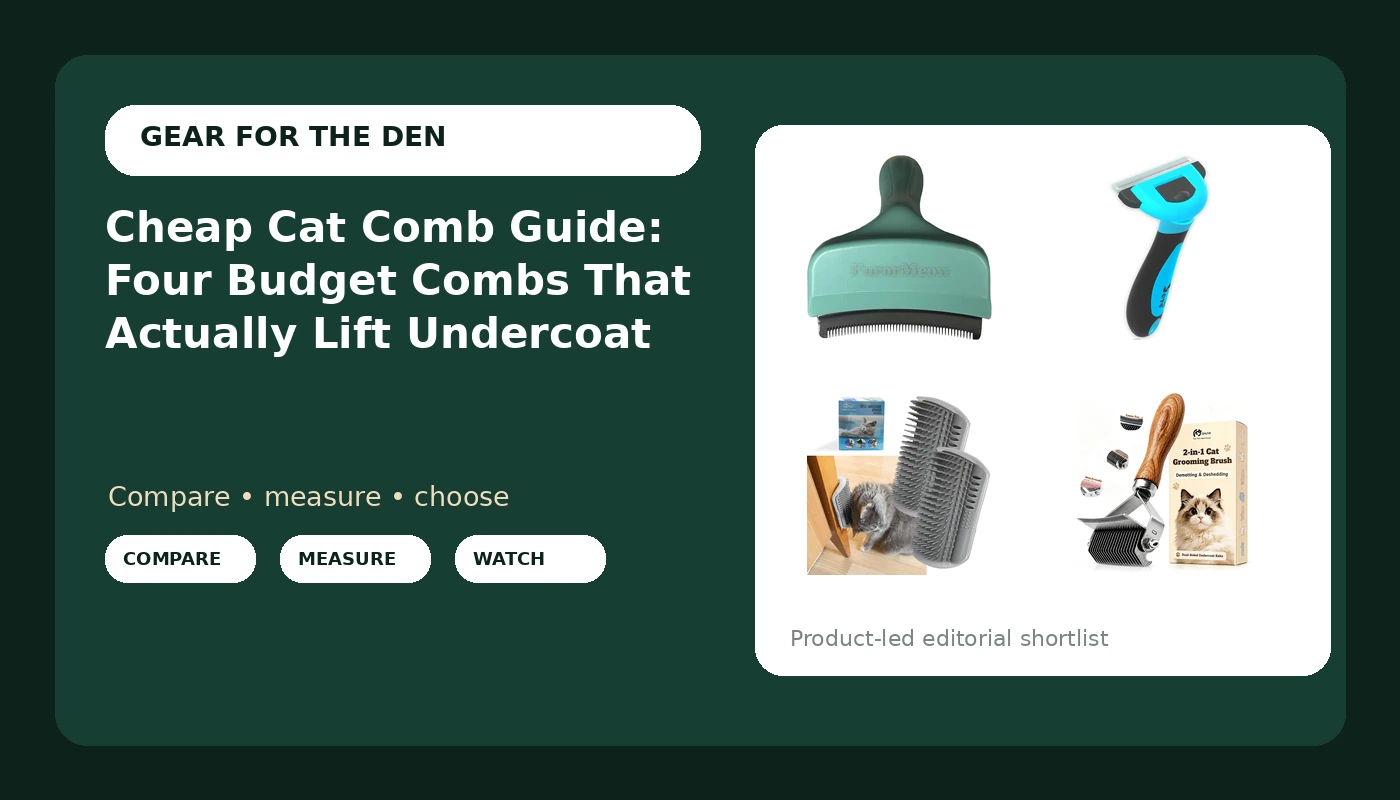
Cheap Cat Comb Guide: Four Budget Combs That Actually Lift Undercoat
A cheap cat comb guide from two shedding seasons: four budget combs, what each one pulls, and which coat lengths they suit.
I have spent more on cat combs than on my own hairbrush, and the cheap cat comb pile in the grooming drawer is the reason. Some of them were a waste of an evening. A few of them outwork tools that cost several times as much. This cheap cat comb guide is what I wish I had read before I bought the first one: four budget combs, what each one actually pulls out of a coat, and which cats they suit. If you live with a cat that hates being brushed, the least expensive tool on this list may be the only one your cat will tolerate.
None of these four is a gimmick, and none of them pretends to be a professional grooming table. They are the kind of tool you keep next to the couch, pick up during a commercial break, and use for three minutes while the cat decides whether to allow it. That is how deshedding actually gets done in a house with cats, and it is why I stopped buying the expensive stuff.
Best Overall: FurorMeow Pet Deshedding Tool with Curve Blade
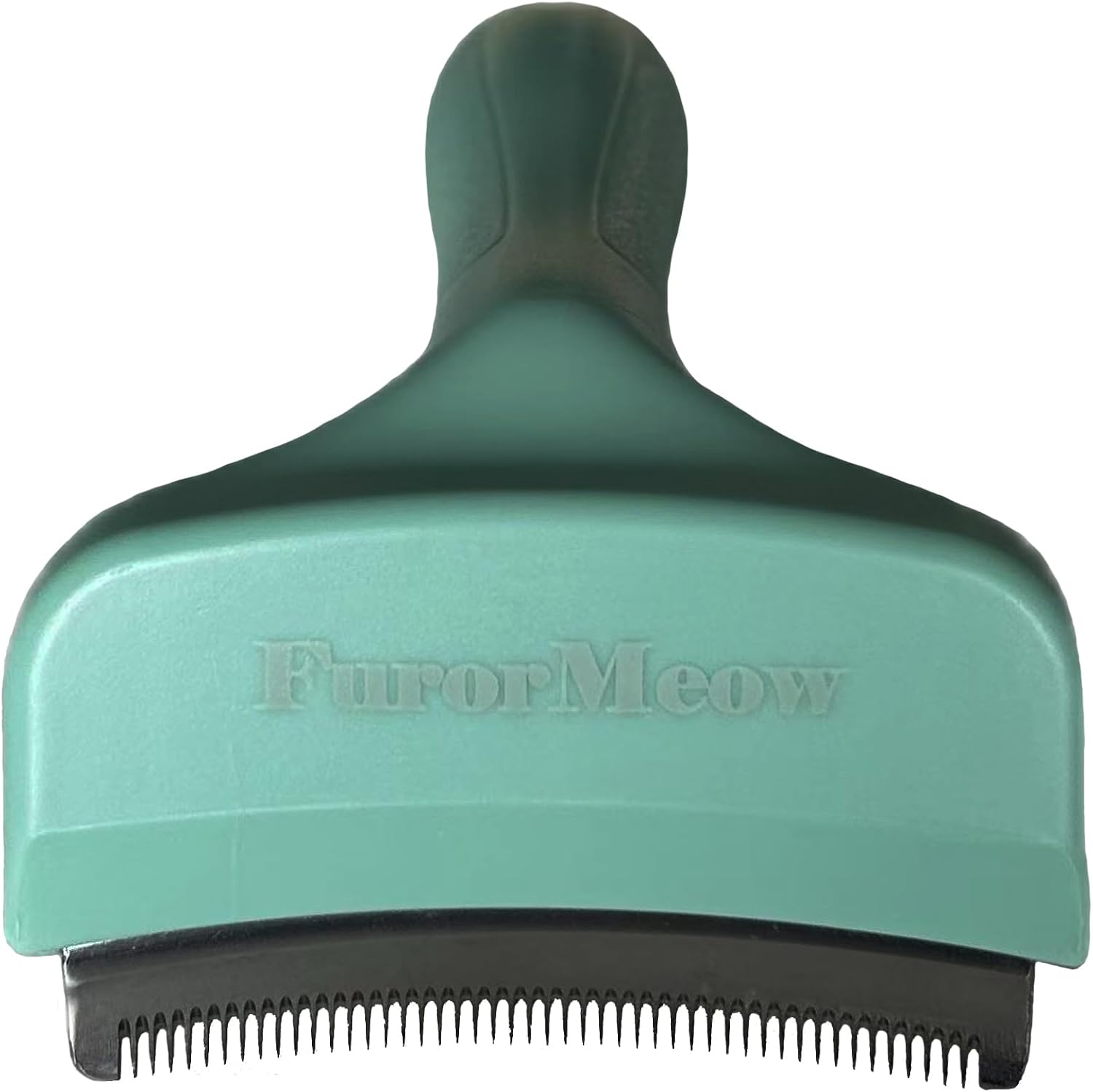
This is the comb I reach for first when a coat has gone thick and dull. The blade is curved, the teeth are set in a tight V shape, and the head is small, which matters more than it sounds. A small head lets you work the shoulder, the base of the tail, and the spot under the chin without fighting the tool.
What makes it the best overall pick is the comb spacing. Tight teeth catch the fine, dense undercoat that a wide-toothed comb slides straight over, and the curve keeps the deshedding edge flat against the body instead of digging a corner into the skin. In three or four passes along the spine it lifts a startling amount of loose hair, and it does it without the ripping sound that sends cats under the bed.
The trade-off is that tight teeth also catch tangles. On a coat that has already matted, start with a dematting tool and use this one second, once the mats are out. It is also not the tool for a cat with thin, sensitive skin along the belly, because any deshedding edge used with pressure there will annoy them. Light passes, short strokes, and a treat afterward.
The green, small version is the one I would buy for a cat. There is a larger size aimed at dogs, but the small head is the reason this works on a cat's frame at all.
Best Value: Petgle Cat Brush & Cat Comb for Shedding
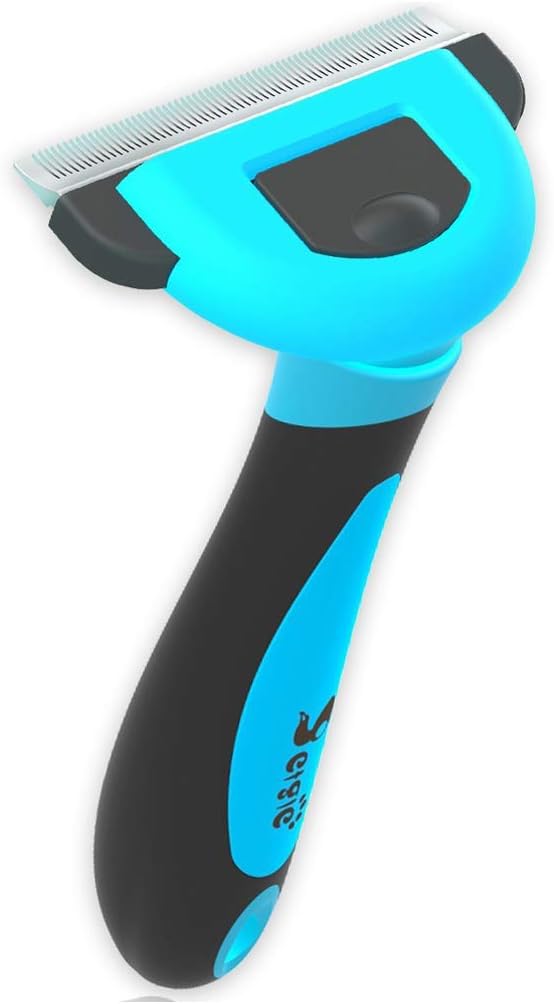
This is the tool that lives on the arm of the couch. The 2.5 inch head is small enough to fit between the front legs and along the jawline, where a full-size slicker just bulldozes the cat sideways. The bristle type is soft, so it lifts surface hair without scratching, and the comb side lets you check whether there is still loose undercoat underneath. That one-two is genuinely useful when you cannot tell whether you are finished.
For a short-haired cat this may be the only grooming tool you ever need. Coat length decides that: on a short coat the brush side alone keeps the couch reasonably clean, and the comb side confirms it. On a long coat it is a finishing tool rather than a workhorse. It will not break up mats, and it will not pull deep undercoat the way the FurorMeow does.
What it does better than anything else here is earn trust. It is gentle, it is quiet, and it works in short sessions, which is exactly how you get a nervous cat used to being handled. If your cat leaves after thirty seconds with every other tool, start here. Use it weekly and the habit builds itself.
How I tested
I brushed the same two cats with all four combs, a few times a week, across a full shedding season. One cat is short-haired and indifferent to being handled. The other is a long-haired mix who treats grooming as a personal insult. If you want the gentler version of this routine, it is worth reading how to deshed a cat without a fight before you start.
Every comb got the same treatment. I worked the back, the shoulders, the flanks, and the base of the tail, then checked what came off and whether the cat stayed. I noted where a tool snagged, where it scraped skin, and how it felt in the hand after five minutes. I cleaned each one after every session too, because a comb packed with fur stops working and you end up blaming the tool for your own laziness.
The comfort test mattered as much as the fur test. A comb that pulls a lot of hair but sends the cat running is worse than a comb that pulls a little and gets used three times a week. Consistency beats intensity when you are working on undercoat.
I did not weigh the fur or measure anything with calipers. What I watched for was simpler: does the coat look better after a week, does the cat come back for more, and does the comb still work after a month of real use.
Analysis and test results
Comb spacing is the whole story with budget combs. Wide teeth glide over the topcoat and leave the undercoat behind, which is why so many people brush a cat for ten minutes and still find hair everywhere. Tight teeth, like the V-shaped set on the FurorMeow, reach the loose undercoat. The catch is that tight teeth are unforgiving on tangles, so the correct cheap cat comb depends on what your cat's coat is doing right now.
Coat length decides more than brand does. Short coats need the right bristle type more than they need a deshedding edge; a soft brush and a quick pass with a fine comb is plenty. Long coats need a deshedding edge for the undercoat and a wider comb for the topcoat, in that order. The Cat Brush for Long Haired Cats 2-in-1 covers both halves of that job in one tool, which is why it sits at the top of this group.
The ideal cheap cat comb is not the one with the most features. It is the one your cat will sit still for. I would rather own a soft brush that gets used every week than a serious deshedding tool that comes out twice a year.
Some specifications on grooming gear have nothing to do with combs. Nail guard talk belongs to clippers, glove fit belongs to grooming gloves, and roller adhesive belongs to the lint roller you keep for the couch. None of that should influence which comb you buy, and none of it showed up in the results above.
The cheap cat comb comparison table
This is the table I would tape inside a cabinet door. Every row is a tool I have used on both cats, and the notes are what actually separated them.
| Comb | Best for | Coat length | Comb spacing | Price |
|---|---|---|---|---|
FurorMeow Pet Deshedding Tool with Curve Blade | Everyday undercoat removal | Short to long | Tight V-shaped teeth | Check current Amazon price |
Petgle Cat Brush & Cat Comb for Shedding | Touch-ups and finishing | Short and long | Soft brush plus comb edge | Check current Amazon price |
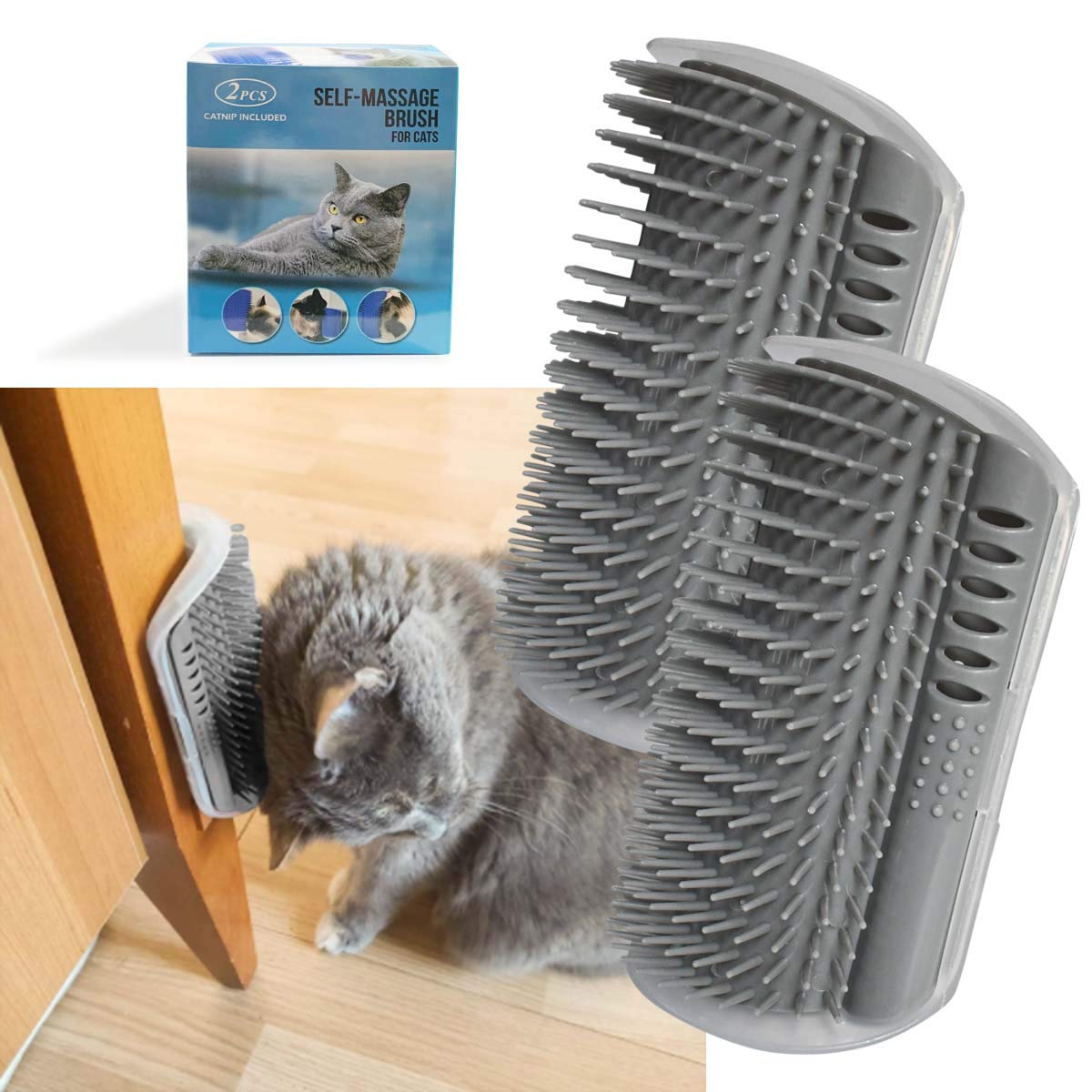 2 Pack Softer Self Groomer with Catnip Wall Corner Massage Comb Scratcher | Cats that hate being brushed | Any | Soft flexible pins | View on Amazon → |
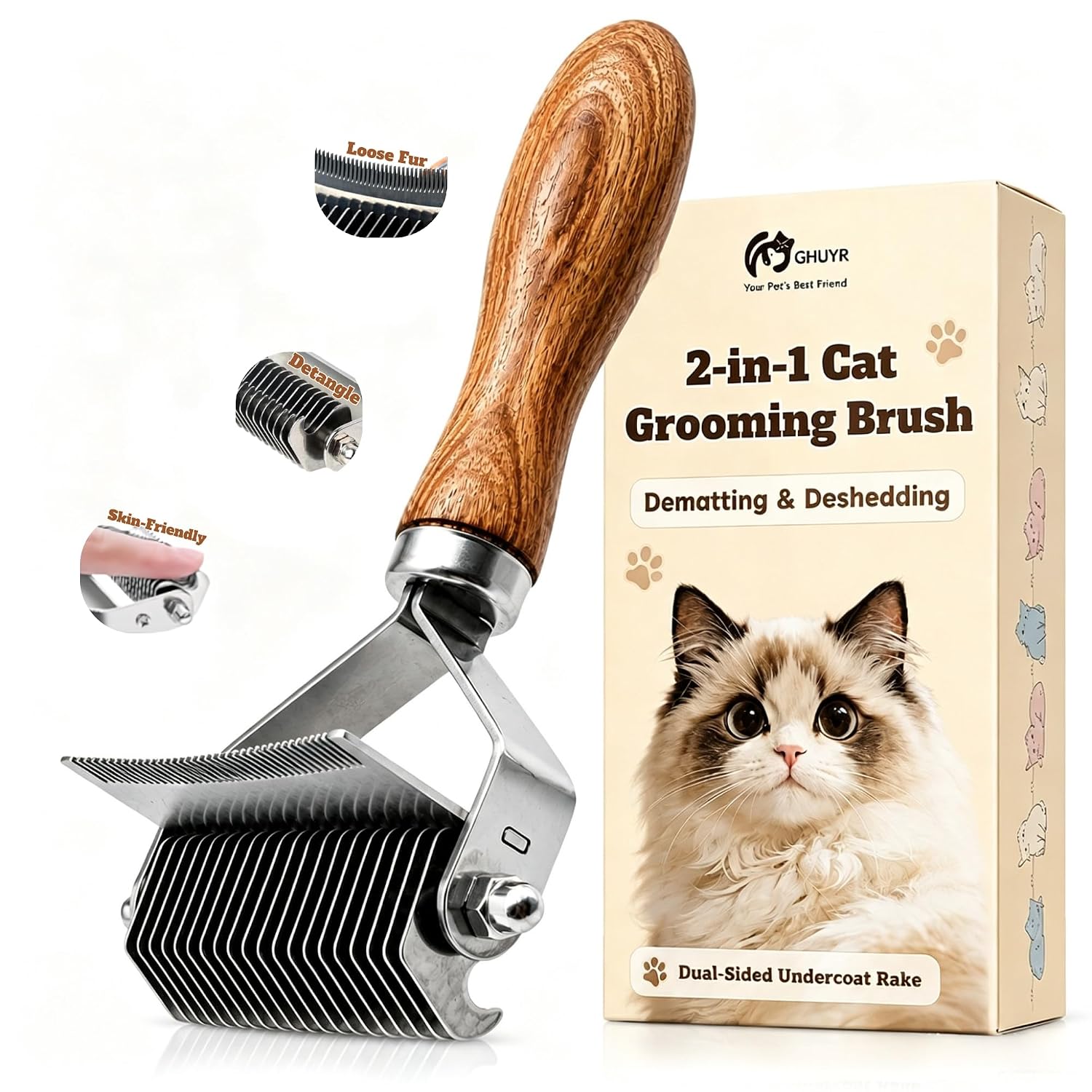 Cat Brush for Long Haired Cats, 2-in-1 Dematting & Deshedding Comb | Mats and heavy undercoat | Long | Dual-sided, fine and wide | View on Amazon → |
The pattern is simple. Buy the tool that matches the coat in front of you, not the tool with the longest feature list.
Self groomers and wall-corner combs
Not every cat will accept a comb in your hand. The 2 Pack Softer Self Groomer with Catnip Wall Corner Massage Comb Scratcher solves a different problem: it mounts at a corner at the cat's own height, holds a little catnip, and lets the cat groom itself on its own schedule. The pins are soft and flexible, so this is a massage and surface-hair tool, not a deshedding tool. It will not replace a comb and it will not clear undercoat.
What it does is keep a cat comfortable with being touched around the head and shoulders, and it gives a kitten something to rub against that is not your doorframe. For a cat that bolts the moment a comb appears, this is a reasonable first step before you try the Petgle.
When a dematting comb is the wrong tool
The Cat Brush for Long Haired Cats, 2-in-1 Dematting & Deshedding Comb is the most expensive of the four, and the only one here with a true dematting side. That side carries fine, closely set teeth that work through mats; the other side is a wider deshedding edge for the undercoat. Used properly, it is the tool for a long-haired cat that has moved past shedding and into matting.
Used daily on a short coat, it is overkill, and on a cat with sensitive skin the dematting side will do more harm than good. Keep it for the mats, then go back to a softer tool once the coat is clear.
Should you buy the FurorMeow Pet Deshedding Tool with Curve Blade?
Yes, if your cat has an undercoat and will tolerate a few short passes. It is the best overall pick because it does the job most people actually need, which is removing loose undercoat before it lands on the furniture, and it does that with less scraping than the cheap alternatives I have tried.
Skip it if your cat mats easily and has no patience for being handled, or if you only ever brush a short coat. For a short coat, the Petgle gets used more often and costs less. But if you have ever finished a brushing session, watched the cat walk away, and seen a fresh cloud of fur settle on the carpet, this is the tool that ends that.
Should you buy the Petgle Cat Brush & Cat Comb for Shedding?
Yes, as a first comb or as a finishing comb. It is the one I would hand to a new cat owner without hesitation, because it is gentle enough to be used badly and still not hurt anyone. The 2.5 inch head is the reason it works on cats that will not hold still for a full-size tool, and the brush and comb sides make it easy to tell when you are done.
The limits are real. It will not pull deep undercoat the way a deshedding tool does, and it will not touch a mat. If you have a long-haired cat in full shed, pair it with the FurorMeow: deshedding edge first, soft brush second, cat on your lap the whole time. That combination covers more coats than any single tool here, and neither one of them will break your budget.