Most beginners arrive at the fish aisle with one question on their phone, and it is usually aquarium filter vs aquarium heater for beginners. The two devices are not rivals and they do not do the same job, but the confusion is easy to understand: both plug into the wall, both sit in the water, and both cost less than a decent bag of food. A filter moves water and houses the bacteria that keep ammonia and nitrite from climbing. A heater holds the tank at a temperature your fish can actually live in. Skip the filter and the water turns toxic within days. Skip the heater in a tropical tank and your fish stop eating, stop growing, and start catching every infection that drifts past.
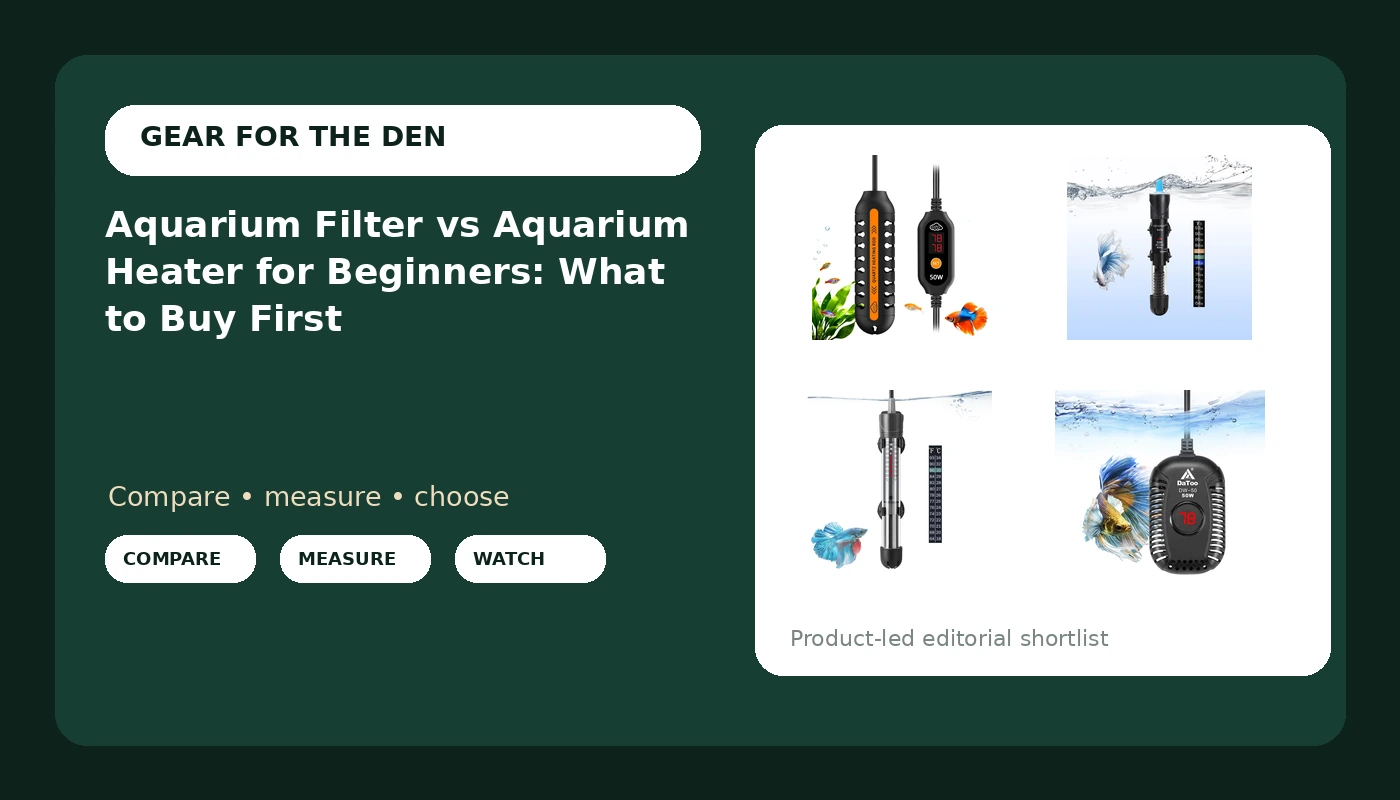
This comparison walks through the difference in plain terms, then lines up four budget 50W heaters side by side: the QZQ with a digital display, the AQUANEAT with a bundled thermometer, the HITOP rated for 6 to 15 gallon tanks, and the DaToo mini with an LED readout. If you are setting up a first tank and deciding where the money goes first, this is the order to spend it in.
Buy the filter first, then the heater. A filter is life support, a heater is comfort, and a tropical tank eventually needs both. For a 5 to 15 gallon tank, a 50W adjustable heater is the correct size, and the four models below are the budget tier worth comparing.
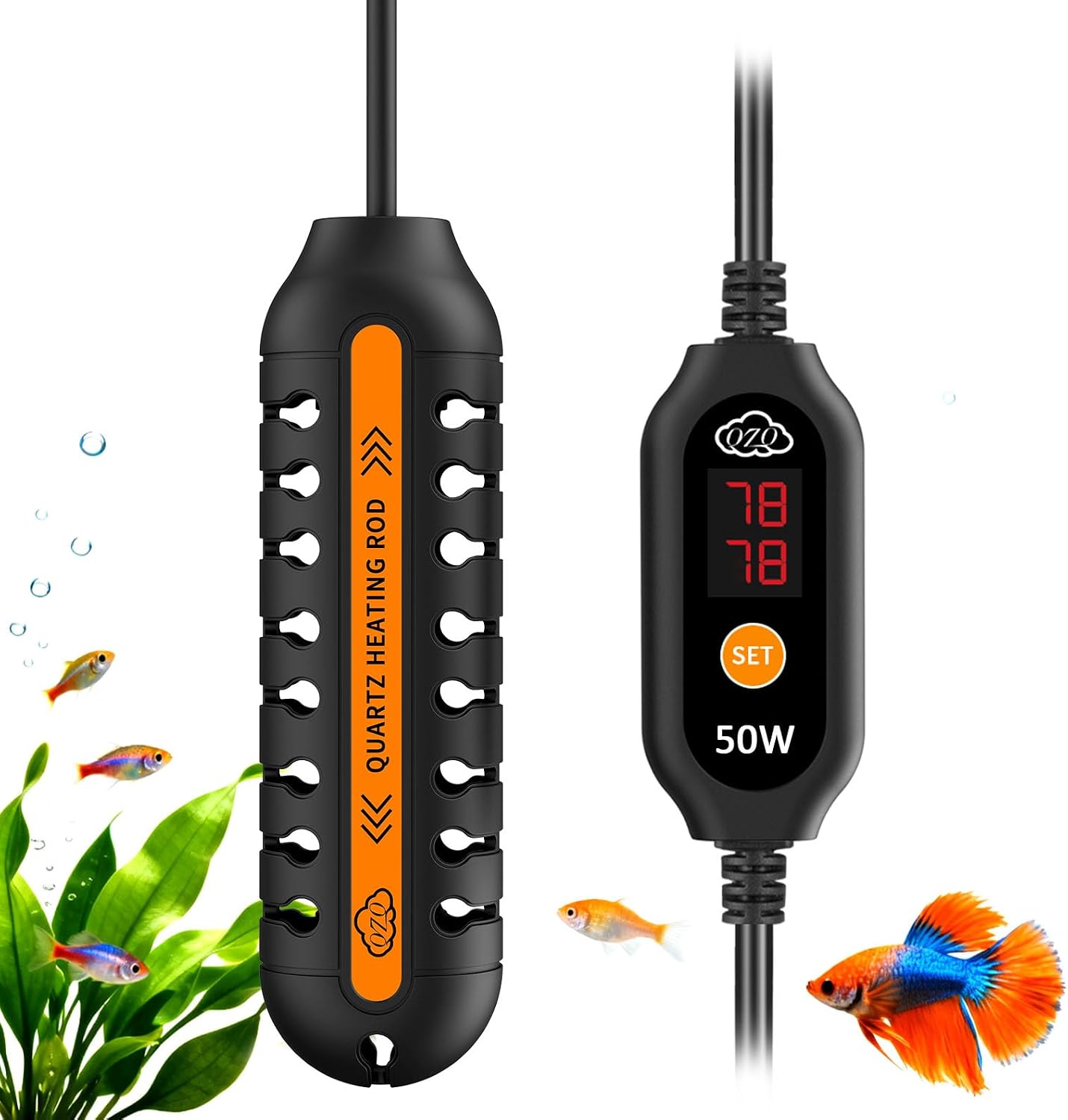
QZQ Aquarium Heater, 50W Adjustable Fish Tank Heater with Digital Display
Digital readout makes the set point obvious at a glance, and the adjustable thermostat covers the tropical range
The display is one more electronic part to fog or fail, and no thermometer is named in the kit
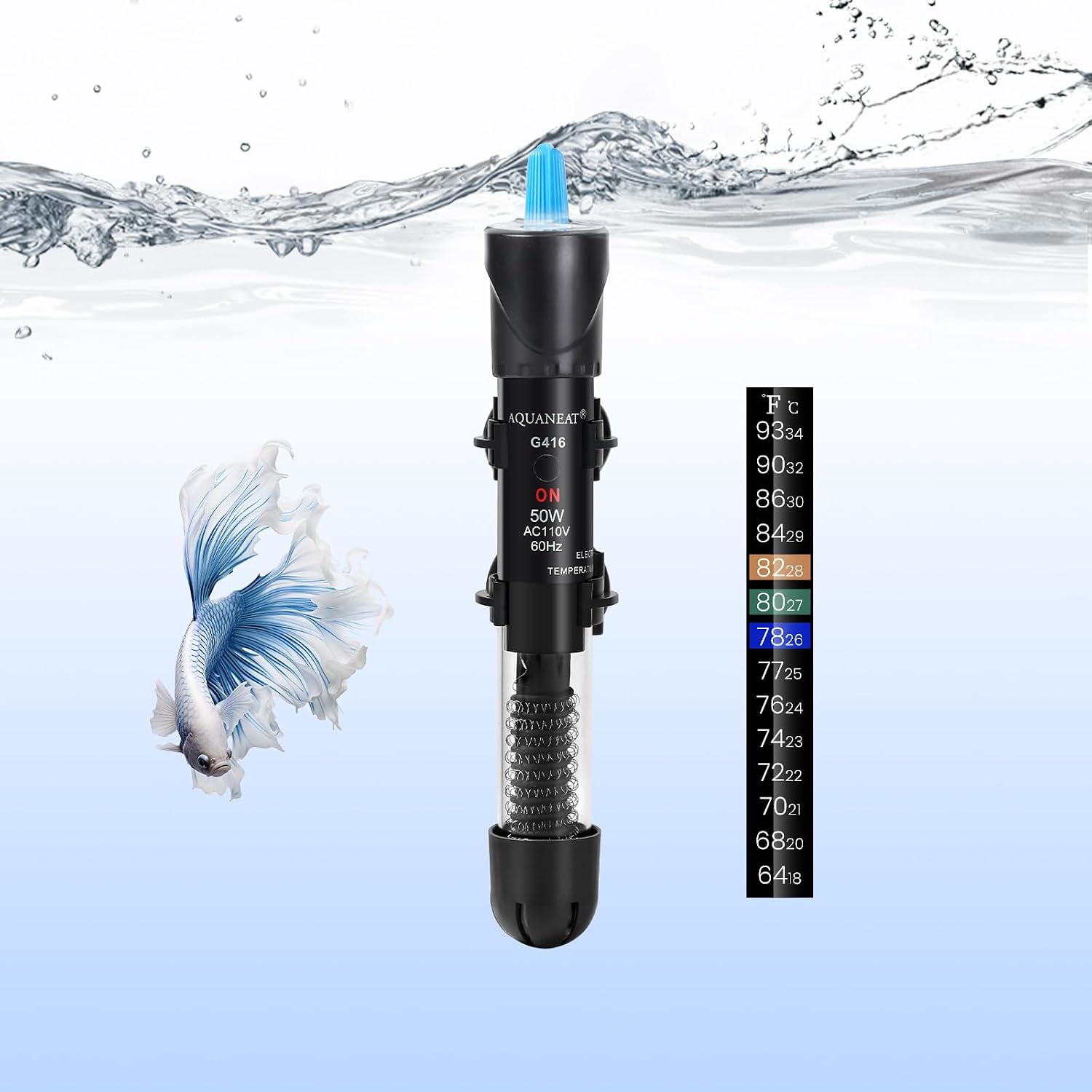
AQUANEAT Aquarium Heater, 50W Fish Tank Heater, Adjustable Submersible Water Thermostat with Thermometer
Adjustable thermostat plus a bundled thermometer, which is the simplest way to get a complete temperature kit
No digital readout, so you set it by feel and confirm with the glass thermometer
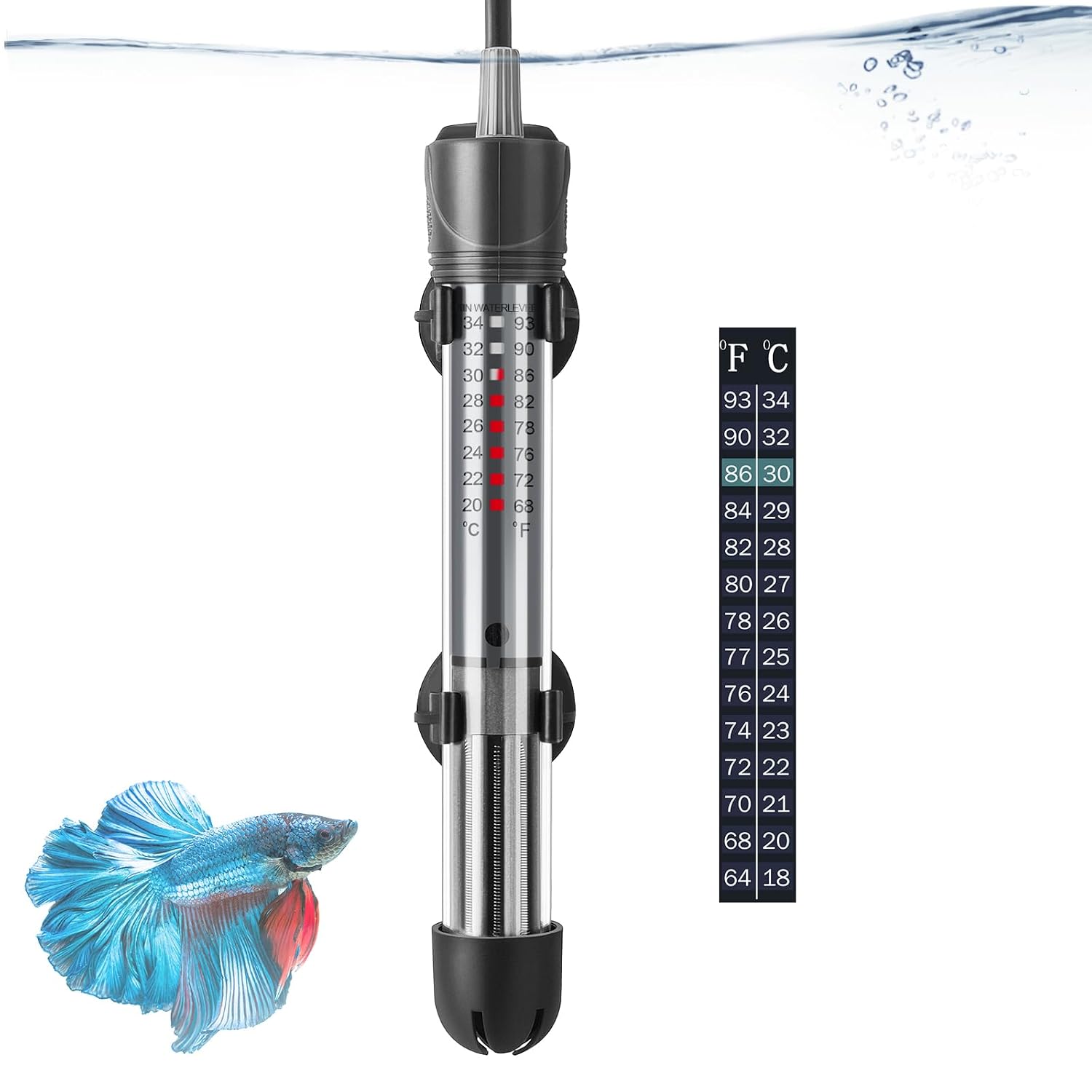
HITOP 50W Adjustable Aquarium Heater, Submersible Fish Tank Heater Thermostat with Suction Cups for 6-15Gal
Explicitly rated for 6 to 15 gallon tanks, so the sizing guesswork is done for you
Suction cup mounts can lose grip over time, and there is no digital display
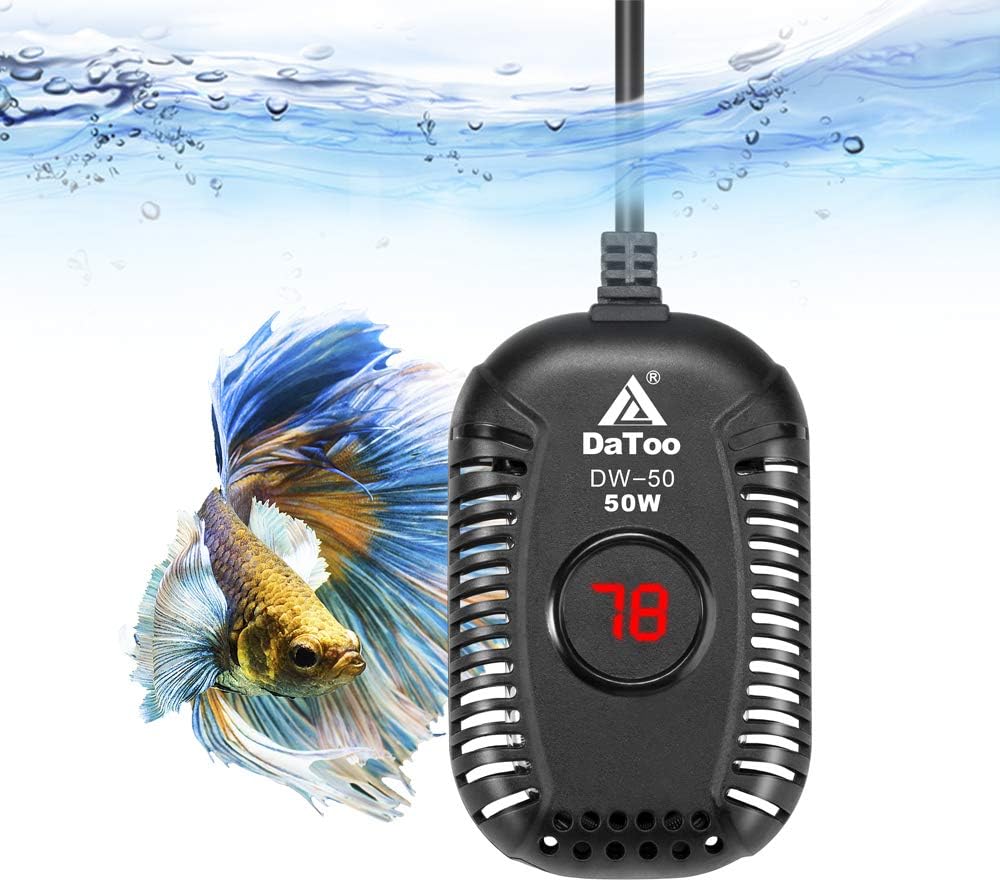
DaToo Small Aquarium Heater 50W Mini Fish Tank Heater 50 Watt Submersible with LED Temperature Display
Smallest body of the group with an LED temperature display, which suits nano tanks and desk setups
A mini heater works harder in larger water, and no thermometer is included
Prices and availability may change.
The real answer to aquarium filter vs aquarium heater for beginners
Here is the short version. If the tank is new, uncycled, and sitting on a kitchen counter, the filter is the purchase that keeps fish alive. Ammonia appears within days in water that has no established bacteria, and no heater removes it. A filter gives that bacteria a surface to colonise and keeps water moving so waste and oxygen circulate past the media.
The heater comes second, but second does not mean optional. Most of the fish sold to beginners, bettas, guppies, tetras, and corydoras, are tropical and want water in the mid seventies to low eighties Fahrenheit. A cold tank slows their metabolism, blunts their immune response, and makes ich and fin rot far more likely. A 50W heater with an adjustable thermostat is the least expensive insurance in the hobby.
There is one honest exception. If you keep goldfish or white cloud mountain minnows in a room that never drops below about 68F, a filter-only tank can work. Everyone else should plan to buy both, and the difference between aquarium filter and aquarium heater for beginners is not which one is better, it is which problem you actually have.
What the filter does that a heater cannot
Every filtration stage handles a different kind of mess. Mechanical filtration traps particles in sponge or floss. Biological filtration grows the bacteria that convert ammonia into nitrite and then into far less harmful nitrate. Chemical filtration, usually carbon or resin, pulls out colour, odour, and some dissolved compounds. A heater does none of this.
Flow rate is the number that decides whether a filter suits your tank. It is measured in gallons per hour, and a common target for a community tank is to turn the whole tank volume over four to ten times an hour. A 10 gallon tank with a 100 gallons per hour filter sits comfortably in that range. Too little flow and waste settles; too much and small fish get pushed around.
Tank volume and stocking decide which filter you need, and so does substrate grain. Fine sand compacts and can clog an intake, while gravel lets water pass through more freely. None of this has anything to do with temperature. Lighting is a separate purchase again, and its kelvin rating matters to plants and colour, not to fish health.
What the heater does that a filter cannot
A heater does one job, and it does it with a resistance coil and a thermostat. Wattage is the sizing number. The old rule of thumb is five watts per gallon, which puts a 50W heater at about 10 gallons, with a comfortable ceiling near 15 gallons in a normally heated room. That lines up with the HITOP listing directly, which names a 6 to 15 gallon range.
The thermostat range is the second number to check. An adjustable heater usually lets you dial somewhere between the high sixties and the low nineties Fahrenheit, which covers every tropical fish you are likely to keep as a beginner. A preset heater is fixed near 78F, which is fine for a betta and useless if you ever need to raise the temperature to treat ich.
Placement matters more than most people expect. A submersible heater should sit near the filter outflow so warmed water spreads through the tank instead of pooling at one end. Suction cup mounts make that easy to reposition. Keep the heater below the water line during water changes, and unplug it before the level drops.
The four 50W heaters, and who each one suits
QZQ Aquarium Heater, 50W Adjustable Fish Tank Heater with Digital Display (Check current Amazon price) is the one to pick if you like seeing the number. The digital display shows the set temperature without you squinting at a dial, and the adjustable thermostat covers the tropical range. It suits a beginner who wants confirmation at a glance and does not mind one more electronic component sitting in the water. Pair it with a cheap glass thermometer, since a display shows the set point rather than the water temperature.
AQUANEAT Aquarium Heater, 50W Fish Tank Heater, Adjustable Submersible Water Thermostat with Thermometer (Check current Amazon price) bundles the two things a beginner needs in one box: an adjustable submersible heater and a thermometer to check it against. There is no digital readout, so you set the dial, wait a day, and read the glass. For anyone who wants the simplest possible temperature kit, the bundled thermometer is the useful part.
HITOP 50W Adjustable Aquarium Heater, Submersible Fish Tank Heater Thermostat with Suction Cups for 6-15Gal (Check current Amazon price) is the most explicit about sizing of the four. The 6 to 15 gallon rating removes the guesswork, and the suction cups let you place it low on the back glass near the filter outflow. It is the pick for a standard 10 gallon starter tank, where the wattage and the physical size both fit without crowding the decor.
DaToo Small Aquarium Heater 50W Mini Fish Tank Heater 50 Watt Submersible with LED Temperature Display (Check current Amazon price) is the smallest body in the group. The LED display and mini housing suit a nano tank, a single betta setup on a desk, or a quarantine container where a full size heater looks absurd. The trade is that a small heater in a larger volume works harder to hold temperature, so keep it in the small tank it was designed for.
Sizing a heater: wattage, tank volume, and the five watt rule
Five watts per gallon is the starting point, and it assumes a room that stays around 68 to 72F. A 50W heater therefore covers roughly 10 gallons, and it can hold a 15 gallon tank if the room is warm. If your tank sits in a cold basement or beside a window in January, size up. Two smaller heaters are also a legitimate strategy in a bigger tank, because if one fails the other keeps the water from crashing.
Tank volume is not the only factor. Surface area, whether the tank has a lid, and how much flow moves the water all change how fast heat escapes. A covered 10 gallon tank with a filter running holds temperature far better than an open tank with still water.
Buy a heater rated slightly above your tank rather than exactly at it. A 50W heater working at half effort lasts longer than a 25W heater running flat out, and the difference in asking price is small. Compare the four above and weigh that against the cost of replacing a tank of fish.
Thermostat range and why adjustable beats preset
An adjustable thermostat is worth the extra few dollars every time. Preset heaters are set near 78F at the factory, which is right for a betta or a community tank of tetras, and wrong the moment something changes. If you need to raise the temperature to treat ich, or drop it a couple of degrees for a cool water species, a preset heater cannot help you.
The thermostat range on the models here runs from the high sixties into the low nineties Fahrenheit, which is wider than most beginners will ever need. What matters more than the top and bottom of the range is stability. A heater that holds 78F all week is better than one that swings between 74F and 82F, even if the average is the same.
That is why a separate thermometer is not optional. The dial or the display tells you what the heater is trying to do. The thermometer tells you what the water is actually doing, and it is the only way to catch a thermostat that has drifted before your fish do.
The trade-offs of a budget heater
Every heater in this comparison sits in the entry tier, and the trade-offs are consistent. Thermostats at this price are not laboratory instruments, so expect a degree or two of drift between the number on the dial and the number on the thermometer. None of them will last forever. Heaters are a wear item in general, and a small one running year round is a reasonable annual replacement.
There is also no redundancy. One heater means one point of failure, and a stuck heater can cook a small tank quickly. If you keep expensive fish, add a temperature controller or a second small heater so a single failure is survivable.
The smaller physical size that makes the mini heaters appealing cuts both ways. A compact body has less surface area to transfer heat, so it works harder in a larger volume and cycles more often. Match the heater to the tank rather than buying the smallest one you can find.
What to buy first when the budget is tight
Searching aquarium filter vs aquarium heater for beginners usually means you have one tank and one budget, so the answer has to be an order. The honest version is that the filter is not negotiable and the heater is conditional. A tank with no filter accumulates ammonia and kills fish within a couple of weeks. A tank with no heater only fails if the room is cold or the fish are tropical.
So the order is filter, thermometer, heater, light, then decorations. If you keep a betta in a heated apartment and the water sits at 78F on its own, you can delay the heater for a month. If your house drops to 65F at night, you cannot.
Framing it as aquarium heater for beginners vs aquarium filter also misses the timing, because the two purchases happen at different moments. The filter goes in on day one, before any fish. The heater can go in the same week, and it should be running before the fish arrive so the temperature is stable from the first hour. The question aquarium filter or aquarium heater for beginners is really a question about which week you are in.
What to check in the first week
Give any new heater a week of running with no fish, or with the fish you already have, and watch three things. First, whether the thermometer and the heater agree. Second, whether the temperature holds overnight, when the house is coolest. Third, whether the heater cycles on and off at a sane rate rather than staying on constantly, which usually means it is undersized for the volume.
Check the water line before every water change and unplug the heater while the level is low. A submersible heater that runs dry for even a minute can crack. Check the suction cups too, since a heater that slides down into the substrate is doing very little for the top of the tank.
Finally, keep the box and the receipt. Entry tier heaters fail, and a warranty claim is a lot easier in the first ninety days than in month ten.
The bottom line
For a first freshwater tank, buy the filter first and the heater immediately after. Of the four 50W models here, the HITOP is the easiest to size because it names its gallon range, the AQUANEAT is the simplest complete kit with its bundled thermometer, the QZQ is the one for anyone who wants a digital readout, and the DaToo is the right shape for a nano tank. Whichever you choose, spend the extra few dollars on a glass thermometer and check the temperature yourself for the first week. That habit prevents more fish losses than any upgrade you can buy later.