The deshedding brush vs dog grooming clipper question has cost me more money than any other decision in fourteen years of living with shedding dogs. I bought the clipper first, because one offhand comment from a groomer made it sound like the grown-up answer. It was not. It buzzed a stripe down the middle of a shepherd mix's back, sailed straight past the undercoat that was actually causing the problem, and the tumbleweeds kept rolling across the kitchen floor for another month. The brush I bought afterward, for less than the price of a spare blade, is the tool that finally emptied that coat.
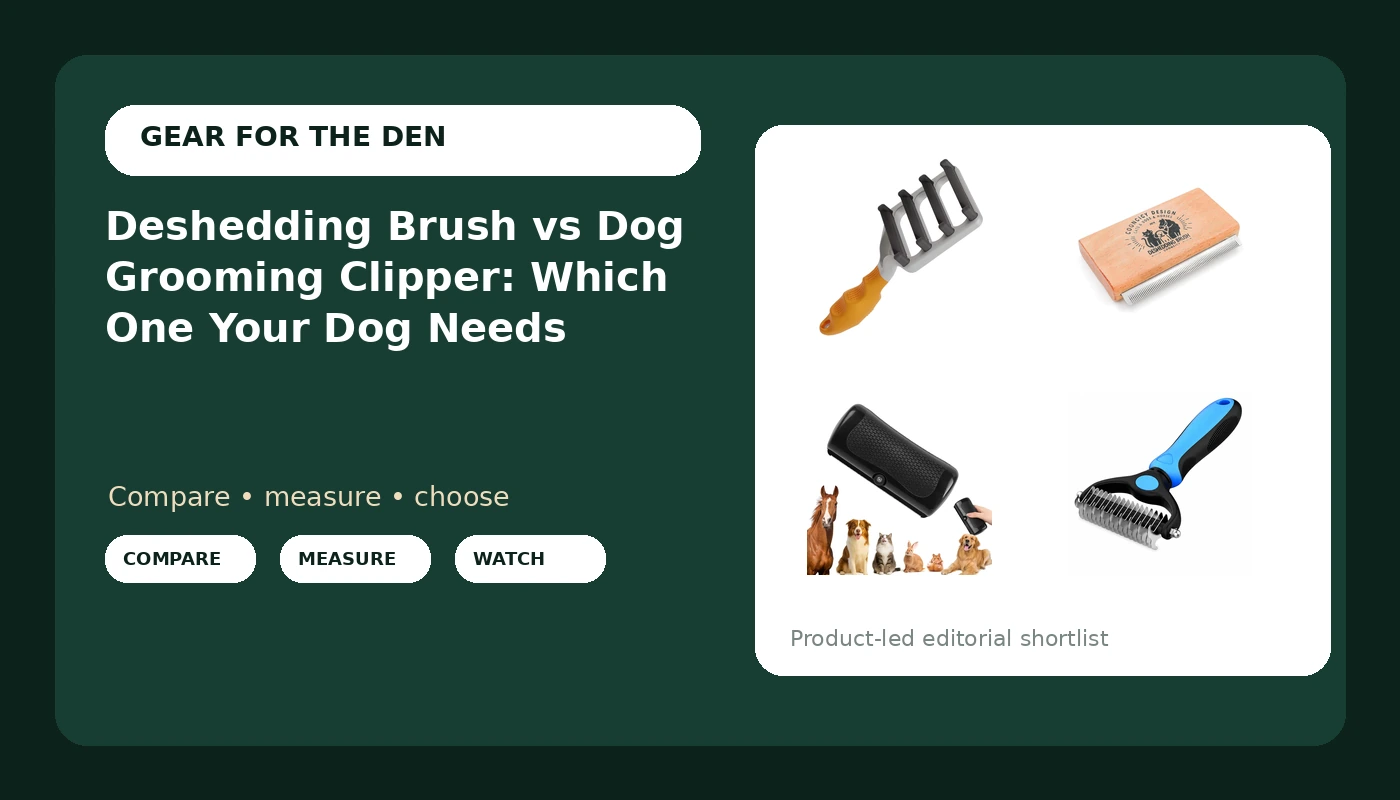
For most shedding dogs, a deshedding brush is the better first purchase, and the Cooncicy Deshedding Dog Brush with Wood Handle is the one I would hand a new owner, because the wood grip handle makes a twenty-minute session on a double coat far easier on the wrist than a molded plastic handle does. A clipper earns its keep only when the coat is matted, impacted, or so long that brushing has stopped being maintenance and started being a rescue. The four tools below are all brushes, and that is the point: for everyday shedding, this is the half of the comparison you actually shop in.
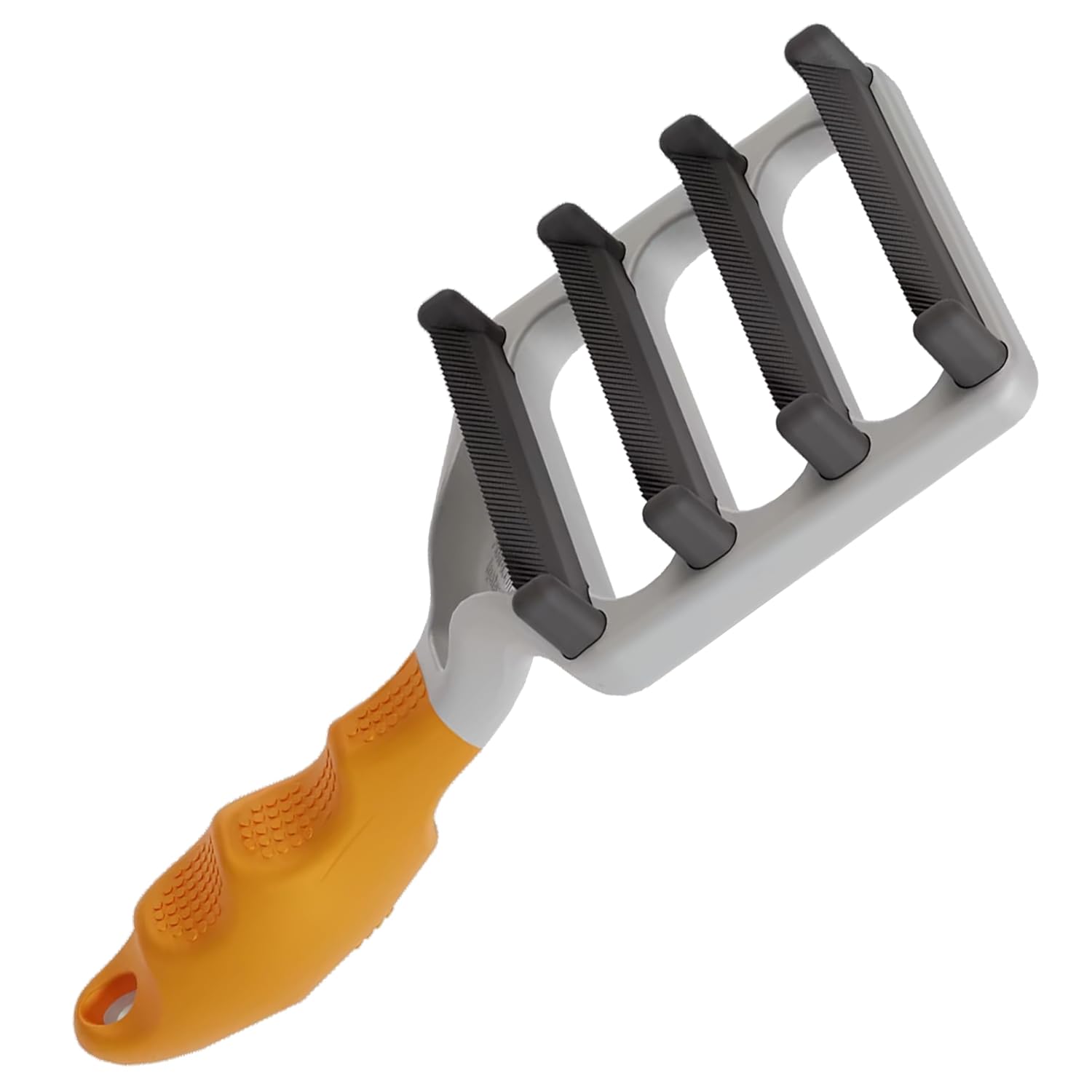
FUR4 deShedding Dog Brush for Long Hair Dogs, Pet Hair Brush with 4 Carbon Fiber Edges, deShedding Tool Removes Loose Fur, Gentle & Effective Dog Grooming Brush for Shedding
Four carbon fiber edges are built to cover more coat per stroke, and the whole design is aimed at long, dense hair
The premium option of the four, which is hard to justify for a short-coated shedder
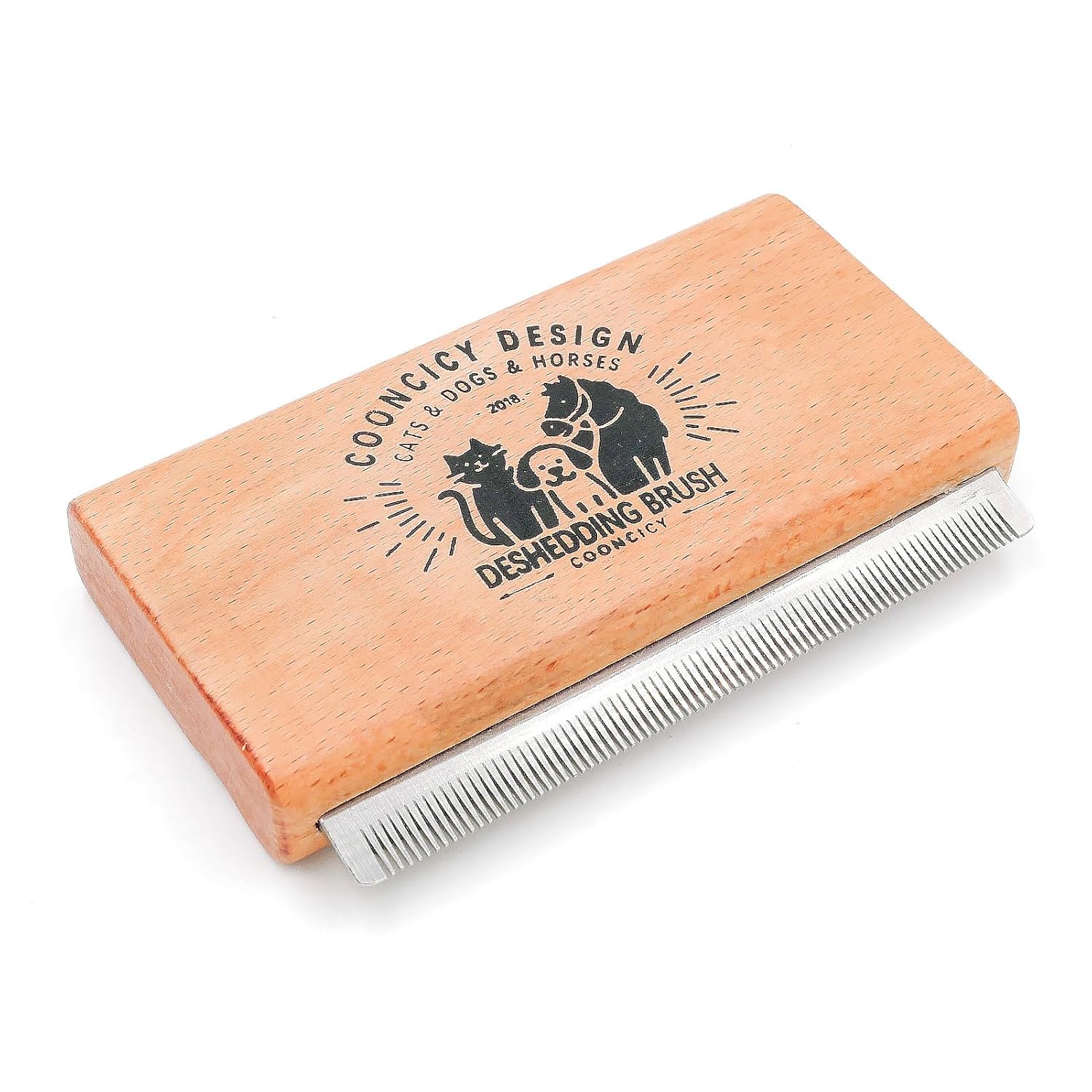
Cooncicy Deshedding Dog Brush with Wood Handle
A wood grip handle that stays comfortable through a long session, and a head simple enough to rinse and dry
A plain single-row head means more strokes on a thick undercoat
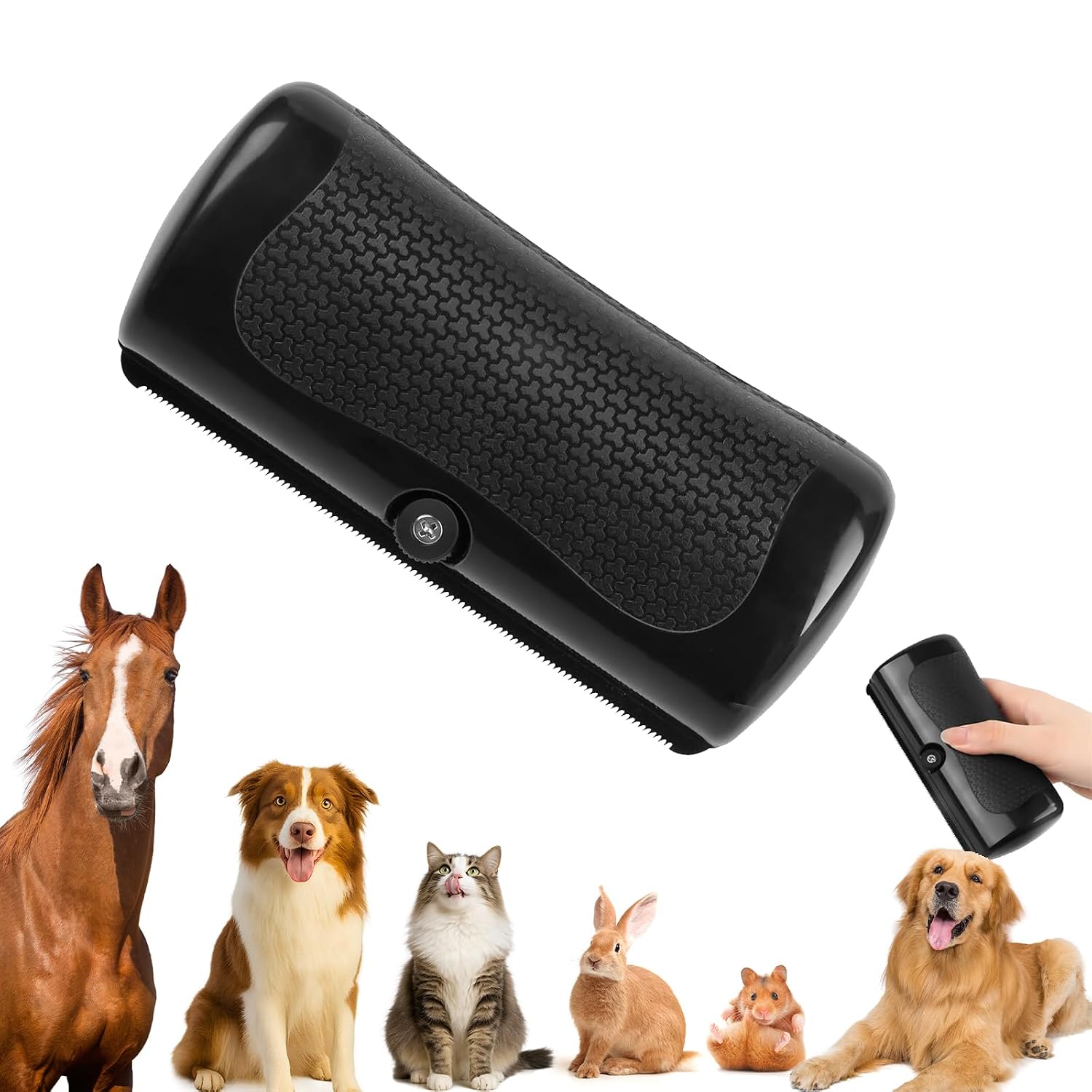
Deshedding Brush for Pets, Easy Hair Removal Tool,Dog Brush for Shedding,Shedding brush for Dogs,Cats, Rabbits, Horses
The only one of the four that names cats, rabbits, and horses, so it is the multi-pet pick
Generic build and a small head, so a large dog takes a while
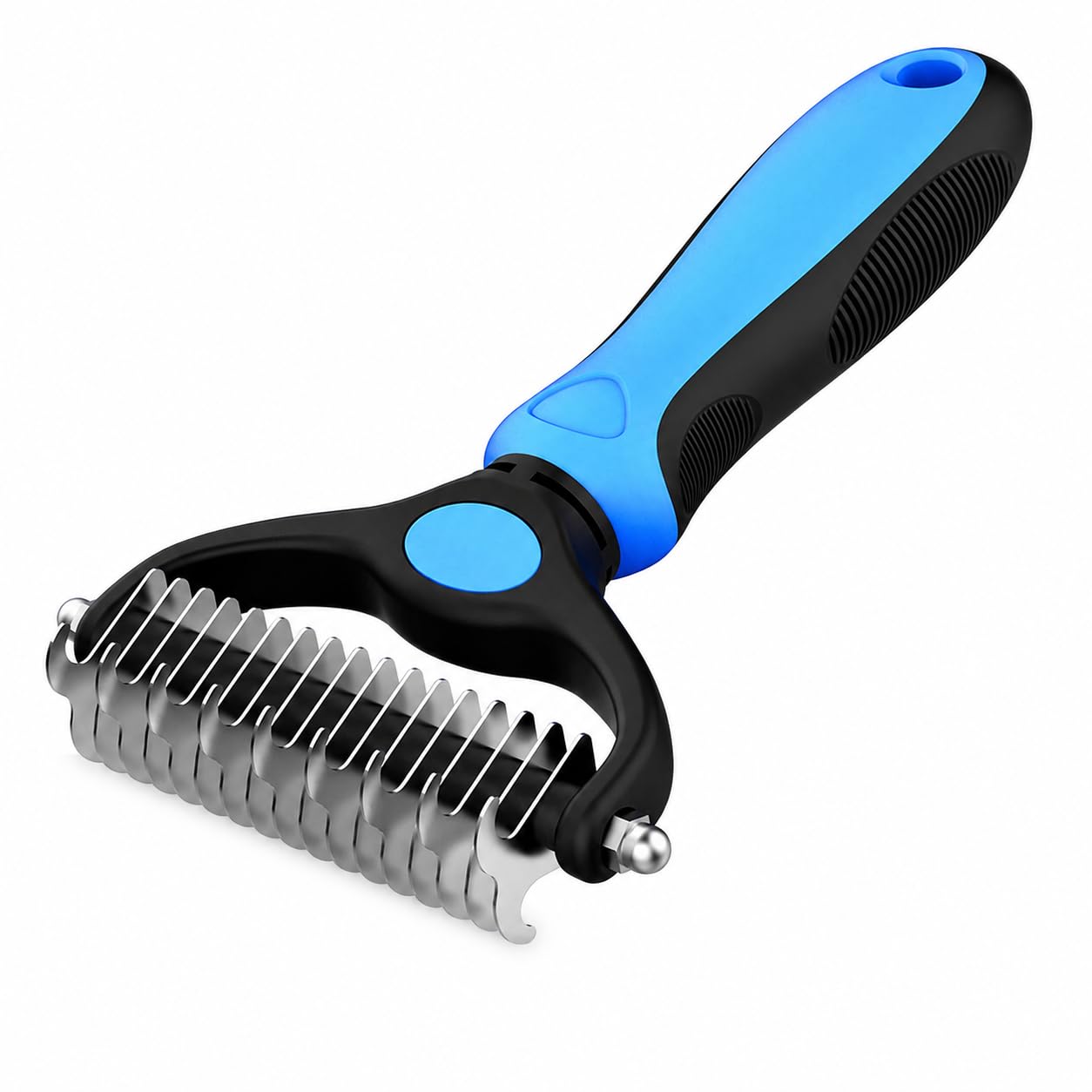
Pet Grooming Tool,Dog Brush For Shedding,Deshedding Dog Brush
The entry-level way to find out whether your dog tolerates a deshedding head at all
A thin specification list, and light heads are the first thing to flex under a heavy coat
Prices and availability may change.
How the deshedding brush vs dog grooming clipper choice actually splits
A deshedding brush pulls loose hair out of the undercoat and leaves the topcoat standing, so the dog still looks like itself when you finish. A clipper cuts hair to a set length, which means it takes the topcoat along with everything underneath it, and the shape you get is the shape you keep for weeks. One is a maintenance tool you reach for twice a week. The other is a reset button, and reset buttons are for coats that have already gone wrong.
The difference between deshedding brush and dog grooming clipper comes down to that word: maintenance. It does not matter how quiet the motor noise is or how well the blade guard is made if the coat was never the problem. Loose undercoat is the problem, and a brush is the tool shaped for exactly that job.
The second half of the split is tolerance. Clippers hum and vibrate against the skin, and plenty of dogs decide within the first thirty seconds that they hate the entire concept. A brush is silent, and you can use it while the dog is half asleep on the rug. If your dog already leaves the room when the nail trimmers come out, the brush is the version of this routine you will actually repeat.
Start with coat type, not with the tool
The deshedding brush vs dog grooming clipper decision is really a coat type decision in disguise, and most owners get it backwards by shopping for a tool before they have looked at the dog.
A double coat, the kind on a husky, a shepherd, a corgi, or an akita, has a dense undercoat that blows twice a year and sheds steadily in between. That coat wants a deshedding brush. The undercoat is designed to come out, and a brush helps it along without touching the guard hairs that keep the dog warm in January.
A short single coat, the kind on a boxer or a Great Dane, sheds stiff little hairs that stab into fabric. There is no undercoat to pull, so a fine-toothed or rubber-edged brush does most of the work, and a clipper is overkill.
A curly or wool coat, the kind on a poodle or a doodle, mats instead of shedding. A deshedding brush does very little there. Mats need a slicker brush, a metal comb, and often a groomer, and a clipper becomes genuinely useful for keeping the coat short enough to stay mat-free.
A long silky coat, the kind on a Yorkie or a shih tzu, needs a brush for daily upkeep and a clipper only for hygiene trims around the feet and sanitary areas.
Undercoat, topcoat, and why cut hair still sheds
The most persistent myth in this whole comparison is that clipping stops shedding. It does not. A clipper cuts hair short, and short hair still falls out. It just falls out shorter, which means it weaves itself into upholstery instead of sitting on top of it where a vacuum can find it. If shedding volume is your complaint, cutting the coat can make your furniture problem worse rather than better.
There is also a warning that comes up every time a double-coated dog gets shaved down for summer. Groomers will tell you that clipping through the undercoat can change how the coat grows back, and that a dog without its undercoat loses some ability to regulate temperature. I have watched that regrowth argument play out on a friend's dog, and it was not pretty. Whatever you decide, that is a decision to make once, not a routine.
A deshedding brush works the other way. It removes the loose undercoat before it lands on the floor, and it leaves the topcoat intact, so the dog keeps the coat that was doing its job.
Bristle type and blade guard: the two specs that decide the job
Bristle type is the first thing to look at on the brush side. Fine stainless teeth reach into a dense undercoat. Carbon fiber edges, like the ones on the FUR4, are built to sweep more surface per stroke and to flex instead of scraping. Rubber nubs suit short coats and sensitive skin, and slicker pins belong to a different job entirely, which is detangling rather than deshedding. Those formats are not interchangeable, and a brush that is wrong for the coat will either skate over the top or scratch the skin.
On the clipper side, the blade guard is the spec that keeps you out of trouble. A guard comb sets the length the blade leaves behind, and without one you are one wrong angle away from a bald patch on a dog that will take months to grow it back. If you are weighing a dog grooming clipper vs deshedding brush for a nervous first-timer, the guard is the thing that decides whether a mistake is fixable or permanent.
Motor noise, airflow, and the parts of clipping nobody warns you about
Nobody mentions the airflow until they own a clipper. The vents push warm air out of the housing and across the dog, and some dogs hate that sensation more than they hate the sound. Add motor noise, which is constant and close to the ears, and you have a tool that a lot of dogs will not tolerate without a slow introduction spread over several weeks.
Then there is the maintenance list: blades that need oiling, blades that get hot and need to be swapped mid-groom, and cords that limit where you can work. A clipper is a small machine, and machines need attention. If you groom one anxious dog at home, that attention is the part that wears you down before the dog ever gets tired.
A deshedding brush has no motor, no airflow, no heat, and no cord. You rinse it, you dry it, you put it in a drawer. That simplicity is not a small thing when the alternative is a grooming session both of you dread.
Grip handle, session length, and why the cheap brush is not the bad brush
Deshedding is repetitive work. A full session on a double coat can run twenty minutes, and your hand makes the same motion the whole time, which is why the grip handle matters more than most buyers expect. A wood handle absorbs some of that pressure and stays comfortable. A thin plastic handle with a hard edge will leave a red mark on your palm by the time you finish the second side.
Cheap brushes get a bad reputation they do not fully deserve. The failure modes are specific: teeth that flex under a thick coat, edges that catch instead of gliding, and handles that crack. None of those are guaranteed at a low price, and none of them are impossible at a high one. What you are usually buying with a premium brush is better material and a shape that covers more coat per stroke, which saves you minutes, not hair.
Matching the four brushes to a dog
FUR4 deShedding Dog Brush for Long Hair Dogs. The name states the target. Four carbon fiber edges instead of one row of teeth means each pass covers more coat, which is the right shape for a collie, an Aussie, or anything with long, dense hair that wraps around a narrow head. It is the premium option of the four, so it makes the most sense for an owner who has already accepted that brushing is a several-times-a-week habit rather than a spring project. Check current Amazon price
Cooncicy Deshedding Dog Brush with Wood Handle. The wood grip handle is the reason this is my default recommendation. The head is simple, easy to rinse, and shaped for undercoat rather than for show, and the handle is the part you will notice every single session. If you own one medium or large dog with a normal double coat, start here. Check current Amazon price
Deshedding Brush for Pets. This is the multi-pet pick. The listing names cats, rabbits, and horses alongside dogs, and the smaller head is genuinely useful on a cat or a rabbit, where a wide dog brush would scrape skin. On a big dog, that same head means a longer session, so it suits a household with several small animals more than a household with one shepherd. Check current Amazon price
Pet Grooming Tool,Dog Brush For Shedding,Deshedding Dog Brush. The entry-level option of the four, and the one I would buy if I were not yet sure my dog would sit still for a deshedding head at all. The specification list is short, so treat it as a trial run rather than a lifetime tool. For a dog that has never been brushed, that is a fair trade. Check current Amazon price
Skin care, oatmeal concentration, and what a brush cannot fix
Brushing does one useful thing beyond hair removal: it moves the coat's natural oils from the skin outward, which is part of why a brushed dog looks better than an unbrushed one even when the shedding is under control. What it does not do is fix skin. If your dog is chewing at its flanks, scratching through the evening, or leaving flakes on the couch, that is a skin problem rather than a shedding problem, and no tool on this page will solve it.
That is where a shampoo with a meaningful oatmeal concentration earns its place in the routine, along with a vet visit if the itching never stops. A deshedding brush dragged over irritated skin makes the irritation worse, and a coat that is inflamed underneath will keep shedding no matter how often you go over it.
Should you buy a cheap brush before a clipper?
Yes, and this is the one piece of advice I give without hedging. If you are deciding between a deshedding brush or dog grooming clipper for a dog that sheds normally, spend the small money first, use it for a month, and see whether the shedding volume comes down. Most of the time it does, and you never need the clipper at all.
Buy the clipper when the situation has already moved past brushing: mats that have tightened against the skin, an impacted undercoat that a brush skates over, or a senior dog whose coat has stopped shedding on its own and needs to be kept short for hygiene. That is a real category of need, and it is a different purchase from a shedding tool.
What I'm watching next
Two things are on my list for the next round of the deshedding brush vs dog grooming clipper split. The first is whether four carbon fiber edges hold their shape over a full shed season better than a plain single-row head, which is the only question that really separates a premium brush from a cheap one. The second is the clipper side of the equation: guard combs, blade heat, and which models a nervous dog will actually tolerate. When that piece is done, this page will link to it.
If you want the short version of everything above: brush the undercoat, keep the clipper for emergencies, and do not let anyone shave a double coat just because summer is coming.