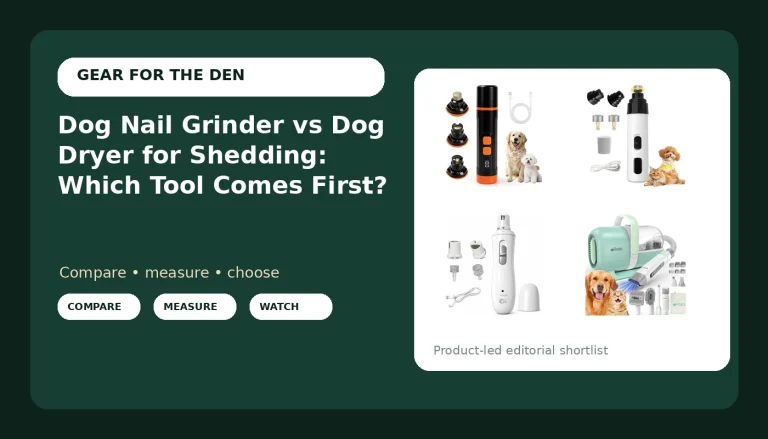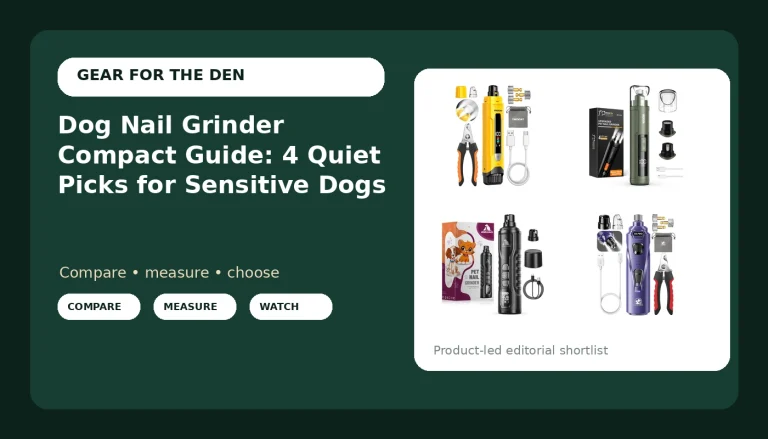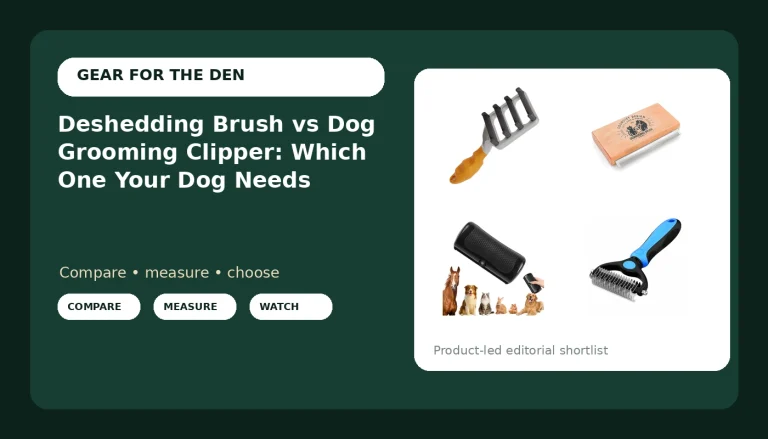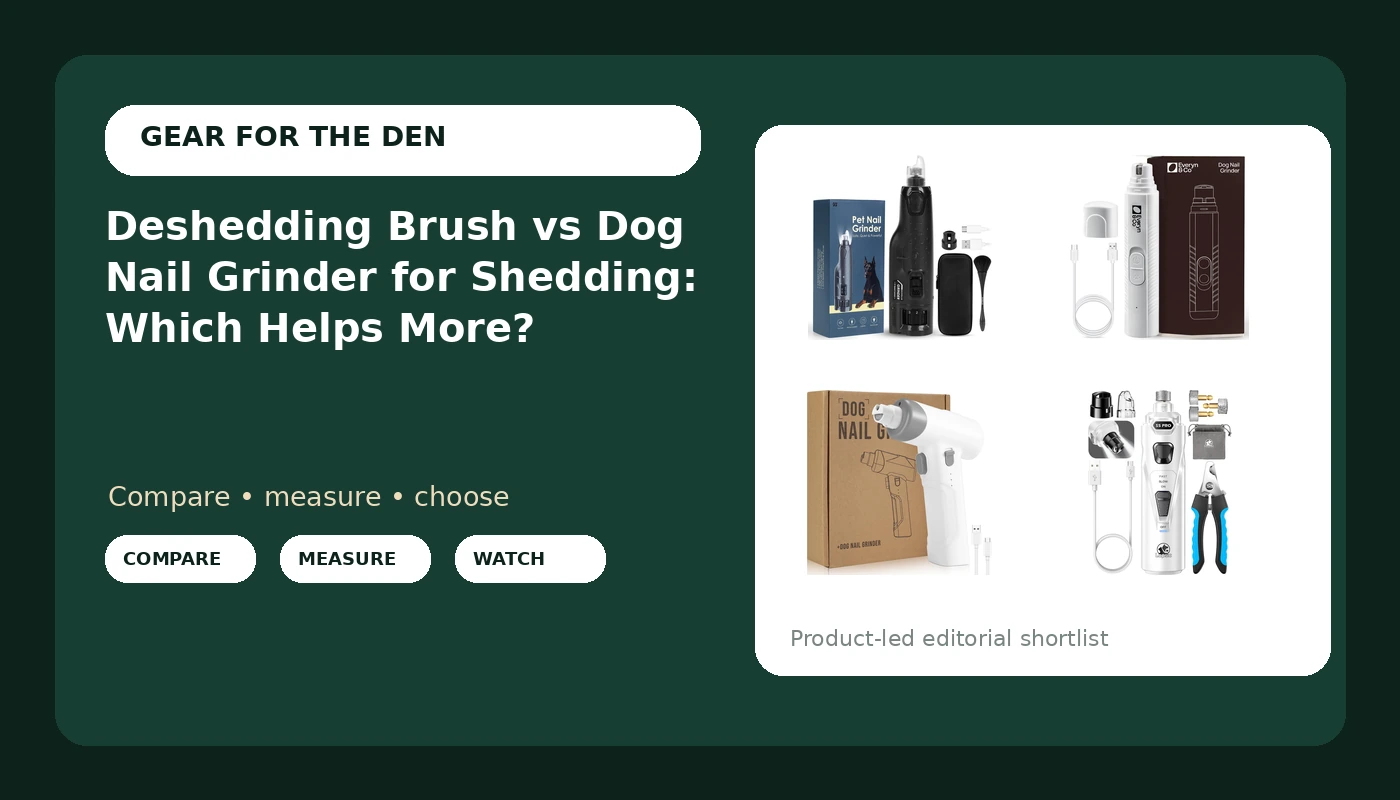
The short answer to deshedding brush vs dog nail grinder for shedding is that only one of them addresses shedding at all. A deshedding brush removes loose undercoat from the coat, while a dog nail grinder trims nails. If your dog is leaving hair on the couch, the grinder is not the fix. If your dog's nails are clicking on the floor, the brush is not the fix. This comparison sorts out that confusion, then helps you choose the right nail grinder if you need one for the rest of the grooming routine. For a broader look at coat care, see dog grooming tools for heavy shedders.
The best tool for shedding is a deshedding brush matched to your dog's coat type, not a nail grinder. But if you already have the brush and you need to finish the grooming session, the four grinders below are the ones worth comparing.
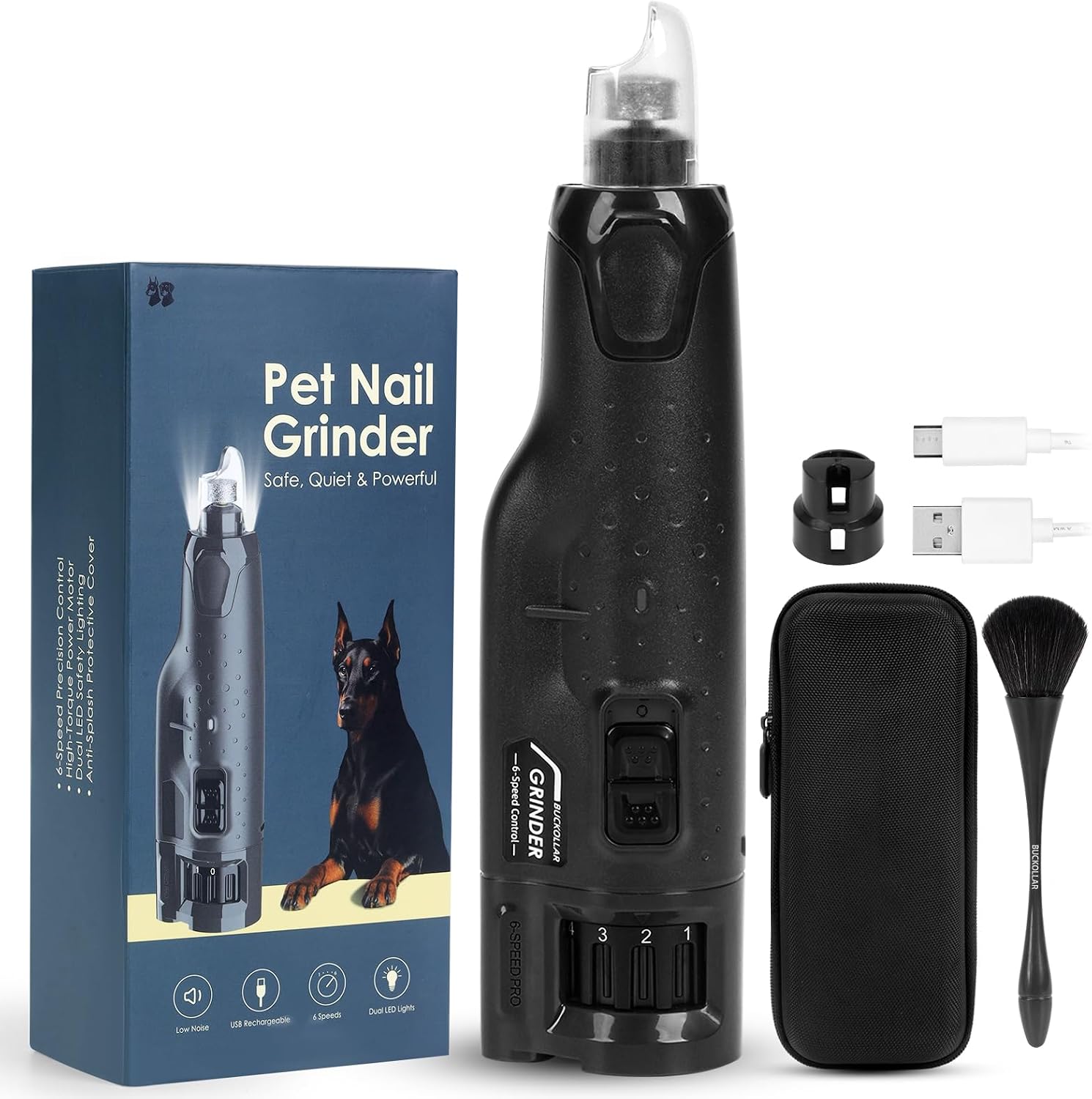
BUCKOLLAR Dog Nail Grinder for Large Dogs, Quiet 6-Speed with LED Light
Six speed settings, large-dog positioning, and an LED light for visibility
The large-dog focus may be more tool than a small breed needs
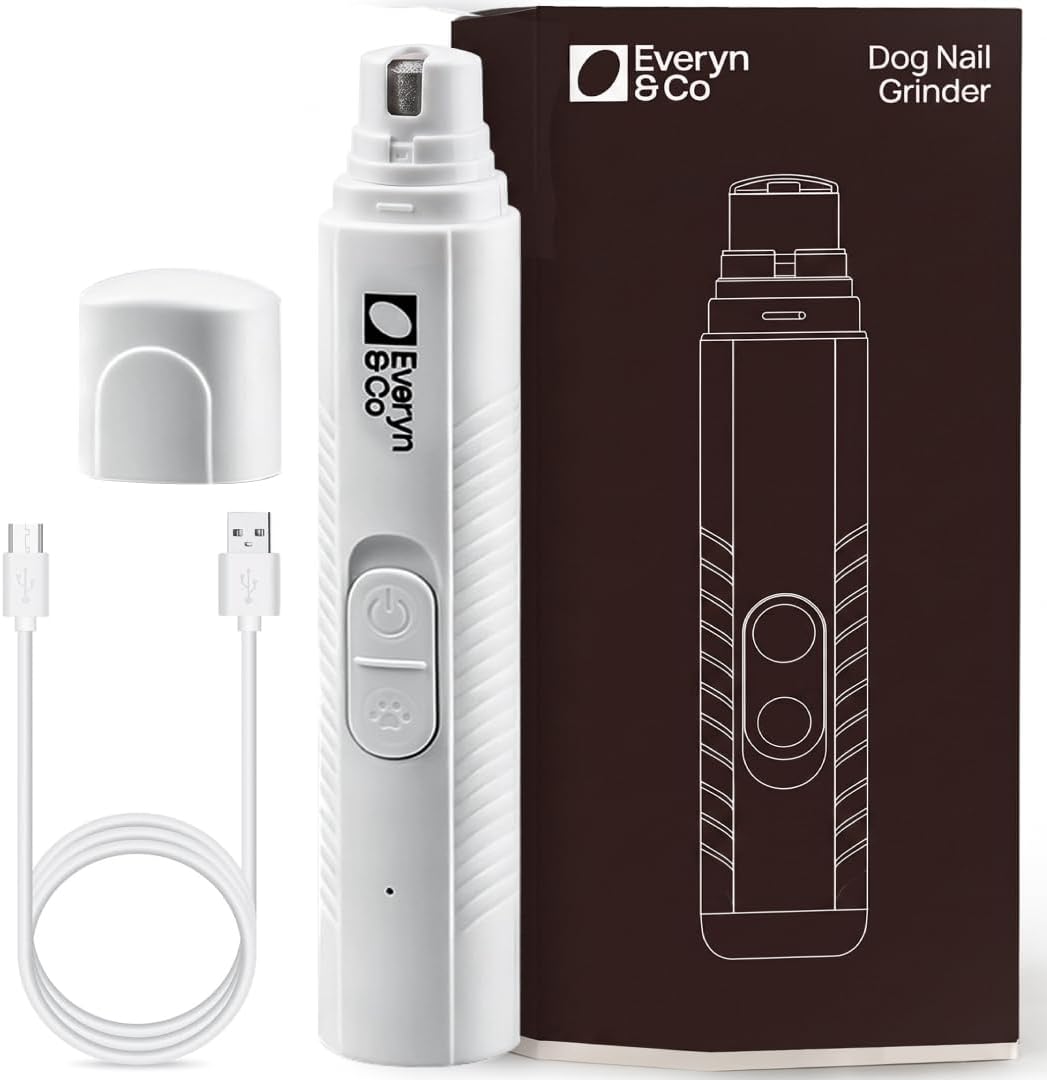
Everyn & Co Dog Nail Grinder with LED Light, USB-C Rechargeable Pet Trimmer
USB-C rechargeable and LED light make it convenient
No guard mentioned in the name, so nervous dogs may need extra care
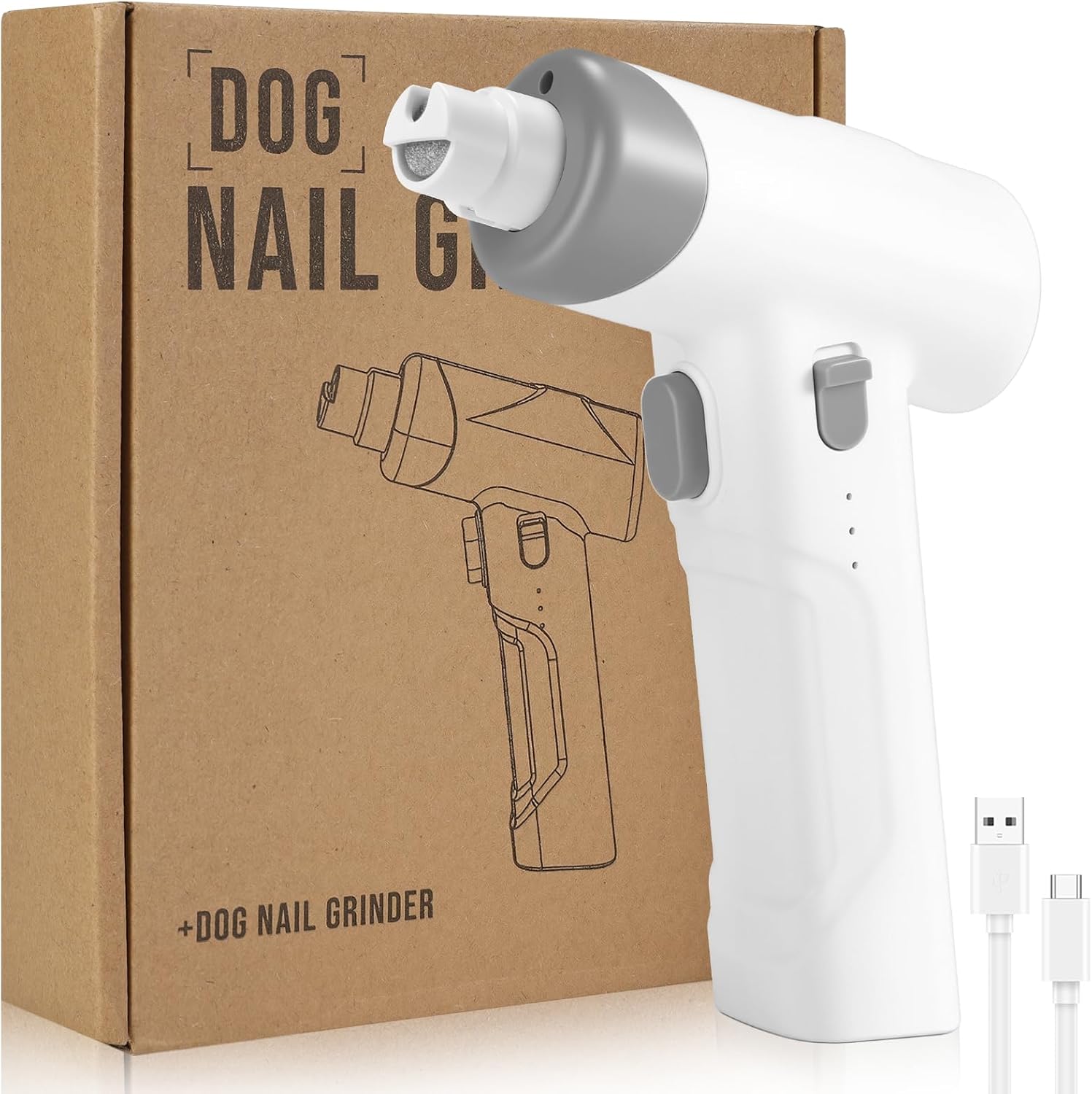
Dog Nail Grinder Quiet Electric Pet Nail Trimmer with Guard LED
Guard and LED are useful safety features for beginners
Generic naming and fewer speed details than some rivals
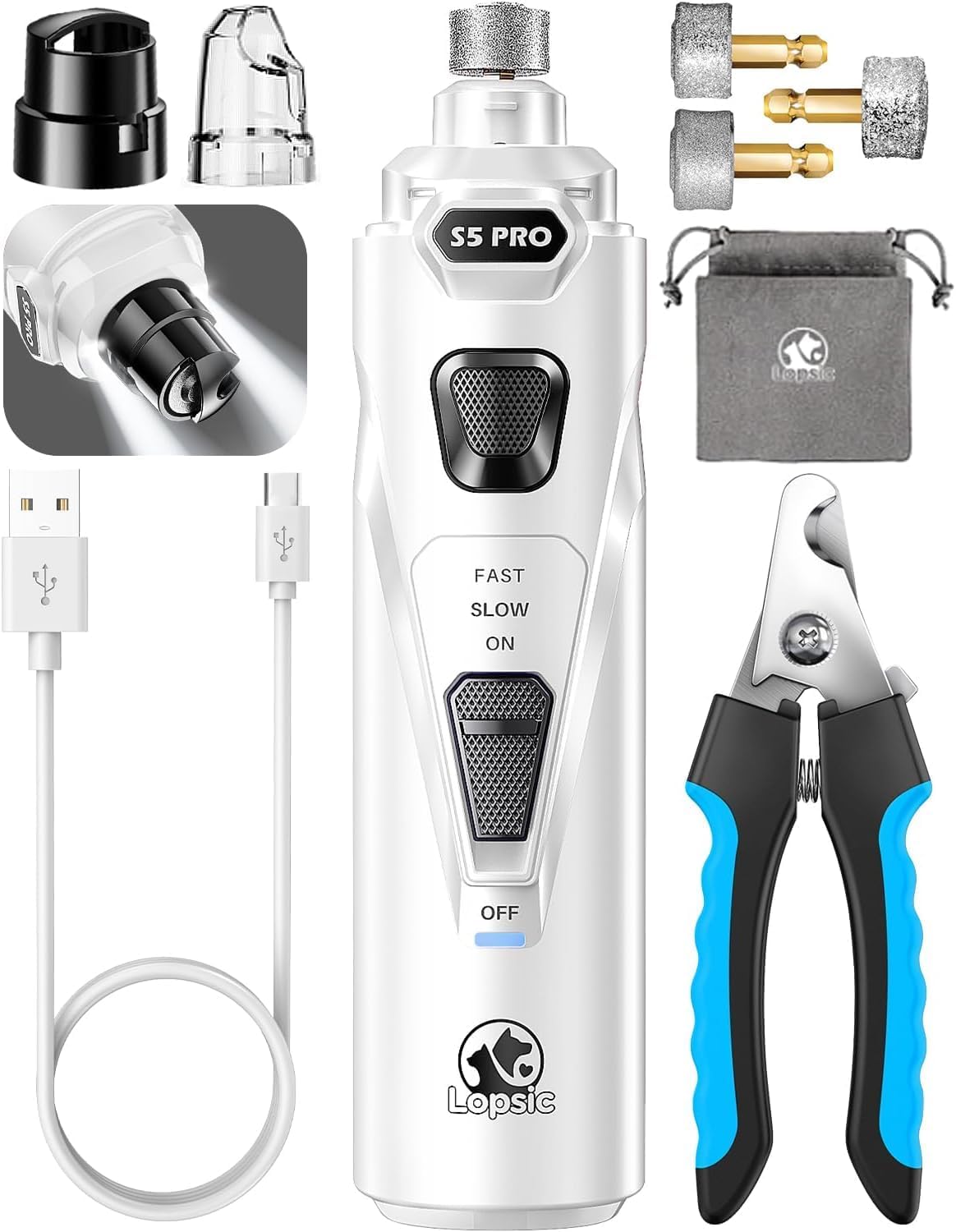
Whisper Quiet Dog Nail Grinder Safe & Stress-Free for Sensitive Dogs Cats
Sensitive-dog and cat positioning, with a whisper-quiet claim
No speed or guard detail in the name
Prices and availability may change.
How to Evaluate Grooming Tools
When you compare grooming tools, start with the job each tool is built for. A deshedding brush is judged by its tooth depth, bristle type, and grip handle. A nail grinder is judged by motor noise, blade guard design, airflow, speed settings, and lighting. Those are different scorecards, which is why a direct deshedding brush vs dog nail grinder for shedding comparison is really a comparison of two categories.
For a deshedding brush, the key question is whether the teeth reach the undercoat. A brush that only glides over the topcoat will not remove loose hair. It will just polish the surface. Bristle type matters because fine bristles work for short coats, while wider, stiffer teeth work for double coats. A blade guard can protect the skin, but if it is too thick, it keeps the teeth from doing their job. The grip handle should let you brush for several minutes without your hand cramping.
For a nail grinder, the key question is control. Motor noise is the first thing many dogs react to. A quieter grinder is easier to introduce. The blade guard is the second thing. It sets how much of the rotating drum touches the nail. Airflow matters because the motor needs to stay cool, and a grinder that overheats will not finish the job. Speed settings help you match the tool to nail thickness. An LED light helps you see the quick, especially on dark nails.
You can learn some of this from a product name. You cannot learn all of it. That is why the table above separates the features you can compare from the claims you need to verify on the live listing.
Deshedding Brush vs Dog Nail Grinder for Shedding: The Core Difference
The difference between deshedding brush and dog nail grinder for shedding comes down to purpose. A deshedding brush is built to reach the undercoat. Its bristle type, tooth spacing, and blade guard are designed to catch loose hair before it lands on your floor. A dog nail grinder is built to shorten nails with a rotating drum. It has a motor, a blade guard, and usually an LED light. It does not pull hair, and it does not reduce shedding. If you are asking deshedding brush or dog nail grinder for shedding, the honest answer is that the brush is the shedding tool and the grinder is the nail tool.
That is the real deshedding brush vs dog nail grinder for shedding split. They live in the same grooming kit, but they solve different problems. One addresses coat type and undercoat. The other addresses nail length and nail thickness. A dog can need both, and many dogs do. But buying a grinder to fix shedding is like buying a leash to fix a muddy floor. The tool does not match the problem.
The confusion usually comes from shopping. Grooming kits often bundle a brush, a grinder, and a pair of clippers. When you see them together, it is easy to assume they all do the same kind of work. They do not. The brush handles hair. The grinder handles nails. The clippers handle mats and heavy trim work. If you keep those roles separate, you will buy less and use more of what you own.
Why Shedding Comes From the Coat, Not the Nails
Shedding is a coat cycle. Coat type, undercoat density, season, diet, and skin health all play a role. A dog with a double coat blows coat once or twice a year, and a deshedding brush or undercoat rake is the right tool for that job. A nail grinder does nothing for that hair. Motor noise and airflow matter for the grinder, but they do not change how much hair your dog drops. If shedding is severe, look at the brush first, then at bathing. An oatmeal concentration in a dog shampoo can help soothe skin, but it will not replace mechanical deshedding.
If you search for dog nail grinder for shedding vs deshedding brush, you are really asking two different questions. One is about coat care. The other is about nail care. The answer to the coat question is a brush with the right bristle type for your dog's coat. The answer to the nail question is a grinder with a guard, quiet motor, and enough speed for your dog's nails. Mixing the two questions leads to buying the wrong tool.
There is also a seasonal factor. Spring and fall are when many double-coated dogs drop the most undercoat. During those weeks, a deshedding brush earns its place. The rest of the year, the same brush may only need a weekly pass. A nail grinder, by contrast, is used every few weeks year-round. That difference in rhythm is another sign that they are not interchangeable.
Nail Grinder Features That Matter
Motor noise is the first feature to check. A quiet grinder is easier on sensitive dogs, cats, and puppies. The Whisper Quiet Dog Nail Grinder Safe & Stress-Free for Sensitive Dogs Cats is positioned around that idea. A quieter motor does not mean a weaker motor, but it usually means the manufacturer paid attention to the sound. If your dog bolts at the sound of clippers, a quieter grinder is worth a look.
Blade guard is the second feature. A guard keeps the nail from catching too much of the rotating drum. The Dog Nail Grinder Quiet Electric Pet Nail Trimmer with Guard LED puts that feature in the name. A guard is not a substitute for technique. You still need to use short passes. But it adds a layer of safety for beginners.
Airflow is the third feature. The motor needs to stay cool, and a well-vented body usually runs longer. If a grinder gets hot, your dog will feel it and may resist the next session. Look for vents around the body and avoid covering them with your hand.
Grip handle is the fourth feature. You need control on a wiggly dog. A handle that fits your hand makes it easier to keep the drum at the right angle. LED light is the fifth. It helps you see the quick, which is the pink part inside the nail. The Everyn & Co Dog Nail Grinder with LED Light, USB-C Rechargeable Pet Trimmer combines that light with USB-C charging. The BUCKOLLAR Dog Nail Grinder for Large Dogs, Quiet 6-Speed with LED Light adds six speed settings for larger nails.
Matching the Grinder to Your Dog and Your Coat Type
Coat type should not decide your grinder, but it should decide your brush. A short-coated dog may need only a rubber curry or a bristle brush. A double-coated dog needs an undercoat rake or a deshedding brush with teeth that reach the undercoat. A poodle or doodle may need a slicker brush and a metal comb. The grinder choice depends on nail thickness, dog size, and temperament.
For large dogs with thick nails, a grinder with more speed settings and a stronger motor is usually easier. The BUCKOLLAR Dog Nail Grinder for Large Dogs, Quiet 6-Speed with LED Light fits that brief. For small dogs, a lighter grinder with a guard can be less intimidating. For sensitive dogs, the Whisper Quiet Dog Nail Grinder Safe & Stress-Free for Sensitive Dogs Cats is positioned around low noise. For cats, a quiet grinder with an LED light is helpful because cats have small, quick-filled nails.
The Everyn & Co Dog Nail Grinder with LED Light, USB-C Rechargeable Pet Trimmer is a practical middle option if you want rechargeable convenience. The Dog Nail Grinder Quiet Electric Pet Nail Trimmer with Guard LED is a reasonable pick for someone who wants a guard and a light without extra speed settings. None of these choices change the shedding answer. For shedding, the brush is still the tool that matters.
What the Specs Say
From the product names alone, the feature spread is clear. One grinder offers six speeds. One offers USB-C rechargeable convenience. One puts a guard and LED in the name. One targets sensitive dogs and cats with a whisper-quiet claim. Those are the differences you can compare without guessing. What you cannot compare from a name is real motor noise in decibels, actual runtime, or how the guard feels on a nail. Those require the product in hand.
That is why the table above keeps the price column as "Check current Amazon price" rather than a fixed number. Prices move, and a comparison based on yesterday's price is not useful. The same goes for ratings and review counts. Use the live listing for that. The feature names are still useful because they tell you what the manufacturer chose to emphasize. A name that leads with "large dogs" is telling you who the tool is for. A name that leads with "whisper quiet" is telling you what problem it solves.
For shedding, the specs that matter are on the brush, not the grinder. Tooth depth, bristle type, and grip handle are the specs that decide whether a deshedding brush works. If you are comparing a deshedding brush vs dog nail grinder for shedding, put most of your research time into the brush. The grinder is a separate purchase for a separate job.
Should You Buy a Deshedding Brush First?
Yes, if shedding is your main complaint. Buy the brush first. A deshedding brush or undercoat rake will remove more loose hair in ten minutes than any nail grinder will remove in its lifetime. Then, if your dog's nails are long or clicking, add a grinder. The order matters because it keeps you from buying a tool that does not solve the problem you actually have.
If you are still deciding between a deshedding brush or dog nail grinder for shedding, go back to the first question: is the problem hair or nails? Hair means brush. Nails means grinder. Both can live in the same kit, but only one is a shedding tool.
There is a practical budget argument here too. A good deshedding brush costs less than a grinder in most cases, and it addresses the mess that most owners notice first. If you have a heavy shedder, the brush will change your floor, your couch, and your laundry. The grinder will change your dog's nails. Both are useful, but the brush is the one that answers the shedding problem.
What to Watch Next
The next useful upgrade in dog grooming gear is not a louder motor or a faster spin. It is better feedback. Grinders with clearer LED lighting, safer blade guards, and quieter motors are the ones that make nail care less stressful. On the shedding side, the interesting changes are in brush design: gentler teeth, better grip handles, and tools that reach the undercoat without scratching skin. None of that changes the basic rule. A deshedding brush vs dog nail grinder for shedding is not a fair fight, because they are built for different jobs.
If you want to build the full grooming routine, start with the coat, then the nails, then the bath. That order keeps the hair under control and the nails short, which is what most owners actually want. The brush is the shedding tool. The grinder is the nail tool. Keep them straight, and you will spend less time cleaning up hair and more time enjoying your dog.