The deshedding brush vs dog nail grinder question sounds like a mismatch at first. One tool pulls loose hair out of a coat; the other sands down nail tips until they stop clicking across the kitchen floor. They do not do the same job, and yet the same person asks about both, usually in the same week, usually after a groomer or a vet said something like "you really should stay on top of this at home."
That is the honest framing. A deshedding brush is a coat decision, driven by coat type and how much undercoat your dog carries. A dog nail grinder is a sound-and-handling decision, driven by motor noise, blade guard design, and whether your dog will stand still long enough for you to finish four paws. Two separate purchases, two separate budgets, and almost no overlap in the skills they demand from you.
The short answer: buy the nail grinder first if you can hear your dog's nails on hard flooring, and buy the deshedding brush first if you are emptying the vacuum canister twice a day during a seasonal blow. Nails are a gait and comfort issue with a deadline. Shedding is a mess issue with a season. If both are problems right now, the grinder is the one that gets harder to fix the longer you wait, because a nail that has grown too long starts pushing the toe out of alignment and changing how your dog stands.
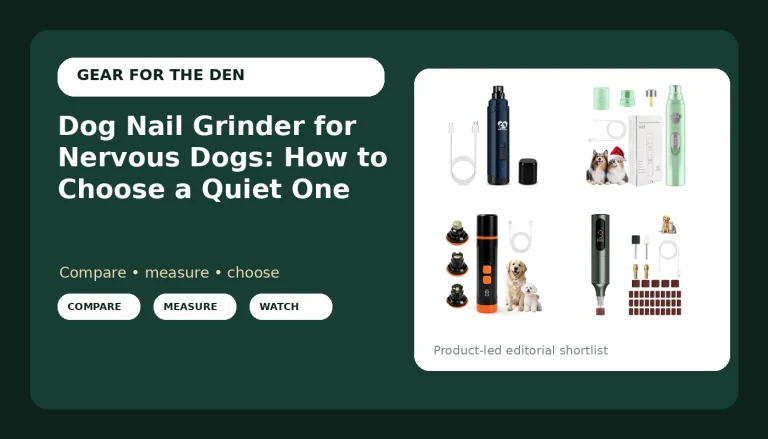
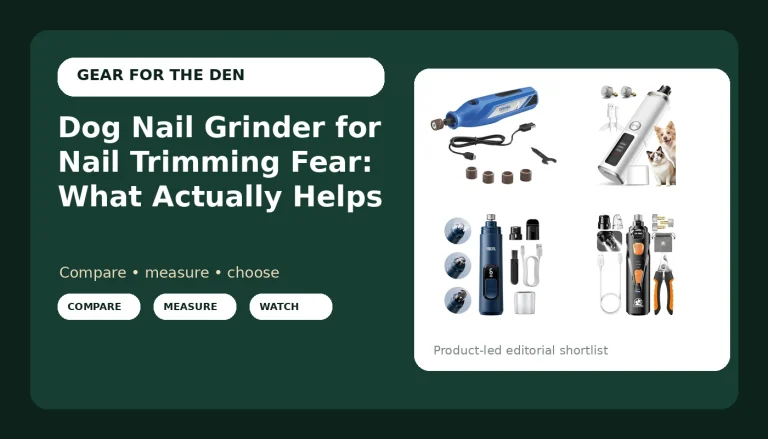
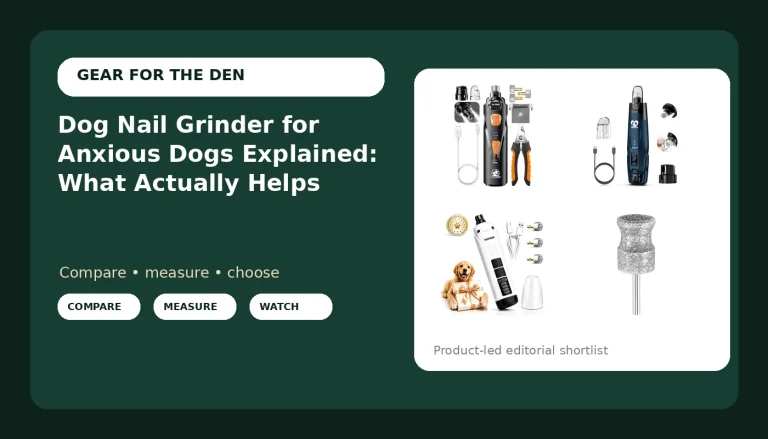
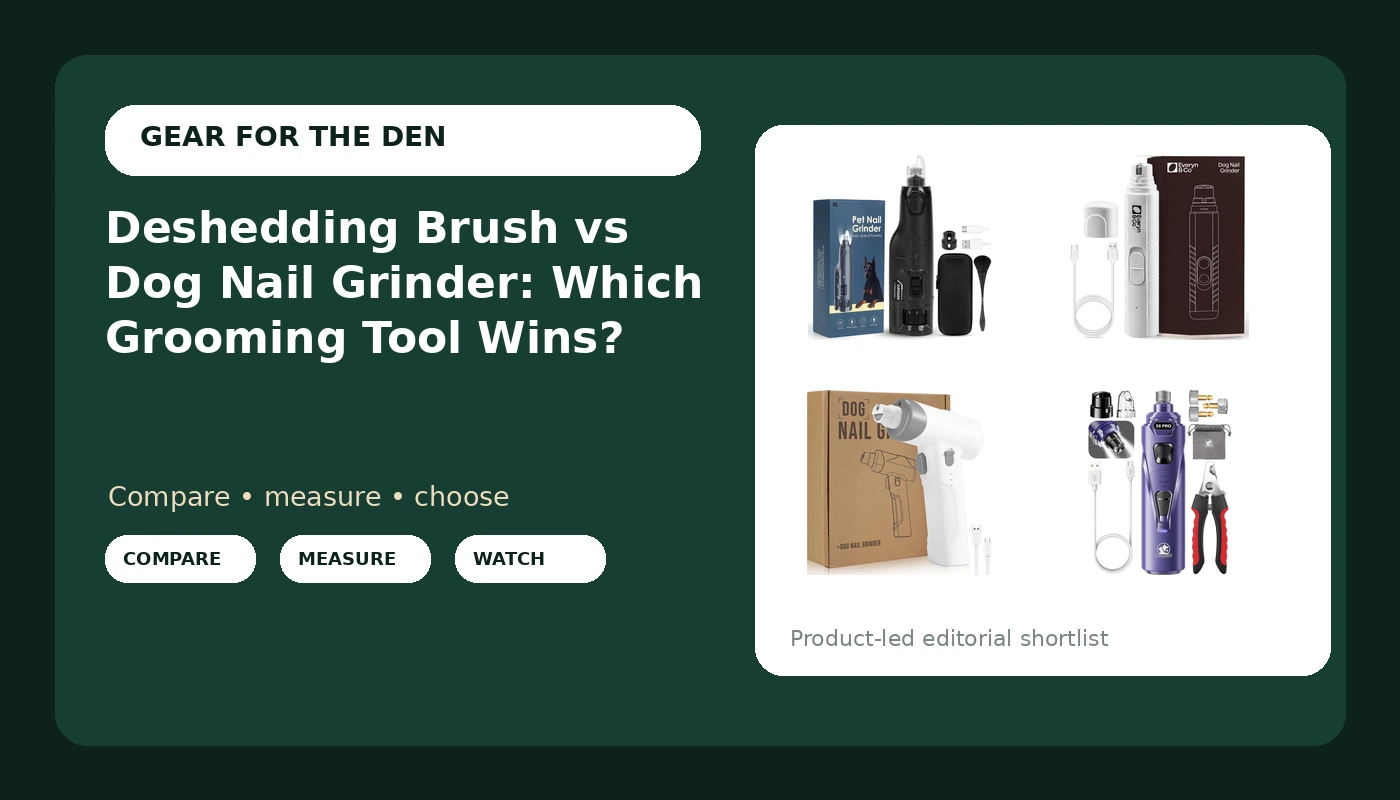
The four grinders below are the ones worth comparing against each other, because the gap between them is the gap that decides whether a nervous dog tolerates the process at all: noise, light, guard, and how the tool sits in your hand.
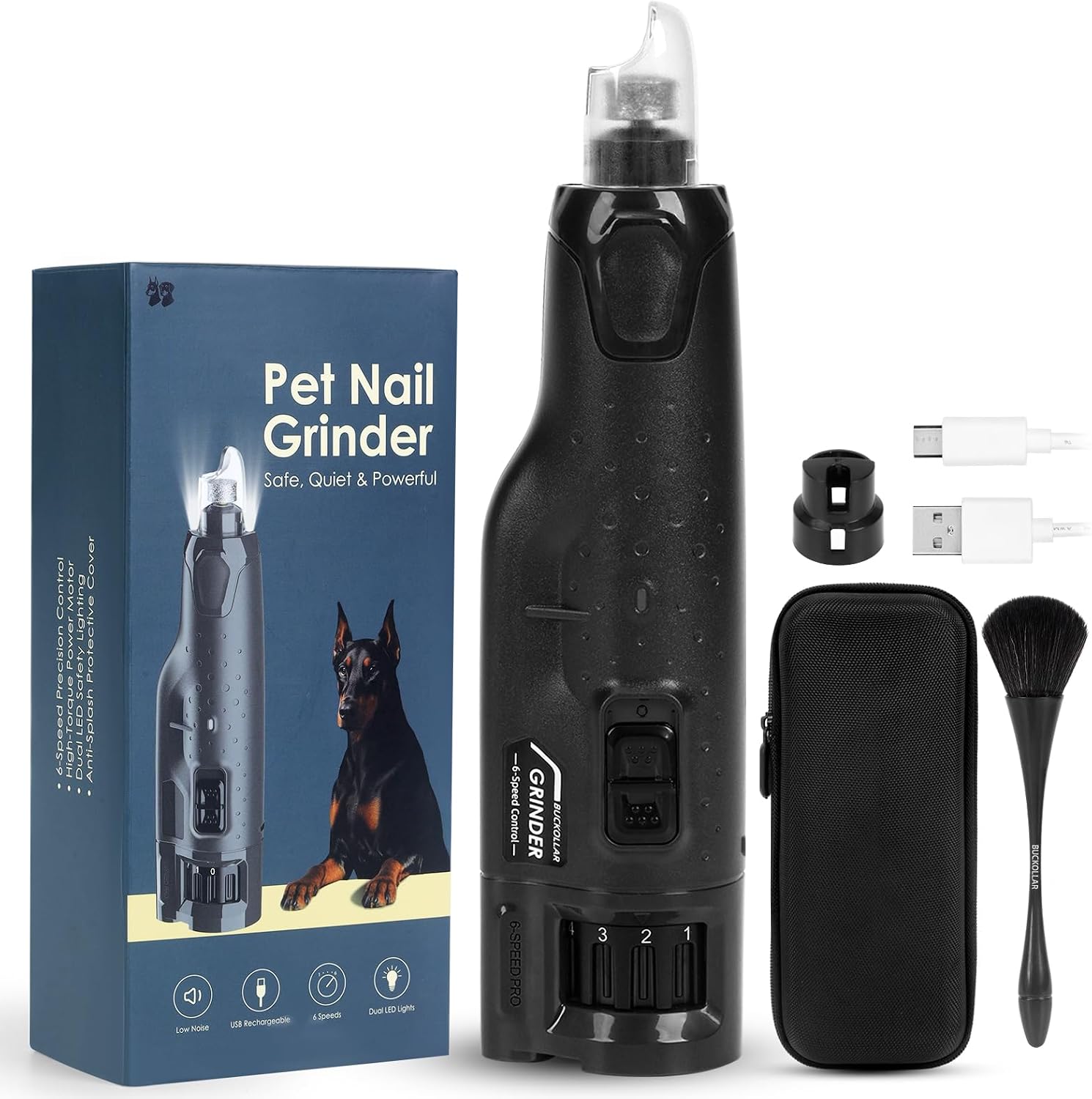
BUCKOLLAR Dog Nail Grinder for Large Dogs, Quiet 6-Speed with LED Light
The most adjustability here, with six named speed steps and an LED light for seeing the quick
Built around large dogs, so it is a lot of tool to steer around a cat's paw
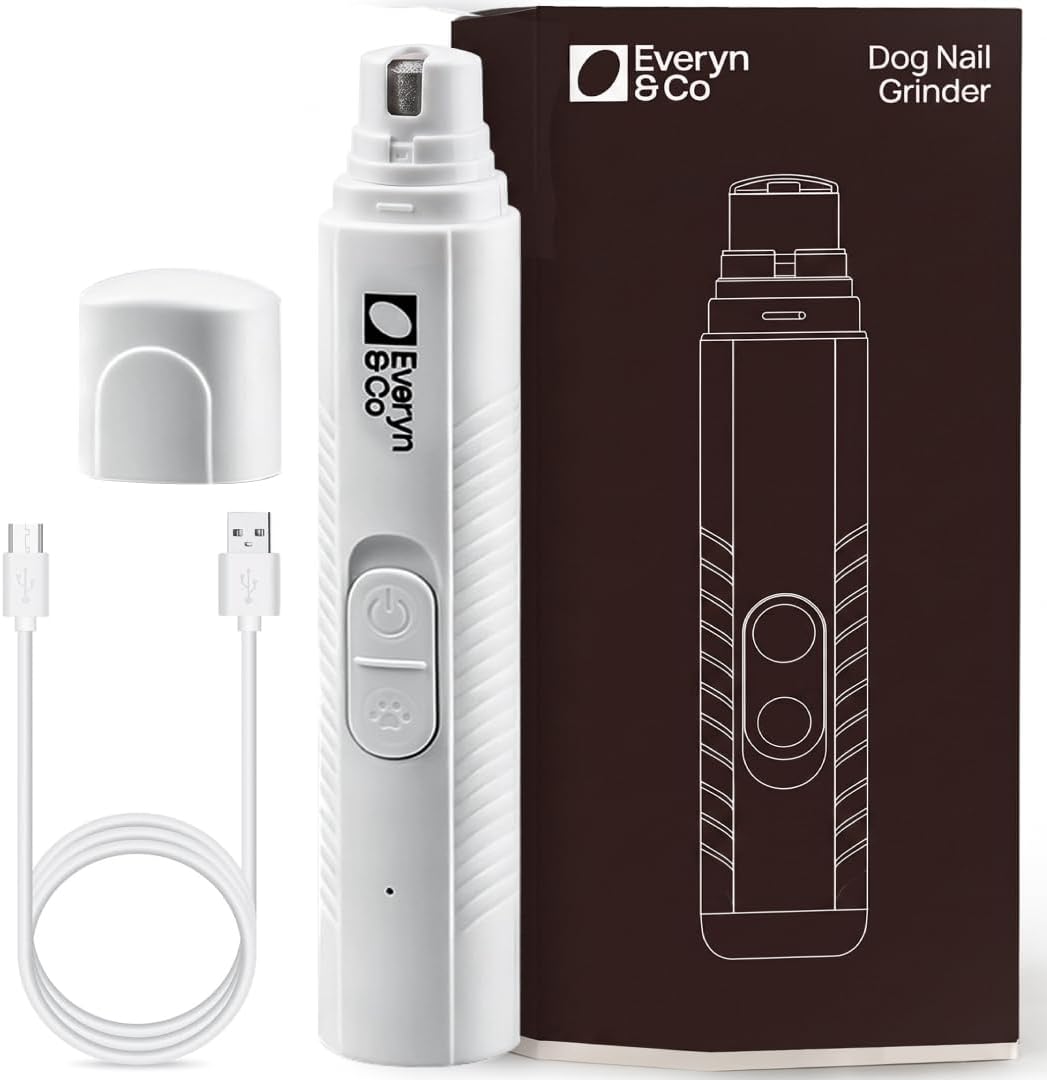
Everyn & Co Dog Nail Grinder with LED Light, USB-C Rechargeable Pet Trimmer
USB-C charging means one cable for the whole house, and the LED light shows where the quick ends
No speed count or size class named, so it reads as a general-purpose trimmer
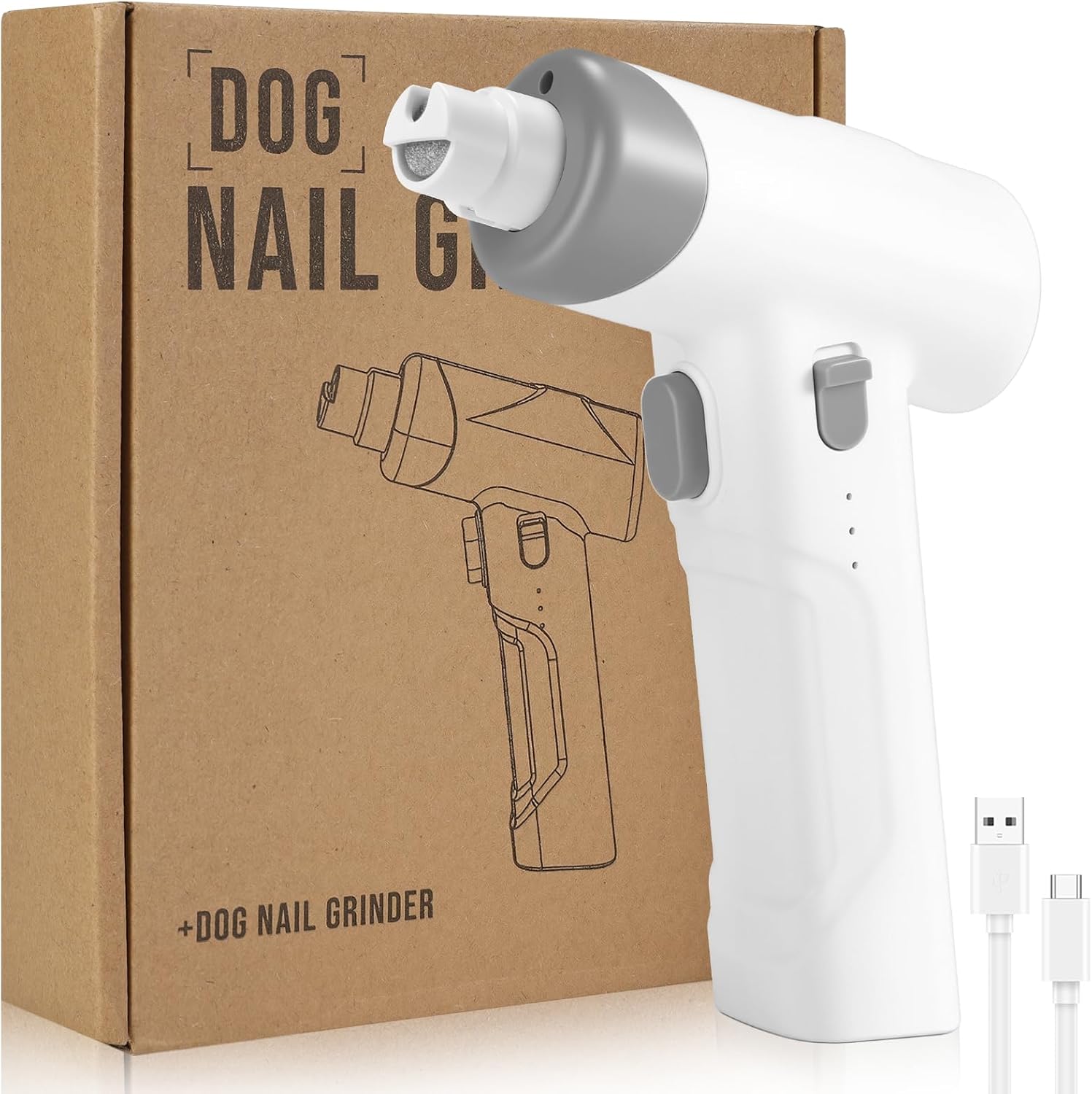
Dog Nail Grinder Quiet Electric Pet Nail Trimmer with Guard LED
The only one in this set that names a guard, the feature that protects a nail that suddenly pulls
Thin on specifics: no size class, speed count, or charging standard in the name
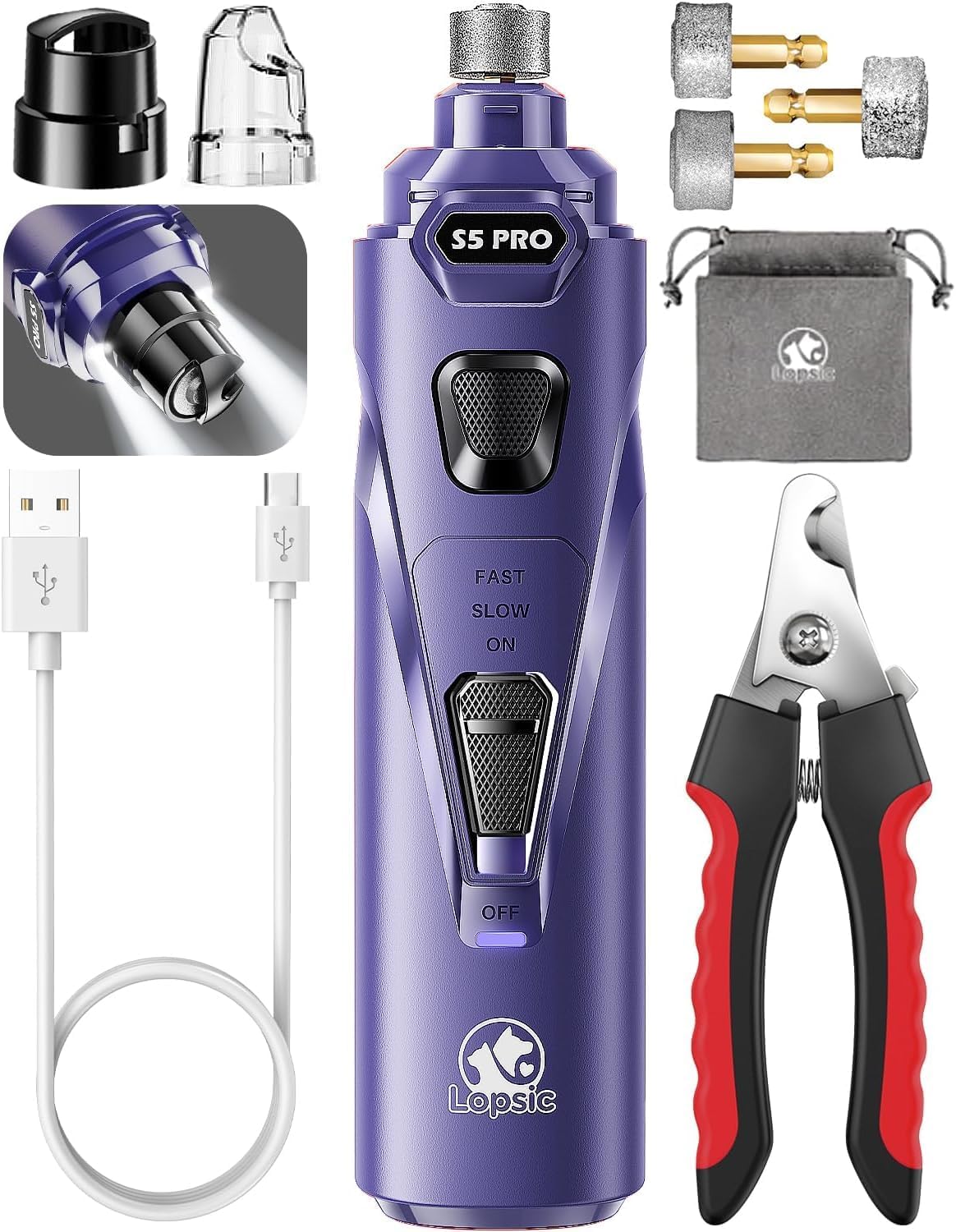
Whisper Quiet Dog Nail Grinder Safe & Stress-Free for Sensitive Dogs Cats
The most explicit low-noise, low-stress positioning in the group, and the only one named for cats too
No large-dog torque claim, so a giant breed may take longer per nail
Prices and availability may change.
The real deshedding brush vs dog nail grinder divide
People frame this as a rivalry, but the difference between deshedding brush and dog nail grinder is mostly about what each one removes and how often you have to do it. A brush removes dead hair from a coat that is already shedding it. A grinder removes hard keratin from a nail that will never shed on its own. One is maintenance on a cycle set by the seasons and the dog's coat type. The other is maintenance on a cycle set by how fast the nails grow, which is roughly every two to four weeks for most dogs.
That difference matters because the failure modes are not comparable. Skip brushing and you get hair on the couch, matting behind the ears, and a dog that runs hot in summer. Skip grinding and you get a dog that slides on tile, stands with its toes splayed, and eventually grows a nail that curls into the pad. One is annoying. The other is painful.
It also explains why the tools look nothing alike. The brush is a handle with rows of teeth or pins. The grinder is a small motor with a spinning band and a light. You will never use one to do the other's job, so the question is not which one is better. It is which problem you are actually living with this month.
There is one more asymmetry worth naming. Brushing a dog is a two-handed, full-body job that takes ten to twenty minutes and usually ends with hair on you. Grinding nails is a two-minute job that requires steadier hands and a calmer dog. If your dog is the anxious type, the brush is the easier sell, and the grinder is the one that needs a slow introduction.
What a deshedding brush actually does
A deshedding tool is built around the undercoat. Double-coated breeds carry a dense, woolly layer beneath the guard hairs, and that layer is what blows out twice a year and drifts into every corner of the house. The bristle type is the whole ballgame. A slicker brush with fine wire pins is for surface work and light mats, not for pulling undercoat. A rake with wide, curved teeth reaches into the undercoat and drags the loose material out. An undercoat rake with a blade edge is the most aggressive of the three and the one most likely to irritate skin if you press too hard.
Coat type decides which of those you buy. A short, single coat, like a boxer or a beagle, does not need a rake at all and will be uncomfortable with one. A husky, a German shepherd, or a Maine coon needs the rake and a weekly routine, plus more during the spring blow.
Two things people get wrong. First, they brush a dry, tangled coat, which hurts, and the dog learns to hate the tool. A bath first, with a shampoo whose oatmeal concentration is high enough to calm itchy skin, softens the coat and shortens the session. Second, they brush in long strokes instead of short, overlapping passes with light pressure, which is how you avoid scraping skin raw. A brush with a padded grip handle helps here, because the light-pressure technique is easier to hold for ten minutes when your hand is not cramping.
Hair is not the only output. A brushing session spreads natural oils through the coat, which is why a brushed dog looks glossier than an unbrushed one. That is the real payoff, not the pile of fur on the floor.
What a dog nail grinder actually does
A grinder replaces the clipper for the final pass. You can take the tip off with clippers and round the edges with the grinder, or you can do the whole job with the grinder at a lower speed. Either way, the tool is a small motor spinning a sanding drum, and the entire experience for your dog comes down to three things: motor noise, vibration, and how the band contacts the nail.
Motor noise is the number one reason dogs bolt. A grinder that hums at a low pitch is tolerated far better than one that whines, and the difference is obvious in the first ten seconds. If your dog has ever hidden under the bed when the clippers came out, a quiet grinder is a genuine upgrade, because you can work in short bursts and stop before the anxiety builds.
A blade guard is the second feature worth paying for. It sits between the sanding band and the rest of the nail, so a sudden flinch does not send the band into the quick or the pad. On a dog that pulls its paw, a guard is the difference between a two-minute session and a bleeding nail. Airflow matters for a different reason: the motor and the band both heat up, and a tool that vents well stays comfortable against the nail instead of getting warm enough that your dog starts pulling away.
Then there is the handle. A grinder with a grip handle that fits your hand lets you hold the paw steady with the other hand, which is the actual skill of nail trimming. A tool that is too thick or too slick turns the job into a wrestling match, and wrestling matches are how nail trimming gets a bad reputation in the first place.
The LED light that nearly every model now includes is not a gimmick either. On a black nail, the light is the only way to judge how close you are to the quick without guessing.
How to choose between them
If you are deciding between a deshedding brush or dog nail grinder as your next purchase, answer three questions.
First: what does your dog's coat actually need? If you own a poodle, a schnauzer, or anything that gets clipped every six weeks, a deshedding brush is close to useless. If you own a husky in April, it is the best money you will spend all year.
Second: when did you last hear nails on the floor? If the answer is "constantly," you have a nail problem, not a hair problem, and no amount of brushing will change that.
Third, and this is the one people skip: which job will you actually do consistently? A grinder that stays in the drawer does nothing. A rake that comes out every Sunday for ten minutes changes your house.
The dog nail grinder vs deshedding brush comparison also has a cost dimension that surprises people. Brushes are inexpensive and nearly indestructible; the consumable is your time. Grinders have batteries, bands that wear, and a learning curve, so the first month is the expensive part. Neither is a one-time purchase in the sense of buy it and forget it. Bands wear out. Rakes clog. Budget for both.
If you are shopping for a household with more than one animal, note that the grinder is the tool that serves both dogs and cats, while the brush has to match each coat type individually. That single fact pushes a lot of multi-pet homes toward the grinder first.
The four grinders worth comparing
All four of these are quiet, hand-held trimmers with an LED light, which is now the baseline for the category. The differences are in who each one is built for.
BUCKOLLAR Dog Nail Grinder for Large Dogs, Quiet 6-Speed with LED Light brings the most adjustability in the group, with six named speed steps. That matters on thick nails, where a single slow speed means a long session and a bored dog. It is built around large dogs, so it is a lot of tool to steer around a cat's paw. Visit on Amazon
Everyn & Co Dog Nail Grinder with LED Light, USB-C Rechargeable Pet Trimmer is the one to pick if you are tired of hunting for a proprietary charging cable. USB-C charging means the same cable as your phone, and the LED light does the real work of showing you where the quick ends on a dark nail. Visit on Amazon
Dog Nail Grinder Quiet Electric Pet Nail Trimmer with Guard LED is the only one in this set that names a guard, and that guard is the feature I would rank above every other spec for a dog that pulls its paw mid-trim. Visit on Amazon
Whisper Quiet Dog Nail Grinder Safe & Stress-Free for Sensitive Dogs Cats is the most explicitly low-stress option here, and it is the only one whose name points at cats as well as dogs. If your animal flinches at sound, this is the one to start with. Visit on Amazon
For a step-by-step walkthrough of the actual trim, see how to trim black dog nails safely.
Trade-offs the listings do not spell out
Speed settings are not free. More speeds mean more decisions mid-session, and a nervous dog does not benefit from you fumbling for a dial while holding a paw. If your dog is calm, buy the adjustability. If your dog is not, buy the quiet one and leave it on a single setting.
Guards are not a substitute for technique. They reduce the consequences of a mistake; they do not teach you where the quick is. Learn nail anatomy on a light-colored nail where you can see the pink, then apply that knowledge to the black nails where you cannot.
Coat tools have their own trap. The more aggressive the rake, the easier it is to overdo it. Over-brushing a thin-coated dog causes brush burn, a raw patch where the pins or teeth have scraped the skin. Ten minutes twice a week beats an hour on Sunday.
And the unglamorous one: none of this replaces a groomer for breeds that need hand stripping or scissor work. These are home maintenance tools for the weeks between appointments, not a full-service setup.
What to buy first
If your dog's nails touch the floor when it stands, the grinder comes first. Start with short sessions, one paw at a time, and reward after each nail rather than at the end. The grinder pays for itself in the first month by keeping you out of the emergency nail trim category.
If your dog is blowing coat and you can pull tufts out by hand, the deshedding brush comes first. Match the bristle type to the coat, work in short passes, and bathe first when the undercoat is packed.
Most double-coated households end up owning both, and the order rarely matters as much as the consistency does. The deshedding brush vs dog nail grinder decision is not really a rivalry. It is a question about which chore you have been avoiding, and the answer is usually the one that has been bothering your dog rather than your floors.