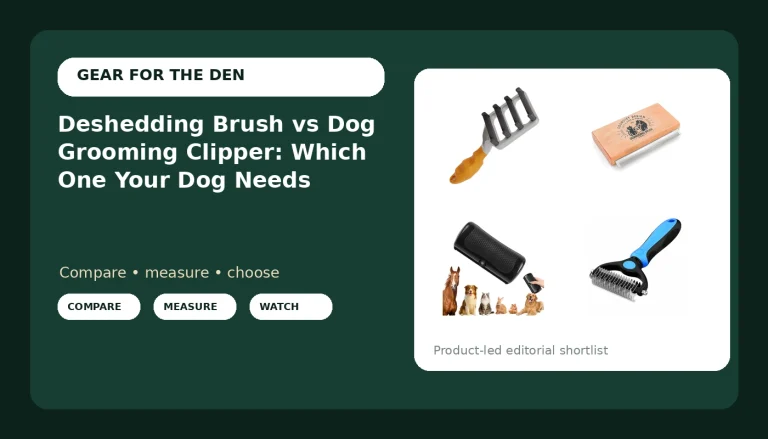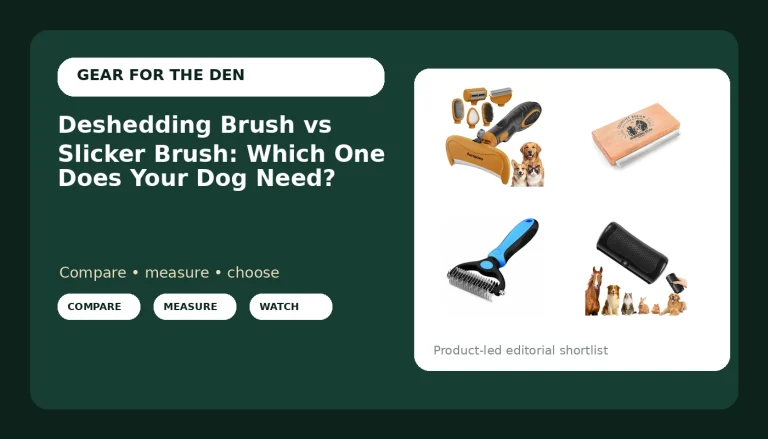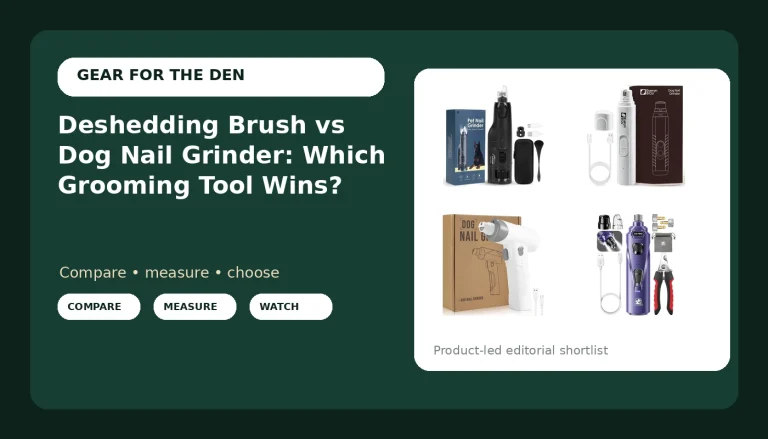
The deshedding brush vs dog paw cleaner question shows up because both tools solve a messy problem, and both tend to live by the back door. One pulls loose fur off the coat before it lands on the couch. The other scrubs mud out of paws before it lands on the carpet. They are not rivals, and once you see that, the shopping decision gets a lot simpler. What genuinely competes is the shelf of deshedding brushes itself, and that is where the four tools in this guide earn or lose their place.
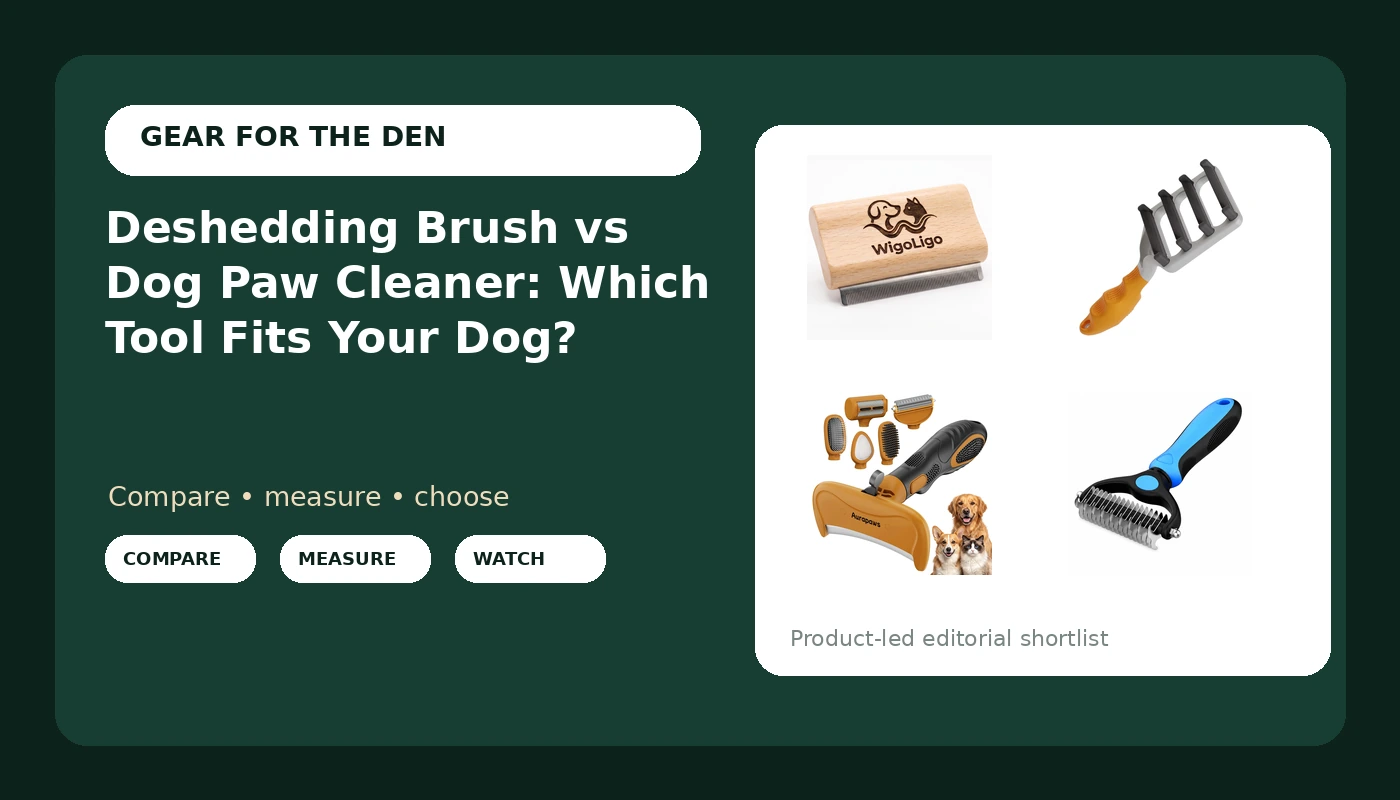
For most homes with a shedding dog, the Aurapaws 6-in-1 is the most flexible pick because its interchangeable heads cover more coat types, the FUR4 is the long-hair specialist with four carbon fiber edges, the WigoLigo is the wooden-handled value option for short and medium coats, and the plain Pet Grooming Tool is the cheapest way to find out whether your dog will tolerate brushing at all.
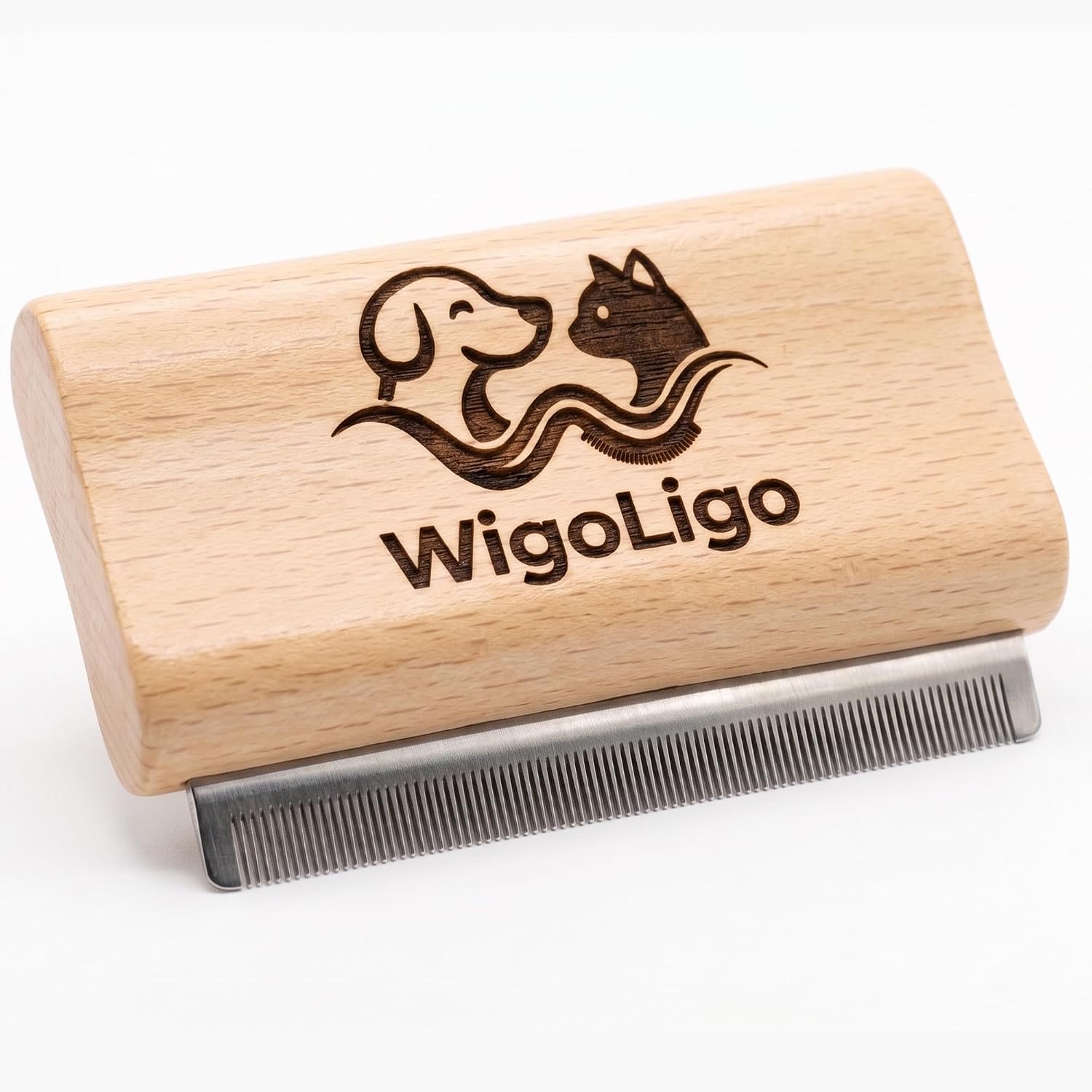
WigoLigo Pet Deshedding Brush for Dog
Wooden body and a five-inch head listed for short, medium, and long coats, which makes it the easiest generalist to hand to anyone
No rake and no interchangeable heads, so a dense undercoat still needs a second tool
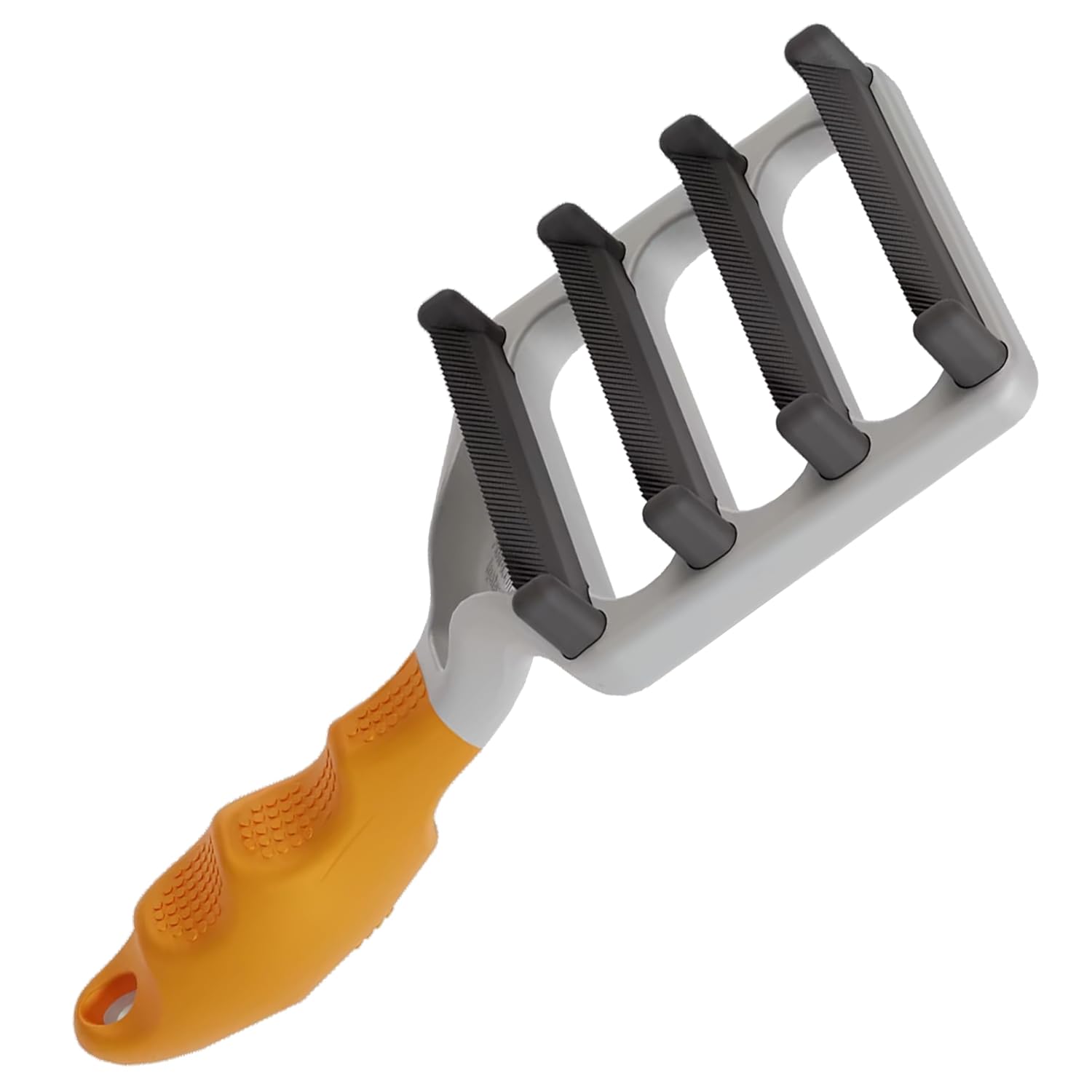
FUR4 deShedding Dog Brush for Long Hair Dogs
Four carbon fiber edges built around long hair and mat-prone coats, described as gentle on the skin
Narrow focus and the highest price of the four
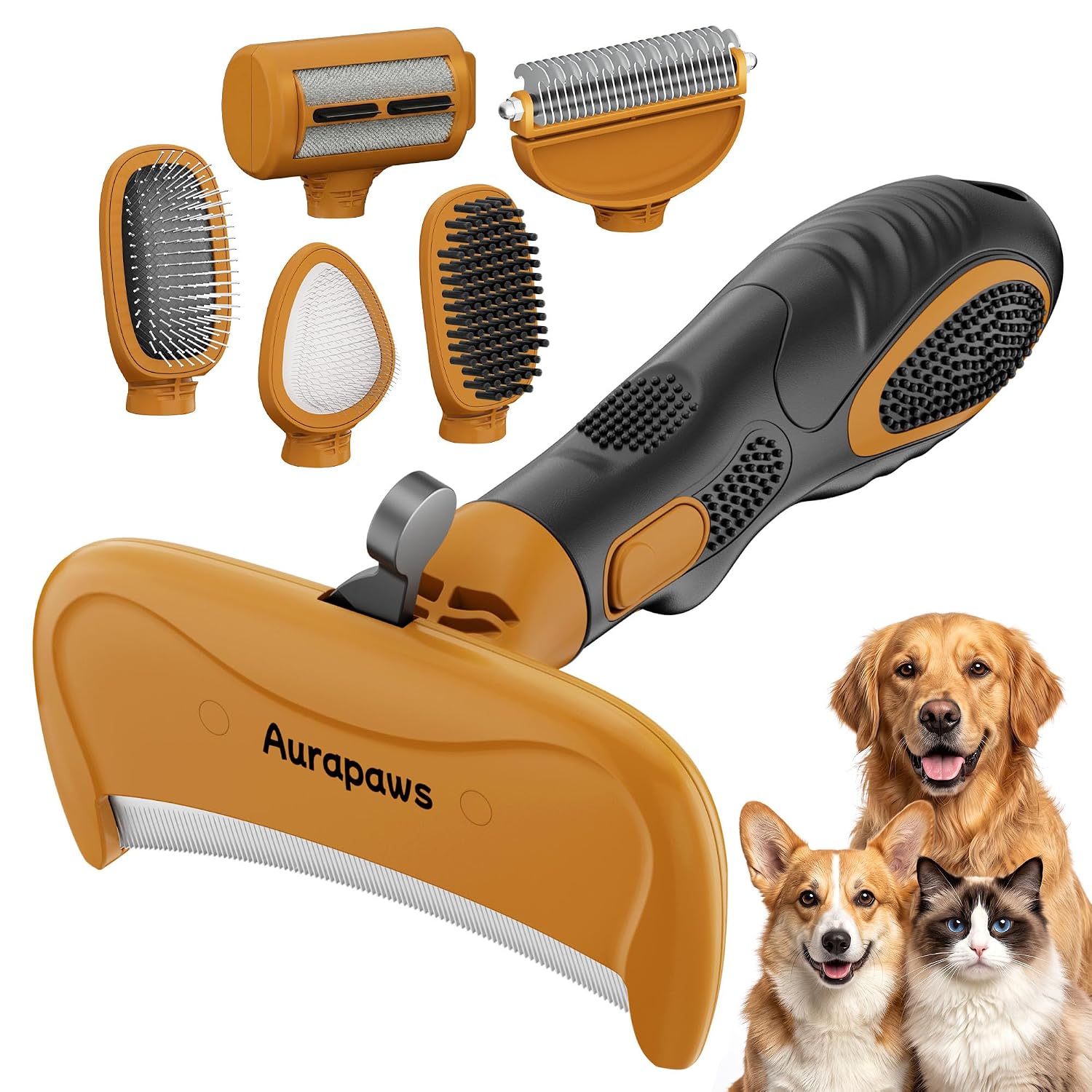
Aurapaws 6-in-1 Deshedding Dog Brush for Shedding, Undercoat Rake Grooming Combo
Patented interchangeable system that adds an undercoat rake, and it is sold for dogs and cats
More parts to store and swap, with a kit price to match
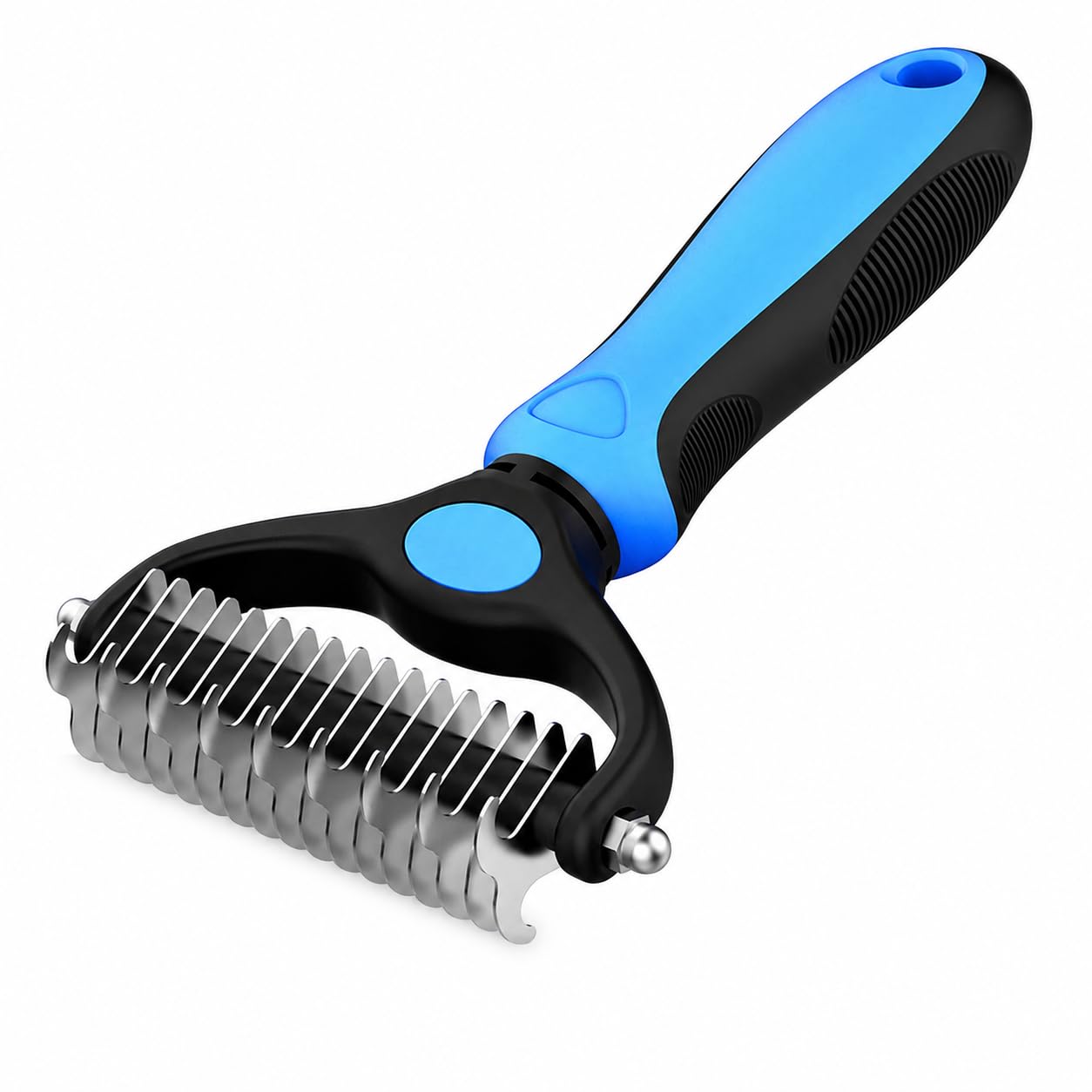
Pet Grooming Tool, Dog Brush for Shedding, Deshedding Dog Brush
The lowest-cost way to test whether your dog tolerates brushing at all
Generic design with no rake, no specialist edge, and no interchangeable head
Prices and availability may change.
Why the deshedding brush vs dog paw cleaner decision comes first
The difference between deshedding brush and dog paw cleaner is mostly a difference in where the mess starts. Shedding starts in the coat, happens indoors, and never really stops: a dog with a thick undercoat drops fur on the sofa, the bed, the car seats, and the one black sweater you actually like. Paw mess starts outside, happens on a schedule, and is over in two minutes. That asymmetry is the whole decision.
If your dog is double-coated and blows its coat twice a year, the brush is the tool that changes your week. If your dog is short-coated, sheds lightly, and walks through wet grass every morning, the paw cleaner earns its spot by the door. Some households need both. Very few need the fanciest version of both.
Search dog paw cleaner vs deshedding brush and you will find a wall of results that treat the two as rivals fighting for one slot in your closet. That framing is wrong. A brush works on the coat, a paw cleaner works on the feet, and neither one does the other's job. Choosing a deshedding brush or dog paw cleaner should start with a single question: which mess bothers you more right now?
Answer that honestly, and the rest of this article is about the brush side, because that is where the four products below actually compete.
How to read a deshedding brush listing
Most product pages bury the useful information under adjectives. Here is what matters when you compare these tools.
Coat type comes first. Every brush here claims to handle more than one, but the design tells you what it was built around. A tool described for long hair dogs is built for length and for the tangles that come with it. A five-inch wooden brush listed for short, medium, and long hair is built as a generalist. A kit with an undercoat rake is built for the dense, woolly layer underneath the topcoat.
Bristle type is the second thing to check. Carbon fiber edges, fine metal tines, and silicone pins all behave differently. Metal rake tines reach the undercoat and pull the loose stuff out. Softer edges glide over the topcoat and collect what is already loose. If a listing is vague about the working surface, treat that as a signal that the tool is a generalist rather than a specialist.
A blade guard is what keeps the working edge from digging into skin, especially around the belly, the armpits, and the thin coat behind the back legs. Not every brush has one. If your dog flinches when you get near the flank, a guarded edge or a gentler bristle type matters more than any feature list.
Finally, look at the grip handle and the overall size. A five-inch brush is small enough to control with one hand while the other holds a wriggling dog. A bulky handle looks comfortable in the product photo and gets awkward when your wrist is at an angle. Grip shape is the most underrated spec on the page.
The four brushes and the job each one does
Aurapaws 6-in-1 Deshedding Dog Brush for Shedding, Undercoat Rake Grooming Combo. This is the most versatile tool of the four by design. The listing describes a patented interchangeable brush system that pairs an undercoat rake with other heads, and it is sold for both dogs and cats. That combination makes it the pick for a multi-pet house or for a dog whose coat changes with the season: one handle, several jobs, and a rake head that does the heavy lifting when the undercoat loosens. The trade-off is parts. Interchangeable heads mean something to store, something to lose, and something to swap while a dog stands there losing patience. The price sits in the upper half of this group, which is fair for a kit and steep if you only ever need one head.
FUR4 deShedding Dog Brush for Long Hair Dogs. This one is a specialist and says so in the name. The description calls out four carbon fiber edges and frames the tool as gentle and effective at removing loose fur, which is exactly the brief for a long-coated dog that mats easily. Carbon fiber edges aim to catch fur without the scratch of aggressive metal tines, and the four-edge layout covers more coat per stroke. If you have one long-haired dog and brushing is already part of your week, this is the tool built for that job. The trade-off is narrowness. A long-hair design does less for a short-coated dog, and this is the most expensive single brush in the comparison, so it only makes sense when the coat matches the tool.
WigoLigo Pet Deshedding Brush for Dog. The wooden handle is the first thing you notice and the five-inch size is the second. It is listed for short, medium, and long hair cats and dogs, which makes it the generalist of the group and the easiest one to leave in a drawer. A wooden body with a grip handle tends to feel steadier in the hand than a hollow plastic shell, and for a dog that tolerates only a few minutes of brushing, steadiness matters. The trade-off is that a generalist does not excel anywhere. It will not rake out a dense undercoat the way a dedicated comb will, and it will not handle a long coat the way the FUR4 is designed to.
Pet Grooming Tool, Dog Brush for Shedding, Deshedding Dog Brush. The most basic listing of the four and the least expensive. There is no interchangeable system, no carbon fiber edge claim, no rake. What it offers is a low-risk entry point: a shedding brush at a price that makes the experiment cheap. If you have never brushed a dog before and you do not know whether yours will stand still for it, this is the tool that answers that question without much spent. The trade-off is obvious. Fewer features mean less reach into a dense undercoat, and a generic design means you are buying a general-purpose tool rather than something tuned to a coat type.
Blade guards, interchangeable heads, and grip handles
The features that separate these four are not cosmetic.
A blade guard is the difference between a tool you use confidently around the chest and one you use carefully. On a rake-style head, the tines reach deep, which is exactly what a shedding undercoat needs and exactly why a guard or a gentle edge matters near thin skin. The FUR4 leans on its carbon fiber edges for that gentleness. The Aurapaws kit leans on interchangeable heads so you can switch to a softer option for sensitive areas.
Interchangeable heads are the feature that lets one tool cover a whole year of coat changes. A dog in full coat blow needs a rake. The same dog in midsummer needs something gentler. Buying one kit instead of three brushes is a real advantage, as long as you are the kind of person who keeps track of small parts.
The grip handle is the feature people ignore until the first long session. Brushing a large dog takes time, and a handle that fits your hand means you keep control when the dog shifts weight or tries to leave. This is where the wooden WigoLigo has an edge over the plastic-bodied options: a solid handle with some weight behind it is easier to keep level against a moving dog.
What a paw cleaner does that no brush can
The other half of the deshedding brush vs dog paw cleaner question deserves a straight answer, because the two tools fail in completely different ways.
A paw cleaner handles what happens after a walk: mud, grit, road salt, wet grass, and whatever the dog stepped in that you would rather not identify. Most are simple cups with silicone bristles inside, and they work by friction and water rather than by anything electrical. Some pair the cup with a dryer, and that is where airflow and motor noise become real shopping criteria. A dryer with weak airflow leaves the paw damp, which is worse than a towel for a dog with skin folds. A loud motor turns a thirty-second routine into a wrestling match, and the decibel number on the box rarely matches the sound in a tiled hallway.
If you wash paws with a shampoo rather than plain water, oatmeal concentration is worth checking. Oatmeal formulas are aimed at itchy, irritated skin, which is common on paws that have met road salt or hot pavement. A high concentration is not automatically better, but a formula that lists oatmeal last is mostly scent and marketing.
None of that replaces a brush. Coat type and undercoat are a brush problem. Mud and salt are a paw problem. Buy for the problem you actually have.
Should you buy the cheapest brush first?
If you are new to brushing a dog, yes. The least expensive tool in this group answers the only question that matters at the start: will your dog stand for it? Some dogs lean into a brush from day one. Others need weeks of short sessions with a hand and a treat before a tool comes near them. Buying an inexpensive generalist first tells you which dog you have before you spend on a specialist.
If you already know your dog tolerates brushing and you know the coat type, skip the entry-level step. A long-coated dog with a matting problem does not need a generalist; it needs the FUR4 and a routine. A multi-pet house with a cat and two dogs does not need three separate brushes; it needs the Aurapaws kit. The cheap brush is a diagnostic tool, not a destination.
What to watch next
The category keeps moving toward interchangeable systems and gentler edges, and both trends are good for dogs. What has not changed is that the tool matters less than the routine. Five minutes twice a week during coat blow removes more loose fur than an hour of brushing once a month, and it is far easier on the dog. The same is true on the paw side: a cup by the door gets used, and a cup in a closet does not.
The deshedding brush vs dog paw cleaner comparison is really a question about which routine you will actually keep. Pick the mess that bothers you most, buy the tool that solves it, and leave the rest on the shelf until it earns a place.