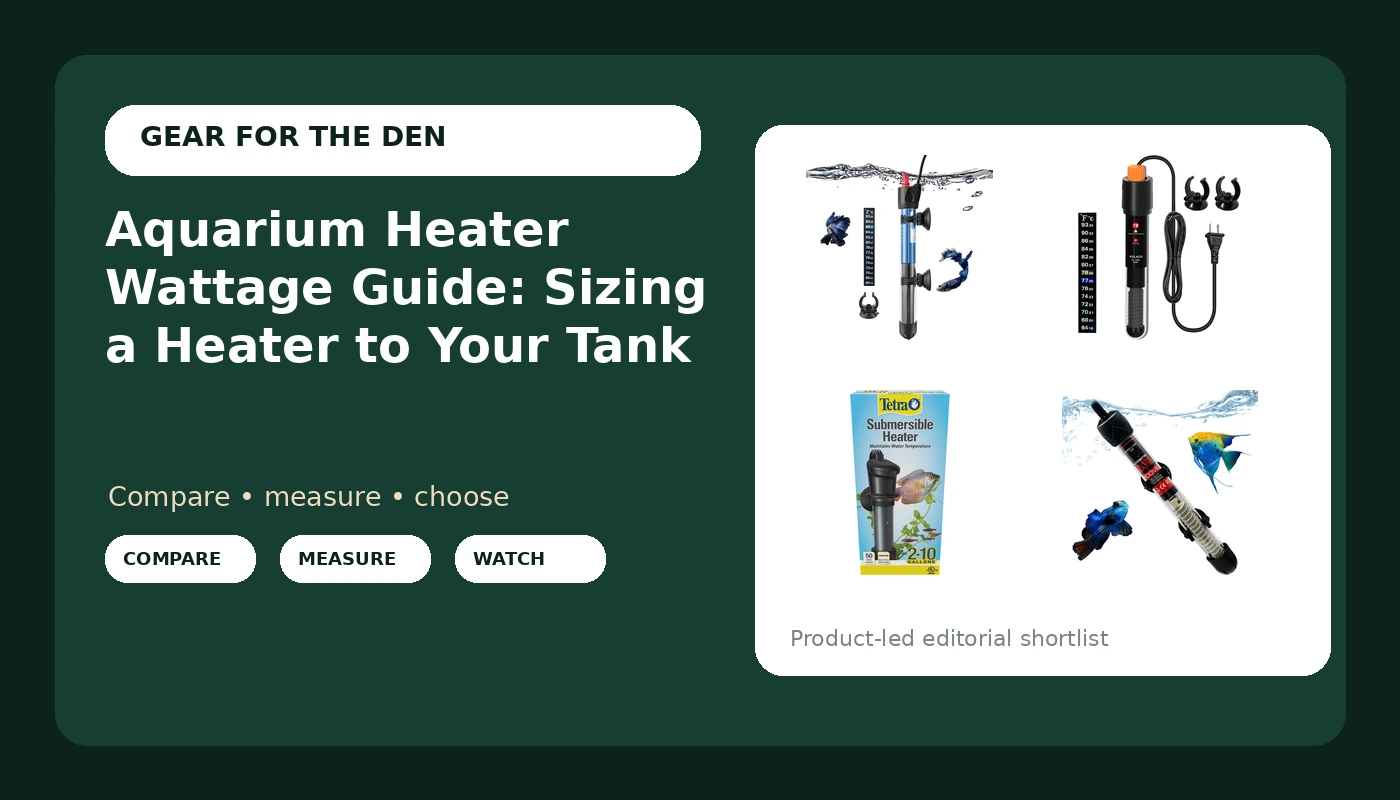
Getting the aquarium heater wattage right is the difference between a tank that holds a steady 78°F and one that swings every time the furnace kicks on. Most of the heater trouble people describe to me is not a manufacturing defect. It is an undersized heater running flat out in a cold room, or an oversized one that pushes a small tank too warm when the thermostat finally catches up.
The fix is arithmetic, not a bigger box. Tank volume sets the baseline, surface area and room temperature decide the rest, and the heater you buy should be sized to both. This aquarium heater wattage guide walks through the math, the tank sizes it produces, and four submersible heaters that fit the numbers without overspending.
Best Overall: Hitop Adjustable Aquarium Heater (50W)
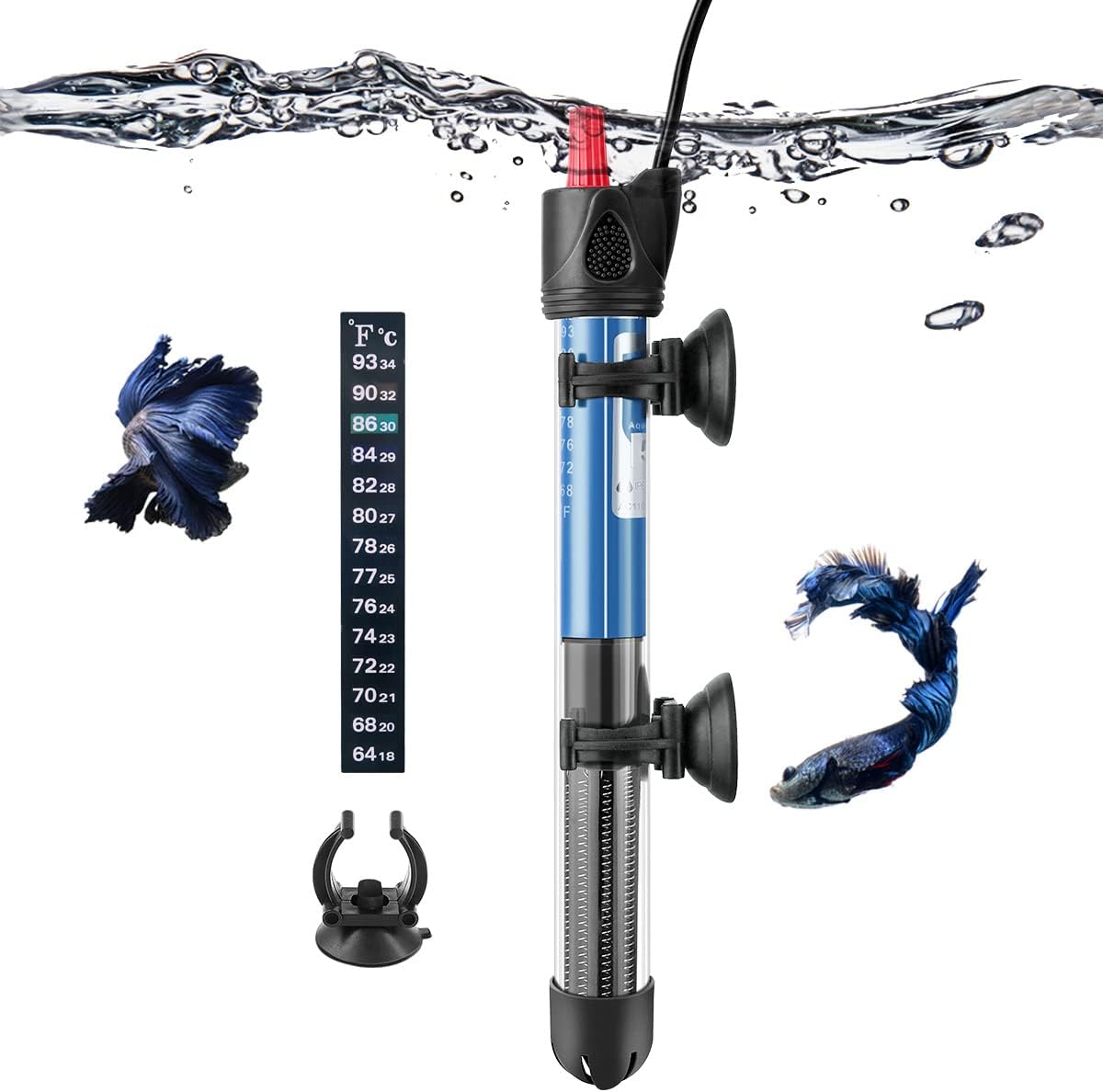
The Hitop is the heater I point people toward first because the lineup does the sizing work for you. The same design is sold in 25W, 50W, 100W, and 300W, and the listing covers tanks from 5 to 70 gallons, so you choose the wattage that matches your tank volume instead of buying whatever size the shelf happens to stock. The 50W version sits in the middle of that range and fits the most common small and mid-size tanks, from a 10-gallon community setup up through a 20-gallon long.
Two details make it flexible. The thermostat is adjustable, so you set a target and can nudge it as the seasons change instead of accepting a factory preset. It is also fully submersible and mounts with suction cups, which means you can place it low in the tank near the filter return, where moving water spreads heat instead of letting it pool under the lid.
Glass is the honest trade-off. A glass tube transfers heat well and the dial is easy to read, but it does not enjoy being knocked against the rim during a water change, and it needs to stay below the waterline while it is plugged in. Unplug it before you drain anything. If you want a heater you never think about, this is not the one. If you want a heater you can adjust, it is.
Best Value: PULACO 50Watt Aquarium Heater
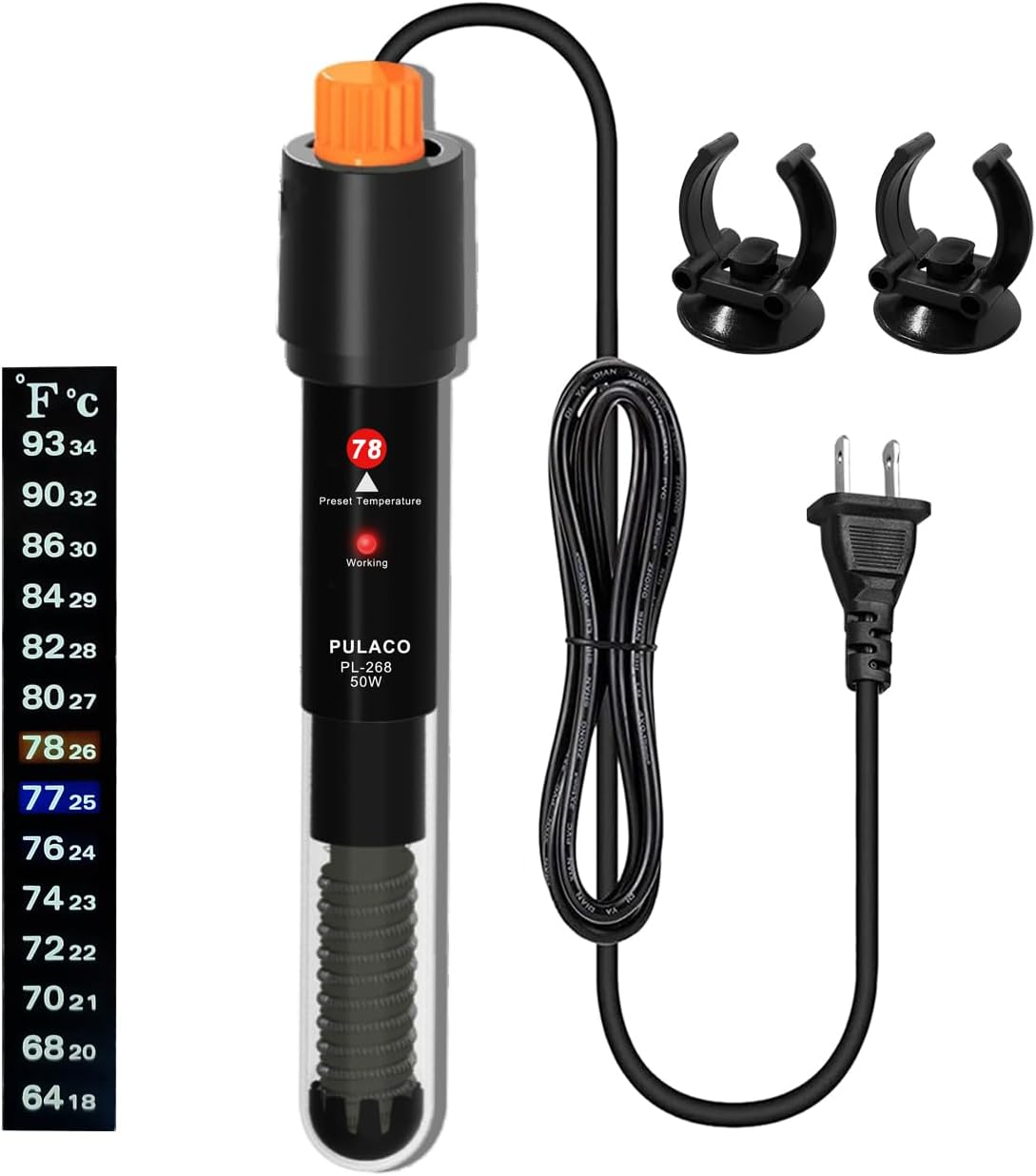
For a 6 to 15 gallon tank, the PULACO 50Watt does the job and throws in the two accessories that usually cost extra: a thermometer strip and a suction cup. That matters more than it sounds. The dial on any heater tells you what the thermostat is trying to hold, not what the water is actually doing, and a stick-on strip gives you a second opinion. If the strip and the dial disagree, the heater is drifting, and you know it before the fish do.
It is adjustable and submersible, sized for the small end of the hobby: betta tanks, quarantine tanks, shrimp tanks, and the 10-gallon starter kit on a kitchen counter. In a 10-gallon in a normal living room, 50 watts is the correct aquarium heater wattage with room to spare. In a 15-gallon in a cold basement it is working harder, and that is when you start looking at the next size up.
How I tested
I do not run a lab, and I am not going to pretend a nine-dollar heater and a forty-dollar heater get bench-tested the same way. What I do is run identical arithmetic on every heater and then read the listing the way a buyer reads it, which is faster and more useful than a spec sheet nobody publishes.
The first question is always wattage against tank volume: is the heater offered in the size my tank actually needs, and does the listing state a gallon range or just a number? The second is the thermostat range: adjustable or preset, and can I set it to the temperature my fish need rather than the temperature the factory picked? The third is what comes in the box, because a thermometer strip and a suction cup are the difference between trusting a dial and verifying it.
Then I check the housing, glass or plastic, and whether the heater is rated for full submersion, since a unit that has to stay partly above the waterline limits where you can mount it. Last, I check placement against flow. A heater sitting in a dead corner will cycle on and off all day and still leave a cold spot, while the same heater near the filter return evens out the whole tank.
Analysis and test results
The rule I use is 5 watts per gallon for tanks up to about 40 gallons, and 3 watts per gallon above that. The reason the number drops is surface area. Heat escapes at the water's surface, and surface area does not scale up as fast as volume does, so a 55-gallon tank loses less heat per gallon than a 5-gallon tank. That is why a 10-gallon needs a 50W heater while a 55-gallon gets by on 150W rather than 275W.
Room temperature sets how hard the heater has to work. A tank in a 65°F room asking for 78°F has a 13-degree lift to cover; the same tank in a 72°F room has a 6-degree lift. Cold rooms push you to the high end of the range, and a basement tank in January is the case where the ideal aquarium heater wattage is one size larger than the chart says. The reverse holds too: a warm apartment can run a tank at the low end without trouble, and a lid or a tight-fitting canopy cuts heat loss further.
Oversizing is not free. A 300W heater in a 10-gallon tank can raise the temperature fast enough to stress fish if the thermostat sticks, and it cycles harder than a correctly sized unit. Undersizing fails differently: the heater never turns off, which shortens its life and leaves the tank vulnerable on the coldest night of the year.
Flow is the part people skip. Water carries heat, so a heater works best where the filter return moves water past it. A filter rated at 150 gallons per hour in a 20-gallon tank turns the volume over several times an hour, which evens out the temperature across the tank, and that flow rate matters more than where the heater sits in the glass. Nothing about the last filtration stage changes the math, and neither substrate grain nor a light's kelvin rating has any bearing on heating at all. Those are setup choices, not temperature choices. What matters is the wattage, the thermostat range, and whether the water is moving.
The aquarium heater wattage chart
This is the chart I keep open when someone asks what size heater to buy. The wattages below are targets for a tank in a normal room around 68 to 72°F. Go up one step in a cold room or an unheated basement.
| Tank volume | Target wattage | Heater to match | Notes |
|---|---|---|---|
| 2 to 10 gallons | 25 to 50W | 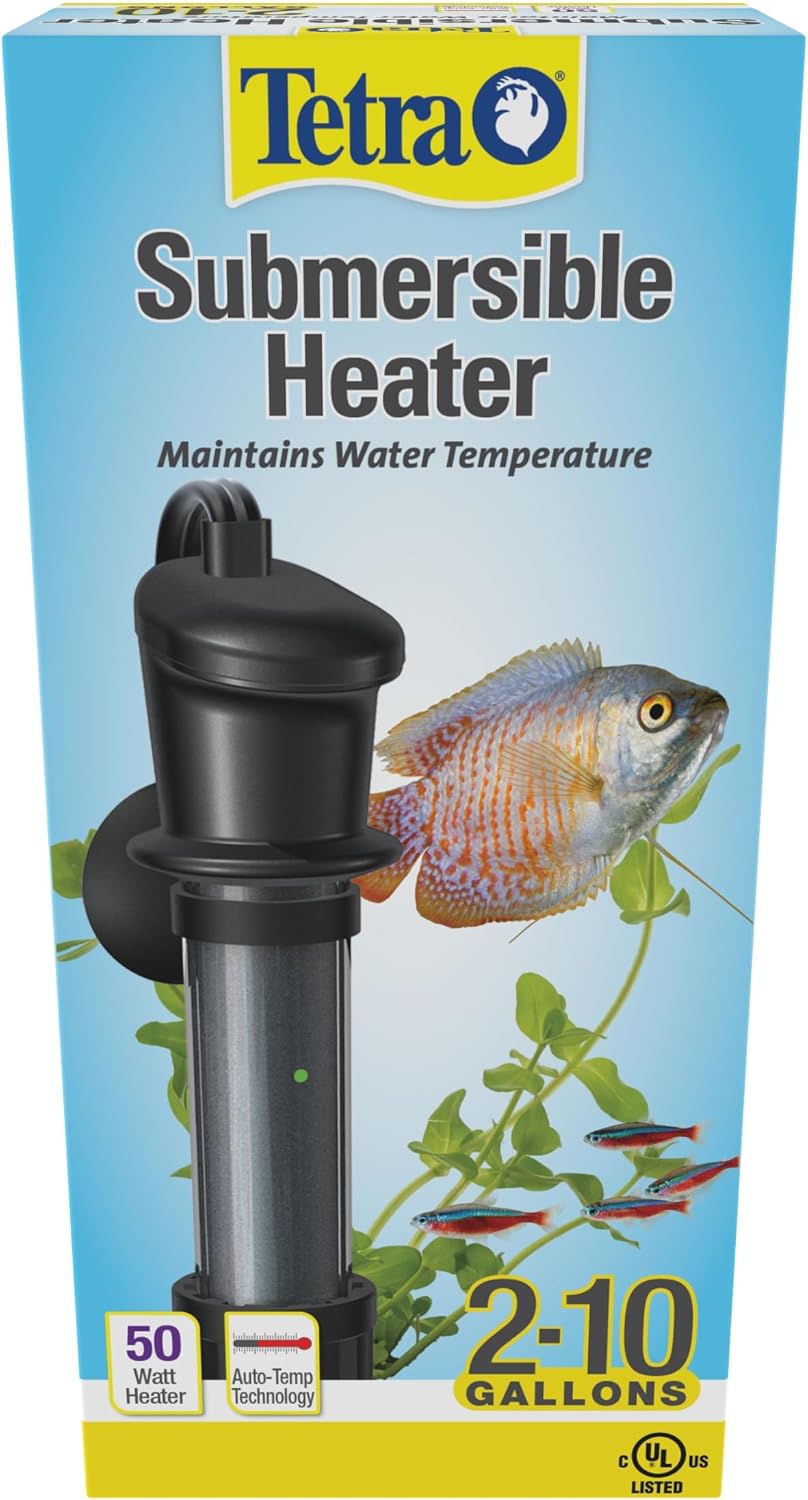 View on Amazon → Tetra HT Submersible Aquarium Heater, 50-Watt | Electronic thermostat, preset target; the simplest option for a small tank |
| 6 to 15 gallons | 50W | PULACO 50Watt Aquarium Heater | Ships with a thermometer strip and a suction cup |
| 10 to 20 gallons | 50 to 75W | Hitop Adjustable Aquarium Heater, 50W | Adjustable dial, sold in four wattages |
| 20 to 40 gallons | 100 to 150W | 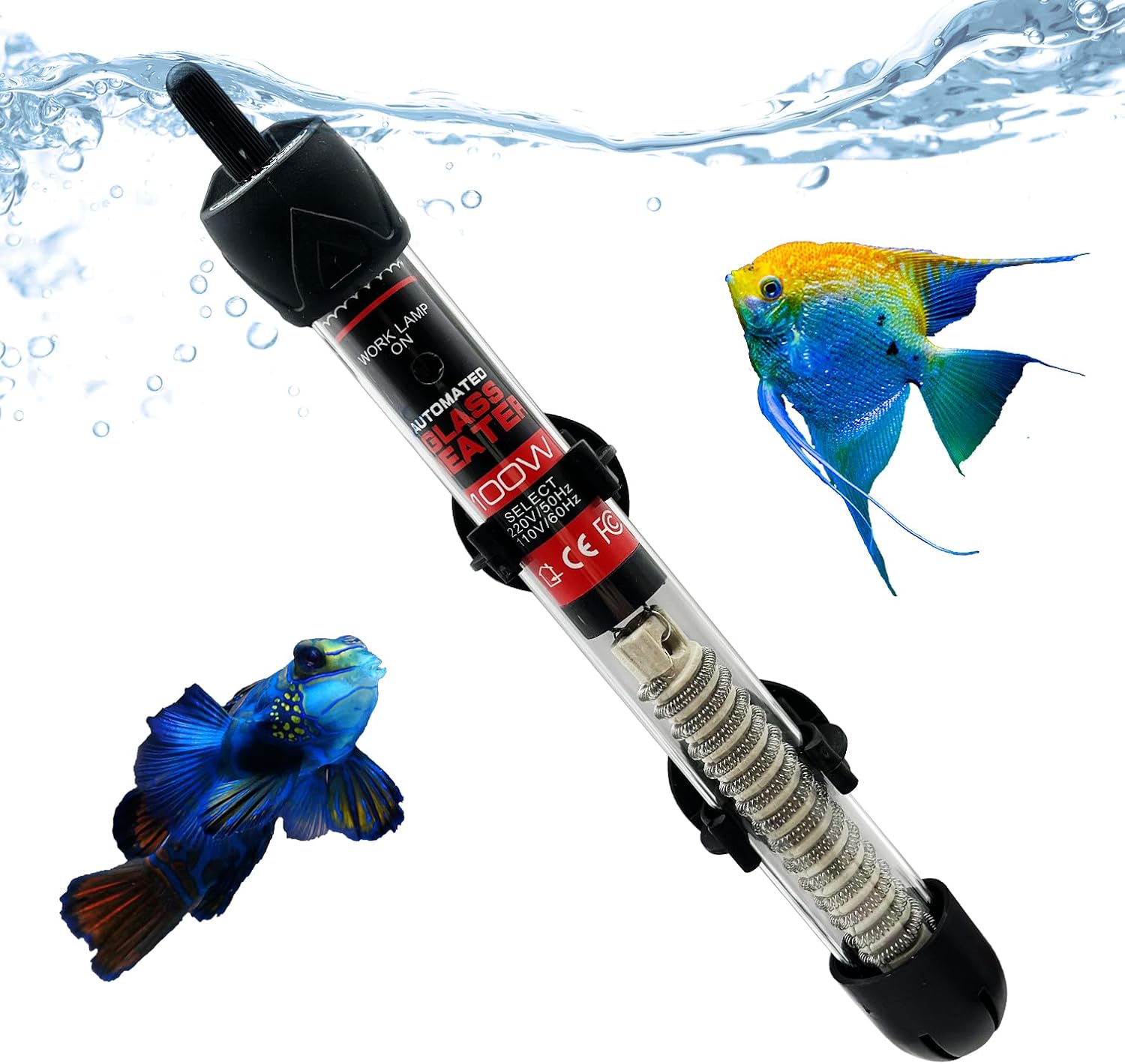 Fish Tank Aquarium Heater, adjustable | Pick the wattage that matches the tank |
| 40 to 75 gallons | 200 to 300W | The same adjustable lineup, 200W or 300W | Two 100W heaters also work here |
| 75 gallons and up | 300W plus a second heater | Two mid-size heaters | Redundancy matters more than total watts |
A chart cannot see your living room. If the tank sits near a window in January, or the house drops into the low 60s overnight, treat the top of the band as your minimum rather than your target.
Sizing by tank volume and room temperature
Two numbers do the work: how many gallons of water the tank actually holds, and how far the water has to climb from room temperature to your target. Measure the real water volume, not the number on the box. A 20-gallon kit with a thick substrate layer, a big filter, and a tall canopy might hold 16 gallons of water, which changes the wattage you need.
Then set the target. Most tropical community fish want 78°F, goldfish want cooler, discus want warmer. Subtract room temperature from your target and you have the lift. Small lift, low end of the band. Big lift, high end, and possibly the next size up.
Two heaters instead of one
On tanks above 40 gallons, two smaller heaters beat one big one. Two 150W units in a 75-gallon tank give you redundancy: if one fails in February, the other holds the tank until a replacement arrives, which is the difference between a bad week and a dead tank. Mount them at opposite ends, both near flow, and set them to the same temperature so they share the load instead of one doing all the work.
The adjustable Fish Tank Aquarium Heater lineup makes this easy because the same design is sold from 25W up to 300W, so you can buy two mid-size units instead of hunting for a matched pair.
Should you buy the Hitop Adjustable Aquarium Heater?
Yes, for most tanks between 5 and 40 gallons. The wattage lineup means you are not forced into a size that does not fit, the adjustable thermostat lets you correct for a cold room, and the suction mount lets you put the heater where the flow is instead of where the cord reaches. Glass is the compromise: it transfers heat well and reads clearly, but it wants a gentle hand during water changes and it has to stay submerged while it is plugged in.
If your tank is smaller than 5 gallons, or if you would rather not think about a dial at all, look at the value pick or a preset unit instead. For everyone else, this is the heater that matches the math.
Should you buy the PULACO 50Watt Aquarium Heater?
Yes, if your tank holds 6 to 15 gallons. The included thermometer strip is the reason it wins on value: you can confirm the water temperature against a real reading instead of trusting a dial, and the suction cup means it mounts where you want it. For a betta tank, a quarantine tank, or a 10-gallon starter setup, 50 watts is the right size and there is no reason to spend more.
If your tank is bigger than 15 gallons, or the room drops below 65°F in winter, step up. A 50W heater in a 20-gallon tank in a cold room is the classic undersized setup: it runs constantly, holds temperature on mild days, and loses ground on the cold ones.