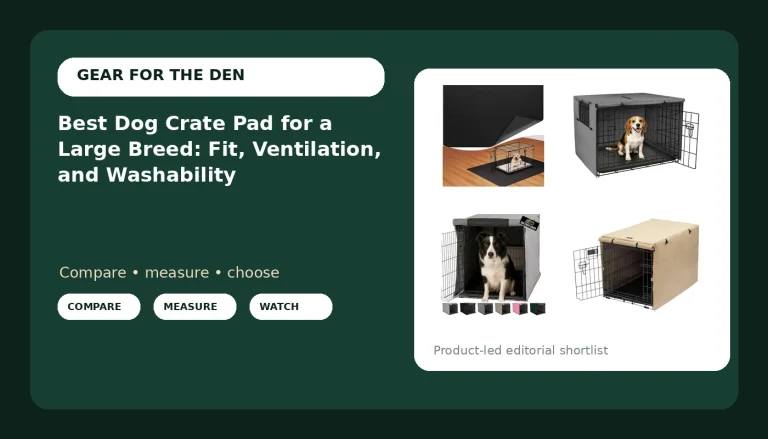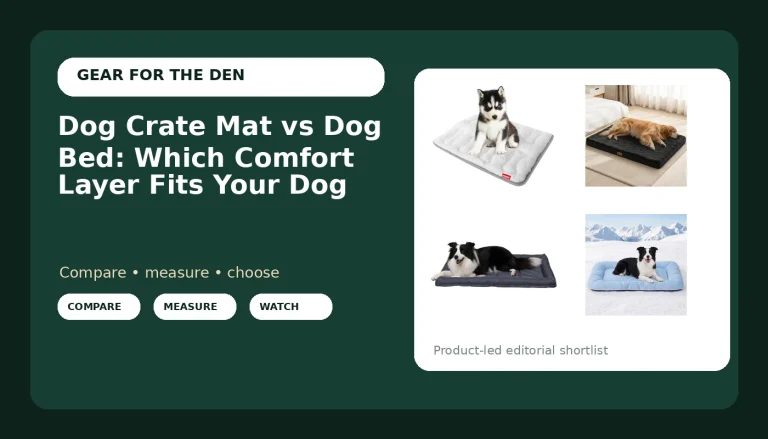
A wire crate is mostly air, and in a cold room that open frame turns every draft into a crosswind around a sleeping dog. Bedding alone does not fix it: the dog warms the mat, the mat warms a thin layer of air, and that air leaves through the bars. That is why dog crate covers for winter do more than they look like they should. A cover closes off the frame, holds a layer of still air around the bedding, and gives the crate the enclosed, den-like feel that many dogs settle into faster.
The catch is that covers are sold on adjectives. Waterproof. Heavy duty. Plush. Designer print. None of those words tell you whether the cover fits your crate, whether the door still lines up, whether your dog can see out, or whether air can move enough that the inside stays dry instead of damp. A cover cut for a 36-inch crate will not sit correctly on a 42-inch one, and a cover with no opening over the door is a cover you stop using by the second week.
This is an explainer rather than a ranking. Below are four covers listed for the crate sizes most owners actually have, what each one is built for, and the measurements and habits that decide whether any of them earns its place in your setup.
Quick answer
Measure the crate first, then buy a cover that matches that measurement, leaves the door and any side gate usable, and still lets air move. For a crate inside a heated home, a breathable polyester or poly-cotton cover with a mesh panel or an open section does more for a dog than the heaviest fabric with no airflow. That is dog crate covers for winter explained as simply as it can be: fit first, airflow second, warmth third, and never leave a cover on a crate that holds a dog who chews fabric or runs hot.
Four useful options
| Model | Best fit | What stands out |
|---|---|---|
| GEHENG Dog Crate Cover, Fits Most 36-inch Dog Crates, with Detachable Top & Mesh, 1680D Waterproof Oxford Cloth (More Durable and Heavy Duty), Waterproof Dog Kennel Cover, Black | Crates near doors, porches, or damp floors | 1680D Oxford shell with a detachable top and mesh panel |
| MidWest Homes for Pets Intermediate Dog Crate Cover Featuring Teflon Fabric Protector, Poly-Cotton Privacy Kennel Cover Fits Most 36-Inch Crates, Pink Designer Print, Machine Washable, Reduces Barking | Indoor 36-inch crates in a living space | Poly-cotton privacy fabric with Teflon fabric protector, machine washable |
| Explore Land Dog Crate Cover, 42 inches, Black | 42-inch crates and larger dogs | Listed for 42-inch crates rather than 36-inch |
| Seiyierr Dog Crate Cover – Kennel Covers Fit for 36 Inch Dog Crate, Double Door Polyester for Wire Puppy Crate Indoor Outdoor Protection, Blue | 36-inch wire crates with two doors | Double-door cut with polyester fabric |
The weatherproof option: GEHENG Dog Crate Cover
The trade-off with a shell this heavy is airflow. A thick waterproof layer blocks drafts, but it also slows the exchange of air that keeps condensation from forming on the inside, which is why the detachable top and mesh panel matter more here than they would on a lighter cover. If your dog sleeps in a heated room and only needs a visual barrier, this is more cover than the job requires. If the crate sits in a hallway by a door, against an outside wall, or on a porch, the heavier fabric is doing real work. Fit it so the door still opens fully and the mesh lines up with a side gate if you use one.
The privacy option: MidWest Homes for Pets Intermediate Dog Crate Cover
Privacy is the point here rather than weather protection. The listing describes this as a barking-reducing cover, and the mechanism is visual: fewer things to watch means fewer reasons to react, which helps a dog who alerts at every footstep in the hall. The poly-cotton layer is a washable fabric, so hair, dander, and the occasional accident come out in the machine instead of becoming a permanent part of the crate. The printed finish is a design choice, so weigh it against the room you keep the crate in. One caveat worth naming: a solid poly-cotton cover is a privacy layer, not a waterproof layer, so treat it as an indoor option and check how much of the door and gate area it leaves open before you commit.
The large-crate option: Explore Land Dog Crate Cover
Size is the whole reason to look at this one. If you keep a 42-inch crate for a large or senior dog, a 36-inch cover stretched over it will gape at the corners, leave the frame exposed, and sag into the crate where a dog can reach it. This cover is cut for the crate you actually own, and the black finish reads as furniture rather than as a printed accessory. Before ordering, count the panels on your crate and note where the openings sit, because a 42-inch crate from one maker does not always share the door layout of another, and a cover only works when the fabric openings line up with the frame openings.
The double-door option: Seiyierr Dog Crate Cover
If you use a side gate for training, for a dog who prefers to enter from the side, or for a crate pushed against a wall, a double-door cover keeps both openings usable without rearranging the room. The polyester layer is the lighter end of this group, so it suits a crate that lives indoors and moves outside on mild days rather than one that sits in weather year round. Check the opening placement carefully: a double-door cut only helps if the flaps land over the doors you have, and the cover still needs enough of an opening or mesh area that air can move while the dog is inside.
Prices and availability may change. Product images, names, and retailer links are matched to verified listings. No current price, rating, stock status, or measured result is stated here without current evidence.
How to judge dog crate covers for winter
A cover does not generate heat. It slows heat loss, and it does that in three ways: blocking moving air around the frame, trapping a still layer between the fabric and the bedding, and cutting the radiant loss a dog feels when it can see a cold window or wall. That means the useful questions are about airflow and fit, not about which fabric sounds warmest.
Cover ventilation is the first thing to get right. A crate that is sealed on all sides holds humidity from the dog's breath and from a damp floor, and a damp crate is a cold crate. Mesh panels, detachable tops, and door openings are the vents. A waterproof layer earns its place when the crate sits on a porch, in a garage, or against a wall that gets damp, but indoors it mostly adds weight.
Material matters less than people expect. Polyester and poly-cotton covers are light, breathable, and easy to wash, which suits heated rooms. Oxford cloth shells are tougher and resist water, which suits drafty entryways and covered outdoor spaces. A washable fabric is worth prioritising in any material, because a cover that traps hair and odor gets removed and never put back on.
Chasing ideal dog crate covers for winter picks on fabric adjectives alone is how owners end up with a cover that fits badly and traps moisture. Size, openings, and airflow decide the outcome.
Matching a cover to your crate: size, doors, and panels
Getting correct dog crate covers for winter sizing is the step most owners rush. Crate size is measured across the outside of the frame, not the inside floor, and a 36-inch crate from one brand can differ slightly from a 36-inch crate from another. Measure length, width, and height, then compare those numbers to the cover listing rather than to the crate's label.
Panel count and door layout come next. A crate with one front door needs a cover with one opening. A crate with a front door and a side gate needs two. Gate height matters too, because a low opening on a tall panel can leave the latch buried under fabric.
Bar spacing affects how much air moves through an uncovered crate, which tells you how much ventilation you need to preserve once it is covered. A tight wire pattern already restricts airflow, so a cover on that crate should leave more open area, not less.
Mat thickness inside the crate does more for warmth than the cover itself. A thick bed holds the dog off the cold crate floor and gives body heat somewhere to collect. A thin mat on a bare pan loses most of what the cover gains.
- Measure the crate's exterior length, width, and height with the doors closed.
- Count the doors and gates, note which side each sits on, and record the gate height.
- Decide which panels may stay solid and which need mesh or an opening for air.
- Fit the cover and open every door and gate fully, checking that no fabric sags into the crate.
- Recheck after a week for sagging, chewing, and any dampness on the inside panels.
Practical checks once the cover is on
- Watch the dog, not the cover. Panting, restlessness, or shifting to bare crate floor means the setup is too warm.
- Keep the crate clear of space heaters, radiators, and heat vents. A fabric cover near a heat source is a fire risk.
- Do not cover a crate holding a puppy or a dog who chews fabric unless you can supervise, and remove the cover at the first sign of chewing.
- Wash or wipe the cover on a schedule. Hair, dander, and moisture build up in the fabric and dull the benefit.
- Leave at least one opening aligned with a door or gate so air can move even when the crate is closed.
Which option should you choose?
Choose the GEHENG Dog Crate Cover when the crate sits near a door, on a porch, or anywhere damp air and drafts reach it, and you want a heavy shell with a removable top. Choose the MidWest Homes for Pets Intermediate Dog Crate Cover when the crate lives in a heated room and your dog settles better without a view of the room. Choose the Explore Land Dog Crate Cover when your crate is 42 inches and fit is the deciding factor. Choose the Seiyierr Dog Crate Cover when your 36-inch crate has two doors and you want both of them usable with the cover on.
None of these covers is a heater, and none replaces a warm bed, a dry floor, or veterinary advice for a dog who cannot hold body temperature. Fabric and sizing details here come from the product listings, and fit still has to be confirmed against your own crate.
The bottom line
The right cover for a cold room is the one that fits the crate you own, leaves the doors and gates usable, and keeps enough air moving that the inside stays dry. Heavier fabric helps most where drafts and damp are real, while a breathable privacy cover helps most in a heated room with a dog who watches every movement. Measure first, count the openings, and treat ventilation as a requirement rather than a bonus. Handled that way, dog crate covers for winter become a simple piece of the setup: a still, dry, den-like space the dog can warm on its own.