Dog shampoo vs dog conditioner is one of those grooming questions that sounds simple right up until you are standing in the pet aisle with a wet, shivering dog waiting in the car. Both products clean, both promise relief for itchy skin, and plenty of bottles blur the line by printing both words on the front label. The real difference comes down to what each one does to the skin barrier and the hair shaft, and once that clicks, choosing between them takes about ten seconds.
The short answer: most dogs need a shampoo, and only some dogs need a conditioner. A dog with a normal coat who gets bathed every six to eight weeks is usually fine with shampoo alone. A dog with a dry, dull, static-prone, or tangle-prone coat is a different story, and there the question of dog shampoo or dog conditioner has a two-part answer: use both, in that order, and rinse far longer than feels necessary.
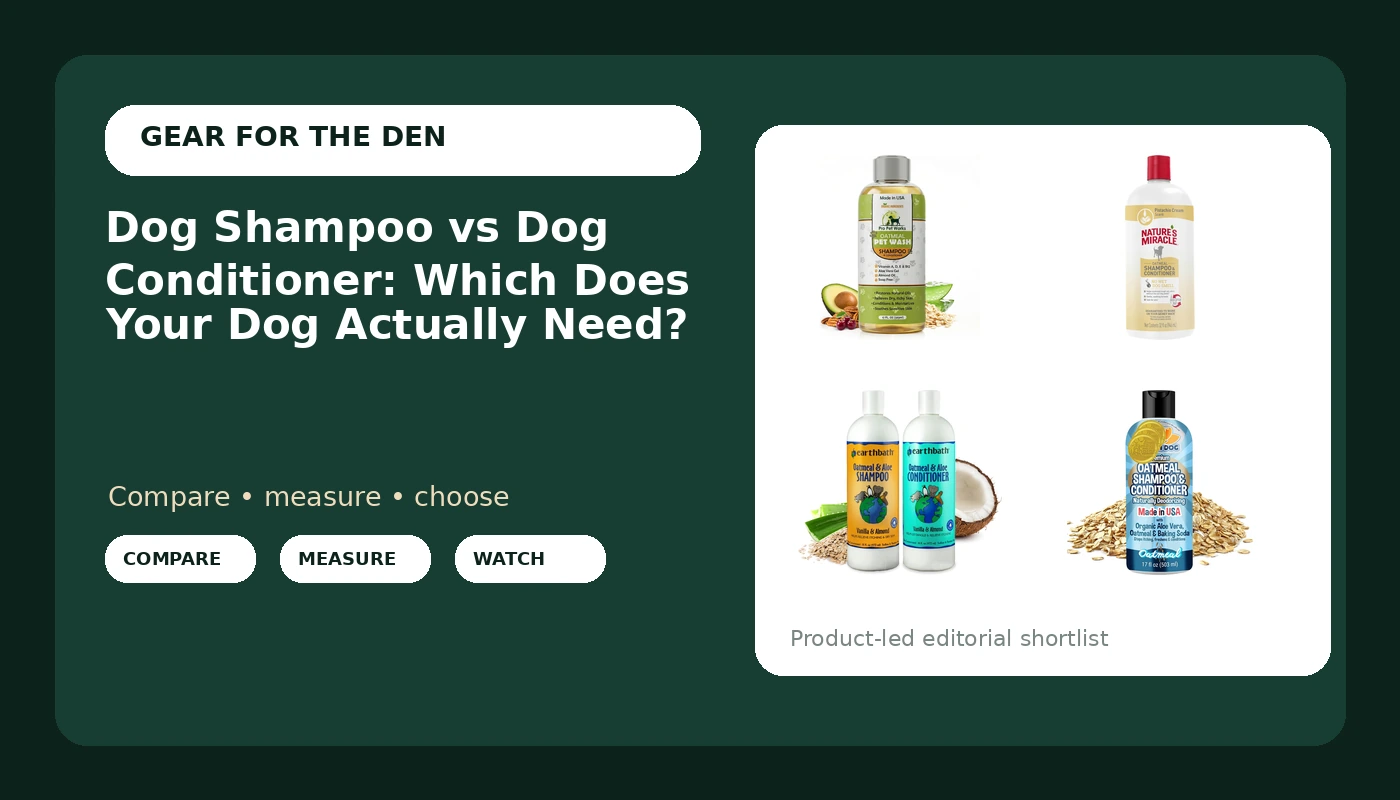
Here is how the four oatmeal formulas we follow most closely stack up against each other. Every one of them is sold as a shampoo and conditioner in some form, which is exactly what makes the comparison useful: they solve the same problem in three different ways.
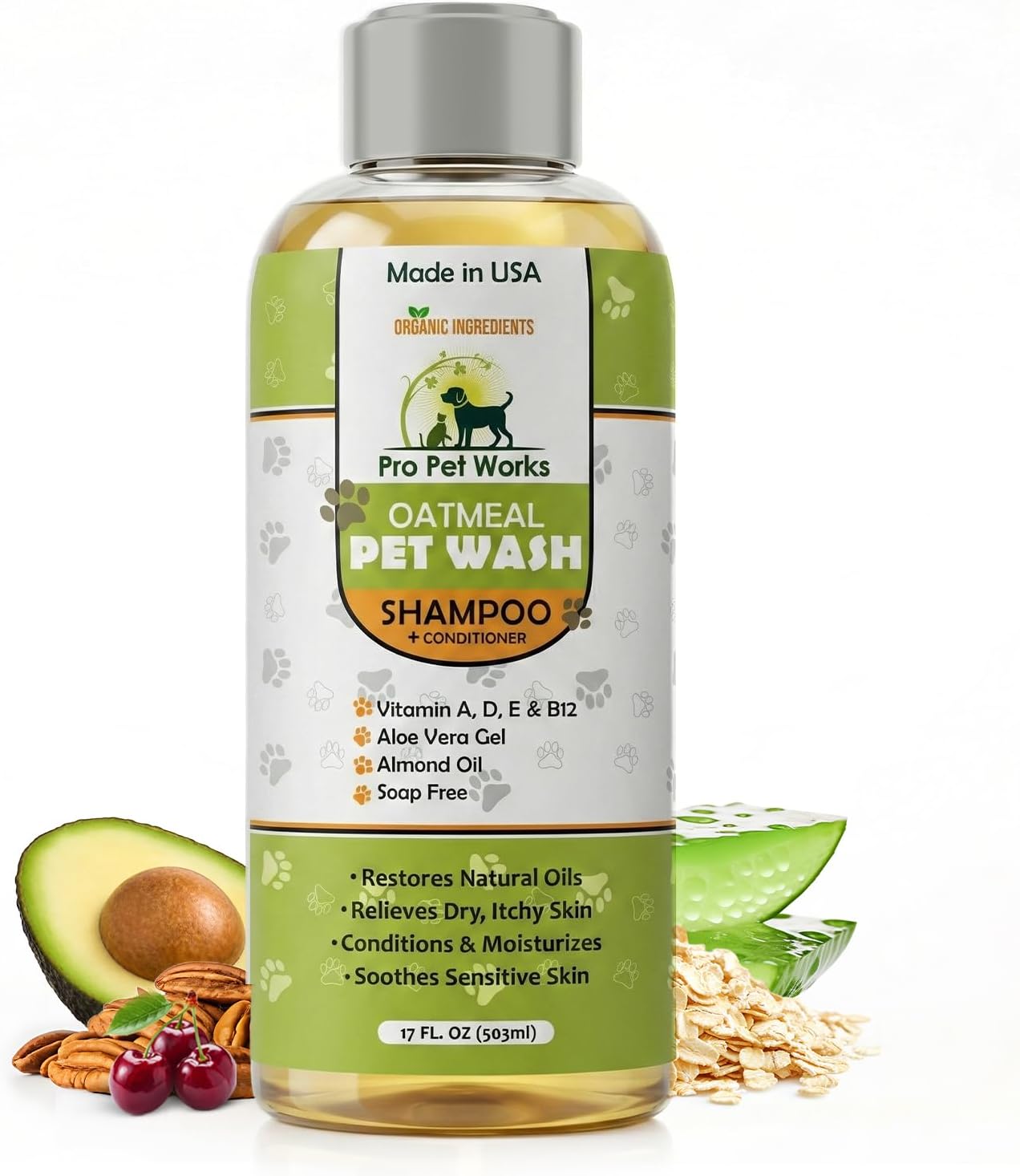
Oatmeal Dog Shampoo and Conditioner for Allergies, Itching and Sensitive Skin
Built for allergy-prone, itchy skin, with omega 3s in the formula and an all-natural pitch
The listing does not state a bottle size, so you are buying blind on volume
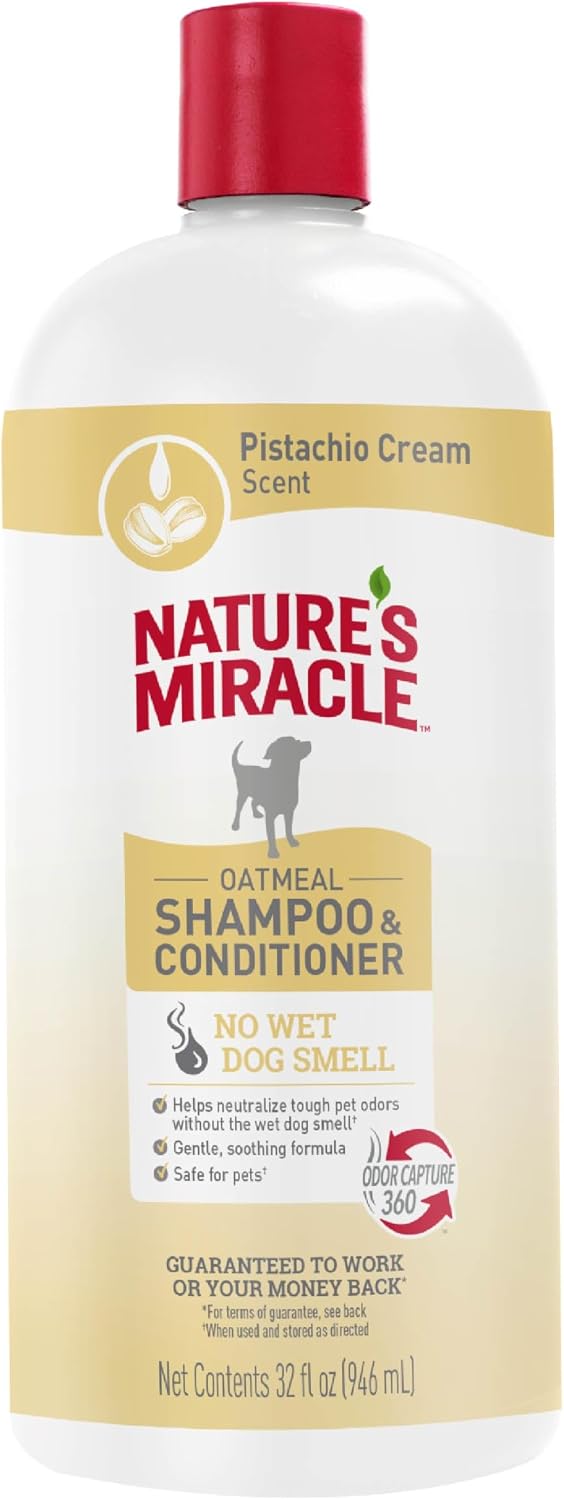
Nature’s Miracle 2-in-1 Oatmeal Dog Shampoo & Conditioner
Largest bottle of the four at 32 oz, and the fastest one-step bath for a short coat
A true 2-in-1 gives you no control over how much conditioner reaches the coat
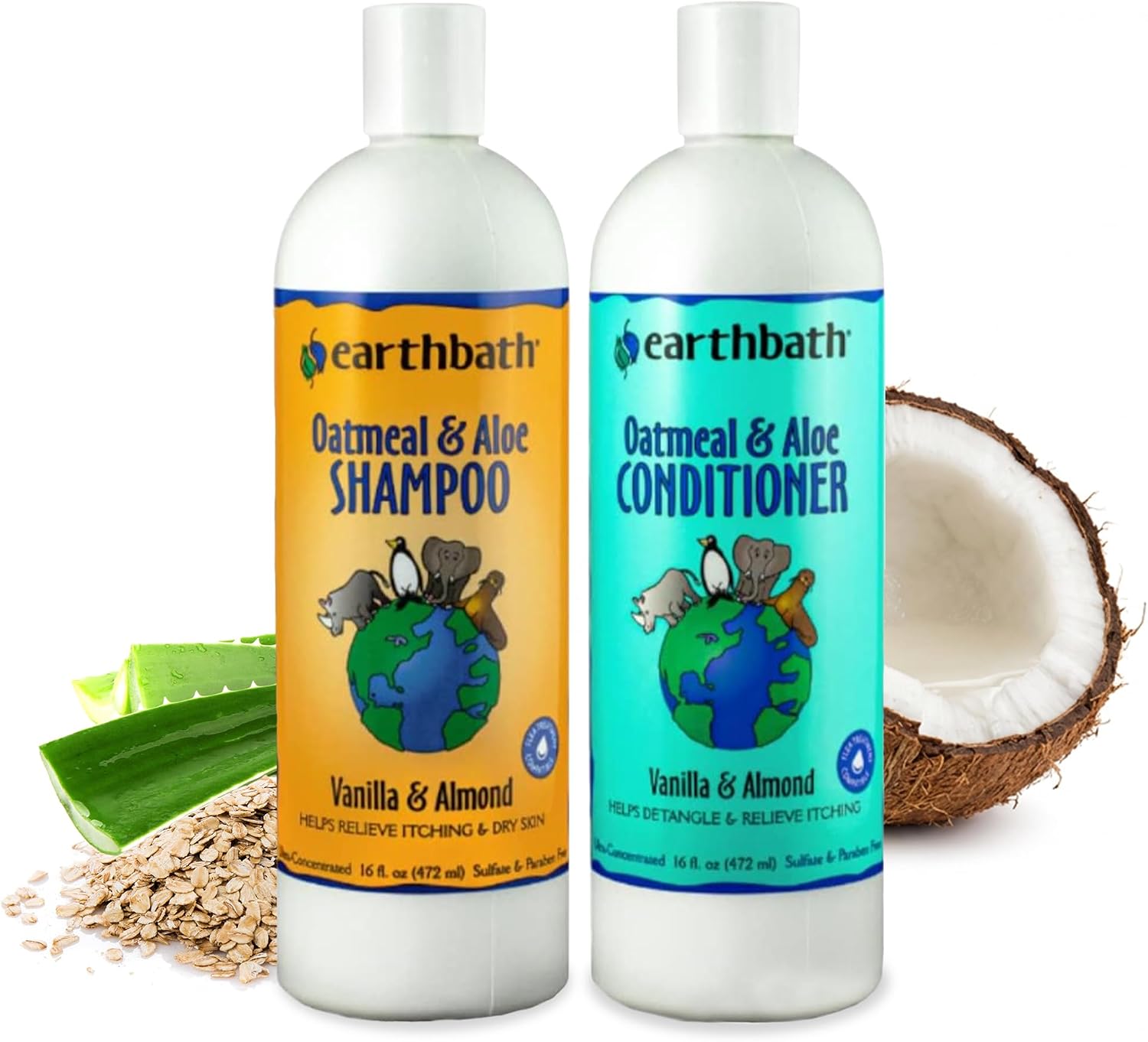
earthbath Oatmeal & Aloe Dog Shampoo and Conditioner, 16 Oz (1 Set)
The only true two-bottle set here, with aloe alongside oatmeal for dry skin
The two bottles are paired, so you buy both halves even if you use one faster
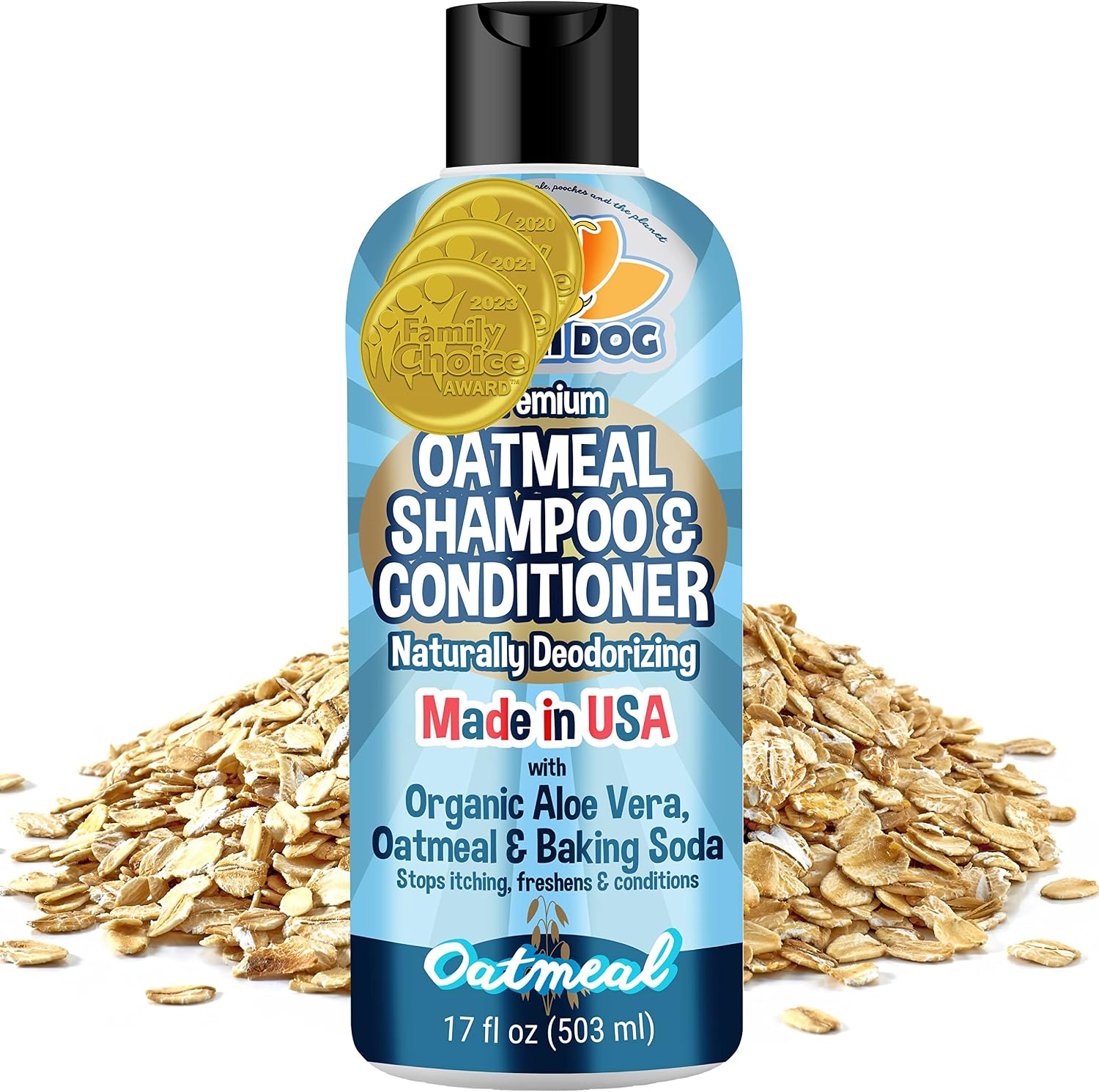
Bodhi Dog Oatmeal Shampoo & Conditioner
Hypoallergenic formula with organic ingredients, made in the USA, and labeled for cats too
17 fl oz sits in the middle of the pack, and it is still a combined formula
Prices and availability may change.
Dog shampoo vs dog conditioner: what each one actually does
A shampoo is a cleanser. Its job is to lift dirt, dander, and the oils that carry odor, then rinse away cleanly. To do that it has to raise the cuticle, the outer layer of each hair, which is why a freshly washed dog can feel slightly rough or squeaky. That is not damage. It is the cuticle standing open, and it is temporary.
A conditioner is a finisher. It lays the cuticle back down, adds emollients and slip, and reduces the friction that turns a long coat into a mat. Conditioner does not clean anything, and using it in place of shampoo mostly seals dirt against the skin.
So the difference between dog shampoo and dog conditioner is order and purpose, not strength. Shampoo first, conditioner second, and rinse both thoroughly. Flip the sequence, dog conditioner vs dog shampoo, and you coat the hair in a film that the shampoo then has to strip, which means more scrubbing than the skin wants.
The dog shampoo vs dog conditioner decision also depends on how often you bathe. A dog washed every three weeks carries less oil and less odor, so a mild shampoo does the whole job. A dog washed twice a year arrives at bath time with a coat that needs the stronger clean, and that is the dog who benefits most from a conditioning step afterward.
Worth knowing too: dog skin sits at a different pH from human skin, which is why a bottle of your own shampoo is not a substitute in a pinch. A cleanser built for a human scalp can leave a dog's coat dull and the skin tight. Whichever formula you choose, work it from the neck down, keep it out of the eyes and ears, and use a damp washcloth on the face instead of a hose.
One more thing about labels: a bottle marked "shampoo and conditioner" is a compromise, not a cheat. It usually means the cleansers are milder and the conditioning agents are lighter so the two can live in one bottle without separating. For a dog with an easy coat, that is a fine trade. For a dog whose coat mats, it is not, because the conditioning load is simply too low to do anything about friction.
What the ingredient list tells you before you buy
The ingredient list is where the four formulas above separate from one another, and where most marketing claims go to die. A few things to scan for.
Oatmeal concentration and position. Oatmeal is the headline ingredient in all four products here, but position on the ingredient list matters more than the word on the front of the bottle. Colloidal oatmeal high in the list means a real soothing component. Oatmeal near the bottom, below fragrance and preservatives, means you are paying for the label.
Omega 3s, and whether the label specifies EPA and DHA. Omega 3 fatty acids support the skin barrier when they are part of a topical formula, and the useful long-chain forms are the ones usually written as EPA and DHA. A bottle that says "omega 3s" and then names both is making a more specific claim than one that says "with omega 3s" and stops there. The Oatmeal Dog Shampoo and Conditioner for Allergies, Itching and Sensitive Skin leads with omega 3s in its own name, which at least tells you the brand treats it as a feature rather than an afterthought.
Limited ingredient versus a long list. A shorter ingredient list is not automatically better, but for a dog with a known reaction, a limited ingredient approach makes it easier to isolate whatever set off the itching. Hypoallergenic labeling, which the Bodhi Dog formula carries, points in the same direction.
Lick safe. Dogs lick. A dog fresh out of the bath will groom its own legs and flanks for an hour afterward. Lick safe is not a regulated term, so treat it as a claim rather than a guarantee, and rinse until the water runs clear no matter what the bottle promises.
Fragrance and dye. Still the most common reason a dog gets itchier after a bath rather than less itchy. If the coat smells like a candle two days later, something in the bottle is doing that, and that something is now sitting on the skin.
Match the formula to your dog's coat type
Coat type decides more of this than brand loyalty does, and it is the fastest way to stop overthinking the purchase.
- Short, smooth coats. Boxers, beagles, most terriers. These dogs rarely need conditioner. Shampoo, thorough rinse, towel, done.
- Double coats with a thick undercoat. Huskies, goldens, Newfoundlands. Conditioner helps the undercoat release during shedding season, but a heavy conditioner can also trap loose hair against the skin. Use it lightly, and only after a real deshedding session.
- Curly and wool coats. Poodles, doodles, bichons. This is the coat conditioner was invented for. It mats against itself, and slip is the difference between a fifteen-minute brush-out and a shave-down.
- Long, silky coats. Yorkies, shih tzus, setters. Conditioner cuts static and breakage. Rinse it out completely, or the coat goes flat and greasy within a day.
- Sensitive or allergy-prone skin. Here the priority flips. The gentlest cleanser and the fewest possible additives matter more than shine, and a combined formula can be the right call because it means one rinse instead of two.
Bottle size, dilution, and what a bath actually costs
Bottle size is the most underrated spec in this category. The four products here run from a 16 oz set to a 32 oz bottle, and the difference matters in two ways: how long the bottle lasts, and whether you can lift it with one wet hand while the dog tries to climb out of the tub.
A 32 oz bottle of a 2-in-1 goes a long way on a short-coated dog, because you use a small amount and there is no second step. On a doodle in full coat, that same bottle disappears in a handful of baths, because a thick coat needs more product and a separate conditioner to work through it.
Dilution changes the math as well. Many oatmeal shampoos can be mixed with water in a squeeze bottle, which stretches a bottle considerably and makes it easier to work the product down to the skin instead of piling foam on the topcoat. If the label gives a dilution ratio, use it. If it does not, start at about ten to one and adjust from there.
Concentrates are worth the extra minute, too. A ready-to-use shampoo is convenient, but a bottle you dilute yourself lets you dial the strength down for a weekly rinse and up for a dog who rolled in something. That flexibility is the reason a smaller bottle can outlast a bigger one.
The four formulas, and who each one fits
Oatmeal Dog Shampoo and Conditioner for Allergies, Itching and Sensitive Skin. Look here first if itching and allergies are the reason you are shopping. It leads with omega 3s and an all-natural formula, and it is positioned as a single-bottle answer for smelly, itchy dogs and puppies. The catch is that the listing does not state a bottle size, so confirm the volume before you commit. Visit on Amazon
Nature's Miracle 2-in-1 Oatmeal Dog Shampoo & Conditioner. The 32 oz bottle is the largest of the four and the simplest to use: one product, one lather, one rinse. That is the right shape for a household with a short-coated dog and a low tolerance for a two-step bath. What you give up is control, because you cannot add more conditioner to the ends of a long coat without adding it everywhere else. Visit on Amazon
earthbath Oatmeal & Aloe Dog Shampoo and Conditioner. Sold as a 16 oz set, this is the only true two-bottle option in the group, and it is the one to pick if your dog's coat genuinely needs a separate conditioning step. Aloe sits alongside the oatmeal, which suits a dog whose skin is dry rather than oily. The trade-off is that the two bottles are paired, so you buy the set whether or not you use both halves at the same rate. Visit on Amazon
Bodhi Dog Oatmeal Shampoo & Conditioner. A 17 fl oz hypoallergenic formula made with organic ingredients and made in the USA, and it is labeled for cats and pets as well as dogs. In a multi-pet household where one bottle has to serve everyone, this is the flexible pick. It is still a combined formula, so the same limitation applies: there is no separate conditioning step. Visit on Amazon
Should you buy a separate conditioner?
Only if you can answer yes to one of these. Your dog's coat tangles between baths. It feels dry or straw-like a day after washing. It stands up with static in winter. Your groomer has mentioned breakage. If none of those apply, a shampoo alone is not a compromise, it is the correct answer, and a separate conditioner is money plus a second rinse you do not need.
If you do buy one, buy it as a pair with a shampoo from the same line at first. Mixing an aggressive cleanser with a rich conditioner can leave a coated feeling that reads as greasy, and it makes it hard to tell which bottle is responsible when something goes wrong with the coat.
There is also a middle path that costs nothing. If your dog's coat only tangles at the ears, the tail, and the feathering on the legs, you can condition just those areas and skip the rest of the body. That is a ten-second habit that solves most of the matting complaints we hear about, without adding a full second step to every bath.
What we are watching next
Two things. More brands are publishing oatmeal concentration instead of just printing the word oatmeal on the front, and that number is the single most useful thing a label can add. And dilution ratios are showing up on more bottles, which turns a mid-priced shampoo into a much cheaper bath once you do the arithmetic. When a mainstream brand puts both of those on the label, this comparison gets easier to write and a lot easier to shop.