Anyone who has kept an aging dog and a cat under the same roof eventually runs into the enzyme cleaner for pets vs pee pads for senior dogs question, usually at the worst possible moment. One of those products removes what has already soaked into the carpet. The other catches what has not happened yet. Confusing the two is how you end up scrubbing a rug at six in the morning while a clean, folded pad sits in the closet doing nothing at all.
The short answer: a pad manages the next accident, an enzyme cleaner repairs the last one, and most homes with an older dog end up needing both. If you can only buy one thing this month, buy the pad, because a washable pad costs far less than a carpet replacement.
Here is how the four pieces of gear in this category stack up. The table is sorted by the job each item does rather than by price, since Amazon prices move around constantly, and every listing should be checked rather than trusted from memory.
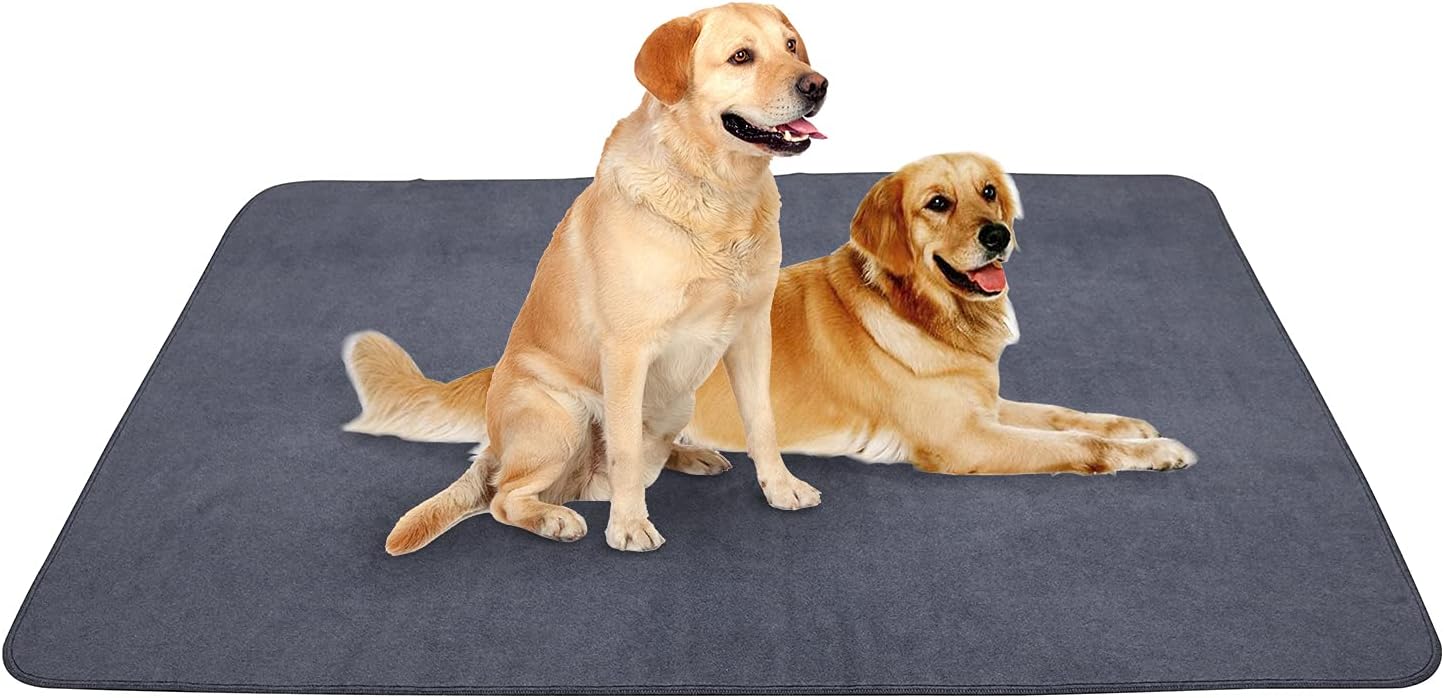
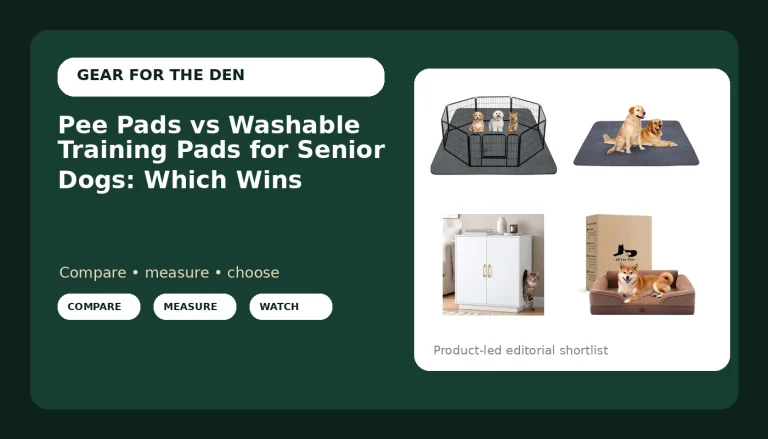
Peepeego Non-Slip Dog Pad 72"x72", Washable Pee Pad Waterproof for Training, Whelping
Six feet of washable, waterproof coverage with a non-slip back, so it stays flat under a dog that cannot step over a rumpled edge
A pad this size is a heavy laundry load and more coverage than a single medium dog usually needs
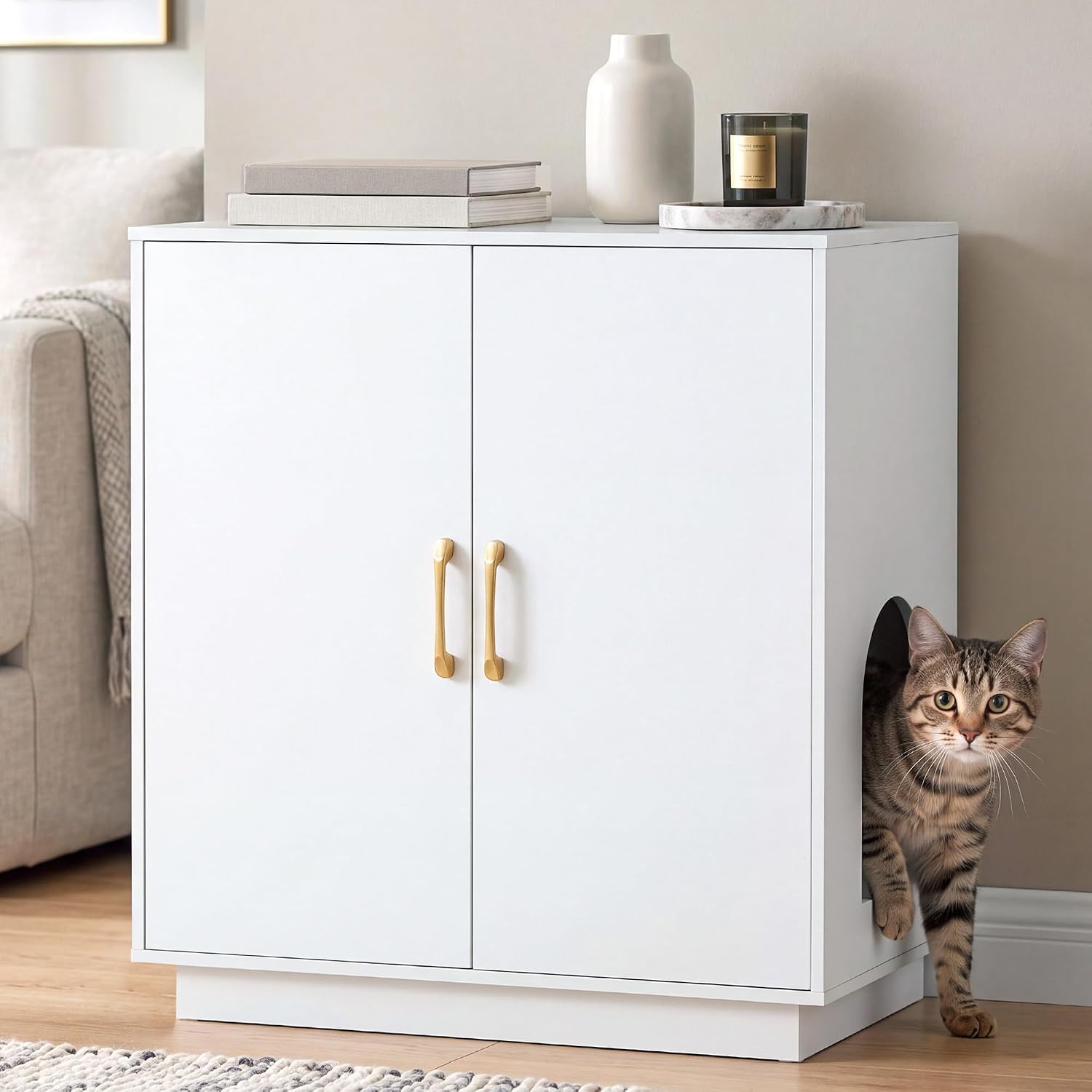
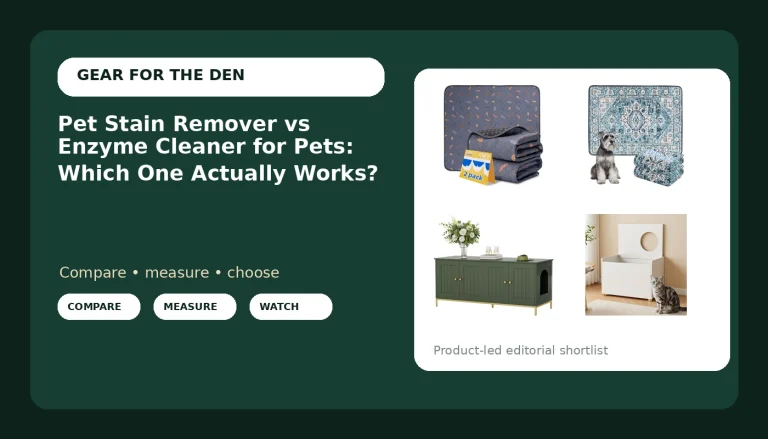
Gitelsnour 30.9'' Litter Box Enclosure Furniture- Hidden Storage, CLB003WT
Furniture that hides the box, and the hidden storage is where the enzyme spray, spare pads, and bags actually live
Occupies floor space permanently, and the interior has to fit the box you already own
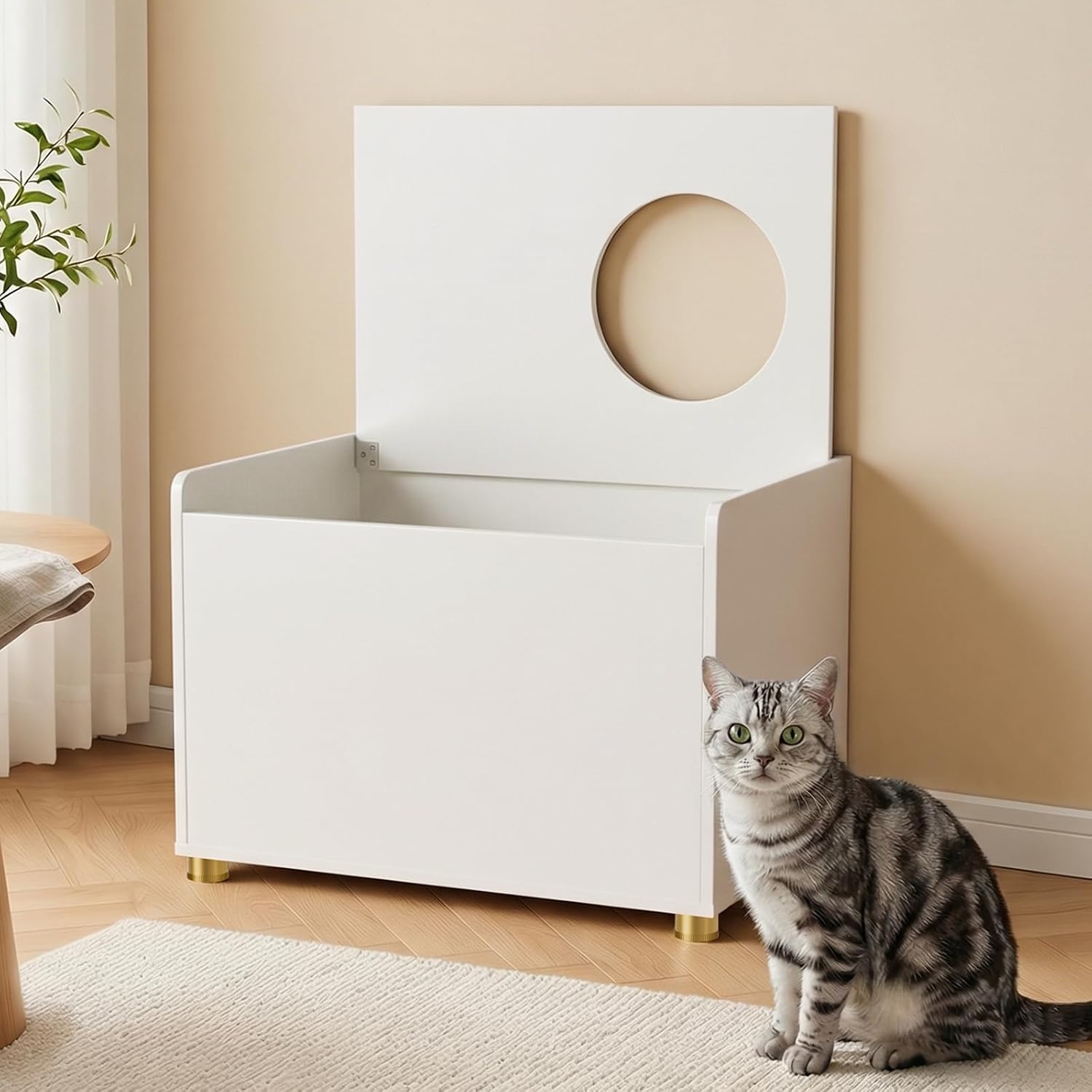
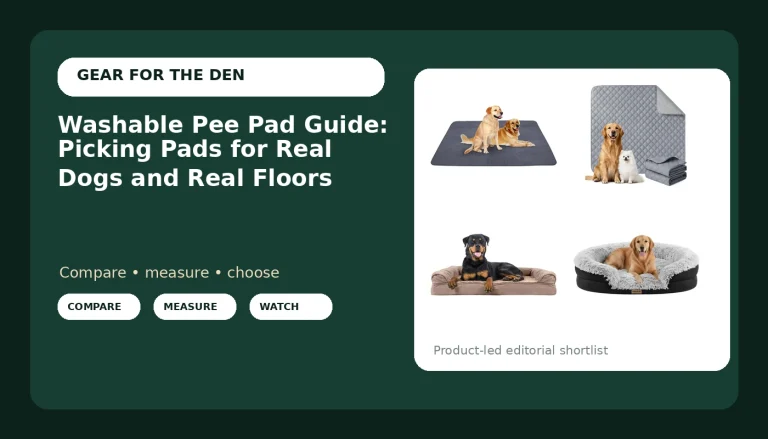
Amunrbrek Top Entry Litter Box Enclosure, Flip Top with Scratch Mat, White
Top entry plus a scratch mat keeps clay granules on the mat instead of ground into the carpet
Top entry is a hard sell for an arthritic or heavy senior cat
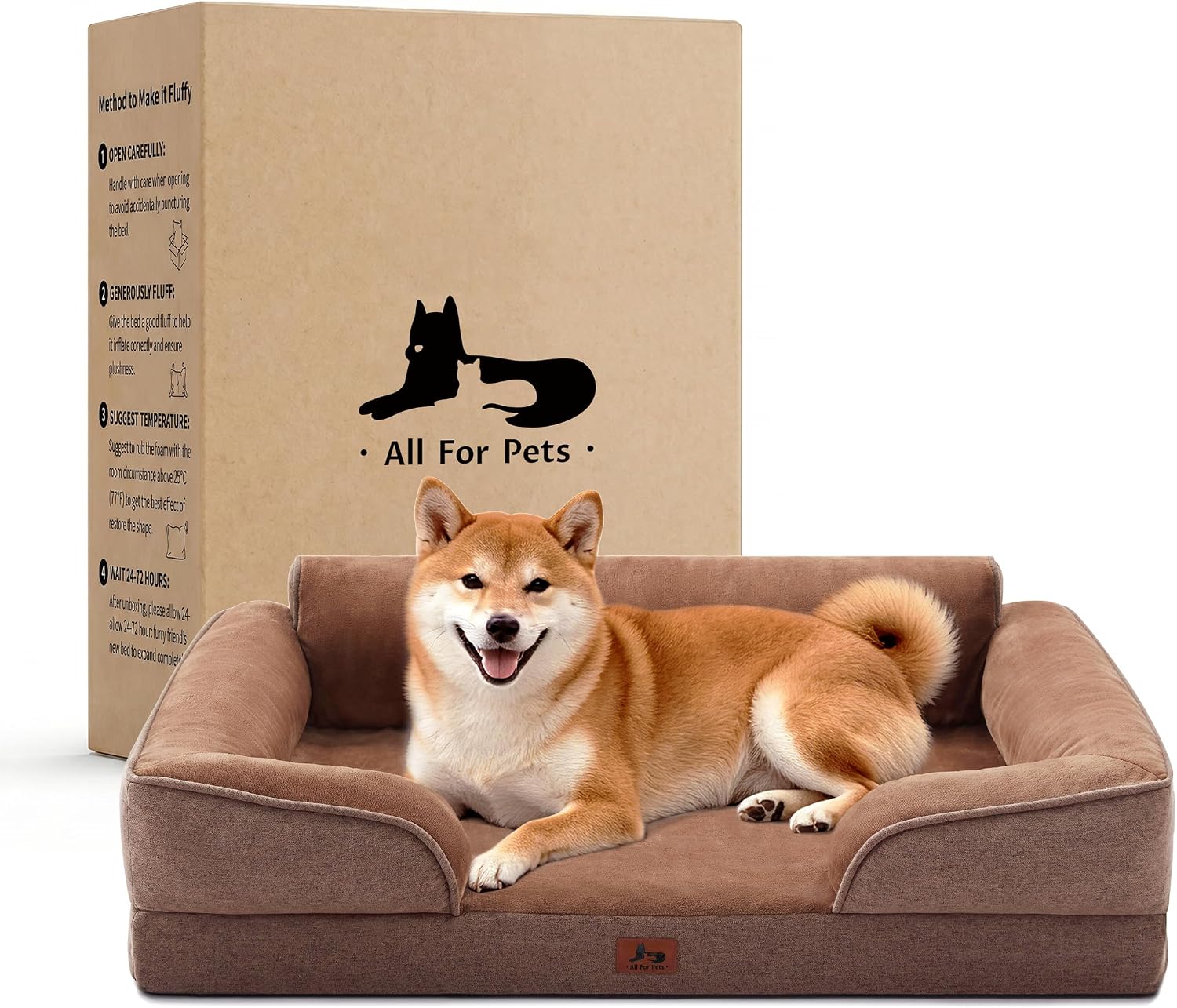
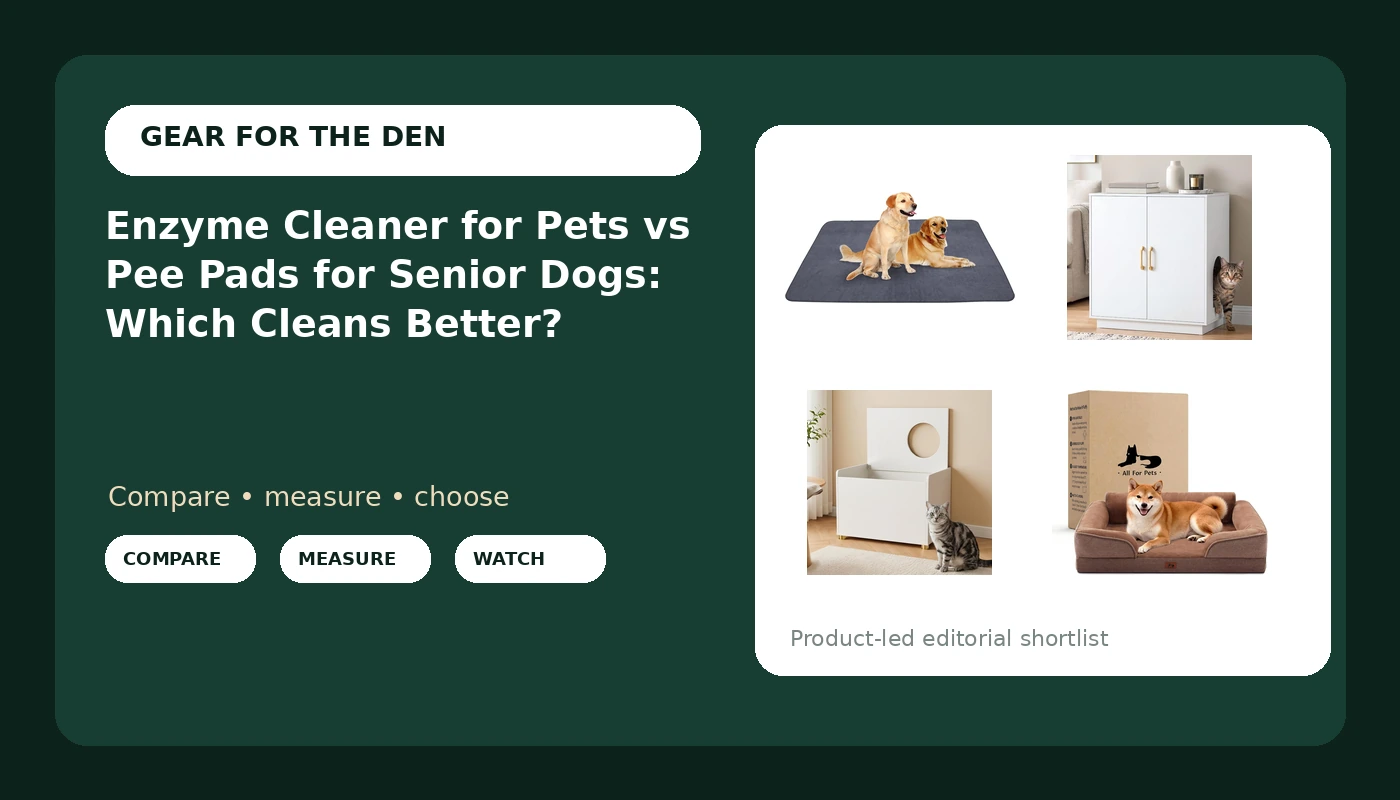
Warmrest Large Orthopedic Dog Bed for Medium Dogs Removable Washable, Brown
A removable washable cover means one accident does not retire the whole bed
The foam core still needs hand treatment, and the cover takes a full load on its own
Prices and availability may change.
How enzyme cleaners actually work
Enzyme cleaners are biological products, not detergent with a friendlier label. They use enzymes, and in some formulas live bacteria, to break down the proteins, fats, and uric acid crystals in urine. That last part is the reason they exist. A standard household spray makes a room smell clean for an afternoon. A genuine odor neutralizer goes after the compound that keeps releasing smell every time humidity rises, which is why the old spot by the door announces itself again in July.
Two variables decide whether a bottle earns shelf space. The first is enzyme concentration and dwell time. Most formulas need the surface to stay wet for several minutes, sometimes ten or more, before you blot. Spray and wipe is the most common way people waste a decent product. The second is surface compatibility. Plenty of formulas are carpet safe and fabric safe, but that does not make them safe on hardwood, natural stone, leather, or a wool rug with vegetable dyes. Test a hidden corner first, and never mix an enzyme product with bleach or a quaternary disinfectant, because that kills the biology you paid for.
One habit worth building: treat the failure, not just the pad. If urine reaches the floor beneath a washable pad, the pad did its job and the floor still needs attention. The cleaner is for that layer, and for the couch, the car seat, and the crate tray. It is also worth keeping the bottle somewhere the smell does not bother you, because a good enzyme product has a faint organic note of its own until it dries.
The real difference between enzyme cleaner for pets and pee pads for senior dogs
The difference between enzyme cleaner for pets and pee pads for senior dogs comes down to timing and surface, and once you see it that way the buying decision gets simple.
An enzyme cleaner is reactive. It works after the fact, on whatever surface the accident reached: carpet, grout, a mattress, the foam core of a bed, the gap between floorboards. It is the only tool in this comparison that addresses odor at the source, and it is also the only one that asks something of you, because you have to find the spot, keep it wet, and repeat the treatment if the urine went deep into the padding.
A pad is proactive. It does not neutralize anything. It intercepts liquid before it reaches the floor, and its value is measured in floor damage avoided rather than in odor chemistry. Pad absorbency and liner waterproofing are the specs that matter, along with pad size, because a pad that is too small simply moves the problem a few inches to the left.
Senior dogs are where both tools get tested. A dog with arthritis takes longer to stand up and get outside, and a dog with cognitive changes may forget the routine entirely. If a dog that has been reliable for years starts soiling indoors, that is a veterinary conversation first and a gear conversation second. The gear manages the mess while you work out the cause, and it buys you time to do that without wrecking the house.
The daily routine: pee pads for senior dogs vs enzyme cleaner for pets
The reason pee pads for senior dogs vs enzyme cleaner for pets is not an either/or argument is that the two occupy different minutes of the day. The pad is a nightly setup. The cleaner is a morning response.
A routine that works for a medium or large senior dog: one pad down in the sleeping area before bed, a second pad at the spot the dog already chooses when it cannot make it outside. In the morning, check both. Dry pads get shaken out and put back down. A wet pad goes into the wash, and the floor underneath gets a quick check with a blacklight or a nose. Any miss gets sprayed, kept wet for the full dwell time, blotted, and left to air dry rather than scrubbed with a brush, because brushing pushes contamination deeper into the backing.
Laundry rules matter more than most people expect. Wash pads on warm with a small amount of detergent, skip fabric softener entirely, since softener coats the fibers and quietly ruins pad absorbency, and add an extra rinse. Tumble dry on low or hang them. High heat is hard on the liner waterproofing, and a pad with a cracked liner leaks onto the exact floor you were trying to protect. Two pads per dog is the minimum for a rotation, three is comfortable.
Where enzyme cleaner for pets vs pee pads for senior dogs fits in a real room
The gear below covers the four jobs that come up in a house with a senior dog and a cat: containment, storage, tracking control, and washable bedding.
Peepeego Non-Slip Dog Pad 72"x72" does the most work per dollar in this group. It is a washable, waterproof pad with a non-slip backing, and pad size is the headline: 72 by 72 inches is a six foot square, enough to line a whelping box, cover a crate tray area, or protect the floor beside a bed where a large dog sleeps. The non-slip back matters more than it sounds, because a dog with weak hind legs cannot step over a pad that has bunched into a ridge, and a pad that slides is a pad that ends up folded in a corner by morning. The waterproof liner is what keeps a soaked pad from wicking through to hardwood, and being machine washable is the entire point of choosing reusable over disposable. Visit on Amazon
The honest trade-off is laundry volume. A six foot square needs a machine with room to move it around, and it will not fit in a stacked apartment unit. For a single medium dog with a normal top-loading washer, a smaller pad is easier to live with. For a whelping area or a long run of floor, this is the size that actually covers it.
Gitelsnour 30.9'' Litter Box Enclosure Furniture with hidden storage looks like an odd entry in a cleanup article until you think about where the supplies live. This is furniture that hides a litter box, and the hidden storage is the feature that matters here, because the enzyme spray, the spare pads, and the waste bags all end up within arm's reach of the source instead of under the kitchen sink behind the roasting pan. It is white, 30.9 inches wide, and styled to read as a side table rather than a litter box.
The trade-off is floor space and fit. It occupies a permanent footprint, and the interior has to accommodate the box you already own, so measure the box before you order and measure the cat while you are at it.
Amunrbrek Top Entry Litter Box Enclosure with a flip top and scratch mat attacks a different cleanup problem: tracked litter. A top entry box means the cat exits upward and lands on the mat, which catches granules before they reach the carpet. That matters because clay litter ground into a carpet is a different kind of mess than urine, and no enzyme product will dissolve it. The flip top makes scooping easier than reaching through a side door, and the white finish keeps a corner of the living room from looking like a clinic.
The trade-off is feline acceptance. Top entry is not for every cat. A senior cat with arthritis may refuse to jump in, and the same caution that applies to senior dogs applies here. If your cat is older or heavy, a low entry box is the kinder choice, and the scratch mat is still worth having under it.
Warmrest Large Orthopedic Dog Bed for Medium Dogs earns its place on this list for one reason: the removable washable cover. An orthopedic bed is a comfort purchase, but a bed with a fixed cover is a bed you throw away the first time a senior dog leaks on it. With a removable cover, the routine is strip, launder, and inspect the foam. If urine reached the foam, that is a job for the enzyme cleaner, applied generously and left to dry on its own. Brown is a forgiving color in a house with pets, and for a medium dog this is a sensible size rather than a floor hog. Visit on Amazon
The trade-off is laundry logistics. The cover takes a full load by itself, and the foam core cannot go in the machine. A spare blanket over the bed during the worst weeks saves you from washing the cover twice a week.
Do you need both, or is one enough?
For most homes with an older dog, the enzyme cleaner for pets vs pee pads for senior dogs question resolves the same way: buy the pad first, and add the cleaner at the same time if the budget allows, because the two cover different failures. Framing it as enzyme cleaner for pets or pee pads for senior dogs is where people go wrong, since neither one does the other's job.
There are real exceptions. A young dog with a single training accident needs a cleaner, not a pad. A dog with mild incontinence that only leaks overnight may need a pad plus a waterproof mattress protector, with the cleaner reserved for the rare miss. A cat-only household that never has urine on the carpet may only need the cleaner for the occasional hairball or vomit spot, which is a different chemistry problem entirely.
The cost logic is worth spelling out. A washable pad is a one-time purchase plus laundry. An enzyme cleaner is a consumable you will rebuy, and a concentrate you dilute yourself stretches much further than a ready-to-use spray. Either way, keep a dedicated spray bottle for pet messes so you are not hunting for it at midnight with a flashlight.
Trade-offs worth knowing before you buy
Washable pads. A six foot pad is a heavy laundry load, and it needs to dry somewhere. Some dogs chew pads, which turns a reusable product into a hazard, and some senior dogs will only use a pad placed exactly where they already go, so plan to move it rather than argue about it.
Enzyme cleaners. Dwell time is non-negotiable. If you spray and wipe, you have bought an expensive air freshener. The product also cannot be mixed with bleach or most disinfectants, it needs to be stored out of reach, and deep contamination sometimes needs two or three applications over several days before the smell stops returning.
Litter box enclosures. Both of the enclosures here trade floor space for tidiness. Hidden storage fills up fast with supplies you forgot you owned, and the top entry design only works if the cat agrees to it. A cat who refuses a top entry box will find the nearest carpet, which is the opposite of the goal.
Orthopedic beds. A removable cover is only useful if you actually wash it. Foam cores cannot be machine washed, so any urine that soaks through needs enzyme treatment and air drying, and a bed with a waterproof liner between cover and foam saves you that step entirely.
The pattern across all four items is the same: the gear that protects the floor is the gear you are willing to maintain. A pad you never wash, a cleaner you never let dwell, and a bed cover you never strip are all just expensive clutter.
The bottom line
Buy the pad for containment and the cleaner for repair, and stop treating them as competitors. If your dog is leaking overnight, the Peepeego pad covers the floor at a price that makes sense for a reusable product, and a good enzyme concentrate handles the misses that get past it. If you also have a cat, the litter enclosure you choose should match your cat's age and mobility, and the bed your dog sleeps on should have a cover you can actually wash. For more on the feline side of the same problem, see Cat Litter Odor Control Without the Perfume. Everything here comes down to one rule: intercept what you can, neutralize what you cannot, and keep the laundry moving.