Every gecko tank size question starts in the same place. Someone has a ten gallon on a shelf, or a twenty gallon sitting in a cart, and they want a straight answer about whether it is enough. The honest answer is that gecko tank size depends on the species first and the keeper second. A leopard gecko and a crested gecko are both sold as beginner reptiles, and they need completely different footprints, because one lives on the floor of the enclosure and the other spends its life on the glass.
I keep geckos alongside the rest of the animals in this house, and I have made every small tank mistake there is: substrate that was too shallow, a hide that was one size too large, a heat mat that cooked one corner of the glass and left the rest of the floor cold. What follows is the gecko tank size guide I wish someone had handed me, with the enclosure minimums I actually use, the lighting gear that makes a small tank workable, and the two products I would buy first. The ideal gecko tank size is not the biggest number that fits in the room. It is the smallest one that still lets you build a real temperature gradient.
Best Overall: Zilla 10 Gallon Reptile Starter Habitat Kit
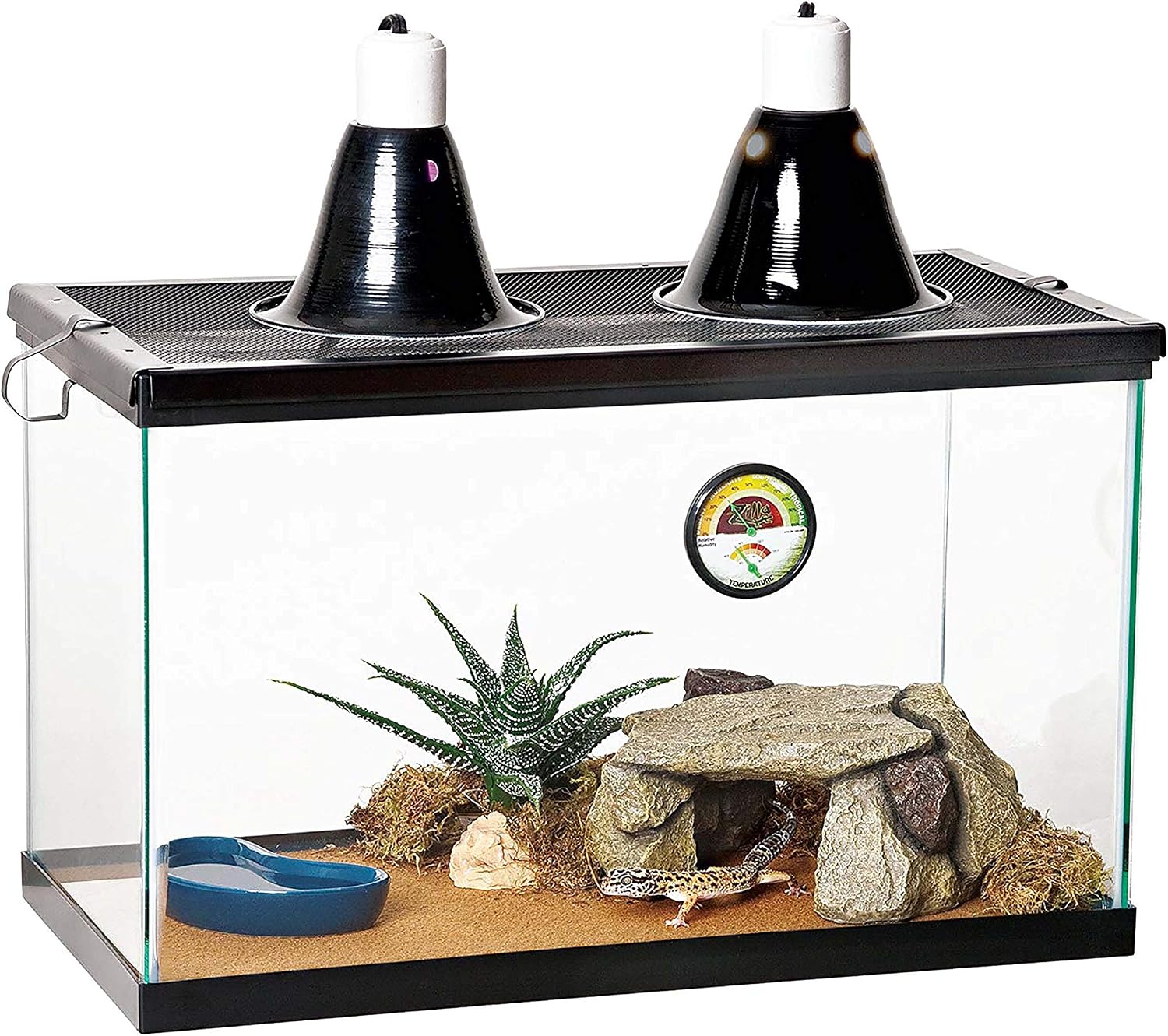
This is the box I point people toward when they want a leopard gecko and have never kept a reptile before. It is a ten gallon glass habitat sold as a starter kit, and for a juvenile leopard gecko that footprint is genuinely right. Ten gallons gives a young gecko a warm end, a cool end, and enough middle to move through without the tank being so large that the animal loses track of its food.
The question behind every gecko tank size debate is floor space, not volume. What I like about buying the habitat and the starter hardware as one kit is that it removes the worst part of a first setup, which is matching a lid to a tank and a lamp to a lid. The footprint is small enough to sit on a dresser, and the tank is light enough that one person can carry it to the sink on cleaning day.
The catch is that a ten gallon is a grow-out tank, not a forever home. An adult leopard gecko wants a 20 gallon long at minimum, and if you have the shelf space, a 40 gallon breeder makes a far better gradient. The second catch is heating. A tank this small holds heat unevenly, so a heat mat on its own will cook one corner of the glass and leave the cool side cold. Put the mat on a thermostat and keep the probe on the floor of the warm end, not taped to the outside of the glass.
If you already own a ten gallon and a screen lid, you do not need this kit. If you are starting from nothing, it is the least annoying way to get a juvenile leopard gecko into a correct enclosure on day one.
Best Value: BNOSDM Reptile Light Fixture
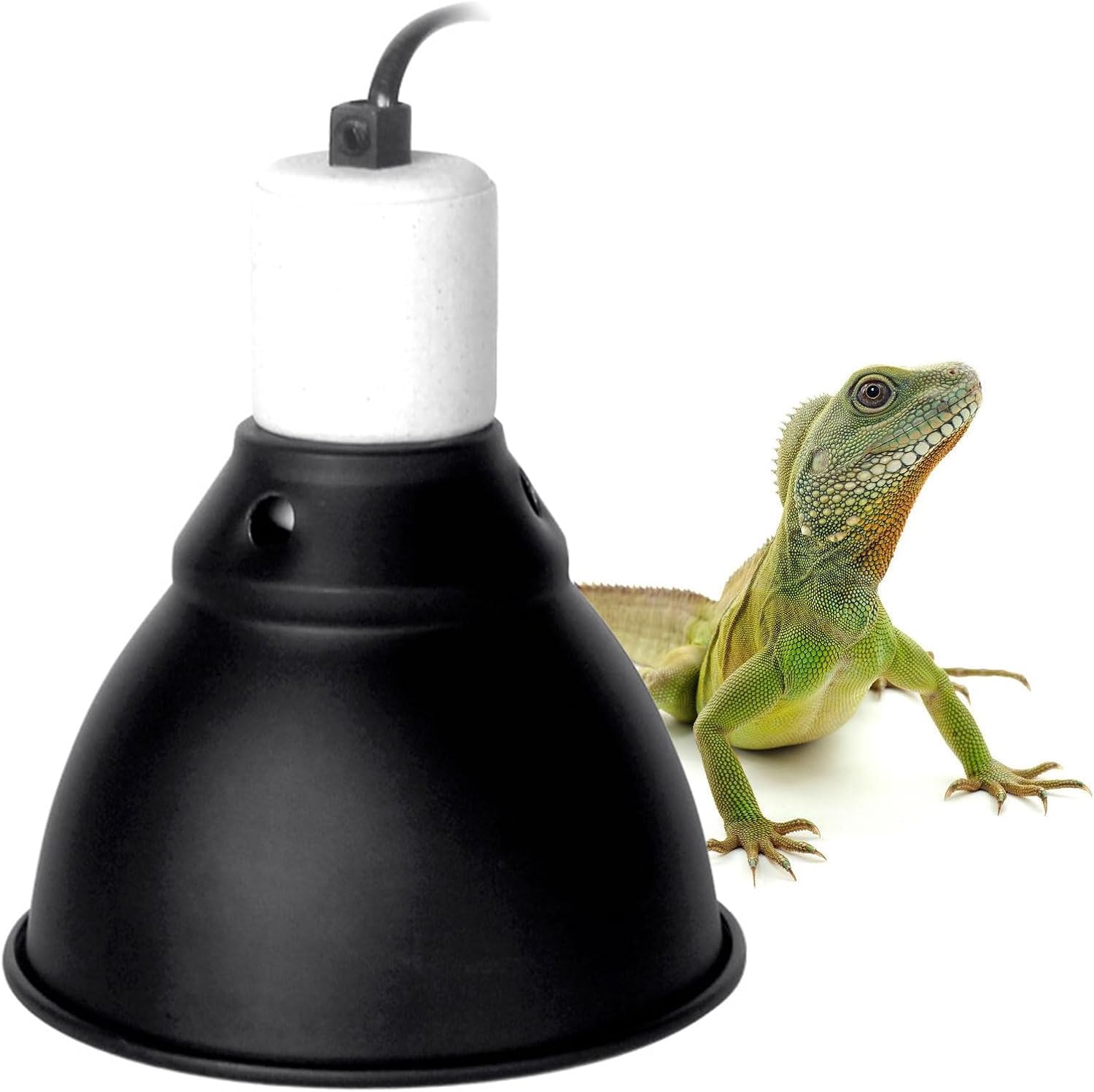
The fixture is the unglamorous half of every lighting decision, and it is where small tanks go wrong. This one is a 5.5 inch shallow dome, which is the shape you want over a ten gallon. A shallow dome throws light and heat across a wider circle, so one bulb can cover the basking spot and part of the warm side. A deep dome concentrates everything into a narrow cone, which is useful in a tall enclosure and frustrating in a short one.
The polished interior pushes the bulb's output down into the tank instead of letting it spill into the room, and it takes standard screw base heat bulbs and UVB bulbs, so you are not locked into one brand of bulb.
Two things to watch. First, a shallow dome sits closer to the screen, which means the bulb sits closer to the animal. Measure the distance from the bulb to the basking surface and adjust the fixture height or the bulb wattage until the basking temperature lands where your species needs it. Second, one fixture does one job. If you want heat and UVB at the same time, you need two fixtures or a combined bulb, and two shallow domes over a ten gallon starts to look crowded. On a small tank I run one fixture for basking heat and let a compact UVB bulb on a separate timer handle the rest.
For the money, this is the piece that turns a cheap tank into something a gecko can actually live in.
How I tested
I ran the same three checks on every setup in this guide. First, a tape measure on the inside of the enclosure, because gallon ratings hide the shape of the floor. A ten gallon and a twenty gallon high are not as far apart in floor space as the numbers suggest, and height does nothing for a gecko that lives on the ground.
Second, an infrared thermometer on the basking surface, plus a second reading on the cool end, taken an hour after the lights come on. I care about the spread between the two ends more than the peak number. A hot spot is easy. A gradient is the hard part, and small tanks lose their gradient fast.
Third, UVB output read at the height where the gecko's back actually sits, not at the bulb. UVB falls off quickly with distance, and a screen lid cuts a meaningful amount of it before it ever reaches the animal.
I also lived with each configuration long enough to see the boring problems: lids that do not seat, lamps that slide around on a screen, substrate that gets kicked into the water dish. Those are the failures that make people quit the hobby in month two.
Analysis and test results
Floor space is the number that matters, not gallons. The standard ten gallon footprint is roughly 20 inches by 10 inches. A 20 gallon long is roughly 30 inches by 12, and that extra ten inches of length is the difference between a gecko that can walk a real gradient and one that can only pick a side. When someone asks me for the correct gecko tank size, I give them floor dimensions first and the gallon rating second.
Small tanks run hot and dry. A ten gallon with a screen lid and a single heat bulb will lose its humidity range within an hour of misting, so if you keep a tropical species in a small enclosure you are signing up for daily misting. Desert species are easier in small glass because they want the low end of the humidity range anyway.
Basking temperature is a thermostat problem, not a bulb problem. The bulb sets the ceiling, the thermostat sets the floor. Set the thermostat range so the warm end holds steady overnight, and put the probe where the gecko sits. Heat mat wattage matters far less than probe placement. A low wattage mat with the probe in the wrong spot will run hotter than a high wattage mat with the probe in the right one.
Substrate depth and hide size are where small tanks get cramped. Two to three inches of substrate for a burrowing species eats floor space you were counting on, and a hide that is too large feels unsafe to a gecko. A hide should be snug enough that the animal touches it on both sides.
UVB output is the easiest thing to get wrong and the hardest to notice. A 10.0 bulb is desert strength. Over a ten gallon it needs either more distance or a screen between the bulb and the animal, or you are overdoing it. Replace UVB bulbs on a schedule, because they keep glowing long after they stop producing useful UVB.
Two fixtures over one small tank is a crowding problem, not just an aesthetic one. Every dome takes up screen space that would otherwise vent heat and humidity. If you can run one fixture for heat and one small bulb for UVB, that is the cleanest layout for a ten gallon.
The gecko tank size chart
This is the chart I keep taped inside the cabinet door. Minimums are for one animal, and they assume a screen lid, a thermostat, and a hide on both ends. Sizes are floor dimensions for ground geckos and height for climbers. When in doubt, size up, because a bigger tank is easier to heat correctly than a small one. You have room to build a gradient instead of fighting for one.
| Gecko or gear | Minimum enclosure | Better adult setup | Notes |
|---|---|---|---|
| Juvenile leopard gecko | 10 gallon | 20 gallon long | Grow-out only, plan the upgrade now |
| Adult leopard gecko | 20 gallon long | 40 gallon breeder | Floor space beats height |
| Crested gecko | 18 x 18 x 24 in | 24 x 18 x 36 in | Vertical tank, they climb glass |
| African fat-tailed gecko | 20 gallon long | 40 gallon breeder | Wants deeper substrate than a leopard gecko |
| Gargoyle gecko | 18 x 18 x 24 in | 24 x 18 x 36 in | Same footprint as a crested gecko |
| Tokay gecko | 24 x 18 x 36 in | Larger | Display animal, not a handling gecko |
Zilla starter habitat kit | Best Overall | Check current Amazon price | Ten gallon starter footprint for a juvenile |
BNOSDM shallow dome fixture | Best Value | Check current Amazon price | Spreads heat across a small floor |
 ReptiKing two pack UVB bulbs | Backup bulbs | View on Amazon → | Desert strength output, two bulbs |
 Single 10.0 UVB bulb | One tank UVB | View on Amazon → | Lower wattage suits a single small fixture |
Two notes on the chart. Juvenile minimums are temporary, so do not buy a ten gallon and call the setup finished. And the jump from a minimum to a good setup is usually ten gallons and one more hide.
ReptiKing two pack UVB bulbs
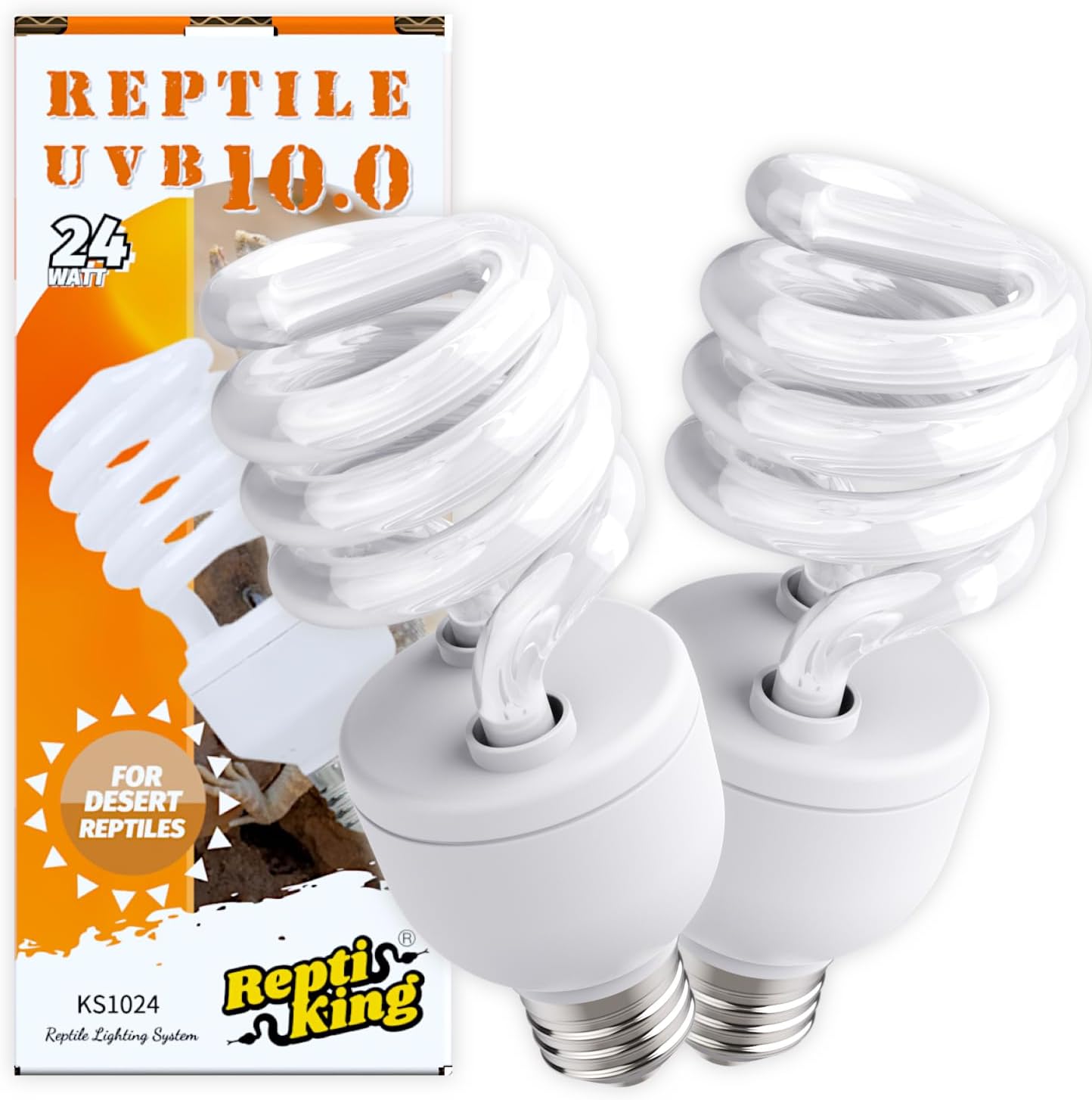
Buying UVB in a two pack is the correct move for one reason: you will need the second bulb. UVB output drops over months of use while the bulb still looks perfectly bright to your eye, so the replacement sitting in the closet is what keeps your schedule honest.
The 10.0 rating is desert strength, which suits bearded dragons and leopard geckos in a setup with enough distance between the bulb and the basking surface. Over a short tank, use the screen lid as a diffuser and raise the fixture until the reading at the basking surface is in range for your species.
Two bulbs also let you stagger replacements. Swap one, keep the other as the spare, and you are never deciding whether a bulb is still good based on how it looks.
Single 10.0 UVB bulb for one small tank
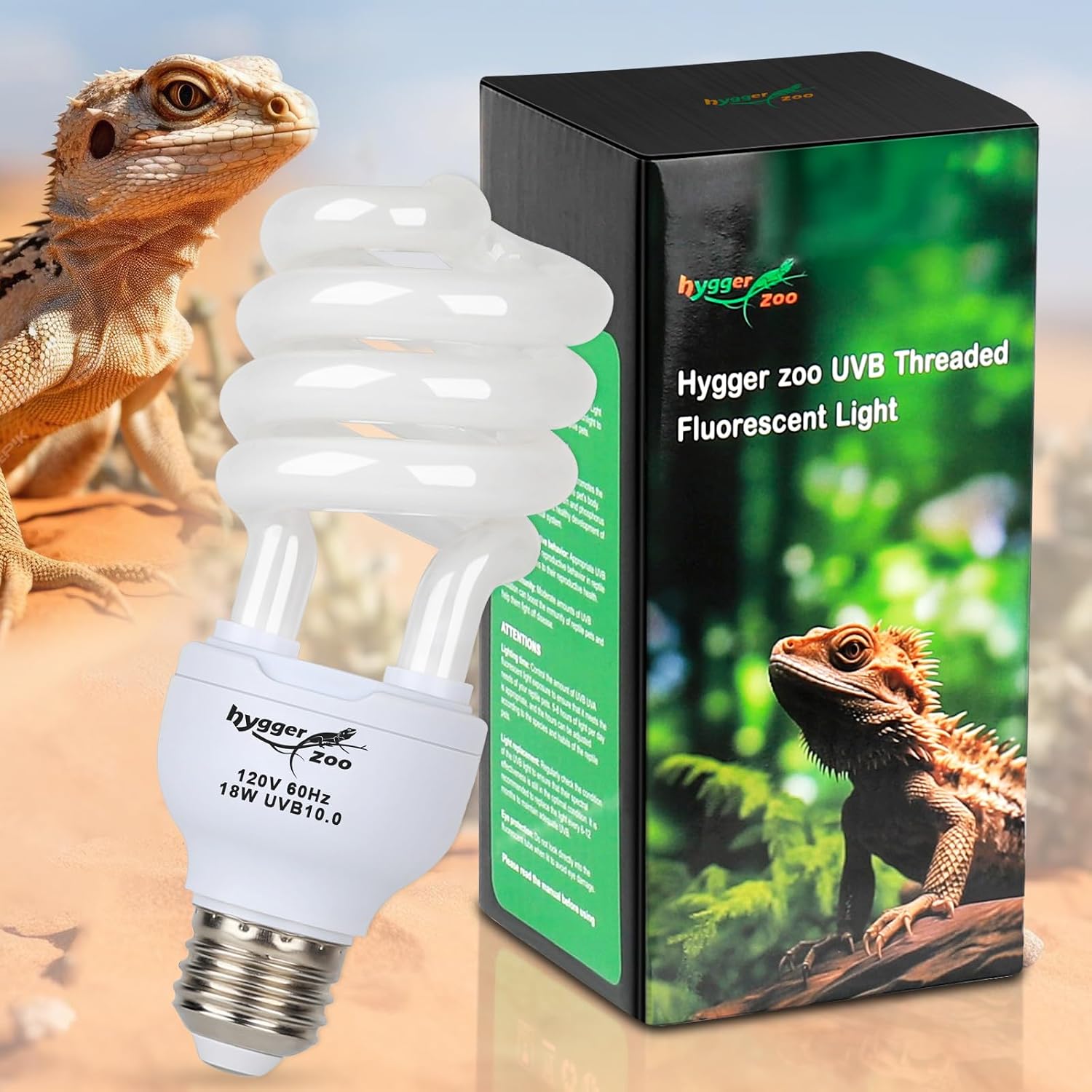
If you only have one small tank, a single bulb is the cheaper way in, and 18W is a sensible match for one fixture over a ten or twenty gallon. The listing covers the usual desert crowd, geckos included, and the lower wattage means less heat riding along with the UVB, which matters in a tank this small.
The tradeoff is that you have no spare. Buy the two pack if you can, or set a reminder to replace this one on schedule. A single bulb is fine. A single bulb that is eighteen months old is not.
Should you buy the Zilla 10 Gallon Reptile Starter Habitat Kit?
Yes, if you are starting from nothing and you are bringing home a juvenile leopard gecko. It is the shortest path from an empty shelf to a correct enclosure, and the ten gallon footprint is right for a young animal. No, if you already own a tank and a lid, or if you are buying for an adult. Adults need a 20 gallon long at minimum, and a kit that starts you in the wrong size is not a bargain.
Whichever way you go, budget for a thermostat and a thermometer before you budget for decorations. The kit gets the habitat right. The thermostat is what keeps the habitat safe.
Should you buy the BNOSDM Reptile Light Fixture?
Yes, for a ten gallon or a twenty gallon with a screen lid. The shallow dome spreads heat across the floor instead of burning one spot, it takes standard bulbs, and it costs less than most single brand fixtures. Pair it with a thermostat and a bulb matched to your species, and you have the lighting half of a small setup solved.
No, if you keep a tall enclosure. A shallow dome in a 24 inch tall tank wastes output on the air. Climbing geckos want a deep dome or a linear fixture that reaches down to the basking ledge. Match the fixture to the tank you actually have, not the one in the product photo.