I started keeping reptiles in a cold upstairs room, and the first winter there taught me more about heat lamp vs heat mat for reptiles than any care sheet I had read. My leopard gecko's heat mat was doing its job under one end of the tank, but my bearded dragon was basking under a bulb aimed at the wrong corner, and neither animal was getting what the setup was supposed to give them. Both survived my learning curve. Neither thrived until I stopped treating heat as one decision and started treating it as two jobs: contact warmth for digestion, and a basking temperature the animal can move into and out of on its own.
The short answer for most keepers is both, not one. A heat mat for reptiles vs heat lamp comparison usually ends the same way: a mat or a radiant panel supplies the warm hide, a lamp supplies the basking spot, and each heat source runs on its own thermostat. The rest of this guide covers why that pairing holds up, where the exceptions are, and which control gear actually does the work.
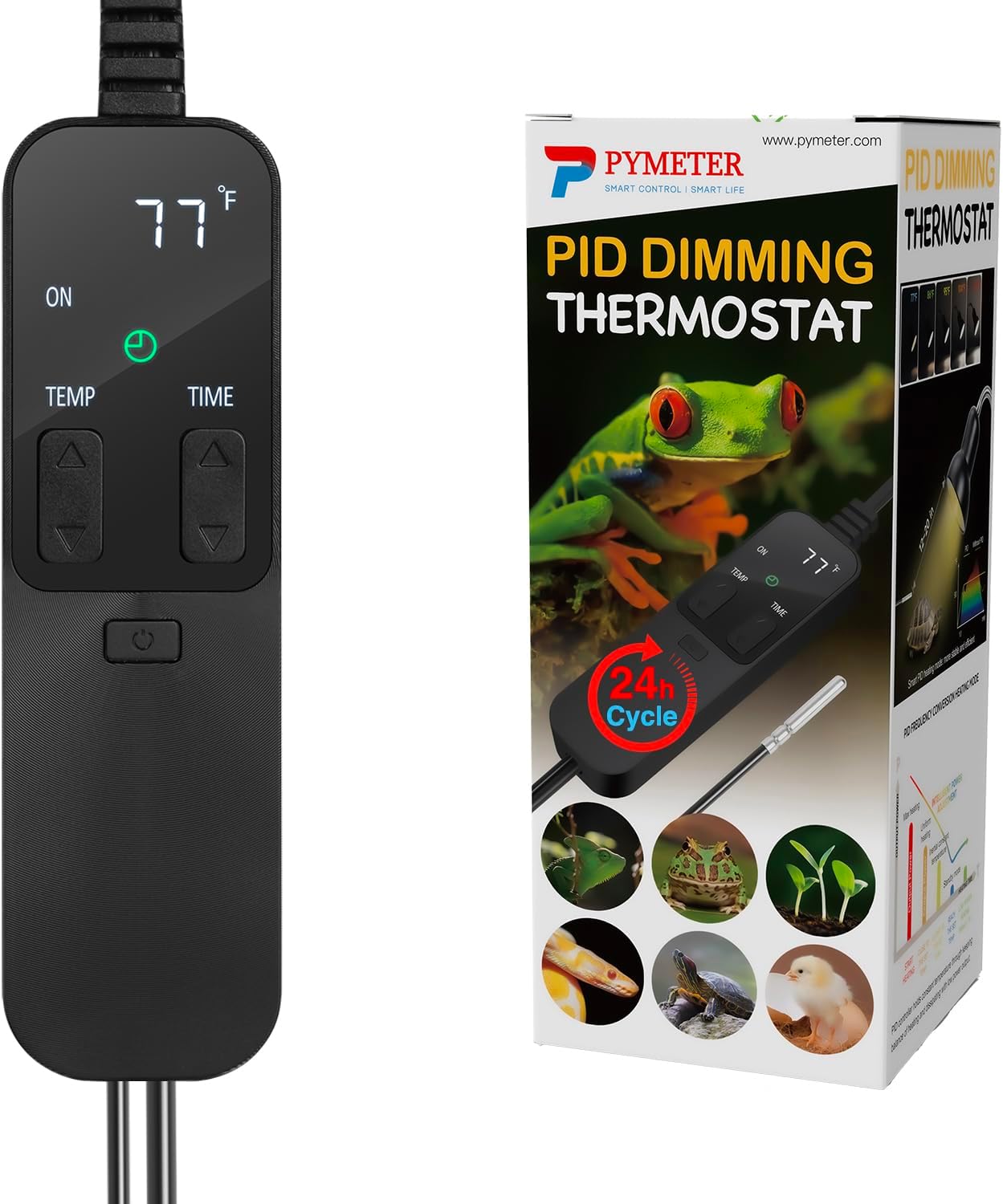
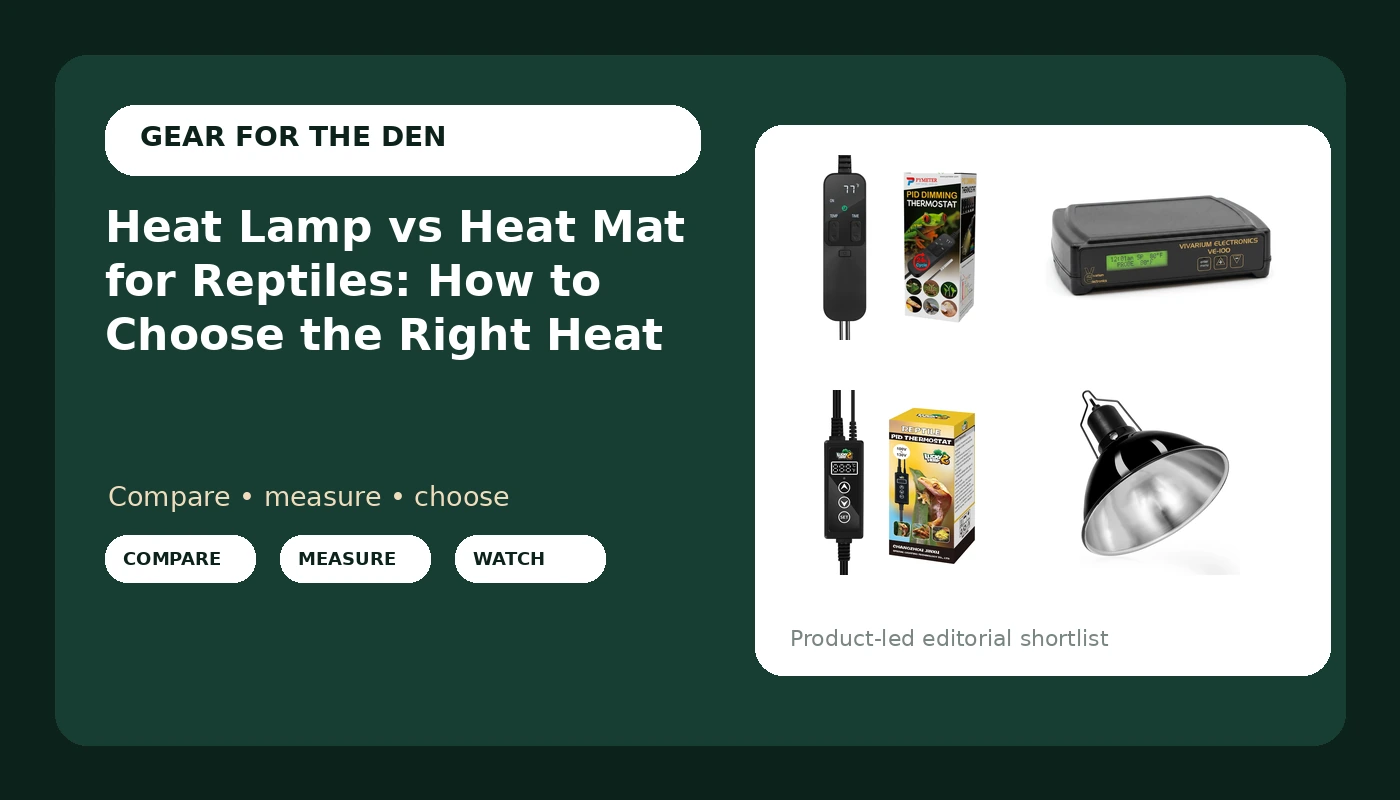
Pymeter PID Dimming Thermostat Reptile with 24 Hours Cycle Timer for Reptiles Heat Lamp Heating Pad Seedling Heat Mat Temperature Controller
PID dimming and a 24 hour cycle timer in one unit, which covers a lamp schedule and a mat at the same time
If you only want a mat held at one temperature, the timer and the dimming are features you will not use
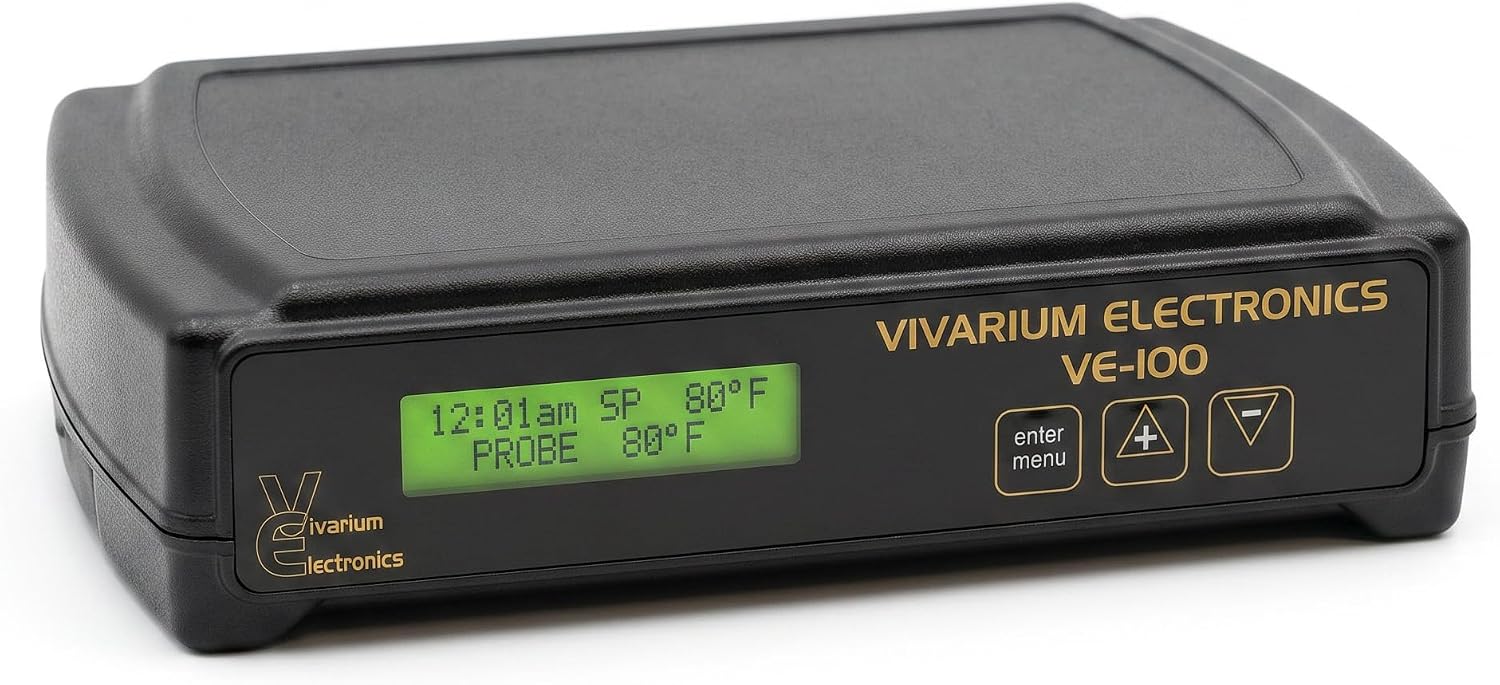
Vivarium Electronics VE-100 Thermostat Made in USA, 700W Temperature Controller with LCD Display, Stackable Tabletop Reptile Thermostat Plug, Heat Mat, Reptile Heat Lamp, Radiant Panel Accessories
700W of capacity, an LCD readout, a stackable tabletop case, and a made in USA build
A tabletop unit with a bigger footprint than an inline controller, and it suits a keeper who already knows the wattage they need
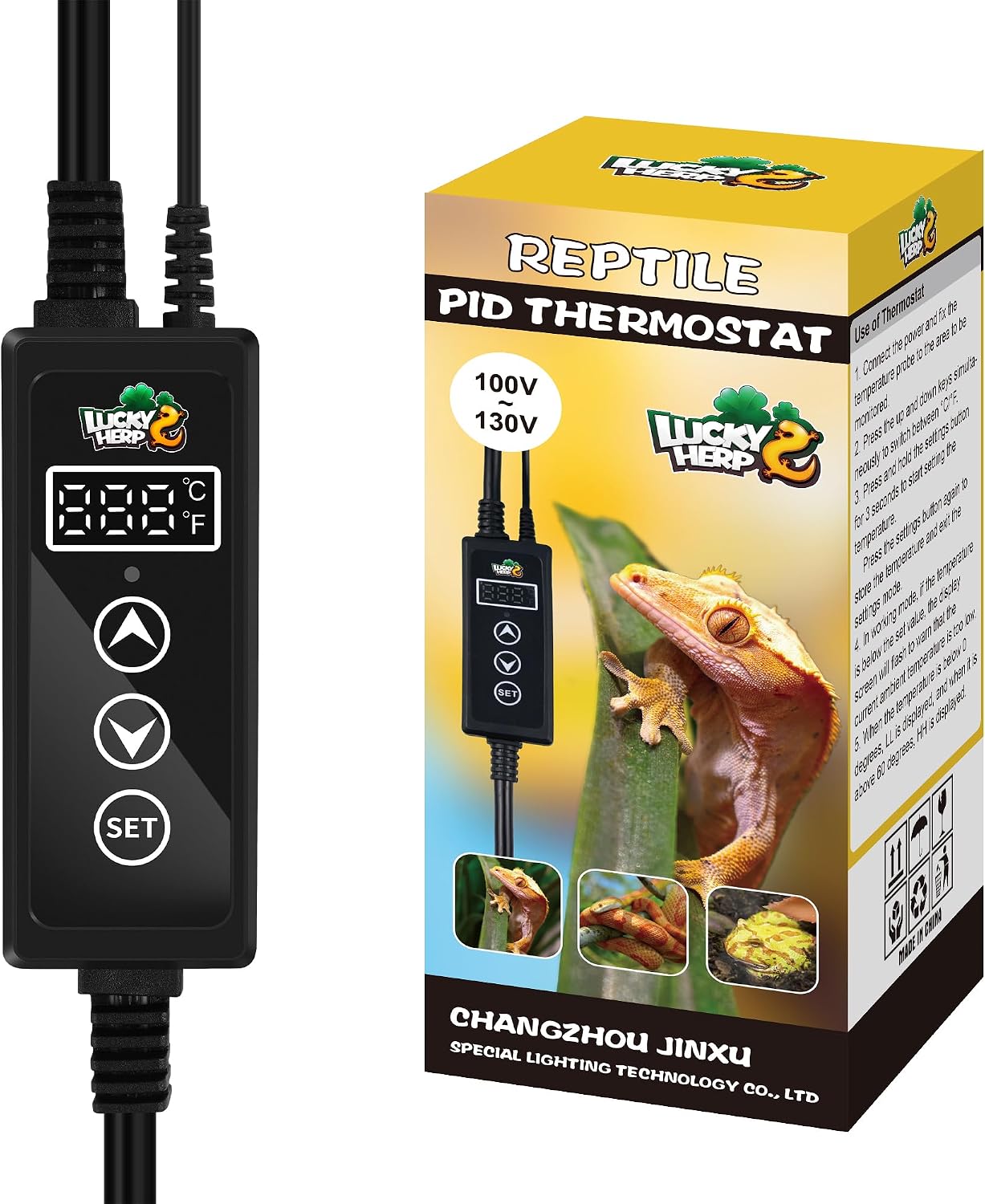
LUCKY HERP Reptile Dimming Thermostat, PID Heat Lamp Temperature Controller with LED Digital Screen for Reptile Heat Lamp Heat Mat & Heaters, Support ℉/℃, Memory Function
PID dimming, an LED screen, Fahrenheit and Celsius switching, and a memory function for power cuts
One unit runs one heat source, so a lamp plus a mat means buying two
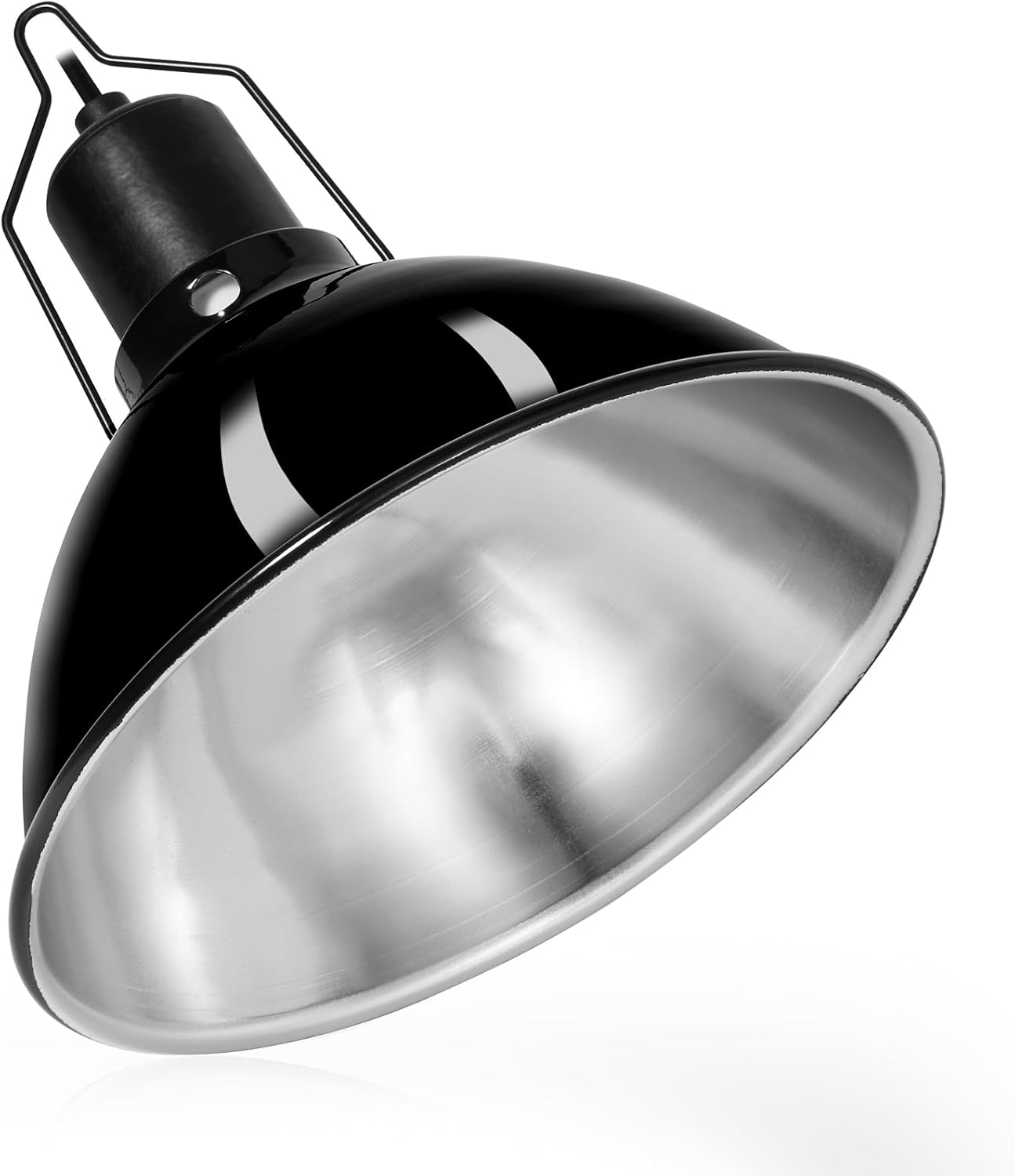
DXOPHIEX 8.5inch Dome Reptile Heat Lamp Reptile Light Fixture
The lamp side of the setup in one 8.5 inch dome, sized for a single basking bulb over a mid sized tank
A fixture only, so it needs a bulb and a thermostat before it heats anything
Prices and availability may change.
The heat lamp vs heat mat for reptiles decision, side by side
The difference between heat lamp and heat mat for reptiles comes down to direction and control. A lamp heats air and surfaces from above, which is what produces a basking temperature an animal can read with its whole body: it moves into the beam, warms up, and moves out. A mat heats a small patch of floor from below, which produces contact warmth a gecko or a small snake can press its belly into after a meal. Neither one is a complete heating plan by itself, and the species most likely to suffer from a single source setup are the ones that need both a hot spot and a warm retreat.
Direction also decides the failure modes. A lamp that is too strong dries the air and pulls the humidity range down in a tropical enclosure within an afternoon. A mat that is too weak, or buried under too much substrate, does almost nothing, and the animal sits on cool glass wondering why its food is not moving through. That is why this is a gear question as much as a species question: both failures are fixable with the right controller, and neither is fixable by buying a bigger version of the same mistake.
Heat lamps: basking temperature, uvb output, and the fixture
A heat lamp is the only common heat source that gives you a visible gradient. The bulb warms a rock or a branch, the animal chooses how close to sit, and you get a basking temperature that changes with distance rather than a single number you have to trust. That is worth a lot for any species that thermoregulates by moving, which is most of them.
What a heat lamp does not do is provide meaningful uvb output. UVB comes from a dedicated fluorescent or mercury vapor lamp, and a plain heat bulb, even a bright one, is not a substitute. If your species needs UVB, budget for a second fixture and a second bulb, and keep the heat lamp on its own control so the two schedules do not fight each other.
The fixture matters more than most people expect. A dome holds the bulb, directs the beam, and keeps your hand away from a surface that runs hot enough to burn. The DXOPHIEX 8.5 inch dome reptile heat lamp fixture is the kind of fixture I would put over a single basking spot on a mid sized tank, since a dome this wide spreads the beam across a basking rock without washing the whole enclosure in light. Check the socket and the rated wattage before you buy a bulb for it, because a fixture is only as good as the lamp it is holding.
Dimming control is the other half of a lamp setup. An incandescent or halogen basking bulb on a simple on/off plug cycles between full power and nothing, which shortens bulb life and swings the basking temperature by several degrees. A dimming thermostat holds the bulb at a lower, steadier output instead, and that is the single upgrade that makes a lamp behave.
Heat mats: heat mat wattage, substrate depth, and hide size
A heat mat is a contact heat source, and everything about it is local. It warms the glass or the floor of one area, the animal chooses whether to sit on it, and the rest of the enclosure stays at room temperature. For nocturnal species, for juveniles in a quarantine tub, and for any animal that spends its day in a hide, that is exactly the right shape of heat.
Three things decide whether a mat works. The first is heat mat wattage against tank size: a mat that is too small for the floor area will not hold a warm zone, and one that is oversized for a small tub is harder for a budget controller to hold steady. The second is substrate depth. An inch or two of loose substrate over a mat insulates it enough that the surface the animal feels is barely warm, so the mat belongs under a thin layer, under a tile, or directly under the hide. The third is hide size: put the mat under the hide, and pick a hide the animal fits inside with room to turn around, because a warm hide that is too tight is a warm hide the animal will not use.
Mats also do nothing for the air. If your enclosure needs a humidity range above what your room provides, a mat will not move it, and a mat paired with a screen top and a dry room will leave you misting twice a day.
Thermostats: thermostat range, dimming, and timers
Every heat source in this article is a risk until it has a controller. That is not a scare tactic, it is the reason the thermostat is the piece of gear I would buy before the lamp, the mat, or the animal.
Three controllers cover most of what a keeper needs, and they differ in ways that matter.
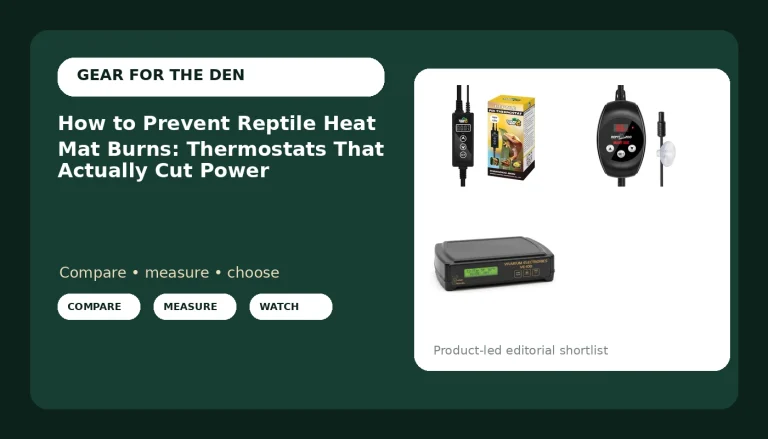
The LUCKY HERP reptile dimming thermostat is a PID heat lamp and mat controller with an LED digital screen, Fahrenheit and Celsius switching, and a memory function that restores your settings after a power cut. PID dimming is the important part, because it varies power to the device instead of switching it on and off, which is what you want under a basking bulb. One unit runs one heat source, so a lamp plus a mat means two of them, and the memory function is the feature that earns its keep if your power flickers.
The Pymeter PID dimming thermostat adds a 24 hour cycle timer to the same dimming idea. That matters for anyone running a lamp on a photoperiod, because it removes the separate outlet timer from the wall and keeps the on and off times inside the controller that is already holding the temperature. If you are only holding a mat at one temperature, the timer is a feature you will not use.
The Vivarium Electronics VE-100 thermostat is the specialist pick: a 700W temperature controller with an LCD display, a stackable tabletop case, and a made in USA build. The 700W capacity is what makes it worth a look if you are running a large radiant panel or several devices, and the tabletop case is designed to sit beside the enclosure rather than hang off the wall. The listing describes it as a temperature controller rather than a dimming PID, so match it to the device you are running and read the listing before you commit.
Whatever you pick, check the thermostat range first. It has to cover the basking temperature you are targeting with room above and below it, and it has to hold steady rather than swing.
Tank size and humidity range: matching the gear to the enclosure
Tank size decides how much heat you need and how many sources it takes to build a gradient. In a small enclosure, one lamp can cover the whole footprint, and a mat under a hide is a bonus rather than a necessity. As the tank gets longer, a single bulb stops being able to hold a warm end and a cool end, and you end up with a basking spot in the middle and a gradient that collapses at both ends. That is when a second heat source, usually a mat or a low wattage radiant panel, starts earning its place.
The humidity range is the other constraint, and it is the one people forget when they add a lamp. Lamps dry air, mats do not. A tropical setup that holds its humidity under a mat alone will lose it the moment you put a 100W bulb over a screen top, which is why tropical keepers often run a mat or a panel for the warm hide, a lower wattage lamp for the basking spot, and a partly covered screen.
What the specs actually tell you
The heat lamp vs heat mat for reptiles question is really a question about control, and the numbers on a listing tell you more than the marketing copy does.
Wattage is the first number to read. A 700W controller covers almost anything a home keeper runs, and it is overkill for a single 8W mat. Heat mat wattage and bulb wattage are the numbers that decide whether your thermostat is loafing or working at its limit, and a controller running at its ceiling holds temperature less accurately than one with headroom.
The second number is the control type. Dimming PID is smoother for bulbs and for anything you want held at a precise basking temperature. A simple on/off controller is cheaper and fine for some mats, but it produces a swing you can watch on a probe thermometer.
The third is the thermostat range. If the range does not reach your target with a few degrees of margin, the controller is the wrong one no matter how good the screen looks. A memory function is a small spec that matters a lot in a house with unreliable power.
Should you buy a thermostat before the lamp or the mat?
Yes, and I would say the same to anyone starting from nothing. The question of whether you need a heat lamp or heat mat for reptiles shows up in my inbox every autumn, and it is usually the wrong first question. The right first question is what your animal's basking temperature and warm hide temperature should be, because that answer tells you which heat source you need and how much control it takes to hold it.
A thermostat is also the one piece of gear that transfers. Lamps burn out, mats get replaced, tanks get upgraded. The controller stays. Buy the one that covers the devices you are likely to run, then add heat sources around it.
What I'm testing next
Two comparisons are on my list for this winter. The first is the Pymeter's 24 hour cycle timer against a lamp on a separate outlet timer, because if the built in timer holds its schedule through a brownout, that removes a plug from the wall and a failure point with it. The second is whether a 700W controller like the VE-100 is worth running for a single heat mat, or whether that capacity only becomes meaningful once you add a radiant panel.
Both answers come down to the same thing: what your enclosure actually needs to hold, and how much margin you want between your gear and its limit. That is the whole heat lamp vs heat mat for reptiles conversation, once you strip out the brand loyalty.