A ten-pound dog can slide under a baby gate that looks closed. A twenty-pound dog can lean on a pressure-mounted barrier until the whole thing pops out of the frame and lands on the tile. If the plan is to block a doorway for a small dog without putting screws into trim that has been painted over four times, a better gate is not the answer. A freestanding barrier and a den the dog actually likes are the answer.
I have blocked four doorways in my own house, and the one that failed was the expensive one. It was a pressure-mounted gate with a latching handle and wall cups that chewed a half-moon out of the casing. The one that worked was a folding metal pen set at a slight angle, with a covered crate on the far side and a bed the dog chose over the couch.
What follows is the order I do this in: eight steps, three pieces of gear, no holes in the wood, and nothing that depends on the dog being polite. If you have been searching for how to block a doorway for a small dog, this is the version that survives a dog with opinions.
Why you should trust me
I am not a trainer and I am not going to pretend I ran a lab. What I have is a small dog, a house with original trim, and a long history of buying the wrong gate first. I have installed and returned more pressure gates than I want to admit, and I have measured the openings in my own home at the baseboard, at handle height, and at the top of the casing, because those three numbers are almost never the same.
I read the gear below the way I read any spec sheet: panel count, gate height, bar spacing, cover ventilation, crate size. Those numbers decide whether a barrier works. The rest is finish and marketing copy.
Where a product has a weakness, I say so in the section about it. Where a product is the wrong tool for this job, it does not appear at all.
How I picked and how I tested
Three pieces of gear made the cut, and each one has a job. The pen is the barrier. The crate cover turns a wire crate into a den so the dog stops standing at the doorway and complaining. The bed is the landing zone on the safe side. If you are still sorting out the crate half of this, the crate sizes and setups I recommend for small dogs cover that ground separately.
My rules were boring and specific. Panel count has to be high enough to shape a doorway without leaving a gap at the hinge side, and eight is the number I keep coming back to. Gate height has to be tall enough that a small dog cannot clear it from a standing start, which for most terriers and dachshunds means 30 inches at the absolute minimum, and 40 is better. Bar spacing has to be tight enough that a puppy cannot get a shoulder through. Crate size has to match the dog, because a crate that is too big becomes a bathroom and a crate that is too small becomes a fight. Cover ventilation has to be real, meaning the cover breathes instead of sealing the crate into a closed box. Washable fabric and a waterproof layer matter because a nervous dog in a new setup will have accidents.
The correct block a doorway for a small dog comes down to those five numbers, not to brand loyalty.
For testing, I worked with what a person can actually check in a living room. I measured openings, set the pen in three shapes (straight across, angled, and folded into an L), watched how much flex there was at the joints, and checked whether a dog could nose under the bottom rail on a low-pile rug. I did not run a lab, and I am not going to invent numbers for you. What I can tell you is which spec decides which failure, and that is more useful anyway.
The last thing I looked at is what the barrier leaves behind. Every barrier that touches a wall leaves a mark, and a rubber foot on painted trim leaves less than a screw cup.
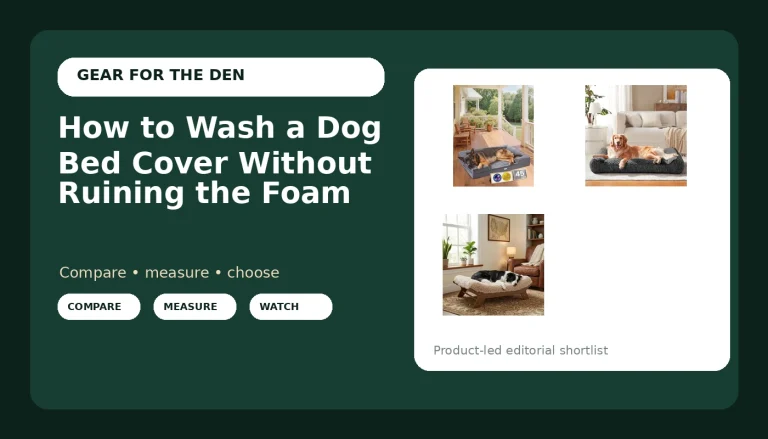
Our pick: Yaheetech Dog Playpen 40in 8 Panels Portable Fence for Indoor Yard Camping
Our pick
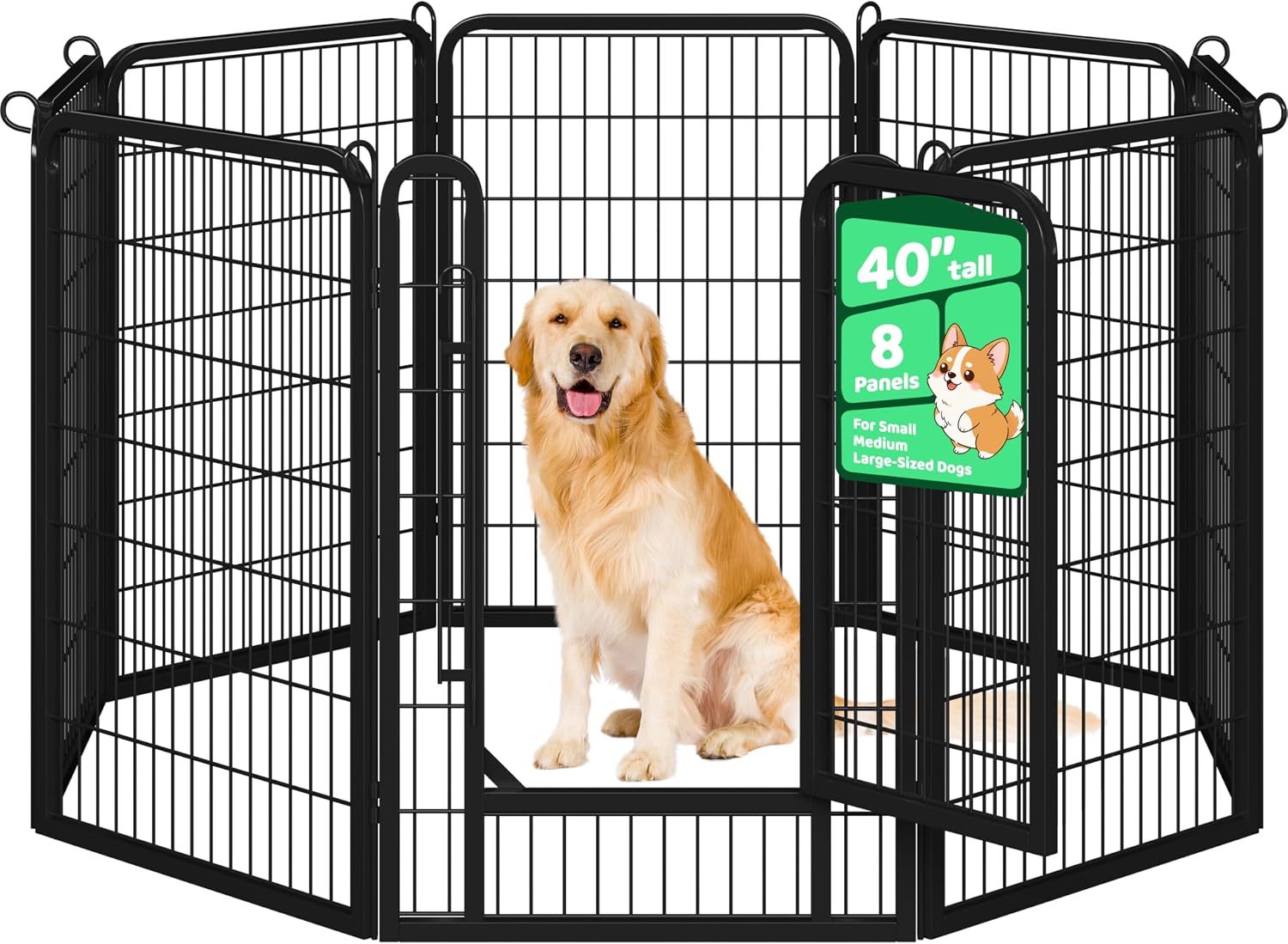
Yaheetech Dog Playpen 40in 8 Panels Portable Fence for Indoor Yard Camping
Check current Amazon price. This is the piece that does the actual blocking, and the reason it works is the panel count. Eight panels give you enough sections to fold the pen into a U around a doorway, press the two ends against the casing, and leave no gap on the hinge side. A four-panel pen will not do that, and a two-panel gate with legs will not either.
Forty inches of gate height is the second reason. Small dogs are not all the same size, and a dog that cannot jump onto the couch can often jump 24 inches from a standing start. Forty inches takes that option off the table without turning the hallway into a fence.
Owners hunting for the ideal block a doorway for a small dog usually start with a gate and end up here, because a pen shapes around the opening instead of needing a flat frame to press against.
Bar spacing is the number to check before you buy. The panels are built for small dogs, and the spacing is tight enough that a puppy cannot get a shoulder through. A head will fit, and a head fitting is fine. If the shoulders fit, you own a suggestion, not a barrier.
Flaws but not dealbreakers: There is no walk-through door on this pen, so you step over it or move a panel every time you cross. On tile, the feet can walk. A thin mat with grip under the feet fixes that, and it costs less than a new gate. The panels fold flat for storage, but they are heavy enough that you will not want to carry them up a flight of stairs twice a day.
Anyone with a doorway, a hallway, or a kitchen opening and a dog under 25 pounds will get years out of this.
The den piece: Pawise Dog Crate Cover,Heavy Duty Waterproof Wire Kennel Cover,Grey,36 in
The den piece
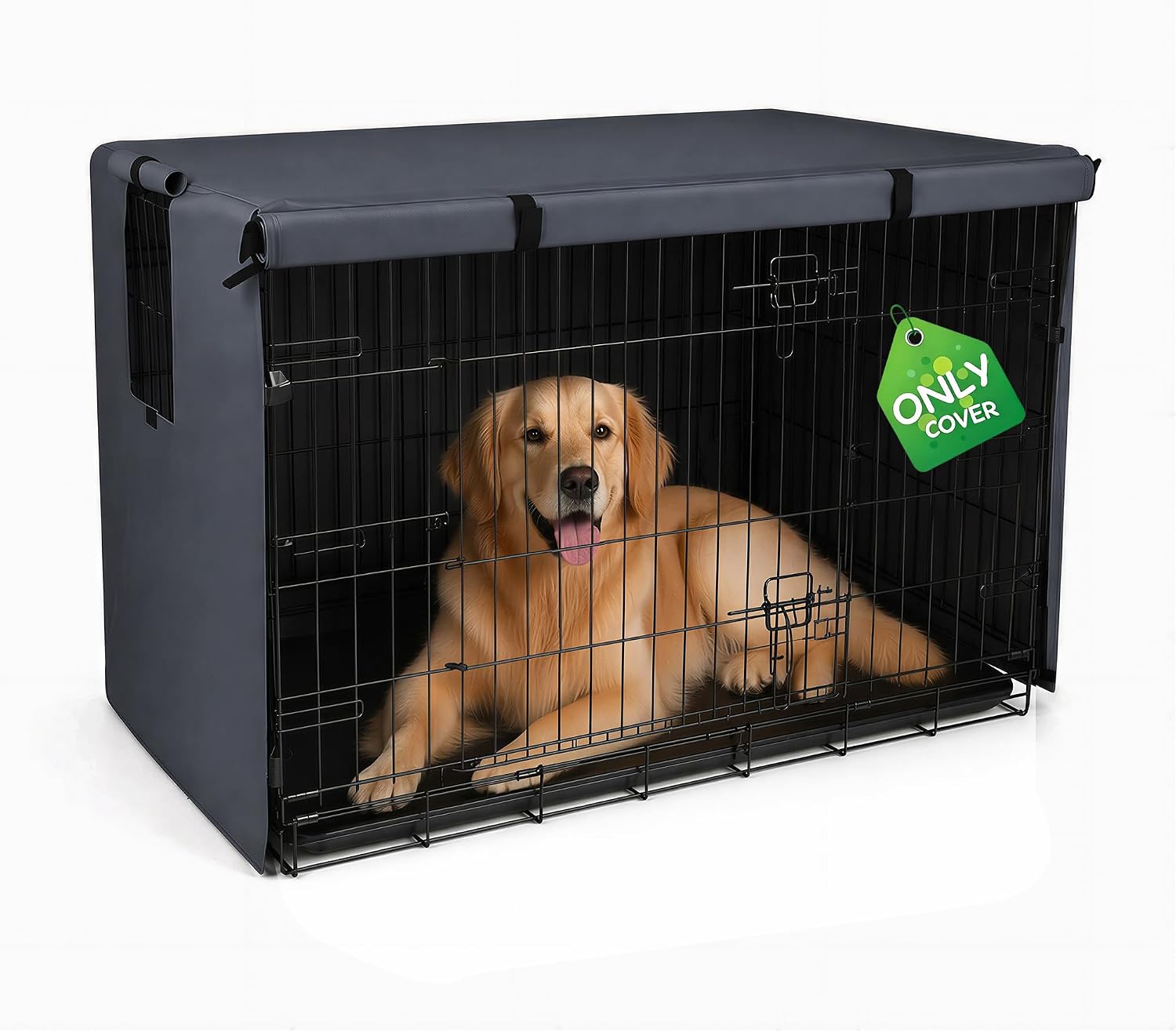
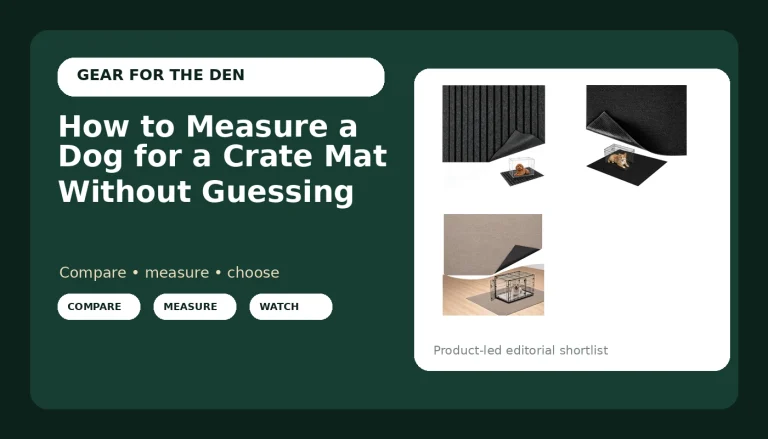
Pawise Dog Crate Cover,Heavy Duty Waterproof Wire Kennel Cover,Grey,36 in
Check current Amazon price. A barrier on its own tells a dog where it cannot go. A covered crate tells the dog where it should go, and that is the half of the job most people skip. The cover turns a wire crate into a den, which is what a small dog is looking for when it stands at the doorway and complains.
Crate size is the first thing to get right. This cover is built for a 36-inch crate, so it fits that footprint and not a different one. Measure your crate before you order, not your dog. A crate that is too big stops being a den and starts being a room, and a dog will pick a corner of it to use as a bathroom.
Cover ventilation is the second thing. This one is a fabric cover rather than a solid box, so air moves and the dog can still hear the house. If you wrap all four sides on a warm day, you have built a sauna. Leave the front open at first and let the dog walk in and out on its own schedule.
Washable fabric and a waterproof layer matter more than they sound. A nervous dog in a new setup will have an accident, and a cover that wipes down and goes in the machine is the difference between a two-minute cleanup and a ruined crate.
Flaws but not dealbreakers: You still need the crate. The cover is the cheaper half of the setup, and if you do not already own a 36-inch wire crate, the math changes. The grey fabric also shows dog hair, so keep a lint roller nearby.
Anyone whose dog whines at the barrier and then settles the moment it has walls around it should start here.
The settle spot: LE SURE Cute Cozy High Back Orthopedic Dog Beds Medium Size Dog,28" Grey
The settle spot
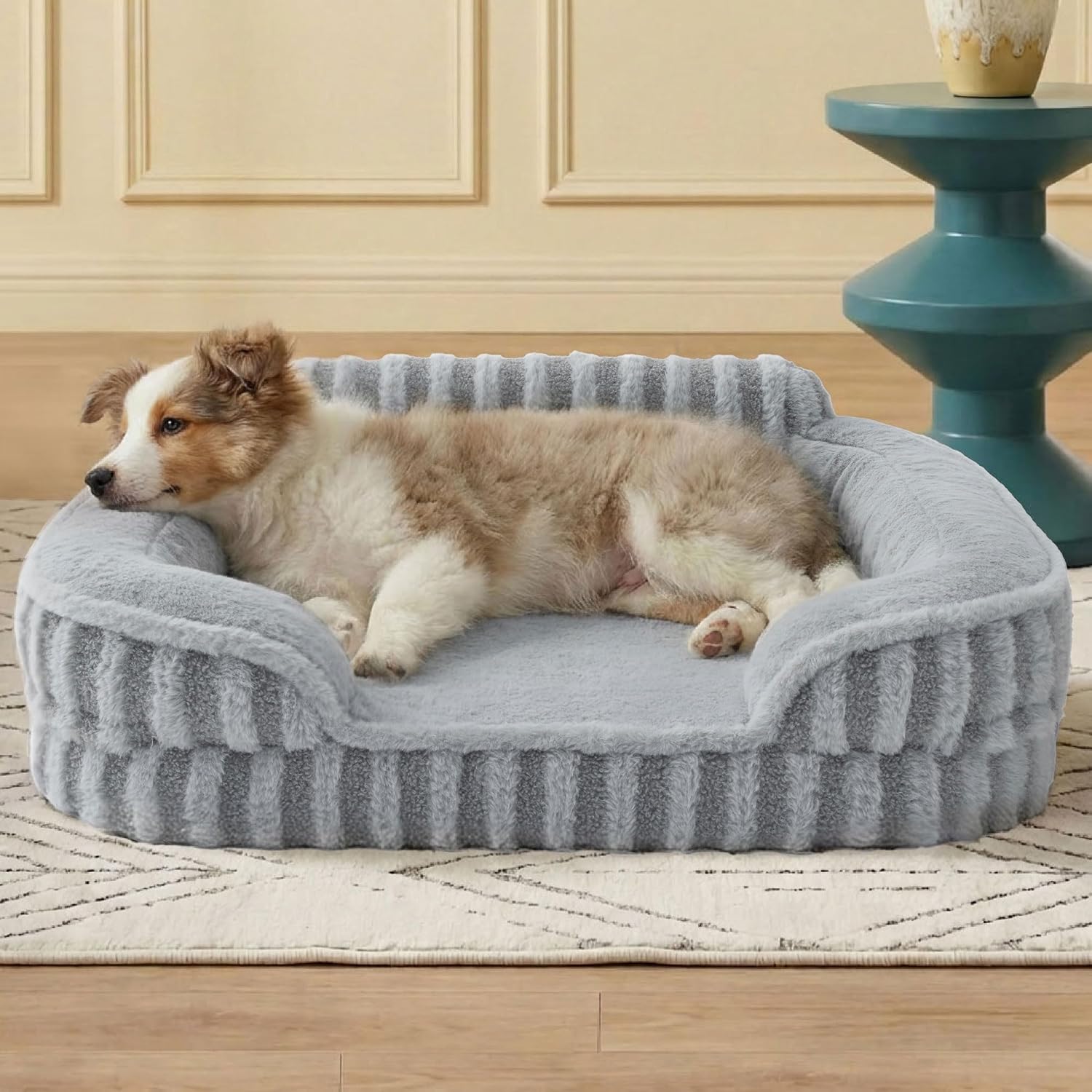
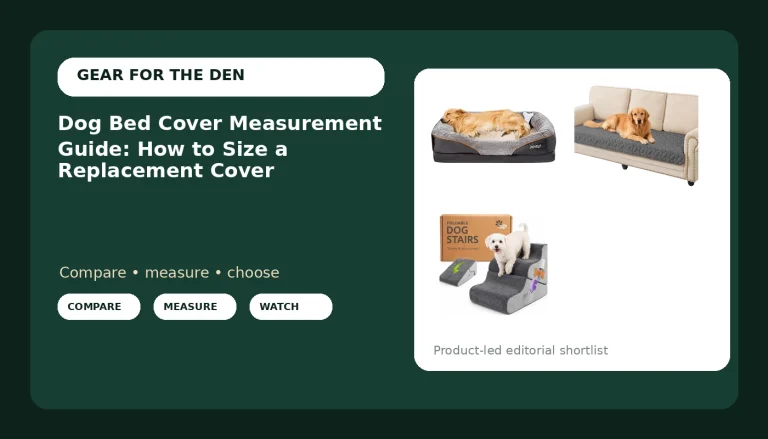
LE SURE Cute Cozy High Back Orthopedic Dog Beds Medium Size Dog,28" Grey
Check current Amazon price. The last piece is the one that keeps the dog from testing the barrier out of boredom. Put a bed on the safe side, close enough to the doorway that the dog can still watch the house, and the barrier stops being a wall and starts being a boundary.
Mat thickness is the part that matters for an older dog. Orthopedic foam is the reason to buy a bed like this instead of a cheap pad, and a high back gives a dog something to lean into instead of the door casing. The 28-inch footprint suits a medium dog and most dogs in the small-dog range that like to stretch out. If your dog is a senior with achy joints, I keep a longer list of orthopedic beds for senior dogs worth comparing.
Washable fabric is not optional in a setup like this. The bed sits on the floor near a doorway, which is where dirt, water bowls, and muddy paws all end up. A waterproof layer under the bed keeps the foam from turning into a sponge if your dog is a senior or a puppy.
Flaws but not dealbreakers: Twenty-eight inches is not a lot of room for a dog that sleeps stretched out, so measure your dog nose to tail before you commit. The orthopedic foam is also the reason you should not leave this bed in a crate with a chewer. Foam loses the argument with a determined puppy.
Anyone blocking a doorway for a senior dog, a post-surgery dog, or a dog that has decided the hallway is its post will get the most out of this one.
How to block a doorway for a small dog in eight steps
Now the part you came for. This works on any doorway with a flat floor and trim you would like to keep.
Step one: Measure the opening in three places. Put the tape at the baseboard, at handle height, and at the top of the casing. Those three numbers are almost never the same, and the smallest one is the width you are actually working with. If the base is narrower than the top, a barrier that fits the top still leaves a gap at the floor, which is exactly where a small dog goes.
Step two: Pick the barrier type before the brand. There are four options: a freestanding pen, a pressure-mounted gate, a screw-mounted gate, or the crate itself. A pressure gate needs a flat frame and a straight wall, and small dogs slip under the bottom bar. A screw-mounted gate is the most secure and the only one that puts holes in your trim. For a rental, an old casing, or a dog under 25 pounds, a freestanding pen wins.
Step three: Deal with the floor before the barrier. A pen foot on slick tile walks. A pen foot on thick carpet rocks. Put a thin, rubber-backed mat under the feet, then check the clearance under the bottom rail. If a nose fits under it, a determined dog will spend the afternoon proving the shoulders fit too. Mat thickness is the variable here, and thinner beats plusher.
Step four: Shape the pen to the opening. Straight across works for a narrow doorway. For anything wider, fold the pen into a U so both ends press into the casing and the middle bows away from the dog. Keep the hinge side against the wall. A hinge in the middle of the span is the first joint a dog will work loose.
Step five: Check bar spacing and the bottom rail. The shoulder test is the only one that matters. A head through the bars is fine. Shoulders through the bars mean the barrier is a suggestion. Run your hand along the bottom rail as well, because that is where the gap hides once the pen sits on a rug.
Step six: Put the den on the safe side. Set the covered crate so the dog can see the doorway and still have walls around it. Match the cover to the crate size, leave the front open for the first few days, and check cover ventilation before you zip anything shut. Feed meals in the crate for a week. A dog that eats in the den stops arguing with the barrier.
Step seven: Add the landing zone. Put the bed between the crate and the barrier, close enough that the dog can settle and still watch the house. Use washable fabric, and add a waterproof layer under the bed if your dog is a senior or still learning. Mat thickness matters here too, and a solid orthopedic base is worth more than a plush top that flattens in a month.
Step eight: Run the escape drill, then fix the exact failure. Stand on the far side, drop a treat, and watch. A nose under the bottom rail means a thinner mat or a lower rail. A joint that walks means angle the panel tighter into the casing. A dog that climbs means the gate height is too low. Fix the one thing that failed, then go back to your normal routine. A barrier that gets tested every day gets tested harder.
The competition and why it lost
Pressure-mounted baby gates are the first thing everyone buys and the first thing a small dog defeats. They need a flat frame, they need a straight wall, and they leave a gap at the floor that a ten-pound dog treats as a door. The versions with a walk-through door are heavier and still rely on pressure, which is the wrong force for a dog that leans.
Retractable mesh gates sag in the middle, and a sagging mesh gives a small dog a run-up and a ramp. Tension rods with a sheet over them are a rental trick that works for a weekend and fails the first time the dog leans on the fabric.
Cardboard and a stack of storage bins are honest attempts, and both become chew toys. A closed door solves the problem completely and isolates the dog, which is fine for an hour and miserable for a full workday, especially in a house where the doorway is the only airflow.
A crate alone with the door latched will hold a dog, but a crate that has never been introduced as a den is a cage, and a dog that hates the crate will bark at the barrier from the other side of it.
A gate with a built-in pet door is the funniest entry on the list, because it is a barrier with a hole in it. A scat mat or an electronic mat punishes the dog for being curious about a doorway, which is a training problem you did not need to create.
The gear above is not the simplest version of this. It is the version that holds.
What this all costs
There are three pieces here and you may only need two of them. If you already own a 36-inch wire crate, you are buying the pen and the bed. If you already have a pen, you are buying the cover. Nothing in this setup requires a contractor, a drill, or a repair to your trim, which is the point.
Think about the spend in terms of what each piece does. The pen is the piece you use every day, and it is the one worth spending on. The cover is the least expensive way to turn gear you already own into a den. The bed is the piece that decides whether the dog settles or stands at the barrier and complains.
Check current Amazon price on each listing before you buy, because prices move and the version of this that fits your budget is the version that fits your doorway. Trim repair, on the other hand, costs more than all three pieces together, and it is the one cost you cannot return.
The math that matters is not the total. It is whether the barrier is still standing at the end of the week. A pen that holds, a crate that reads as a den, and a bed in the right spot will do more for your hallway than any gate you can hang on a frame.