Pet urine does not stop smelling because you scrubbed it. It stops smelling because you broke down the uric acid crystals that keep releasing odor every time the humidity climbs. If you want to get rid of pet urine smell for good, treat the spot like a chemistry problem instead of a laundry problem, because that is what it is.
I have lived with a leaking senior beagle, a terrier who marked two doorframes, and a rotating cast of foster cats. The hallway runner I saved is still on the floor, and the couch survived the cat who decided the corner cushion was his. This is the workflow I use now, plus the gear that handles the boring parts for me.
So this is how to get rid of pet urine smell in a normal house, on carpet and on hard floor, in one afternoon instead of one month of guessing.
Why you should trust me
Two decades of animals in the house, including years of fostering, means I have cleaned up more urine than any one person should. I have paid for a professional enzyme treatment, pulled up a carpet pad that was soaked well past the visible stain, and thrown out a dog bed that no amount of washing fixed. Every mistake in this guide is one I have made, usually twice.
I am not a chemist and I will not pretend to be one. What I am is the person who reads the label to see whether the enzyme concentration is even listed, whether the liner is genuinely waterproof or just water resistant, and whether the thing survives a machine wash. Those details decide whether the smell comes back in August.
How I picked and how I tested
The honest version: I did not run a lab. I built a checklist from the way urine actually behaves in a house, then held each product against it.
- Enzyme concentration. If the bottle does not tell you how much enzyme is in it, you are buying perfume. Dwell time matters as much as strength, because the crystals have to re-dissolve in water before the enzyme can break them down.
- Pad absorbency and pad size. A pad that is too small just moves the puddle. A thin pad lets liquid reach the backing, and the backing is where the smell lives.
- Liner waterproofing. The liner is the whole point. If liquid passes through, you have created a bigger problem under the pad.
- Machine washable. If it cannot go in the washer, it becomes landfill and you are back to buying disposables every week.
- Carpet safe and fabric safe. Anything you pour on a rug gets tested on a hidden corner first, because some cleaners lift dye.
- Odor neutralizer versus masking. A neutralizer changes the chemistry. A fragrance covers it until the humidity rises.
Where I could not verify a claim, I say so below. The ideal get rid of pet urine smell routine is not a single product. It is blot, flush, dwell, dry, then make the same mistake harder to repeat, which is why this list is short.
Gear that helps you get rid of pet urine smell
Two of these handle the animal and the accident. The third handles the reason the accident keeps happening in the same place.
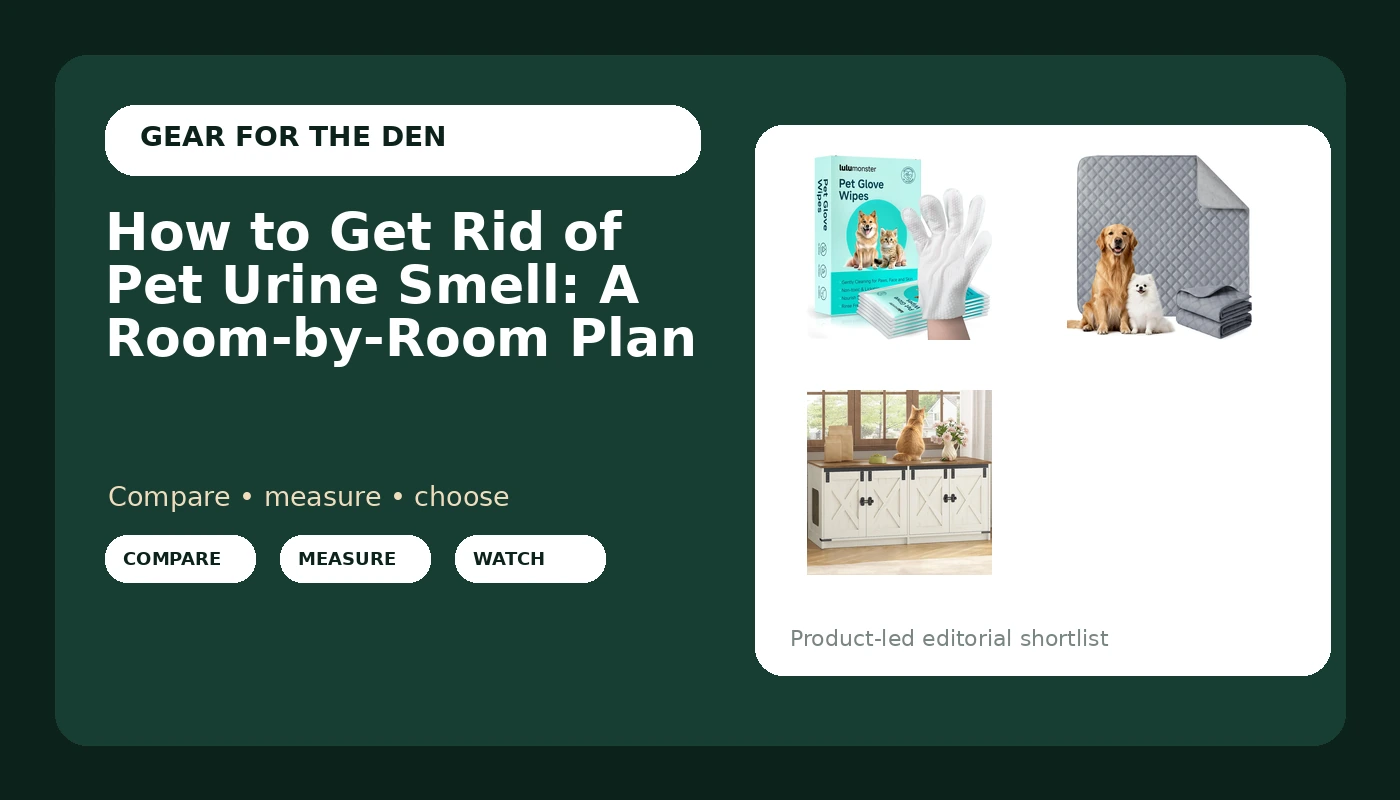
Budget pick: LULUMONSTER Pet Glove Wipes for Dogs & Cats, 6 Individually Wrapped Rinse-Free Grooming Gloves for Paws, Face & Body, Travel & Daily Pet Care
Budget pick
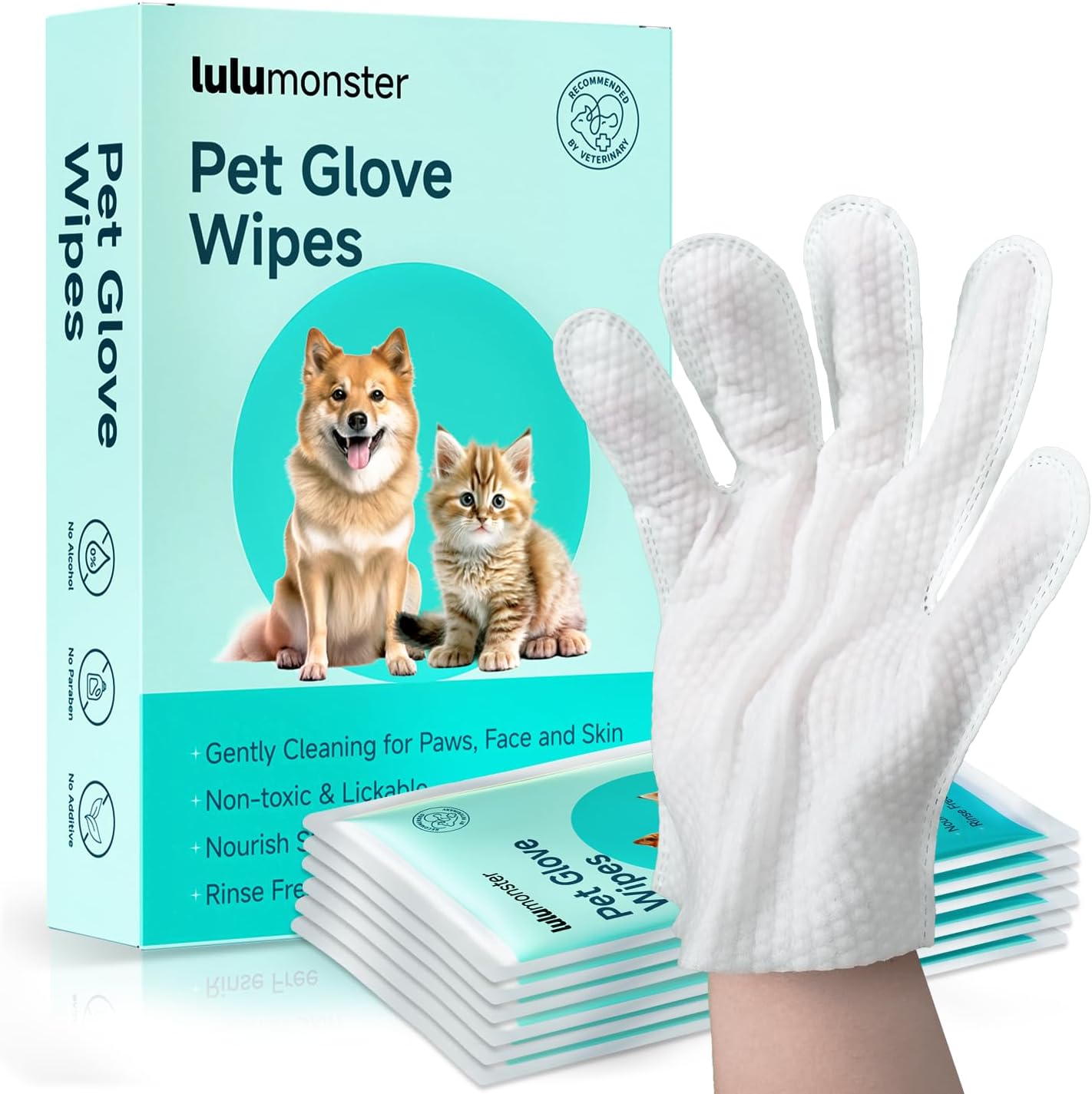
LULUMONSTER Pet Glove Wipes for Dogs & Cats, 6 Individually Wrapped Rinse-Free Grooming Gloves for Paws, Face & Body, Travel & Daily Pet Care
The step everyone skips is the animal. A dog who stepped in a puddle carries urine back onto the carpet on four paws and a belly, and then you are chasing a smell that keeps reappearing in a room you already cleaned. These are rinse-free grooming gloves, six to a box, each one individually wrapped, so you can keep two in the car, two by the door, and two in the bathroom cabinet without them drying out.
The glove shape is the useful part. You can wipe a paw without a second person holding the dog, and the rinse-free formula means no towel, no sink, and no wet dog smell layered on top of the urine smell. For a senior dog who leaks a little, this is the difference between a thirty-second wipe at the door and a bath every third day.
Check current Amazon price on the six-pack and compare it to one grooming appointment.
Flaws but not dealbreakers: Six gloves go fast in a multi-pet house, and the individually wrapped format is more packaging than some people want. If you are wiping four paws twice a day, order two boxes.
Best for anyone with a senior dog, a long-haired cat, or a pet who comes in from a wet yard.
Our pick: Eterish Reusable Washable Pee Pads for Dogs Large/Extra Large 36'' x 41'' 2 Pack, Absorbent Pet Puppy Dog Training Pads Non-Slip, Waterproof Whelping Potty Pads for Dogs Leak-Proof
Our pick
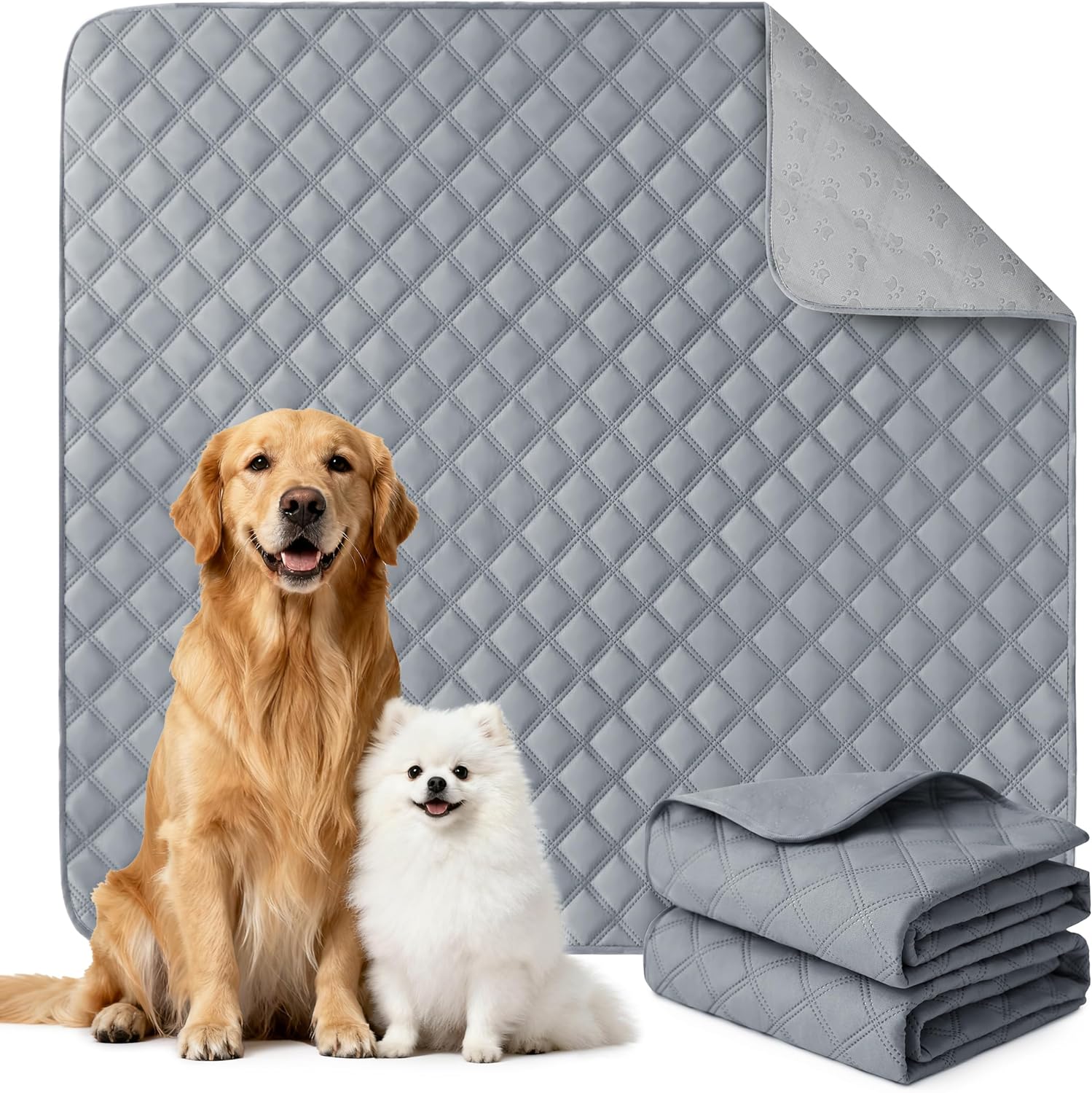
Eterish Reusable Washable Pee Pads for Dogs Large/Extra Large 36'' x 41'' 2 Pack, Absorbent Pet Puppy Dog Training Pads Non-Slip, Waterproof Whelping Potty Pads for Dogs Leak-Proof
This is the workhorse. Two pads, each 36 by 41 inches, which is big enough to cover the spot where a leaking dog sleeps, the strip in front of the back door, or the floor of a whelping setup. Pad size matters more than people expect: it decides whether you are containing a puddle or just decorating it.
The pad absorbency comes from the top layer and the core, and the waterproof liner is what keeps liquid from reaching your floor, which is the entire point of owning one. The non-slip backing keeps the pad where you put it when a dog walks off mid-puddle.
What earns it the pick is the machine washable construction. Rinse it, wash it cool with a fragrance-free detergent, hang it to dry. No disposables, no weekly reorder, no thin plastic pad sliding around under a bowl. Skip the fabric softener, because it coats the fibers and kills both absorbency and the liner waterproofing over time.
Check current Amazon price for the two-pack. Two pads means one is on the floor while the other is in the wash, which is the minimum for a house with an incontinent dog.
Flaws but not dealbreakers: They are not invisible. If your living room has to look a certain way, this is a functional object sitting in it. Buy two sets if you have more than one problem area.
Best for senior dogs, puppies in training, whelping setups, and anyone tired of buying disposable pads.
Containment gear that stops the next accident
Half of removing an odor is removing the source. The other half is removing the reason it keeps coming back.
Upgrade pick: Hzuaneri Cat Litter Box Enclosure for 2 Cats, Hidden Litter Box Furniture
Upgrade pick
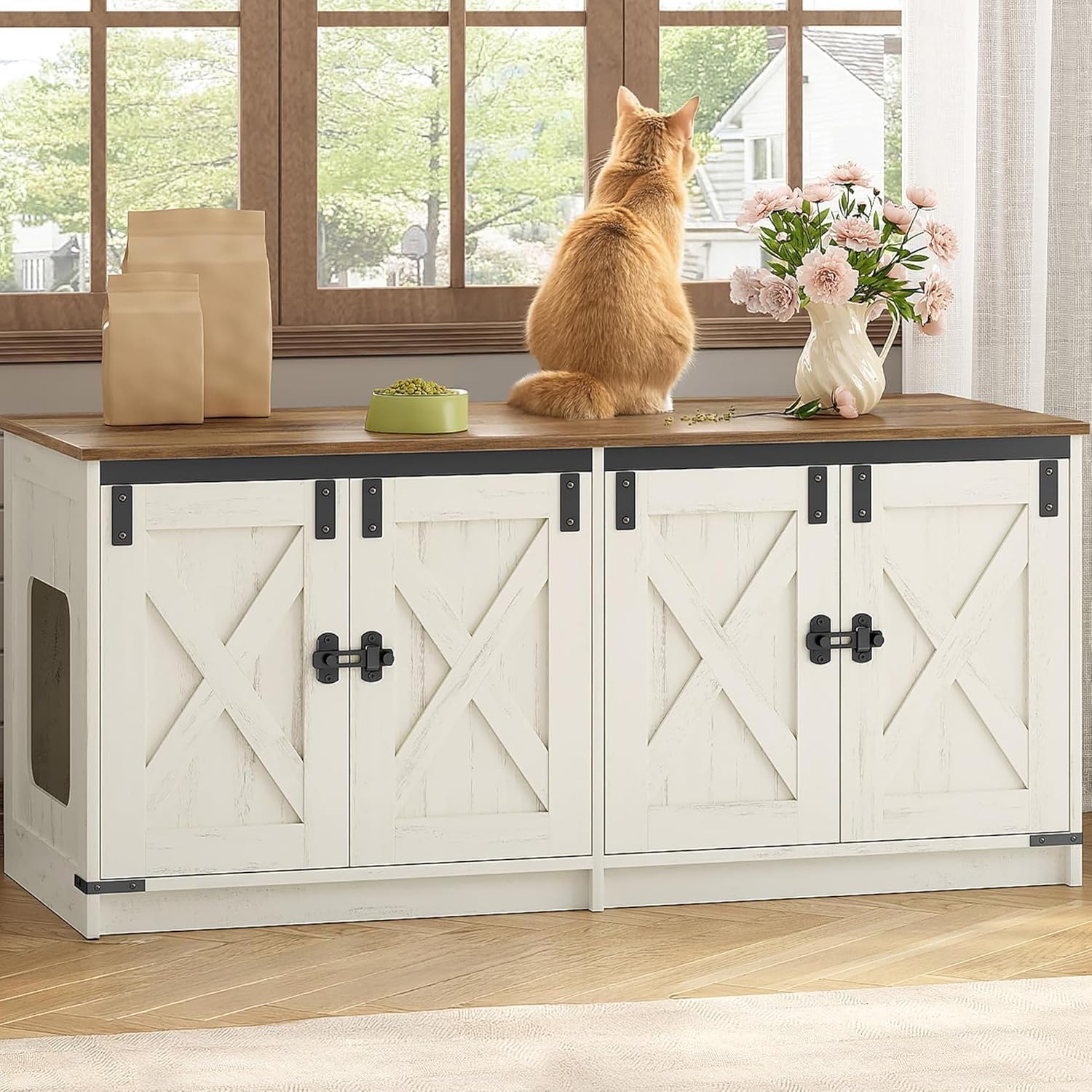
Hzuaneri Cat Litter Box Enclosure for 2 Cats, Hidden Litter Box Furniture
If the smell is coming from a box rather than an accident, the fix is usually placement and privacy, not another cleaner. A box that gets ambushed by the dog, or that sits in a high-traffic hallway, is a box the cat will quit using. A cat who quits using the box picks a corner instead, and then you are back to the first half of this article.
This is a furniture-style enclosure built for two cats, which means it hides the box in plain sight and gives the cat a covered, low-traffic place to go. It also gives you a surface that wipes clean instead of carpet that holds odor. If you are still deciding where it should live, start with cat litter box placement before you order.
One honest caveat: covering a box concentrates odor, so pair an enclosure with daily scooping and a litter that controls ammonia, and check the ventilation before you commit. Measure the box you already own first, because an enclosure only works if the box inside it fits with room for the cat to turn around.
Check current Amazon price, then read the listing's interior dimensions carefully. This is the one purchase on the list that has to fit your space.
Flaws but not dealbreakers: Furniture takes up floor space and assembly takes an evening. If your cat is skittish about enclosed boxes, leave the door off for the first two weeks.
Best for multi-cat homes and anyone who wants the box out of the living room.
The actual get rid of pet urine smell workflow
The correct get rid of pet urine smell order is blot, flush, dwell, dry, then prevent. Change the order and you will be cleaning the same spot again next month.
Step one: Find every spot, not just the wet one. In a dark room, run a UV blacklight over the carpet. Cat urine fluoresces, dog urine often does not, so trust your nose as well and get down at floor level. Mark each spot with painter's tape so you are not hunting for it in daylight. What you can smell in one place is often three spots: the original accident, the place where the pet sleeps, and the path between them.
Step two: Blot, do not rub. Press a stack of paper towels or one of the washable pads onto the spot and stand on it. Rubbing pushes urine deeper into the carpet backing and the pad, which is exactly where you cannot reach it. Change the towel and repeat until it comes up nearly dry.
Step three: Flush with cool water. Pour a small amount of cool water onto the spot and blot again, three or four times. This dilutes what is left in the fibers. Cool is the rule. Heat sets the protein in urine the same way it sets a stain in a shirt.
Step four: Apply the enzyme cleaner and let it dwell. This is the step people rush. Read the label for enzyme concentration, then leave the spot wet for the full dwell time, usually ten to fifteen minutes and sometimes longer. The water in the cleaner re-dissolves the uric acid crystals and the enzyme breaks them down. If the spot dries before the dwell time is up, you wasted the product. Cover it with a damp towel or a sheet of plastic to keep it working.
Step five: Treat the pad and the backing. If urine reached the carpet pad, treat the carpet and the pad, then check the subfloor with your hand. Wet subfloor is the one case where a professional is cheaper than guessing, because the smell keeps coming back from underneath no matter what you pour on top. On a washable pad, treat both sides, because liner waterproofing only helps if liquid has not already gone around the edge.
Step six: Neutralize and dry. After the enzyme has done its work, an odor neutralizer is optional. Airflow is not. Put a fan on the spot, open a window, and let it dry completely. A spot that stays damp grows bacteria, and bacterial odor smells different from urine but just as bad. Skip the steam cleaner here, since heat can set whatever the enzyme missed.
Step seven: Wash everything washable. Bed covers, blankets, the pad, the collar if it got soaked. Cool or warm water, fragrance-free detergent, no fabric softener. Test any cleaner on a hidden corner first, because carpet safe on a label does not always mean fabric safe on your couch. If the smell survives one wash, run it again with white vinegar in the rinse.
Step eight: Stop the next one. Clean is a temporary state in a house with animals. Put a washable pad under the water bowl, on the senior dog's sleeping spot, and at the door where accidents happen. Keep the litter box where the cat can reach it without crossing the dog's path. Wipe paws at the door with a rinse-free glove before they touch the carpet. Prevention is the only step that keeps the smell from returning, and it is the cheapest one.
The competition and why it lost
The approaches that did not make the list lost for specific reasons.
Enzyme cleaners in a spray bottle with no stated enzyme concentration are the biggest offender. You pay for a scent and a wet spot, and the crystals are still there.
Bleach and ammonia-based cleaners are worse than useless on urine. Ammonia is a component of urine, so cleaning with it can encourage a pet to mark the same spot again, and bleach on a wet carpet pad can damage the backing. Neither one removes uric acid.
Steam cleaners feel like the nuclear option, and they are, in the wrong direction. Heat sets protein and can drive the smell deeper into the pad.
Masking sprays, plug-in fresheners, and scented candles never touch the source. They cover the smell for an afternoon and then lose to a humid day.
Disposable pads work, but they are a subscription. Over a year, a washable set does the same job, holds more, and stays where you put it.
A carpet shampooer is a tool for dirt, not for urine. Without an enzyme step, it wets the crystals and spreads them around.
What this all costs
No price list here, because prices move. Check current Amazon price on each listing before you buy, and think about the spend this way.
- The rinse-free grooming gloves are the smallest line item, and they replace some of the baths and grooming appointments you are already paying for.
- The washable pad set is the best value in the group. Two pads, machine washable, replacing a disposable reorder that never stops.
- The litter box enclosure is the one real purchase. It is furniture, so it stays in the room and holds up better than anything else here.
- A professional enzyme treatment costs more than all three combined, and it is the step you can skip if the workflow above works. Keep it in reserve for subfloor damage, not for a fresh accident.
The math that matters is not the purchase price. It is how many times you have to repeat the job. Do the dwell time, treat the pad and the backing, dry it with airflow, then use the gear to keep the next accident off the carpet. That is the whole difference between a house that smells clean and a house that smells like a cover-up.