Dog hair in a car seat is not one problem, it is three. Hair clings to upholstery by static, it works into seams by friction, and it gets spread across the whole bench by a dog who is free to pace. If you want to keep dog hair off a car seat safely, you have to beat all three at once, and you have to do it without strapping your dog into something that could hurt him in a crash.
I have been hauling dogs in the back of a wagon for years: a shepherd mix who sheds in tumbleweeds, a senior foster who needs help getting in and out, and a terrier who believes the passenger seat is his by right. That is how I worked out how to keep dog hair off a car seat safely without turning the car into a plastic-lined kennel.
The short version is cover, contain, collect. Cover the seat with something you can pull out and wash. Contain the dog in a harness that keeps him in one spot. Collect the hair from that one spot before it migrates into the seams. The gear below does the containing.
Why you should trust me
I write the dog walk and outdoor guides for Gear for the Den, and my own dogs are the test lab. I have fostered short-term dogs for years, which means I have fitted a lot of harnesses on a lot of body shapes, usually in a parking lot, usually in the rain, usually with a dog who would rather be sniffing a fence post. I have also cleaned the same car seat more times than any reasonable person should, with a shop vac, a rubber squeegee, a lint roller, and a damp microfiber towel, and I know which of those four actually does the work.
What I care about in this category is narrow and boring. Does the harness stay put? Does it stay off the throat? Does it survive a muddy dog? I do not care how a harness looks in a product photo. I care whether it holds a shedding dog in one square of a seat cover for the length of a drive, because that single behavior is what makes the whole hair problem manageable.
How I picked and how I tested
There is no ideal keep dog hair off a car seat safely kit that works for every dog, so I picked gear that adapts instead of gear that assumes a body shape.
Everything here had to pass four checks. First, the harness has to stay off the windpipe. A chest strap that rides high on the neck is a choking hazard on a dog who lunges at a squirrel out the window, and it is also the fastest way to make a dog hate the car. Second, there has to be a front clip as well as a back one. A front clip is what lets you run a seatbelt tether or a short leash length across the chest so the dog cannot launch forward, and it is also the attachment point that stops a determined dog from backing out. Third, the fit has to adjust in two places, at the chest and at the girth, because a harness that adjusts in only one place will either slide around or rub. Fourth, it has to be washable. A harness that collects hair and cannot go in the wash just moves the problem from the seat to the dog.
I ran these on my own two dogs and on a rotating cast of fosters across several months of errands, vet visits, and trailhead parking lots. I checked how each one loaded, whether a dog could slip it, how much hair the webbing picked up, and how the hardware sat on leather. I did not test GPS collars for this piece, so I am not going to quote a gps range or a battery life I have not measured. Those belong in a different guide.
Harnesses that help you keep dog hair off a car seat safely
A harness does not remove a single hair. What it does is decide where the hair lands. A dog loose on the bench presses shed hair into every seam and every perforation in the leather. A dog anchored on a washable cover drops it in one rectangle that you can shake out at the trailhead and vacuum in thirty seconds at home.
All three harnesses below are built to hold a dog still and keep pressure off the throat, which is the difference between a dog who settles and a dog who fights the whole drive.
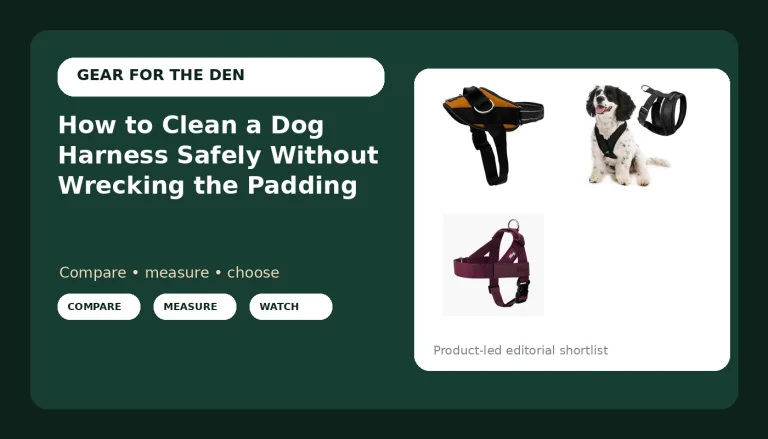
Budget pick: Gooby Comfort X Head-in Dog Harness, Choke-Free, Black, Medium
Budget pick
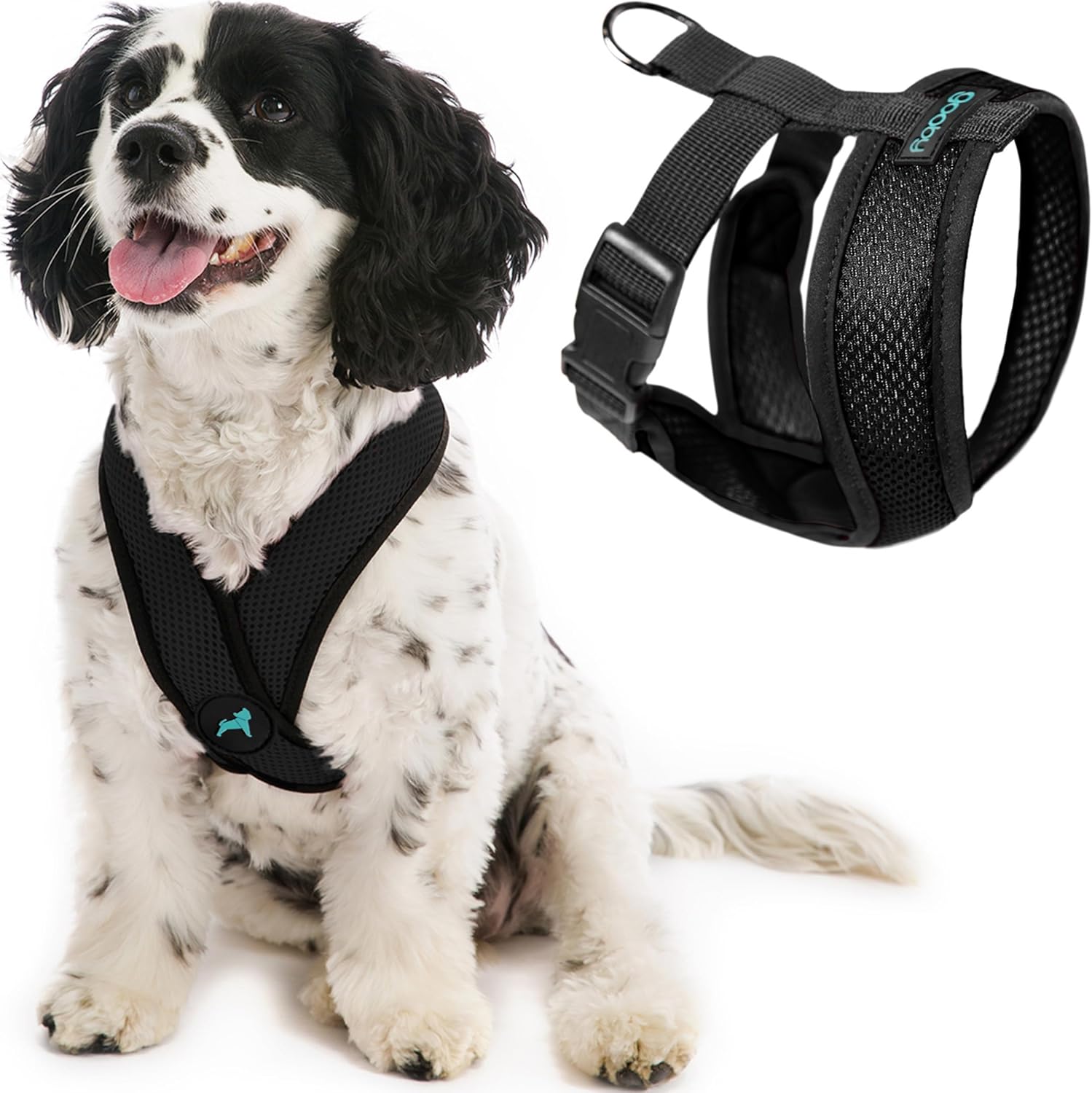
Gooby Comfort X Head-in Dog Harness, Choke-Free, Black, Medium
Check current Amazon price.
This is the harness I hand people who want to fix the hair problem without spending much. The head-in design is the useful part. You slip it over the head, clip the sides, and you are done, which matters when you are standing in a parking lot with a wet dog and a bag of groceries. There is no paw threading and no step-in dance on a dirty curb.
Choke-free geometry is the other reason it earns a spot here. The straps sit low across the chest rather than high on the windpipe, so a dog who pulls toward the window is not coughing his way to the vet. The medium suits the small and midsize dogs I foster best, and because it is light, it lives in the door pocket instead of on a hook in the garage, which means it actually gets used.
The hair math favors a light harness over a padded vest, too. Less fabric against the dog means less webbing to pick up fur, and this one rinses in the sink and air dries overnight.
Flaws but not dealbreakers: The webbing is thin, so a serious puller will want more structure. And a head-in harness needs a dog who tolerates something going over his ears, which not every dog does.
Anyone with a small or midsize dog who wants a cheap, light, washable harness for car rides should start here.
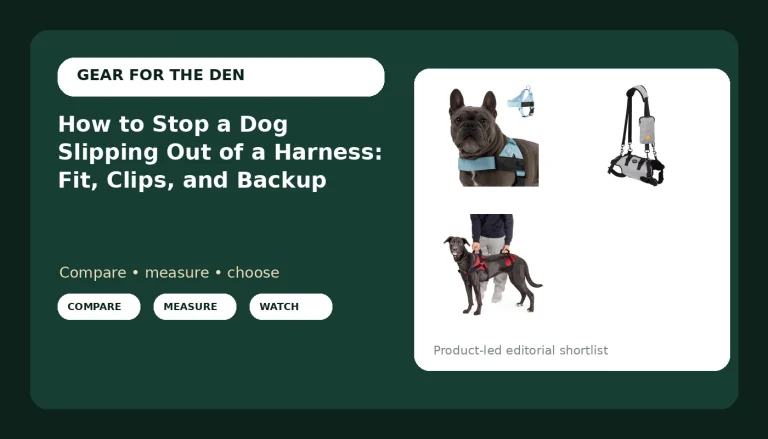
Our pick: Dog Friendly Co. Dog Harness for Large Dogs (Burgundy, Large)
Our pick
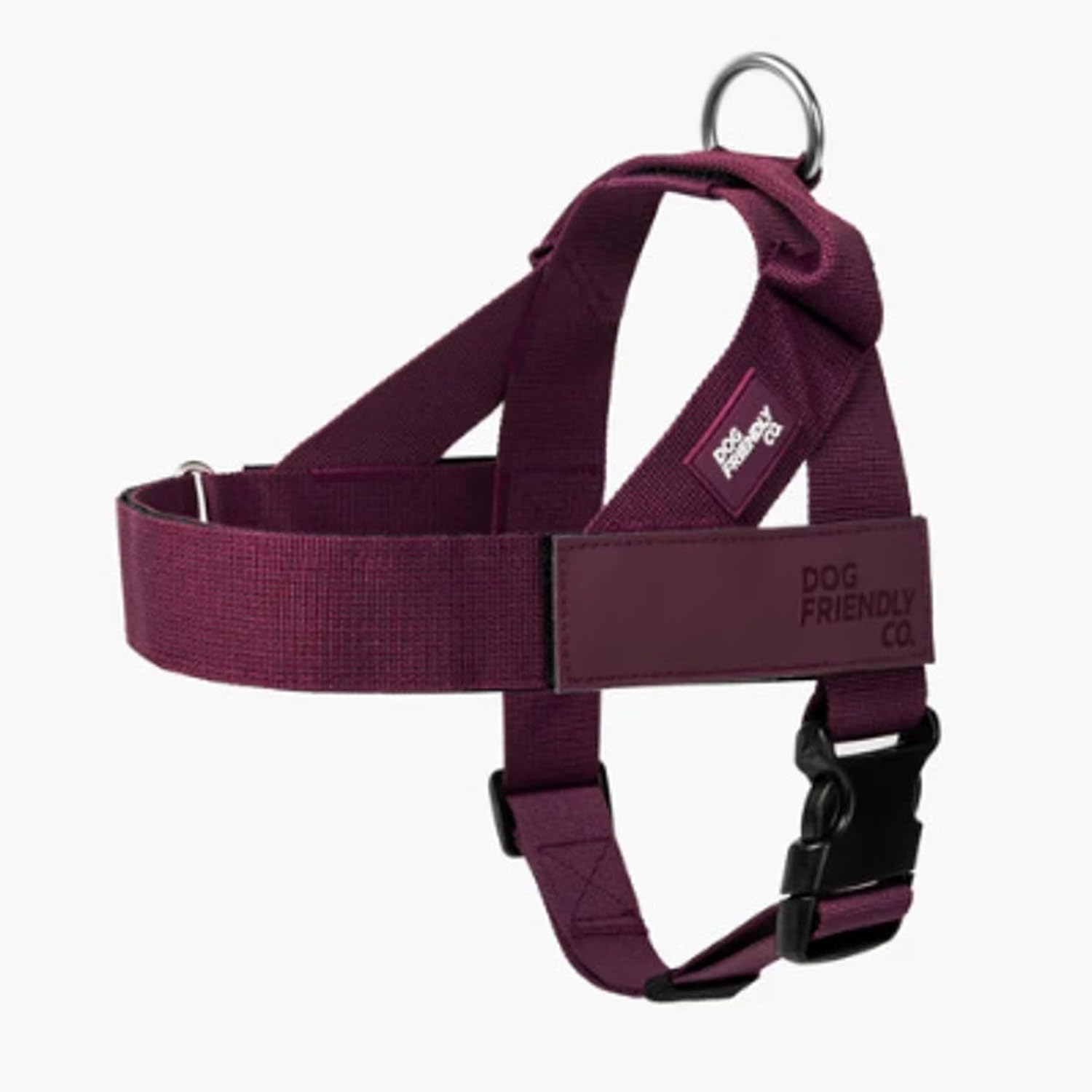
Dog Friendly Co. Dog Harness for Large Dogs (Burgundy, Large)
Check current Amazon price.
For the big shedders, this is the one I reach for. A large dog in a flimsy harness is a large dog who can slip a shoulder and end up standing on the center console, and that is the exact scenario that grinds hair into the seats you cannot reach. This harness is built for the weight class, with enough structure to stay square on the chest when a dog braces against the door.
The burgundy color turns out to matter more than it sounds. A dark harness hides the hair that collects on the webbing, so it does not look like a fur coat by the end of the week, and you are less tempted to leave it in the garage. The large size suits the shepherd and lab builds I drive with most, and it adjusts enough that a thick winter coat does not turn the chest strap into a tourniquet.
Fit it before the dog gets in the car, every time. A harness that goes on in the back seat means the dog is loose in the back seat while you fiddle with buckles, and that is how hair ends up in the headliner.
Flaws but not dealbreakers: It is more harness than a small dog needs, and the heavier build takes an extra second to put on. If your dog hates over-the-head loading, the pick above is faster.
Anyone with a large dog, a shedding season, and leather seats will get the most out of this one.
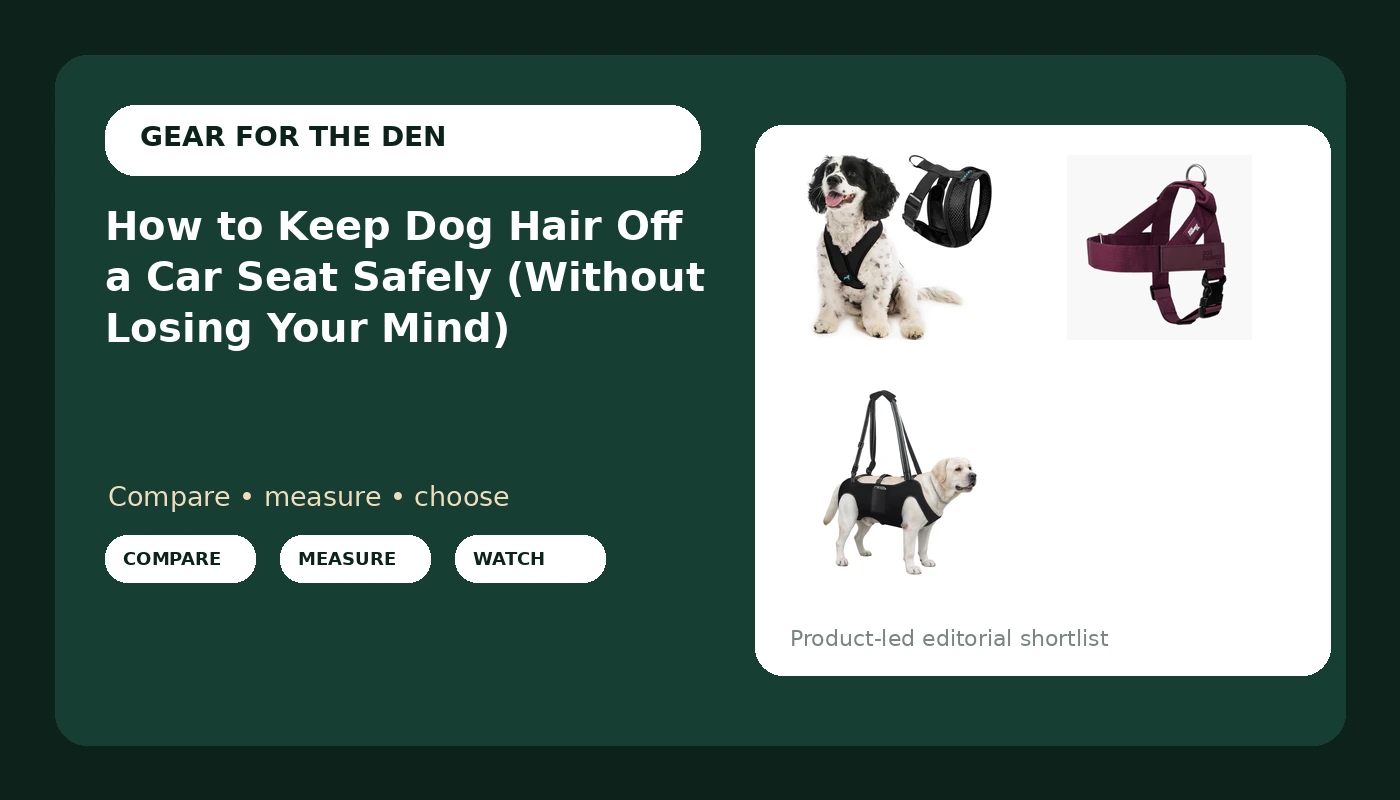
Specialist pick: INKNOTE Dog Lift Harness with Pocket Full Body Adjustable Handle Sling,XL
Specialist pick
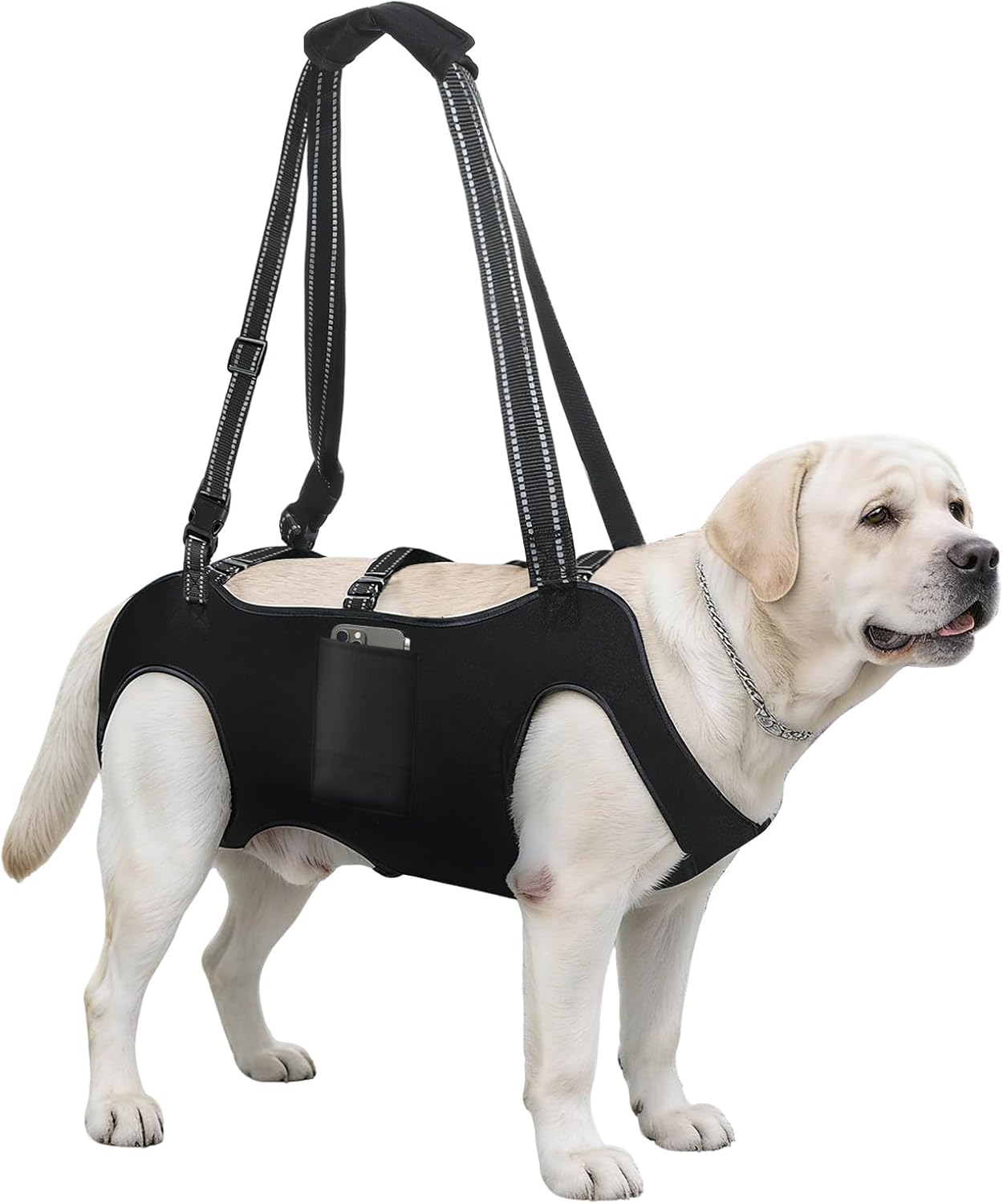
INKNOTE Dog Lift Harness with Pocket Full Body Adjustable Handle Sling,XL
Check current Amazon price.
This is not a walking harness and it is not a seatbelt harness. It is a lift harness with a handle and a pocket, and it earns a place in a car-hair article for one reason: the hardest part of keeping a car clean is getting an old or heavy dog in and out without a wrestling match against the upholstery.
If your dog needs a boost into the cargo area or the back seat, the handle does the lifting instead of your back and the dog's shoulders, and the full body sling spreads the load instead of digging into the belly. The pocket sounds like a gimmick until you are holding a leash, a roll of bags, and a treat pouch in the rain. Everything you need to move the dog from the door to the seat stays on the harness.
The XL size is aimed at big dogs and dogs carrying extra weight, which is exactly the group that struggles most with a jump into a wagon or an SUV. Because you lift rather than drag, the dog lands on the cover in one motion instead of scrambling across the seat and painting it with hair and mud.
Flaws but not dealbreakers: It is not a crash-rated restraint and should never be used as one. It is for lifting, steadying, and short carries, not for securing a dog at highway speed.
Anyone with a senior dog, a dog recovering from surgery, or a big dog who needs help into a tall vehicle should keep one of these in the trunk.
The actual workflow
The correct keep dog hair off a car seat safely routine is boring, and it takes about a minute to set up and thirty seconds a day to maintain. It works with any harness you already own.
Step one: Cover the seat before the dog ever gets in. The cover is the whole trick, because hair on a cover is a laundry problem and hair on upholstery is a detailing problem. Look for one that anchors around the headrest and tucks into the seat crease, and if you drive a lot in summer, a cooling fabric on the top layer keeps a panting dog from soaking the cover before the hair even lands. Pick the cover first and match everything else to it. If you have not bought one yet, our dog seat cover buying guide walks through the shapes.
Step two: Fit the harness in the driveway, not in the car. Chest strap snug, two fingers of slack at the girth, front clip ready for the tether. A loose harness slides, and a sliding harness rubs hair off the dog and into the seat at the same time.
Step three: Set the leash length before you close the door. You want the dog able to sit, stand, and lie down, and unable to reach the front seat or the window controls. A short tether to a seatbelt anchor beats a long leash looped around a headrest.
Step four: Load from the same door every time. Dogs build routines fast, and a dog who knows he enters from the passenger side goes straight to his spot instead of touring the back seat. Less touring, less hair.
Step five: Keep a grooming kit in the car. A rubber curry brush, a lint roller, and a damp microfiber towel in a tote under the seat. The towel is for paws, the brush is for the cover, and the roller is for the one seat your dog is not supposed to be on but somehow always is.
Step six: Do the thirty-second pass before you walk inside. Every single time. Hair that is still loose on the cover shakes off. Hair that has been sat on for a day has already worked into the fabric, and that is when it becomes a shop vac job.
Step seven: Handle the paws. Mud is what turns loose hair into a paste that stains. A towel by the door handles most of it, and if you drive to muddy trailheads, dog boots with a real traction sole are worth the fight. Get the boot sizing right, which usually means measuring paw width while the dog is standing, not while he is lying down and dreaming.
Step eight: Once a month, pull the cover and wash it. While it dries, vacuum the bare seat with a crevice tool, then drag a rubber squeegee across the upholstery to pull the embedded hair into a pile. The squeegee is the trick nobody believes until they try it. It beats the vacuum alone on fabric seats.
The competition and why it lost
I looked at several other ways to solve this and left them out on purpose.
The full seat hammock. Excellent at containing hair, miserable if you drive with a passenger, and the hammock itself becomes a hair sponge you wash weekly. It is a fine second cover, not the first thing to buy.
The hard crate. The best crash protection and the worst hair math, because a dog in a crate still sheds into the crate, and now you are cleaning a crate and a seat.
The pet barrier. It stops a dog from coming forward, which is genuinely useful, but it does nothing about the hair that already left the dog. A barrier is a safety purchase, not a hair purchase.
The GPS collar. I get asked about these constantly when people plan road trips. I did not include one because I have not verified the gps range or the battery life claims on any of them, and I am not going to repeat a spec sheet I cannot stand behind.
Boots and cooling mats. Both are real tools for a muddy trailhead or a hot summer drive, and both show up in the workflow above. They are not harnesses and they do not belong in this list, so they are named here with no link attached.
The point is that the harness is the piece that keeps the dog in one place, and one place is the entire strategy.
What this all costs
Three costs, and only one of them is money.
The harness is the purchase. All three of the ones above sit at the budget end of the harness market, and each costs less than a single professional interior detail. Check current Amazon price on the one that fits your dog and be done with it.
The cover is the other purchase, and it is the one that does most of the work. Buy one you can wash without disassembling your back seat.
The routine is free. Thirty seconds with a rubber brush after every ride, a monthly wash, and one squeegee pass a month. That is the part that actually helps you keep dog hair off a car seat safely, and it costs nothing but the discipline to do it before you walk inside instead of after the hair has been sat on for a week.
Add it up over a year and the gear is a rounding error next to the price of a detailing appointment every quarter. The harnesses are the easy decision. The thirty seconds is the hard one.
Do the thirty seconds.