Dog hair does not ruin a car seat by landing on it. It ruins a car seat by getting pressed into the weave, one short barbed fiber at a time, until the upholstery feels like felt and smells like a wet dog on a warm afternoon. Ask how to keep dog hair off a car seat and most people reach for a vacuum. The vacuum is the last step in the job, not the first one.
The ideal keep dog hair off a car seat setup is unglamorous: a barrier the dog lies on, a harness that keeps the dog on the barrier, and about ten minutes a week with a tool that lifts hair instead of pushing it deeper. The correct keep dog hair off a car seat routine is not a deep clean. It is a small habit repeated before the hair ever gets ground in.
I have spent years hauling shedding dogs in cloth-seat cars, and the gap between a seat that vacuums clean in two minutes and a seat that needs a professional detail comes down to those three things. Nothing on this list is expensive, and nothing on it is a gadget you will use twice and forget.
Why you should trust me
I write about dog gear for Gear for the Den, and the car is where most of it gets judged. A leash, a harness, or a bag holder that is fine on a sidewalk can still be the wrong tool at a trailhead with two wet dogs and a hatchback full of gear.
I have owned cloth-seat cars for as long as I have owned shedding dogs, and in that time I have paid for exactly one professional interior detail. Everything since then I have handled myself with a shop vacuum, a rubber brush, and a stack of microfiber cloths. That is the experience this guide is built on: not a laboratory, just a lot of Saturdays and a lot of dog hair.
What I look for has not changed. Does the barrier stay where I put it when a dog turns around? Does the harness keep the dog from climbing between the seats? Can I reset the whole setup in under fifteen minutes without dragging out equipment I will resent?
How I picked and how I tested
For this guide I looked at three things: what keeps hair off the seat, what keeps the dog on the barrier, and what makes the weekly reset fast enough that I will actually do it.
Every item that comes into my car gets the same check. For a barrier, I want a backing that grips the seat, a surface a shop vacuum can pull hair off in one pass, and a fabric that survives a wash cycle without shrinking. For a harness, I check the chest strap for adjustability, the front clip for a spot that does not rub, and whether the leash length I use with it keeps the dog from stepping onto the front seat. For anything that lives on the leash, I check whether it stays attached when a dog lunges at a squirrel.
I am not measuring newtons or running crash tests. The test is a week of real drives: the school run, the trailhead, the vet, and the muddy field behind the house. If a product makes the seat harder to clean or the dog harder to settle, it does not stay in the car.
Gear that helps keep dog hair off a car seat
Three items carry the routine. None of them is a seat cover, because the cover itself is a category you should pick for your own seat shape and budget. I keep a short list of washable quilted seat covers for that decision. What follows is the gear that makes the cover work: something to anchor the dog, something to get the pre-ride walk done, and something to find the dog when the walk runs long.
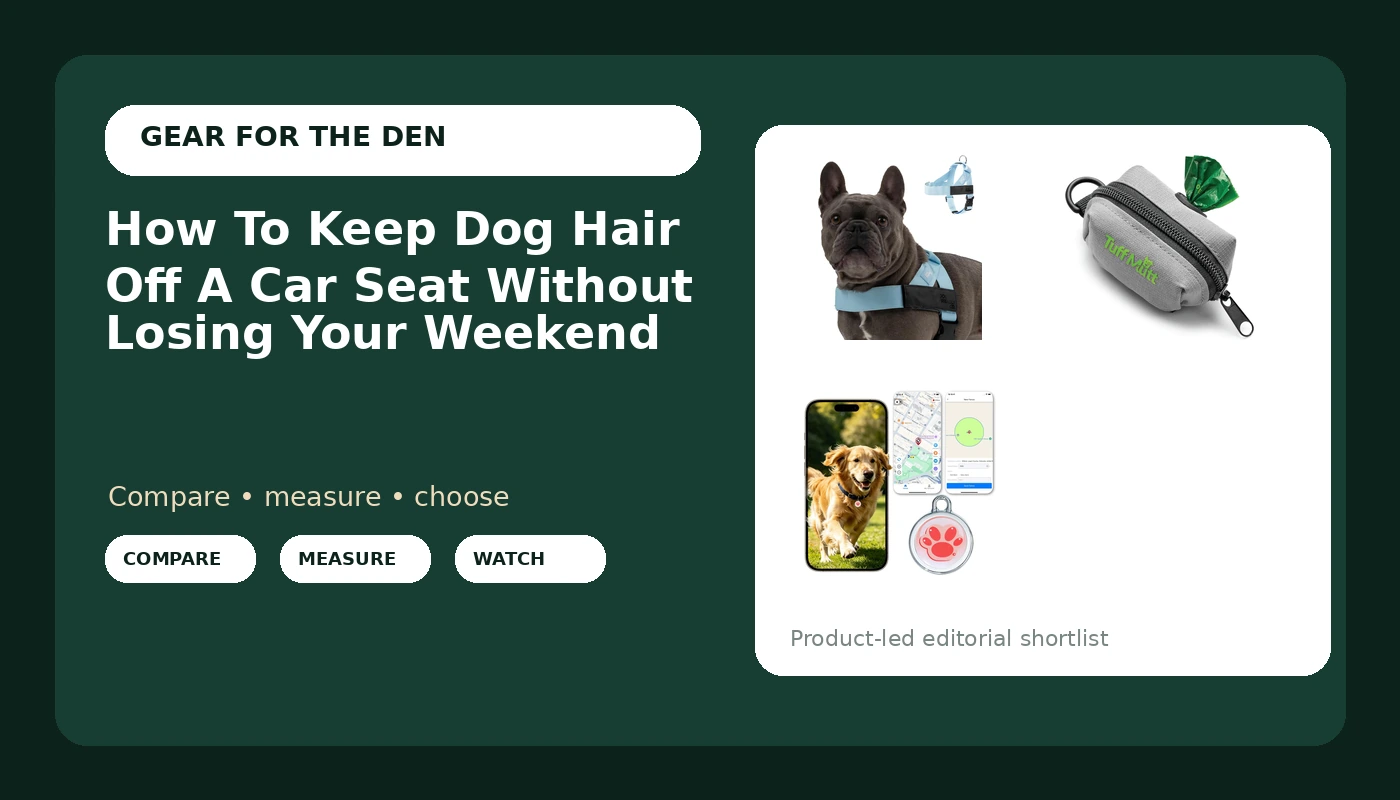
Our pick: Dog Friendly Co. Dog Harness for Medium Dogs (Sky Blue, Medium)
Our pick
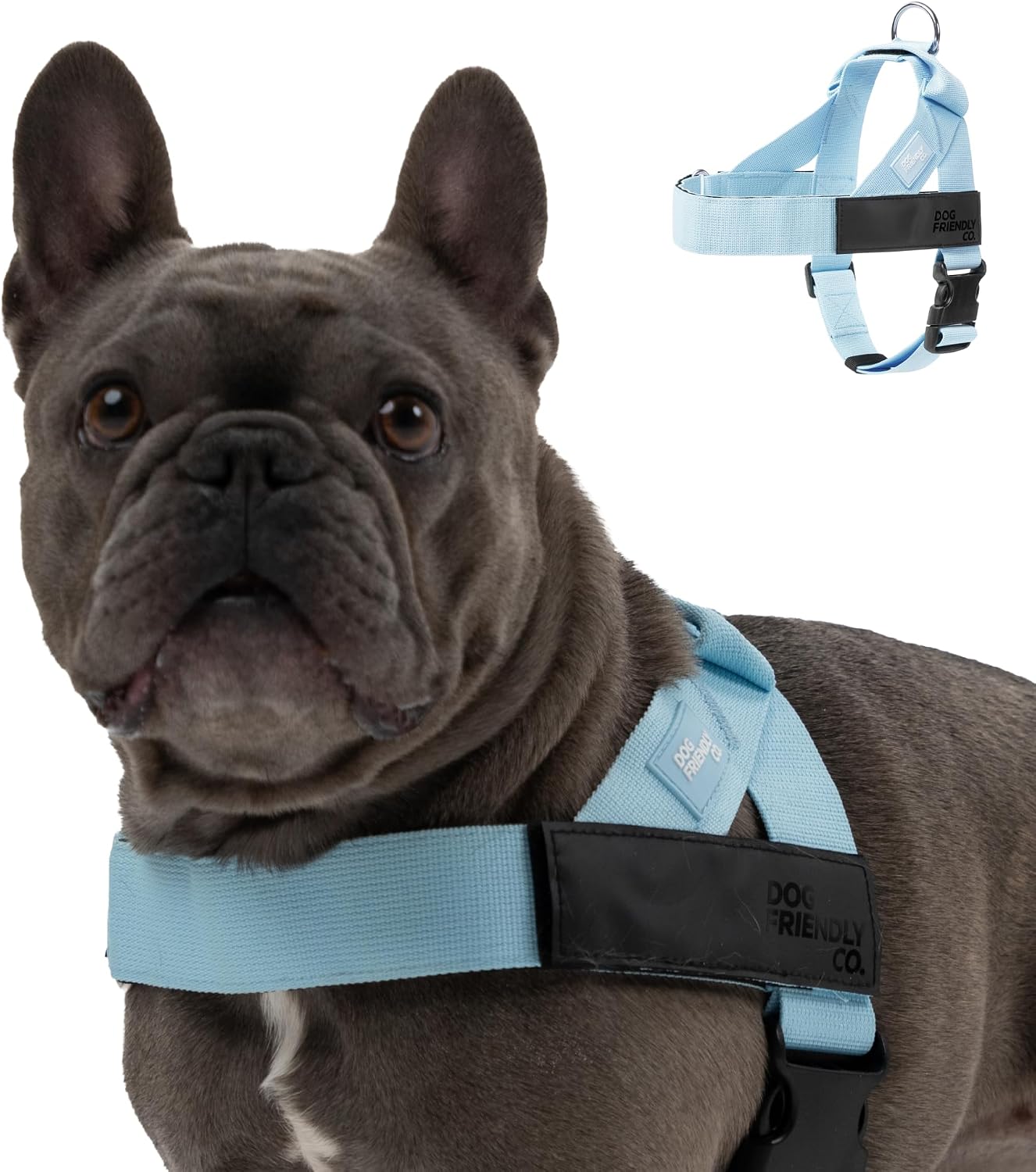
Dog Friendly Co. Dog Harness for Medium Dogs (Sky Blue, Medium)
The single biggest source of ground-in hair is a dog who slides, stands up, and climbs between the seats. Every time that dog turns around, the coat grinds another layer of hair into the cloth. A harness with a front clip and an adjustable chest strap, used with a short leash, keeps the dog lying on the barrier instead of touring the car.
The Dog Friendly Co. harness is where I would start for a medium dog. The chest strap adjusts across a wide range, the front clip gives you a spot to attach the leash at the chest rather than the back, and the medium is sized for the middle of the size chart rather than the extremes. Used with a leash length of about a hand and a half, the dog can shift and lie down but cannot step onto the front seat.
Two things to get right. Measure the chest before you order, because a medium in one brand is not a medium in another. And treat this as a walking harness that anchors the dog on the barrier, not as a substitute for a crash-tested restraint, which is its own purchase with its own standards.
Check current Amazon price.
Flaws but not dealbreakers: The padding is light, so a hard puller will wear the webbing faster than a heavily padded harness would.
Budget pick: Tuff Mutt Dog Poop Bag Holder for Leashes with Velcro Attachment
Budget pick
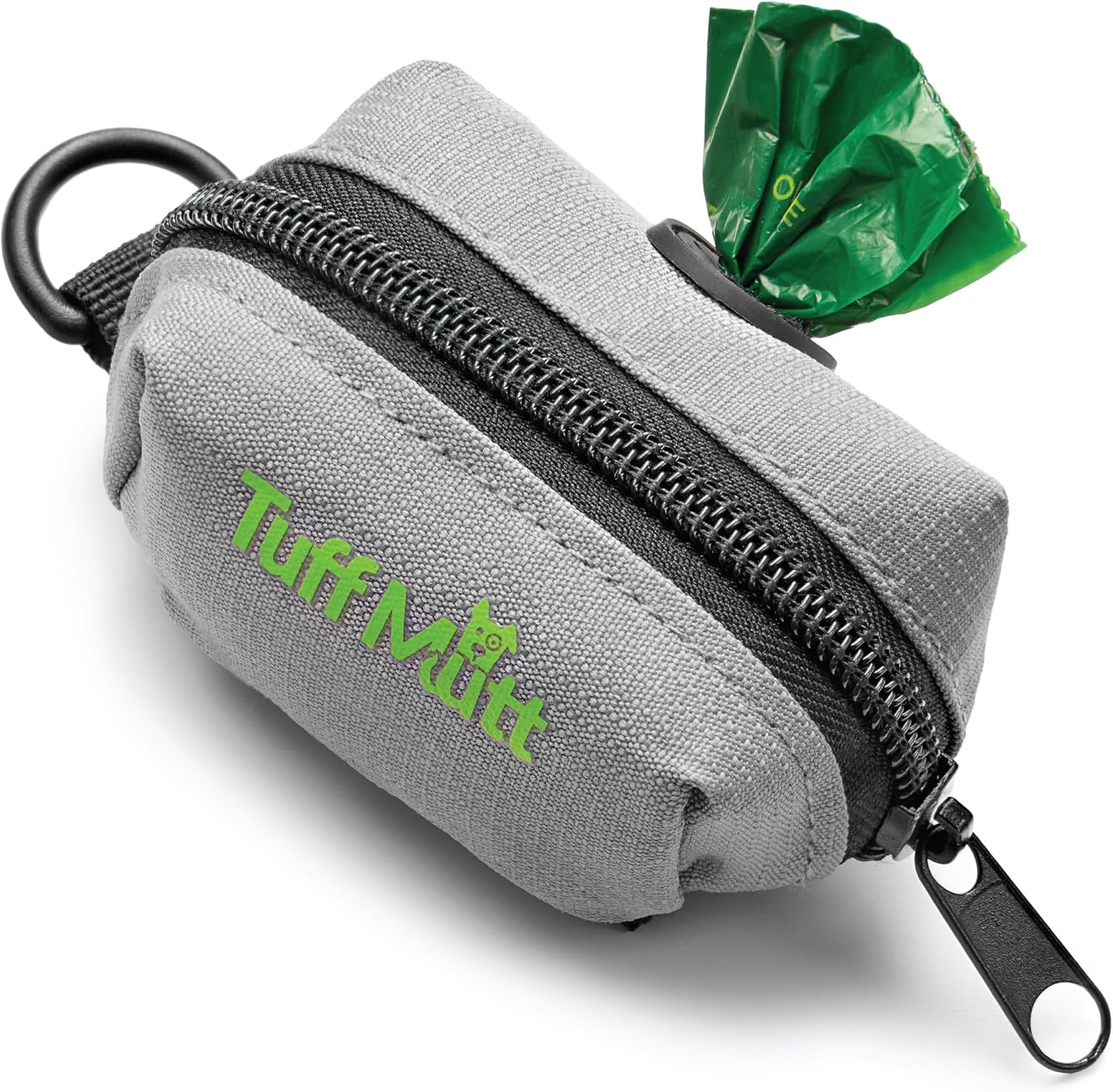
Tuff Mutt Dog Poop Bag Holder for Leashes with Velcro Attachment
The cheapest way to keep hair out of a car is to walk the dog before the ride. A dog that has been out for fifteen minutes empties out, sniffs everything in sight, and then lies down in the car. A dog that has not been out paces, spins, digs at the seat, and grinds hair into the cloth the whole way there.
The Tuff Mutt holder keeps bags where you can reach them, which sounds like a small thing until you are standing in the rain with a dog on one arm and no bag anywhere. It attaches to the leash with velcro, so it moves from leash to leash without a clip or a carabiner, and the roll sits flat against the strap instead of swinging while the dog walks.
It also does a second job that has nothing to do with the walk. A bag turned inside out over your hand is the fastest way to lift a wad of dog hair out of a seat crease, and step five below is where that trick earns its keep.
Check current Amazon price.
Flaws but not dealbreakers: Velcro collects hair and lint. Rinse the strap end when you rinse the leash, or it will stop gripping.
Upgrade pick: GPS Tracker for Dogs, Sg Tracker with Real-Time Location
Upgrade pick
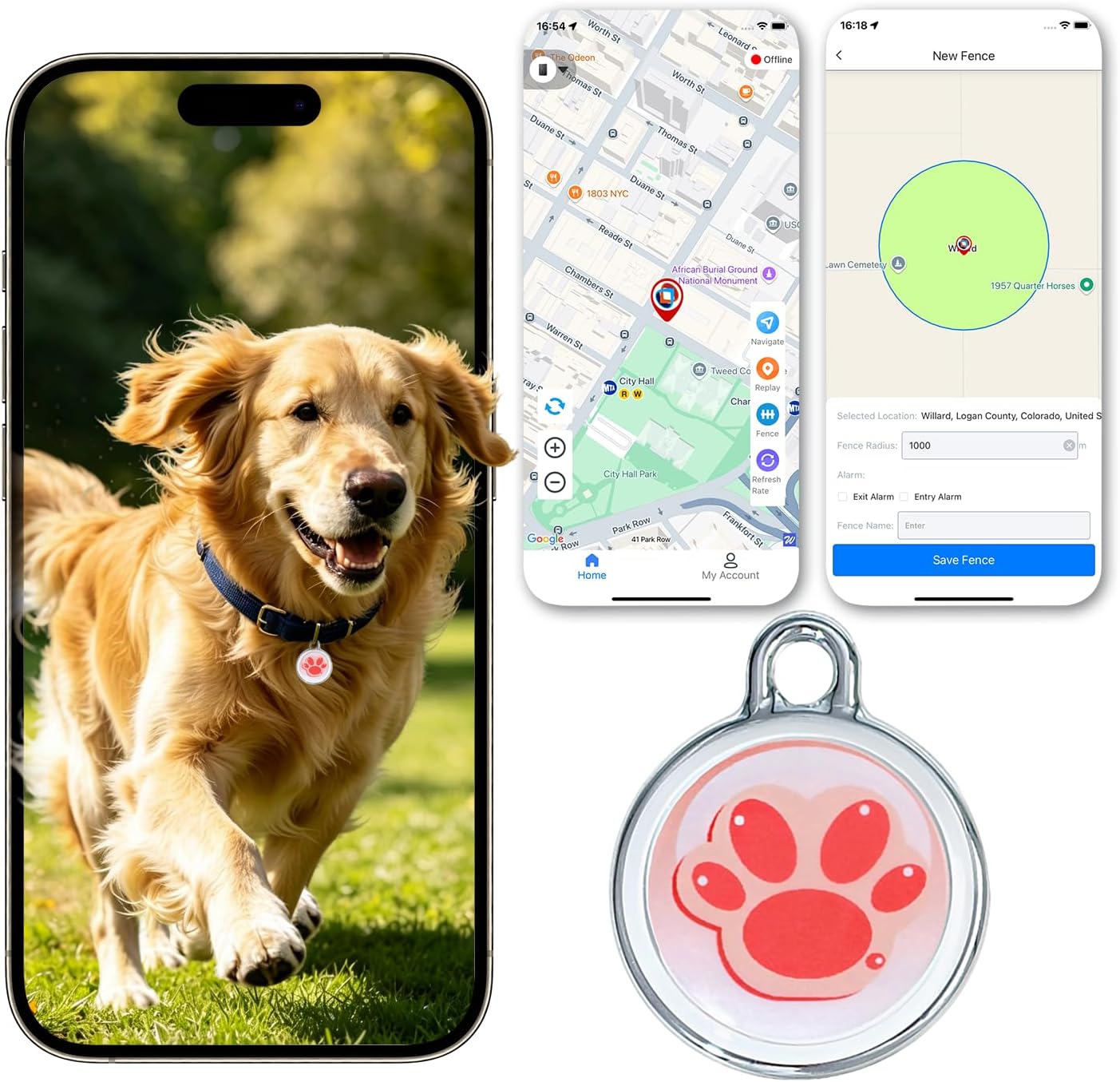
GPS Tracker for Dogs, Sg Tracker with Real-Time Location
This is the one item on the list that never touches the seat, and it still earns its place, because the best hair-removal tool is a tired dog. A long off-leash run before the ride is worth more than any vacuum attachment. The dog that has run hard gets in, circles once, and lies down.
The Sg tracker gives you real-time location, which is what you want when the run happens somewhere with hills and trees. Two specs matter more than the rest. GPS range tells you whether you will get a ping when the dog is behind a ridge. Battery life tells you whether you can leave it on the collar for a week or have to remember a nightly charge, and a tracker with a dead battery is a collar charm.
The reason it belongs in a car article: the off-leash run is the step most people skip, because they do not trust the dog off leash. A tracker removes that excuse, and the ride that follows is calmer and cleaner.
Check current Amazon price.
Flaws but not dealbreakers: A tracker tells you where the dog is, not where the dog is allowed to be. It is not a fence, and it will not stop a dog from bolting out of an open car door.
The actual workflow, step by step
This is the whole method. It takes about fifteen minutes the first time and ten minutes a week after that.
Step one: Set the barrier before the dog gets in. Shake the cover out, tuck the excess into the seat crease, and check that the backing grips. A cover that slides is worse than no cover, because it grinds hair into the seat underneath. If you have not bought one yet, start with a washable quilted cover rather than a universal elastic-corner one.
Step two: Fit the harness and check the front clip. The chest strap should be snug enough that two fingers slide under it and no more. Attach the leash at the front clip and shorten the leash length until the dog can lie down and turn around but cannot walk onto the front seat.
Step three: Walk first, ride second. Ten minutes of sniffing does more for the seat than any tool, because a dog that has emptied out lies down instead of pacing. Keep the bag holder on the leash so you are never hunting for a bag with a dog pulling at the end of your arm.
Step four: Load from the same door every time. Same side, same door, same command. Dogs build the habit fast, and a dog who steps straight onto the barrier never drags a shoulder across the seat back.
Step five: Lift the loose hair before you vacuum. Put a bag over your hand like a mitt, or use a damp rubber glove, and drag it across the seat in one direction. The hair balls up on the plastic, and you turn the bag inside out and throw the hair away with it. This step saves more time than anything else on the list.
Step six: Vacuum with a rubber-bristle attachment, not a plastic crevice tool. The crevice tool pushes hair deeper into the weave and makes the seat look worse than when you started. Short overlapping strokes, and empty the canister when it is half full, because a full canister just redistributes hair back onto the seat.
Step seven: Do a damp pass. Wring a microfiber cloth out until it is barely damp and wipe the seat in one direction. This pulls the fine undercoat the vacuum leaves behind. Rinse the cloth in a bucket, not over the seat, or you will make mud.
Step eight: Reset once a week. Shake the barrier outside, wash it on whatever schedule the label allows, and check the seams and the seat crease, which are where hair collects. Ten minutes here is the difference between a seat that cleans easily and a seat that needs an appointment.
The competition and why it lost
Cheap elastic-corner covers lose because they slide. The corners hold the cover to the seat but nothing holds it flat, so every turn the dog makes shifts the fabric and grinds hair into the upholstery underneath. A cover with a grippy backing and a tuck flap does the job that a four-dollar elastic cover only claims to do.
Slick rubber cargo mats lose for a different reason. They are easy to wipe, but they are also slippery, and a dog who cannot get a grip braces and digs, which is worse for the seat back than a soft barrier. A textured mat over a quilted cover is a better combination than either one alone.
Lint rollers lose because they are a surface tool. They pick up the hair sitting on top and leave the layer that has been pressed into the weave, which is the layer you actually see. Handheld pet vacuums with a rubber nozzle are genuinely useful, but they are step six of a routine, not a routine by themselves.
Everything sold for the dog's body rather than the car's interior belongs in another guide. Boots with a traction sole, boot sizing charts, cooling fabric vests, and cooling mats are all about heat and pavement, and none of them will keep a single hair off your seat. They are good products in the wrong article.
What this all costs
The harness, the bag holder, and the tracker are all one-time purchases, and each product page above carries a Check current Amazon price line, since listings move. The routine itself costs nothing beyond what you already own: a shop vacuum, a rubber brush, two microfiber cloths, and a bag you were going to throw away anyway.
The whole point of a routine to keep dog hair off a car seat is that it is cheaper than the alternative. Compare the price of these three items with what a shop charges in your area to pull embedded dog hair out of cloth seats, and the setup pays for itself the first time you skip that appointment. Add a second barrier so one can be in the wash while the other is in the car, and you have solved the only real failure mode, which is a cover that is dirty on the day you need it.
The cost per week over a year is small. The ten-minute reset is the part that decides whether this works, and that part is free. Do it on a Sunday, keep the tools in one bucket in the trunk, and the seat stops being a project and goes back to being a seat.