Most small apartments have three or four honest candidates for a litter box, and an automatic box crosses one off the list the moment you count the clearance it needs. The work of learning how to place a self cleaning litter box in a small apartment is mostly measuring, not shopping: a footprint that fits, an outlet within reach of a cord, and a path your cat will actually use at three in the morning.
I have set up boxes in studios with a single window, in railroad flats where the only free outlet was behind the couch, and in a bathroom narrow enough that the door had to stay open a hand's width. The pattern never changes. People buy the machine first, then hunt for a place to put it, then discover the one free corner sits behind a door that swings.
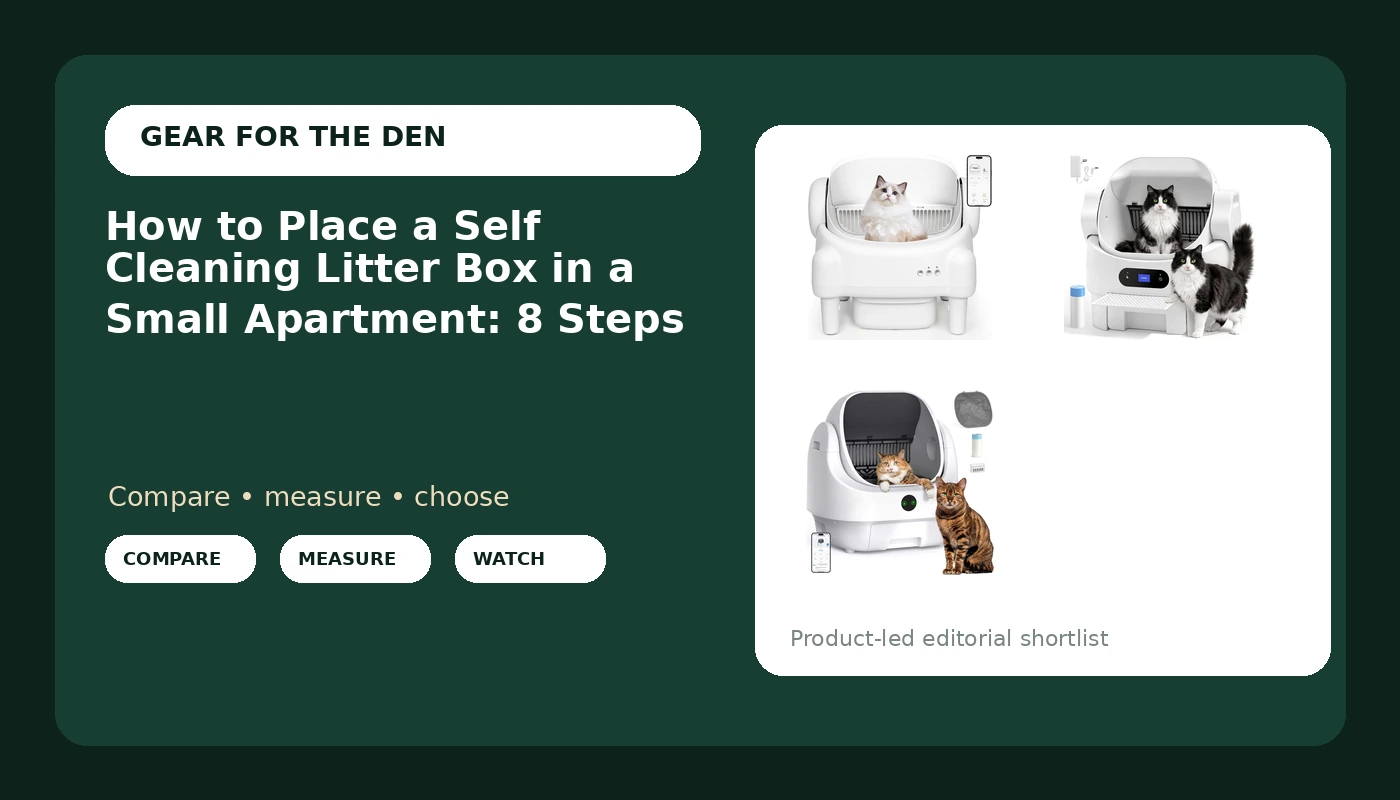
Do it in the other order. What follows is the placement method I use, the three open-top automatic boxes I would shortlist for a tight floor plan, and what each one asks of your apartment before it earns a spot.
Why you should trust me
I have moved a litter box more times than I want to count, and every move taught me the same lesson: the cat's route matters more than your floor plan. A box that is annoying to reach is a box a cat will abandon for a rug. An automatic box that is annoying to reach is worse, because now you have a motor, a cord, and a smell in a place you cannot easily clean.
I write the cat gear guides here at Gear for the Den, and I have helped friends in studios, one-bedrooms, and a converted garage work out where the box goes before they spent money on the box. I do not sell these units and I do not own all three. What I can tell you is which questions separate a placement that works from one you will be redoing in a month.
How I picked and how I tested
I ran every candidate through the same four checks, in this order, because the order matters more than the boxes themselves.
- Footprint and clearance. The published width decides most apartments. I check it against the gap between the toilet and the wall, the space at the end of a hallway, and the depth of a closet with the door taken off.
- Power and placement. An automatic unit needs an outlet. I check the cord run for trip hazards and for anything that would sit under a rug, and I ask whether there is any power backup so a blackout does not leave a cycle half finished.
- Control and connectivity. Where a unit offers app control, I want to know how app pairing works, what signal range looks like through two apartment walls, whether a feature sits behind a subscription, and what battery life looks like if the box can run on batteries.
- Failure modes. What happens when a cat steps back in mid-cycle, what happens when the power cuts, and what happens when the drawer is full and you are at work.
The three boxes below came through those checks with an open-top design, which is the shape that suits small apartments best. Open top means no lid swinging into a wall, no dark interior a nervous cat will refuse, and no dismantling anything to see the litter level.
Where to place a self cleaning litter box in a small apartment
Finding the correct place a self cleaning litter box in a small apartment comes down to three things: an outlet, a wall, and a clear approach. Everything else is preference. These three open-top units fit that brief at three different points on the price ladder.
Budget pick: Paruuntys Automatic Litter Box, Safety Sensor, App Control, Open-top Design
Budget pick
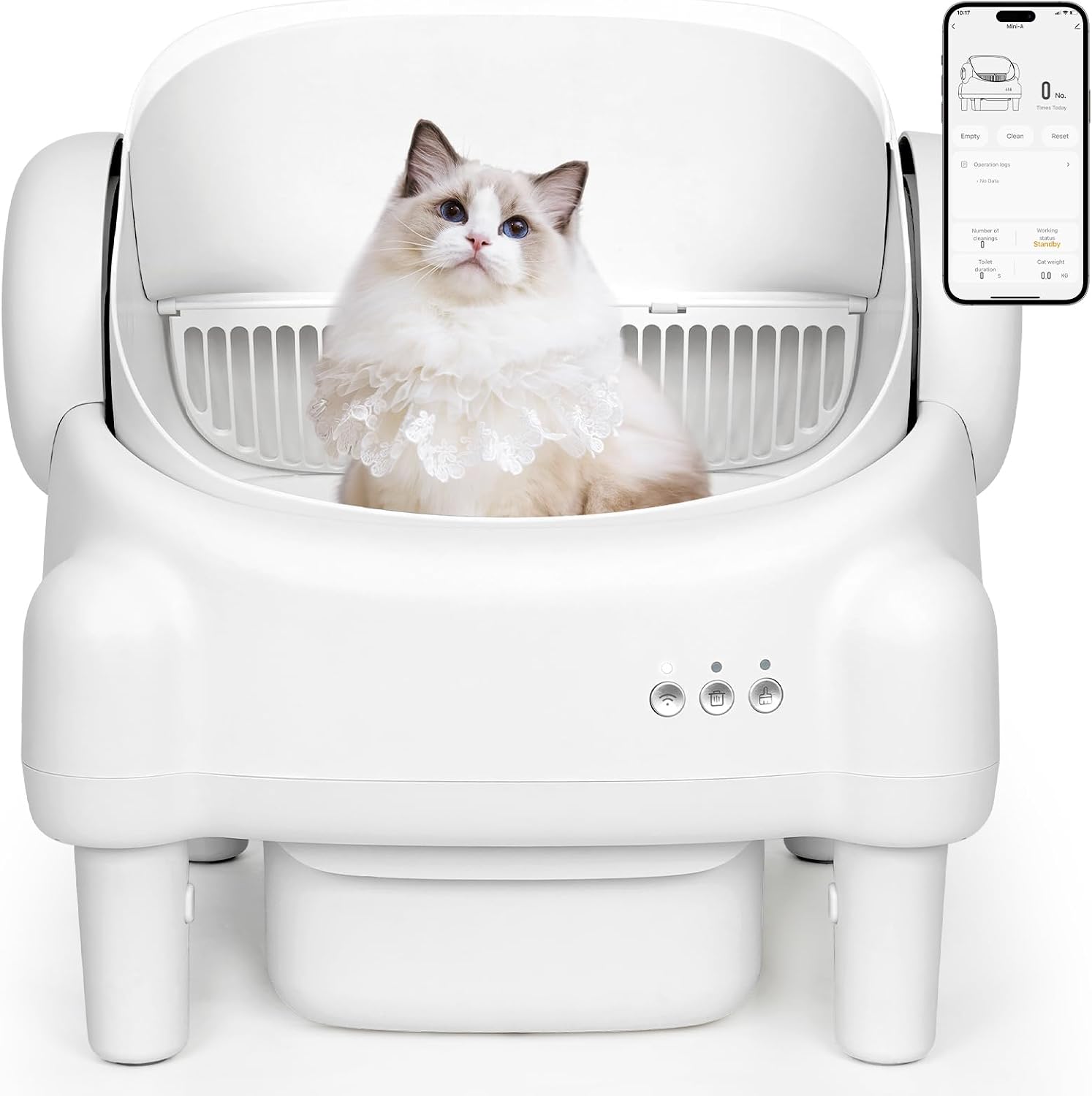
Paruuntys Automatic Litter Box, Safety Sensor, App Control, Open-top Design
Open top is the right shape for a tight apartment, and this is the least expensive way into it. With the lid gone there is no dome to swing up into a wall, no cover to lift before you can see what happened, and no dark interior for a nervous cat to refuse. The Paruuntys adds two features that matter at this end of the market: a safety sensor, which is what stops a cycle when a cat steps back in, and app control, which lets you check on the box without walking past it.
Check current Amazon price.
Where it fits: a bathroom alcove, the end of a hallway, or the dead corner beside a washing machine. Because the design is open-top, it can sit under a counter lip as long as the entry stays clear and the cat has room to turn around inside the box.
Two things to settle before you order, both of which the listing answers better than I can. First, whether the app needs a subscription for the features you actually want, and whether the box keeps cycling when the Wi-Fi drops. A unit that stops mid-cycle because your router hiccuped is worse than a plain pan. Second, whether there is any power backup for an outage.
Flaws but not dealbreakers: open top means odor has nowhere to hide, so budget for a litter with real odor control and a mat that traps tracking. App control is only as good as your signal range, and the back bathroom in a long flat is exactly where Wi-Fi goes to die.
Anyone renting a small one-bedroom who wants the safety sensor and the app without paying for a globe-shaped unit should start here.
Our pick: Self Cleaning Automatic Litter Box for Cats ≤15lb, 15.5"W Open Top, 50L Globe
Our pick
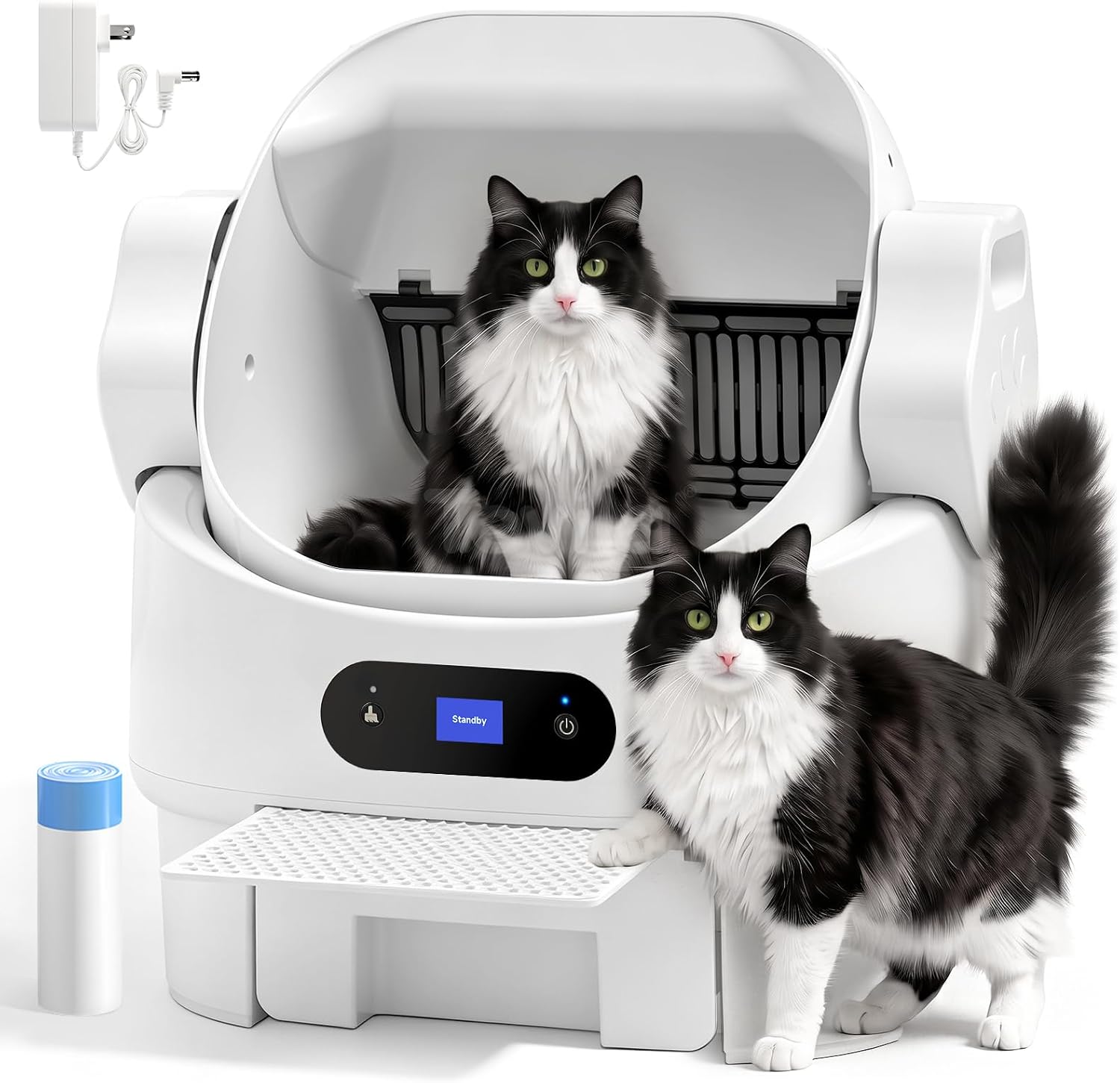
Self Cleaning Automatic Litter Box for Cats ≤15lb, 15.5"W Open Top, 50L Globe
This is the middle of the list and the one I would put in most apartments. The 50L globe gives the cat real interior volume, so a bigger cat can turn around without scraping the sides, and the open top means you are not lifting a lid that swings into a door. The 15.5 inch width is the number to check against your floor plan first, because it decides whether the box fits beside a toilet or at the end of a hallway.
Check current Amazon price.
It is rated for cats up to 15 pounds, which covers most of the cats I get asked about and is the honest ceiling to plan around. Above that weight you are shopping in a different size class, not a different brand.
Where it fits: against a wall with the entry facing the room rather than facing a wall. The globe shape plus the open top gives you a windbreak without a lid, which is the compromise that works in a bathroom with a fan. Leave three inches of clear floor at the entry and enough room behind the unit that it does not rock when the motor runs.
Flaws but not dealbreakers: a globe takes up more visual space than a flat pan, and in a studio that matters. The weight limit is a hard limit, not a suggestion.
Anyone with one cat under fifteen pounds, a bathroom or hallway wall, and an outlet within cord's reach should make this the default pick.
Upgrade pick: Open-Top Automatic Litter Box, Odor Control, Ready to Use, Self Cleaning
Upgrade pick
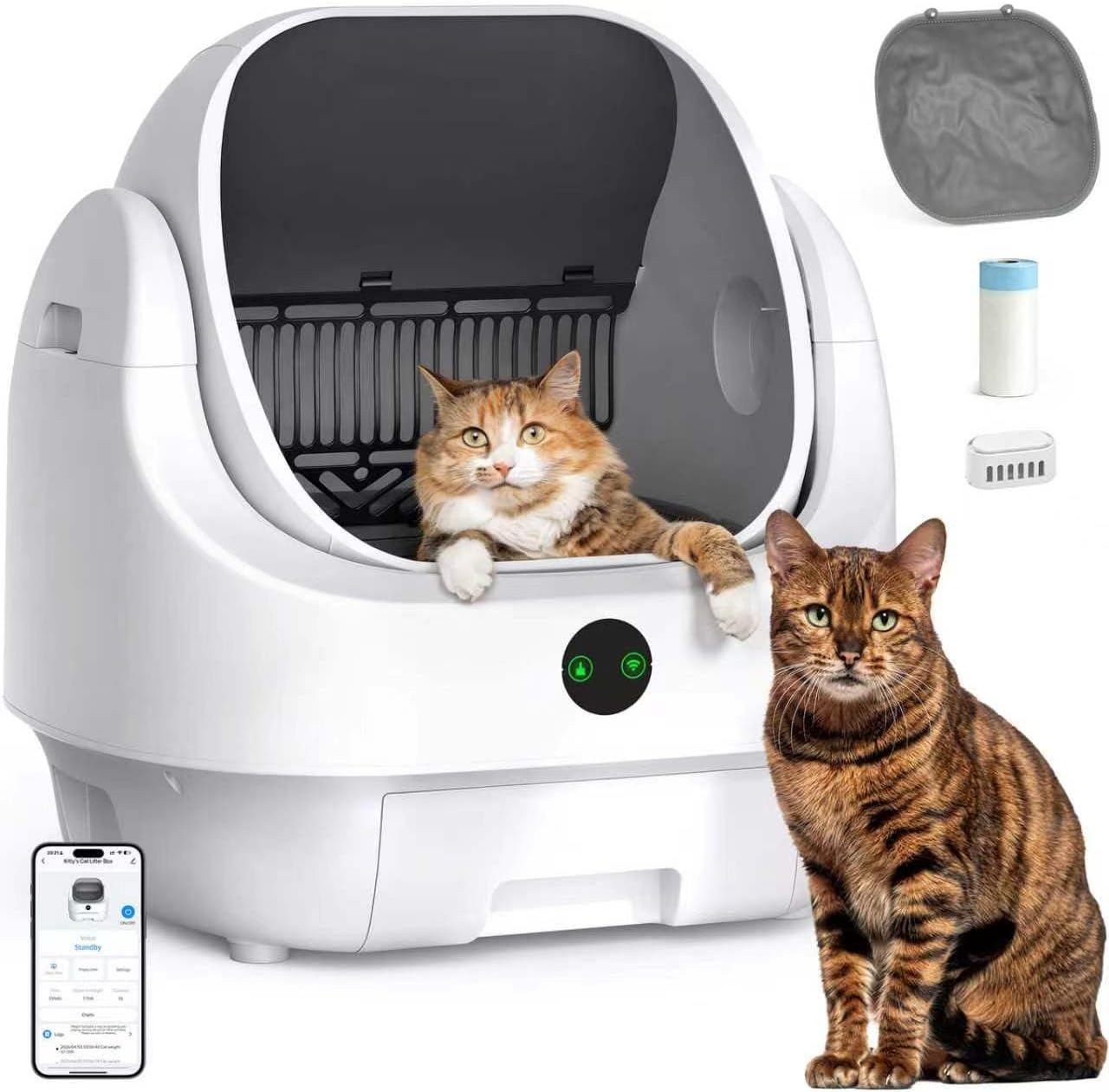
Open-Top Automatic Litter Box, Odor Control, Ready to Use, Self Cleaning
The most expensive of the three, and the one that behaves least like a machine in the corner. Odor control is built into the design rather than left entirely to your litter choice, and it arrives ready to use, which matters more than it sounds when you are setting up a box in a small flat with the cat watching. Open top again, so no lid, no swing clearance, no dark interior.
Check current Amazon price.
Where it fits: the same spots as the others, with one bonus. If your apartment has a spot that is convenient but slightly awkward, a box that handles odor on its own is the one that lets you use it. That could be the end of a hallway near the front door, or the corner of a bathroom you share with guests.
What you are paying for is the odor handling and the out-of-the-box setup, not a bigger footprint. Check the width against your gap the same way you would with the budget unit, and check the cord run the same way too. An upgrade pick does not get to skip the outlet.
Flaws but not dealbreakers: it is the priciest box here, and odor control is a feature you pay for whether or not your cat is a heavy digger. If you already run a litter with strong odor control and empty on schedule, you may not feel the difference.
Anyone who has tried everything else on the smell, or who wants a box that works the day it arrives, should look here first.
The actual placement workflow
The order matters more than the box. The most common mistake people make is buying first, then trying to place a self cleaning litter box in a small apartment that was never measured for one.
Step one: Measure the footprint, then measure the swing. Width is the number that kills most placements. Take the published width of the unit you are considering, add three inches at the entry for the cat to step in and turn, and add two inches behind it so the box does not rock against the wall. Then open every door that shares that space. A box behind a door that swings is a box you will move in a week.
Step two: Choose the room, then the corner. Food and water areas are out, and so is the kitchen. A bathroom with a fan is fine. A hallway is fine if it has an outlet and a wall. Ask ten cat owners about the ideal place a self cleaning litter box in a small apartment belongs and most of the answers will be about hiding the box from guests, which is the wrong priority. The cat has to reach it easily and feel safe while using it.
Step three: Check the power run. Every automatic unit on this list needs an outlet. A cord stretched across a walkway is a trip hazard, and a cord under a rug is a heat problem. If the only outlet is on the far wall, plan a low-profile cord channel instead of an extension cord. This is also the moment to think about power backup, because a unit that loses power mid-cycle leaves you with a half-rotated drum and a cat who no longer trusts the machine.
Step four: Give the box a wall and a way out. Cats want an escape route. Do not tuck a box into a dead-end closet with one exit, and do not face the entry into a wall. An open-top design helps here because the cat can see over the rim while it is inside. That visibility is the reason open top beats a dome in an apartment, where the box often sits in a hallway with foot traffic on one side.
Step five: Deal with odor before the motor runs. The open-top shape you are choosing for clearance also means odor has no lid to hide under. Start with a litter that controls odor on its own, add a mat that traps tracking at the entry, and keep the box out of still air pockets like the space behind a closed door. Do not park it against a radiator or directly under an air return, where heat and airflow will push the smell around the room.
Step six: Pair the app and walk the signal. App pairing is where small apartments surprise people. The box lives at the far end of the flat, behind two walls, and the signal range that was fine in the living room is not fine in the back bathroom. Pair the unit where it will actually sit, with your phone where you actually sit. While you are in the settings, check battery life if the box can run on batteries, and confirm whether anything you want sits behind a subscription.
Step seven: Move the cat, not the box. Do not remove the old pan on day one. Put the new unit beside it, let both be used, then shift the old pan a few inches a day until it is gone. If you have two cats, keep two boxes even in a small apartment, because one machine cannot serve a queue. The two-box rule for multi-cat apartments explains the arithmetic.
Step eight: Lock the routine and recheck monthly. Empty the waste drawer or bag on a fixed schedule tied to your trash day rather than to your nose. Wipe the sensor and the rim once a week, because dust and litter dust are what make a safety sensor sluggish. Re-measure the spot every time you move furniture, and check the entry height again as your cat ages. A placement that works for a two-year-old cat is not always the placement that works at fourteen.
The competition and why it lost
Three other categories came up while I was working out placements, and all three lost for the same reason: they solve a different problem.
Covered dome boxes. The lid gives you somewhere to hide the smell, but it also means the box needs swing clearance in front and it puts the cat in a dark interior. In an apartment, that lid is usually the reason the box ends up in the worst corner of the flat.
Top-entry pans. They contain tracking well, but they ask the cat to jump in and out, which is the wrong ask for a senior cat or a cat with sore joints, and they are awkward to clean from a standing position in a small bathroom.
Litter box cabinets and enclosures. They hide the box beautifully and then trap odor inside a wooden box, and most of them have no room for an automatic unit with a rotating drum or a globe. If you have a manual pan and a guest coming, a cabinet works. If you have a motor, it does not.
Two categories that are not competition at all: automatic feeders and pet cameras. Portion accuracy and camera resolution are the numbers you shop for in those, and water resistance matters if the camera lives outdoors. None of that helps you place a litter box, and none of it belongs on this list. For the litter side of the equation, the odor control litter guide for apartments covers what to put inside the box.
What this all costs
The three boxes sit at three different points on the price ladder, and each one asks for the same things on top of the purchase: litter, liners or bags if the unit uses them, electricity, and a mat. Those recurring costs are the part people forget, and they do not care which box you bought. Check current Amazon price on each unit before you commit, because automatic litter boxes move on price more than most pet gear.
The honest cost math for an apartment is not the sticker. It is the sticker plus a year of litter plus the cost of the spot itself. If placing the box costs you the only closet in the flat, that is a real cost, and it is why the placement order in this guide matters. Measure first, choose the room second, buy third.
What you get for the spread between the budget unit and the upgrade pick is odor handling and setup convenience, not size. The budget pick and the upgrade pick take up similar floor space. If your apartment has a spot that is convenient but slightly smelly, that difference is what you are buying.
One more thing to price before you buy: your time. A box that needs a subscription to unlock features you want, or that loses its pairing every time the router reboots, costs you fifteen minutes a week forever. Read the listing carefully, work through the app questions above, and buy the box that fits the spot you actually have. You have to place a self cleaning litter box in a small apartment somewhere, and choosing the somewhere is the whole decision.
That is the job. Measure the gap, pick the wall, then let the machine do the scooping.