Two dogs eating out of the same bowl is not a feeding plan. It is a race with a referee, and the referee is you, standing in the kitchen at 6:40 in the morning in socks. If you have been searching for how to set up a feeding station for two dogs, the honest answer is that the bowls matter far less than the distance between them, the height they sit at, and which dog gets which corner.
I have fed two dogs in one kitchen for years, including a foster rotation that brought a food-obsessed beagle and a grazer who ate three kibbles, walked away, and came back twenty minutes later. That combination taught me more about feeding stations than any product page ever did. A grazer and an inhaler sharing a room need separate real estate, not two bowls side by side on a shared mat.
The gear list here is short on purpose. You need a bowl setup sized to each dog, something to slow the fast eater, and a water source that survives the post-meal wrestling match. Everything else is decoration.
Why you should trust me
I am not a vet and I am not a behaviorist, so I will not dress this up as medical advice. What I am is the person in my family who gets the call when a puppy arrives and the older dog starts standing over the food bowl. I have set up feeding stations in galley kitchens, laundry rooms, mudrooms, and one apartment hallway, and I have watched what happens when two dogs can see each other while they eat versus when they cannot.
The resource guarding piece is the part most gear guides skip. A dog that stares at another dog's bowl while eating is not being cute, it is doing math. Splitting the room, raising the bowl for the bigger dog, and giving each dog a clear zone fixes more meals than any product on this list. The gear makes that layout easier to hold. The layout is the actual work.
How I picked and how I tested
I will be straight about method. I did not run these three items through a lab. What I did was compare each one against the checklist I use for every multi-dog station: bowl capacity against the size of the dog, feeding height for large and giant breeds, food grade material and dishwasher safe construction, non slip base or mat compatibility, and whether the shape lets a dog eat without pinning the bowl into a corner.
For the slow feeder insert, I looked for the complaints that follow silicone inserts around: dogs flipping the insert out of the bowl, slow feed ridges too shallow to slow a determined Labrador, and silicone that traps kibble dust in the spiral. For the stainless steel sets, I looked at whether the food contact surface is actually stainless steel, how a stand behaves when a dog leans its full weight on the rim, and whether the bowls survive a dishwasher without rusting at the seam.
I also watched my own two dogs eat at every height I could fake with a stack of books and a low bench. The difference between a bowl on the floor and a bowl raised toward chest height is not subtle for a big dog. A dog that folds its front legs into a crouch to reach the bottom of a bowl eats faster, gulps more air, and stands up with a burp.
Gear you'll need before you set up a feeding station for two dogs
Everything below is about separating two dogs at mealtime and matching the hardware to the dog in front of you. If you have one large dog and one small one, mix and match. That is expected, not a workaround.
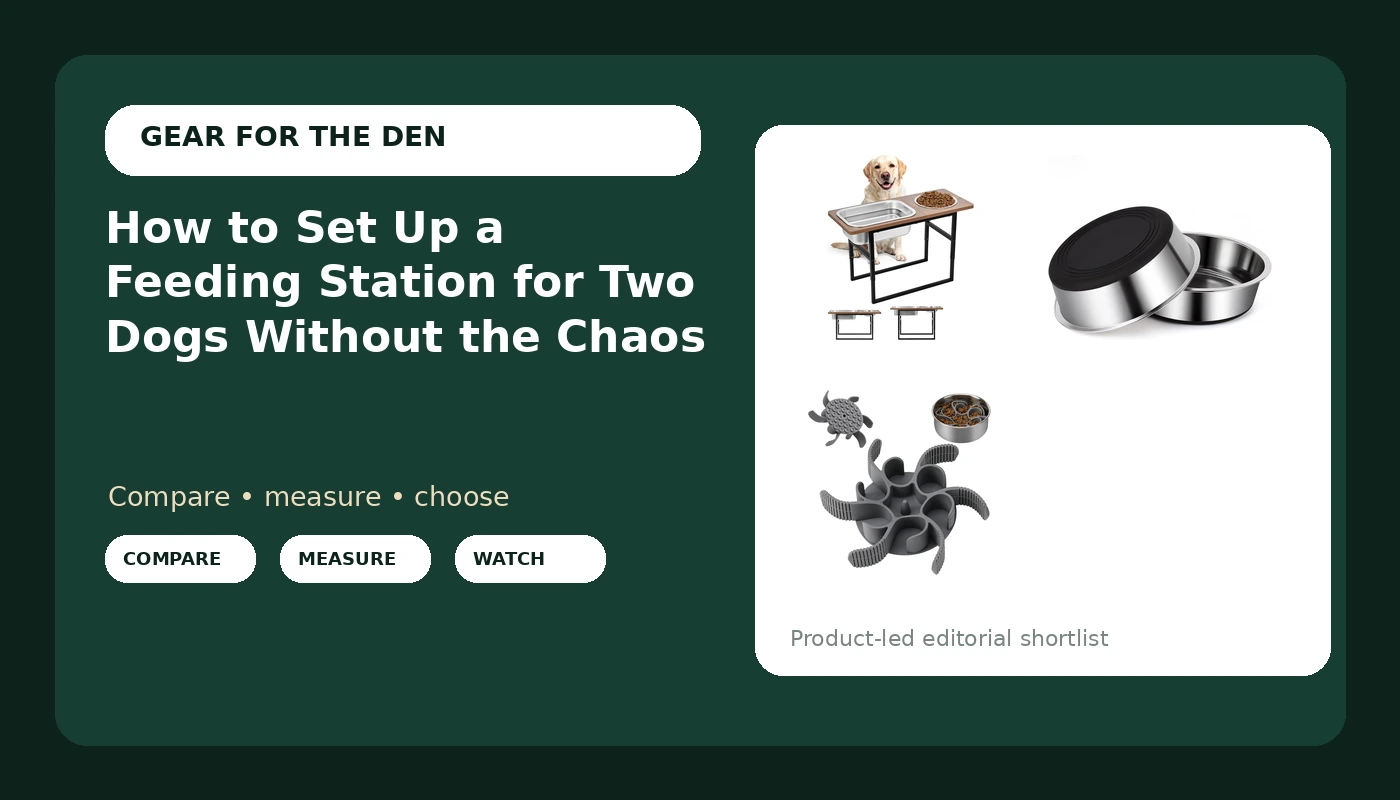
Our pick: Elevated Dog Bowls for Large and X-Large Breed, 2 Stainless Steel Bowls
Our pick
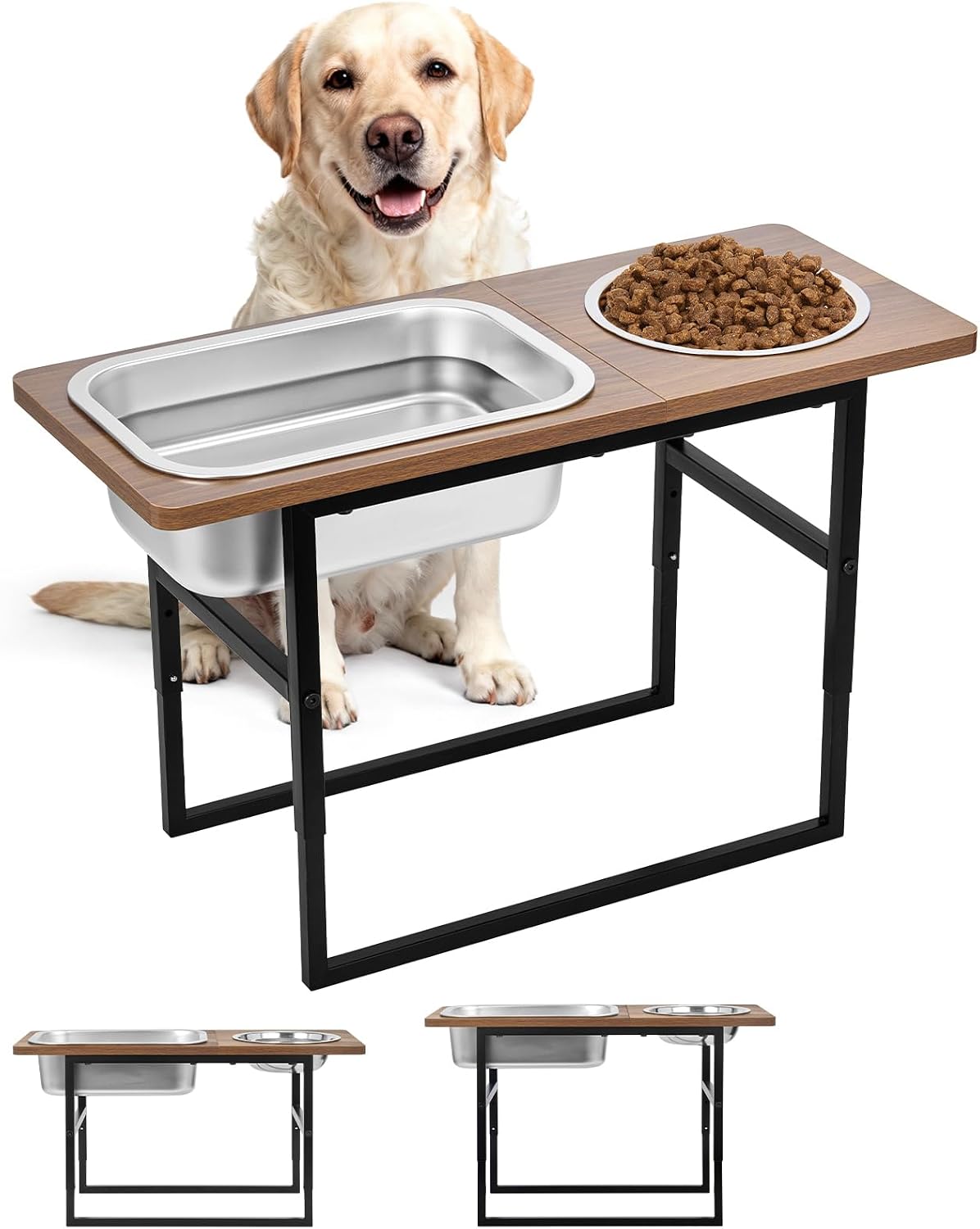
Elevated Dog Bowls for Large and X-Large Breed, 2 Stainless Steel Bowls
Check current Amazon price. This is the piece that does the most work for a big dog. Two stainless steel bowls in a raised stand means feeding height stops being a compromise, and for a large or extra large breed that is the whole point. A dog that eats from a raised bowl swallows less air, and less air means fewer of the 2 a.m. stomach noises that wake the whole house.
Two bowls in one stand also solves the fast eater problem in a specific way: you can put food in one bowl and water in the other, or split a meal across both bowls so the dog shifts its weight and pauses between bites. The stainless steel surfaces wipe clean and the bowls lift out for the dishwasher, which matters more than it sounds when you are doing this twice a day.
Flaws but not dealbreakers: A shared stand means both bowls sit at the same feeding height, so it is a poor fit for a household with one Great Dane and one dachshund. Buy this for the big dog and set the small dog's bowl on the floor or on a separate low riser.
Budget pick: Dog Bowls, Food Grade Stainless Steel for Food and Water, 2-Pack, 3 Cups
Budget pick
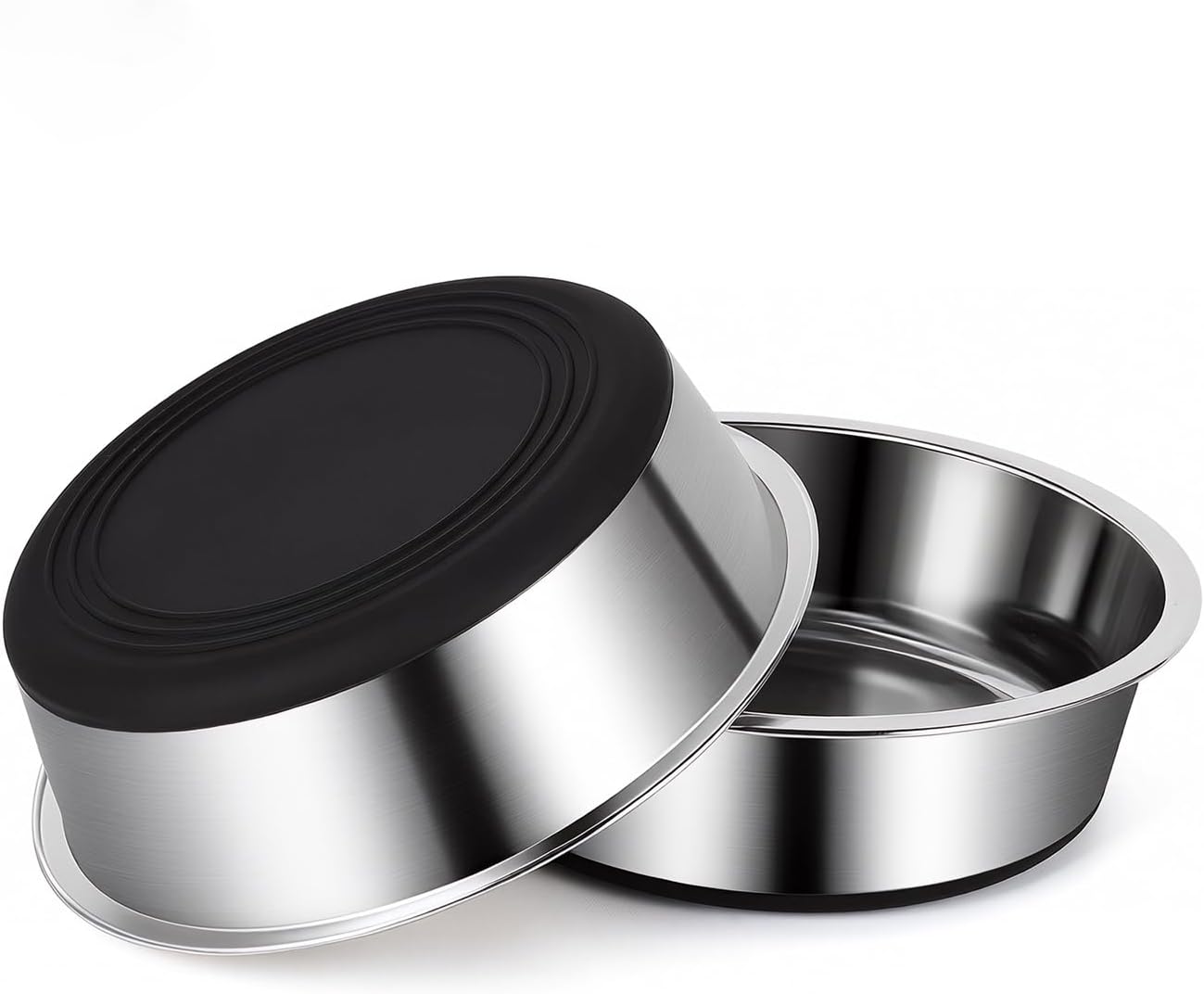
Dog Bowls, Food Grade Stainless Steel for Food and Water, 2-Pack, 3 Cups
Check current Amazon price. If you want the simplest possible answer to two dogs and two bowls, this is it. A 3 cup bowl capacity suits a medium dog well, and having two identical bowls makes the stations visually symmetrical, which sounds fussy until you remember that a dog reading body language does not care about your decor scheme, only about who is closest to which bowl.
The construction is food grade stainless steel and dishwasher safe, and the bowls are light enough to carry between the kitchen and the crate area. For a two-dog household where neither dog is enormous, a pair of these plus a non slip base or a rubber mat under each bowl covers most of the setup.
Flaws but not dealbreakers: Three cups is a real limit. A 90 pound dog eating a full meal will finish this bowl and look at you for more. Measure your dog's actual portion before you commit, and size up if you are anywhere near the rim.
Add-on pick: Dog Slow Feeder Bowls Silicone Spiral Pet Food Feeder Insert to Slow Eating
Add-on pick
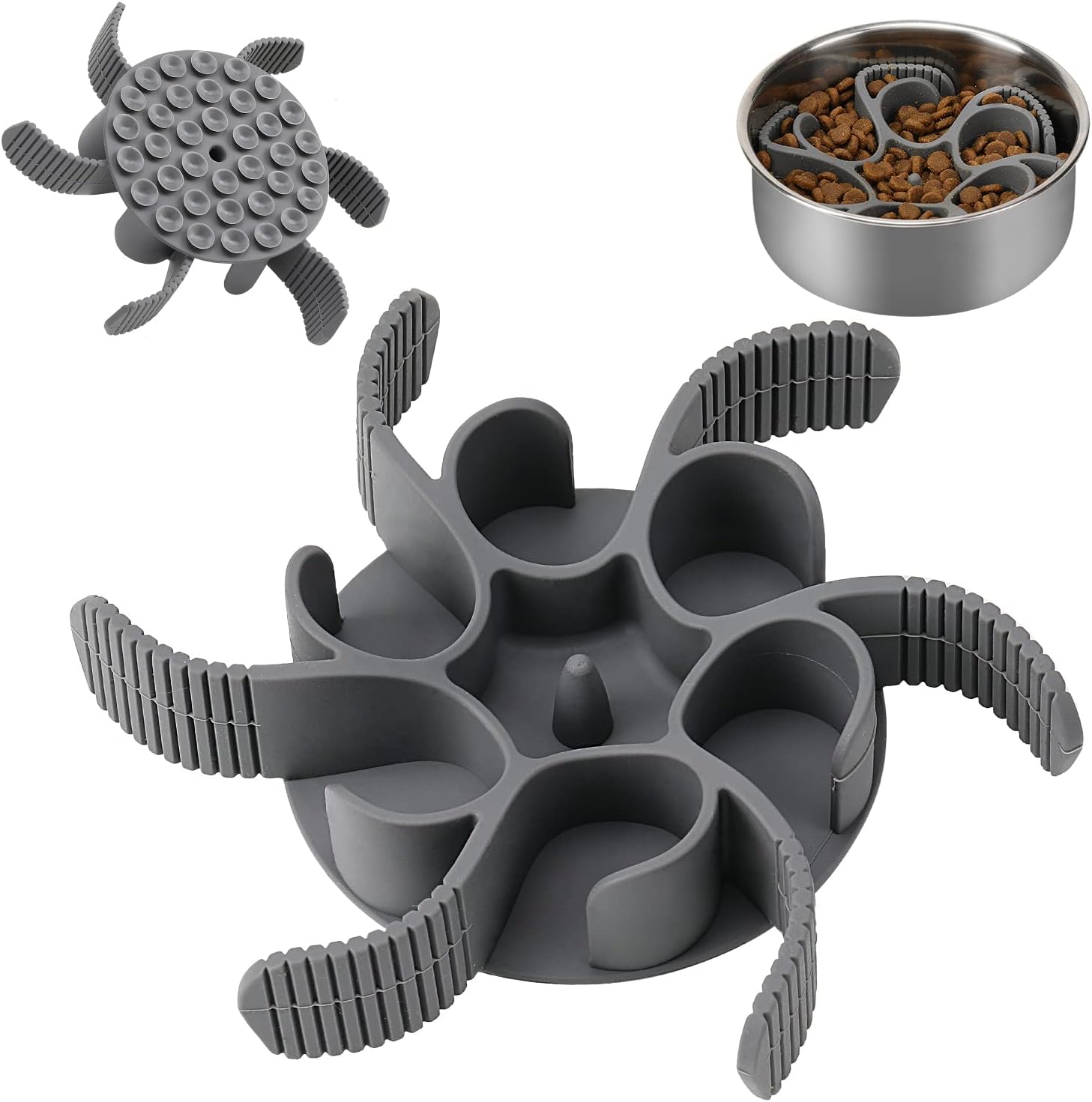
Dog Slow Feeder Bowls Silicone Spiral Pet Food Feeder Insert to Slow Eating
Check current Amazon price. This is the cheapest fix in the article and the one I would buy first if one of your dogs inhales a meal in ninety seconds. The spiral slow feed ridges force the dog to work around a pattern instead of hoovering a flat surface, and the silicone insert drops into a standard bowl rather than making you buy a whole new feeder.
It also gives you a fair way to stagger two dogs. Put the slow feeder in the fast dog's bowl, put a plain bowl down for the grazer at the same moment, and both dogs start eating together without one finishing and then hovering. That single move removes most of the mealtime tension in a two-dog house.
Flaws but not dealbreakers: Some dogs learn to flip a silicone insert straight out of the bowl, and a determined chewer will test the edges. It is also not a puzzle toy. It slows eating, it does not entertain a bored dog for an hour.
The actual feeding station workflow
This is the part that matters. A feeding station setup for two dogs is really two separate stations that happen to share a room, and the gear is the easy half. Learning how to set up a feeding station for two dogs is mostly about the order you do things in.
Step one: Pick the room and the two spots. Choose a room with a hard, washable floor if you have one, because two dogs eating means two water splashes and a fair amount of kibble on the ground. Then pick two spots that are not in a doorway and not on the path between the back door and the couch. Traffic through a feeding station starts more squabbles than the food itself.
Step two: Set the distance before you set the bowls. Measure the space between the two spots. Six to ten feet is the range that works for most pairs, and more is better if either dog has ever guarded food. If your kitchen will not give you that, use a baby gate or a closed door and feed one dog on each side. Distance beats discipline every time.
Step three: Match feeding height to the dog. For a large or extra large breed, the bowl rim should land somewhere between the lower chest and the shoulder. Too low and the dog crouches and gulps. Too high and it has to reach upward, which is worse. This is the single biggest comfort upgrade available for a big dog, and it is why an elevated stand exists.
Step four: Size the bowl capacity to the meal. Measure what each dog actually eats in one sitting, then buy a bowl that holds it with a little room to spare. A bowl filled to the rim invites spilling and competition. A bowl that is barely half full looks like a snack to a dog that is already anxious about food.
Step five: Build the water station separately. Do not put the shared water bowl between the two food bowls. Water capacity matters here, especially with two large dogs, and a bowl that runs dry by afternoon just teaches dogs to crowd the kitchen. Put water somewhere neutral, off the eating line, and refill it on a schedule rather than when it looks low.
Step six: Add slow feed ridges for the fast dog. If one dog finishes in a minute and the other takes fifteen, the fast dog is the one who needs an insert. This is not about manners. A dog that bolts its food swallows air, and air is what turns into bloat risk and midnight pacing. Slowing the fast dog also keeps both stations on a similar clock.
Step seven: Anchor everything with a non slip base. A bowl that slides across tile is a bowl a dog chases, and a dog that chases its bowl is not eating calmly. A rubber mat, a non slip base, or a stand with grippy feet under each station does more for mealtime peace than any training cue you can repeat.
Step eight: Run the same routine for two weeks. Feed at the same times, in the same order, in the same spots. Pick up the bowls when the meal is done, wipe the mats, and run the stainless steel through the dishwasher every few days. When you set up a feeding station for two dogs, this step decides whether the other seven stick.
The competition and why it lost
A few things I considered and left off the list.
Countertop water fountains with a filter cartridge were the first thing I wanted to include. Two dogs drink a lot, and moving water keeps a bowl interesting. What killed it was maintenance. A filter cartridge needs replacing on a schedule, and a fountain that gets skipped for a week is worse than a plain bowl you rinse in ten seconds. A reservoir with an airtight seal helps, but the cleaning routine is the deciding factor for me.
Gravity waterers lost for a related reason. They hold serious water capacity, which is genuinely useful in a multi-dog house, but the ones I looked at are awkward to scrub, and a two-dog kitchen already has enough plastic to wash.
Puzzle feeders as a full meal replacement also lost. They are great enrichment and a terrible dinner. A dog that has to solve a puzzle for every kibble eats slowly but also eats anxiously, and I want mealtime to be boring and predictable, not a job.
A second elevated stand for the second dog is the one upgrade I would genuinely consider if both of your dogs are large. Two stands mean two feeding heights, which fixes the mismatched pair problem a shared stand cannot.
What this all costs
Nothing in this article is a big purchase, and that is the point. The slow feeder insert is the smallest spend of the three and the one that changes the most behavior for the money. The two-bowl stainless steel set sits in the middle and is the piece I would buy first if both dogs are medium sized. The elevated stand is the largest of the three and earns its keep only if you have a large or extra large breed.
Check current Amazon price on each listing before you buy, because these move around. What does not move is the cost of a bad feeding station: a dog that gulps air, a dog that guards, and a kitchen floor that looks like a crime scene twice a day. There is no single ideal feeding station setup for two dogs, because the right one depends on the size gap between your dogs and how much floor you are willing to give up.
If you want to go deeper on the big-dog side, my notes on feeding setups for large and senior dogs cover heights and portion sizes in more detail.
Two dogs can share a kitchen without sharing a meal. Set the distance, match the height, slow the fast one down, and keep the water somewhere else. That is the whole trick, and it takes one afternoon.