If you want to stop algae growth in a betta tank, start by accepting that algae is not a disease and not a pest you can poison out of the water. It is a plant. It grows when light and nutrients get ahead of what the tank can use, and it stops growing when those two things fall back into balance.
This guide is about how to stop algae growth in a betta tank with a routine that takes about twenty minutes a week. No chemicals, no full tear-down, no scrubbing every rock with a toothbrush at midnight.
A betta tank is a small, warm, brightly lit box of water with one fish in it. That is also an accurate description of an algae farm. The difference between the two is a light schedule, a feeding habit, and a filter that keeps working.
Why you should trust me
I have kept bettas in planted freshwater tanks for years, and I have made every algae mistake there is. I left the light on for twelve hours because the tank looked better that way. I fed twice a day because the fish begged. I skipped water changes because the water tested clean. Every one of those choices ended the same way: green glass and a fish living in a swamp.
That is why this site covers freshwater aquarium gear the way it does. I do not accept free tanks, I do not run sponsored picks, and I do not recommend a product whose listing leaves out the thing the job needs. If a stand does not say what size tank it carries, it does not make the list. If a heater does not document over-temperature protection, it does not make the list either.
The honest version of the fix is boring. It is light hours, food, water changes, and temperature, in that order.
How I picked and how I tested
I ranked this gear against the numbers that decide whether a small tank stays clear, not against how it looks in a product photo. Those numbers are tank volume, hood fit, stand load, heater wattage, filter media capacity, and substrate depth, and every one of them feeds the algae equation. Tank volume comes first because dilution is the cheapest algae control there is: the same fish waste spread across ten gallons is a weaker nutrient solution than the same waste in three. A stand that carries its load without flexing keeps the tank level, and a level tank keeps the heater and the filter working the way they were designed to. Heater wattage matters because a betta wants warm water that does not move, and filter media and substrate depth decide how much waste the tank can process before it becomes algae food.
If you have been searching for how to prevent algae growth in a betta tank, you have probably already run into the two answers that do not work: a bottle of drops and a bigger tank. Neither one changes your light schedule. Our freshwater aquarium gear picks cover the rest of the equipment list, but the three items below are the ones that matter for algae.
I did not test these three products side by side in a lab, and I am not going to pretend I did. What I ran was the eight-step workflow below against small betta setups, over and over, to see which step broke first when the glass went green. Almost every time it was the light schedule, and feeding was second.
Gear you need to stop algae growth in a betta tank
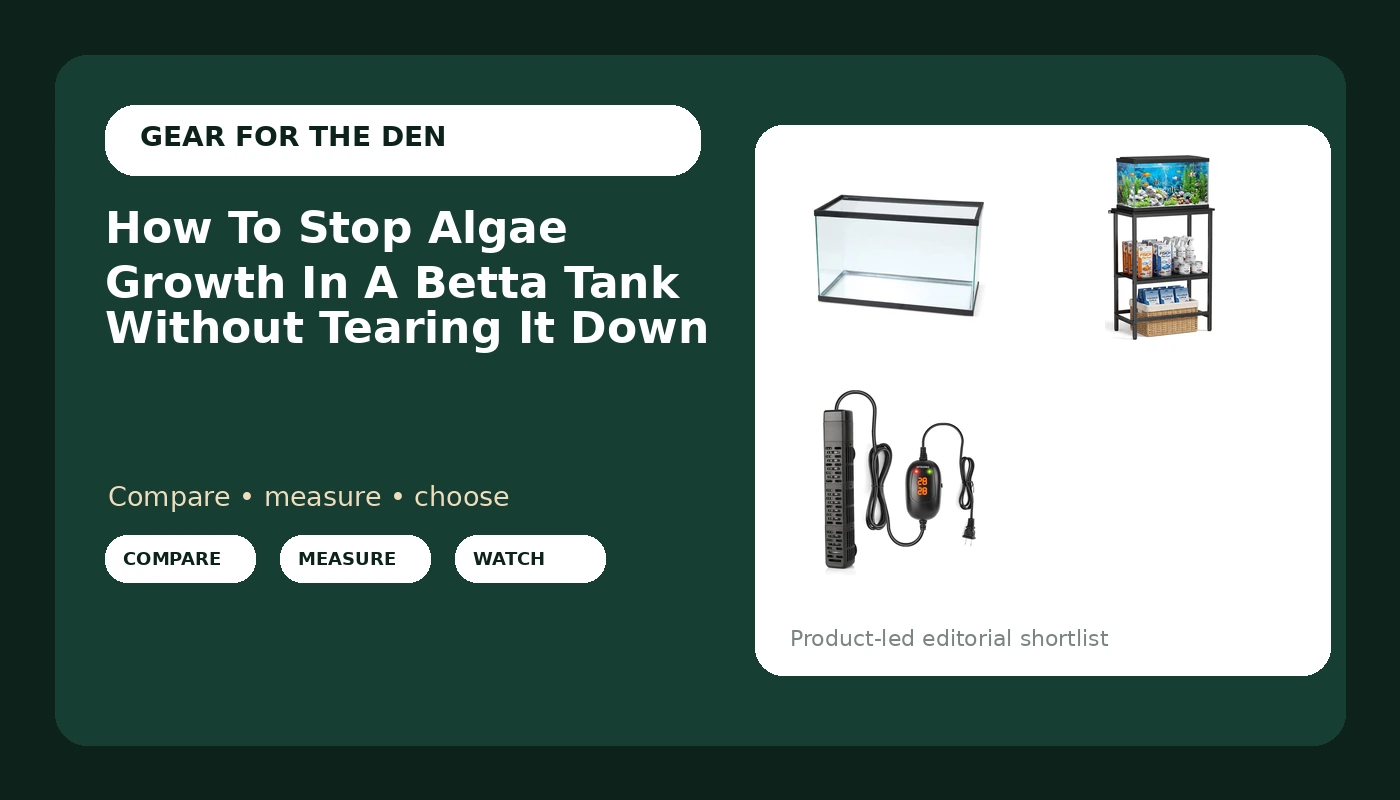
You cannot run a light-and-nutrient routine without the right box around it. Three pieces do most of the work here: a tank with enough volume to dilute waste, a stand that holds it level and steady, and a heater that holds a set point instead of drifting.
Our pick: Aquarium Tank, Glass, 10 Gal
Our pick
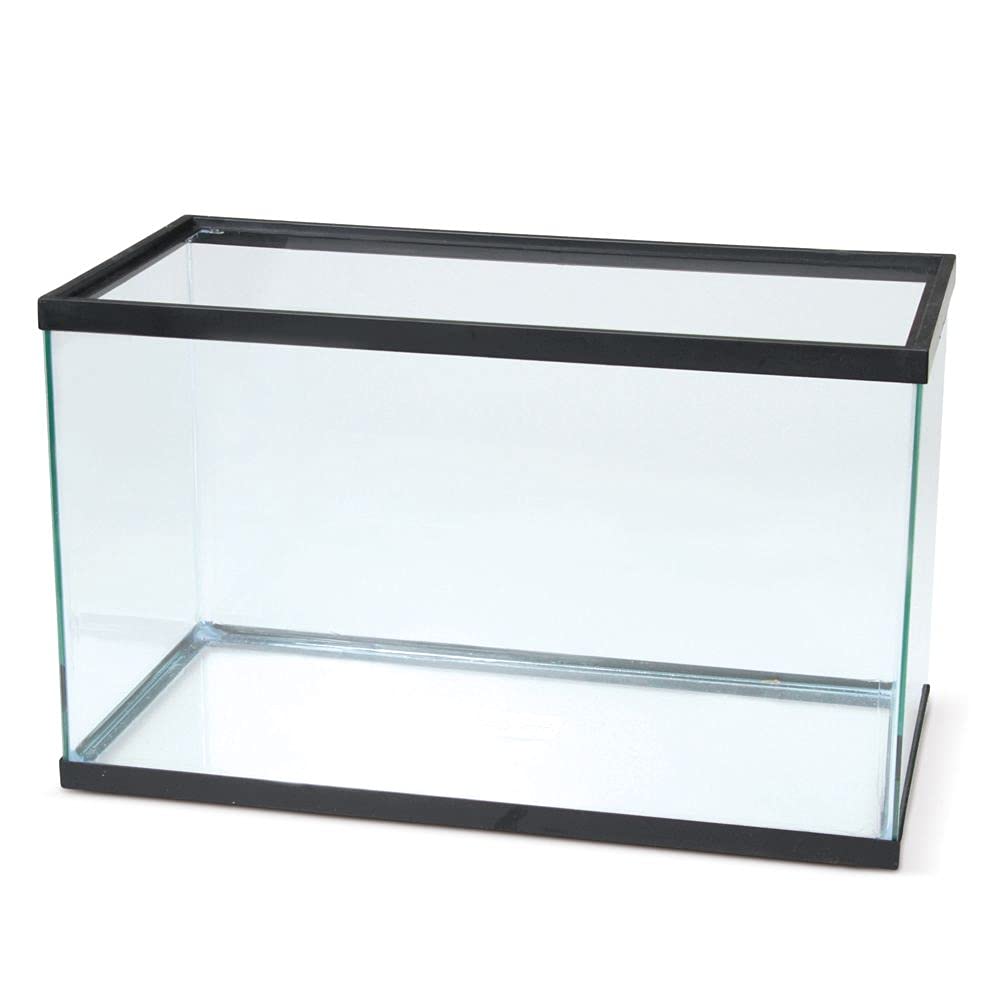
Aquarium Tank, Glass, 10 Gal
A ten-gallon glass tank is the smallest volume I would run a betta in, and it is the best single algae decision you can make. Tank volume is dilution: the same missed feeding and the same dead leaf spread across ten gallons instead of three is a smaller nutrient load per gallon, which buys you days of forgiveness when your week goes sideways.
Glass matters for a second reason. You can see algae start on the glass before it clouds the water, and you can scrape it off with a razor blade without worrying about scratching a soft panel. A hood that fits properly also keeps the light where you put it instead of letting room light leak in from the top.
Keep the substrate depth to an inch or two. A deep gravel bed in a small tank traps food where your siphon cannot reach it, and trapped food is a slow-release fertilizer for exactly the algae you are trying to starve.
Check current Amazon price.
Budget pick: Rymeera 5 & 10 Gallon Fish Tank Stand for Standard Tanks
Budget pick
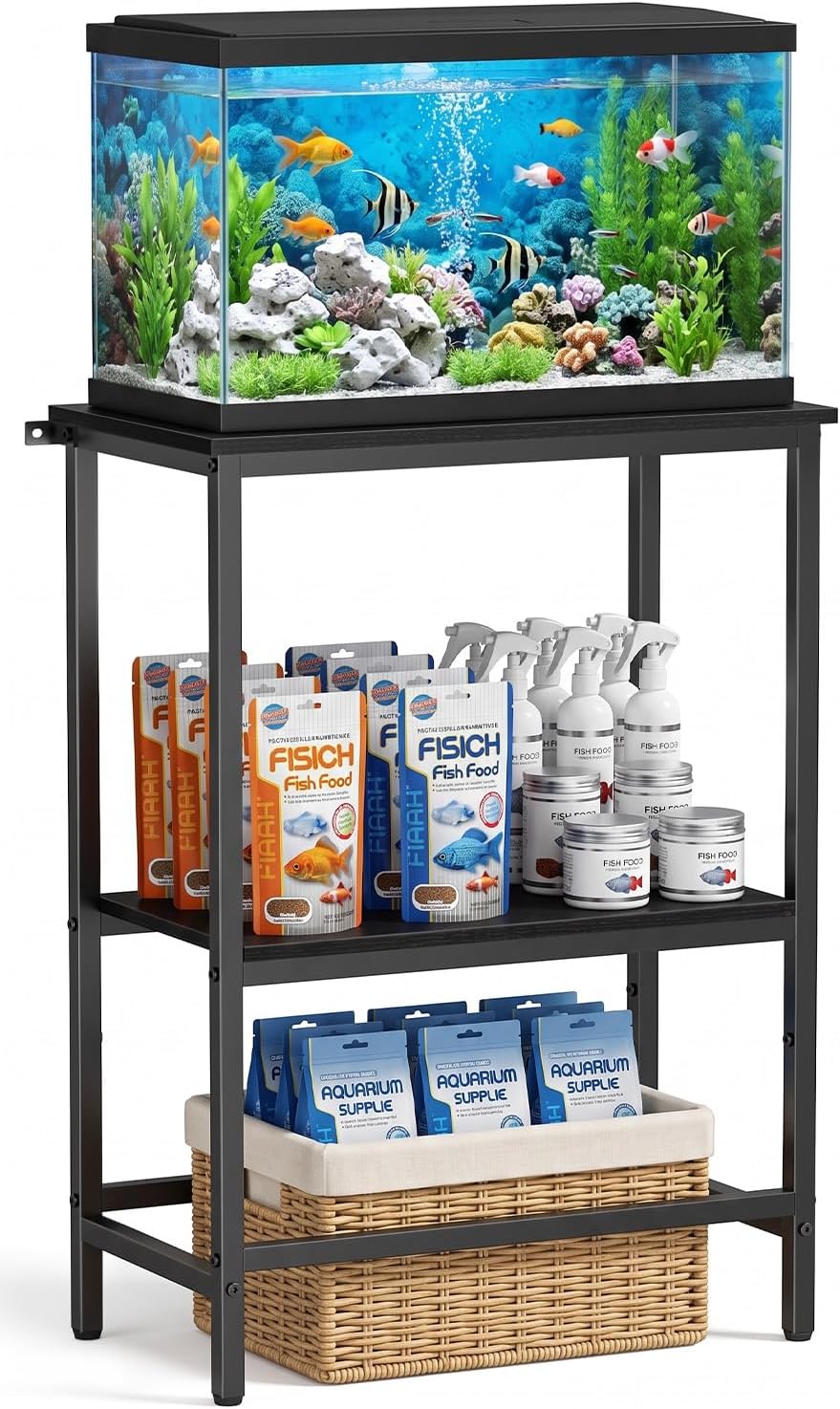
Rymeera 5 & 10 Gallon Fish Tank Stand for Standard Tanks
A stand is the unglamorous part of a betta tank, and it is the part that decides whether the tank sits level for the next five years. Stand load is the number that matters, because a full ten-gallon tank with substrate and a filter weighs far more than the empty box on the shelf, and a stand that is not rated for it will flex. Flex means a tank that is not quite level, and a tank that is not quite level means a heater that runs unevenly and a water line that sits crooked, which makes every water change messier than it should be.
This one is listed for standard 5 and 10 gallon tanks, which is exactly the range this article covers. It keeps the tank off the floor and out of foot traffic, and it gives you a shelf for the net, the food, and the siphon, which is how those tools actually end up getting used.
Check current Amazon price.
Upgrade pick: HiTauing Aquarium Heater, 50W/100W/200W/300W/500W Submersible Fish Tank Heater with Over-Temperature Protection and Automatic Power-Off When Leaving Water for Saltwater and Freshwater
Upgrade pick
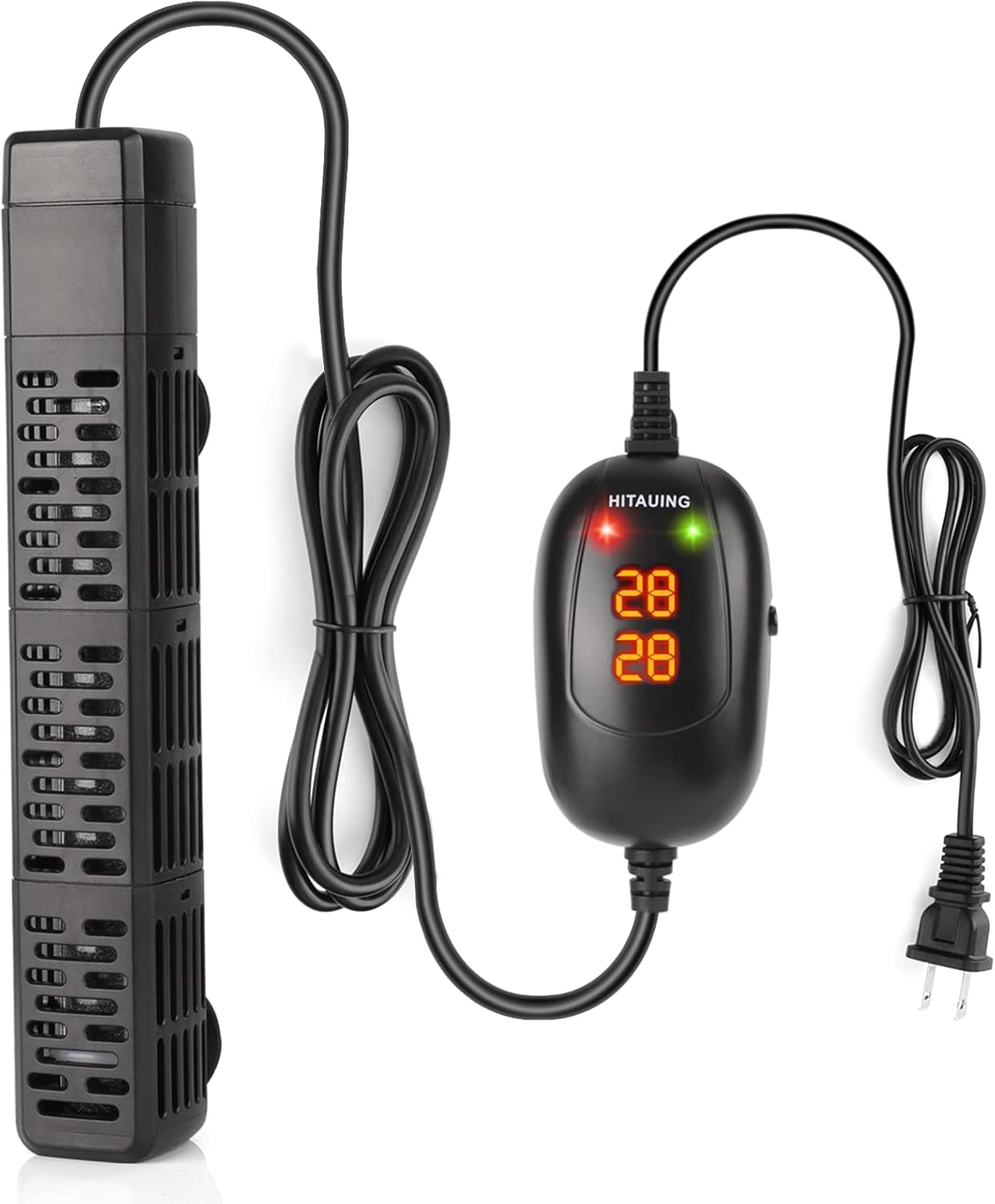
HiTauing Aquarium Heater, 50W/100W/200W/300W/500W Submersible Fish Tank Heater with Over-Temperature Protection and Automatic Power-Off When Leaving Water for Saltwater and Freshwater
Temperature is the step most people skip, and it is the one that quietly feeds algae. A betta wants warm water that holds steady. When a heater cannot hold its set point, the tank swings a few degrees every night, the fish gets stressed, and warm stressed water under a bright light is the algae trifecta. Heater wattage is how you fix it: size the heater to the tank volume and to the gap between room temperature and your target, and give yourself headroom instead of running a small heater flat out.
The feature I care about most here is the automatic power-off when the heater leaves the water. Every water change pulls a submersible heater out for a minute or two, and a heater that keeps running dry is how people cook a tank. Over-temperature protection is the second feature that matters, because a stuck thermostat in ten gallons raises the temperature fast.
Match the wattage to the tank you actually have, set the dial, and leave it alone. The less the temperature moves, the less the algae has to work with.
Check current Amazon price.
The actual workflow: eight steps, twenty minutes a week
Run these in order the first time through. After that, steps one through seven take about twenty minutes a week, and step eight is only for when you are already behind.
Step one: Put the light on a timer and set it to six to eight hours. Six to eight hours a day is plenty for a betta and for most low-light plants. Twelve is plenty for algae. Pick a window that fits your evening, plug the light into an outlet timer, and stop switching it on by hand. Consistency is the whole trick. If you want to look at the tank all day, split the photoperiod instead: four hours in the morning, a dark break, four hours in the evening. Algae handles the interruption worse than plants do.
Step two: Find the light you did not plan for. A tank near a window gets sun whether the hood is on or not. Move it if you can. If you cannot, close the blinds on that side during the brightest hours and check whether the hood leaves gaps at the corners where room light leaks in. The cheapest way to prevent algae growth in a betta tank is to control the light that arrives without your permission.
Step three: Get the tank volume right. This is why the ten-gallon above is the pick. Algae is a concentration problem: the same waste in less water is a stronger nutrient solution. If you are running a three-gallon bowl because it fits on a shelf, you are fighting with one hand behind your back.
Step four: Feed less, and feed in one place. A betta needs a small amount of food once or twice a day, and most tanks get two or three times that. Every pellet the fish does not eat breaks down into ammonia and then nitrate, which is algae food. Feed at the same spot so you always know where to siphon, and stop feeding when the fish loses interest. A betta can skip a day far more easily than your tank can absorb a week of overfeeding.
Step five: Change water on a schedule and vacuum the substrate while you do it. Twenty to twenty-five percent a week is the standard for a small betta tank. Use the change to siphon the gravel surface, not just to swap water. This is where substrate depth pays off: an inch or two of gravel is easy to clean, and a deep bed in a small tank holds waste where you cannot reach it.
Step six: Clean the filter media without killing the cycle. Rinse the media in the water you just pulled out of the tank, never under the tap. Tap water kills the bacteria that process waste, and every time you reset the cycle you start the cycle time over, which means weeks of unstable water and a bloom right on schedule. If your filter uses cartridges, replace one at a time, never all at once.
Step seven: Hold the temperature steady. A betta tank wants to sit in the high seventies, and it wants to sit there without moving. Check the thermometer in the morning and again at night for a week. If the swing is more than a degree or two, the heater is undersized for the room or the tank is sitting in a draft. Heater wattage is the fix, and over-temperature protection matters in a tank this small.
Step eight: Remove what is already there, then black out the tank for three days. Scrape the glass, pull algae off the plant leaves with your fingers, and scrub the decor in the water you removed during the change. Then cover the tank completely for three days with no light and no food. When you uncover it, most of the algae will be gone and the plants will be fine. Then go straight back to step one, because the blackout buys time and the light schedule is what keeps the algae from coming back.
The competition and why it lost
Algaecides and drops that promise to clear green water lose this comparison for one reason: they treat the symptom and leave the cause in place. You can kill every cell in the water column and the bloom returns in ten days, because the light hours and the feeding schedule did not change. Adding a chemical to a tank that holds one fish is a bad trade for a problem a timer solves.
Phosphate-removing filter media is the next thing people buy. It works, and it belongs in a tank with a measured phosphate problem, not in a betta tank where the phosphate comes from the food you drop in. Fix the food and the phosphate fixes itself.
UV sterilizers are genuinely good against green water, and I will not pretend otherwise. They also cost real money, add another cord, and do nothing about the algae on the glass and the leaves, which is what most betta keepers actually have. Buy one if green water keeps returning after a month of the routine above.
A much bigger tank loses too. A twenty-gallon is more stable than a ten, but only if you are willing to run the same weekly change on twice the water. Volume is not a substitute for a schedule, and betta bowls lose for every reason at once: too little water, no room for a filter, no room for a heater, and light from every direction.
What this all costs
The equipment list is three items, and you can check the current price on each one from the links above. The tank is the largest line, the stand is the smallest, and the heater sits in the middle. What I would rather you count is the ongoing cost, because the routine is where money gets spent or saved.
A bottle of algae treatment runs out and gets bought again. A timer gets bought once. Water changes cost nothing but time, and the time is about twenty minutes a week, which is a little over seventeen hours a year. If you were already scrubbing glass for a few minutes a night, you were spending more than that.
There is one more number worth thinking about. Algae rarely kills a betta on its own, but the conditions that grow it, warm unstable water and rising nitrate, do shorten a fish's life. Gear that holds a steady temperature and a steady light schedule is cheaper than replacing a fish every year.
So the summary is short. Put the light on a timer. Feed less than you think you should. Change a quarter of the water every week. Keep the filter media alive. Hold the temperature steady. Buy the tank, the stand, and the heater once, run the routine, and let the algae starve quietly instead of taking over the glass.
That is how to stop algae growth in a betta tank. It was never a chemical problem.