If you are searching for how to stop terrarium odor, start with the enclosure, not the air freshener. The smell is a signal. It usually means waste is sitting in wet substrate, the basking temperature is too low for proper digestion, or the UVB output has faded past the point where your reptile can use calcium and process food efficiently. You can stop terrarium odor at the source by fixing heat, light, and cleanup in that order.
A healthy terrarium smells like soil after rain, not like ammonia. If the odor hits you when you walk into the room, the problem is not cosmetic. It is biological. Bacteria and fungi bloom where waste stays wet and warm. Your job is to make the enclosure a worse place for that bloom and a better place for your reptile.
This guide is about the gear and the routine. The gear list is short because you do not need much. You need a fixture that holds a basking bulb, a fixture that can run UVB on its own schedule, and a UVB bulb that actually emits the spectrum your species needs. Then you need a workflow. If you want to know how to prevent terrarium odor, the routine matters as much as the gear. For the broader setup context, see our reptile tank setup guide.
Why you should trust me
I write the reptile gear coverage here at Gear for the Den. I spend my time reading care sheets, comparing fixture specs, and talking to keepers about what actually cuts odor in a glass box. I do not claim to have run a laboratory test on every bulb in this guide. What I can tell you is which specs matter for odor control and which marketing words do not.
I have made the mistakes. I have watched a friend's bearded dragon tank go sour because the basking spot was too cool. I have seen a leopard gecko setup smell like a swamp because the humidity range was wrong and the substrate depth was too deep for the airflow. Those are the problems this article solves. I am not selling you a miracle spray. I am telling you where the smell comes from.
How I picked and how I tested
I picked the gear below by looking at what a keeper actually needs to run a dry, warm, clean terrarium. I did not bench-test these units with a spectrometer. My test is a checklist. Does the fixture hold a real basking bulb without melting? Can it run a heat bulb and a UVB bulb on separate timers? Does the dome depth concentrate heat so the basking temperature is stable? Is the socket ceramic, not plastic? Can you mount it on a screen top without the whole thing sagging?
I compared socket type, dome depth, wattage ceiling, mounting options, and whether the fixture can run a heat bulb and a UVB bulb on separate schedules. Then I checked the listing details against common keeper setups for bearded dragons, leopard geckos, and tropical species. I looked at tank size, basking temperature, uvb output, thermostat range, substrate depth, hide size, humidity range, and heat mat wattage. Those are the numbers that decide whether a terrarium smells like a forest floor or a locker room.
The gear below is not a complete habitat. It is the lighting and heat layer. If your tank already has a proper thermostat and a clean routine, these fixtures will not fix a bad setup on their own. But if your heat and UVB are the weak link, they are the first place to spend.
The gear that helps stop terrarium odor
You cannot stop terrarium odor with a stronger filter alone. You have to fix the heat and light that drive digestion, then keep the substrate dry enough that bacteria cannot take over. These three pieces cover the basking side, the dual-fixture side, and the UVB side.
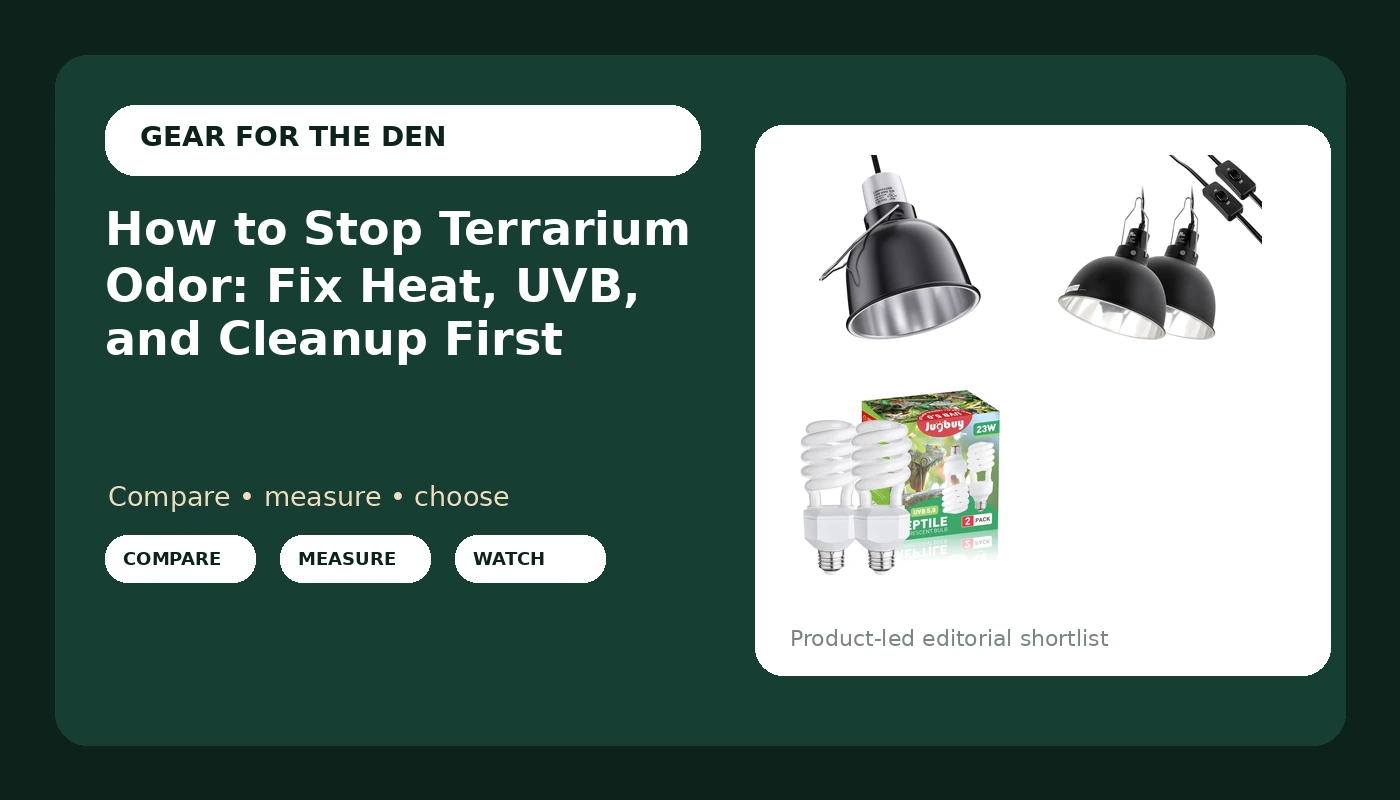
The basking fixture: Reptile Light Fixture, 5.5'' Dome Lamp with Ceramic Socket, Reptile Heat Lamp Fixture for Heat Emitter & Basking Bulbs, for Bearded Dragon, Snake, Chameleon, Turtle & Terrarium Tank Accessories
The basking fixture
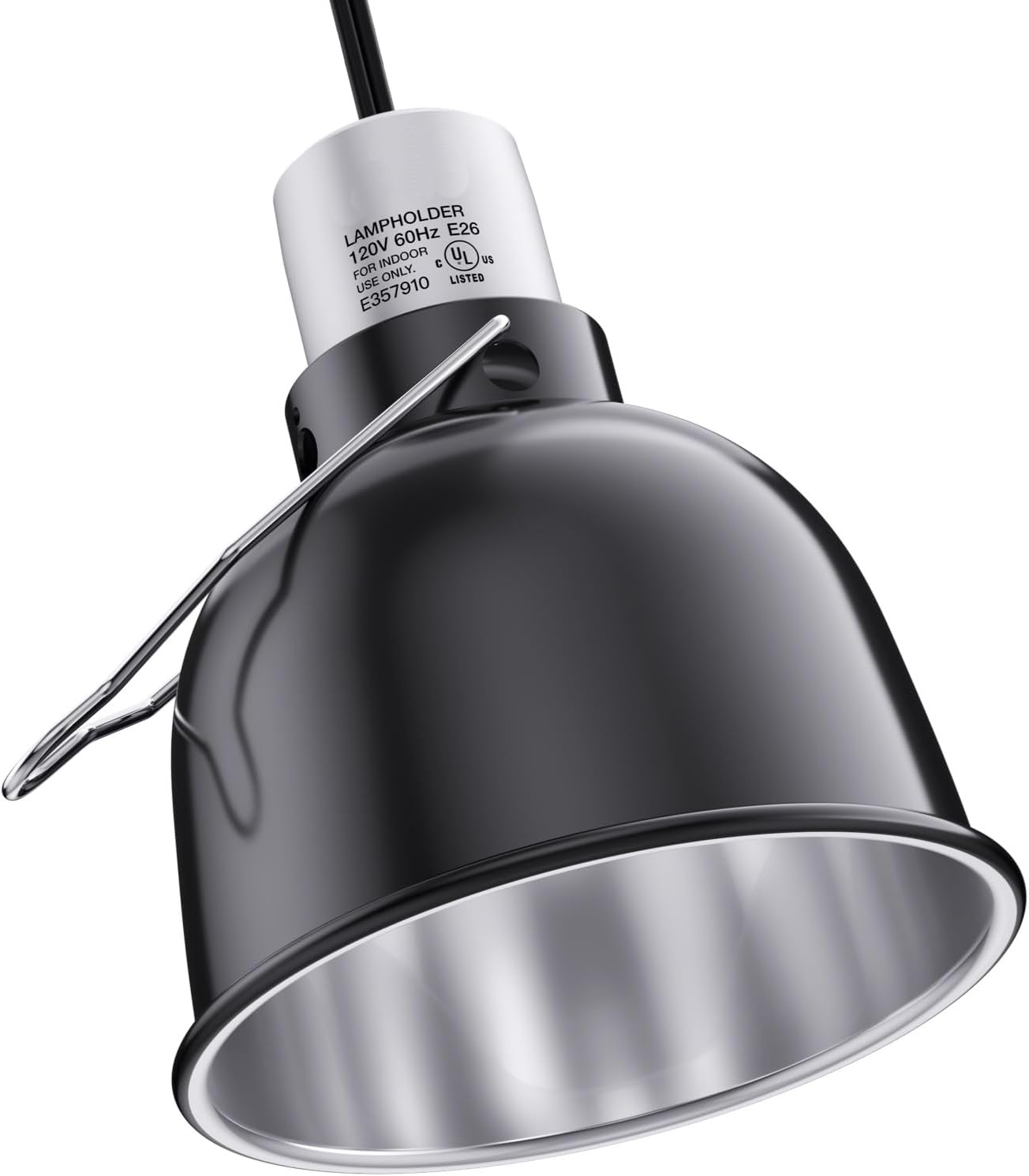
Reptile Light Fixture, 5.5'' Dome Lamp with Ceramic Socket, Reptile Heat Lamp Fixture for Heat Emitter & Basking Bulbs, for Bearded Dragon, Snake, Chameleon, Turtle & Terrarium Tank Accessories
This is the simple single-dome fixture for one basking bulb or one heat emitter. The ceramic socket is the part that matters. Plastic sockets get brittle when you run a high-wattage basking bulb for most of the day. A ceramic socket takes the heat and keeps the contact solid, which means your basking temperature does not drift because the bulb is loose. Check current Amazon price.
The 5.5-inch dome is compact. It concentrates heat into a smaller circle, which is useful in a small tank or a tall screen-top enclosure where you need a hot spot without baking the whole cage. Pair it with a thermostat or a dimmer, because a small dome can push a basking surface past the safe range fast. That thermostat range is what keeps the smell down: a reptile that gets the right basking temperature for its species digests its food fully, and fully digested food produces less odor when it comes out.
Flaws but not dealbreakers: The clamp and hook are basic. If you have a cat that walks on the screen top, secure the cord and use a stand or a bracket. This is a one-bulb fixture, so if you need heat and UVB at the same time, you will need a second dome or the two-pack below.
Anyone with a single basking bulb and a small to mid-size tank will get the job done here.
The dual-fixture setup: CAVACHEW 2 Pack Reptile Light Fixture, 8.5in Deep Dome Reptile Lamp Fixture, Optical Reflection Cover, Separate Switch & Hook, Terrarium Light Fixture for Reptile Heat Basking UVB Bulbs, 150W, Black
The dual-fixture setup
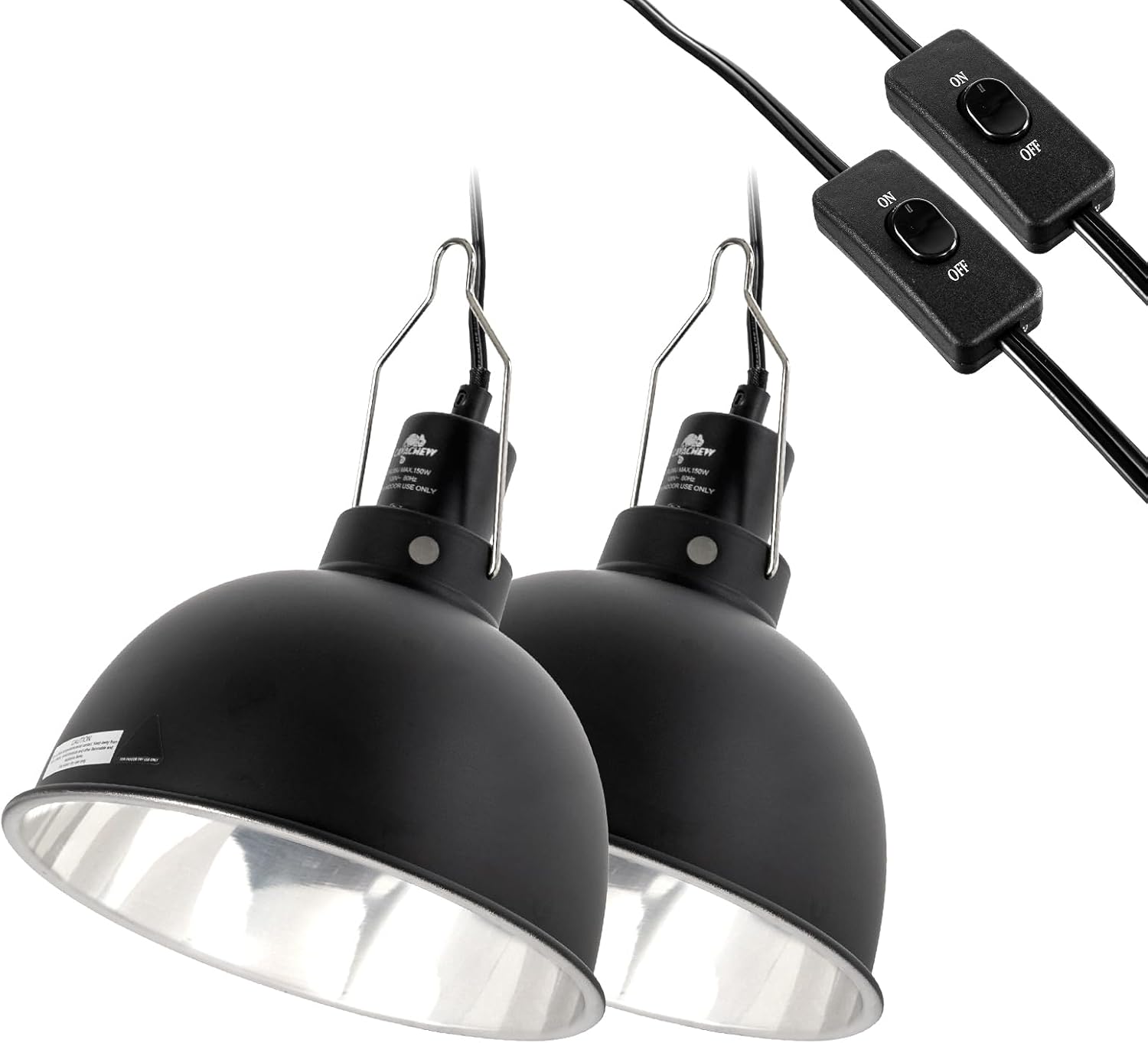
CAVACHEW 2 Pack Reptile Light Fixture, 8.5in Deep Dome Reptile Lamp Fixture, Optical Reflection Cover, Separate Switch & Hook, Terrarium Light Fixture for Reptile Heat Basking UVB Bulbs, 150W, Black
This two-pack is the better buy if you are running a heat bulb and a UVB bulb on separate schedules. Each fixture has its own switch, so you can turn the basking light off at night and leave the UVB on its daytime timer, or the other way around. The 8.5-inch deep dome has an optical reflection cover that pushes more of the light and heat down into the tank instead of out into the room. That matters for basking temperature and for uvb output, because a shallow dome wastes both.
The 150-watt ceiling gives you room for a real basking bulb or a ceramic heat emitter. The hooks let you hang the domes from a stand or a screen top. Check current Amazon price.
Flaws but not dealbreakers: Two fixtures mean two cords and two timers. Label them. If you plug the UVB into the heat channel, you will cook the bulb schedule and stress the animal. The deep domes are also wider than a 5.5-inch dome, so measure your screen top before you order. On a small tank, two 8.5-inch domes can cover most of the lid and trap humidity, which is the opposite of what you want if you are trying to prevent terrarium odor.
Anyone running a bearded dragon, a turtle, or a tropical setup that needs heat and UVB at the same time should start here.
The UVB bulb: Jugbuy UVB Reptile Light Bulb 5.0, 23W UV Spiral Compact Florescent Terrarium Lamp Ideal for Tropical Reptiles Bearded Dragon Hermit Crab Turtle Leopard Gecko Tank Chameleons Iguanas Snake – 2 Pack
The UVB bulb
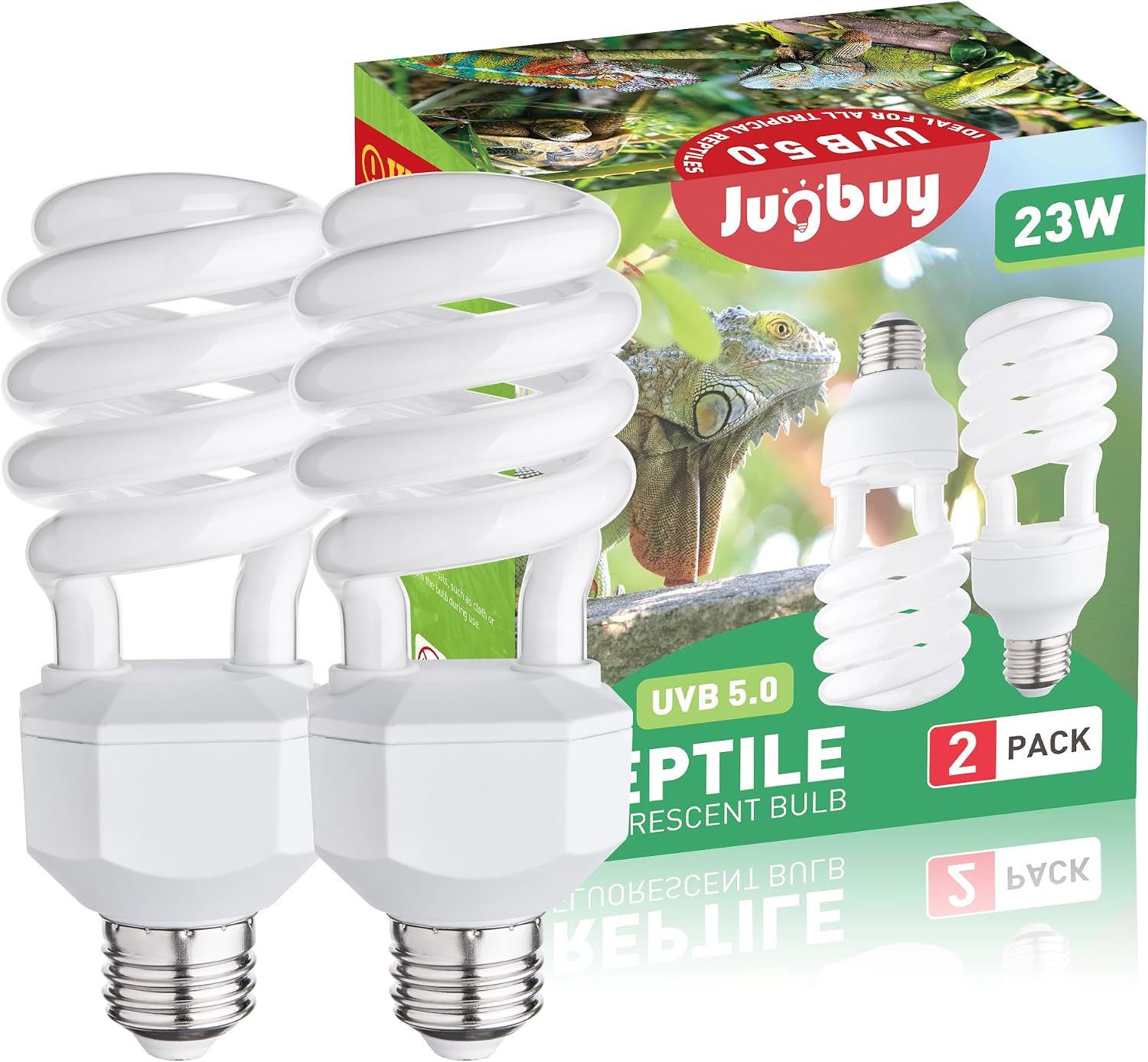
Jugbuy UVB Reptile Light Bulb 5.0, 23W UV Spiral Compact Florescent Terrarium Lamp Ideal for Tropical Reptiles Bearded Dragon Hermit Crab Turtle Leopard Gecko Tank Chameleons Iguanas Snake – 2 Pack
UVB does not directly make a tank smell better. It does something more important: it lets your reptile process calcium and regulate its metabolism. A reptile that cannot do that is a reptile that eats poorly, digests poorly, and produces waste that smells worse. The 5.0 rating on this compact fluorescent is the tropical and forest-species level, which fits bearded dragons, leopard geckos, turtles, and many chameleon and iguana setups. The 23-watt spiral fits a standard dome fixture. Check current Amazon price.
The two-pack matters because UVB output fades before the bulb burns out. You cannot see the fade with your eyes. You need to replace on a schedule, usually based on the fixture and the species. Having a spare means you actually swap it instead of waiting for a paycheck. Use this in the dual-fixture setup above so the UVB runs on its own timer, separate from the basking bulb.
Flaws but not dealbreakers: A compact coil does not spread UVB as evenly as a long tube. In a large tank, you may need two bulbs or a tube fixture to cover the whole basking zone. Mount it close enough to the basking spot to matter, but follow the fixture distance guidance. This is a UVB source, not a heat source. Do not expect it to raise your basking temperature.
Anyone who needs a replacement UVB bulb on a schedule and wants a spare on the shelf should grab the two-pack.
The actual workflow
Now the part you came for. This works on any terrarium, from a small leopard gecko tank to a large bearded dragon enclosure. The goal is to stop the smell at the source, not cover it up.
Step one: Find the source. Smell the substrate, the water bowl, the hide, and the area under the basking spot. Ammonia means urine and waste are sitting. A sour, swampy smell means wet substrate and poor airflow. A dead-feeder smell means a cricket died in a corner. Do not clean the whole tank before you find the source, or you will repeat the problem next week.
Step two: Check the basking temperature. Use a digital thermometer or an infrared temp gun on the actual basking surface, not the air. Check the basking temperature your species needs. A bearded dragon and a leopard gecko do not want the same number. If the surface is too cool, digestion slows, food sits in the gut, and the waste that comes out is softer and smellier. This is the single most common cause of terrarium odor.
Step three: Set the thermostat range. Plug the basking fixture into a thermostat or a dimmer. The thermostat range should match your species, not the room. Set the probe under the basking spot and aim for the range on your care sheet. For a heat mat, check the heat mat wattage and use a thermostat, because an unregulated heat mat can run dangerously hot. A stable basking temperature means stable digestion, and stable digestion means less odor.
Step four: Verify UVB output. UVB output drops over time. If your bulb is old, replace it even if it still glows. Use the 5.0 compact bulb for tropical species and the appropriate strength for desert species. Mount it over the basking zone so the animal gets UVB while it warms up. A reptile that cannot synthesize vitamin D3 properly will eat less, digest less, and produce more waste.
Step five: Fix the humidity range and substrate depth. Most odor problems are wet problems. Check the humidity range for your species. A tropical tank needs higher humidity, but the substrate should not be a swamp. Keep substrate depth appropriate for the species, and stir loose substrate weekly. If you pour water into the corner to raise humidity, do it in one corner, not across the whole floor.
Step six: Clean the water and feeders. Change the water bowl daily. Remove uneaten feeders as soon as you notice them. Dead crickets and soggy vegetables are a major hidden odor source. If you use a water feature, clean it weekly and check for biofilm. A clean water source also keeps your reptile drinking, which supports kidney function and reduces concentrated waste.
Step seven: Increase ventilation and respect tank size. Tank size matters more than most people think. A small tank with a big reptile concentrates waste and humidity. Use a screen top, not a solid lid, and leave at least part of the screen open. Do not cover the whole top with a towel to hold heat. If you need more heat, use a higher wattage bulb or a ceramic heat emitter with a thermostat, not a sealed lid. Good airflow dries the surface and slows bacterial growth.
Step eight: Build a cleanup schedule. Spot clean waste daily. Remove shed skin and dead plant matter weekly. Do a full substrate change on a regular schedule, depending on tank size and stock. Check under the hide and match the hide size to the animal, because waste collects in tight corners. Wash the water bowl and food dish with hot water and a reptile-safe cleaner. If you do these eight steps, you will prevent terrarium odor instead of chasing it.
The competition and why it lost
The first competitor is the odor spray. It lost because it adds perfume to a biological problem. You are not removing ammonia; you are covering it. Your reptile is still breathing it.
The second competitor is cedar or pine bedding. It lost because the oils are toxic to reptiles. Do not use them, no matter what a pet store clerk says. They do not fix odor, and they can cause respiratory damage.
The third competitor is the bioactive setup. Bioactive tanks can work, but they are not a shortcut. You still need the right basking temperature, the right uvb output, and the right humidity range. A bioactive tank with a cold basking spot will still smell. It is a different path to the same rules.
The fourth competitor is the unregulated heat mat. It lost because a heat mat without a thermostat is a burn risk and a fire risk. If you use a heat mat, match the heat mat wattage to the tank size and put it on a thermostat. Heat mats also do not replace a basking bulb for species that need overhead heat and UVB.
The fifth competitor is the sealed glass lid. It lost because it traps humidity and odor. A screen top with a partial cover is better for almost every species. If you need to hold humidity, use a substrate that holds moisture and a larger water bowl, not a sealed lid.
What this all costs
The gear here is a one-time cost, and it is smaller than most people expect. Check current Amazon price on each listing for the current numbers. The single dome is the entry point. The two-pack is the middle step and the one I would buy first if I were setting up a new tank. The UVB two-pack is the replacement item you will buy again on a schedule.
The ongoing cost is not the fixture. It is the UVB bulb, the substrate, and the electricity. A basking bulb running most of the day is cheap. A UVB bulb that you replace on schedule is cheap. A vet visit for a respiratory infection caused by a wet, stinking tank is not cheap. That is the real math.
If you want to keep the cost down, buy the two-pack fixture and run a single basking bulb plus a single UVB bulb. Keep a spare UVB bulb on the shelf. Use a thermostat, not a guess. Clean daily, not monthly. The gear is simple. The routine is what makes it work.
That is the job. Your terrarium was not designed to smell. Fix the heat, fix the UVB, fix the substrate, and the smell goes away.