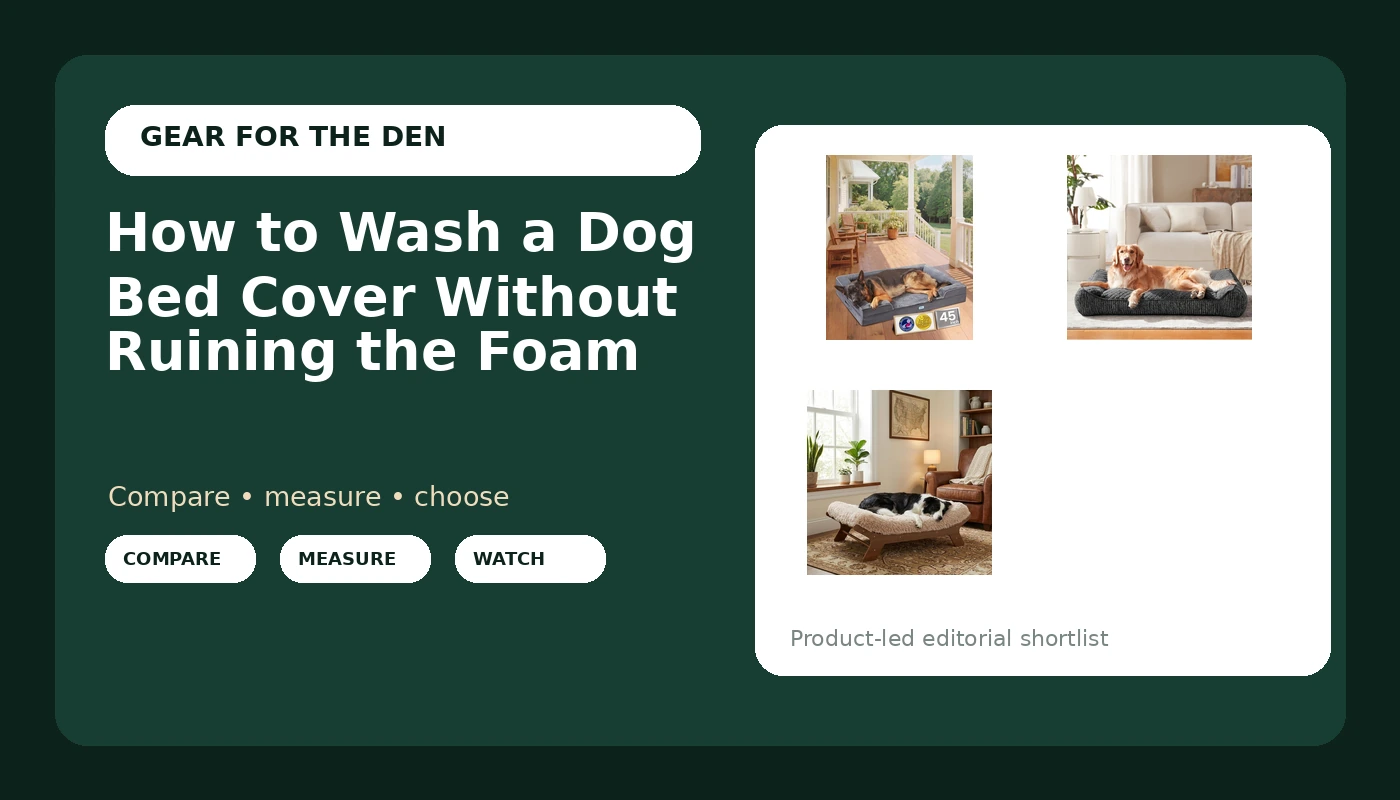
Knowing how to wash a dog bed cover is the difference between a bed that lasts four years and one that smells like a wet retriever by the first warm week of spring.
Most covers are more forgiving than the care tag suggests. Water is not what kills them. Heat, bleach, fabric softener, and a foam core that goes into the drum wet and comes out still wet are what kill them.
The routine below takes about forty minutes of hands-on work plus drying time, and it works on any bed whose cover unzips. It is built around the three mistakes that turn a washable fabric cover into a replacement order.
Why you should trust me
I write about dog comfort and home gear here, which means my week is spent reading care labels, cover specs, and the fine print on zippers and seam construction instead of repeating what the box says. I have washed covers off flat mats, bolster beds, couch-style beds, and elevated frames, and I keep a running list of which fabrics come back soft and which come back pilled. I also keep the mistakes: a memory foam insert that went through one low-heat cycle and came out deformed, a cover that shrank at the zipper, and a waterproof layer that delaminated after a hot wash. Every step in this guide exists because one of those three things happened to me.
How I picked and how I tested
The three beds below were chosen because their covers come off, and the cover is the part that gets dirty. A bed with a sewn-shut cover can be vacuumed and spot cleaned, but it cannot be washed, and that is a different article. If you are shopping for an older dog, the same cover logic applies to the beds in our guide to best orthopedic dog beds for senior dogs.
I judged each one on four things: how the cover fastens, whether a full-length zipper lets the insert slide out in one piece or a short one forces it through an opening the size of a fist, the washable fabric and what sits under it, the mat thickness and the fill type, and how quickly the cover dries once the insert is out.
I did not run a lab and I am not going to pretend a home washer is a testing instrument. What I did was read the care instructions and construction notes for each bed, compare how the covers come apart, and check whether the fill can be separated from the fabric at all. If the foam is glued to the cover, careful washing will not save it, and it does not belong in a how-to guide. If your dog sleeps in a crate, the same rules apply to a crate pad, though you also have to match the pad to the crate size and check the bar spacing so it does not sag between the bars.
The beds and covers in this guide
All three have removable covers. What differs is the fill, the fabric, and how much work it takes to get the cover back on.
Budget pick: OhGeni Orthopedic Extra Large Dog Bed Couch, Memory Foam, 45×33Inch (Gray)
Budget pick
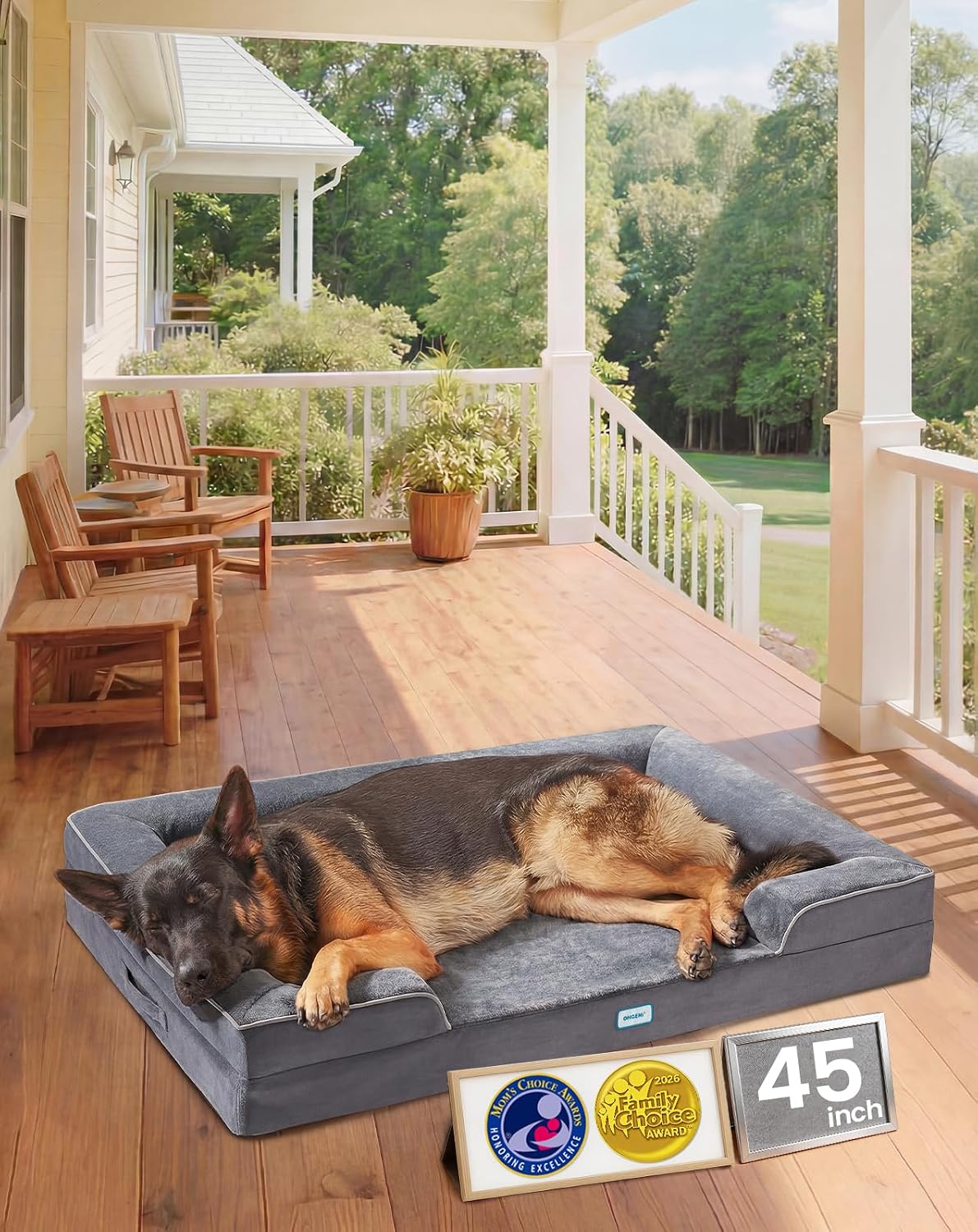
OhGeni Orthopedic Extra Large Dog Bed Couch, Memory Foam, 45×33Inch (Gray)
This is the couch-style orthopedic bed with a gray cover over a memory foam base, and it is the one I would hand to someone washing a dog bed for the first time. The cover is a washable fabric with a plush face, and the foam is thick enough that mat thickness matters when you are deciding where the dog sleeps, not when you are cleaning it.
The cover zips off along the bottom, so the insert comes out in one piece instead of being folded through a small opening. Zip the empty cover closed before it goes in the machine, because an open zipper snags other laundry and chews up its own teeth. Cold or warm water, gentle cycle, mild detergent, second rinse.
Flaws but not dealbreakers: the plush face grabs hair like a lint roller, so brush or vacuum the cover before it gets wet or you will be fishing wet fur out of the drum. The bolster seam also holds water longer than the flat panel, so drape the cover over a rack rather than bunching it on a line. Check current Amazon price before you order a spare cover.
Our pick: JOEJOY XL Orthopedic Dog Bed for Large Dogs, Extra Thick Foam Pet Bed Sofa
Our pick
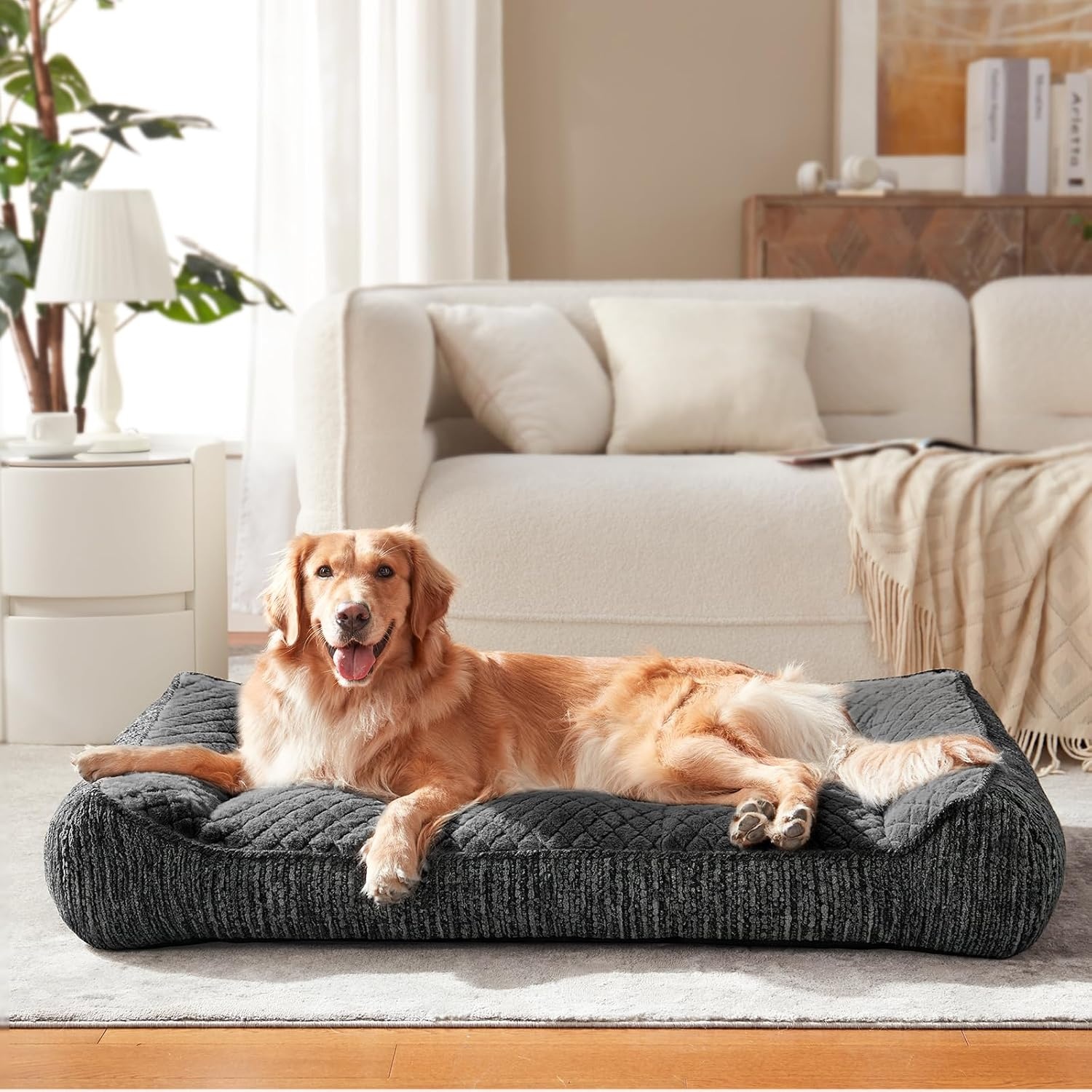
JOEJOY XL Orthopedic Dog Bed for Large Dogs, Extra Thick Foam Pet Bed Sofa
This is the extra thick foam sofa bed in XL, and the thickness is the whole reason to pick it: a big dog sinks into it instead of bottoming out on the floor. It is also why the cover is the part you wash and the foam is the part you protect. Thick foam takes days to dry once it is soaked, so the entire goal is keeping water out of the core.
A waterproof layer built into the cover or the liner matters more on a bed this size than on a thin mat. If your dog has accidents, leaks, or drools through a nap, that waterproof layer is what saves the foam underneath. Wash the cover, spot clean the insert, and keep the insert out of the dryer entirely. A low spin pulls water out of the fabric without wringing the cover out of shape.
Flaws but not dealbreakers: the cover is heavy when wet, and a long zipper drags if you carry it to the machine full of water. Strip the cover off the bed before you move it.
Upgrade pick: Muihood Elevated Wood Dog Bed Frame with Foam Mattress, WalnutPattern, L
Upgrade pick
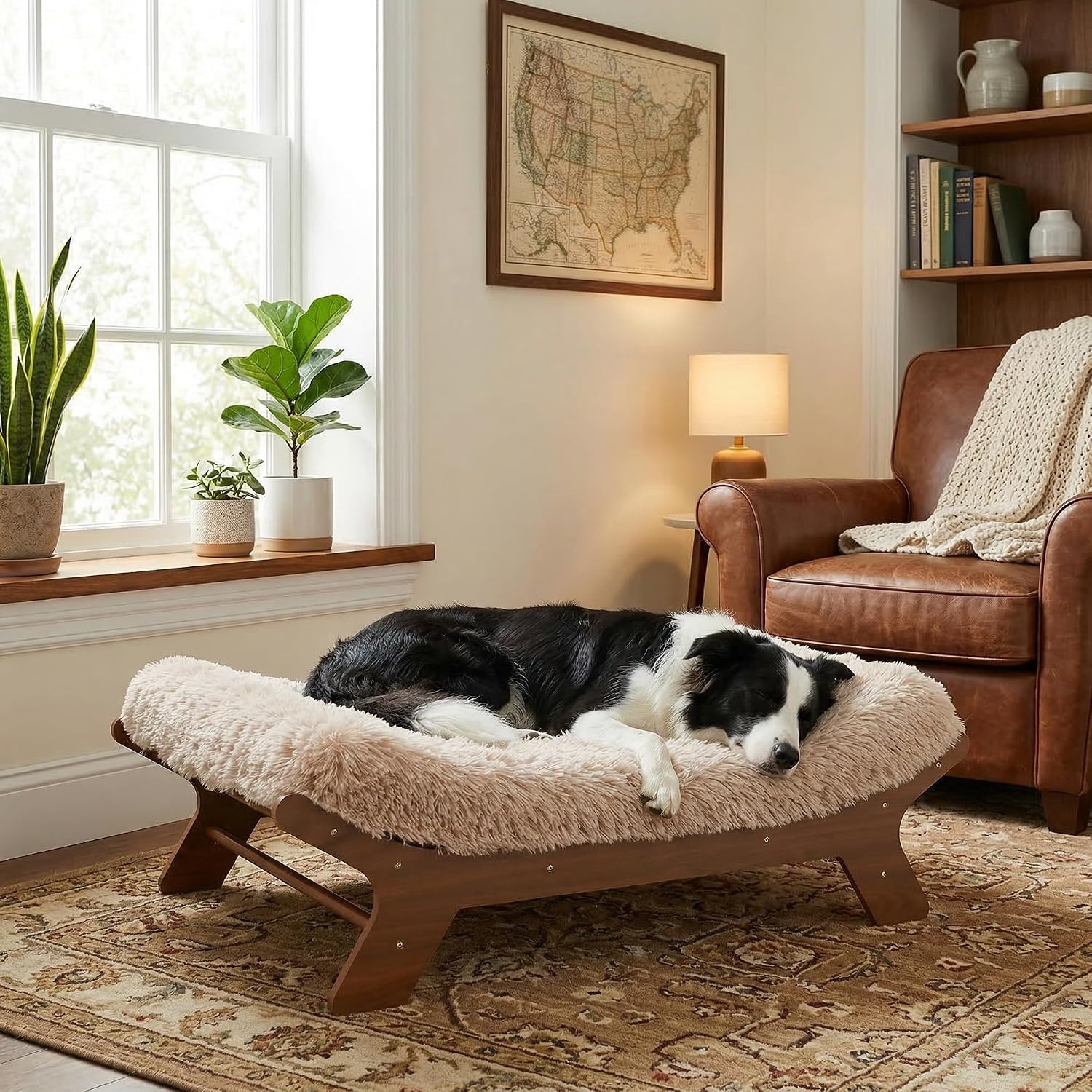
Muihood Elevated Wood Dog Bed Frame with Foam Mattress, WalnutPattern, L
An elevated frame with a foam mattress on top, finished in walnut. This is the bed to buy if you are tired of washing covers every other week: air moves under the mattress, cover ventilation does half the drying for you, and the wood wipes clean with a damp cloth in about a minute. The mattress still has a cover, and that cover still goes in the machine, but the frame never does.
The frame is the part you clean by hand. Wipe the rails with a cloth that is damp, not dripping, and dry them right away so the finish does not cloud. If you are fitting this inside an exercise pen or behind a gate, gate height and panel count decide whether the frame clears the enclosure without blocking the door, and the slat count on the bed itself is low enough that assembly is a ten-minute job with the hardware in the box.
Flaws but not dealbreakers: the mattress cover is thinner than the covers on the two foam beds above, so treat it gently and skip anything with heavy agitation. Check current Amazon price before you commit.
How to wash a dog bed cover without wrecking the fill
Here is the part you came for. This works on any cover that zips off, on any machine that has a gentle cycle.
Step one: Read the tag and open the zipper. Before anything gets wet, find the care tag and read it. It sets your temperature ceiling and tells you whether the cover can be tumbled at all. Then unzip the cover completely and pull the insert out in one motion. Check the inside for a second liner, because many covers have an inner waterproof layer sewn in, and that layer decides whether you can machine wash or are stuck spot cleaning. Zip the empty cover closed before it goes in the drum.
Step two: Shake the hair out outdoors. This is the step people skip and then regret. Take the cover outside, shake it hard, and brush or vacuum the plush face. Loose hair and grit turn into a muddy slurry in the drum, and that slurry works its way into the seams and the zipper teeth. A rubber brush or a vacuum with an upholstery head does the job in two minutes, and it keeps your machine cleaner at the same time.
Step three: Pre-treat the spots, not the whole cover. Urine, vomit, and drool need an enzyme cleaner, and they need it before the wash, not after. Spray the spot, let it sit ten minutes, and blot. Never use bleach on urine: bleach sets the protein and locks the smell in. If you want the ideal wash a dog bed cover temperature for a heavily soiled cover, stay at warm and add a second rinse rather than turning up the heat.
Step four: Pick the cycle. The correct wash a dog bed cover cycle is the gentlest one your machine offers, and the choice depends on the machine you own. A front loader with no agitator is far kinder to covers than a top loader with a central post. Use the delicate or bulky setting, warm water at most, and a low spin. Put small covers inside a mesh laundry bag so straps and tabs do not wrap around the agitator.
Step five: Use the right detergent, and less of it. A mild liquid detergent at half the dose on the cap is enough. Skip fabric softener, skip dryer sheets, skip scent boosters, and skip bleach. Softener coats the fibers, dulls the waterproof layer, and leaves a residue that attracts dirt again. If the cover still smells after the wash, run it twice with half detergent rather than once with a strong dose.
Step six: Run a second rinse. Soap residue is why covers feel stiff after a wash and why dogs roll on them the second they come out of the machine. Set an extra rinse, or run a plain water cycle with no detergent afterward. This is also where the last of the loosened pet hair comes out of the drum instead of staying in the fabric.
Step seven: Dry it low and slow, or not at all. Air drying is best. Lay the cover flat or drape it over a rack so air moves through both sides, because cover ventilation and not heat is what dries fabric. If you must use the dryer, use no heat or the lowest setting and check every ten minutes. The insert never goes in the dryer, not on low, not for five minutes. Heat is what deforms memory foam, and a deformed insert cannot be fixed.
Step eight: Reassemble only when both parts are bone dry. A cover that feels dry on the outside can still be damp at the zipper tape and the seam allowances. Put the insert back into a damp cover and you are growing mildew inside a bed your dog breathes next to for eight hours a night. If the cover is cool to the touch, give it another hour. Then work the insert in, zip it up, and check the seams and zipper for new pulls.
The competition and why it lost
Sewn-shut covers lose first. A bed with a cover you cannot remove is a bed you can only vacuum and spot clean, and no spray bottle gets urine out of a foam core. Cedar-filled beds lose next: the shavings absorb odor and moisture and cannot be washed at all, only replaced. Poly-fill beds with a non-removable cover have the same problem in a cheaper package.
The spray it and wipe it approach loses because it only works on the surface. It handles dust and light drool and does nothing for the sweat, oils, and dirt that soak into the fabric underneath your dog every night.
Wire crate pads without removable covers belong in the same pile. If your dog sleeps in a crate, a pad with a washable fabric cover and a waterproof layer is the only version worth buying, and you should still check the crate size and the bar spacing so the pad does not buckle between the bars.
Solid foam mattresses with no cover at all are the last one, and they are the worst for this job. Foam with nothing over it traps hair in the surface pores and gives you no way to clean it short of a hose and three sunny days.
What did not lose? Beds with a removable cover and an insert that comes out in one piece. That is the whole contest.
What this all costs
Washing a cover costs you detergent and a couple of hours of drying time. Replacing a bed costs you a bed. That is the entire argument for doing this right the first time and for buying furniture your washer can reach.
The two foam beds in this guide sit at the low end of the market for an orthopedic dog bed, which is where most people should start. The elevated frame bed costs more because you are buying wood and a mattress, and because the frame outlasts three covers. Check current Amazon price on each before you commit, since these listings move.
Budget for one extra thing: a mesh laundry bag and a bottle of enzyme cleaner. Together they cost less than a replacement cover, and they are the difference between a wash that works and a wash that leaves a smell.
The frequency math is simple. A cover washed every two weeks on a gentle cycle will outlast a cover washed once a month on hot with a heavy spin, because heat and agitation are what break fibers down. Wash more often, wash gentler, and dry completely. If you want to learn how to wash a dog bed cover without buying a new one within the year, treat the cover like the washable fabric it is and treat the foam like the sponge it is not.