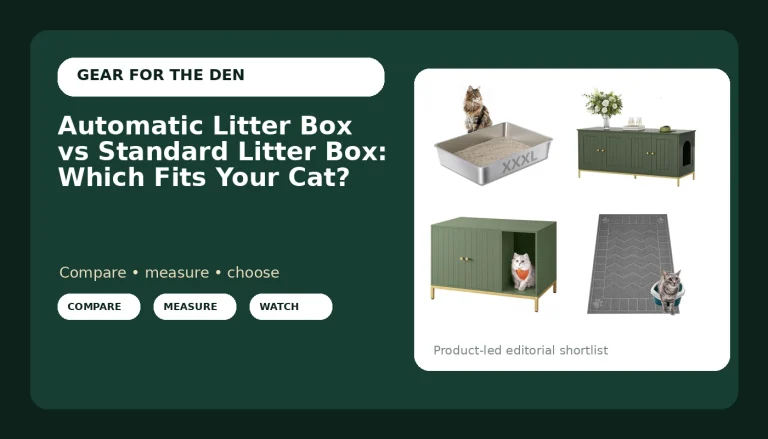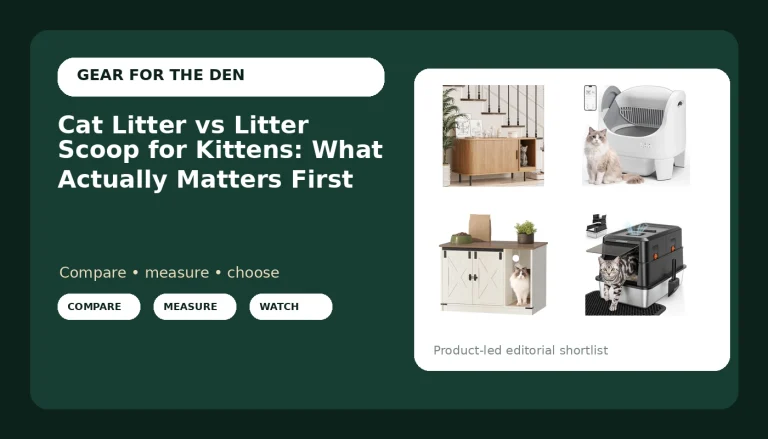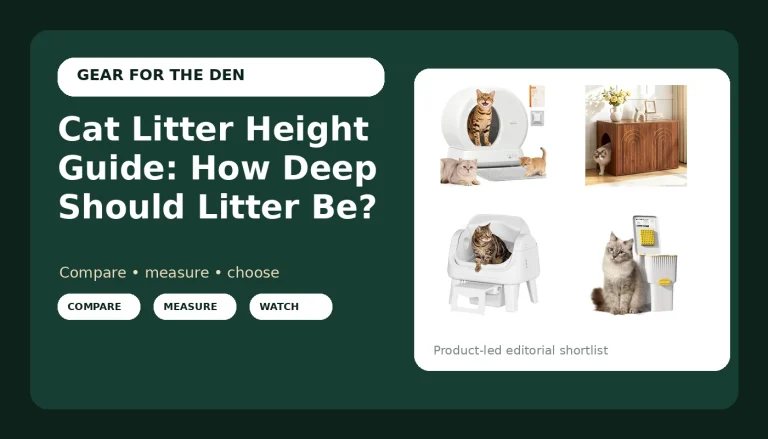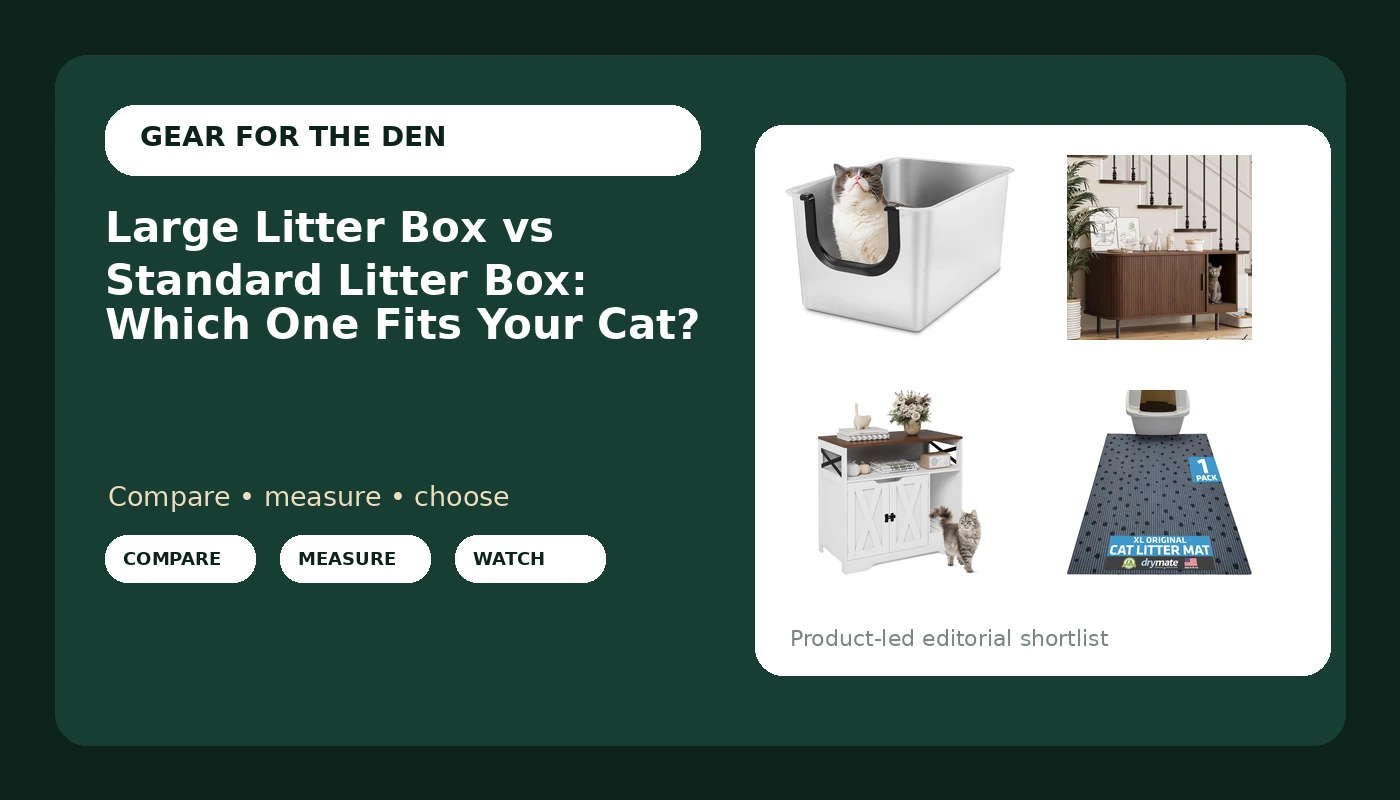
The large litter box vs standard litter box question sounds like a simple size argument until you watch a full-grown cat try to turn around in a pan that barely clears its body. Most standard pans are built around a footprint of roughly 15 to 18 inches, which is fine for a kitten and tight for an adult with a long body, a senior with stiff hips, or a digger that moves half the litter before it commits. A large litter box changes the geometry of the whole setup: more room to turn, more litter depth to work with, and more surface area to keep clean between scoops. This comparison covers four pieces of gear that solve that problem in different ways, from an extra-large open stainless pan to two enclosed cabinets, plus the mat that catches what the cats track out.
The pick for most households is the Yangbaga Extra Large Stainless Steel Cat Litter Box with High Sides, because a big open pan with tall walls fixes the two problems that send people shopping in the first place: no room to turn around, and litter thrown over the edge. The enclosed cabinets in this group are the better answer if the box lives in a room guests actually see, and the mat is the lowest-effort change if you are not ready to replace the pan yet. Check current Amazon price on the Yangbaga pan before you read the rest, because the rest of this comparison only makes sense if the pan itself is the right size for your cat.
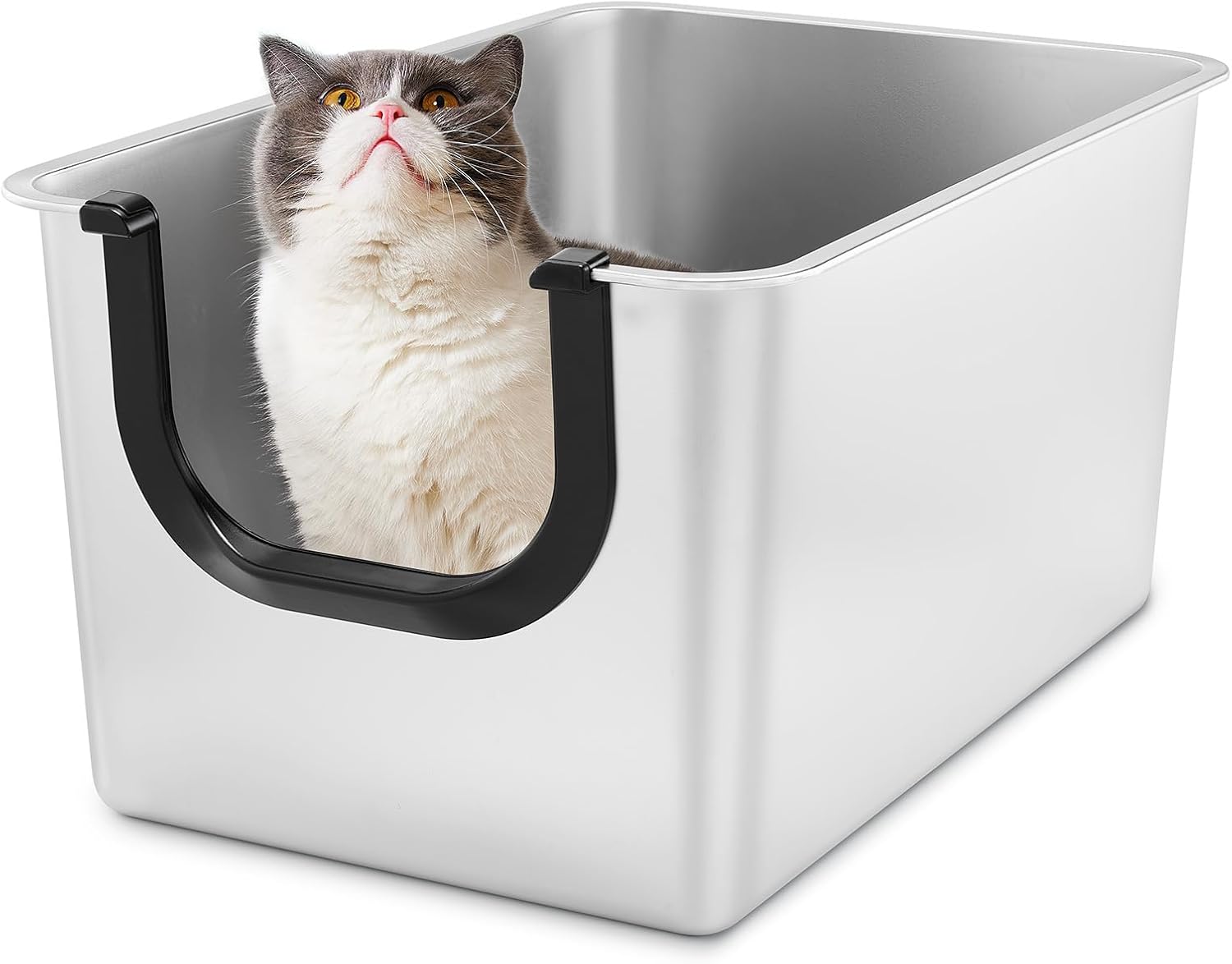
Yangbaga Extra Large Stainless Steel Cat Litter Box with High Sides
Extra-large stainless pan with high sides gives an adult cat room to turn and keeps urine and litter inside the walls
High sides are a real step-over for a kitten or a senior cat, and an open pan hides nothing
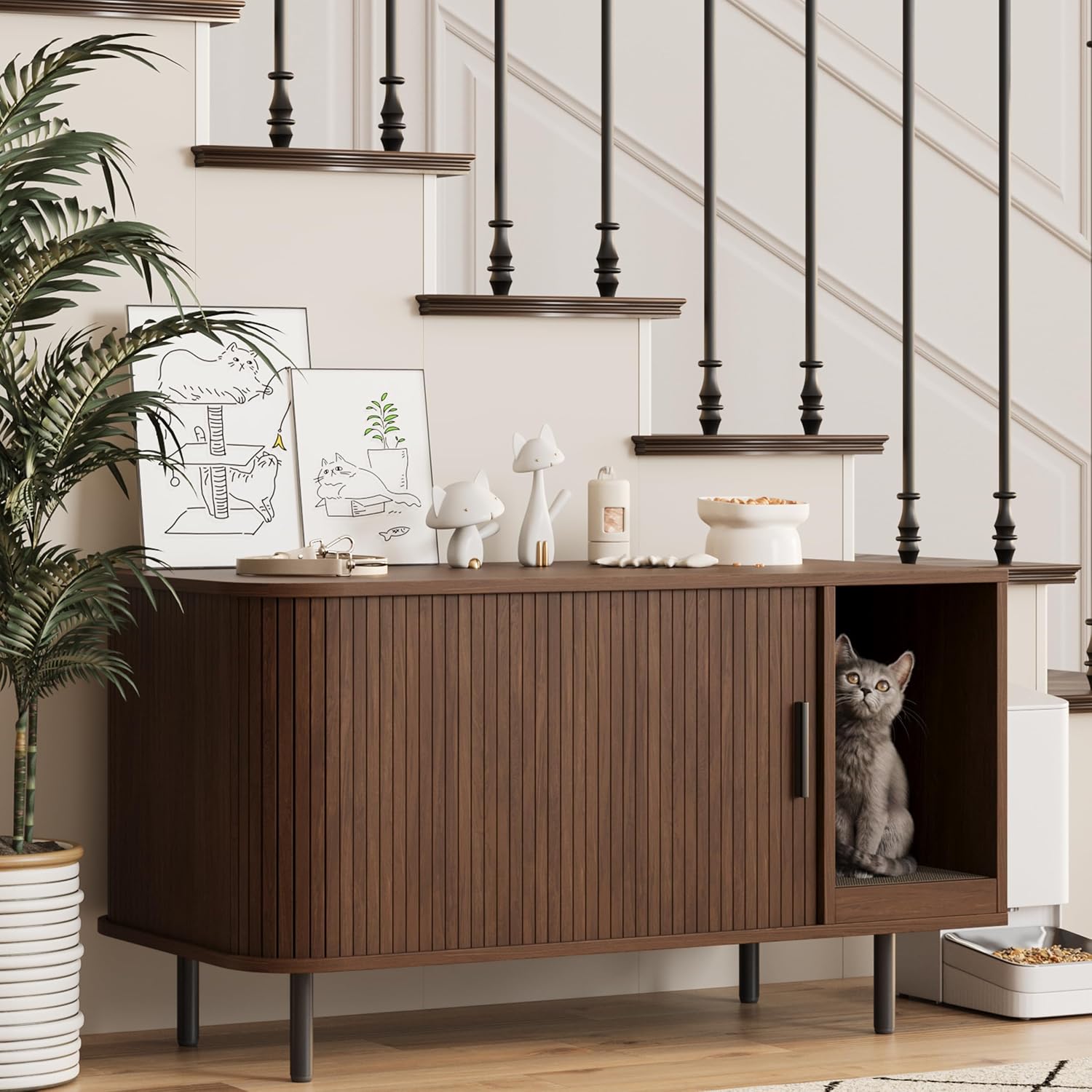
Halitaa 37.4" Cat Litter Box Enclosure with Scratch Pad, Sliding Door
A 37.4 inch cabinet fits a large pan with room to spare, the sliding door saves hallway clearance, and the scratch pad earns the furniture a second job
Cabinet walls cut airflow, so odor control depends entirely on how often you scoop, and the door adds a step to every full clean
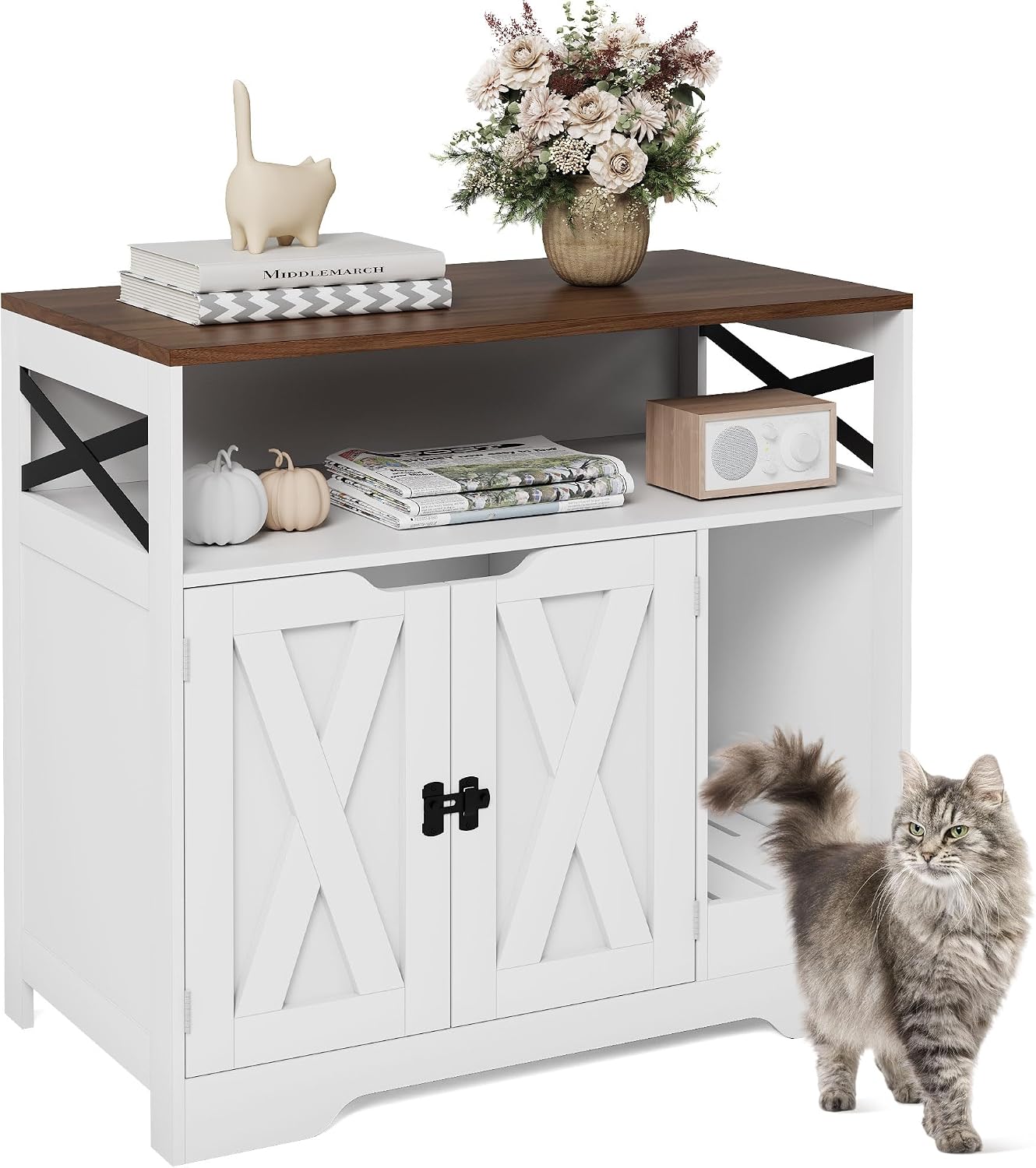
ZYKZYK Cat Litter Box Enclosure Tall Hidden Litter Box Furniture Cat House
Tall hidden furniture suits a cat that stands to urinate and takes up less floor than its height suggests
Tall cabinets are heavy to pull away from the wall for a deep clean, and a fully hidden pan makes it easy to miss early warning signs
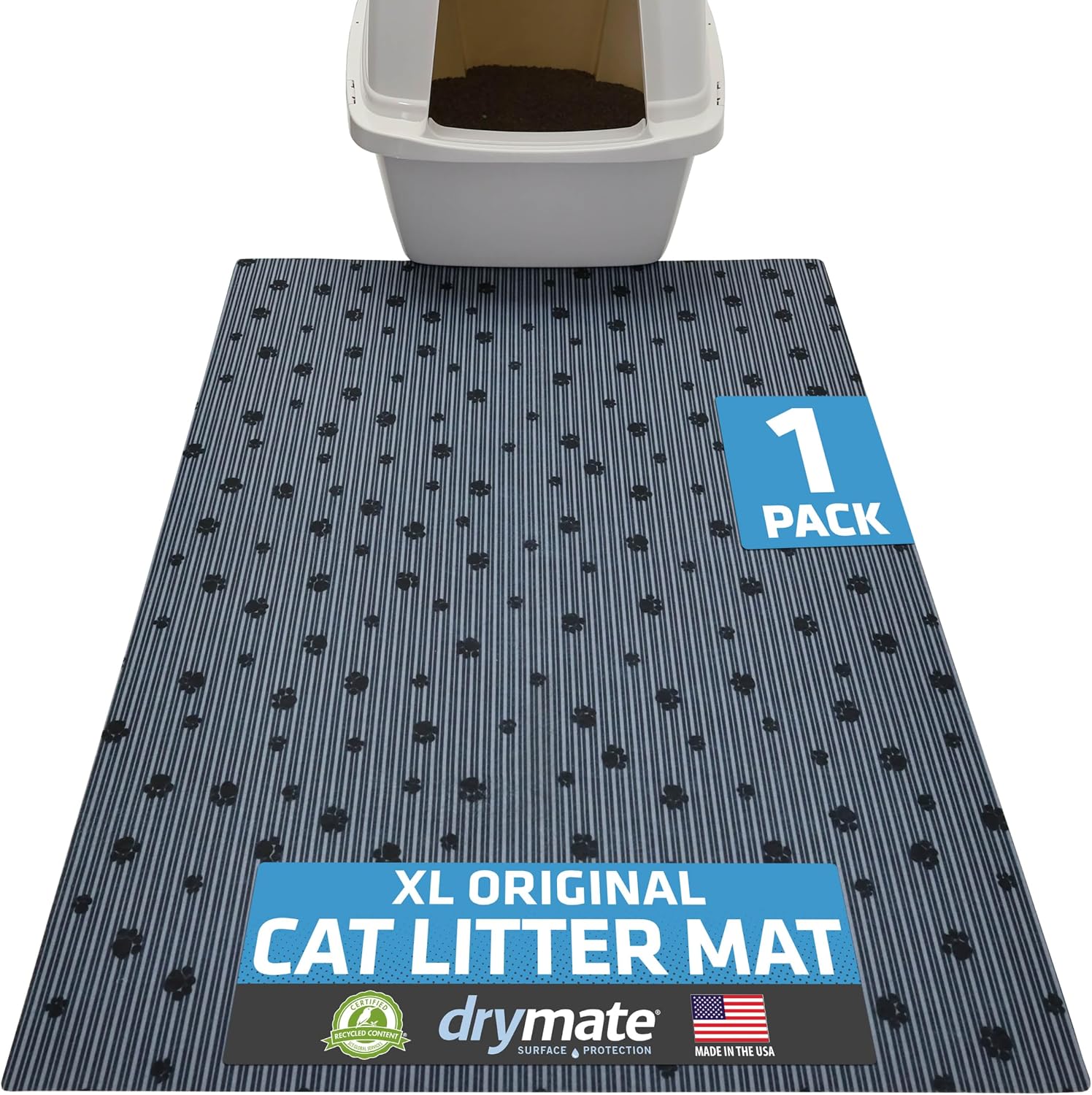
Drymate Cat Litter Box Mat, Litter Trapping Mat, Dark Grey, 28×36 XL
A 28×36 XL mat with a litter-trapping texture covers the whole landing zone of an extra-large pan
It is a mat, not a fix. If the pan is too small for the cat, the mat just collects more of what gets kicked out
Prices and availability may change.
What the large litter box vs standard litter box trade-off costs you in practice
The first cost is floor space, and it is not small. A standard pan with a small mat might claim a two-foot square of a bathroom or laundry room. The Drymate mat in this group is 28 by 36 inches, which tells you roughly how much floor an extra-large pan plus a landing zone really wants. If your cat exits the box and shakes, that landing zone is exactly where the litter goes, so the mat is not decoration. It is part of the footprint.
The second cost is litter volume. A bigger pan holds more litter, and more litter spreads urine across a larger mass, which slows how quickly the box starts to smell. That is the real difference between large litter box and standard litter box ownership: the standard pan is not just smaller, it concentrates everything into a tighter area and reaches the end of its usable litter depth faster, so you are changing litter more often for the same number of cats.
The third cost is access. A taller wall keeps litter and urine in the box, but it also raises the step a cat has to clear. Kittens, seniors, and cats with sore joints need either a lower entry or a step placed in front of the pan. If you choose a large litter box or standard litter box purely on the size of your cat, you can still get it wrong by ignoring how easily that cat gets in and out.
Box size, entry height, and litter depth
A large litter box vs standard litter box comparison usually starts with the cat, not the room. The working rule most behaviorists use is that the pan should be about one and a half times the length of the cat, measured from nose to base of tail, with a little room to spare. For an average 18-inch cat that lands you near 27 inches, which is why so many standard pans fail adult cats. They were sized for kittens and small breeds and never grew up.
Entry height is the spec nobody prints on the label. A pan with six-inch walls is easy for a young cat and a hurdle for a fourteen-year-old with stiff hips. The high sides on the Yangbaga pan are the reason it keeps litter inside, and also the reason it is not the right box for every cat in a multi-cat house. If a kitten and a senior share a home, a low-sided pan in a second location is often the practical fix rather than one compromise box that suits neither.
Litter depth is where a bigger pan earns its keep. Two to three inches is the usual recommendation, and a standard pan runs out of that depth quickly because digging pushes litter to the edges and leaves a thin center. A larger floor area holds the same bag of litter at a usable depth for longer, and it gives clumping litter a better chance to form a solid clump instead of a pancake that breaks apart on the scoop. Clumping speed matters more in a shallow box, because a slow clump in thin litter lets urine reach the plastic before it sets, and that is where the smell starts.
Odor control, mat texture, and the floor around the box
Odor control is mostly about surface area and airflow. Stainless steel does not absorb odor the way scratched plastic does, which is the quiet advantage of the Yangbaga pan, and a large box spreads waste across more litter so the ammonia load builds more slowly. None of that replaces daily scooping. No box size fixes a cleaning schedule, and a big pan you scoop twice a week will smell worse than a small pan you scoop twice a day.
Mat texture is the other half of the mess. The Drymate Cat Litter Box Mat, Litter Trapping Mat, Dark Grey, 28×36 XL is sized to sit under an extra-large pan and still catch the granules a cat kicks on the way out. A loose, slick mat slides and bunches under the box; a mat with a grippy backing stays where you put it, and the texture is what pulls litter off the paws instead of letting it travel across the room. If you have ever found litter in a bed, you already know the mat matters as much as the pan. Check current Amazon price.
Airflow is the trade-off nobody mentions when they buy furniture. An open pan ventilates itself. A cabinet traps the smell inside until you open the door, which is fine if you scoop daily and miserable if you do not. If odor control is your main complaint, an open large pan with a good mat will beat an enclosed cabinet every time.
Enclosures, sliding doors, and what a cabinet hides
The Halitaa 37.4″ Cat Litter Box Enclosure with Scratch Pad, Sliding Door is the living-room version of this idea. At 37.4 inches wide it fits a large pan inside with room to spare, the sliding door lets you open the cabinet without swinging a panel into a hallway, and the scratch pad gives the cat a reason to use the furniture for something other than the box. The trade-off is that you now have a door between you and a full litter change, and cabinet walls cut the airflow that keeps odor down. Check current Amazon price.
The ZYKZYK Cat Litter Box Enclosure Tall Hidden Litter Box Furniture Cat House takes the same idea vertical. The tall profile suits a cat that stands to urinate, and the cabinet claims less floor than its height suggests, which matters in an apartment. It also hides the pan completely, and that is the point of buying it. The cost is weight and visibility. A tall cabinet is harder to pull away from the wall for a deep clean, and a fully hidden pan means you are less likely to notice a change in urine volume or a cat straining, both of which are worth catching early. Check current Amazon price.
Neither cabinet includes a waste drawer. If you want a waste drawer, or a self-cleaning cycle with a sensor range that reliably ignores a cat walking past, you are shopping in a different category, and you should expect to pay for the electronics as well as the cabinet. For most homes, a large open pan plus a mat covers the same ground with fewer parts that can fail. For more on room layouts with more than one cat, see our guide to cat home and multi-cat setups.
What the four picks say about value
Three of these four products answer the same complaint at different levels of commitment. The mat is the smallest change: it does not alter the pan, it just stops litter from traveling. The Yangbaga pan changes the box itself, which is the change that matters most to the cat. The two enclosures change the room, hiding the pan behind furniture and accepting a little extra cleaning friction in exchange.
Framed as standard litter box vs large litter box, the real question is which part of the problem you want to solve first. The mistake I see most often is buying the cabinet first. A cabinet wrapped around a pan that is too small for the cat is still a pan that is too small for the cat, and now you have spent the money twice. Fix box size and entry height first, then decide whether the pan needs to be hidden.
Should you buy the mat before the box?
If your cat uses a standard pan without accidents and your only complaint is tracked litter, yes. The mat is the least disruptive fix, and it is the one upgrade you can add without changing anything the cat already knows. The Drymate 28×36 XL is sized for an extra-large pan, so it will still work later if you size up.
If your complaint is that the cat hangs over the edge, misses the box, or perches with its rear against a wall, the mat is not the fix. That is a box size problem, and it usually shows up as urine outside the pan or a cat standing on the rim. In that case, go straight to a large pan with high sides and add the mat at the same time.
What I'm watching next
Two things are worth watching in this category. The first is stainless enclosures. Stainless pans are easier to keep odor-free, and the obvious next step is a cabinet built around one instead of a plastic tray that scratches and holds smell. The second is the self-cleaning segment, where a waste drawer and a sensor range that ignores a cat walking past are the two features that separate a useful unit from an expensive toy.
Neither is in this comparison, and neither replaces the basics. A pan big enough for the cat to turn around in, litter deep enough to clump before urine reaches the bottom, and a mat that keeps the floor clean will outperform a gadget that gets all three wrong. Start with box size, then work outward.