Setting up a first freshwater tank raises a question that rarely gets a straight answer: how warm should the water actually stay, and what holds it there? Tropical fish, bettas, and most of the small species sold to new keepers sit comfortably in the mid to upper seventies Fahrenheit, and a room that cools overnight will drag an unheated tank down with it. That is why the search for the best aquarium heater for beginners usually starts with a number on a box rather than with the fish itself.
The number that matters most is wattage, and the usual starting point is about five watts for every gallon of water in a normally heated room. A 5 gallon tank lands near 25 watts, a 10 gallon tank near 50, and a 20 gallon tank near 100. That relationship explains why the picks below cluster around 25 and 50 watts: those are the sizes that fit the tanks a beginner is most likely to own. Tank volume is not the only variable. A tank in a cool basement, or one with a lot of surface movement, loses heat faster than the same volume in a warm living room, so it helps to treat the wattage figure as a floor rather than a ceiling.
This guide covers six submersible heaters built for small freshwater setups, from a 1 gallon betta bowl up to a 20 gallon community tank. Every pick is matched to the tank volume its maker names, and the comparison sticks to published details: wattage, thermostat range, mounting style, and the safety features that matter when a heater is exposed during a water change. It is written for someone who has never opened a heater manual.
Quick answer
The NICREW 50W Aquarium Heater with Temp Controller for 5-10 Gallon Tanks is the strongest fit for most first tanks because it pairs a 50 watt element with a separate temperature controller, so the thermostat range can be set and read without pulling the heater out of the water. Choose the SEAOURA Small Aquarium Heater, 25W Fish Turtle Betta Tank Heater, 1-6 Gal instead when the tank holds less than five gallons and a 50 watt unit would be more than the volume needs.
Aquarium heater for beginners: what is worth comparing
Most of the decision comes down to four things. The first is wattage against tank volume: a heater that is too small runs constantly, and one that is far too large can overshoot a small body of water. The second is whether the thermostat is preset or adjustable, which decides how much you fiddle with it over a year. The third is where the controls live, either on the heater body or on a separate controller that stays dry. The fourth is safety hardware, such as dry-run shutoff and overheat protection, which matters most if you do frequent partial water changes with the heater still mounted in the tank.
Top pick
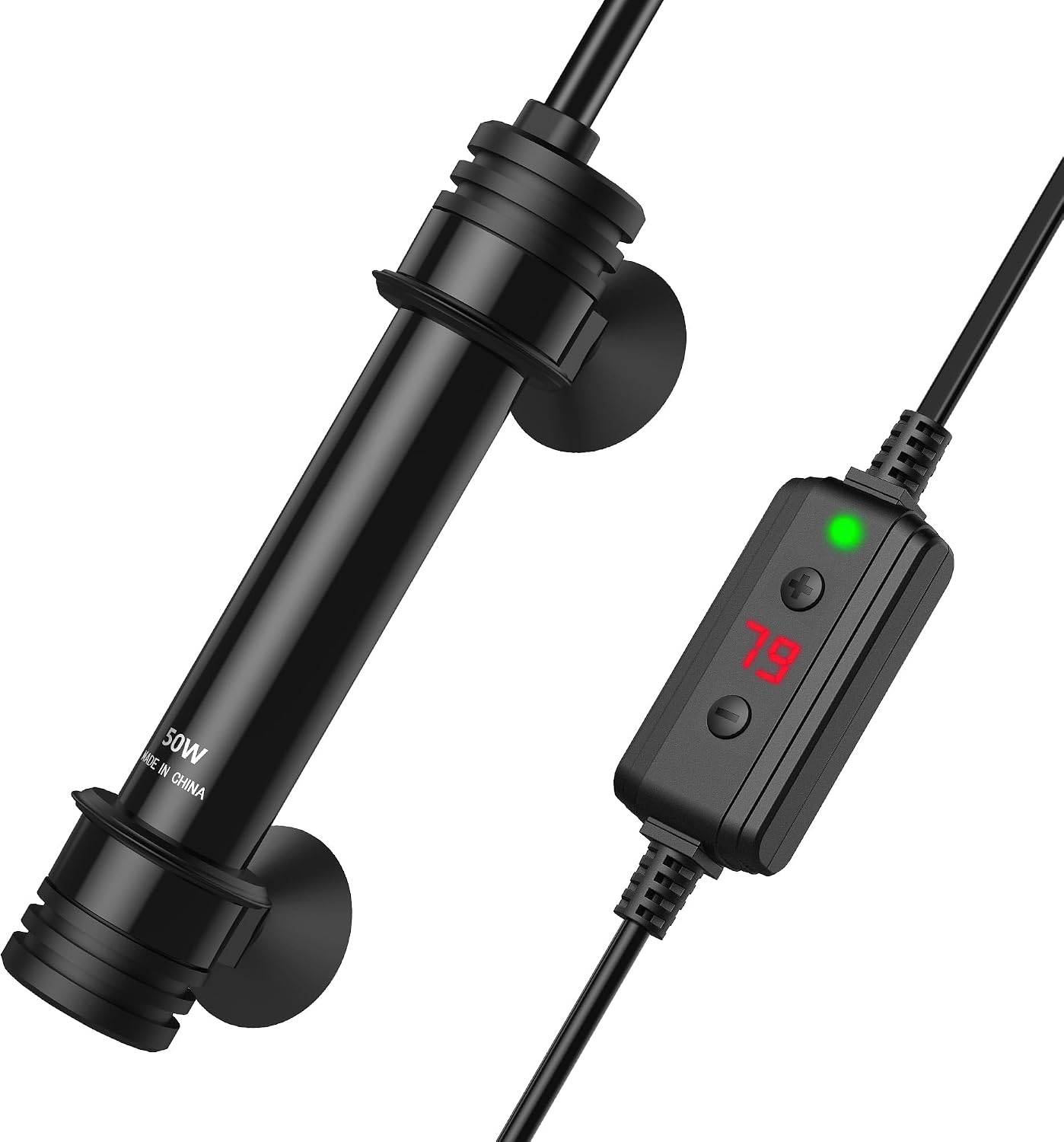
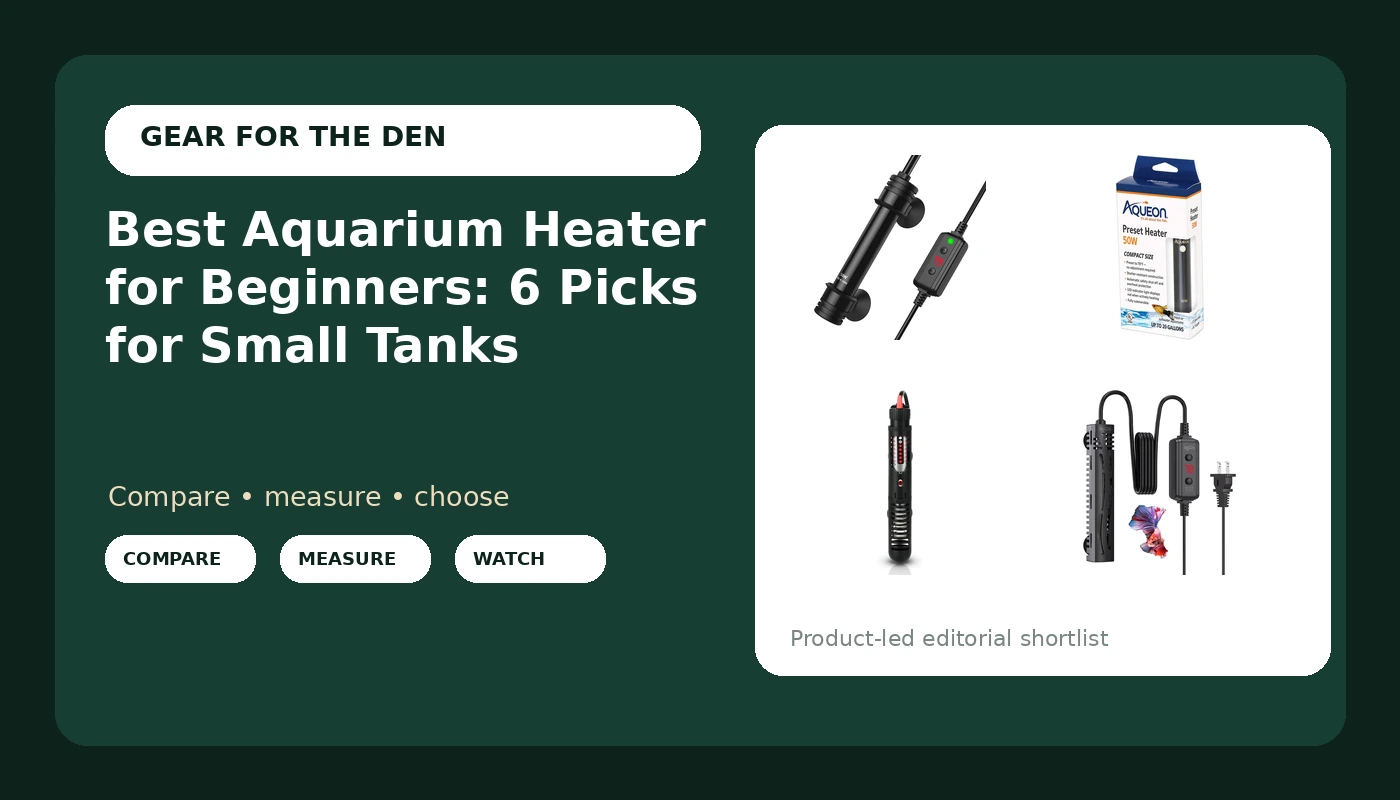
NICREW 50W Aquarium Heater with Temp Controller for 5-10 Gallon Tanks
A 50 watt submersible heater with a separate temperature controller, sized for 5 to 10 gallon tanks. The controller lets you set and read the thermostat range without reaching into the water.
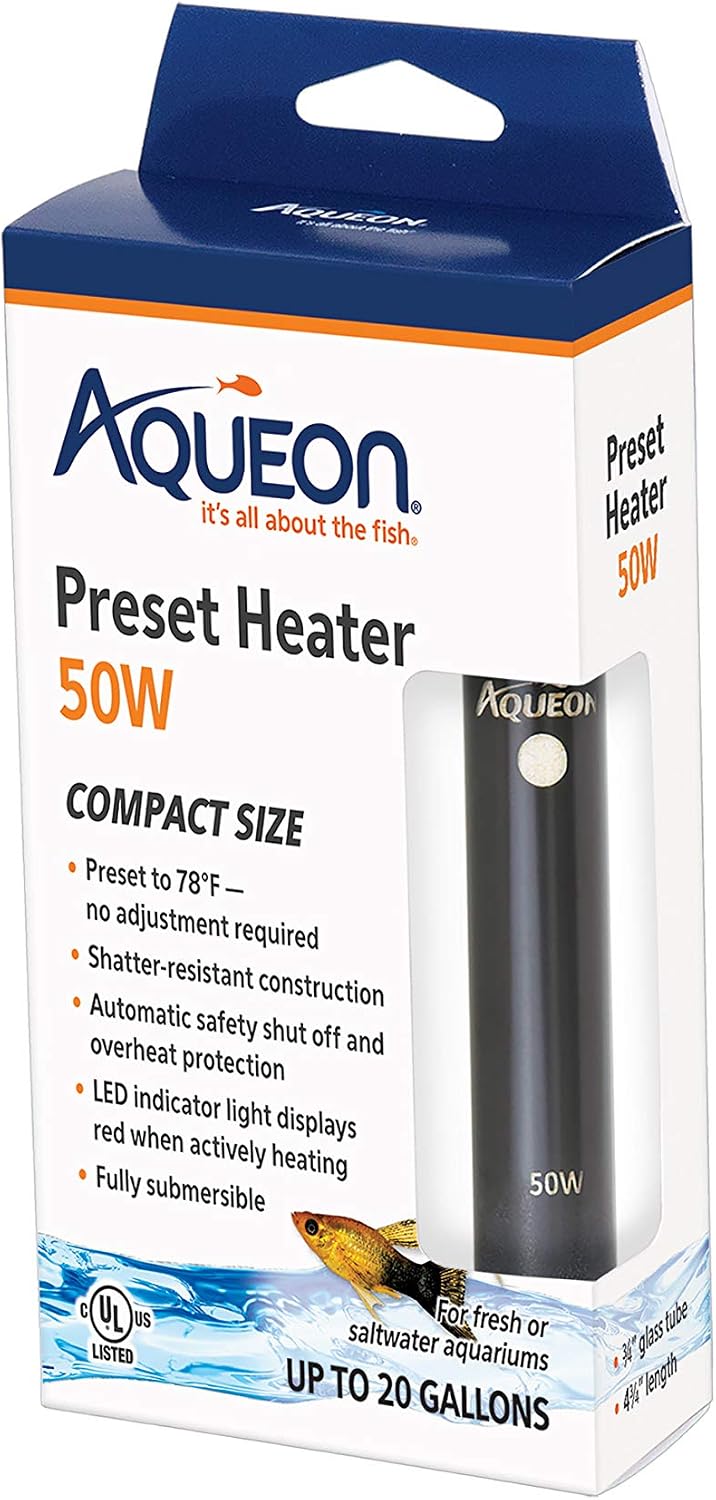
Aqueon Aquarium Fish Tank Heater, Preset, Up to 20 Gallons, 50 Watts
A preset 50 watt heater rated for tanks up to 20 gallons. There is no dial to set, which suits a keeper who would rather not manage a thermostat at all.
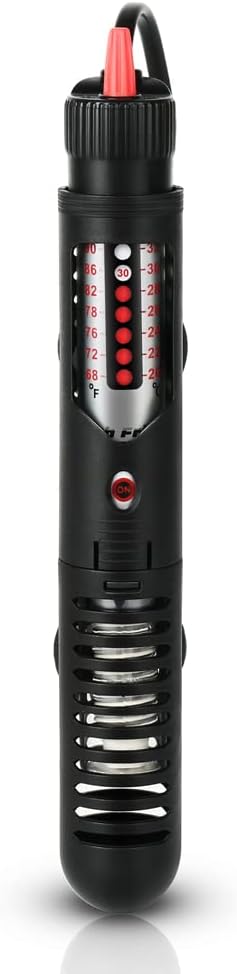
DaToo Submersible 50W Aquarium Heater Adjustable Fish Tank Heater 50 Watt
A 50 watt submersible heater with an adjustable setting on the body, aimed at keepers who want to tune the thermostat range themselves without adding a second device.
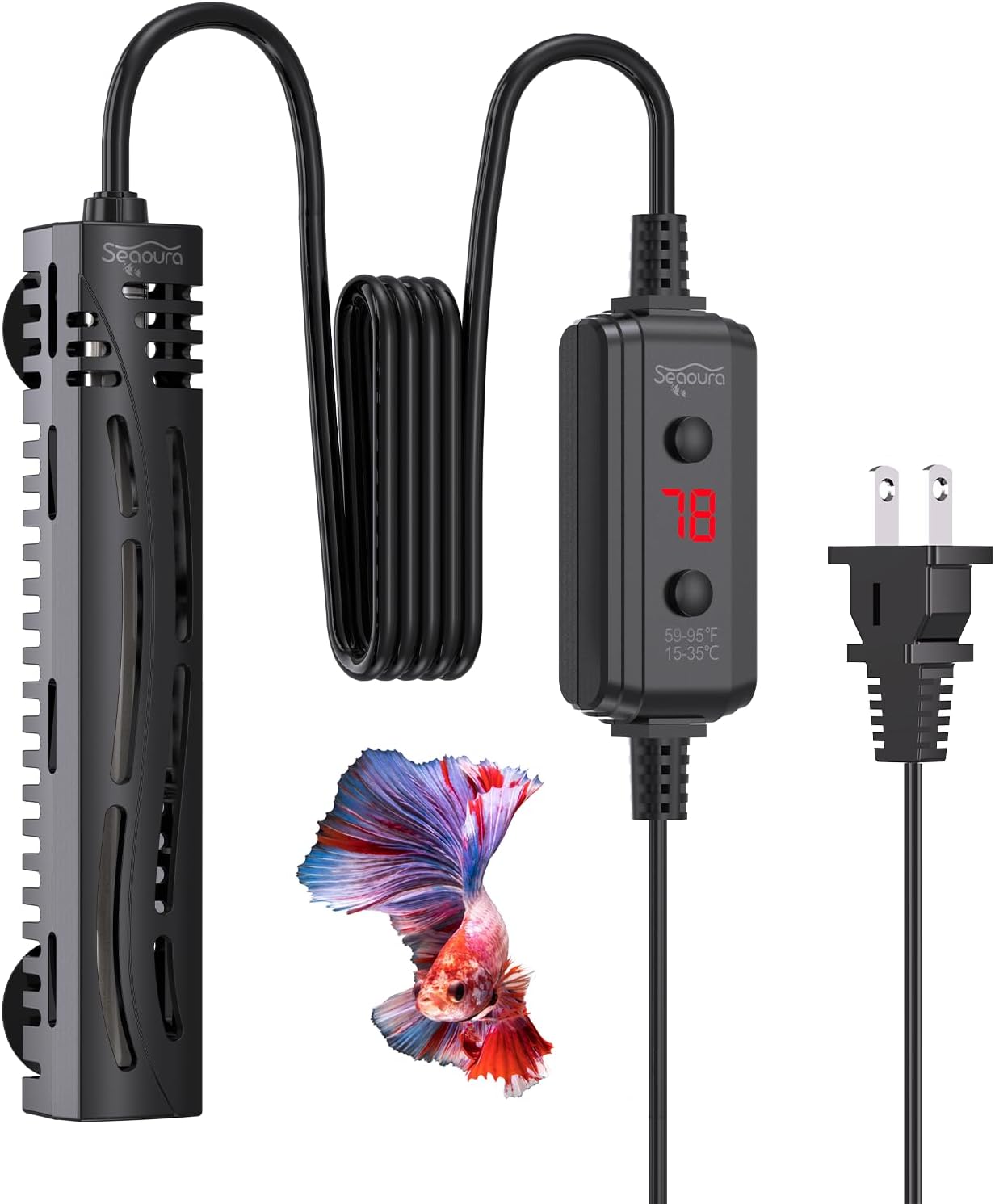
SEAOURA Small Aquarium Heater, 25W Fish Turtle Betta Tank Heater, 1-6 Gal
A compact 25 watt heater listed for 1 to 6 gallon tanks, including betta and turtle setups. The lower wattage suits very small water volumes.
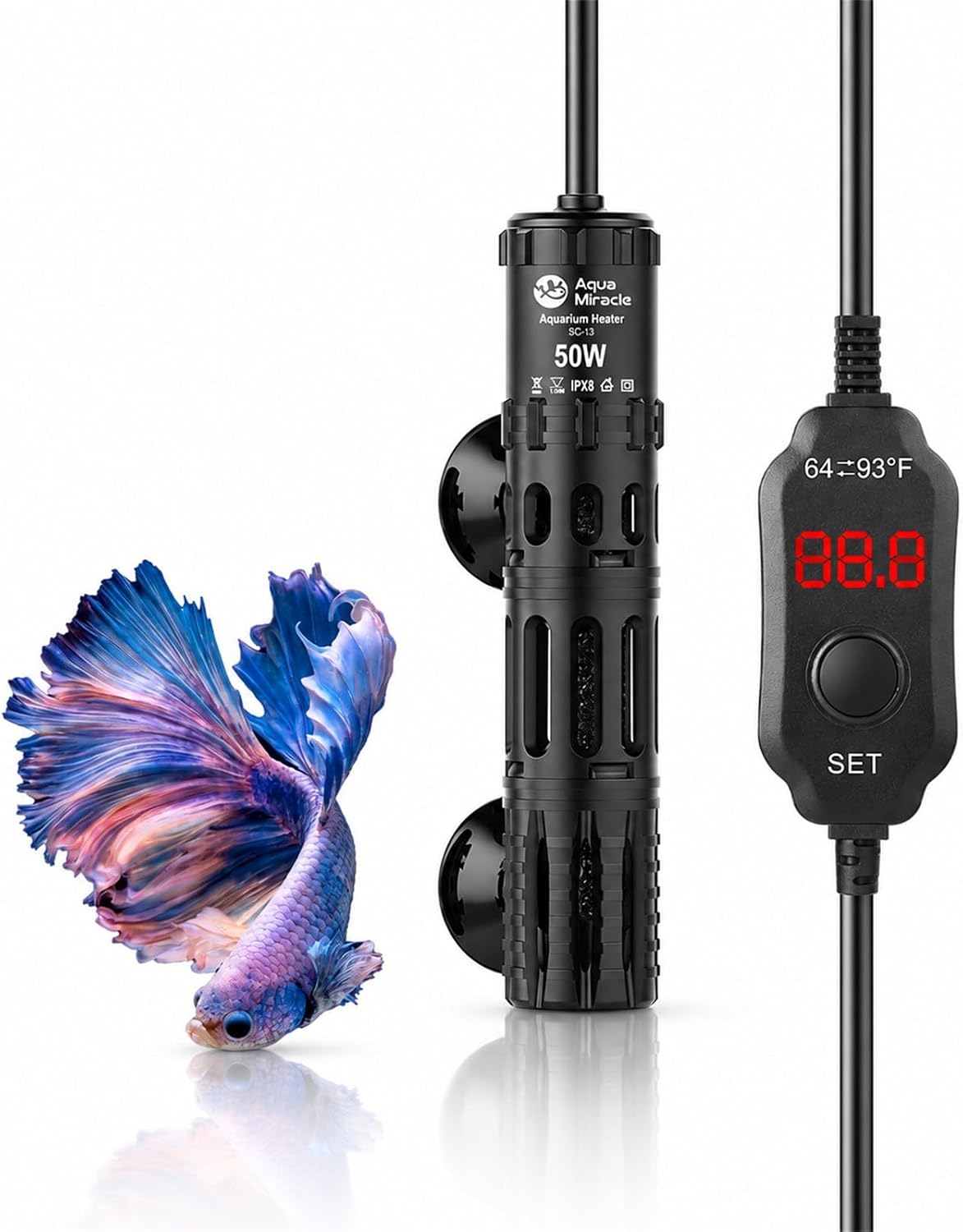
AquaMiracle Aquarium Heater Dry-Run Auto Power-Off & Overheat Protection
A submersible heater that shuts off automatically when it runs dry and carries overheat protection, a useful safeguard during water changes.
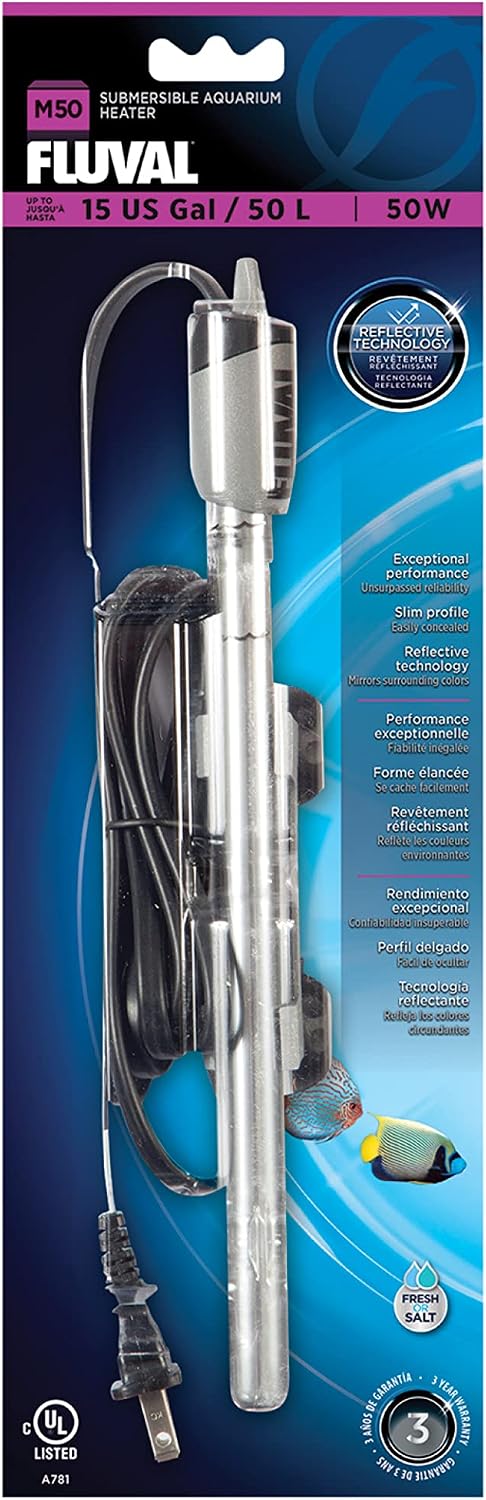
Fluval M 50-Watt Submersible Aquarium Heater for Fresh & Saltwater Tanks
A 50 watt submersible heater rated for fresh and saltwater tanks, which matters if you may add a marine setup later.
How these products were compared
This guide compares wattage against the tank volume each maker names, thermostat adjustability, control placement, safety features, and the physical footprint of each unit in a small tank. Product names, images, and retailer links are matched to the same product listing so that every card points to the product shown.
The notes here come from manufacturer-published specifications rather than bench testing, and no current price is printed anywhere in the article. Prices move, so each card links to the retailer, where you can confirm the price, availability, and return terms before ordering.
How to choose the right aquarium heater
Start with tank volume, not with features. The correct aquarium heater for beginners is the one that matches the water it will warm, and the five watts per gallon starting point gets you close enough to pick a wattage class: 25 watts for a 5 gallon tank, 50 watts for a 10 gallon tank, and 100 watts for a 20 gallon tank. Then decide how much control you want. A preset heater holds one temperature and asks nothing of you, while an adjustable model with a thermostat range lets you nudge the setting up or down as the seasons change. Beginners often do better with the simpler option first, because a preset unit removes one thing to get wrong. If the tank sits in a room that swings in temperature, adjustability earns its keep.
Placement changes how well a heater works. Water movement spreads heat, so mounting a submersible unit near the filter outlet, where the flow rate is highest, keeps the whole tank closer to one temperature instead of leaving a warm pocket in a corner. In a small tank, a filter rated at 50 to 100 gallons per hour is usually enough to move water past the heater. If your filtration stage is a sponge filter running on an air pump, the lift is gentler and the heater may need to sit closer to the bubble stream. Leave the heater clear of the substrate and of any decor that could block circulation, and keep it fully submerged up to the line the manufacturer marks. For a fuller picture of how the rest of the system fits together, see this small tank filter guide.
Two numbers on a tank spec sheet have nothing to do with the heater. The kelvin rating of your light and the substrate grain of your gravel shape how a tank looks and how plants grow, but neither changes how quickly water loses heat. Keep the heater decision separate and settle it on tank volume, room temperature, and the thermostat style you are willing to manage.
NICREW 50W Aquarium Heater with Temp Controller for 5-10 Gallon Tanks
The NICREW 50W Aquarium Heater with Temp Controller for 5-10 Gallon Tanks is the pick that best matches how a beginner actually uses a heater. The element is rated at 50 watts, which lines up with the roughly five watts per gallon guidance for the 5 to 10 gallon tanks the model names, and the separate controller means the thermostat range is set on a unit that stays out of the water. That matters at feeding time and during water changes, when you want to check a setting at a glance instead of reaching into the tank.
The trade-off is that a controller adds a second piece of hardware to mount and another cord to route along the back of the tank. The heater is also rated for a narrower band of tank sizes than the Aqueon preset model, which covers tanks up to 20 gallons. If you expect to move up to a larger tank within a year, that extra headroom may be worth more than an adjustable control. For a beginner staying in the 5 to 10 gallon range, matching the heater to the tank is the safer habit, and this unit makes that match explicit.
Alternatives to consider
The Aqueon Aquarium Fish Tank Heater, Preset, Up to 20 Gallons, 50 Watts is better suited to keepers who want no settings at all, since the preset design removes the thermostat decision and the 50 watt rating covers tanks up to 20 gallons. The DaToo Submersible 50W Aquarium Heater Adjustable Fish Tank Heater 50 Watt is a stronger fit when you want an adjustable setting on the heater body itself and would rather not mount a separate controller.
The SEAOURA Small Aquarium Heater, 25W Fish Turtle Betta Tank Heater, 1-6 Gal, the AquaMiracle Aquarium Heater Dry-Run Auto Power-Off & Overheat Protection, and the Fluval M 50-Watt Submersible Aquarium Heater for Fresh & Saltwater Tanks cover the remaining cases. The SEAOURA is the only 25 watt option in this group and the only one listed for tanks as small as 1 gallon, which makes it the sensible choice for a betta bowl or a nursery tank. The AquaMiracle is the pick when dry-run shutoff and overheat protection are the features you care about most, a reasonable priority if you do frequent partial water changes with the heater left mounted. The Fluval M is worth considering if the same heater might later run in a brackish or saltwater tank, since it is rated for both fresh and saltwater use.
Day-to-day use and maintenance
Once a heater is in the tank, the routine is short. Unplug it before any water change that drops the waterline below the heater body, because a submersible heater that is powered while exposed can overheat even when it carries dry-run protection. Wait a few minutes after the water level is restored before plugging it back in, and let the unit settle before trusting the thermostat range reading. For an aquarium heater for beginners, those two habits, unplugging first and keeping a separate thermometer in the tank, prevent most of the problems people run into.
Check the temperature with a glass or digital thermometer rather than assuming the dial is exact, since a thermostat range is a target rather than a guarantee. Wipe the heater body during monthly maintenance to clear the film that builds up on any surface in a stocked tank, because a coated element sheds heat less efficiently. Keep the cord out of any drip loop that could channel water toward the outlet, and inspect the suction cups or brackets a few times a year. A heater that has cracked, clouded, or stopped holding a steady temperature should be replaced rather than repaired.
Buying checklist
- Measure the tank's actual water volume rather than trusting its advertised size.
- Choose wattage for normal room temperature and tank volume, not for an occasional cold snap.
- Confirm that the exact model includes the thermostat style you want, preset or adjustable.
- Check the cord length and mounting hardware against your tank rim and outlet location.
- Read the cleaning and maintenance instructions before the first water change.
- Verify the current retailer price, availability, and return terms.
Final recommendation
Choose the NICREW 50W Aquarium Heater with Temp Controller for 5-10 Gallon Tanks when your first tank holds 5 to 10 gallons and you want to set a thermostat range on a controller that stays out of the water. Choose the SEAOURA Small Aquarium Heater, 25W Fish Turtle Betta Tank Heater, 1-6 Gal when the tank is smaller than 5 gallons and a 50 watt unit would be more than the volume needs. If the tank runs larger, or if you would rather not adjust anything at all, the Aqueon preset model covers up to 20 gallons without a dial. There is no single ideal aquarium heater for beginners, only one matched to the tank in front of you, and the six models above cover the range from a 1 gallon betta setup to a 20 gallon community tank.