Most people who search pet doorbell vs training clicker are not really choosing between two gadgets. They are trying to solve one of two problems: a dog that needs a way to ask to go outside, or a dog that needs a clear, instant signal that says yes, that was it. The pet doorbell vs training clicker question gets muddy because both items are cheap, both live near the door, and both get sold as puppy essentials, yet they teach opposite halves of the same lesson. One gives the dog a way to talk to you. The other gives you a way to talk back at the exact moment the dog does something right. Get the order wrong and you spend a month ringing a bell at a puppy who has no idea why the treat appeared.
If you are starting from zero with a puppy, buy the clicker first. Marker training is the skill that makes every other tool work, including the bell, and a finger clicker costs less than a bag of treats. If the specific problem is a puppy who stands silently at the door and then pees on the mat, buy the doorbell first. The bell closes a communication gap. The clicker closes a timing gap. Most homes end up wanting both, and the four items below cost less together than a single connected pet camera.
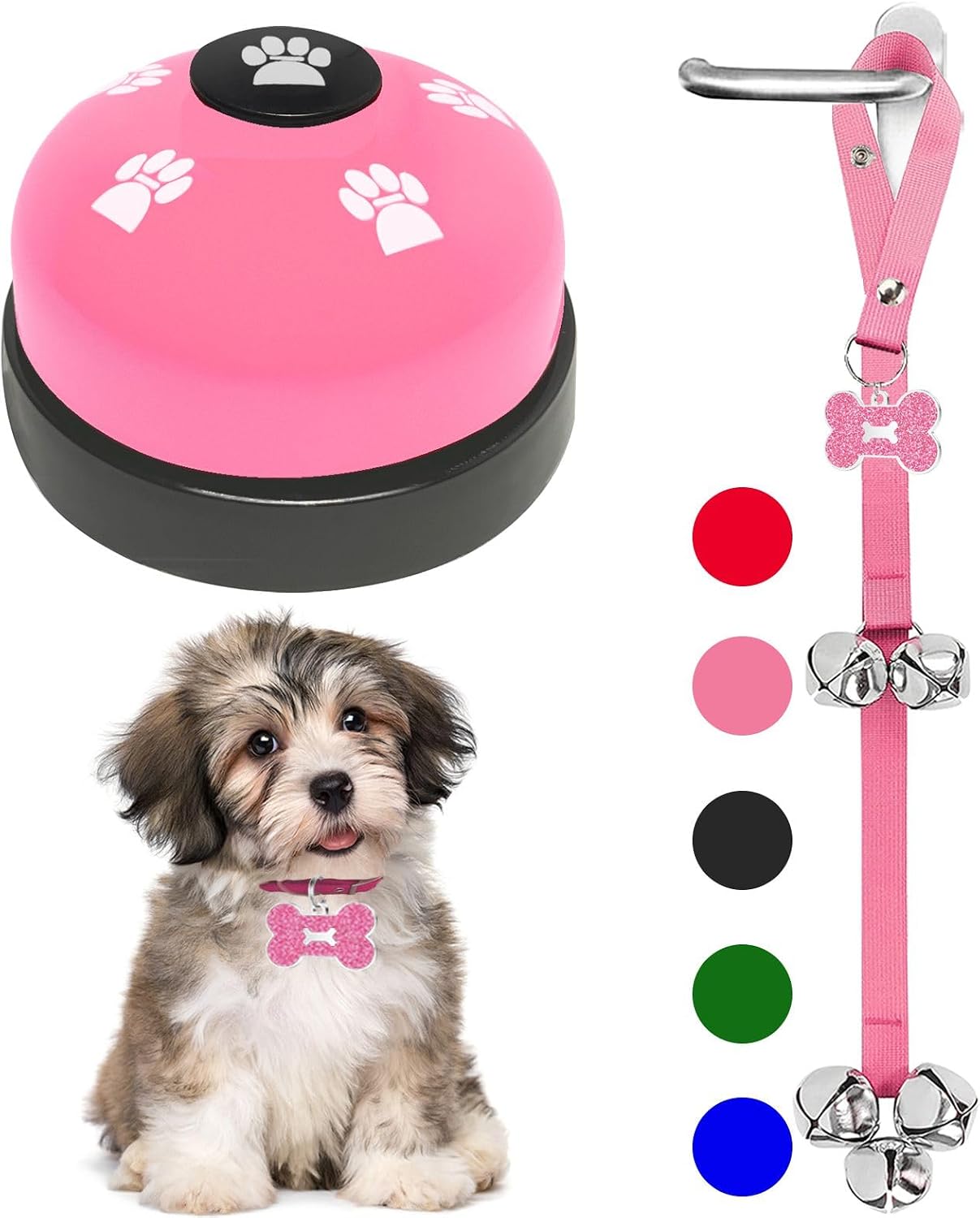
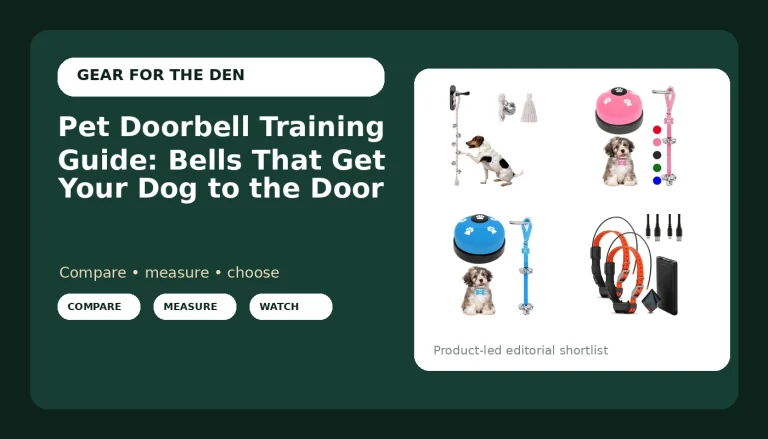
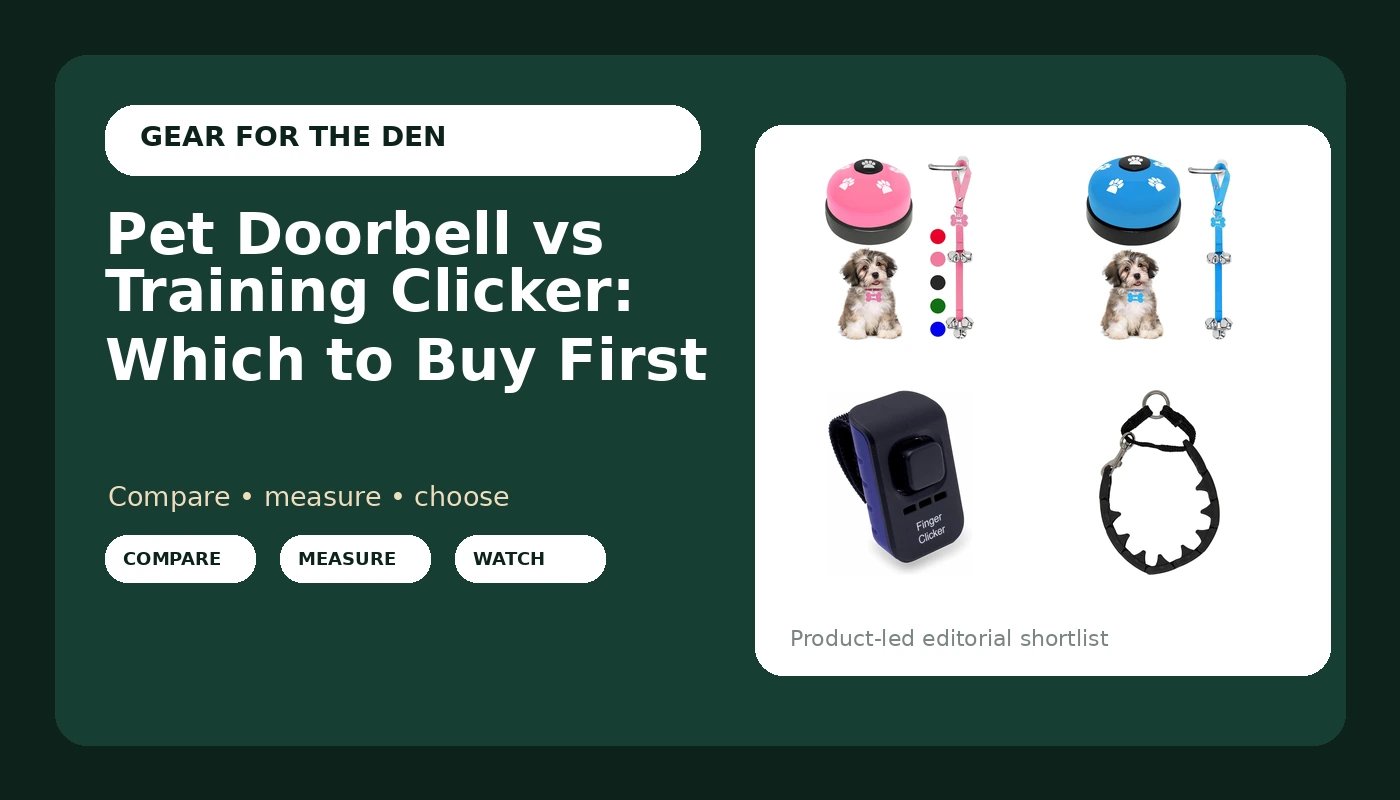
KEXIAVA 2 Pcs Dog Door Bells (Pink)
Two bells in the pack, so the door you actually use and the spare both get one, and the pink strap is easy to spot on a busy door
A bell carries one message only, and a dog who learns that ringing works will test it for walks and attention too
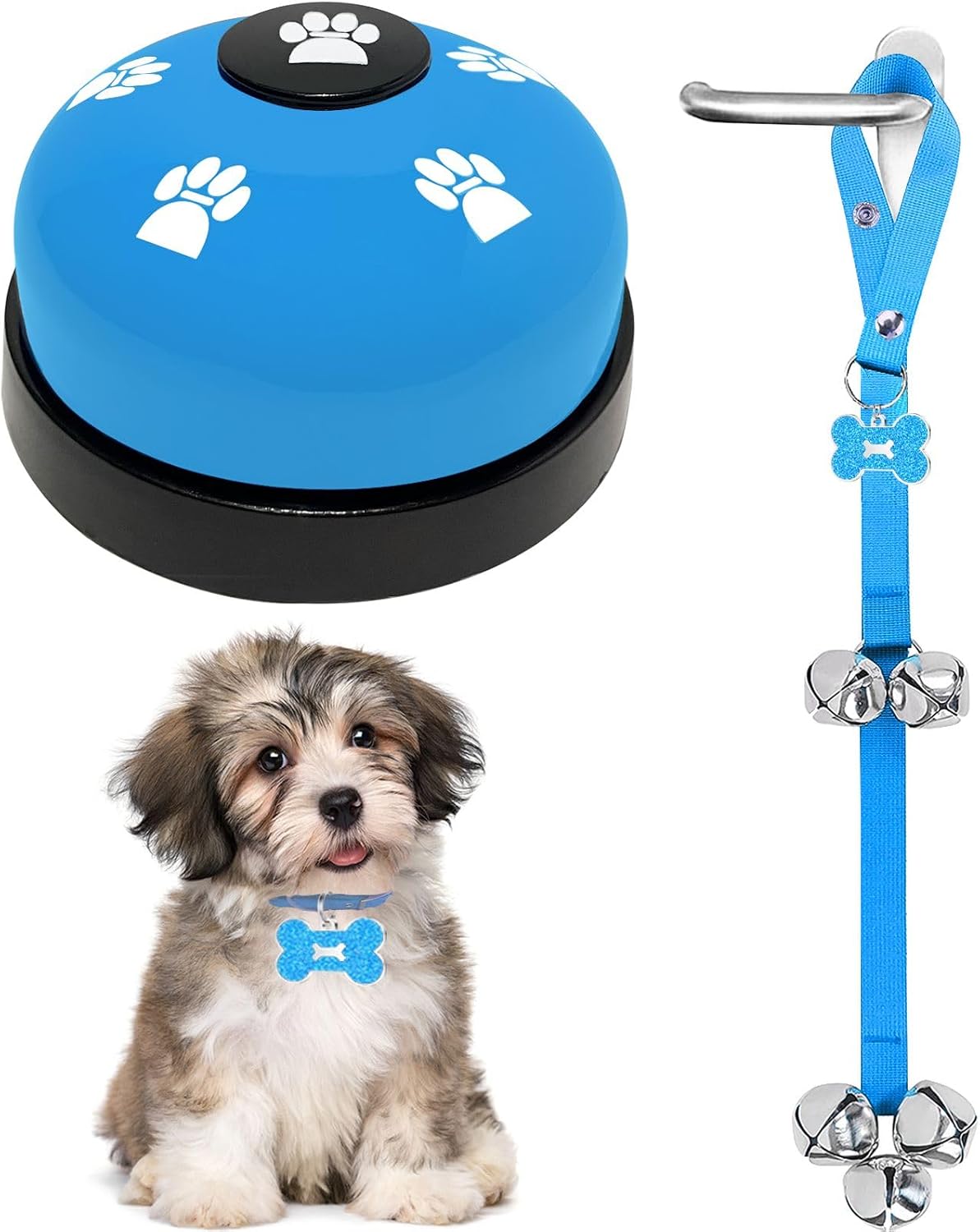
KEXIAVA 2 Pcs Dog Door Bells (Light Blue)
The same two-pack value in a light blue strap, which reads as the calmer of the two on a white door
Functionally identical to the pink pack, so the choice is cosmetic and nothing else
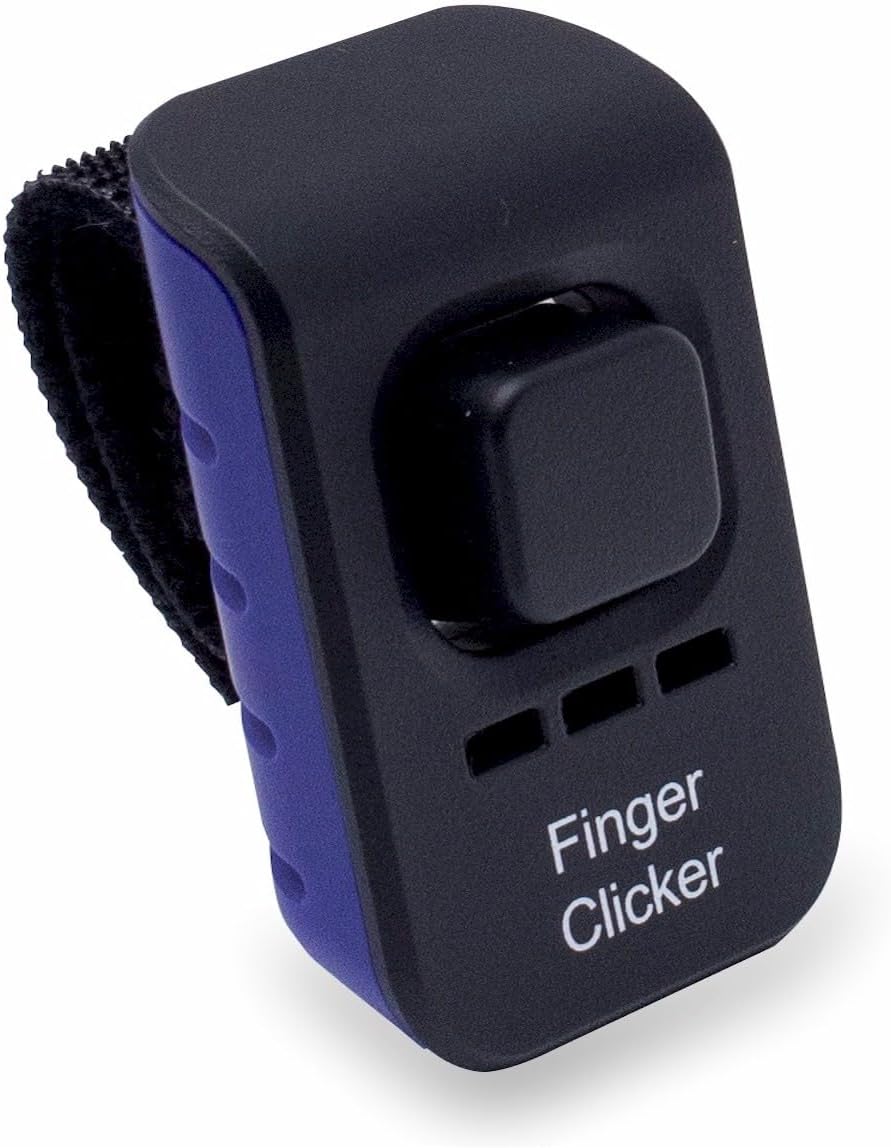
Educator E-Collar Adjustable Dog Training Finger Clicker, Blue
A finger clicker keeps the marker on your hand instead of in a pocket, and the adjustable band means it stays there through a walk
It marks behavior and teaches nothing on its own, so it is dead weight without treats and a plan
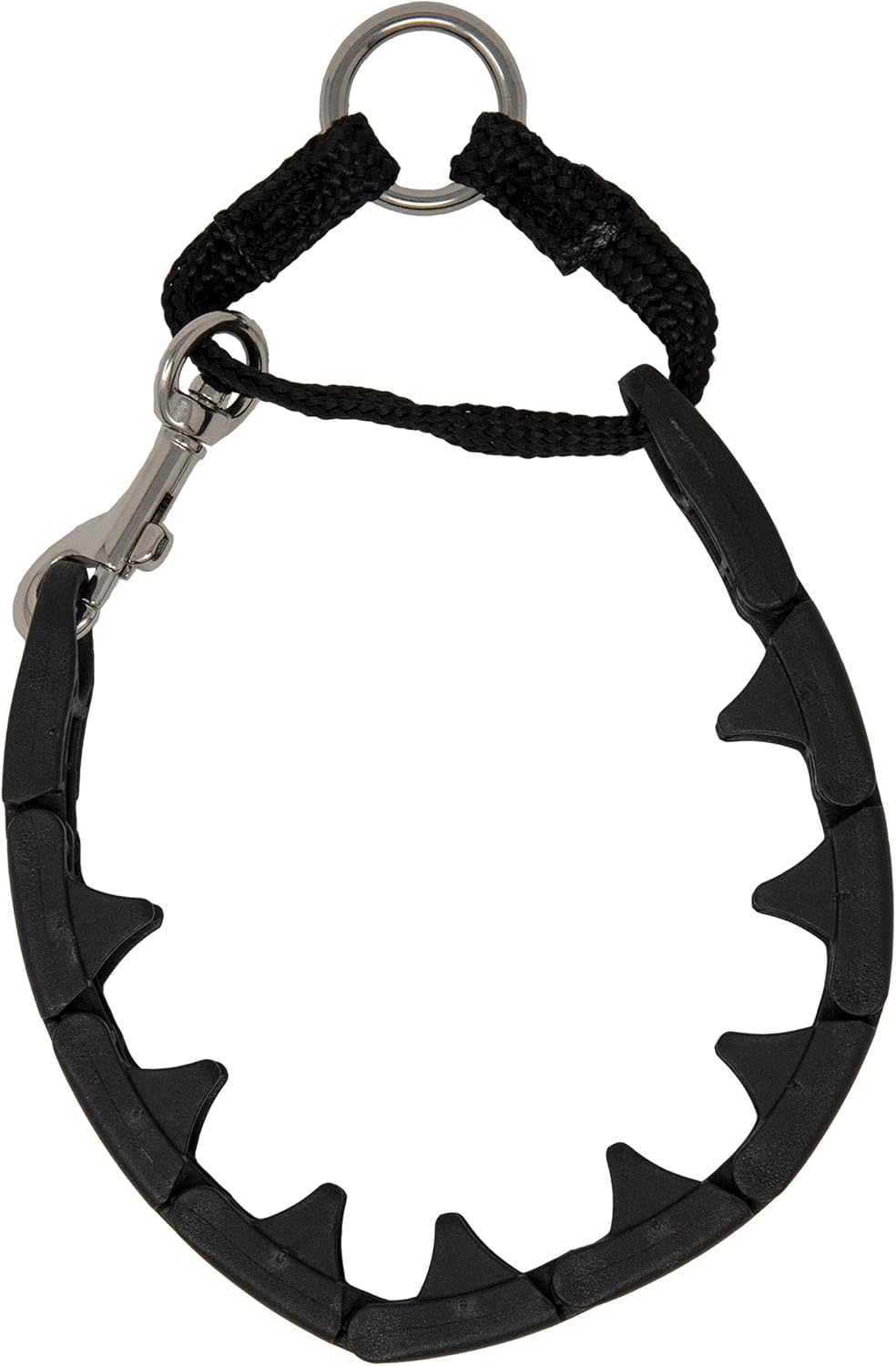
Starmark Pro-Training Dog Collar Small 15-inch, Humane No-Pull
Listed small at 15 inches, so it suits the puppy and small-breed necks this comparison is mostly about
It is walking equipment, not a training signal, and it does not replace reward-based teaching
Prices and availability may change.
How I sort training tools
Every tool on this list has to answer three questions. Does it tell the dog something the dog could not work out alone? Does it stay usable when your hands are full, your shoes are on, and the dog is already halfway out the door? And what happens when it breaks, gets lost, or gets picked up by a family member who never read the instructions?
A clicker answers all three. It is a small piece of plastic with a metal tongue that makes a consistent sound, and that consistency is the entire point. The sound is not the reward. The sound is a marker that tells the dog exactly which behavior earned the reward, and it sounds the same every time, which a human voice does not. That is why trainers reach for a clicker when they are shaping something new instead of just praising.
A doorbell answers the first two and fails the third if you get careless. It is not a marker in the same sense. It is a communication button that hangs on the door and that the dog learns to nudge or paw. The dog controls it. You respond to it. Nothing about the bell tells the dog what correct looks like, which means the bell only works after you have already taught the dog what you want.
A no-pull collar is a third category entirely. It is equipment the dog wears, not a signal you send, and it belongs in a separate conversation about walks.
The pet doorbell vs training clicker split, in plain terms
The difference between pet doorbell and training clicker is who starts the exchange. With a clicker, you start. You wait for the behavior, you click the instant it happens, and you hand over a treat. The dog learns that the click predicts food, and because a click is faster than your voice, the dog learns precisely which part of the last two seconds paid off.
With a doorbell, the dog starts. The dog walks to the door, rings the bell, and you take the dog out. The dog learns that the bell produces a result, and if you are consistent, the result is a potty trip.
That is the whole pet doorbell vs training clicker comparison in two sentences, and it explains why both get sold to the same buyer. A puppy learning to ask to go out is also learning what good means, and those are separate lessons. The bell handles the asking. The clicker handles the meaning. Use a bell as a marker and you get a dog who rings for attention. Use a clicker to teach a dog to ask to go out and you get a very well-marked puddle.
Doorbells: giving the dog a way to ask
The two KEXIAVA packs are the same product in different colors, and the difference between them is the strap. Each pack contains two bells, which matters more than it sounds. You can hang one on the back door and keep the second as a spare, or hang one low for a small dog and one higher for a tall one. The pink version is the easier of the two to see against a white door frame, which is a small thing until you are hunting for a bell in the dark.
The teaching sequence is short. Hang the bell on the door the dog actually uses, low enough that a nose or a paw reaches it without a jump. Before every potty trip, guide the dog to the bell, let it ring, then open the door immediately. Take the dog out, keep the trip boring, and reward after the dog goes, not before. Repeat until the dog rings without your help, then start fading your prompt.
Where it goes wrong is consistency. A bell is a request, and requests get answered. If one person opens the door for a potty ring and another opens it for a bored ring, the dog learns that ringing is a universal remote. Decide as a household that the bell means outside for business only, and that a non-potty ring gets a calm trip out and straight back in. The bell also covers one message. It will not tell you the water bowl is empty or the cat is on the counter.
If you want the two-pack for the door you use most, Check current Amazon price for the pink set or Check current Amazon price for the light blue.
Clickers: marking the exact moment
The Educator finger clicker is the version I would hand to a first-time owner. The adjustable band keeps it on a finger rather than loose in a treat pouch, so the marker is always one thumb movement away, and that matters because timing is the whole skill. A clicker that lives in your pocket is a clicker you will not reach for in the half second that decides whether the dog understands the lesson.
Charge the clicker before you use it for anything. Click, treat, click, treat, ten to fifteen repetitions across a few short sessions, with no behavior required. The dog does not have to do anything except learn that the sound predicts food. Once that connection is in place, you can mark a sit, a name response, four feet on the floor instead of two on your chest, or a potty in the right spot.
Three rules keep it honest. Click once per reward, because a double click muddies the signal. Click within about a second of the behavior, because the marker has to land inside the moment. And always pay after the click, even the clicks you did not mean to make, because a marker that lies stops working.
The clicker is also the tool that makes the doorbell easier to teach. You can mark the nose touch on the bell, mark the quiet wait at the door, and mark the potty itself. Used alone, the clicker will not stop a dog from asking to go out by staring at you in silence. It has no way to carry a message across the room. That job belongs to the bell.
The no-pull collar that lands in the same cart
The Starmark Pro-Training collar is listed as small at 15 inches, and it belongs in this article because it shows up in the same cart as the other two tools and gets confused with them. It is not a marker and it is not a communication button. It is walking equipment. A no-pull design works by changing what the dog feels when it pulls, so the dog's own forward pressure does the work instead of your arm.
Two things to get right. Measure the neck before you order, because a collar that is too loose slides and a collar that is too tight is unfair. And pair it with reward-based training rather than treating it as a fix. The collar prevents rehearsal of pulling, which is useful, but the dog still has to learn what you want instead. A clicker is what teaches that. Click the moment the leash goes slack, reward, repeat. The collar buys you the calm second you need to click.
If you are weighing pet doorbell or training clicker as your next purchase, the collar is the answer to a third question about walks, and it does not replace either one.
What the specs actually tell you
If you have been shopping connected pet gear, you have a list of specs in your head: battery life, signal range, app pairing, subscription, water resistance, camera resolution, portion accuracy, power backup. Those specs decide a smart feeder or a camera doorbell, and they are worth every minute you spend on them when that is what you are buying. None of the four items here are connected devices, and it is worth being explicit about which specs do and do not apply, because a comparison that borrows smart-home language for a metal bell helps nobody.
Battery life is not a factor in this group. A clicker has no battery, and the bells are mechanical. Signal range is measured in feet from the door, not in Wi-Fi strength, and the limit is how far your dog is from the knob. App pairing and subscription do not apply, because there is nothing to pair and nothing to pay monthly. Camera resolution belongs to a pet camera, portion accuracy belongs to an automatic feeder, and power backup belongs to anything that holds a schedule you cannot afford to lose. Water resistance matters if a bell hangs on an outside door in a wet climate, and it matters for a collar that goes on rainy walks.
What actually matters here is smaller and more useful: whether the sound is identical every time, whether the dog can operate the device without help, whether it survives being pawed at by a puppy, and whether every human in the house will respond the same way. Those four questions predict success better than any spec sheet.
Should you buy both, or pick one?
For a puppy under six months with no potty signal, buy both. The two tools are cheap enough that the combined cost is still less than a mid-range harness, and they cover different lessons. Use the clicker for everything except the potty request. Use the bell only for the door. Keep them separate in your own head so the dog can keep them separate in theirs.
If you are weighing a training clicker vs pet doorbell for an adult dog that already asks to go out, skip the bell and buy the clicker. You are paying for a tool the dog does not need.
If the only problem is a dog that stands at the door in silence, buy the bell and skip the clicker for now, then add a clicker when you start working on walks or recalls. The bell is a single-purpose tool, and that is a feature. It is not trying to be a full training system.
And if the dog already rings a bell you borrowed, or already comes running when you tap a spoon on a can, you have your answer. The tool is not the training. The repetition is.
Where these tools stop working
A doorbell stops working when the household stops answering it. It also stops working for a dog that learns to ring for walks, for dinner, or for the sheer pleasure of watching a human stand up. Fix that by making every ring a boring trip outside and nothing else.
A clicker stops working when the treats stop. It is a promise, and a promise you break a few times in a row is a clicker that means nothing. It also stops working when your timing slips, which is why the finger version beats the pocket version for anyone still learning the skill.
The no-pull collar stops working when it is used as a substitute for teaching. It manages a moment. It does not build a behavior.
Buy the clicker if you are teaching. Buy the bell if you are being asked to listen. Buy the collar if the walk itself is the problem. The pet doorbell vs training clicker choice only looks like a tie because the two tools sit in the same search results, and once you know who starts the conversation, the order is obvious.