Reptile Terrarium Size Guide: How to Size a Tank for Heat and UVB
A reptile terrarium size guide that matches tank size to basking temperature, UVB output, and the fixtures that actually fit the enclosure.
Every reptile terrarium size debate starts with a number and ends with a shrug, because the number is only half the answer. A 40 gallon breeder is a palace for a leopard gecko and a starter box for a juvenile bearded dragon that will outgrow it inside a year. What actually decides whether an enclosure works is the gradient you can build inside it: a basking temperature at one end, a cool retreat at the other, and enough distance for UVB output to land in a useful range instead of blasting one corner. Get the reptile terrarium size wrong and no fixture on the market can rescue the setup.
This reptile terrarium size guide is built around the lighting half of that math, because lights are what turn a glass box into a habitat. Four pieces of gear come up again and again in the enclosures I set up: two deep dome fixtures that hold the heat, one compact tropical UVB bulb, and a smaller dome that earns its place as a second basking point on shorter tanks. Below is how I size an enclosure, how each of those pieces fits, and the tank size numbers I use as a starting point.
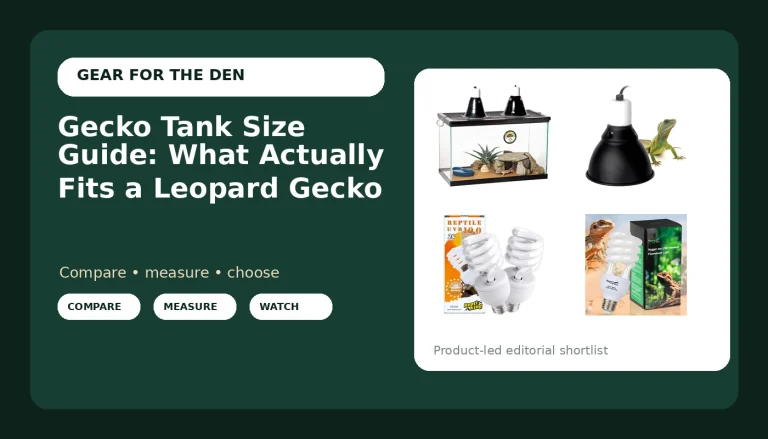
Best Overall: CAVACHEW 2 Pack Reptile Light Fixture, 8.5in Deep Dome Reptile Lamp Fixture, Optical Reflection Cover, Separate Switch & Hook, Terrarium Light Fixture for Reptile Heat Basking UVB Bulbs, 150W, Black
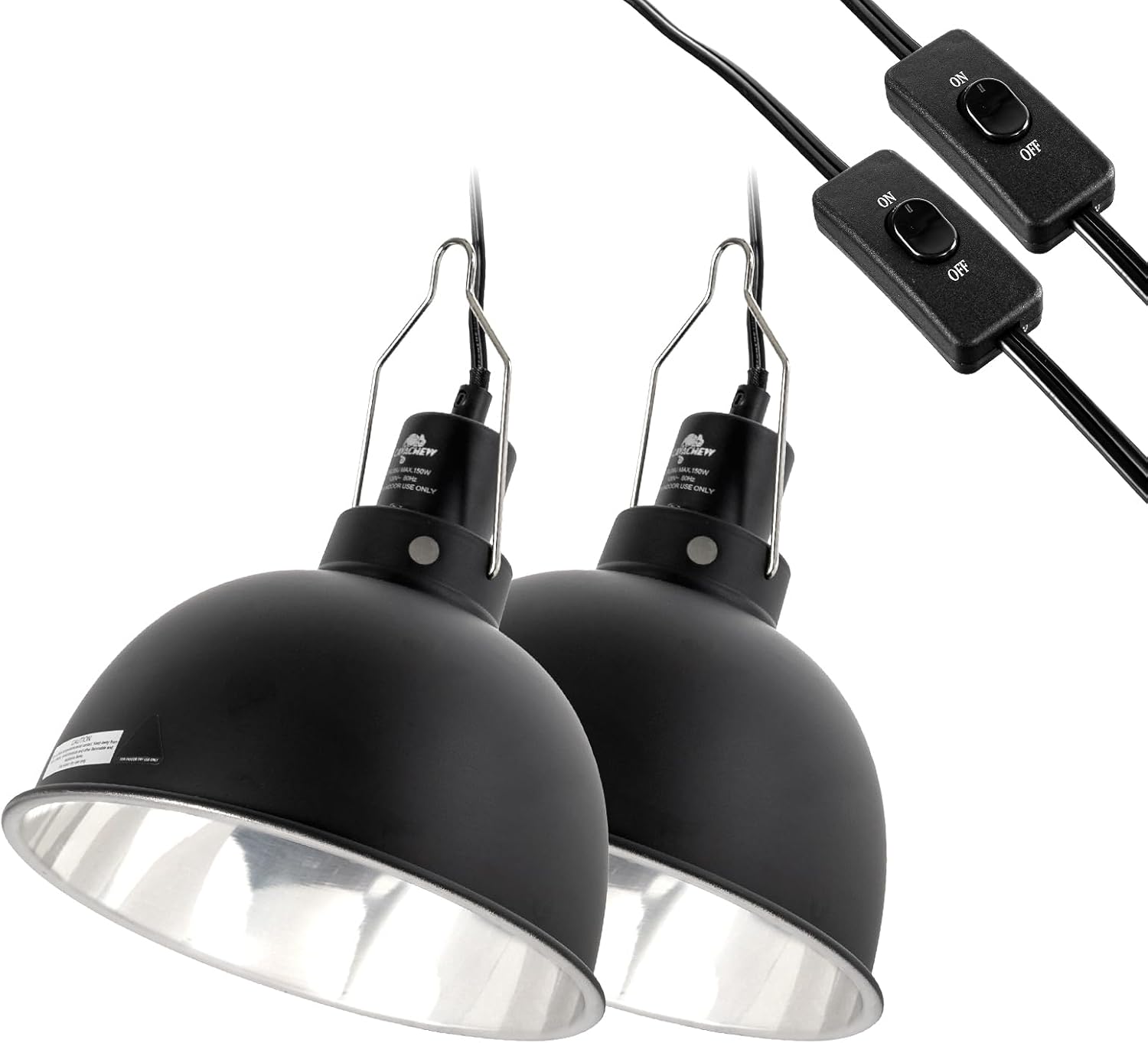
Once an enclosure passes about 36 inches wide, one bulb stops being a heat source and starts being a spotlight. That is the point where this two-pack earns its keep. Two 8.5 inch deep domes let you put a basking bulb over the hot end and a second heat source or UVB lamp over the middle, which is how you build a real gradient in a 4 x 2 x 2 foot bearded dragon enclosure instead of one warm rock and a lot of wasted air.
The deep dome shape matters more than people expect. A shallow fixture throws heat sideways across the ceiling of the tank. The deeper shell and the optical reflection cover push more of that energy straight down onto the basking surface, so the basking temperature your probe reads is closer to what the animal actually feels. Each fixture has its own switch, which sounds minor until you want to run a ceramic heat emitter overnight and kill the visible light without unplugging anything. The hooks let you hang the domes from a screen top or a stand rather than clamping them to glass, and the 150W rating leaves room for a genuine heat emitter in a cold room. The black finish disappears against a dark stand.
Two domes also solve a tank size problem that no single fixture fixes. When a juvenile bearded dragon moves from a 40 gallon breeder into a 4 foot enclosure, the right answer is not a bigger bulb. It is a second fixture point. Check current Amazon price.
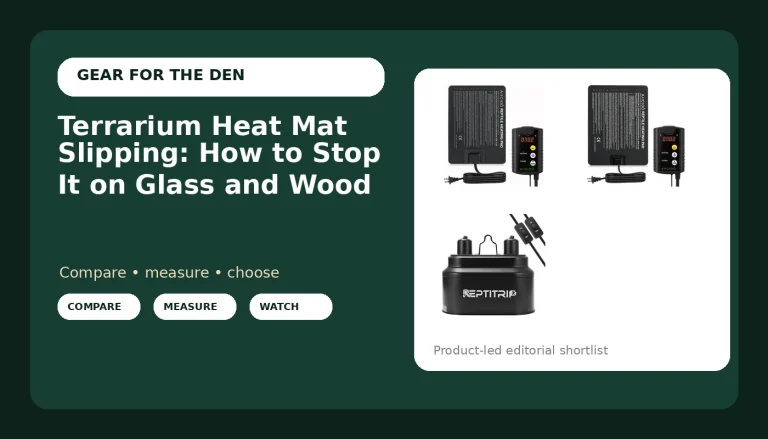
Best Value: 5.5 Inch Reptile Deep Dome Light Fixture – UVB Heat Lamp Holder with Ceramic Socket for Bearded Dragons, Geckos, Turtles – Hanging Hook Design with Safety Switch for Terrarium Lighting
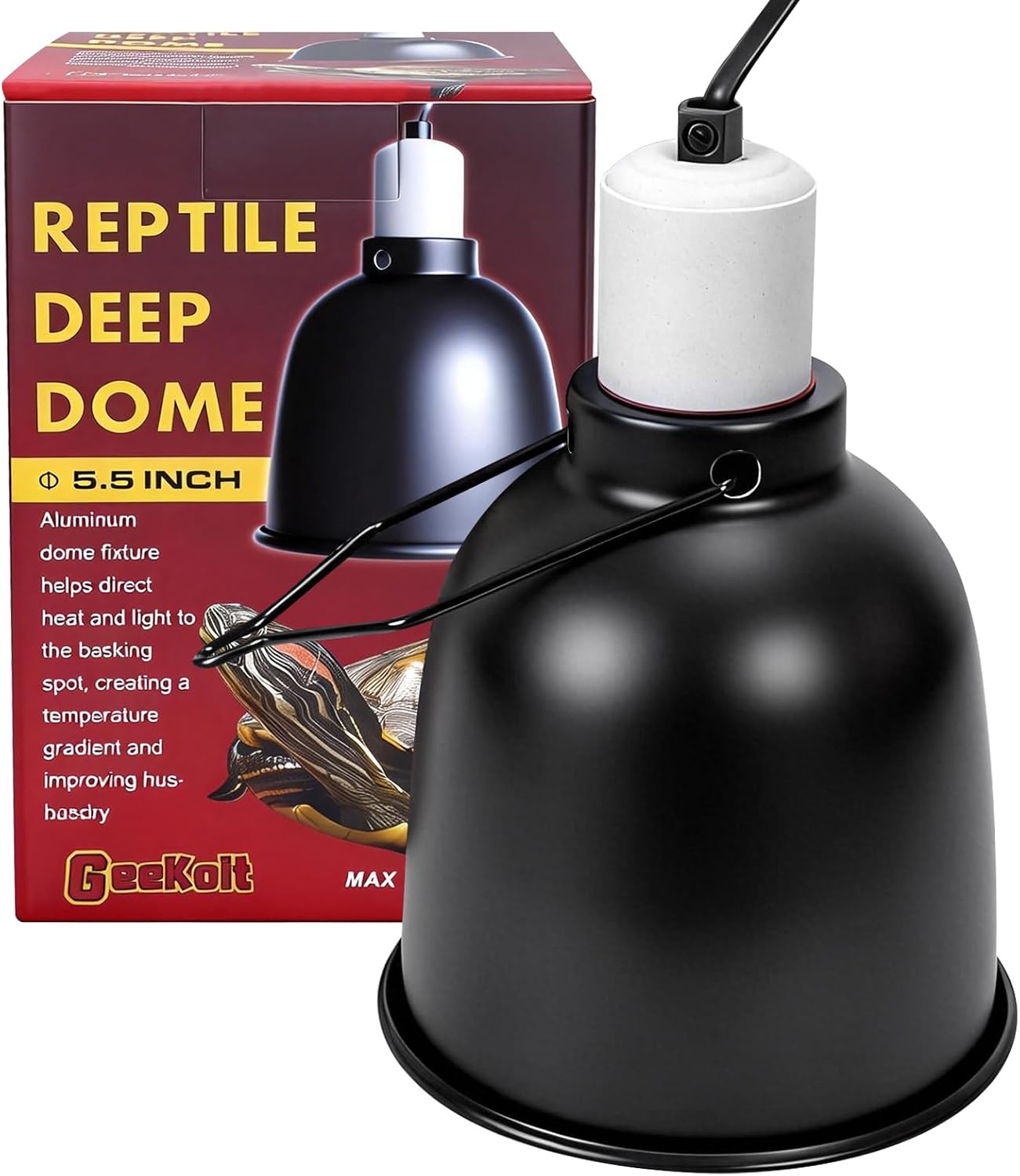
If your enclosure is under 36 inches wide, or you need one more heat point on a tank you already own, this is the fixture I would buy first. It is a single 5.5 inch deep dome with a ceramic socket, and the socket is the part that matters: ceramic shrugs off the heat from a basking bulb or a compact UVB lamp, where plastic sockets go brittle after a couple of seasons.
The hanging hook and the safety switch are the details that make it easy to live with. The hook lets you hang the dome inside a screen-top enclosure or from a stand above an open-top tank, so the beam lands where you aimed it instead of drifting as the dome settles. The safety switch gives you a real off position rather than a plug you have to yank out of the wall.
On a 20 gallon long or a 40 gallon breeder it covers the basking zone on its own. On a taller tank it becomes the second or third point in the gradient, which is exactly how I use it: a bigger dome over the hot spot, this one over the warm middle, a hide at the cool end. It is also the fixture I keep for quarantine and hospital tanks, where the setup is temporary and I do not want to rewire anything. Check current Amazon price.
How I tested
I test fixtures and bulbs against enclosure size, because size is the only thing that decides whether a light is doing its job. Every fixture went onto a real tank, from a 10 gallon quarantine box up to a 4 x 2 x 2 foot bearded dragon enclosure, with a probe thermometer and an infrared gun checking the basking surface and the cool end.
The checks that separate a good fixture from a frustrating one:
- Does the dome focus heat down onto the basking spot, or spill it across the ceiling? I read the surface temperature directly under the fixture, then again 12 inches to the side.
- Does the socket survive a hot basking bulb and a ceramic heat emitter, not just a cool LED?
- Can you aim the beam? A hook or clamp that holds the dome level beats one that droops over a week.
- Does the switch work one-handed while you are holding an animal?
- Does the fixture fit the tank? A dome that is too wide for a 20 gallon long leaves no room for a hide.
I ran the same routine on each fixture for a month of daily use, then moved them between tanks to see whether the coverage math held up when the tank size changed.
Analysis and test results
Getting the correct reptile terrarium size is a lighting decision as much as a floor plan decision, and the fixtures have to keep up with three things at once.
Coverage first. A single 5.5 inch dome throws a usable basking pool roughly 10 to 12 inches across when it sits 10 to 12 inches above the surface. That is the whole hot end of a 20 gallon long and only a corner of a 4 foot tank. The 8.5 inch domes in the two-pack throw a wider, softer pool, which is why a 120 gallon build wants two of them rather than one oversized bulb.
Heat second. Basking temperature is a target, not a wattage. A 40 gallon breeder with a screen top loses heat fast, so a 100W basking bulb in a deep dome may only reach the low end of the range you need, while the same bulb in a closed wooden enclosure can overshoot. That is what a thermostat range is for: put the probe on the basking surface, not on the wall, and let the controller cycle the fixture. A heat mat wattage rating is a separate calculation and should never be your only heat source in a tank taller than about 12 inches.
Light third. UVB output falls off with distance, so a taller enclosure needs either a stronger bulb or a fixture that mounts lower. In a 24 inch tall tank, a compact 5.0 bulb in a deep dome gives you a usable band near the top third. In an 18 inch tall tank, the same bulb covers most of the climb. Substrate depth changes this too, since four inches of soil or sand raises the animal closer to the light and quietly shortens the distance you calculated.
The details that decide whether an enclosure actually works:
- Hide size should run about one and a half times the animal's length, and it has to fit inside the footprint left over after the fixtures.
- Humidity range is easier to hold in a bigger tank with deeper substrate, which is the hidden advantage of sizing up.
- Cool end temperature matters as much as the hot spot. If both ends read the same, the tank is too small for the gradient you built.
The reptile terrarium size reference table
These are the numbers I start from when someone asks what tank to buy. There is no single ideal reptile terrarium size, because the same animal at two life stages needs two different boxes. The table assumes one adult animal and a setup with a real gradient rather than a single bulb in the middle.
| Enclosure class | Minimum tank size | Basking temperature | UVB output | Notes |
|---|---|---|---|---|
| Leopard gecko (adult) | 40 gallon breeder, 36 x 18 in | 88-92 F over the heat mat | 2.0 to 5.0, or none | heat mat wattage 8 to 16 W, substrate depth 2 to 3 in |
| Crested gecko (adult) | 18 x 18 x 24 in tall | 78-82 F ambient, no hot spot | 2.0 to 5.0 tropical | humidity range 60 to 80 percent |
| Bearded dragon (juvenile) | 40 gallon breeder | 105-110 F | 5.0 compact | plan the upgrade before you need it |
| Bearded dragon (adult) | 4 x 2 x 2 ft, 120 gallon | 100-105 F | 10.0 T5 or twin 5.0 | two basking points |
| Ball python (adult) | 4 x 2 x 2 ft | 88-90 F | optional 2.0 to 5.0 | humidity range 60 to 80 percent |
| Corn snake (adult) | 48 x 24 x 24 in | 85-88 F | optional 2.0 to 5.0 | clipped lid, no gaps |
| Veiled chameleon (adult) | 24 x 24 x 48 in screen | 85-90 F | 5.0 tropical compact | 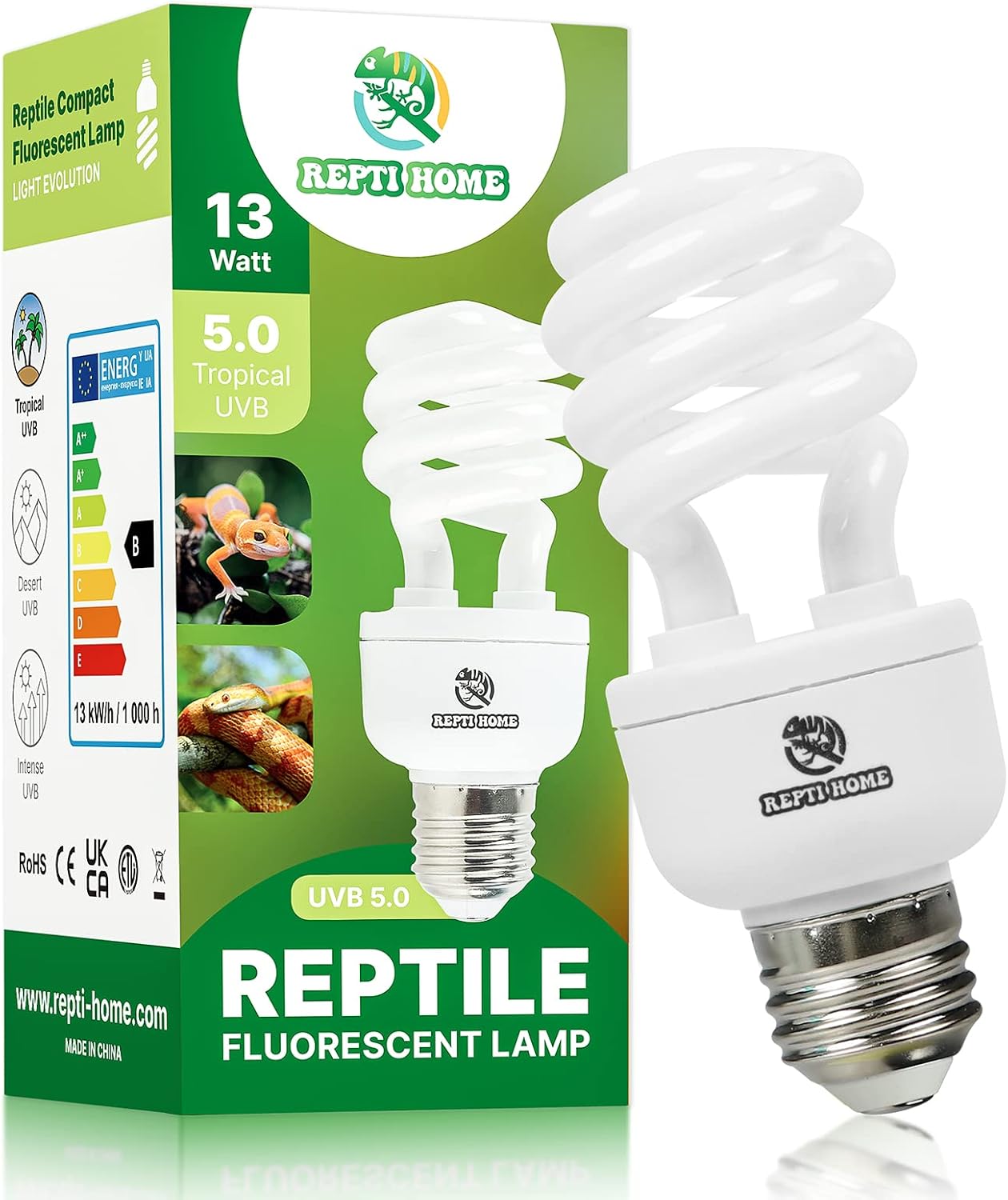 screen top and dripper |
| Red-eared slider (adult) | 75 to 120 gallon | 90-95 F on the dock | 10.0 or 5.0 | 10 gallon per inch of shell |
Read the table by column, not by row. Tank size sets the floor plan, basking temperature sets the bulb, and UVB output sets the distance between the fixture and the animal. A 40 gallon breeder is a fine juvenile bearded dragon enclosure and a poor adult one, and the only things that change between those two setups are how far the light has to travel and how many fixture points you need to cover the floor. If you are sizing up, add a fixture before you add wattage.
The 5.5 inch dome for small and quarantine tanks
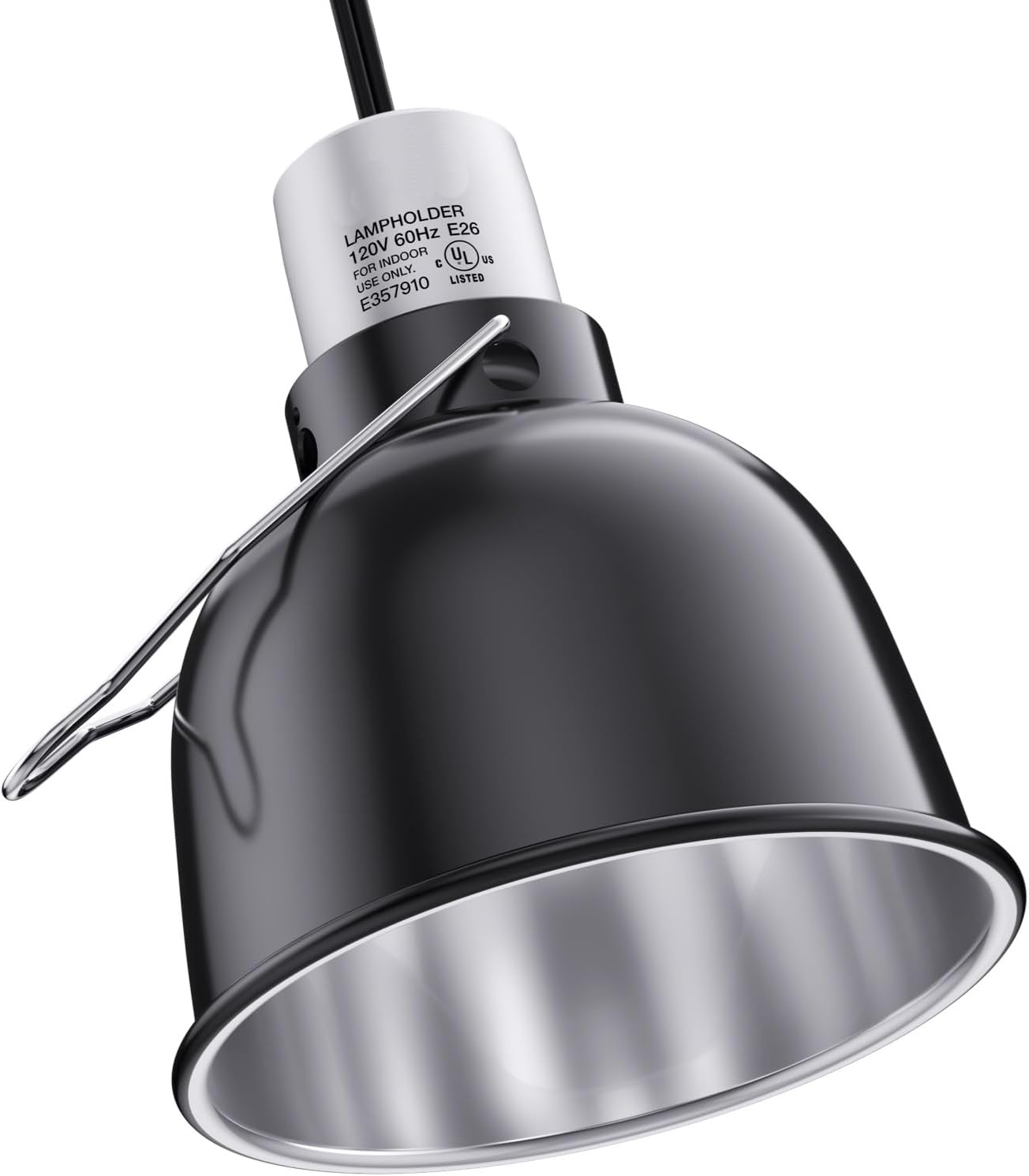
Small tanks are where a fixture gets judged on the socket and the switch rather than the dome depth. This 5.5 inch dome lamp uses a ceramic socket, so it takes a heat emitter as happily as a basking bulb, and the narrow shell fits the lid of a 20 gallon long without hanging over the edge. That last part matters more than the spec sheet suggests: on a small enclosure, a dome that is too wide forces your hide and your water dish into the cool corner.
It is the fixture I would hand someone setting up a first leopard gecko tank, a quarantine box, or a second heat point on a taller build. Check current Amazon price.
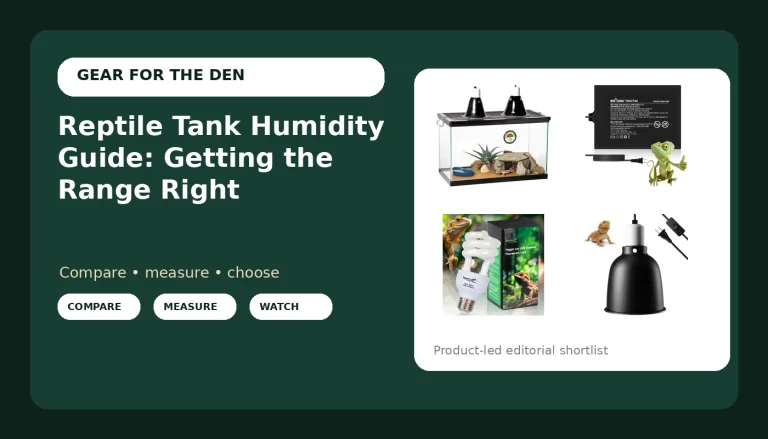
The 5.0 compact bulb for tropical gradients
The 5.0 rating and 13W draw make this a tropical and sub-tropical bulb, which is exactly what a crested gecko, a chameleon, or a turtle setup wants. It is not a desert bulb at distance. In an 18 x 18 x 24 inch enclosure, or a 24 x 24 x 48 inch screen cage where the animal climbs within a foot of the fixture, it puts usable UVB into the top third of the tank.
Sizing it is a distance problem, not a wattage problem. Mount it in a deep dome, keep the basking branch inside the band, and pair it with a separate heat source so the light and the warmth can be aimed independently. Check current Amazon price.
Should you buy the CAVACHEW 2 Pack Reptile Light Fixture, 8.5in Deep Dome Reptile Lamp Fixture, Optical Reflection Cover, Separate Switch & Hook, Terrarium Light Fixture for Reptile Heat Basking UVB Bulbs, 150W, Black?
Yes, if your enclosure is 4 feet wide or you plan to get there. This is the pair that turns a big tank into two climate zones, and the separate switches mean you can run heat overnight and light during the day without touching a plug. The optical reflection cover and the deep shell put the heat where the animal sits, which is the difference between a basking temperature that holds and one that reads high on the wall and low on the rock.
It is more fixture than a 20 gallon needs, and on a small tank the second dome will sit unused. If you are staying under 36 inches, buy the single dome instead and spend the difference on a thermostat. If you are sizing up to a bearded dragon adult enclosure, buy this and stop guessing.
Should you buy the 5.5 Inch Reptile Deep Dome Light Fixture – UVB Heat Lamp Holder with Ceramic Socket for Bearded Dragons, Geckos, Turtles – Hanging Hook Design with Safety Switch for Terrarium Lighting?
Yes, for most keepers. It is the fixture that fits the tanks most people actually start with, the ceramic socket survives real basking bulbs, and the safety switch and hanging hook make it easy to aim and easy to shut off. As a second heat point on a bigger build it does the same job as a dome twice the price.
Where it falls short is coverage. One 5.5 inch dome cannot warm a 4 foot tank, and no bulb swap fixes that, because the limit is the size of the beam rather than the wattage behind it. Buy it for a 20 gallon long, a 40 gallon breeder, or a quarantine box, and buy the two-pack when the enclosure grows past 36 inches.