If you are comparing reusable vs disposable pee pads, the decision usually comes down to three things: how much mess you are managing, how often you want to wash, and whether your pet's accidents are predictable. In a multi-pet home, the answer is rarely one product. It is a mix of washable pads for dogs, a containment system for cats, and a routine that keeps odor and moisture from reaching carpets and furniture. This comparison looks at four products that cover those jobs, including two washable dog pads and two cat litter solutions, and explains where each one fits.
The best setup for most pet homes is a layered one: a large washable pad for the main accident zone and a smaller multi-pack for crates, carriers, and quick cleanups. For cat-only homes, the choice is between an automatic litter box and a furniture-style enclosure, and that depends on whether you want less daily scooping or less visible litter scatter.
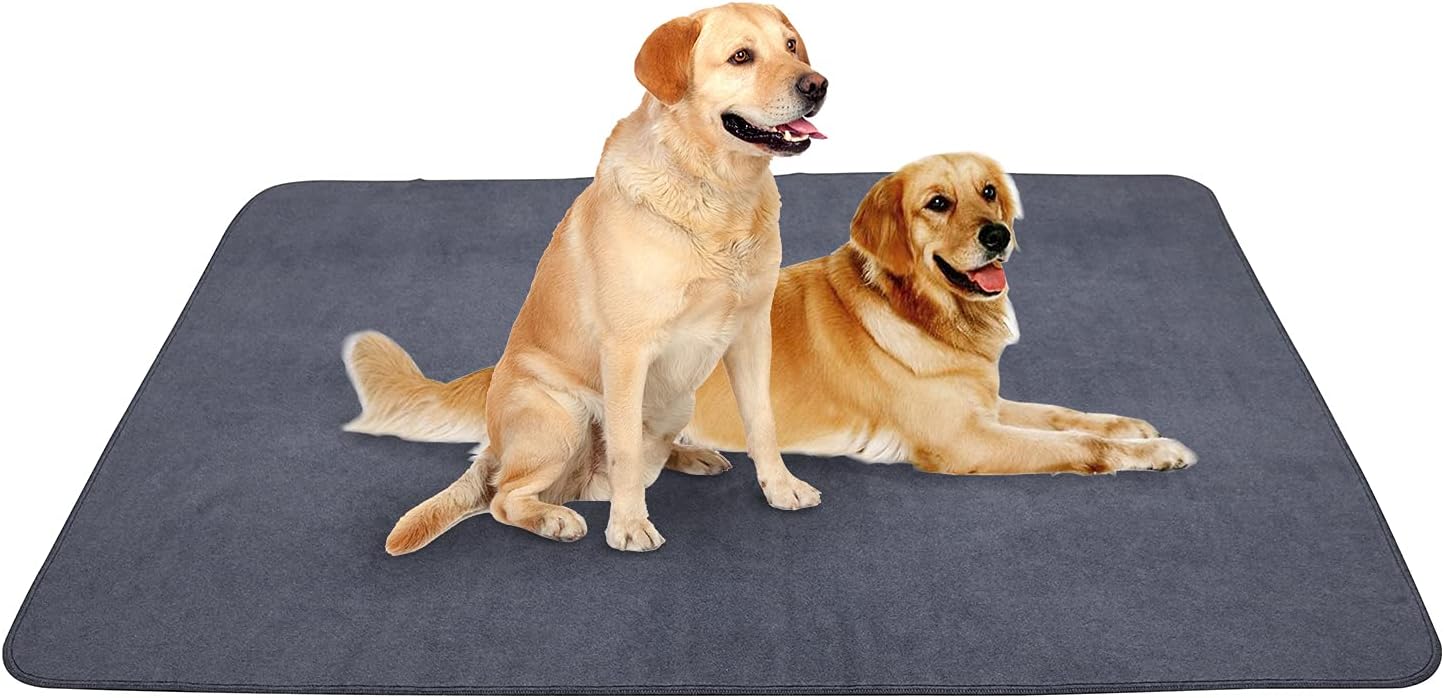
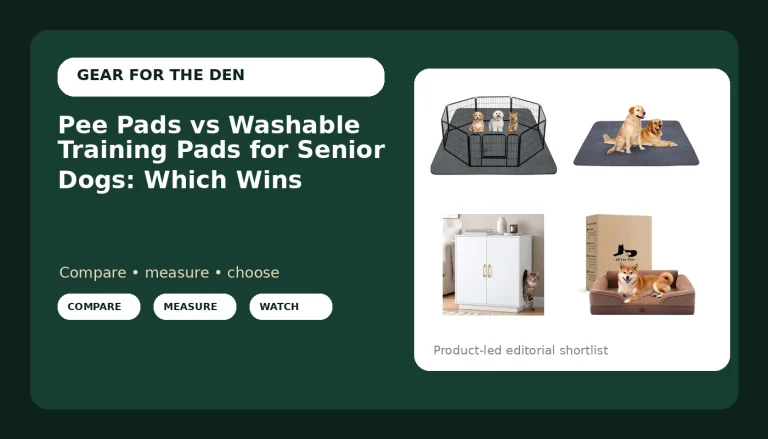
Peepeego Non-Slip Dog Pad 72"x72", Washable Pee Pad Waterproof for Training, Whelping
The 72"x72" size covers a full whelping box or a large training zone, and the non-slip, waterproof, washable build is made for repeat use
It needs a lot of floor space and a washer that can handle a very large pad
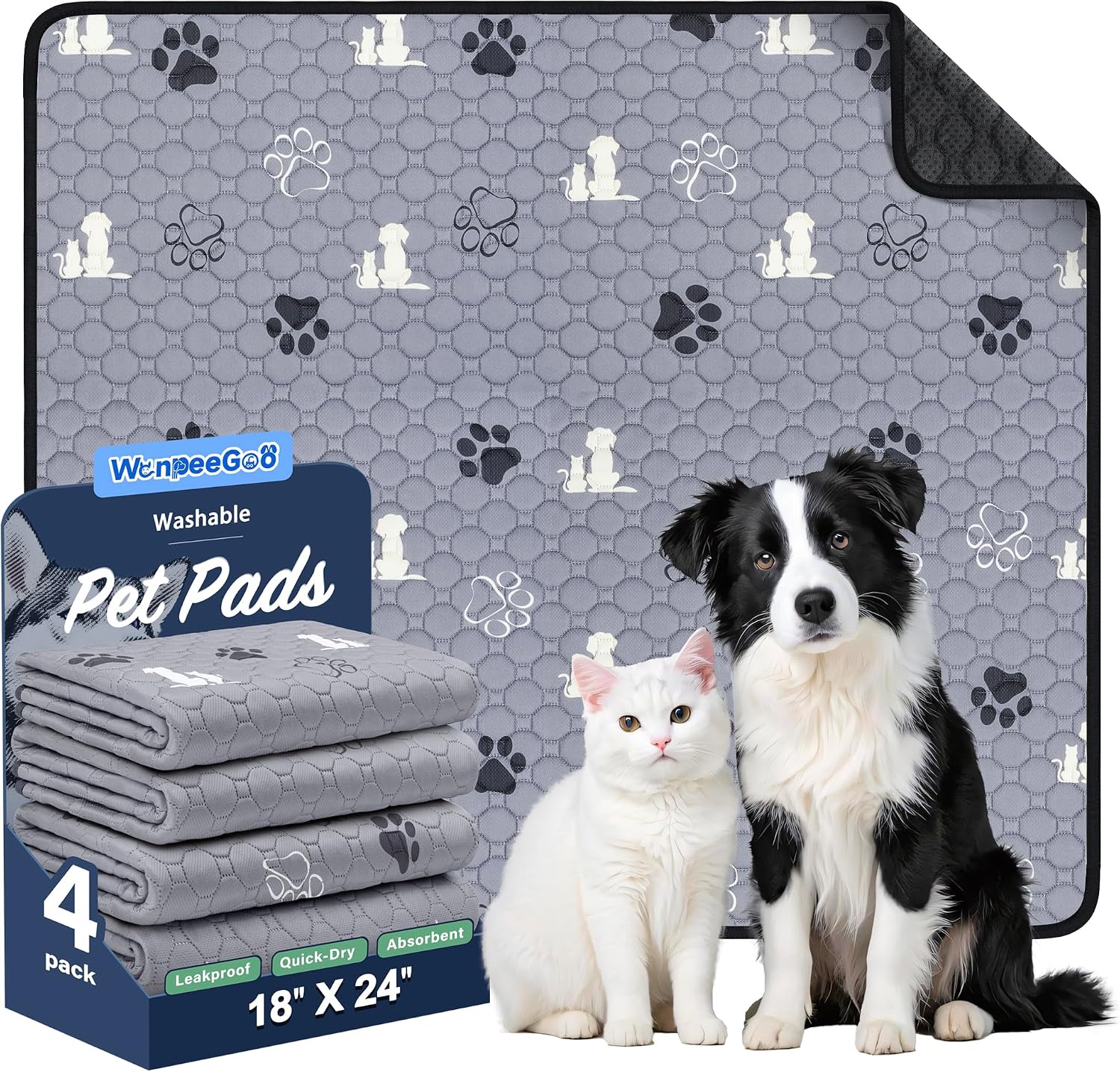
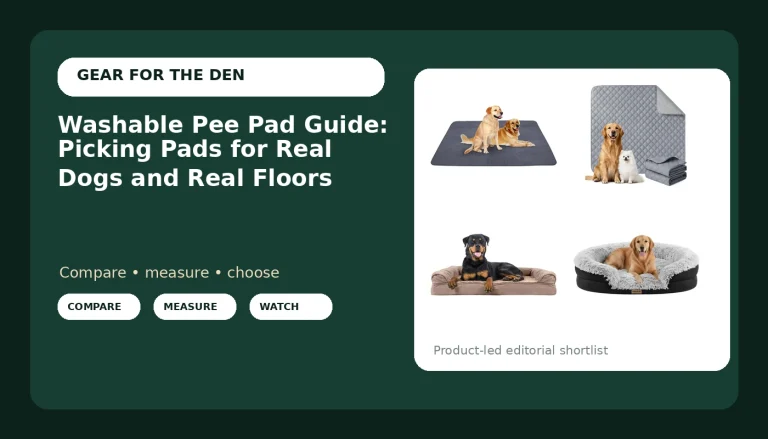
WanpeeGoo Washable Pee Pads for Dogs, Waterproof, 18 x 24 in, 4 Pack, Gray
Four 18 x 24 in pads give you rotation for crates, carriers, and small accident zones while others are in the wash
The smaller size is not a match for large breeds, whelping areas, or full-room protection
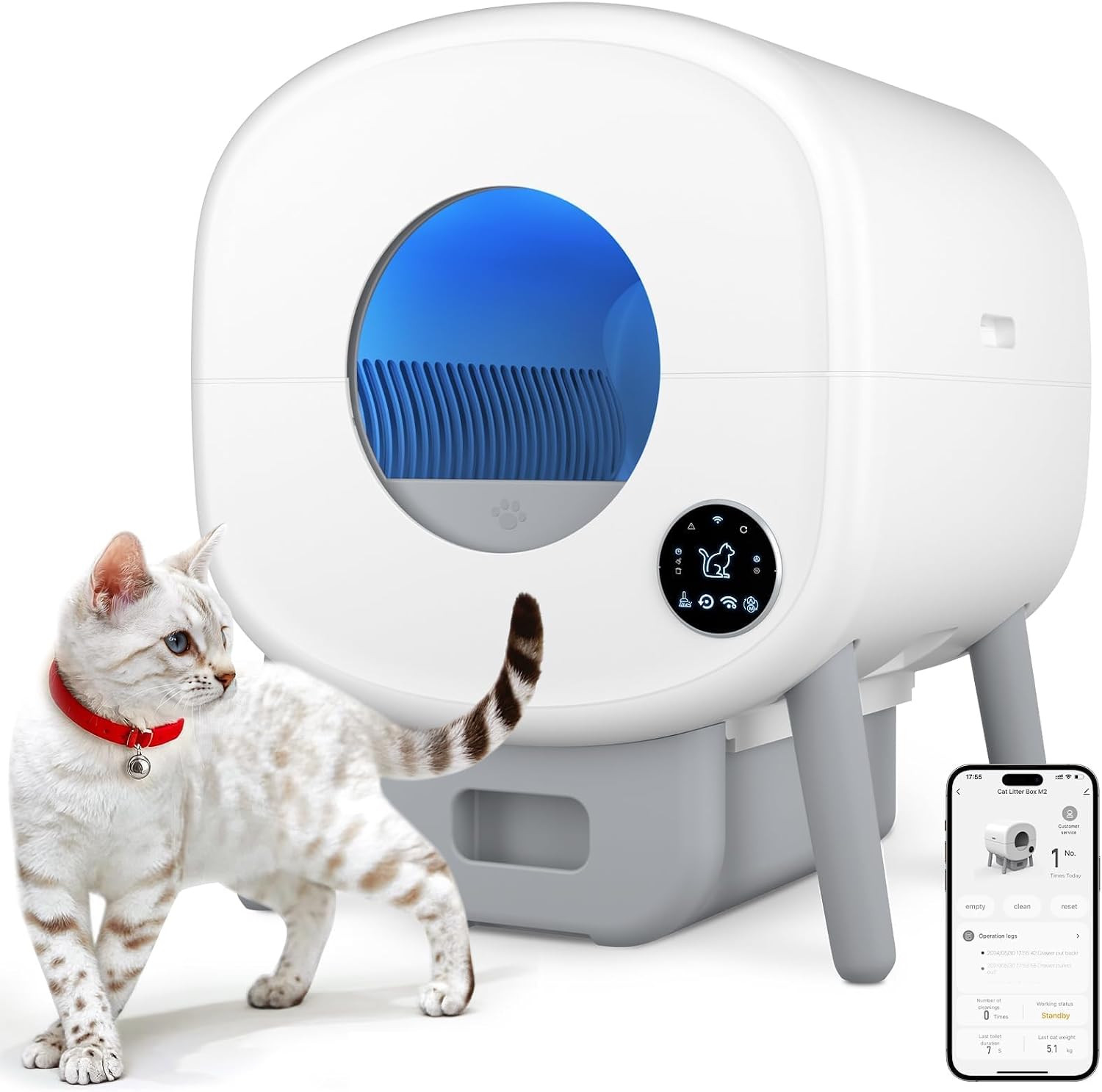
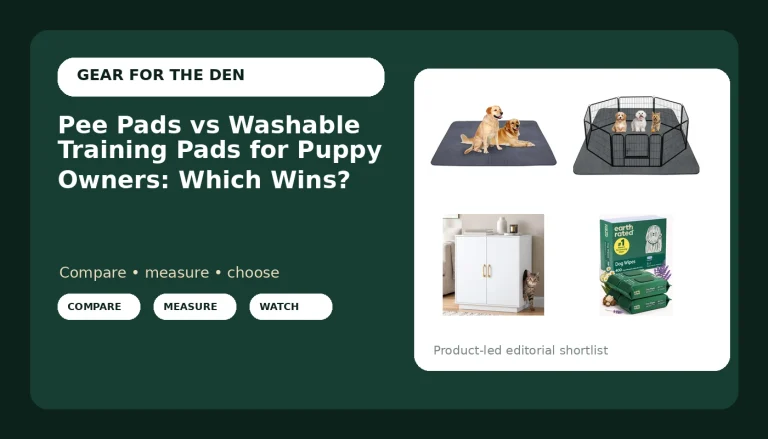
Cumrige Automatic Litter Box,Safety Sensor,App Control,95L Large Capacity
Automatic cleaning, a safety sensor, app control, and a 95L capacity address daily scooping and odor containment in one unit
It is a cat-specific appliance, so it does not replace pee pads for dogs, and it depends on power and an app
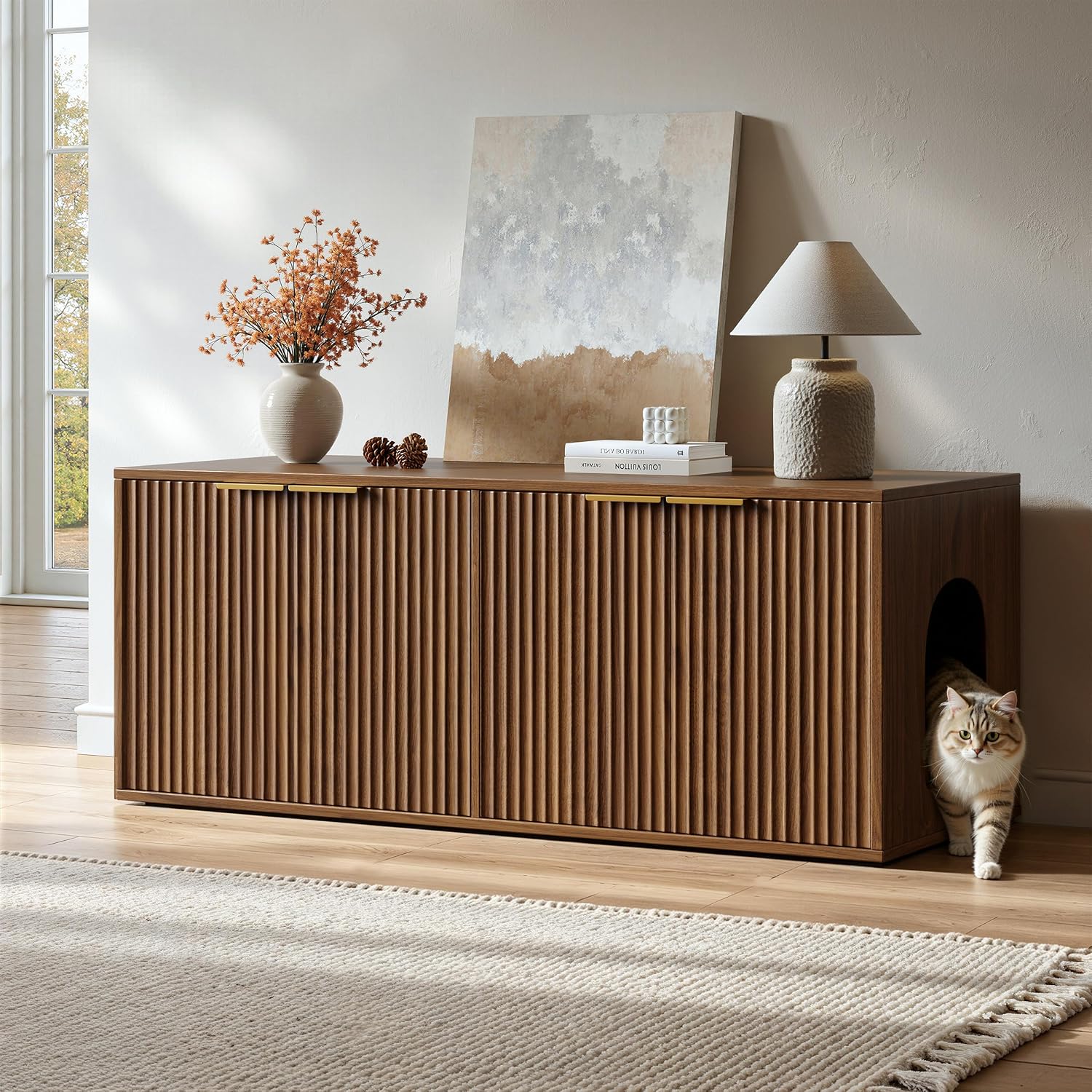
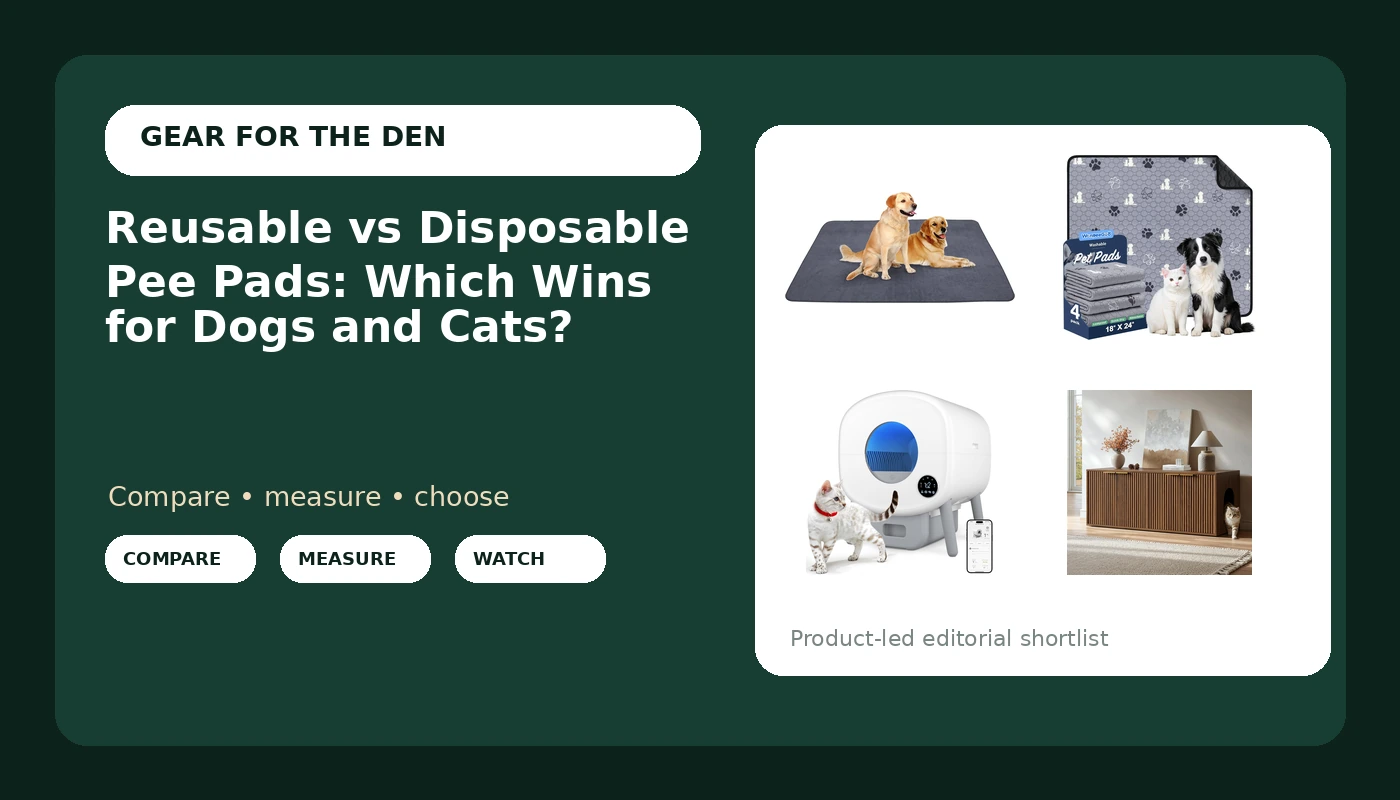
Evermagin 47.2" Walnut Litter Box Enclosure Furniture for 2 Cats
A walnut furniture enclosure sized for two cats hides the litter box and helps contain scatter in a shared room
You still need a litter box inside it, and it does not help with dog accidents or floor puddles
Prices and availability may change.
reusable vs disposable pee pads: the core trade-offs
The difference between reusable and disposable pee pads is mostly a difference in where the waste goes. Disposable pads are designed to be thrown away after one use, so they favor speed and zero laundry. Reusable pads are designed to be washed and used again, so they favor lower ongoing waste and a steadier routine. Neither is automatically better. The right choice depends on your pet, your schedule, and how much floor you are trying to protect.
Disposable pads usually combine a soft top sheet, an absorbent core, and a waterproof backing. Reusable pads swap that one-time core for layers of fabric and a liner waterproofing layer that can survive many wash cycles. That changes the math on pad absorbency. A disposable pad is engineered for a single high-volume event. A reusable pad is engineered to hold up to repeated washing, which means the fabric has to stay absorbent and the backing has to stay waterproof after the tenth or twentieth wash.
Enzyme concentration matters here too. If urine reaches carpet, a cleaner with a high enzyme concentration breaks down the uric acid crystals that keep pets returning to the same spot. A pad catches the liquid before it gets there. An odor neutralizer helps with the smell in the room, but it does not replace a proper enzyme cleaner for accidents that soak through.
What pad absorbency and liner waterproofing actually mean
Pad absorbency is not just about how much liquid a pad can hold. It is also about how fast it pulls liquid away from the surface. A pad that pools urine on top is a pad that will be tracked across the floor. Look for a pad that wicks moisture into the core and keeps the top layer feeling dry. For reusable pads, that top layer also needs to release the moisture in the wash, or the pad will hold odor over time.
Liner waterproofing is the second half of the job. A waterproof liner protects carpet, hardwood, and fabric from the liquid that passes through the absorbent layer. On a disposable pad, the liner is a thin plastic film. On a reusable pad, it is usually a coated fabric or a laminated layer. The liner is the part that decides whether a pad is carpet safe. If the liner fails, the pad is just a wet cloth on your floor.
Pad size is the third variable. A pad should be larger than the accident zone, not exactly the same size. Dogs that circle before they go need room for the circle. Puppies in a whelping box need coverage that reaches the walls. Cats are a different story. They do not use pee pads the same way, which is why the cat products in this comparison focus on litter containment rather than floor pads.
Washable dog pads: Peepeego and WanpeeGoo compared
The Peepeego Non-Slip Dog Pad is the large-format option. At 72"x72", it is sized for training areas, whelping setups, and puppies that have not learned where to go yet. The non-slip backing is a practical detail on smooth floors, and the waterproof, washable build is designed for repeated use. The trade-off is space. A 72-inch pad needs a dedicated area, and it needs a washer and dryer that can handle a bulky item. If you have a small apartment or a stacked laundry unit, this is the pad that will test your patience.
The WanpeeGoo Washable Pee Pads come as a four-pack of 18 x 24 in pads in gray. That size is not meant to cover a whole room. It is meant for crates, carriers, car seats, and small accident zones. The four-pack matters because it gives you a clean pad while another is in the wash. Gray is also a practical color for a pad that sees regular use. The limitation is obvious: an 18 x 24 in pad is not a solution for a large dog, a whelping box, or a pet that has free run of a room.
If you are comparing disposable pee pads vs reusable, these two pads show the range of reusable options. One is a large surface for training. The other is a rotation set for smaller spaces. Most dog homes end up wanting both sizes, because the job changes from room to room.
Cat cleanup: automatic litter box vs enclosure
The Cumrige Automatic Litter Box is the tech-forward option. The name lists a safety sensor, app control, and a 95L large capacity. For a multi-cat home, that capacity and automation can reduce daily scooping and help keep odor under control. The app control adds monitoring, which can be useful if you want to know when the box has been used. The catch is that it is still a litter box. It needs power, it needs an app connection, and it needs a cat that will accept an automatic unit. Some cats do, and some cats refuse.
The Evermagin 47.2" Walnut Litter Box Enclosure Furniture for 2 Cats takes the opposite approach. It does not automate anything. It hides the litter box inside a piece of furniture sized for two cats. That helps with litter scatter and visual clutter, which are two of the main reasons cat owners look for a cleanup upgrade. It also protects the box from being an eyesore in a living room. The catch is that you still need a litter box that fits inside, and you still need to scoop.
These two products are not reusable vs disposable pee pads in the dog sense. They are cat-specific home protection. If your main problem is a dog having accidents on the floor, the washable pads are the relevant products. If your main problem is litter tracked through the house and a box that dominates a room, the automatic box or the enclosure is the better place to spend.
disposable pee pads vs reusable: the cost picture
The disposable pee pads vs reusable question is often framed as a simple cost comparison, but the full picture includes more than the purchase price. Disposable pads have a lower entry cost and no laundry. Reusable pads have a higher entry cost and a recurring laundry cost in water, detergent, and dryer time. Over a long enough timeline, a reusable pad can come out ahead, especially if you are using several disposable pads a day. Over a short timeline, such as a two-week puppy training push, disposable pads can be simpler and cheaper.
Convenience is the other side of the ledger. Disposable pads win when you are traveling, when your washer is broken, or when you are dealing with a pet that is recovering from surgery and you do not want to handle soiled fabric. Reusable pads win when you want to reduce trash, when you have a regular laundry routine, and when you want a pad that stays in place on the floor. The best answer for many homes is a hybrid: reusable pads for daily use and a small pack of disposables for travel and emergencies.
Pad size, placement, and fabric safe cleanup
Whether you choose reusable or disposable pee pads, placement decides how well they work. Put the pad where the pet already goes, not where you wish the pet would go. For puppies, that often means near the door or in a pen. For senior dogs, it means on the route between the bed and the door. For cats, it means a litter box in a quiet spot, not next to a noisy appliance.
Pad size should match the pet, not the room. A pad that is too small will be missed. A pad that is too large can confuse a pet that is learning to use a specific spot. For reusable pads, check the washing instructions before you buy. A pad that is machine washable is only useful if it can survive your machine and your dryer. Hot water and high heat can break down the liner waterproofing over time, so a gentle cycle and low heat are usually the safer routine.
Fabric safe and carpet safe are not the same claim. A pad can be fabric safe in the wash and still leave a stain on carpet if the liner fails. If you are placing a pad on carpet, add a waterproof mat under it or choose a pad with a tested waterproof backing. For accidents that reach the carpet, use an enzyme cleaner and give it time to work. An odor neutralizer can help with the surface smell, but the enzyme concentration is what breaks down the source.
What to buy first
For dog owners, start with a large washable pad if you have a training area or a whelping setup, and add a small multi-pack for crates and travel. The Peepeego pad is the large-surface pick. The WanpeeGoo four-pack is the rotation pick. Together they cover the two most common dog cleanup jobs without relying on a single size.
For cat owners, choose between the Cumrige Automatic Litter Box and the Evermagin Litter Box Enclosure based on the problem you want to solve. If scooping and odor are the pain points, the automatic box is the direct answer. If visibility and litter scatter are the pain points, the enclosure is the better fit. Both are home protection products, and both assume you already have a cat that uses a litter box.
The reusable vs disposable pee pads decision does not have to be permanent. Many pet homes move from disposables to reusables as training progresses, then keep a few disposables on hand for travel and emergencies. The goal is not to pick a side. The goal is to keep urine out of the carpet, keep odor under control, and keep the cleanup routine simple enough that you actually do it.