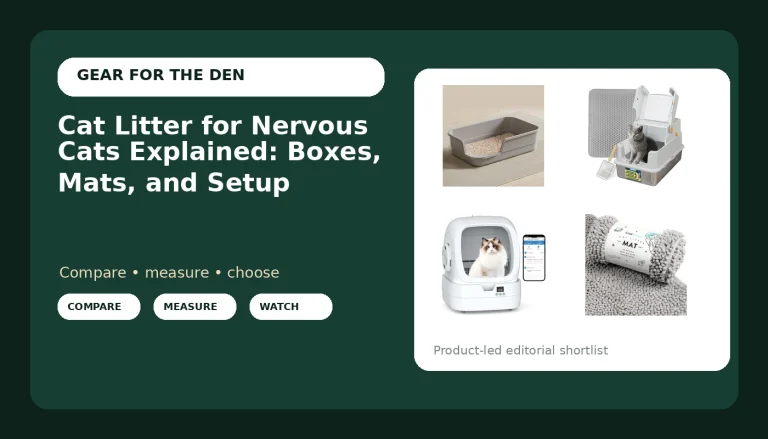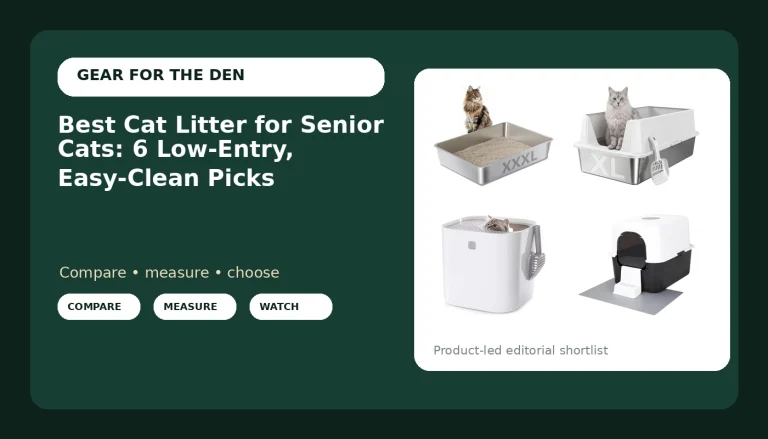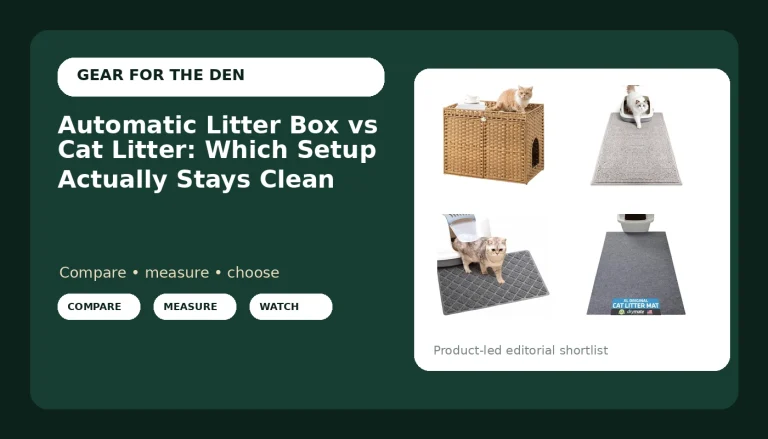
A nervous cat rarely announces what changed. The litter box simply stops being used, or it gets used in a rush, and the owner is left sorting through a long list of possible causes. The box, the litter inside it, the floor around it, and the smell that builds between scoopings all feed into that hesitation. That is why a search for cat litter for nervous cats so often turns into a larger question about the whole bathroom setup, from box size and entry height to the texture of the mat just outside the door.
This guide covers six pieces of gear that shape that experience: one clumping litter, two litter box enclosures, two trapping mats, and one hands-free disposal system. Every item below is described from its manufacturer listing, and each card links to the exact product it names. Gear is not a cure for a medical problem, and a cat that has stopped using the box entirely needs a vet before a shopping cart, but the equipment around the box is often the cheapest variable to adjust first.
Quick answer
The Fresh Step Extreme Clump Multi Cat Clumping Cat Litter, 14 lb. is the strongest fit when the litter itself is the variable being changed, because it is a clumping, multi-cat formula in a 14 lb. bag that can be blended into an existing box a little at a time. Choose the Feandrea Cat Litter Box Enclosure, with Scratching Mat, Tall Legs instead when the cat needs a more private, enclosed place to go before any litter change will make a difference.
What is worth comparing in cat litter for nervous cats
There is no single spec that decides this category, which is why the products below do not all do the same job. A litter decides what the cat stands on and how quickly the box gets clean again. An enclosure decides how exposed the cat feels while using it. A mat decides how much grit travels into the rest of the room, and a disposal system decides how long used litter sits around smelling like used litter.
The variables that matter most are box size, entry height, litter depth, clumping speed, odor control, mat texture, and the way waste is stored between trips to the bin. A waste drawer or a pedal bin handles that last part; the two are not the same thing, and the difference shows up in daily use rather than in a photo. The grid below lists all six items with the details that separate them.
Top pick
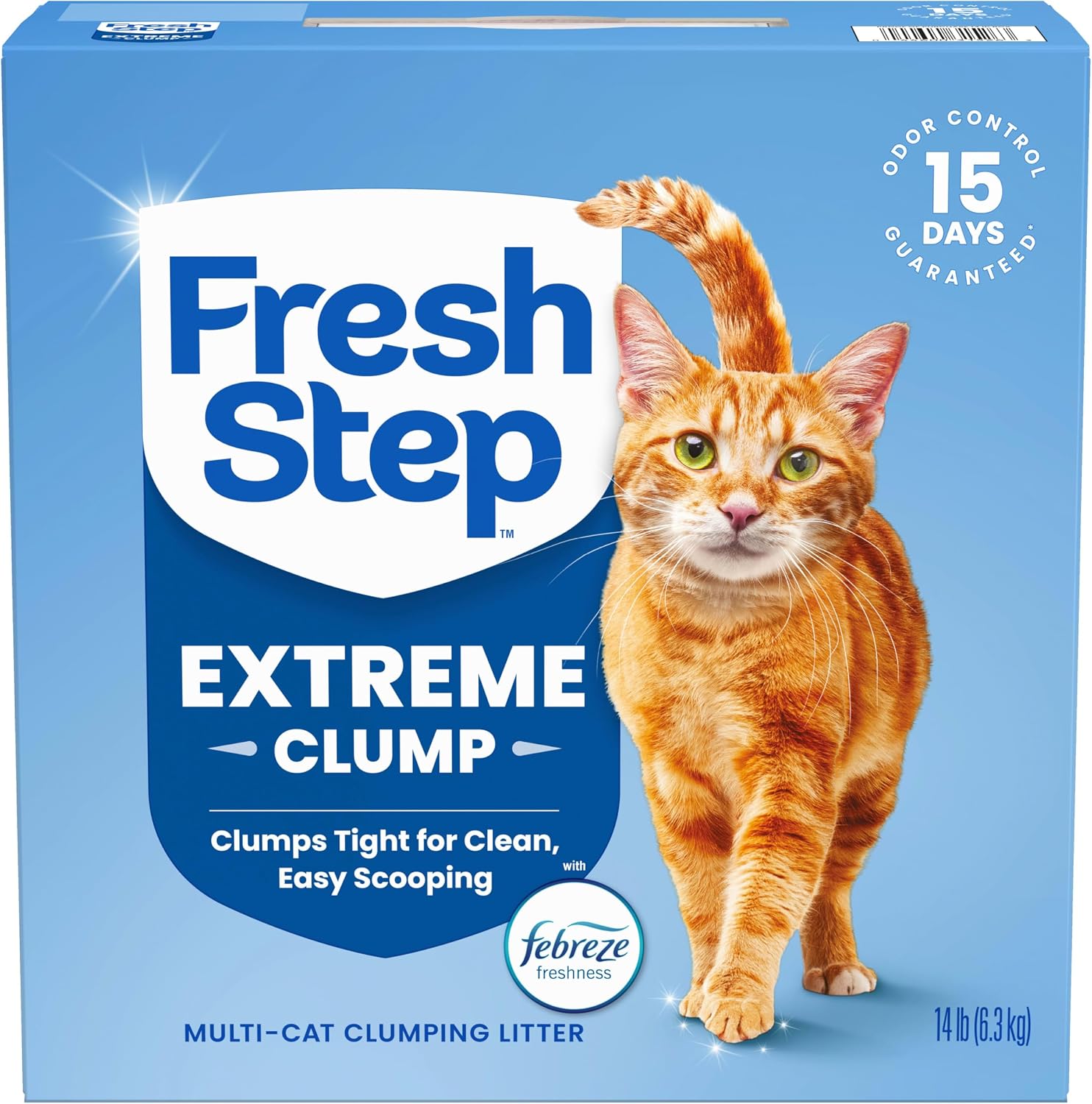
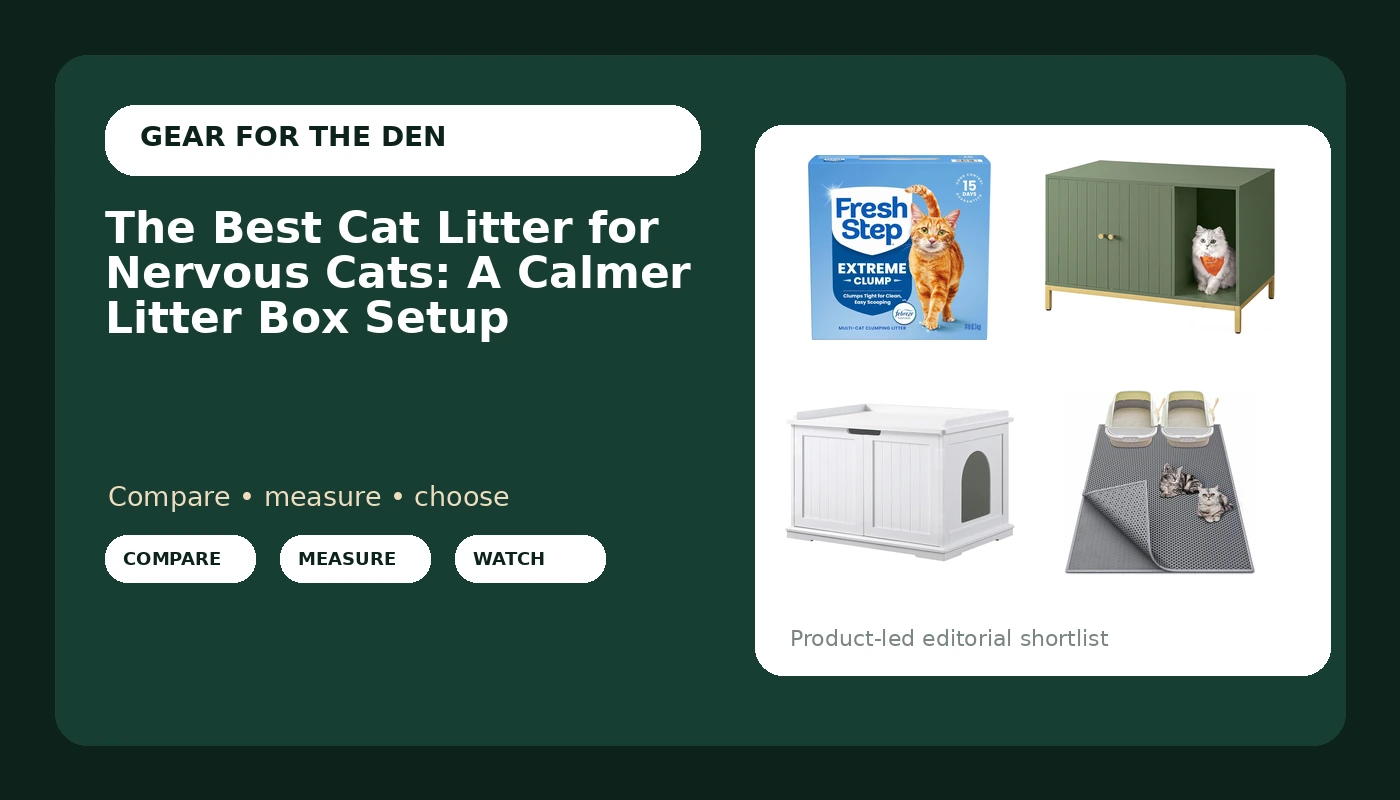
Fresh Step Extreme Clump Multi Cat Clumping Cat Litter, 14 lb.
A clumping, multi-cat formula sold in a 14 lb. bag. Clumping litter binds waste into scoopable clumps, which returns the box to a clean surface faster than a non-clumping litter that has to be replaced in full.
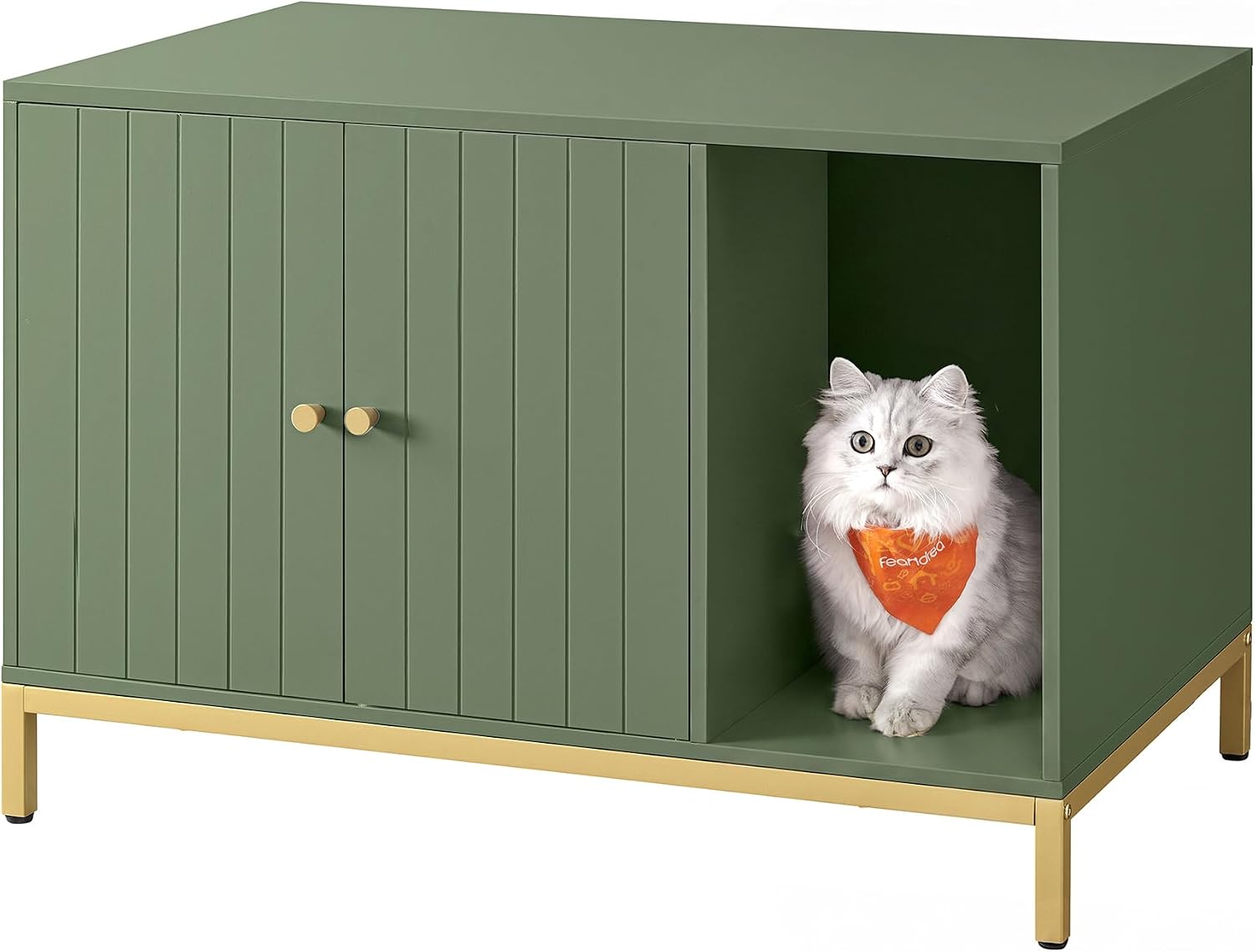
Feandrea Cat Litter Box Enclosure, with Scratching Mat, Tall Legs
An enclosed litter box cabinet on tall legs, supplied with a scratching mat. The roofed design gives a cat a private place to go, and the scratching mat gives the front paws something to do at the entrance.
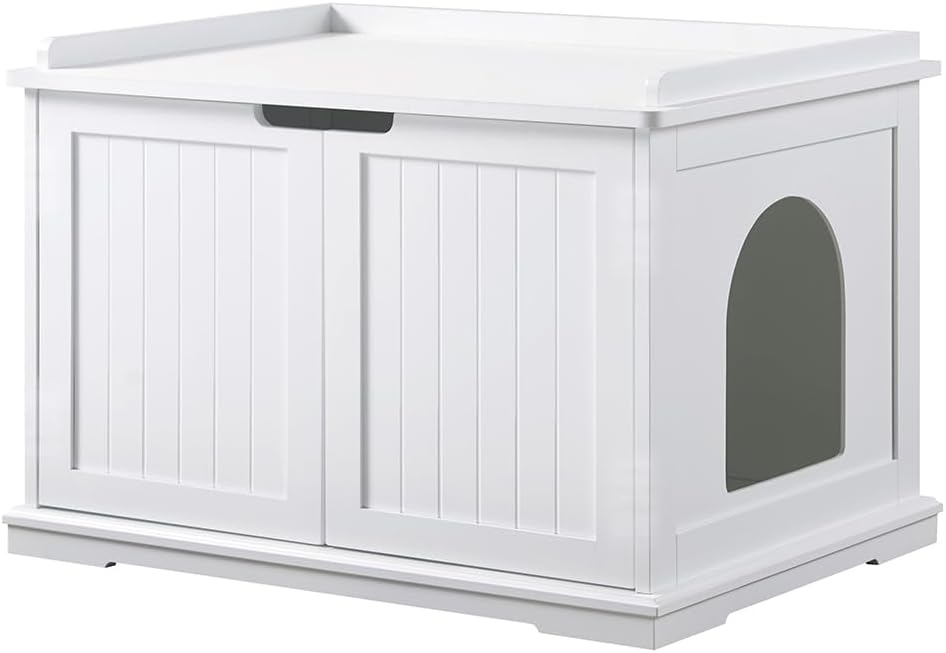
unipaws Cat Litter Box Enclosure Furniture, Hidden Litter Box Cover
A furniture-style enclosure that hides the litter box inside a cabinet, so the setup reads as a piece of furniture rather than an open tray.
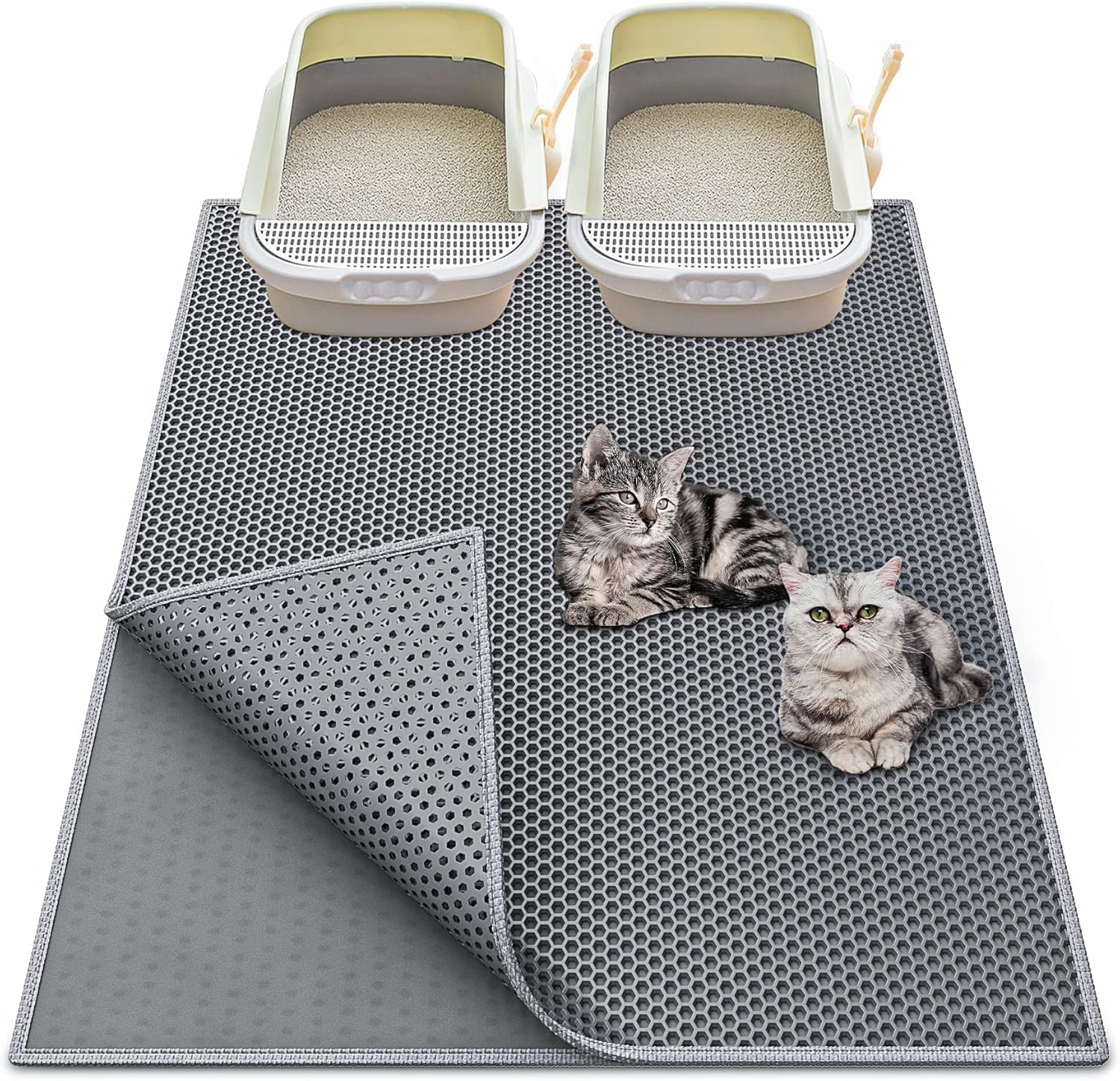
Waretary Cat Litter Mat, 36"x30", Waterproof, Scatter Control, Grey
A 36 by 30 inch waterproof mat with a scatter control surface, sized to cover a wide strip of floor in front of the box.
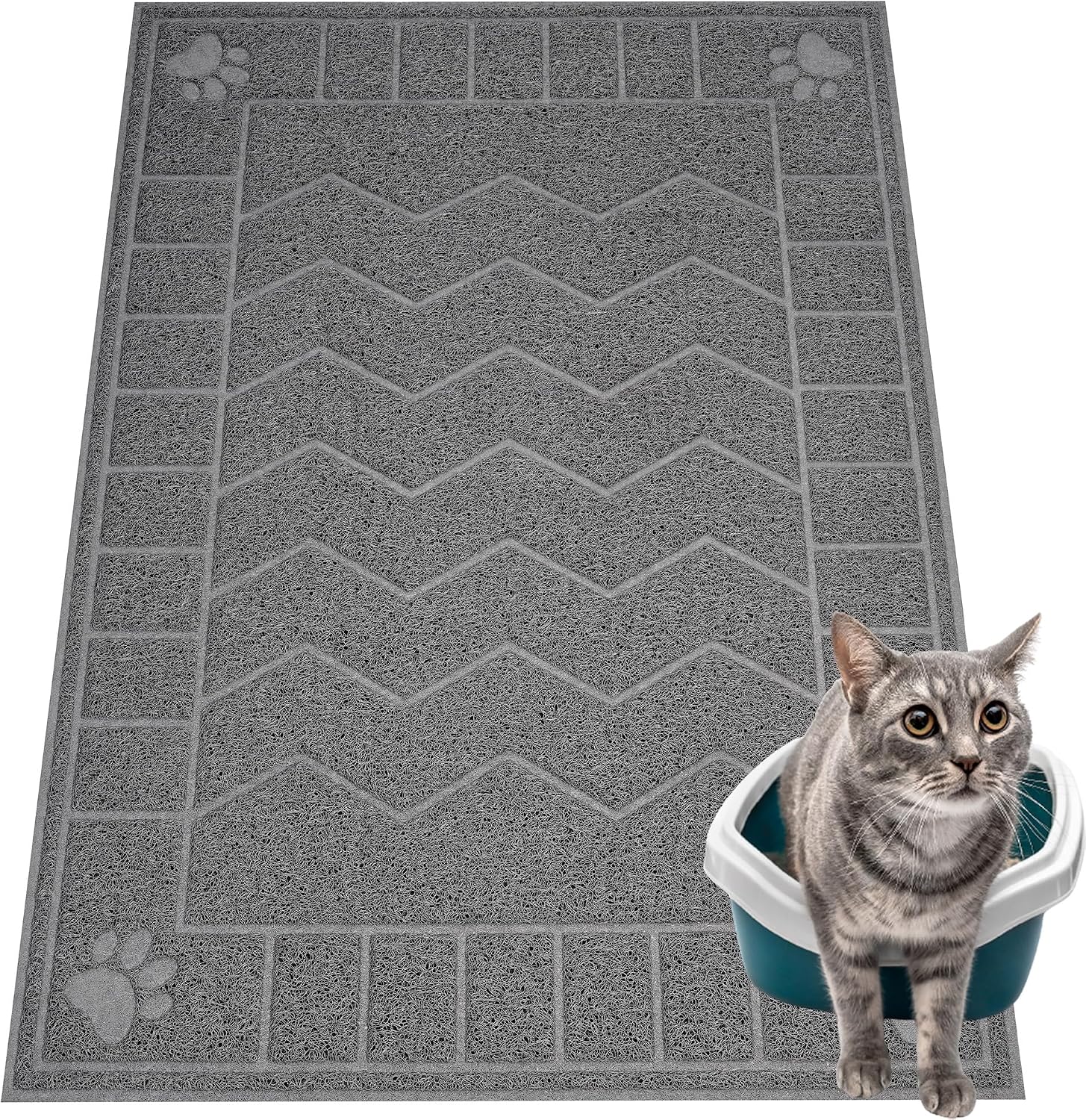
Motsamla Cat Litter Box Mat, 35" x 24" Large Waterproof Litter Trapping Mat
A 35 by 24 inch large waterproof mat with a trapping surface, sized for a tighter footprint than the wider mat above.
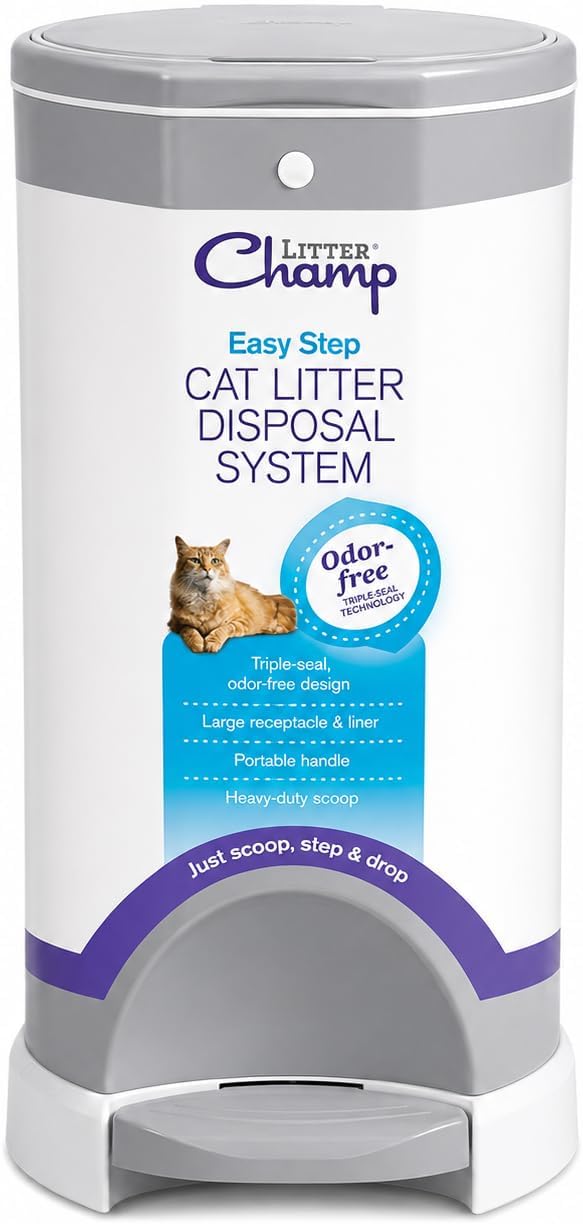
Litter Champ Cat Litter Disposal System, Hands-Free Pedal Trash Can
A hands-free pedal trash can for used litter and scoopings, with a lid that opens without a free hand and keeps the contents out of sight between bin days.
How these products were compared
This guide compares litter format and clumping behavior, box size and entry height, litter depth control, mat texture and coverage, and odor control and waste handling. Product names, images, and retailer links are matched to the same listing so that every card points to the product shown.
The comparisons are based on the published descriptions and stated dimensions for each item. Nothing here is presented as hands-on testing, and where a manufacturer does not state a detail, this guide does not fill the gap with a guess. No current price appears in the article, because prices move; the link on each card is the place to confirm the current figure, availability, and return terms.
How to choose the right litter box setup for a nervous cat
Start with litter depth. A nervous cat often digs hard, turns around twice, and then stands still, so the surface under the paws matters more than the packaging. Too little litter and the cat is scraping the tray; too much and the paws sink until the cat is standing on a wet bottom layer. A steady depth that gets topped up after every scooping is easier to maintain than a deep fill that slowly thins out. Clumping speed is the second variable. A litter that clumps quickly leaves less wet surface behind, so the next visit starts on drier footing and scooping takes less time, which matters if you are the person doing it every day.
Box size and entry height decide whether the approach feels safe. A tray that is too small forces the cat to stand in one spot with its head near a wall, and a high wall on a small tray makes stepping in awkward. Enclosures trade exposure for commitment: the cat gets a roof and a quiet corner, but it also has to be willing to walk into a space with one exit. Many nervous cats prefer that arrangement, and some will not use it at all, which is why the two enclosures below are compared on how the opening is arranged and how the box is accessed rather than on how they look in a catalog photo.
Mat texture is the last piece of the approach. A trapping mat gives the cat a softer landing than bare floor, and it catches the granules that get kicked out of the box, which keeps the grit from spreading down the hall. Waterproof backing matters for the same reason it matters under a water bowl: spills and accidents happen, and a mat that wipes clean is easier to live with than carpet that does not.
There is no single correct cat litter for nervous cats, because the answer depends on what the cat is already willing to use. The safest change is a small one: keep the existing box and location, adjust litter depth, and blend any new litter into the old one over a week or two. Odor control belongs in the same routine, since keeping odor under control in a multi-cat home comes down to scooping frequency more than to any single product. If you ever move to an automatic box, sensor range and the size of the waste drawer become the deciding specs, since a unit that triggers late, or a drawer that fills faster than the cycle, adds work rather than removing it.
Before buying anything, decide which problem you are solving. If the cat avoids the box, privacy and placement come first. If the cat uses the box but tracks litter everywhere, a mat is the fix. If the room smells, odor control and faster waste removal matter more than a new box. Buying an enclosure will not fix a litter problem, and changing litter will not fix a box that sits next to a noisy appliance.
Fresh Step Extreme Clump Multi Cat Clumping Cat Litter, 14 lb.
This is a clumping litter sold in a 14 lb. bag and labeled for multi-cat households. It is the only litter in this guide, which makes it the default top pick for anyone whose question is about the material in the box rather than the furniture around it. Clumping formulas bind waste and the surrounding litter into a scoopable clump, so the box returns to a clean surface faster than a non-clumping litter that has to be dumped wholesale. In a multi-cat home that difference shows up in how often the box needs a full change.
The trade-off is weight and volume. A 14 lb. bag is heavy to carry and will not last as long as a larger package in a busy household, so the cost per change is worth checking against your scooping routine. Any litter switch should be blended into the old litter rather than swapped overnight, because texture is one of the few things a nervous cat notices immediately. Start with a small proportion of the new litter, increase it over a week or two, and keep the box in the same place the whole time. This guide cannot predict whether a particular cat will accept a new texture. It can say that a clumping, multi-cat formula in a manageable bag is the most common starting point, and that it pairs with either mat and either enclosure below without any change to the routine.
Alternatives to consider
The Feandrea Cat Litter Box Enclosure, with Scratching Mat, Tall Legs is better suited to a cat that wants a roofed, private box and something to scratch on the way in, while the unipaws Cat Litter Box Enclosure Furniture, Hidden Litter Box Cover is a stronger fit when the box has to live in a living room and needs to pass as furniture rather than pet equipment.
The Waretary Cat Litter Mat, 36"x30", Waterproof, Scatter Control, Grey, the Motsamla Cat Litter Box Mat, 35" x 24" Large Waterproof Litter Trapping Mat, and the Litter Champ Cat Litter Disposal System, Hands-Free Pedal Trash Can cover the floor and the cleanup side of the setup. The Waretary mat is the wider of the two and suits a box with a long approach; the Motsamla mat covers a tighter footprint in front of a smaller box; the Litter Champ takes the scoopings themselves, with a pedal lid that opens without a free hand. None of the three changes anything the cat stands on inside the box, which is exactly why they are easy add-ons when a full litter change feels risky.
Day-to-day use and maintenance
Scoop at least once a day, and twice a day if there is more than one cat using the box. Nervous cats are often the first to avoid a box that has become unpleasant, so the daily routine matters more than any single product on this list. Top the litter up after every scooping to keep the depth steady, and wash the tray with a mild soap and water rather than a heavily scented cleaner, because a strong smell in a small enclosed space is the opposite of what a jumpy cat wants.
Enclosures need the same attention as open boxes, plus a little more. A roofed box holds odor longer because air moves through it more slowly, so plan on a full litter change on a shorter cycle than you would use with an open tray, and wipe the interior when you do it. Check the opening and the interior height against how your cat moves, since a cabinet that is fine for a small cat can be cramped for a larger one.
Mats should be shaken out or rinsed according to the maker's instructions, and both mats here are described as waterproof, which makes them easier to hose down than a carpeted mat. The disposal system should be emptied before it is full, because a pedal bin that will not close is just an open bucket with a lid on top.
Leave the box where it is once the cat is using it. Moving a box to a better-looking spot in the middle of an adjustment period undoes the progress. The ideal cat litter for nervous cats is the one your cat keeps using, which usually means the least change at any one time, not the most features.
Buying checklist
- Measure the floor space where the box will sit, including the swing of any nearby door, before choosing an enclosure.
- Match entry height to the cat rather than to the room; a low entry suits a shy or older cat better than a deep tray.
- Choose litter depth and clumping speed that fit your normal scooping routine rather than an occasional worst case.
- Confirm that the exact model includes the feature you are buying it for, such as a scratching mat, a pedal lid, or a waterproof backing.
- Read the cleaning and maintenance instructions before the first use.
- Verify the current retailer price, availability, and return terms.
Final recommendation
Choose the Fresh Step Extreme Clump Multi Cat Clumping Cat Litter, 14 lb. when the litter is the variable you are changing, and blend it into the existing litter over a week or two instead of swapping it overnight. Choose the Feandrea Cat Litter Box Enclosure, with Scratching Mat, Tall Legs when the box needs to be more private and off the floor before any litter change can help. Choose the unipaws Cat Litter Box Enclosure Furniture, Hidden Litter Box Cover when the box has to live in a shared room and appearance matters as much as function.
If the problem is tracked grit or the smell of used litter waiting for bin day, the mats and the pedal disposal system are the cheaper fixes, and either one can be added without changing anything the cat already knows. Whichever way you go, the best cat litter for nervous cats is rarely a dramatic upgrade. It is usually the setup that stays consistent, stays clean, and stays quiet.