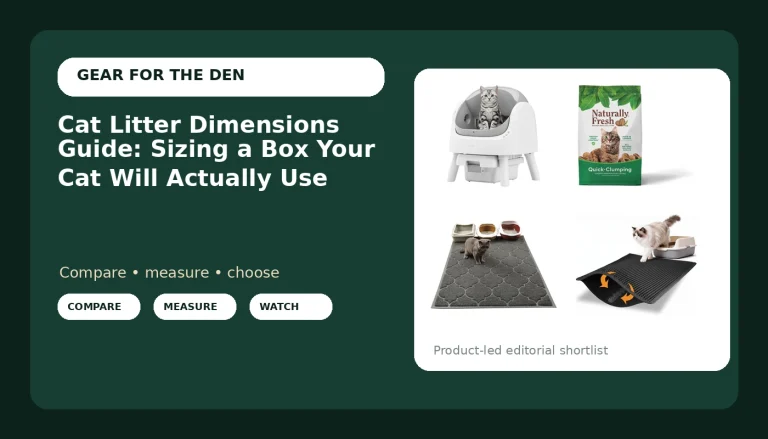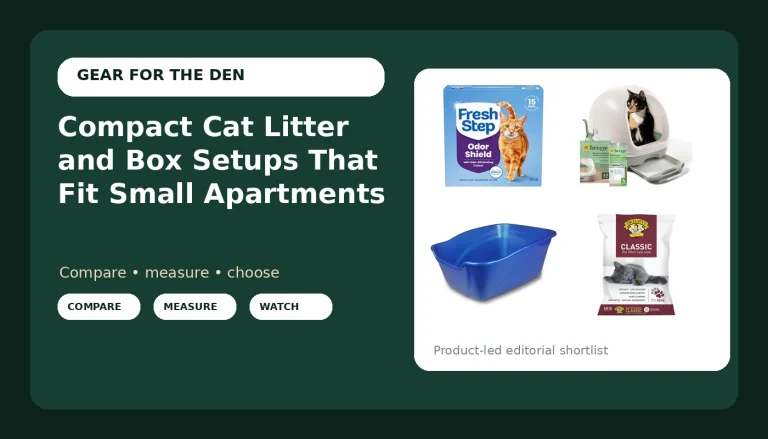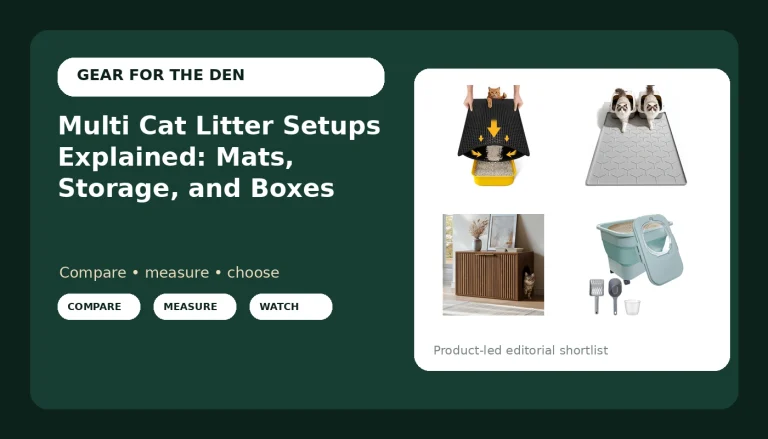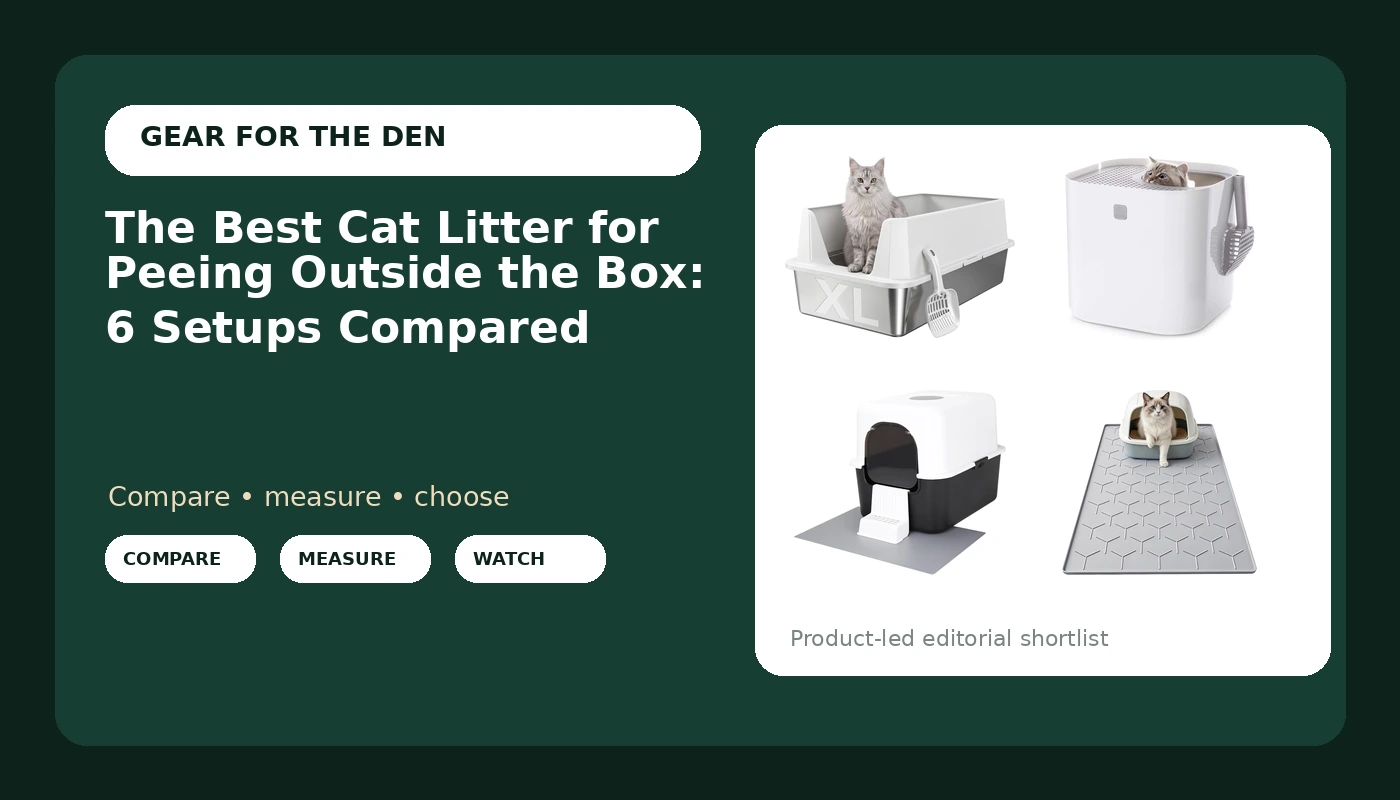
A cat that urinates beside the pan instead of inside it is usually reacting to the box, the litter, or the routine rather than misbehaving. Because urinary tract disease, diabetes, and stress can all produce the same pattern, a veterinary visit comes first; this guide covers what to change once health problems are ruled out. The best cat litter for peeing outside the box is rarely a single bag of litter. It is a setup: a pan wide enough for the cat to turn around in, an entry the cat can step through without hesitating, and a litter depth that invites digging instead of sending granules over the rim.
A cat that stands at the edge and lets urine run over the side is often working with a pan that is too small or too shallow, and no litter swap fixes that. A cat that digs frantically and sprays litter across the floor is telling you about depth and texture instead. The six products below cover the practical range for both problems: two stainless steel pans, two enclosed boxes, a litter mat, and a clumping litter built for multi-cat homes.
Quick answer
The Tevila XL Stainless Steel Cat Litter Box with Plastic Enclosure & Scoop is the strongest fit for households where the miss happens at the edge or over the side, because the pan is listed as extra large and arrives with a plastic enclosure that adds a physical barrier plus a scoop to complete the setup. Choose the Modkat Top-Entry Cat Litter Box, Leak-Proof, Liner & Scoop, White instead when the miss happens on the way out, since the top-entry design and leak-proof base are aimed at containing urine inside the box.
What is worth comparing in cat litter for peeing outside the box
Misses outside the box usually trace back to a few measurable things. Box size comes first: a pan that is short in either direction forces the cat to hang over an edge, which puts urine on the floor no matter how absorbent the litter is. Entry height is next, because a high wall can be a deterrent for a kitten, a senior, or a cat with joint pain, and a cat that cannot step in comfortably will go somewhere easier. Litter depth matters as well, since most cats want enough material to dig and cover, and a pan that is too shallow for that depth pushes litter over the rim.
Then there is the litter itself. Clumping speed and odor control shape how often the box needs scooping and how quickly smell builds, and both affect whether a cat keeps using the pan. Underneath the box, mat texture decides how much tracked litter stays near the door instead of spreading through the house.
The products below cover each of those pressure points, from an extra-large metal pan to a clumping litter sized for a multi-cat home.
Top pick
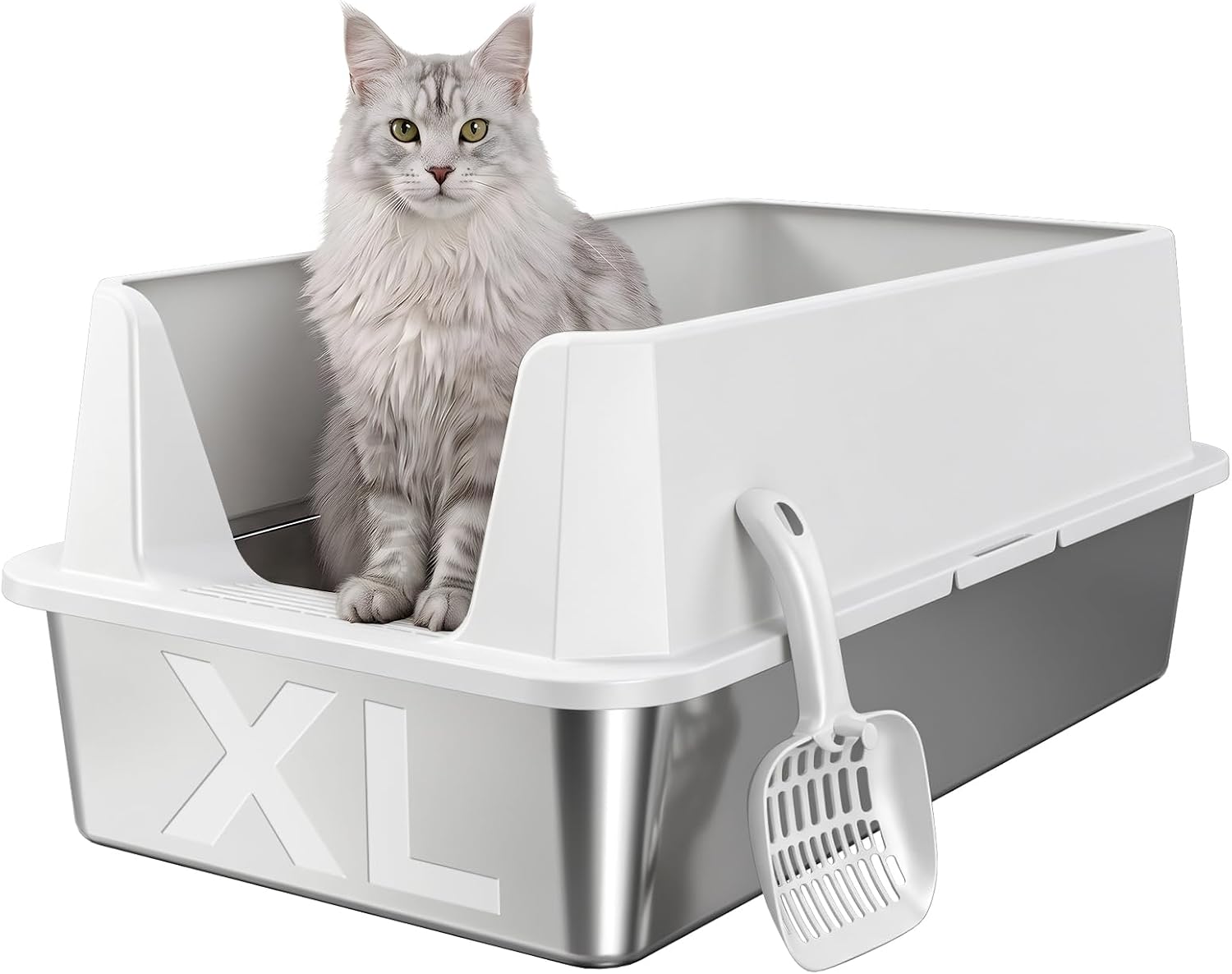
Tevila XL Stainless Steel Cat Litter Box with Plastic Enclosure & Scoop
Extra-large stainless steel pan that ships with a plastic enclosure and a scoop, so containment and the daily tool arrive in one package.
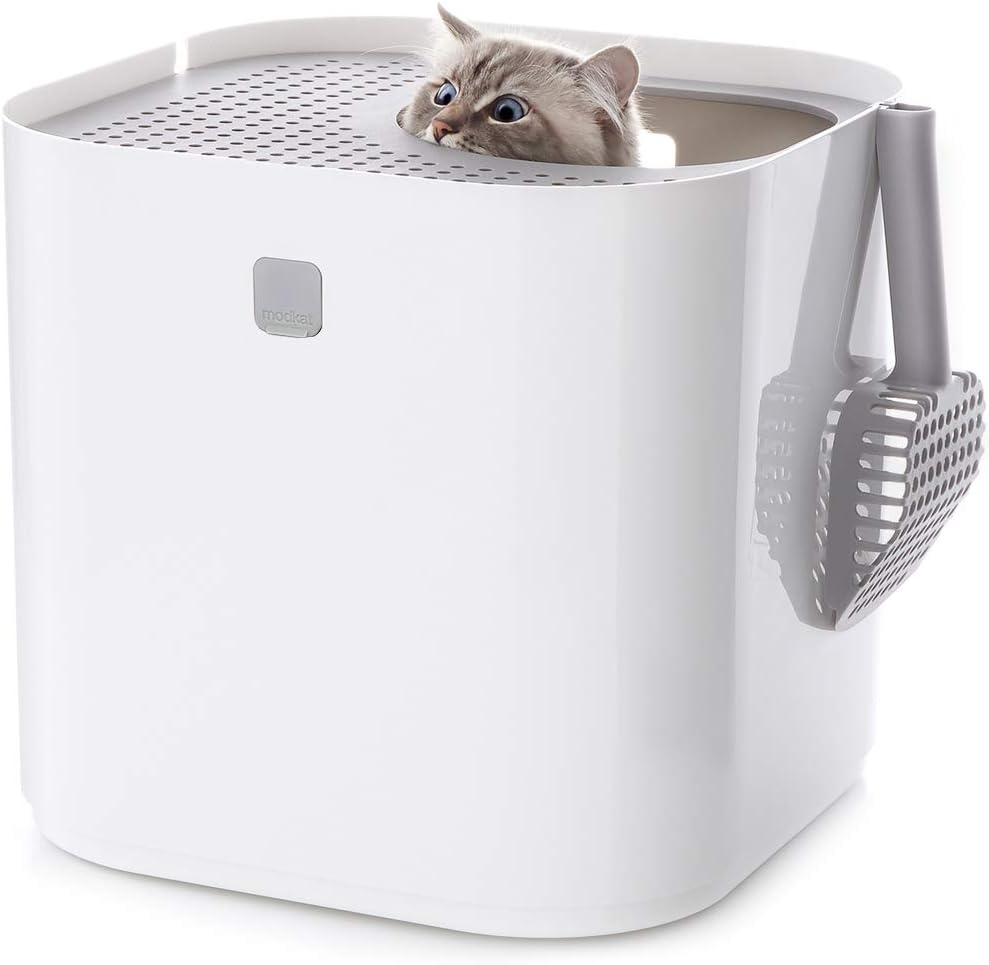
Modkat Top-Entry Cat Litter Box, Leak-Proof, Liner & Scoop, White
Top-entry design with a leak-proof base, supplied with a liner and a scoop in a white finish.
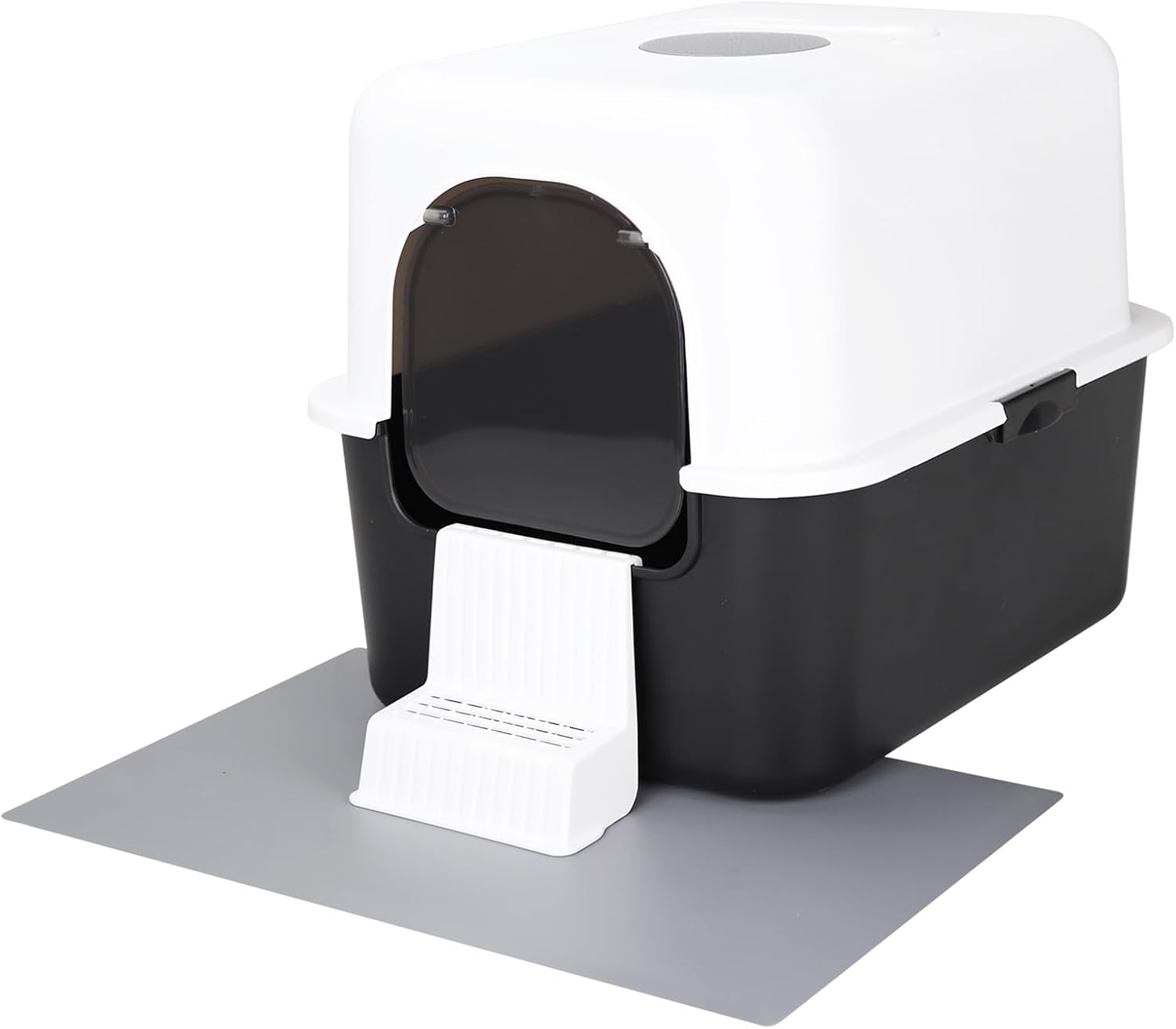
Sfozstra Enclosed Cat Litter Box: Splash Resistant Leak Resistant
Enclosed box described as splash resistant and leak resistant, aimed at cats that spray against the walls of a hooded pan.
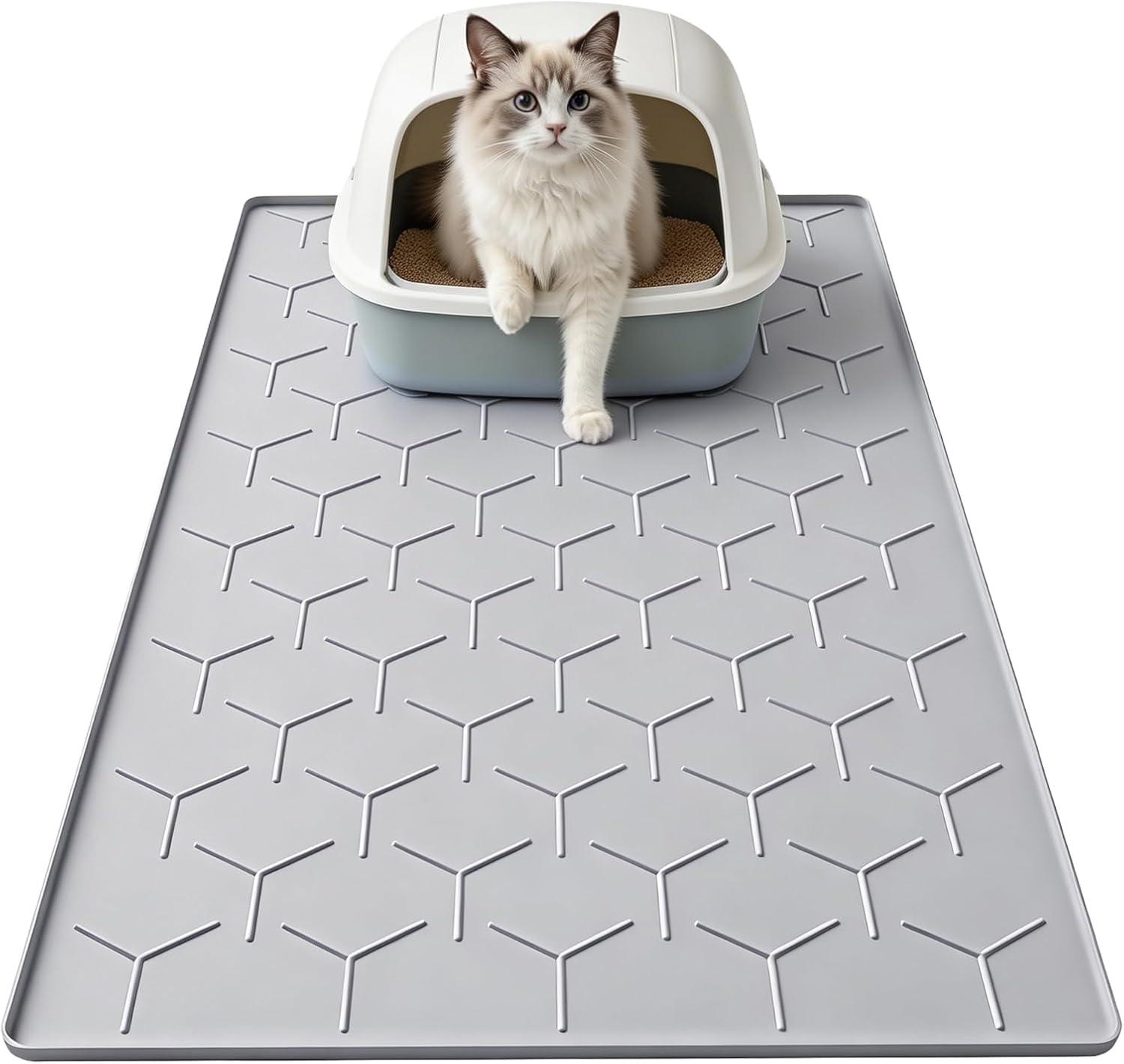
Garoopion Silicone Cat Litter Mat 34×22 inch, Easy to Clean, Gray
Silicone mat measuring 34 by 22 inches, listed as easy to clean in gray, sized for the floor in front of a large box.
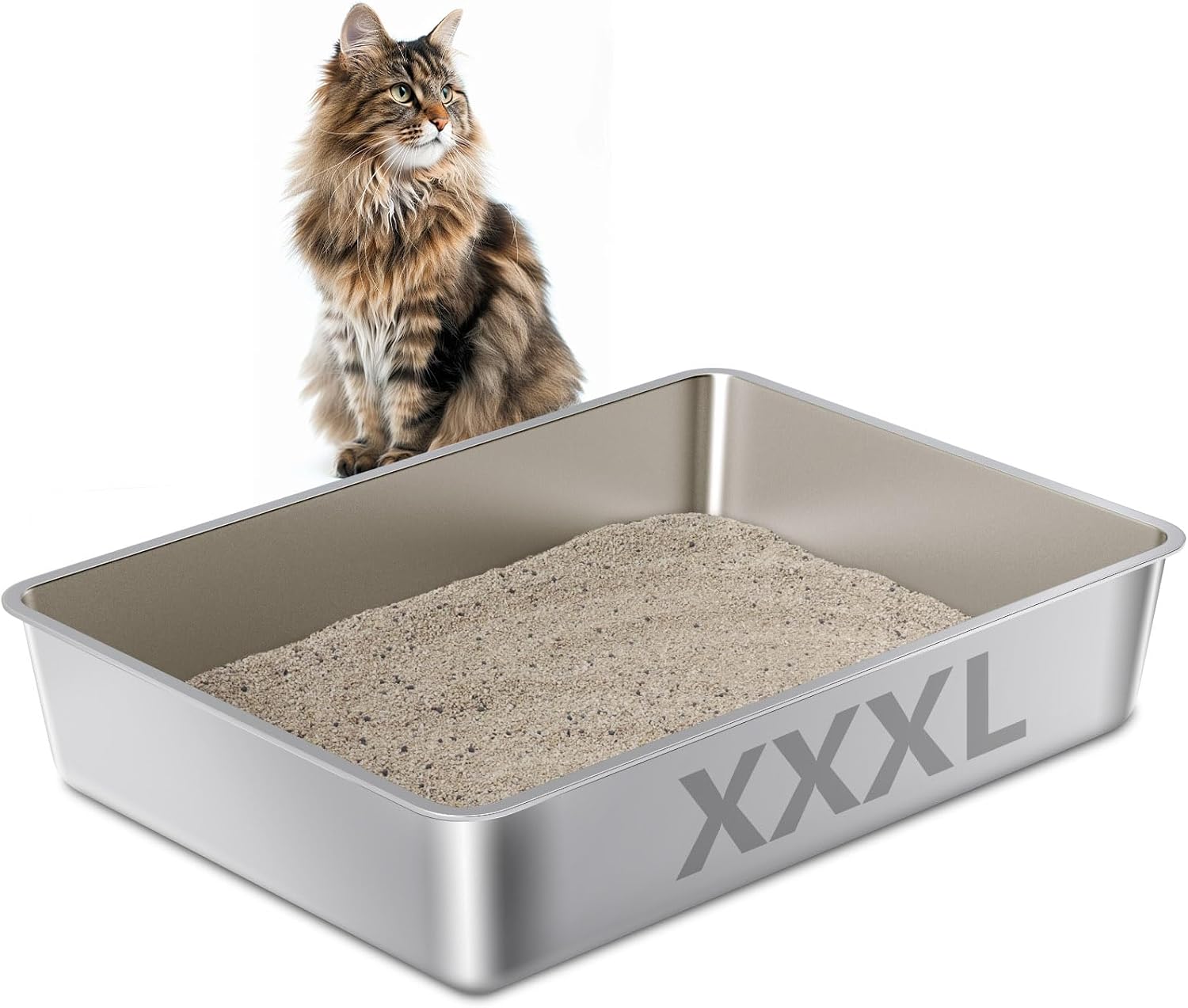
EGMEHOAD XXXL Stainless Steel Cat Litter Box -Extra Large Metal Litter Box
XXXL stainless steel pan built as an extra-large metal litter box for cats that need more room than a standard plastic box offers.
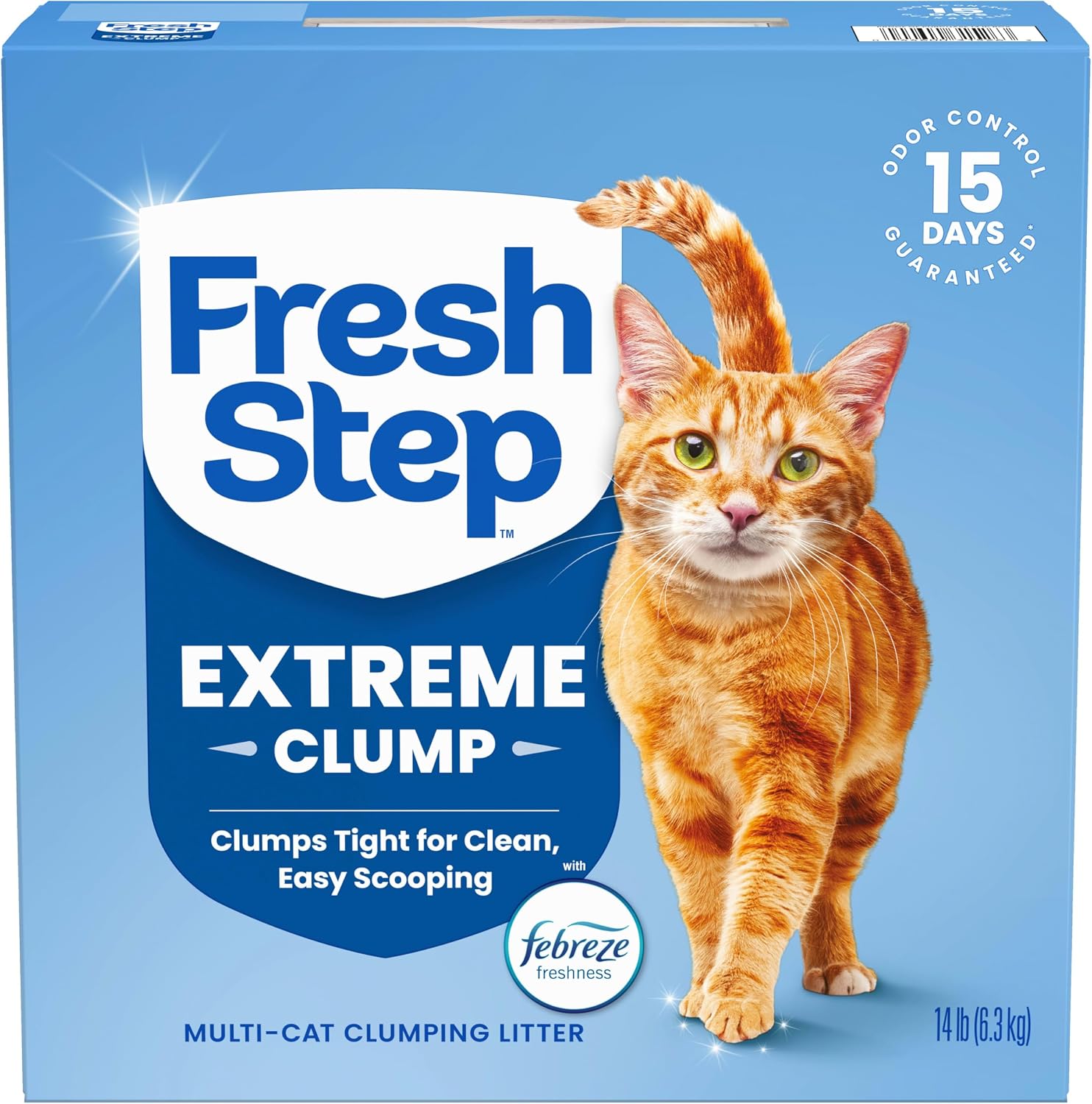
Fresh Step Extreme Clump Multi Cat Clumping Cat Litter, 14 lb.
Multi-cat clumping litter in a 14 lb. package, described as extreme clumping for households with more than one cat.
How these products were compared
This guide compares box size, entry height, litter depth, clumping speed, and the accessories included with each product. Every card matches a product name and image to one retailer link, so the item you click is the item described.
The comparison stays on the published product details rather than hands-on testing. Claims here come from what each listing states about its own design: stainless steel construction, top-entry configuration, enclosure panels, mat dimensions, and package weight. Where a listing does not state a measurement, this article does not invent one. That is why some products are described by the role they play in a setup rather than by a number.
The picks below reflect what matters for the best cat litter for peeing outside the box: whether the pan contains a cat that stands high or sprays, whether the litter clumps quickly enough to keep the surface clean between scoops, and whether the included accessories save you a second purchase. Use the retailer link to confirm the current price and availability, since both change.
How to choose the right cat litter for peeing outside the box
Choosing the correct cat litter for peeing outside the box starts with the pan you already own, not with the bag on the shelf. Measure the interior of the box: length, width, and the height of the lowest wall. A cat needs room to turn around and to squat without its rear hanging over an edge, and many standard pans are shorter than owners assume. If the interior is tight, a larger pan does more for the problem than any litter swap.
Entry height is the second decision. A top-entry box keeps litter in and gives a cat a place to stand while it finishes, but it is a poor match for a kitten, a senior cat, or a cat recovering from surgery. An enclosed box with a low or removable front offers some of the containment without the climb. Whichever shape you pick, make sure the cat can enter and exit without jumping.
Litter depth and litter type work together. Most cats do best with enough depth to dig and cover, and the pan has to be tall enough to hold that depth without spilling. For the ideal cat litter for peeing outside the box, look for a clumping formula that forms a firm clump quickly, because fast clumping keeps urine from reaching the bottom of the pan and makes odor control easier in a multi-cat home. A fine, soft texture is usually easier on paws than a coarse pellet, though preference varies by cat.
Finally, think about mat texture and placement. A textured mat catches granules off the paws before they reach the carpet, and a mat that rinses and dries quickly gets cleaned more often. If tracking and smell are part of the problem, our guide to cat litter odor control and tracking fixes covers the room-level changes that support whatever pan you choose.
Automatic boxes handle some of this with a waste drawer and a sensor range that triggers raking after the cat leaves, but they add cost, a power requirement, and their own maintenance schedule. This roundup stays with manual setups, which are simpler to place and easier to clean when a cat is already avoiding the box.
Tevila XL Stainless Steel Cat Litter Box with Plastic Enclosure & Scoop
The top pick here is the Tevila XL Stainless Steel Cat Litter Box with Plastic Enclosure & Scoop. Three things make it the default recommendation for a household dealing with misses. The pan is described as extra large, which addresses the most common cause of edge and over-the-side accidents. The stainless steel body is a non-porous surface, so it does not develop the scratched, urine-soaked texture that plastic pans can pick up over years of scooping. And the package includes a plastic enclosure and a scoop, so containment and the daily tool arrive together rather than as separate purchases.
The enclosure is the part that matters most for a cat that sprays or stands high. A raised surround catches urine that would otherwise arc over the rim, and it also reduces scatter when a cat digs enthusiastically. Because the enclosure is plastic and separate from the steel pan, cleaning is a two-part job: the pan can be washed while the enclosure is wiped down.
The trade-off is height and footprint. An extra-large pan with an enclosure takes up more floor space than a standard box, and the added wall height is a poor fit for a cat that is already reluctant to step in. If your cat is a kitten, a senior, or recovering from a procedure, start with a lower entry and add containment later. Stainless steel is also heavier than plastic, so emptying and washing the pan takes a little more effort.
Alternatives to consider
The Modkat Top-Entry Cat Litter Box, Leak-Proof, Liner & Scoop, White is better suited to a cat that overshoots while standing, since the top-entry design and leak-proof base are built around containing urine inside the box, and it ships with a liner and scoop. The Sfozstra Enclosed Cat Litter Box: Splash Resistant Leak Resistant is a stronger fit when a hooded shape and a lower entry matter more than stainless steel, and its listing describes both splash resistance and leak resistance.
The EGMEHOAD XXXL Stainless Steel Cat Litter Box -Extra Large Metal Litter Box covers the case where floor space is not the constraint and the cat simply needs the largest metal pan in this group. The Garoopion Silicone Cat Litter Mat 34×22 inch, Easy to Clean, Gray covers the floor in front of whichever box you choose, and the Fresh Step Extreme Clump Multi Cat Clumping Cat Litter, 14 lb. covers the litter itself for homes with more than one cat.
Day-to-day use and maintenance
Once the setup is in place, the routine does most of the work. Scoop at least once a day, and twice a day in a multi-cat home, because a soiled box is one of the most common reasons a cat starts going elsewhere. Top off the litter after scooping so the depth stays consistent; a pan that gets shallower through the week invites digging and spillage. Wash the pan with mild soap and water on a regular schedule, and skip heavily scented cleaners, since residual perfume can be a deterrent.
Stainless steel pans generally tolerate scrubbing better than plastic, which scratches and holds odor over time. Enclosed boxes need the hood or enclosure wiped as well as the pan, and the seams are where smell tends to collect. Mats should be shaken out and rinsed regularly; a mat that stays dirty stops catching anything.
Watch the cat, not just the box. If a cat that used the pan reliably starts avoiding it after a change in litter, box location, or household routine, that is information worth acting on. Return to the previous setup if the change lines up with the new behavior, and keep the box in a quiet spot with more than one exit route in a multi-cat home. Persistent misses, straining, or blood in the urine are veterinary problems, not gear problems.
Buying checklist
- Measure the interior of your current pan: length, width, and the height of the lowest wall.
- Match entry height to the cat, not to the product photo, especially for kittens and seniors.
- Choose litter depth and pan depth together so digging does not push litter over the rim.
- Confirm the exact model includes the accessories you need, such as a scoop, liner, or enclosure.
- Read the cleaning instructions for every surface, including mats and enclosure panels.
- Verify the current retailer price, availability, and return terms before ordering.
Final recommendation
Choose the Tevila XL Stainless Steel Cat Litter Box with Plastic Enclosure & Scoop when you need a large, non-porous pan with containment for a cat that sprays or stands high, and you are willing to give it floor space. Choose the Modkat Top-Entry Cat Litter Box, Leak-Proof, Liner & Scoop, White when the miss happens on the way out of the box and a top-entry shape fits your cat's mobility. If the pan is already adequate and the problem is tracking or smell, start with the litter and the mat instead, and change one variable at a time so you can tell what worked.