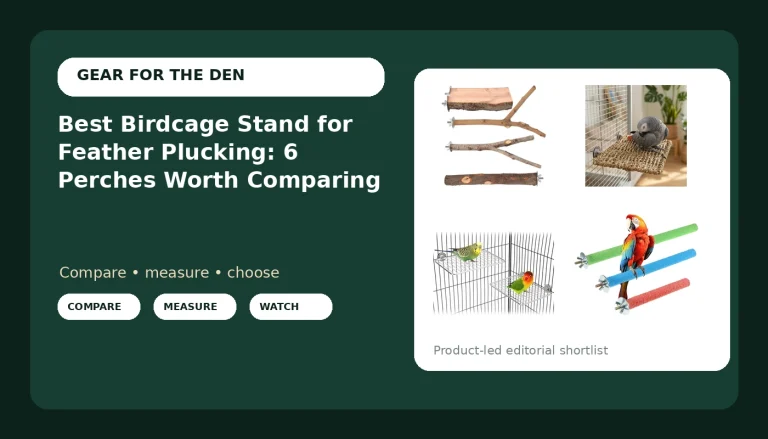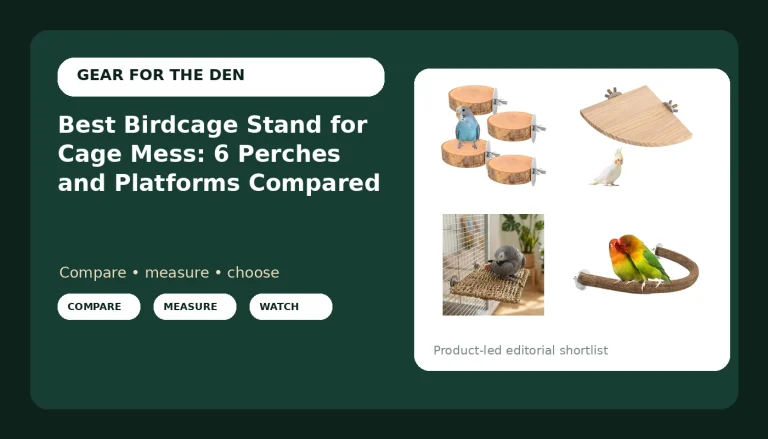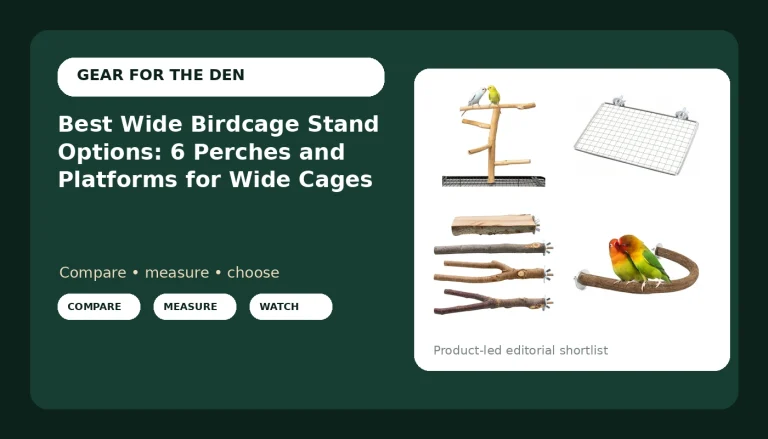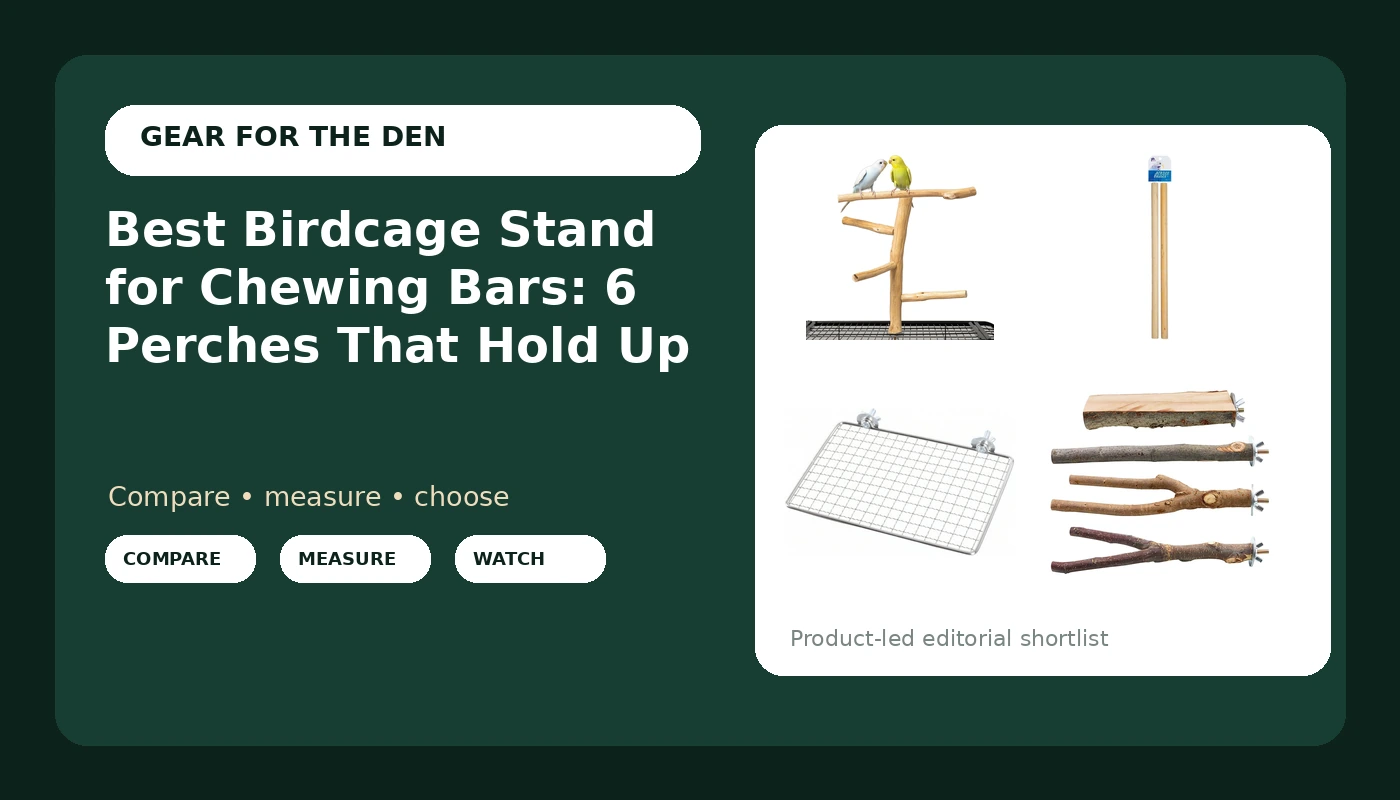
A bird that chews the bars is rarely being destructive for its own sake. It is usually working a beak that never stops growing, burning off energy, or telling you that the perch it has does not give it a comfortable place to stand. Adding a birdcage stand for chewing bars changes the geometry of that problem. The bird gets a textured, movable surface to work on, and the cage bars get a break from constant wear.
The products in this guide are all perches, platforms, and play stands that attach to a cage rather than free-standing furniture. That distinction matters, because most shoppers searching for a birdcage mount for chewing bars are not shopping for a floor stand. They are shopping for something that hooks, clamps, or rests on the cage they already own, at a height the bird actually uses. Get that placement right and the bar chewing often drops on its own, because the bird has somewhere better to put its beak.
Quick answer
The Pecirvoli Bird Perch for Top of Cage, Natural Wood Play Stand is the strongest fit for a bird that needs a landing surface outside the cage because it is a natural wood play stand built for the top of a cage. Choose the 4 Pack Natural Wood Bird Perch Set for Parakeet Cage instead when you want several natural wood perches to spread around one cage at different heights.
Birdcage stand for chewing bars options worth comparing
Top pick
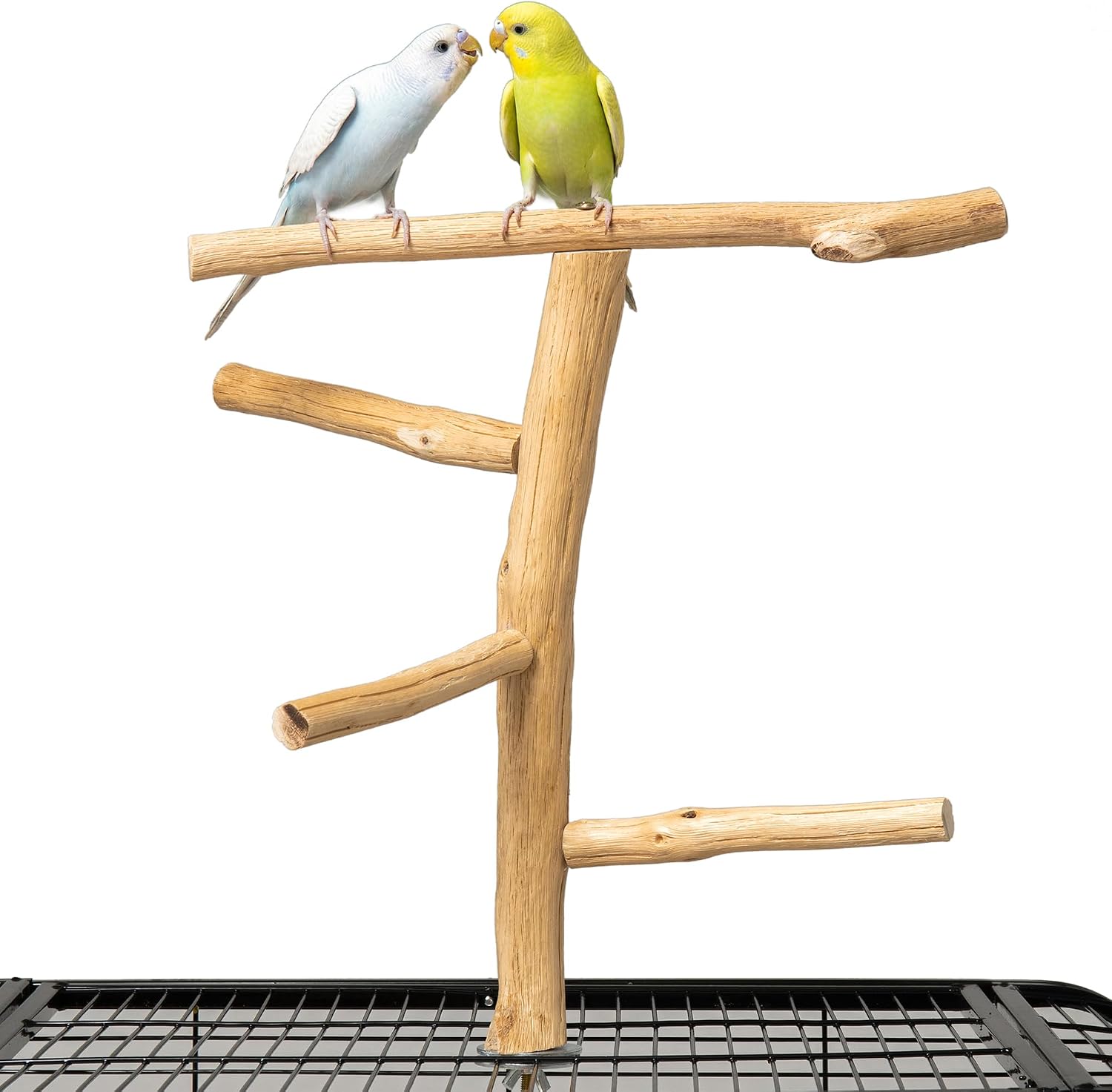
Pecirvoli Bird Perch for Top of Cage, Natural Wood Play Stand
A natural wood play stand designed to sit on top of a cage, giving a bird an out-of-cage surface to land on, chew, and watch the room from.

Prevue Pet Products Pacific Bird Cage Perch
A single replacement perch from the Prevue Pet Products Pacific line, sized as a straightforward in-cage perch rather than a platform or play stand.
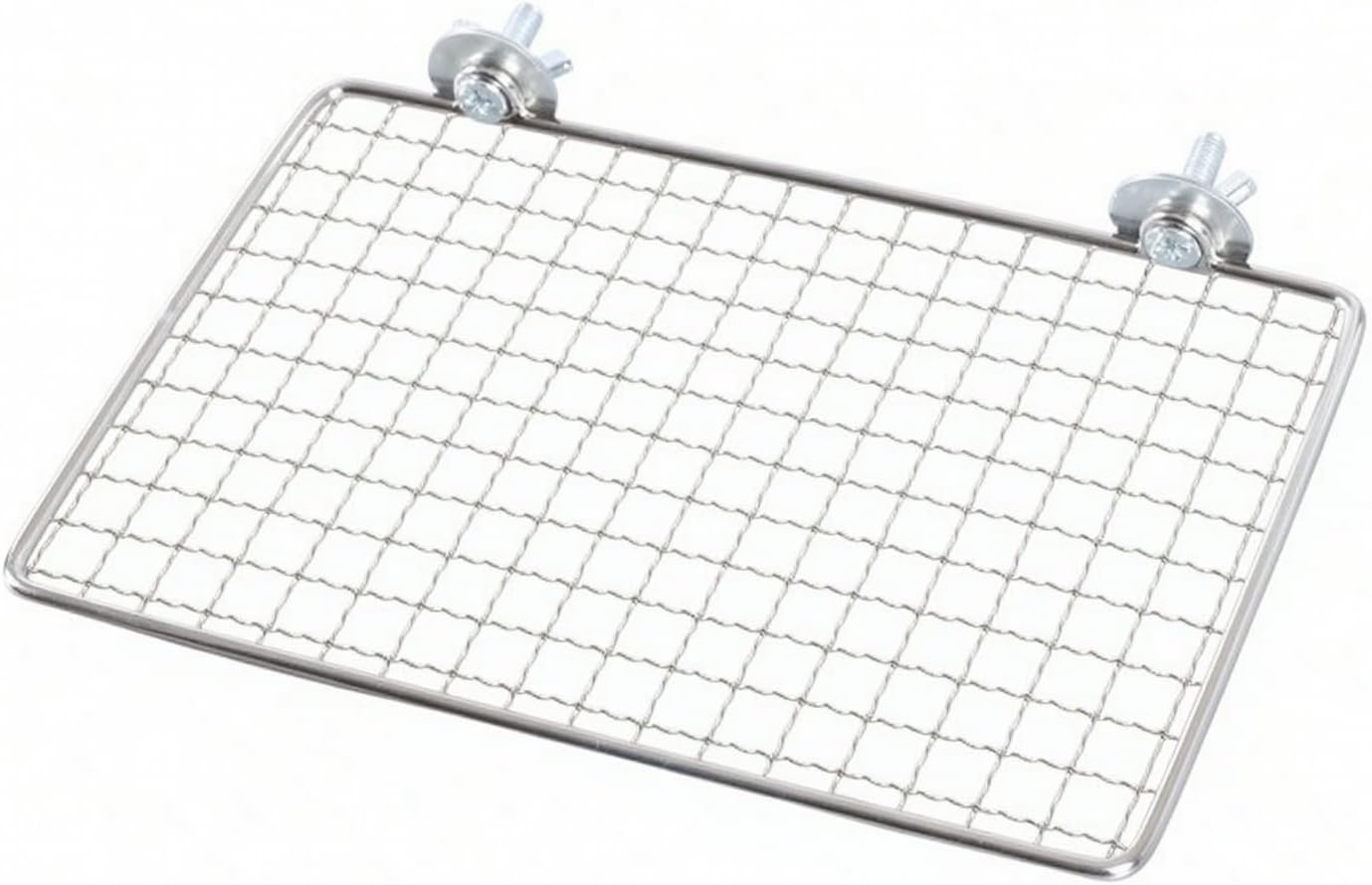
Space-Saving Bird Cage Mesh Perch, Large 20 X 15 Cm
A large 20 by 15 cm mesh perch that saves space by giving the bird a flat, climbable surface instead of another round dowel.
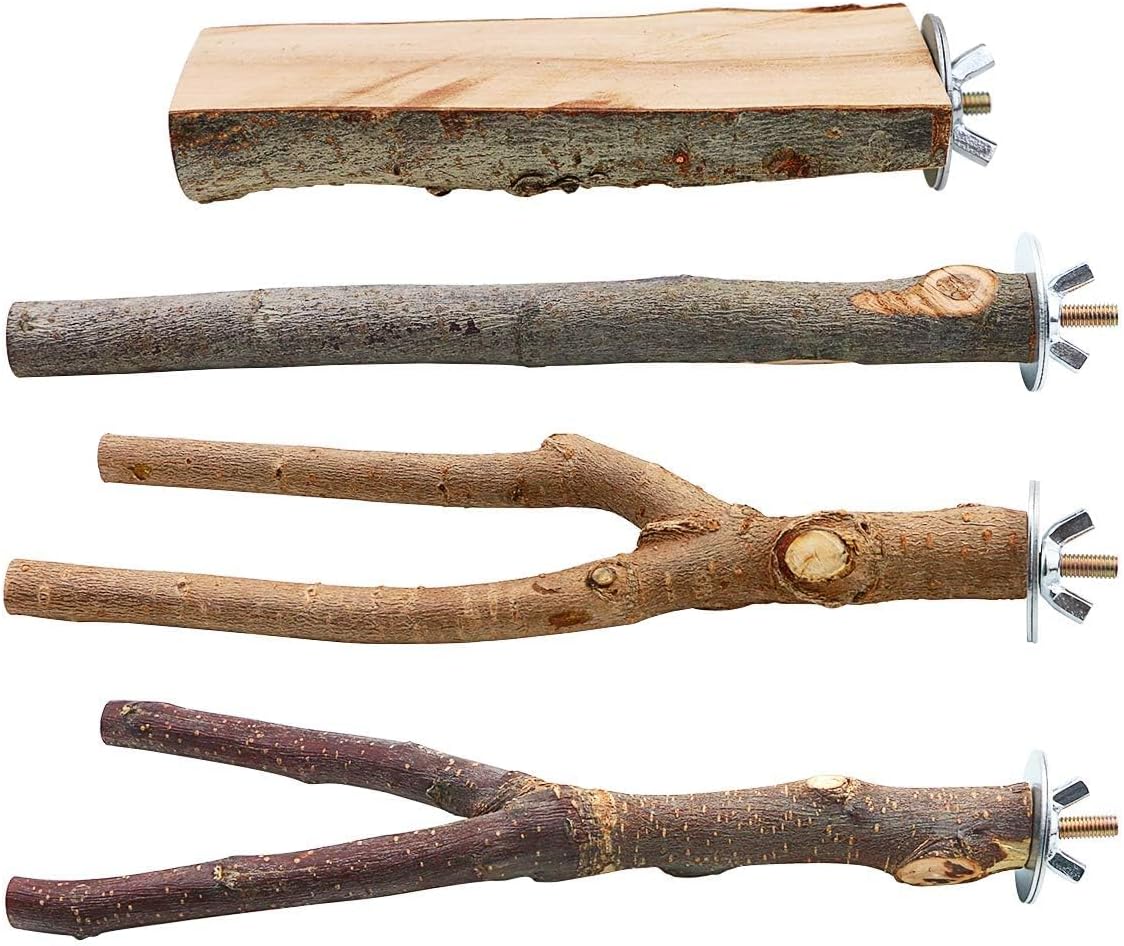
4 Pack Natural Wood Bird Perch Set for Parakeet Cage
A four-piece natural wood perch set aimed at parakeet cages, so you can place a perch at more than one height without buying separate pieces.
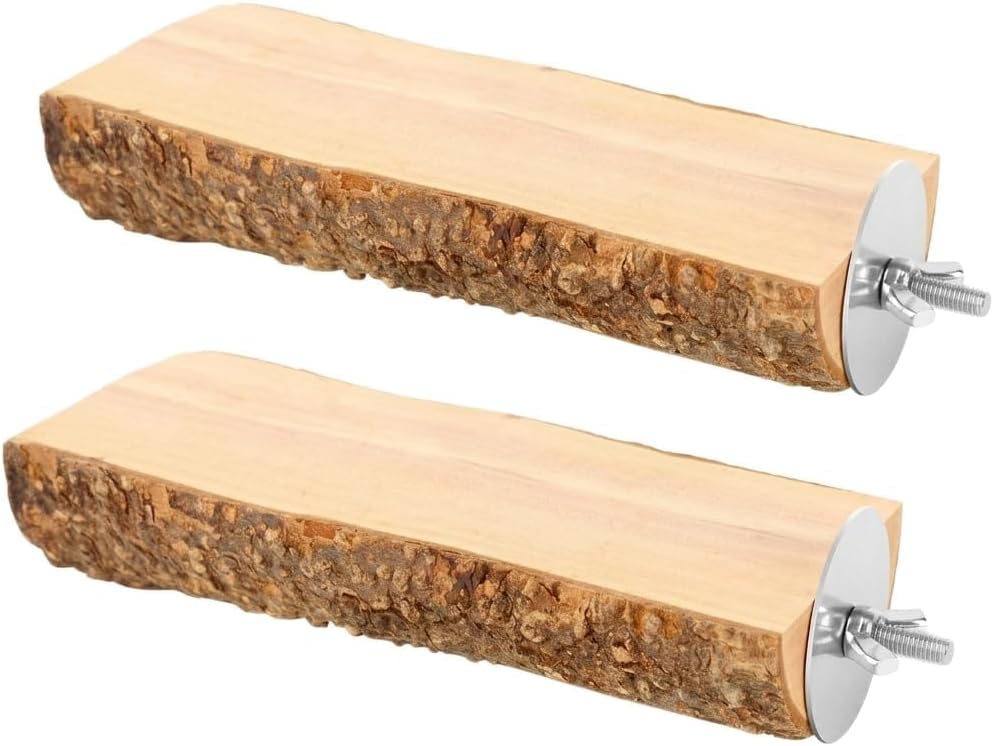
CZWESTC 2 Pcs Natural Apple Wood Bird Perch Platform for Cage
Two natural apple wood perch platforms that give a bird a flat standing area rather than a single round bar to grip.
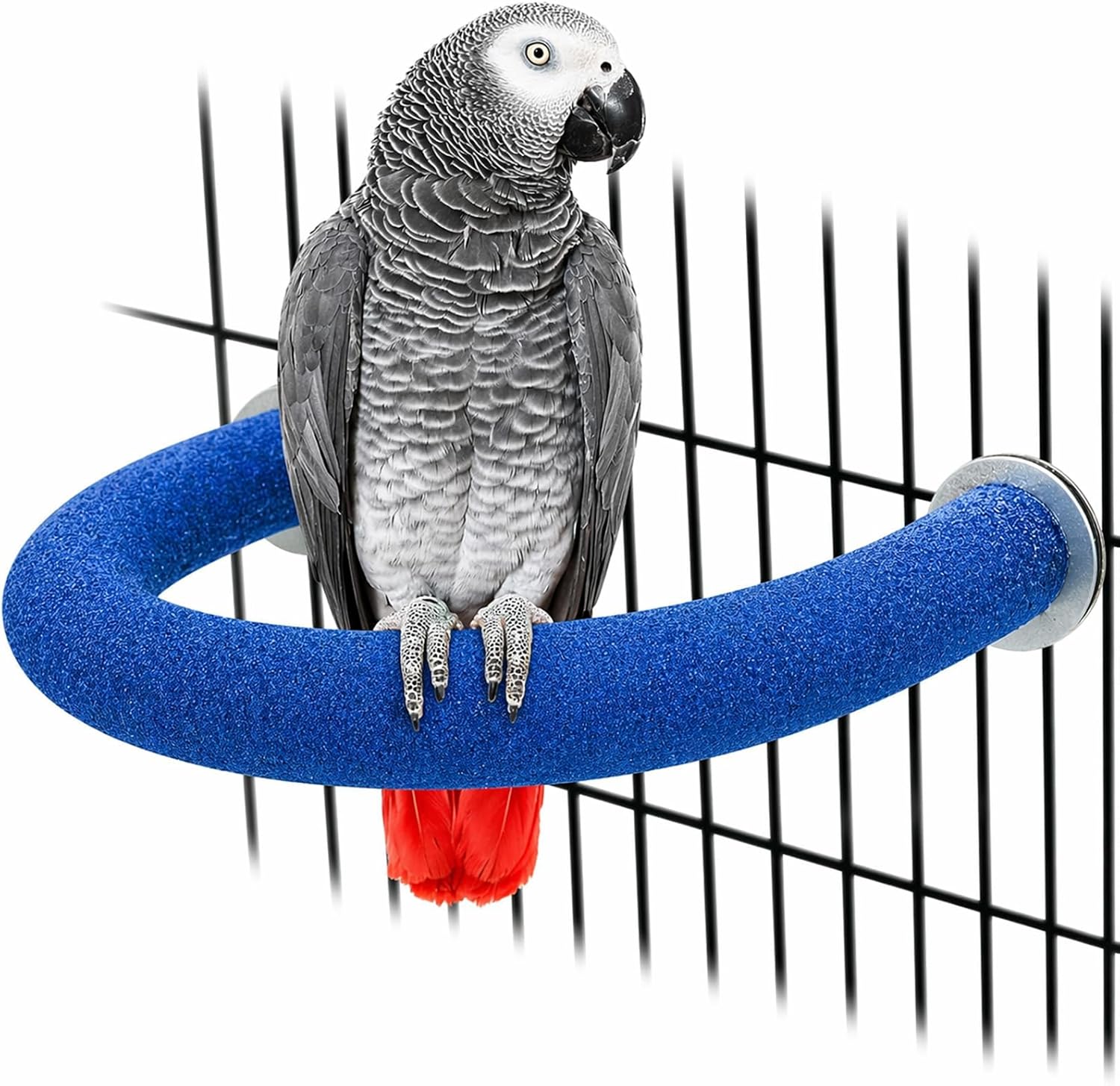
Rypet U-Shaped Large Parrot Perch, Quartz Bird Perch for Cage(Blue L)
A large U-shaped quartz perch in blue, shaped to sit against cage bars and give a bigger bird a wider, more textured place to stand.
How these products were compared
This guide compares bar spacing, cage height, perch diameter, mount style, and cleaning needs. Product names, images, and retailer links are matched by ASIN so that every card points to the product shown. The comparison is built from the product records and the manufacturer descriptions behind each listing. Nothing here is presented as hands-on testing, and no current price is printed, because listings move. Use the link on each card to confirm the current price, availability, and return terms before you buy. Bar spacing decides which mounts fit, and it is the first thing to check when you are choosing a birdcage stand for chewing bars, because a mount that rattles or will not seat is the one failure no amount of good perch material can fix.
How to choose the right cage perch
Start with perch diameter. A perch that is too narrow lets a bird's toes wrap all the way around and overlap, and one that is too wide leaves the bird unable to grip at all. Small species such as parakeets and budgies do well on slimmer natural wood perches, while a larger parrot needs a thicker surface. That is why a set of several natural wood perches often works better than a single dowel: you can put a narrow perch high in the cage and a wider one lower down, and the bird chooses. Variety matters more than any single measurement, because shifting between diameters works different muscles in the feet and legs.
Next, look at how the product attaches, because that is what makes a birdcage riser for chewing bars stay where you put it. Some perches hook over the cage bars, some thread through them, and some rest on top of the cage. A mount that wobbles when the bird shifts its weight gets abandoned quickly, and a perch that sits directly above a food cup or a tray liner ends up coated in droppings and hulls. Match the mount to your bar spacing: a hook designed for wide bars will rattle on a small finch cage, and a fitting sized for thin bars may not seat at all on a large parrot cage. If the listing does not state a bar range, look closely at the shape of the fitting before you commit.
Think about cage height and where the bird already spends its time. Perches placed high suit birds that want a lookout spot, while a lower platform helps an older or less mobile bird get off the grate. If the cage already has a swing mount in the middle, adding a perch on the same side can crowd the space and lead to collisions, so spread the furniture around rather than stacking it. A flat platform and a round perch next to each other give the bird two different surfaces within a step of each other, which is often more useful than two identical dowels.
Material decides how much maintenance you sign up for. Natural wood and apple wood are chewable, which is exactly what a bar-chewing bird needs, but they also absorb mess and wear down over time. Mesh and quartz surfaces wipe clean faster and hold their shape, though they offer less to chew. Neither is automatically better. If your bird chews the bars out of boredom, a destructible surface redirects that behavior. If your bird mostly sits and watches the room, a surface that cleans easily may be the better trade.
Two smaller points are easy to forget. If you travel with your bird, carrier size matters: a perch that lifts out and refits easily makes a vet visit less stressful than one that is bolted in place. And foraging difficulty is worth a thought, because a flat platform or a textured mesh surface gives you somewhere to scatter a little food or tuck a toy, turning a perch into a puzzle. A plain dowel cannot do that. None of it requires extra gear, just a surface wide enough to work with.
It also helps to know why your bird chews. A bird that chews only at certain times of day is often bored at those times, and a perch placed near a window or near where the family sits will get more use than one in a quiet corner. A bird that chews the bars right next to the cage door may be asking to come out, in which case the fix is a top-of-cage stand or more out-of-cage time rather than another perch inside. Reading the pattern first saves money.
Pecirvoli Bird Perch for Top of Cage, Natural Wood Play Stand
The Pecirvoli perch is a natural wood play stand intended for the top of a cage, which is why it leads this guide. For a bird that chews bars, the roof of the cage is often the spot it wants anyway: it is high, it has a view, and it is away from the food and water. Putting a wood surface there gives the bird something more interesting to work on than powder coating. Because it is built as a play stand rather than a single dowel, it also gives you somewhere to set the bird down while you clean the cage interior or swap a tray liner.
The trade-off is that a top-of-cage stand is not an in-cage solution. A bird that only chews the bars at eye level inside the cage will still need a perch mounted on those bars, and this product does not replace that. It is also a fixed footprint on the roof, so measure the top of your cage before you commit if you also keep a cover, a play gym, or storage up there.
One thing to check before ordering: the top of a cage is not always flat, and many cages have a handle, a seed guard, or a sloped roof in the middle. Measure the usable flat area first, because a play stand that overhangs or tips is worse than no stand at all.
You can see the current listing for the Pecirvoli Bird Perch for Top of Cage on Amazon.
Alternatives to consider
The Prevue Pet Products Pacific Bird Cage Perch is better suited to replacing a worn perch inside a standard cage, where one straightforward perch is all you need. The Space-Saving Bird Cage Mesh Perch, Large 20 X 15 Cm is a stronger fit when floor and air space inside the cage are tight and you want a flat, climbable surface instead of another round dowel.
The 4 Pack Natural Wood Bird Perch Set for Parakeet Cage is the value route to several natural wood perches at different diameters, which suits a parakeet cage that needs furniture at more than one height. The CZWESTC 2 Pcs Natural Apple Wood Bird Perch Platform for Cage gives a bird a flat standing area rather than a single bar, useful when a round perch has been chewed down or when a bird prefers to sit flat. The Rypet U-Shaped Large Parrot Perch in the large blue quartz version suits a bigger bird that needs a wider, more textured surface than a slim dowel provides.
Whichever you pick, the mount is the part that decides whether the product works as a birdcage holder for chewing bars. A perch that shifts, spins, or sags is not a perch the bird will trust. If you cannot tell from the listing how a fitting attaches, look for a product whose shape makes the attachment obvious.
One practical note on quantity: two perches are usually better than one, even in a small cage. A single perch forces the bird to stand in the same spot all day, and it concentrates droppings in one place. Two perches at different heights spread both the wear and the mess.
Cost is not a useful sorting tool here, because all six of these products sit in a similar range and none of them is a big purchase. The better question is which shape matches the bird's habits: round for gripping, flat for sitting, mesh for climbing, and wood for chewing.
Day-to-day use and maintenance
Most of these perches are simple to live with. Wood perches get chewed, which is the point, but they also collect droppings and food residue, so a weekly scrub with a bird-safe cleaner and a thorough rinse keeps them from becoming a bacterial problem. Mesh and quartz surfaces wipe down faster than raw wood, but they also show mess more clearly, so you will clean them more often whether you planned to or not.
Rotate perches between positions every few weeks. That spreads the wear, forces the bird to move around the cage, and gives you a chance to inspect each mount closely. Check the fitting every time you clean: a hook that has loosened, a screw that has backed out, or a platform that has shifted can drop a bird, and the failure usually shows up right after a cleaning session rather than during one.
If a wood perch has been chewed down to a thin section, replace it rather than waiting for it to snap under a bird's weight. Heavy chewers are worth planning for: keep one spare perch on hand so the cage is never left bare while a perch dries after washing. And reposition anything that sits above a food cup or a tray liner, because droppings fall straight down and a perch in the wrong spot turns every meal into a cleanup job.
Bird-safe cleaning matters more than a spotless cage. Avoid anything heavily fragranced or with a harsh residue, rinse thoroughly, and let wood dry completely before it goes back in, since damp wood is where problems start. If you use a tray liner, check it at the same time: a liner that has bunched up can hide a perch mount that needs attention.
Finally, watch how the bird uses the new perch for the first week. A perch that is ignored is usually in the wrong place, not the wrong product. Moving it a few inches up or across the cage often changes everything, and that costs nothing.
Buying checklist
- Measure the bar spacing on your cage and the clearance above the intended perch position.
- Choose perch diameter based on the bird's foot size rather than the size of the cage.
- Confirm that the exact model includes the mounting hardware shown in the listing.
- Read the cleaning and maintenance instructions before the first wash.
- Verify the current retailer price, availability, and return terms through the card link.
Final recommendation
Choose the Pecirvoli Bird Perch for Top of Cage, Natural Wood Play Stand when the chewing happens above the cage line and you want a natural wood surface up there. Choose the 4 Pack Natural Wood Bird Perch Set for Parakeet Cage when the chewing happens inside the cage and you want several perches to rotate through at different diameters. If neither pattern matches what you see, spend a few days watching the bird before you buy anything. The best birdcage stand for chewing bars is the one placed where the chewing actually happens, at a height the bird already likes, mounted on bars it cannot rattle.