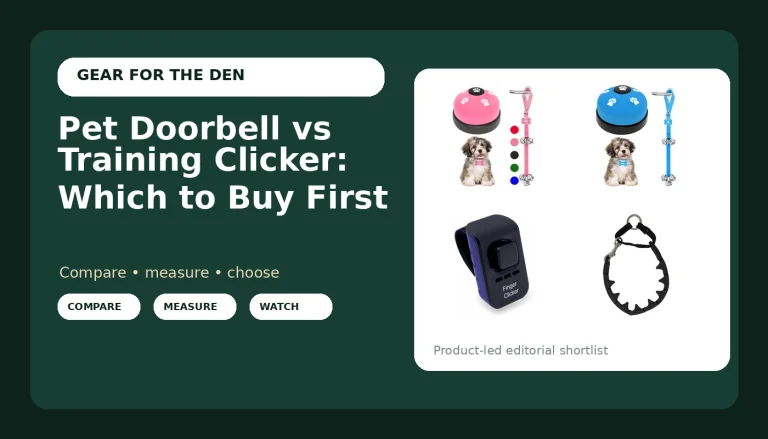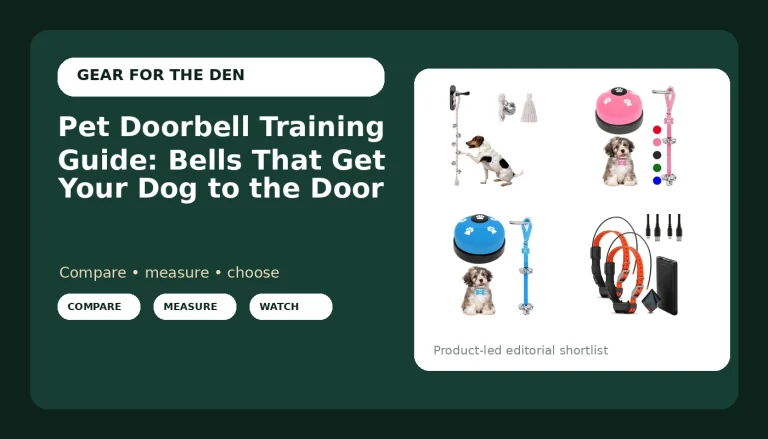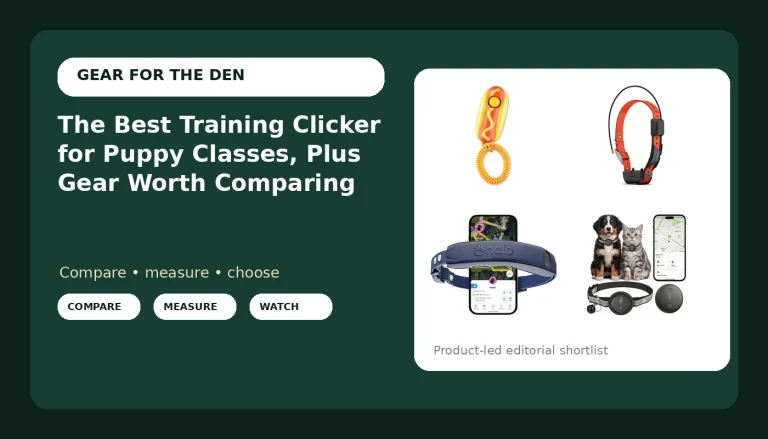
Clicker training looks simple from the outside: press the button, hand over the treat. The difficult part is the gap between those two actions, and that gap is where most sessions quietly go wrong, because good training clicker timing is the skill of closing it. Get the gap right and the click lands on the exact behavior you intend to pay for, rather than on the sit that already finished or the paw that came up afterward. This is a plain-language explainer rather than a product review. It covers what the click actually does, how short the marking window is, what makes timing drift under real conditions, and which pet tech supports the routine around a session. If you have ever ended a session unsure whether your dog learned the cue or just learned the treat bag, the answer is almost always in the timing.
Quick answer
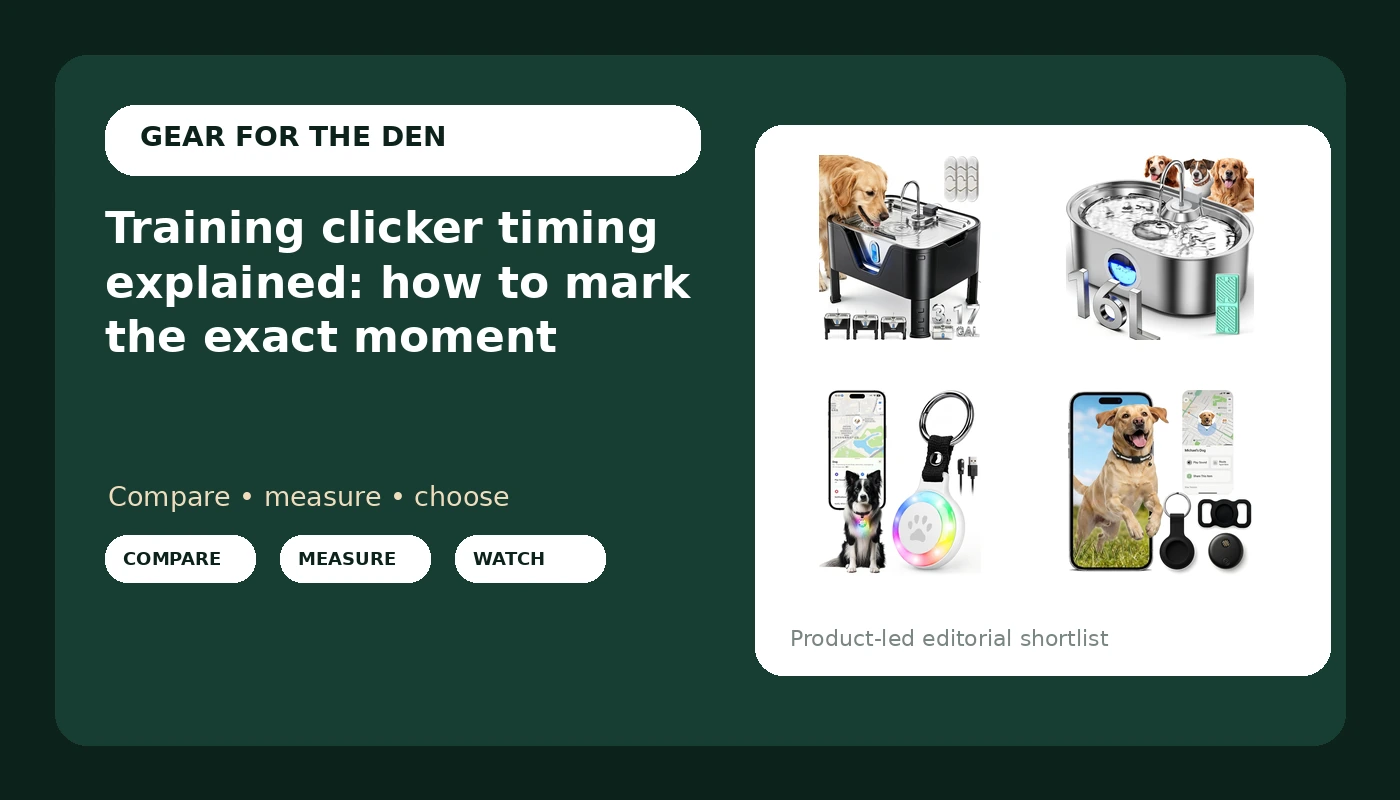
The one-sentence version of training clicker timing explained: the click has to mark the behavior while it is happening, and most trainers describe that window as effectively immediate, inside roughly half a second. The reward can follow a second or two later without weakening the lesson, because the click, not the treat, is what tells the dog which behavior earned payment. Get that order right and everything else in a session becomes easier to troubleshoot. The four items below are not timing tools. They are the gear that keeps a training routine running: water and bowls for long sessions at home, and trackers for the off-leash work where a recall has to hold at a distance. Timing is the skill; these are the supporting pieces.
4 useful options
| Model | Best fit | What stands out |
|---|---|---|
| 3.17Gal/ 12L Large Dog Water Fountain Elevated Dog Bowls with 3 Filters | Homes that train in one room every day | Elevated bowl section, a 3.17 gallon reservoir, and three filters in the listing |
| 4.2Gal Extra Large Dog Water Fountain, Stainless Steel Pet Water Fountain | Multi-dog homes and heavy drinkers | Stainless steel body and an extra large 4.2 gallon capacity |
| Pet Tracker for Dogs Cats, Location & LED Night Light Tag, No Monthly Fee | Evening sessions and low-light practice | Location tracking plus an LED night light tag, with no monthly fee stated |
| GPS Tracker for Dogs, Real-Time Location Tracking, No Monthly Fee, No SIM | Off-leash recall work in open ground | Real-time location tracking with no SIM card and no monthly fee |
The training station: 3.17Gal/ 12L Large Dog Water Fountain Elevated Dog Bowls with 3 Filters
Sessions break down when the dog wanders off to drink or when you leave to refill a bowl. A station that stays put removes that interruption, and the elevated bowls put water at a height that suits a large dog being asked for a long set of reps from a standing position. A large reservoir and a filter supply mean fewer refill trips, and fewer refill trips mean fewer unplanned breaks in the middle of a set. This is convenience gear, not a training tool, and it will not fix sloppy marking. What it can do is remove one common reason a good session gets cut short.
The stainless option: 4.2Gal Extra Large Dog Water Fountain, Stainless Steel Pet Water Fountain
Stainless steel is a common preference because it rinses clean and tends not to hold odors the way some plastics can. With more than one dog, capacity matters more than styling, since a fountain that runs dry by mid-morning simply adds a chore to your day. When you compare fountains, check the listing for pump details, the water resistance of the electrical parts, and whether any power backup is offered, because a fountain that quits during an outage is a fountain your dog ignores. None of that changes your click timing, but a station that behaves predictably keeps the routine predictable, and predictable routines are far easier to time.
The low-light tag: Pet Tracker for Dogs Cats, Location & LED Night Light Tag, No Monthly Fee
Evening is when a lot of people practice recalls, and evening is exactly when a dark dog disappears against a dark yard. A tag with a light solves the visibility half of that problem and adds location as a bonus. Check battery life and signal range on the listing before you commit, because both vary by model and by how hard you use them. App pairing matters too, since a tracker that pairs cleanly is one you will actually open when you need it. The subscription question is the other thing to confirm, and this listing states there is none, which is worth verifying at the listing itself.
The open-ground tracker: GPS Tracker for Dogs, Real-Time Location Tracking, No Monthly Fee, No SIM
Long-line and off-leash recall work is where a tracker earns its place in a training bag. Timing practice happens at distance, and distance is where a dog can slip out of sight. A tracker trains nothing on its own, and it is not a substitute for a long line in an unfenced area. What it does is shorten the search if a session goes wrong. Confirm battery life, signal range, and app pairing on the listing, and treat the no-subscription claim as something to re-check at the listing rather than a permanent guarantee.
Prices and availability may change. Product images, names, and retailer links are matched to verified listings. No current price, rating, stock status, or measured result is stated here without current evidence.
What training clicker timing actually measures
The click is a marker. It is not a command, not praise, and not a promise of food. Its only job is to identify the exact moment a behavior happened, so the dog can connect the reward that follows to that moment rather than to whatever it happened to be doing when the treat arrived.
What the marker measures is contiguity, the closeness in time between two events. Dogs form associations between events that sit close together, and the association gets muddier as the gap grows. A click that lands late does not simply weaken the lesson, it can teach the wrong one, because the dog marks whatever it was doing when the sound arrived. Sit, then head turn, then click teaches the head turn.
That is why trainers describe the click as ending the behavior. The instant the marker sounds, the rep is finished and the dog is free to collect. The reward arrives after the click, and a delay of a second or two is generally fine, because the click has already done the identifying work. The reward should not arrive before the click, or the click becomes background noise.
Human reaction time is finite, which is part of why a clicker beats a spoken word. A short, sharp, consistent sound is easier to place accurately than a word, and it sounds the same every time. In practice, correct training clicker timing is less about fast hands than about a clear criterion. If you have not decided which moment you are marking, no amount of speed saves the rep, because you will hesitate at exactly the wrong instant.
One more distinction is worth holding onto: the click is a marker, not a keep-going signal. Some trainers use a separate word to tell a dog that a long behavior is still being paid for, but that is a different tool. If the same sound does both jobs, the dog cannot tell whether the rep is finished or still running, and your timing stops meaning anything.
Why ideal training clicker timing drifts
Ideal training clicker timing assumes a quiet room, one dog, treats within reach, and a trainer who is not also answering a phone. Real sessions rarely look like that, and the drift usually traces back to a short list of causes. The treat supply is across the room, so your hand travels before your thumb does. You are holding a leash, a clicker, and a fistful of food at once. You gave the cue before the dog was paying attention, so you mark a false start. The set ran past the point where you were still sharp.
Fatigue is the quiet one. Accuracy falls off over a long set, and a tired trainer tends to click late and reward slowly. Short sets protect timing better than willpower does.
A fixed routine holds the window steady:
- Name the exact behavior and the exact instant you will mark before the first rep.
- Put the reward within arm's reach so nothing travels between click and treat.
- Run sets of five to ten reps, then stop and reset before accuracy slips.
- Click first, reward second, and let the click end the rep every time.
- Check your work with a phone recording or a second person calling the mark, and adjust.
Practical guidance for sessions that stay sharp
- Keep water close. A fixed fountain and bowl station near the training area removes the mid-set trip to the kitchen, and a large reservoir means fewer refills. Check capacity, filter supply, and whether the listing mentions a power backup for the pump.
- Train in light you can see. For evening reps, a collar tag with an LED night light keeps a dark dog visible, and location tracking on the same tag is useful if the dog ranges farther than you expected.
- Confirm the specs that matter. Battery life, signal range, app pairing, and subscription terms decide whether a tracker is worth wearing, and water resistance matters for anything that lives next to a bowl.
- Measure the treats, not just the reps. Portion accuracy keeps a long session from turning into a meal and keeps the reward valuable enough to work for.
- If you record sessions, check camera resolution before buying a camera, because a blurry frame will not tell you whether the click landed early or late.
For hands-free walking while you practice, a hands-free leash setup keeps your clicker hand free.
Which option should you choose?
Choose the 3.17Gal/ 12L Large Dog Water Fountain Elevated Dog Bowls with 3 Filters when you want one station that covers water and bowls and you train in the same room every day. Choose the 4.2Gal Extra Large Dog Water Fountain, Stainless Steel Pet Water Fountain when you have more than one dog or a heavy drinker and you prefer a stainless steel body. Choose the Pet Tracker for Dogs Cats, Location & LED Night Light Tag, No Monthly Fee when your sessions run into the evening and you want visibility plus location on a single collar tag. Choose the GPS Tracker for Dogs, Real-Time Location Tracking, No Monthly Fee, No SIM when you practice recalls at distance and want real-time location without a monthly plan.
None of these will improve your timing, and none of them should be treated as a substitute for the marker itself. The listings describe capacity, materials, and tracking features. They do not describe measured accuracy, battery performance under load, or training outcomes. Verify the details at the listing before you buy.
The bottom line
Put simply, training clicker timing explained comes down to one habit: mark the behavior you want while it is happening, then pay. Everything else, the clicker, the treats, the water station, the tracker, exists to make that habit easier to repeat. Fix the criterion first, put the reward within reach, keep sets short, and check your accuracy before you blame the dog. Gear can remove interruptions and keep a dark yard visible, but the half second that decides the lesson belongs to you.