The deshedding brush vs slicker brush question lands in the inbox every spring and fall, usually phrased as a sigh: the dog is blowing coat, the brush is full, the couch is losing anyway, and nobody is sure which tool was supposed to prevent any of it. Both tools remove hair. They remove it from different layers, at different depths, and with very different amounts of pressure against the skin, which is why swapping one for the other tends to end with either a grumpy dog or a floor still covered in fur.
The short answer: a deshedding tool is the correct first pass for a double coat, and a slicker brush is the correct finish for that same coat, plus the only brush most single-coated dogs ever need. If you are buying one tool and nothing else, match it to your dog's coat type rather than to a review count.
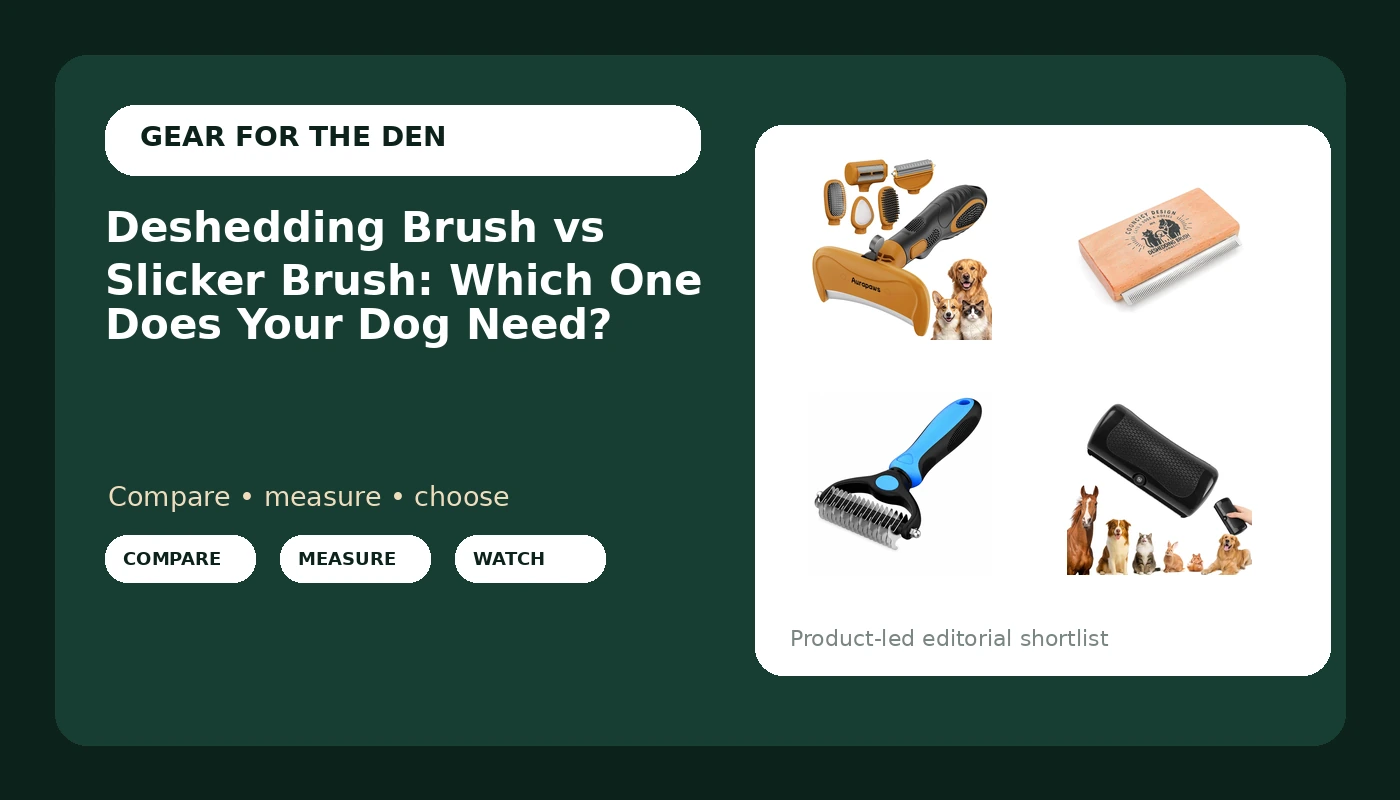
Aurapaws 6-in-1 Deshedding Dog Brush, Undercoat Rake Grooming Combo
Six interchangeable heads cover raking, dematting, and finishing in one purchase, for dogs and cats
The most complex tool here, with more heads to store and more decisions mid-groom
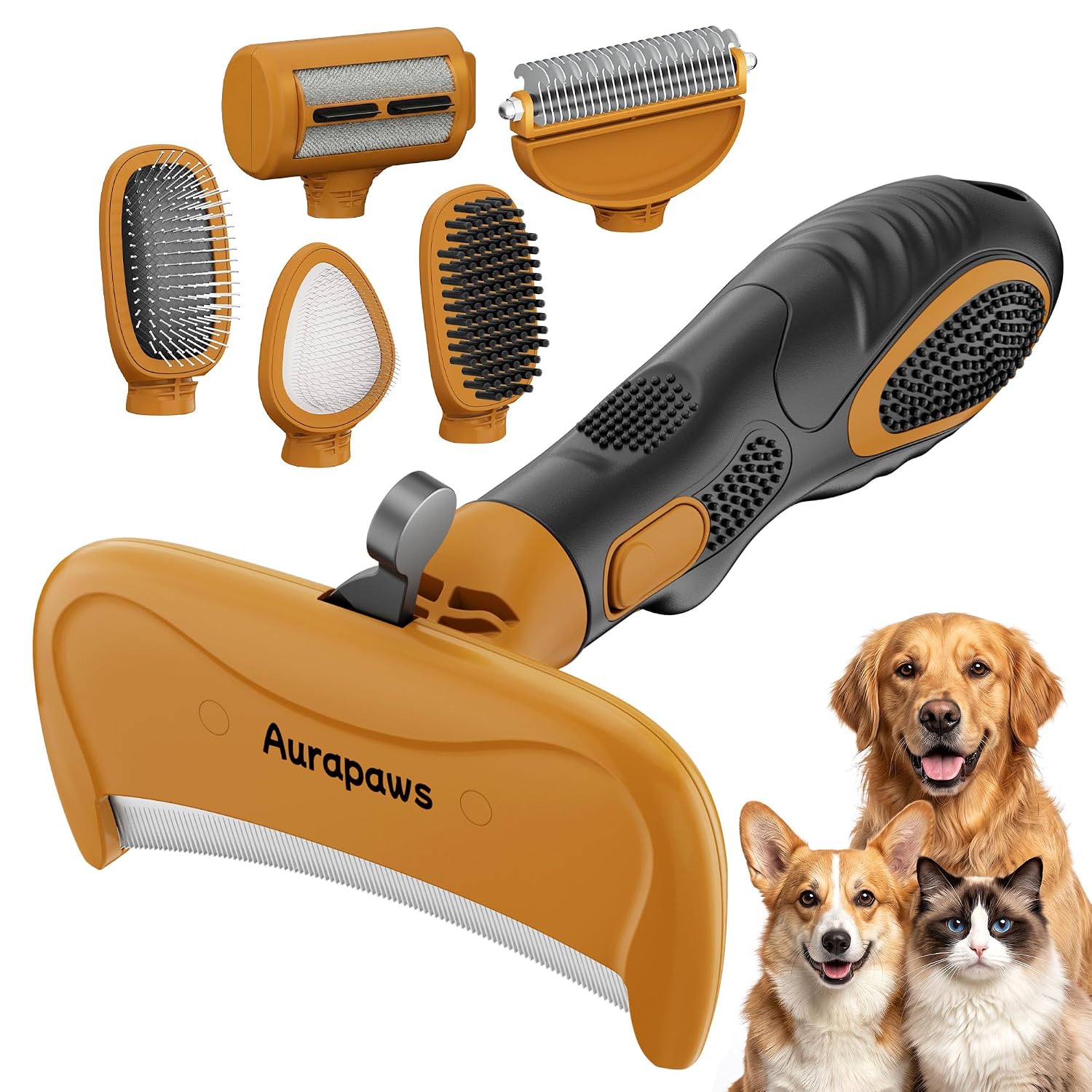
Cooncicy Deshedding Dog Brush with Wood Handle
A warm, rigid grip handle that does not flex in a wet hand, plus a simple single-purpose head
One job only, so it will not finish a coat or work out a knot
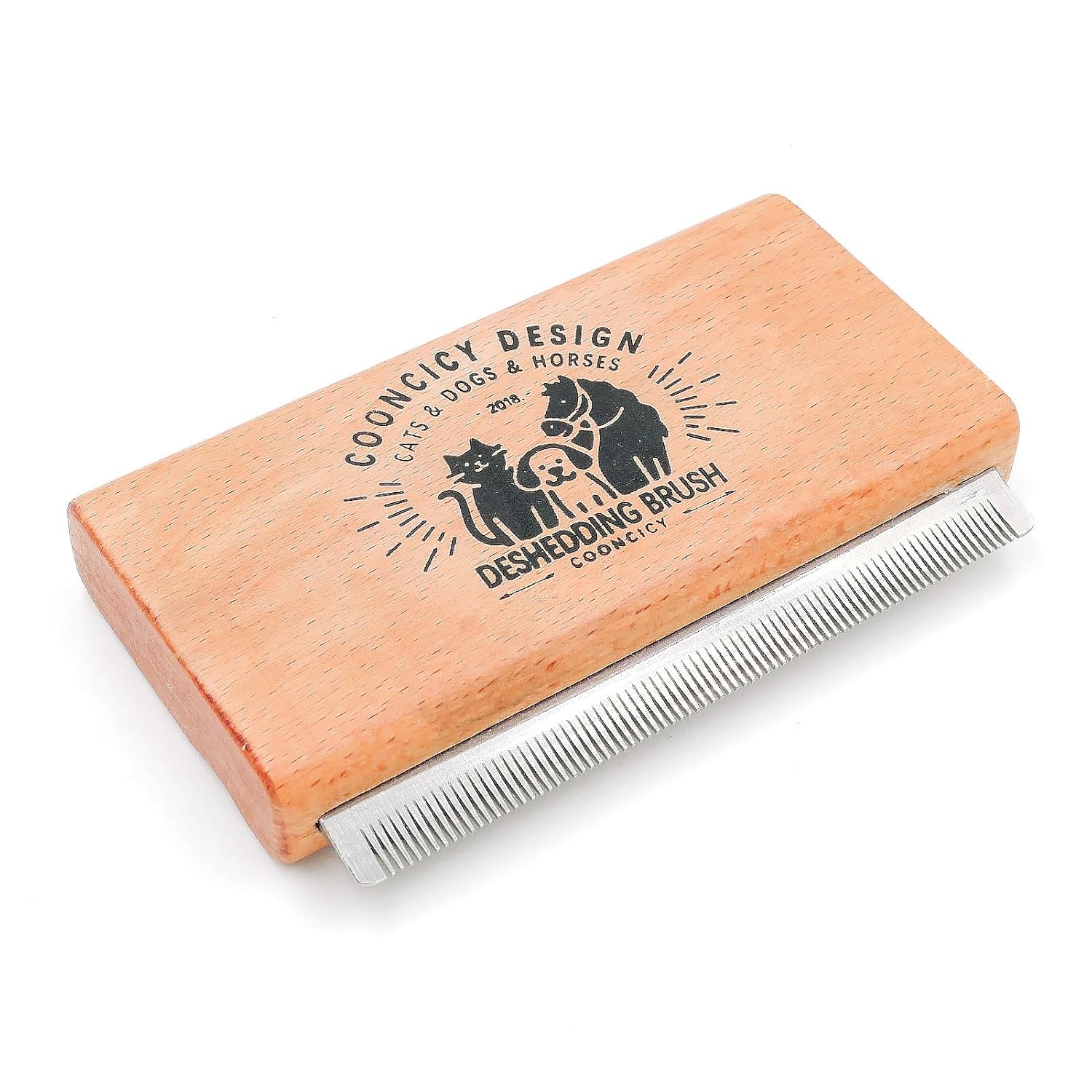
Pet Grooming Tool, Dog Brush For Shedding, Deshedding Dog Brush
No moving parts, nothing to lose, and the easiest tool in the group to rinse and hand to a helper
A generic head shape with no coat-specific geometry, so unusual coats are a gamble
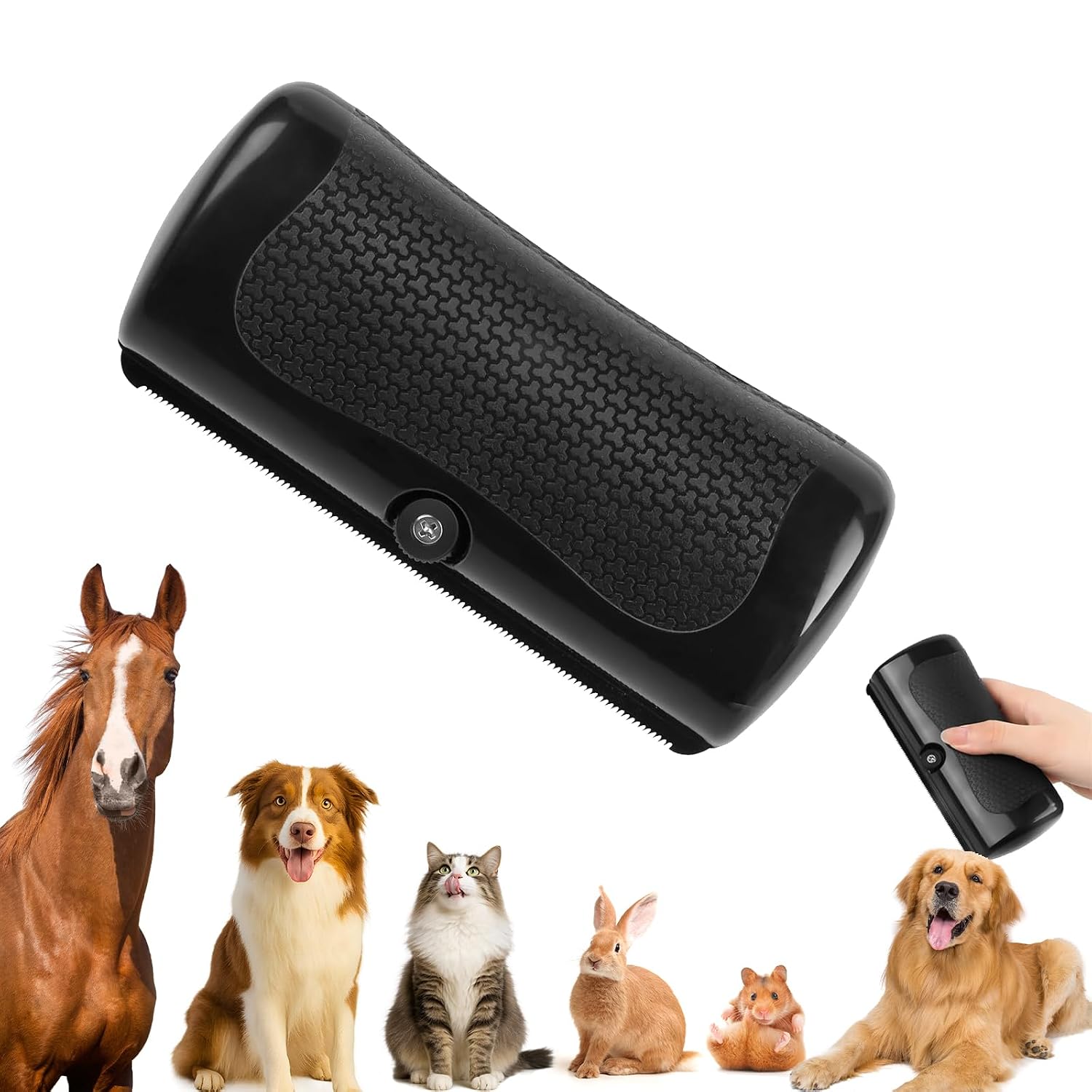
Deshedding Brush for Pets, Easy Hair Removal Tool
Marketed across dogs, cats, rabbits, and horses, which suits a house with several shedding animals
A universal claim usually means a compromised blade geometry for any single species
Prices and availability may change.
Deshedding brush vs slicker brush: the difference in one pass
The difference between deshedding brush and slicker brush comes down to which layer of hair the tool is built to reach. A deshedding tool works below the topcoat, lifting the loose, dead hair out of the undercoat before it migrates to your floor. A slicker brush works the surface: its fine pins separate hair, lift dander and debris, and smooth the topcoat into something that looks finished rather than merely tolerated.
That difference shows up in the shape of the head. A deshedding tool is usually a short row of teeth or a curved blade, sometimes with a blade guard that keeps the metal edge off the skin, and it is used in short strokes that follow the direction of the coat. A slicker is a cushion of fine wire pins, and the bristle type matters more than most people expect: soft pins for thin or sensitive coats, stiffer pins for dense ones.
Push either tool past its job and you get the same result, which is a dog that stops enjoying grooming. A deshedding blade dragged across a coat with nothing loose to remove is just a scrape. A slicker brush worked hard on a thick undercoat during a seasonal blow will fill up in seconds and accomplish almost nothing.
What a deshedding brush is actually for
Deshedding tools exist for one scenario: a double-coated dog in the middle of a shed. Breeds with a true undercoat, the shepherds, huskies, labs, corgis, and their mixes, carry a dense layer of insulation under the guard hairs. That layer turns over twice a year, and the loose hair has to come out somehow. Left alone, it mats against the skin, traps heat, and ends up woven into every fabric in the house.
The tool does not stop shedding. Nothing does. What it does is collect the hair that has already released, so it lands in your hand instead of on the couch. Used once or twice a week during a blow, and once every week or two the rest of the year, a deshedding pass keeps the coat moving and gives you a clear look at the skin underneath, which is where you will notice a hot spot, a tick, or a rash before it becomes a vet visit.
The mistake is reaching for it on a coat with no undercoat. On a poodle, a Yorkie, or a schnauzer, the blade finds nothing to pull and simply drags. That is the moment to switch tools, not to press harder.
Where a slicker brush wins
Search slicker brush vs deshedding brush and most of the results will tell you to buy both, which is honest but unhelpful if you are standing in a store aisle with one hand free. Here is the cleaner version.
A slicker brush is the better tool for a single coat, a hair coat, a curly coat, a puppy coat, and any dog whose skin reacts to firm metal. It is also the tool that finishes a deshedding session, because after the undercoat is raked out, the topcoat is still ruffled and full of loose surface hair that the slicker lifts away. If your dog gets bathed and dried at home, the slicker is what you reach for once the coat is dry.
Its limit is depth. A slicker cannot reach the undercoat, so on a husky in April it skims the surface while the shed continues underneath. It also tangles quickly. Wire pins load up with hair, and a loaded slicker stops doing anything useful until you pull the hair out of the cushion.
The four deshedding brushes here, and who each one suits
All four of these are deshedding tools rather than slickers, which makes this a comparison inside one category. The differences are in versatility, handle, and how specifically each head is aimed at a particular coat.
Aurapaws 6-in-1 Deshedding Dog Brush for Shedding, Undercoat Rake Grooming Combo
The Aurapaws is the only tool here that behaves like a system rather than a single brush. Six interchangeable heads on a patented handle cover undercoat raking, dematting, and the finishing pass, so one purchase can replace two or three separate tools in a drawer. It is also the one option built for both dogs and cats, which matters in a mixed house.
The trade-off is complexity. More heads means more storage, more decisions halfway through a groom, and a short learning curve if you have only ever used a fixed blade. For a heavy-shedding dog plus a cat, that flexibility earns its place. For one calm dog with one predictable coat, it is more tool than the job requires.
Check current Amazon price for the Aurapaws 6-in-1.
Cooncicy Deshedding Dog Brush with Wood Handle
The Cooncicy is the classic shape most people picture when they hear deshedding brush: a wood handle, a metal head, and a short row of teeth that follows the curve of a dog's back. The wood is the selling point. A grip handle that stays warm and does not flex under a wet hand changes how long you are willing to keep brushing, and grooming sessions are usually decided by hand fatigue rather than by the dog.
It is a single-purpose tool with no interchangeable parts to lose, which also means it will not demat a knot or finish a coat. Buy it if you want one honest deshedding pass and nothing else, and pair it with a slicker for the topcoat.
Check current Amazon price for the Cooncicy deshedding brush.
Pet Grooming Tool, Dog Brush For Shedding, Deshedding Dog Brush
This is the stripped-down version of the idea: a deshedding head, a handle, and no stated specialty. There is nothing wrong with that. A tool with no moving parts is easy to rinse, hard to break, and simple enough to hand to a partner or a kid who wants to help.
The catch is that a generic head shape cannot be tuned to a specific coat type. It works best on medium, straightforward double coats, and it is a guess on anything unusual: fine hair, a curly coat, or skin that objects to firm metal. If your dog is a lab mix with a normal seasonal shed, that is not a real problem.
Check current Amazon price for the Pet Grooming Tool deshedding brush.
Deshedding Brush for Pets, Easy Hair Removal Tool
The multi-species claim is the whole pitch here: dogs, cats, rabbits, horses. In a house with more than one shedding animal, that is genuinely useful, because you are buying one tool and using it on everything with fur.
The caveat is that a head designed to be acceptable on a rabbit and a horse is optimized for neither. If your only shedding pet is a ninety-pound shepherd, a species-specific tool will usually do a better job on that coat. If your house is a small zoo, this is the practical pick.
Check current Amazon price for the Deshedding Brush for Pets.
Coat type, undercoat, and the rest of the routine
The tool is one variable in a routine that has several, and the deshedding brush vs slicker brush decision only pays off if the rest of the setup is not fighting you.
Start with the blade guard. On any deshedding tool, the guard is what keeps the metal from digging into skin, and it is the first thing to check on a budget head. A guard that sits flush with the teeth is doing its job. One that has been bent out of shape is a scratch waiting to happen.
Then look at the bristle type on whichever slicker you pair with it. Soft pins for puppies, thin coats, and cats. Firm pins for dense double coats that need to be worked through. A slicker that is too stiff on a fine coat is worse than no slicker at all.
Bath day adds its own specs. A high-velocity dryer moves a startling amount of air, and airflow that is strong enough to push water out of an undercoat is what actually shortens drying time. Motor noise is the number nobody prints on the box and the one your dog will remember, so if you groom indoors, listen before you buy. If shedding comes with scratching, the oatmeal concentration in your shampoo matters more than the brand on the bottle, because colloidal oatmeal is the part that calms the skin.
None of this changes the core split. A deshedding tool goes under the coat, a slicker finishes the surface, and the grip handle in your hand decides whether you actually keep going for the ten minutes the job takes.
The bottom line
So, deshedding brush or slicker brush? If your dog has a true double coat, the answer is both, used in that order: rake the undercoat, then slick the topcoat. If your dog has a single coat, a hair coat, or a curly coat, the slicker is the one that matters and the deshedding head is optional.
Among the four deshedding tools here, the Aurapaws 6-in-1 is the pick for a multi-pet house or anyone who wants one purchase to cover raking, dematting, and finishing. The Cooncicy is the pick for a simple, comfortable single-purpose tool with a wood grip handle. The Pet Grooming Tool is the pick when you want the least complicated thing that works on a normal double coat. The Deshedding Brush for Pets is the pick when dogs, cats, rabbits, and horses are all sharing your floors.
Buy the one that matches the coat in front of you, use it in short strokes, and stop when the hair stops coming. The floor will tell you whether you chose right.