If you have ever run a hand down a dog's back and come away with a palm full of dry fur, you already know that dog coat health is the easiest thing to notice and the hardest thing to solve with one purchase. A dull coat, flakes near the tail, a greasy stripe along the spine, or a dog who scratches an hour after every bath can all look like the same problem, and they rarely are. Coat condition is a readout of several systems at once: skin oils, hydration, diet, the shedding cycle, and how often the coat is washed, rinsed, and dried.
This page is dog coat health explained in practical terms, covering what shampoo and conditioner can realistically change, what they cannot, and how to tell four formula types apart before you buy. Every product below is a shampoo and conditioner option sold for dogs with dry, itchy, or heavy-shedding coats. None of them is a treatment for a medical condition, and none replaces a veterinarian's diagnosis when the skin is broken, infected, or inflamed for weeks.
Quick answer
A dull coat and flaky skin usually improve when three things line up: a gentle shampoo matched to coat type, a conditioner that restores some slip and moisture, and a bath schedule that does not strip the skin barrier more often than the dog needs. Oatmeal-based formulas are the standard starting point because colloidal oatmeal is a well-known skin-soothing ingredient, and three of the four options here are built on it. The fourth is aimed at shedding instead.
What no shampoo can do is fill a nutritional gap, so if the diet is short on omega 3 fatty acids, particularly the EPA DHA forms, or the dog has an untreated allergy or thyroid problem, the coat will keep reporting that no matter what goes in the tub. Match the formula to the skin in front of you first, then to the coat type.
Four useful options
| Model | Best fit | What stands out |
|---|---|---|
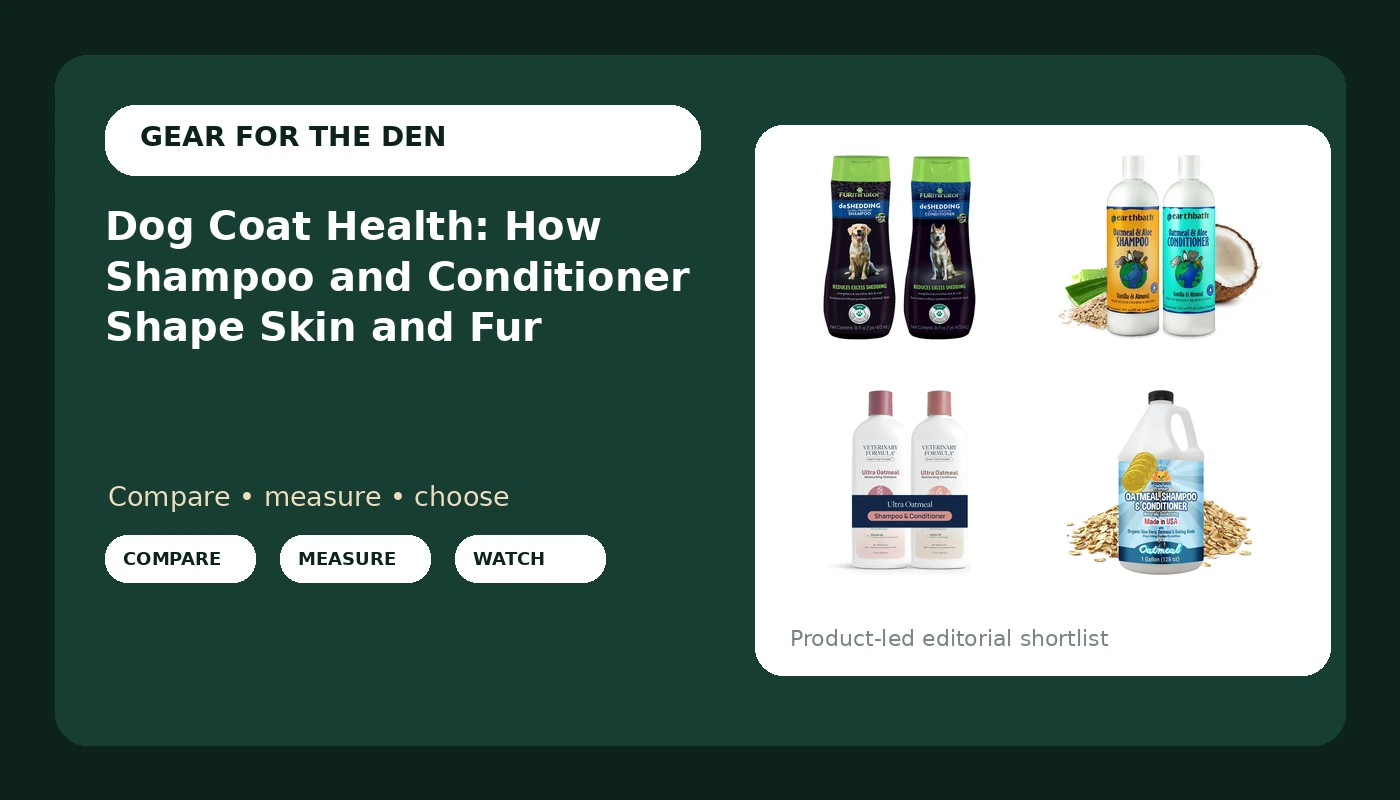
| Furminator® Deshedding Ultra Premium Shampoo & Conditioner Bundle. 16oz. | Dogs that shed heavily and need coat-release support | Shampoo and conditioner sold together as a bundle, 16 fl oz bottles |
| earthbath Oatmeal & Aloe Dog Shampoo and Conditioner, 16 Oz (1 Set) | Dry skin that reacts to harsh cleansers | Oatmeal and aloe formula in a matched 16 oz set |
| Veterinary Formula Ultra Oatmeal Shampoo + Conditioner Bundle, 17 oz Each | Sensitive skin that needs an oatmeal-first routine | Ultra oatmeal shampoo plus a matching conditioner, 17 oz each |
| Bodhi Dog Natural Oatmeal Dog Shampoo & Conditioner – Hypoallergenic Formula – Naturally Deodorize Dogs, Cats & Pets – Moisturizes Dry, Itchy & Sensitive Skin – Made in USA (1 Gallon) | Multi-pet homes and frequent bathers | One-gallon size, hypoallergenic oatmeal formula, made in the USA |
The deshedding option: Furminator® Deshedding Ultra Premium Shampoo & Conditioner Bundle. 16oz.
Deshedding shampoos help the coat release dead hair during the wash and the rinse, which is why they tend to be paired with a rubber curry brush or a rake rather than used on their own. The trade-off is focus. A formula built for coat release is not automatically gentle on inflamed skin, so if your dog has hot spots, broken skin, or a history of reacting to heavy fragrance, start with an oatmeal formula and keep the deshedding pair for weeks when the skin is calm. Bottle size matters here too. Sixteen ounces is a fair trial size for a small dog, but a large double-coated breed will move through both bottles quickly, and the conditioner empties at roughly the same rate as the shampoo when you follow the label. A deshedding tool does more for the undercoat than any shampoo can.
The oatmeal and aloe set: earthbath Oatmeal & Aloe Dog Shampoo and Conditioner, 16 Oz (1 Set)
Aloe is a common addition to dog shampoo because it feels cooling on irritated skin, while oatmeal does the soothing work most owners are actually shopping for. The practical question with a matched set is frequency. Oatmeal formulas are usually mild enough for routine bathing, but routine still means every three to six weeks for most dogs, not every weekend. Bathing more often than the skin can recover from strips the oils that keep the coat flexible, and the flakes usually come back worse. Rinse time matters as much as the formula. Any residue left in a dense coat becomes an itch trigger, so work the conditioner through with a comb and rinse until the water runs clear, particularly on curly and wire coats.
The sensitive-skin bundle: Veterinary Formula Ultra Oatmeal Shampoo + Conditioner Bundle, 17 oz Each
Oatmeal concentration is one of the few label details you can genuinely compare between bottles. A shampoo can carry the word oatmeal on the front label and still list it near the end of a long ingredient list, so if soothing is the goal, check where it sits in the order and how the brand describes the blend. Buying the shampoo and the conditioner as one bundle keeps both steps in the same oatmeal family, which lowers the chance of layering a heavily fragranced conditioner over a mild shampoo. The two bottles are 17 oz each, which lands between a trial size and a value size and suits a medium dog bathed every few weeks. If your dog has a diagnosed skin condition, bathe under your vet's guidance.
The value-size gallon: Bodhi Dog Natural Oatmeal Dog Shampoo & Conditioner – Hypoallergenic Formula – Naturally Deodorize Dogs, Cats & Pets – Moisturizes Dry, Itchy & Sensitive Skin – Made in USA (1 Gallon)
A gallon changes the arithmetic of bathing. If you wash two or three animals, or one large dog on a regular schedule, a bigger bottle size lowers the cost per bath and cuts down on reorders. The catch is handling. A full gallon is awkward to pour over a dog in a tub, so most owners decant it into a smaller squeeze bottle and store the rest somewhere cool and out of direct sun. This is also the one formula here described as suitable for dogs, cats, and other pets, which makes it the easiest to share in a mixed household. Because the label describes a hypoallergenic formula, patch test any animal with a known sensitivity before you commit to the full jug.
Prices and availability may change. Product images, names, and retailer links are matched to verified listings. No current price, rating, stock status, or measured result is stated here without current evidence.
What dog coat health actually depends on
Coat is mostly protein, and skin is the organ that produces it, so anything that upsets the skin shows up in the fur weeks later. The outer layer of the skin holds water and oils in place; when that barrier is damaged by harsh shampoo, over-bathing, or a chronic allergy, moisture escapes and the coat turns brittle and dull. Sebum, the oil that gives a healthy coat its sheen, is produced at the follicle, which is why a greasy coat and a dry coat can both point to a skin problem rather than a fur problem.
Nutrition sits underneath all of it. A complete and balanced diet supplies the amino acids and fats the body needs, and the omega 3 fatty acids, especially the EPA DHA forms found in fish oil, have the most direct evidence for supporting skin and coat condition in dogs. That is a diet and supplement conversation, not a shampoo conversation. Coat type changes what you should expect. A double-coated breed will blow coat twice a year no matter what you feed it, a curly coat traps moisture and needs longer rinsing, and a short single coat shows every flake. Age and hormones matter too; senior dogs often carry a thinner, drier coat, and thyroid problems produce a classic dull, sparse coat with scaling.
For most owners, correct dog coat health comes down to unglamorous basics: rinse thoroughly, do not bathe more often than the skin needs, keep fleas and parasites controlled, brush to distribute oils and remove dead hair, and get a vet involved when the skin is red, smelly, or the dog is losing hair in patches. There is no single product that delivers ideal dog coat health on its own, and any label that implies otherwise is overselling.
How to read a shampoo label for coat type and oatmeal concentration
Labels are written to sell, so the useful move is to read them in a fixed order. Start at the back, where the ingredient list lives, and work forward. Ingredients appear in descending order by weight, so a formula that names oatmeal first or second is a different product from one that names it after the fragrance and preservatives. Colloidal oatmeal and oatmeal extract are separate entries with different concentrations, and a limited ingredient formula will have a shorter list, which helps when you are trying to isolate a trigger.
Then the coat type question. Fragrance-free and dye-free formulas are the safer default for dogs with sensitive skin, and conditioner is not optional for long or curly coats. Weigh bottle size against how often you actually bathe the dog, and whether the formula is one you can rinse out completely. A dog that licks its paws and flanks after a bath is usually reacting to residue, not necessarily to the shampoo itself.
- Identify the coat type before buying anything. Double coats, curly coats, wire coats, and short single coats need different rinse times and different amounts of conditioner.
- Read the ingredient list from the bottom up and note where oatmeal appears. A high position suggests a higher oatmeal concentration than a token mention near the end.
- Compare bottle size with your bath frequency. Two 16 oz bottles are a reasonable start for a small or medium dog; a gallon suits multi-pet homes and frequent bathers.
- Check that the formula rinses out fully and dries comfortably. Coat condition improves when no residue stays behind, especially under a thick undercoat.
- Decide whether you need a soothing formula or a deshedding one, and only then compare listings. Buying a deshedding pair for inflamed skin, or an oatmeal set for a coat that only needs release in spring, wastes money either way.
Bath-day routine that protects the skin and coat
The formula matters less than the routine around it. The same bottle produces a soft coat on one dog and a flaky one on another when the rinse, the water temperature, or the drying step is rushed.
- Use lukewarm water and apply the shampoo as the label directs. Hot water and undiluted shampoo both strip oils faster than the skin can replace them.
- Work the shampoo down to the skin, not just across the topcoat. A dense undercoat hides soap, and hidden soap is the most common cause of post-bath itching.
- Rinse for at least as long as you lathered. There is no regulated lick safe standard on shampoo labels, so rinsing until the water runs clear is the practical protection for a dog that grooms itself afterward.
- Condition, comb, and rinse again on long or curly coats, since conditioner left in a heavy coat attracts dirt and traps moisture.
- Dry the dog properly with a towel or a low-heat dryer, and keep a short log of bath date, formula, and any skin reaction so patterns show up within a few washes.
Which option should you choose?
Choose the Furminator® Deshedding Ultra Premium Shampoo & Conditioner Bundle. 16oz. when shedding is the main complaint and the skin is calm. Choose the earthbath Oatmeal & Aloe Dog Shampoo and Conditioner, 16 Oz (1 Set) when the skin is dry and reactive and you want a matched oatmeal and aloe set at 16 oz. Choose the Veterinary Formula Ultra Oatmeal Shampoo + Conditioner Bundle, 17 oz Each when you want an oatmeal-first wash and condition pair in slightly larger bottles. Choose the Bodhi Dog Natural Oatmeal Dog Shampoo & Conditioner when you bathe several pets, or one large dog often enough that a one-gallon bottle size makes sense.
The caveat is that none of these products treats a skin disease, and none substitutes for nutrition or parasite control. Oatmeal soothes surface irritation; it does not resolve allergies, infections, or hormonal coat loss. If you cannot tell whether your dog's coat problem is nutritional, parasitic, allergic, or simply over-bathing, start with the cheapest change, which is usually a longer rinse and a longer gap between baths, then work through the list again.
The bottom line
Shampoo and conditioner are a small part of dog coat health, but they are the part you control directly every time you bathe. Pick a gentle, well-rinsed formula that matches the skin in front of you, whether that is an oatmeal set for dry and itchy skin or a deshedding bundle for a coat that drops heavily twice a year. Support it with diet, brushing, parasite control, and a bath schedule the skin can keep up with. If the coat keeps declining despite all of that, the next useful step is a veterinary exam rather than another bottle.