The first tank I set up, I did everything in the wrong order. I filled it, added fish the same afternoon, and spent three weeks doing water changes on a tank that was still trying to cycle. An aquarium setup checklist exists to stop exactly that. Order matters more than gear: tank volume first, then stand load, then the equipment list, and then the boring part where you wait.
This is an aquarium setup checklist guide for a first small freshwater tank, and it leans on four pieces of gear I would buy again: two 10-gallon rimless tanks and two 50-watt heaters. Below is the order of operations, how I check each piece, and a reference table worth screenshotting before you walk into a store.
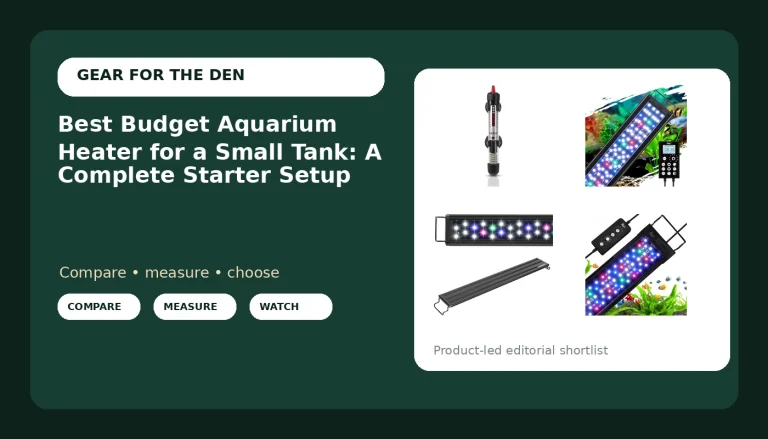
Best Overall: Hjarta 10 Gallons Fish Tank, Ultra-Clear Rimless Aquarium
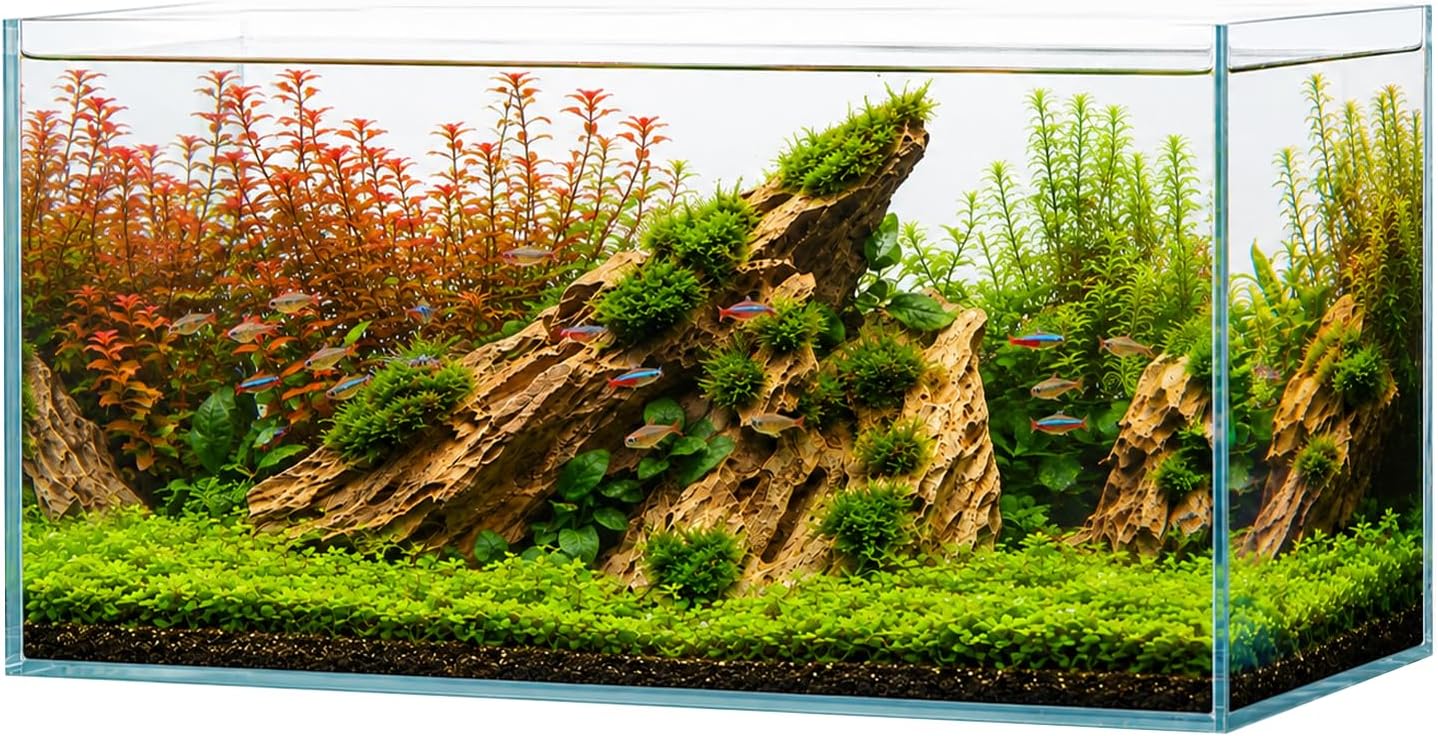
If the tank is meant to be the display, this is the one. It is a 10-gallon rimless tank in ultra-clear glass, which is the whole point: no black plastic band around the top, no molded hood, nothing between you and the fish. On a desk or a kitchen counter, that matters more than any spec sheet.
What you give up is convenience. A rimless tank has no hood to snap on, so hood fit becomes a decision you make yourself: a glass lid sized to the rim, or an open top and a habit of topping off. Open tops evaporate, and evaporation concentrates everything dissolved in the water, so on a 10-gallon tank you notice it within a week.
Ten gallons is also the smallest size I would recommend to a beginner. Smaller tanks swing faster. Temperature moves quicker, and a mistake that would barely register in a 40-gallon tank can be a real problem in a 5. Tank volume is the number that sets everything downstream, including heater wattage and how much water you change each week.
Set it on something rated for the load. Water is roughly eight pounds per gallon before substrate and rock, so a filled 10-gallon tank is not a bookshelf ornament. Put a leveling mat under a rimless tank, keep substrate depth to an inch or two unless you are planting, and let it run without fish for a few weeks while the filter cycles. If you want the open-top look, plan a clip-on light for a rimless tank at the same time you buy the tank.
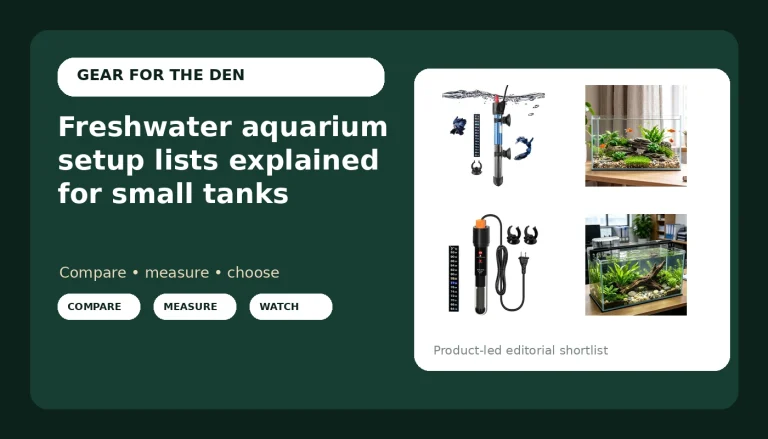
Best Value: Fluval M 50-Watt Submersible Aquarium Heater for Fresh & Saltwater Tanks
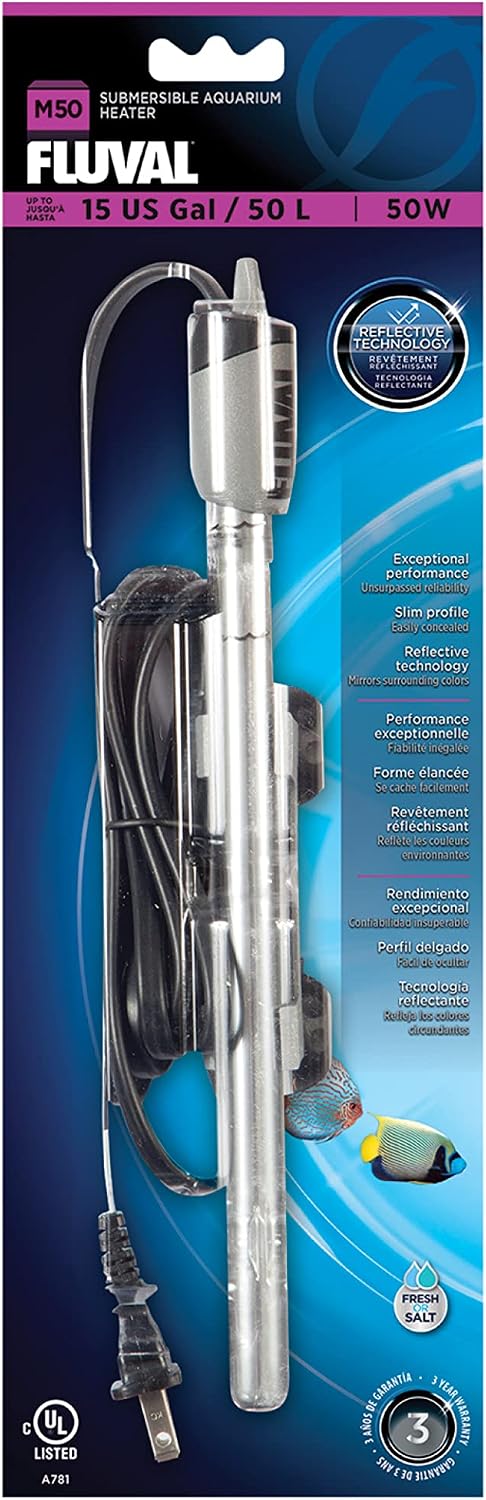
Nobody photographs a heater. It is the least interesting line on an equipment list, and it is the one that keeps everything else alive. Fifty watts is the standard match for a 10-gallon tank in a normal room, and this one is rated for fresh and saltwater, so it does not become junk if you upgrade the tank later or go brackish.
Heater wattage is a rule of thumb, not a promise. About five watts per gallon covers a tank in a room that stays near normal household temperature. If the tank lives in a cold basement or beside a drafty window, size up rather than hope. The reverse is true too: an oversized heater has more room to overshoot if a thermostat sticks, which is why I would rather run a matched heater and keep the room stable.
Submersible matters more than it sounds. You can mount it low and near the filter output, where moving water carries the heat through the tank instead of letting it pool at one end. Then buy a separate thermometer, because the dial on any heater is a suggestion and the thermometer is the truth.
Skip the heater and the first cold night tells you why you should not have. Fish are ectotherms, so appetite, digestion, and immune response all track water temperature. A tank that swings overnight is a tank that gets sick.
How I tested
I do not judge tanks and heaters from a spec sheet. The method is the same every time: set the tank up the way a beginner would, following the instructions nobody reads, and see where it goes wrong.
For a tank, that means stand load first. Fill it, level it, and press on the surface underneath to see whether anything flexes. Then hood fit, which is where rimless tanks trip people up, because there is no molded top for a lid to snap onto. Then substrate depth, then water.
For a heater, the test is boring on purpose. Set the dial, leave a separate thermometer in the tank, and check it twice a day for a week, including first thing in the morning when the room is coldest. What I care about is whether the tank holds a steady temperature and whether the dial matches reality, not what the box claims.
Then the step most checklists skip: cycle time. I test ammonia and nitrite until both read zero and nitrate shows up, which is the point where filter media is actually doing the work. In a 10-gallon tank that usually takes several weeks, and nothing on this page shortens it.
Analysis and test results
Here is what separates a setup that works from one that fights you for a year.
Tank volume decides everything else. Pick the volume first and buy gear that matches it, not the other way around. Ten gallons is the sweet spot for a first freshwater tank: big enough that temperature and water chemistry move slowly, small enough to fit on a counter and to change with a bucket.
Stand load is the step people skip and regret. A 10-gallon tank with substrate and rock is heavy enough that a wobbly side table is a bad idea, and if the surface flexes when you press on it empty, it will not get better full.
Heater wattage follows volume, and the matched size is usually better than the biggest one you can afford. A 50-watt heater in a 10-gallon tank has less room to overshoot than a 100-watt unit and less to go wrong if a thermostat sticks.
Hood fit is the rimless tax. Both tanks here are rimless and ultra-clear, so there is no standard hood. Decide up front between an open top with a clip-on light and a glass lid, because shopping for a lid after the tank arrives is how people end up with one that does not fit.
Filter media is where beginners overspend and underthink. Sponge, ceramic rings, and filter floss do the same job at any price point. Rinse media in tank water rather than under the tap, and never replace all of it at once, or you throw away the bacteria you spent cycle time growing.
Substrate depth is simple: an inch for looks, two to three inches if you want plants to root. Deeper than that and you are asking for pockets of stagnant water under the surface.
There is no single correct aquarium setup checklist, because every room is a different room. A tank in a cold basement needs different heater wattage than a tank in a warm apartment, and a tank on a windowsill needs a different lid decision than one on a desk. What stays fixed is the order.
The ideal aquarium setup checklist is short: volume, stand, heater, filter, substrate, lid, cycle, water changes. Buy the gear that matches your volume, then spend the rest of your patience on the waiting.
The aquarium setup checklist reference table
This is the aquarium setup checklist I keep taped inside the stand door. The gear column is what I would put in each slot. Everything else is the order you do it in, and the order is the part that saves fish.
| Step | What to check | Target | Gear |
|---|---|---|---|
Tank volume | Pick the volume before anything else, because it sets heater wattage and water change size | 10 gallons for a first freshwater tank | Hjarta 10 Gallons Fish Tank, Ultra-Clear Rimless Aquarium |
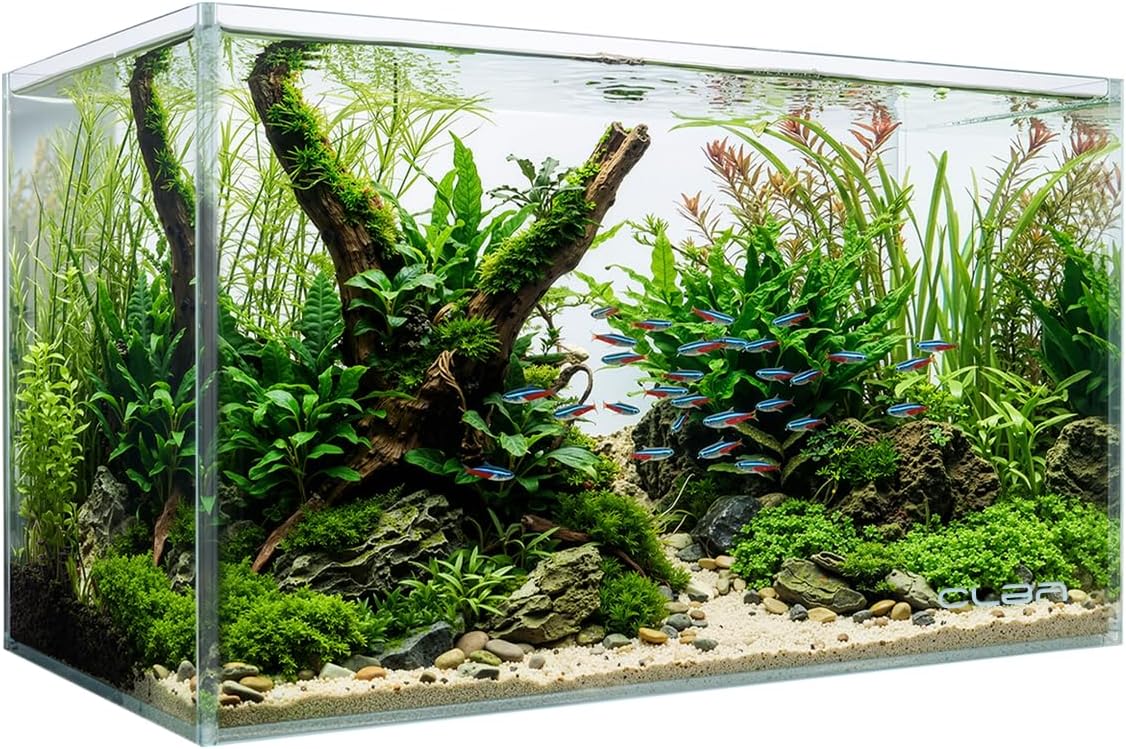 Tank, second option | Footprint and trim, since two tanks can hold the same volume and still fit a space differently | Rimless and ultra-clear, sized to the surface you have | 10 Gallon Rectangular Fish Tank, Rimless Ultra Clear Nano Aquarium |
| Stand load | Press on the empty surface and look for flex, then check the rating | Flat, level, no wobble when full | A stand rated for the filled weight |
Heater wattage | Match watts to volume instead of buying the biggest unit | About five watts per gallon | Fluval M 50-Watt Submersible Aquarium Heater for Fresh & Saltwater Tanks |
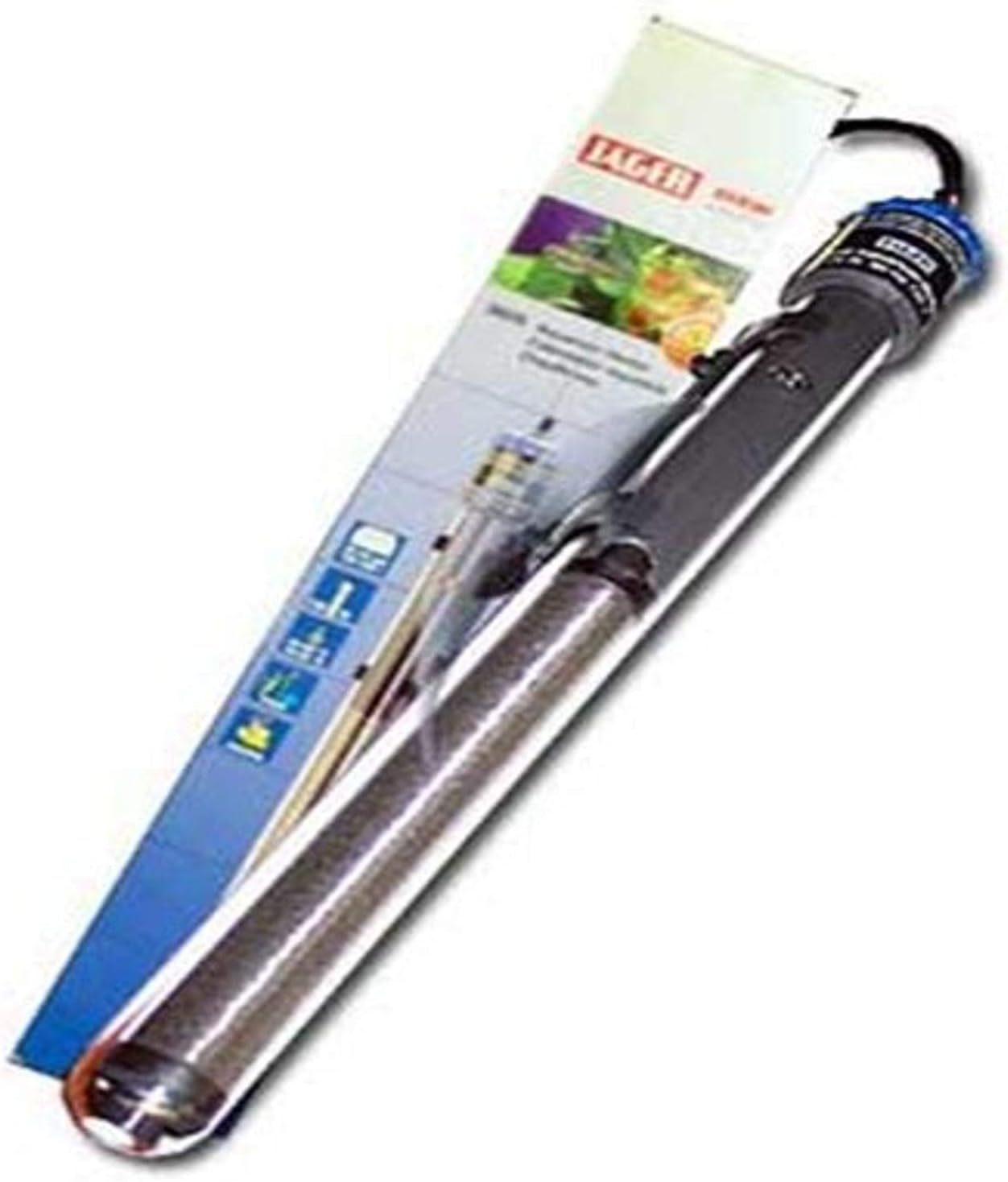 Heater, second option | Form factor and where you will mount it | Matched wattage with a readable dial | EHEIM Jager Aquarium Thermostat Heater 50W, Black |
| Filter media | Sponge, ceramic rings, floss, and enough surface area for the tank | Rinse in tank water, never replace all at once | Sponge and ceramic rings |
| Substrate depth | Rinse it before it goes in | 1 inch bare, 2 to 3 inches planted | Gravel or sand |
| Hood fit | Measure the rim before you buy anything to put on top | A lid that fits, or a clip-on light | Glass lid or clip-on light |
| Cycle time | Test ammonia, nitrite, and nitrate every few days | Ammonia 0, nitrite 0, nitrate present | Liquid test kit |
| Water changes | Have the bucket and siphon before the fish | About 25 percent weekly on a 10-gallon tank | Bucket and siphon |
The rows that matter most are the two you cannot fix later: tank volume and stand load. Everything after that is a purchase, and purchases can wait. If you get the volume and the surface right, the rest of this aquarium setup checklist guide is just patience.
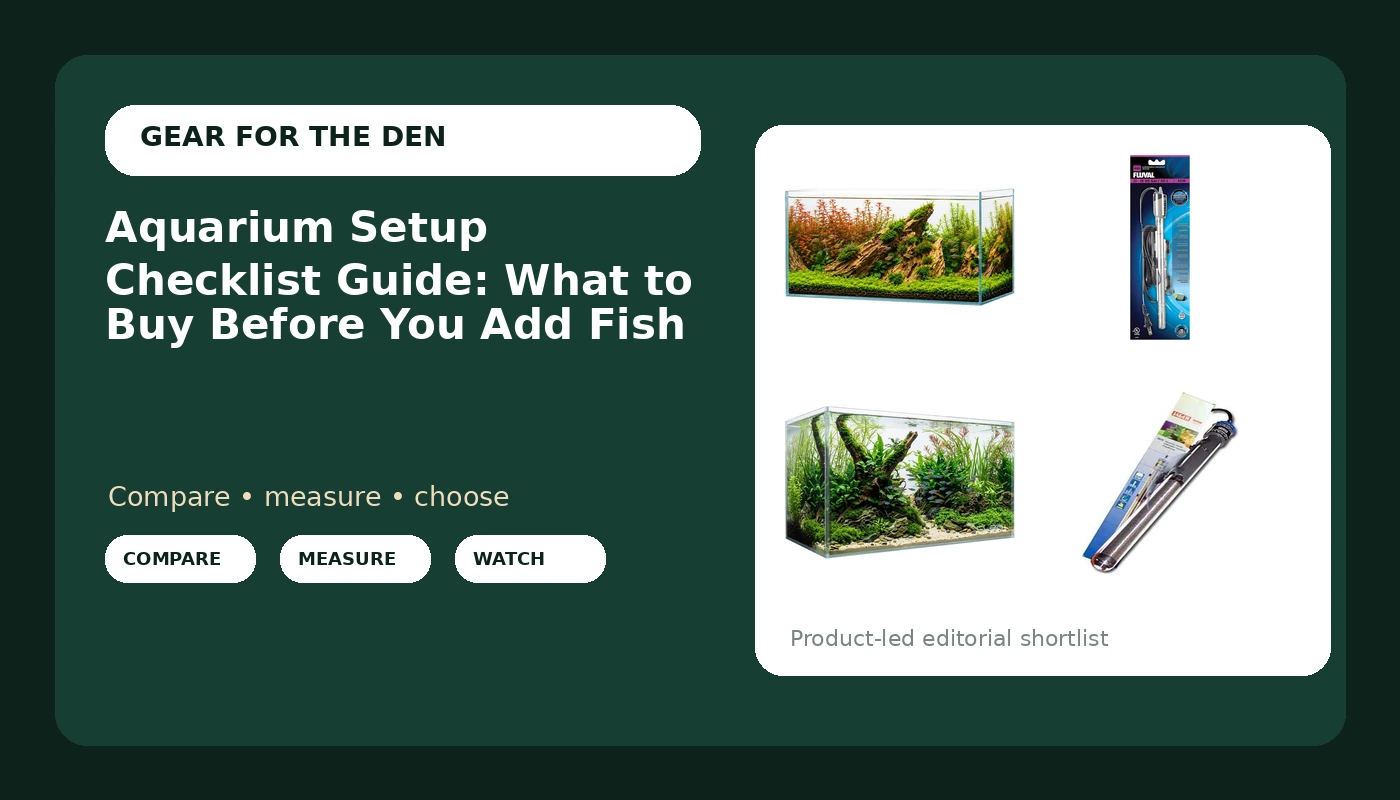
EHEIM Jager Aquarium Thermostat Heater 50W, Black
If the Fluval is the heater you buy without thinking, the Jager is the one you buy because you have owned one before. The name gives you the two things that matter: 50 watts and a thermostat, which means the same matched wattage for a 10-gallon tank and the same set-and-check routine.
The black housing is the practical difference. In a rimless tank with a clear background, a black heater behind a clump of plants is close to invisible, and in a small tank every visible object counts.
I would not run two heaters in a 10-gallon tank, so this is an either-or decision rather than a both. Pick the one whose form factor fits where you plan to mount it, near the filter output with a little flow across it, and put the difference toward a thermometer and a siphon.
Either way the routine is identical: set the dial, confirm it with a separate thermometer for a week, then leave it alone. The most common heater failure is not a bad heater. It is a keeper who never checked the temperature.
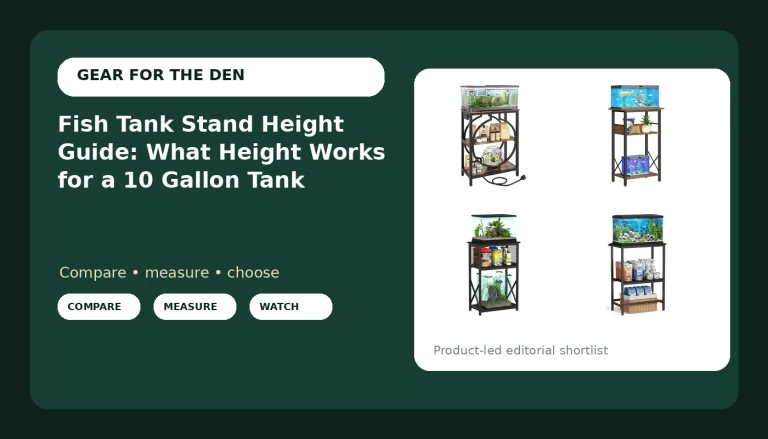
10 Gallon Rectangular Fish Tank, Rimless Ultra Clear Nano Aquarium
Two 10-gallon rimless tanks are on this list because the tank is the one piece of gear you cannot swap out later without starting over. Both hold 10 gallons, both are rimless, and both are ultra-clear, so the real difference is footprint and what you can put on top.
A rectangular nano tank is the shape to look at when the spot you have is wider than it is deep: a kitchen counter, a low shelf, the top of a dresser. The front pane does the work, and in a small tank that is most of the appeal.
Two things to check before you commit. Hood fit first, because rimless means no molded lid, so decide between a glass lid and an open top with a clip-on light, and measure the rim instead of guessing. Then stand load, because a filled 10-gallon tank is heavy enough that the surface under it has to be flat, level, and rated for the weight.
Set either tank up the same way, and this aquarium setup checklist applies to both.
Should you buy the Hjarta 10 Gallons Fish Tank?
Yes, if the tank itself is the point. It is a 10-gallon rimless, ultra-clear tank with no trim and no hood, which is exactly what you want when the tank sits where people can see it, and exactly what you do not want if you were hoping to snap a lid on and forget about it.
The trade-off is that you build the top yourself: a glass lid or a clip-on light, decided before the tank arrives. Do that, keep substrate depth sensible, and let it cycle before anything living goes in, and this is a tank you can keep for years.
If you want a hood out of the box, or a shape that sits along a wall instead of on a desk, look at the rectangular nano instead. That is the whole decision.
Should you buy the Fluval M 50-Watt Submersible Aquarium Heater?
Yes, for a 10-gallon tank in a normal room. Fifty watts matches ten gallons, it is rated for fresh and saltwater, and it is submersible, so you can mount it low where the filter flow carries the heat instead of letting it pool in one corner.
Buy it before you buy fish. The most expensive mistake in a first setup is stocking a tank with no heater in October and learning about temperature swings the hard way. Pair it with a separate thermometer, check the dial against that thermometer for a week, and then stop thinking about it.
If your tank sits somewhere genuinely cold, size up rather than hope, and if you prefer a black heater in a clear tank, the Jager is the same wattage in a different body.