A glass box with a heat lamp over one end and a water bowl at the other is a small weather system, and bearded dragon terrarium humidity is the reading that tells you whether that system is doing its job. Most of the trouble I see in keeper threads is not a broken hygrometer. It is a tank where the heat is too weak to pull moisture out of the air, or so strong that the animal spends the week in a dry, dusty bake.
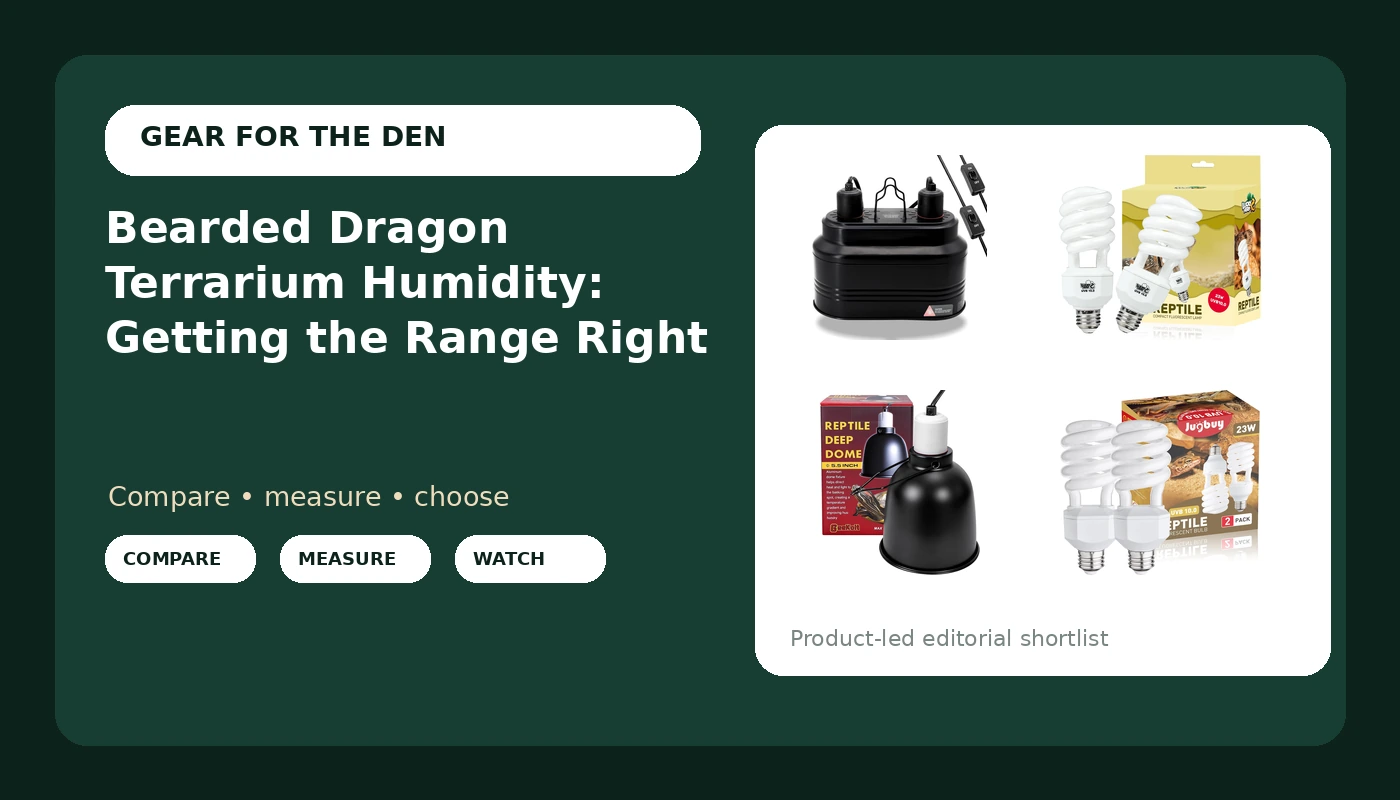
This bearded dragon terrarium humidity guide is built around the gear that actually moves the number: the basking fixture, the UVB bulb, and the way you schedule the two. The four products below are what I would put in a 4x2x2 enclosure, and the reference table further down gives you target ranges by zone, from the hot spot on the basking rock to the cool-side hide where your dragon sleeps.
Best Overall: MECESOR Dual Reptile Lamp Fixture with Independent Switches
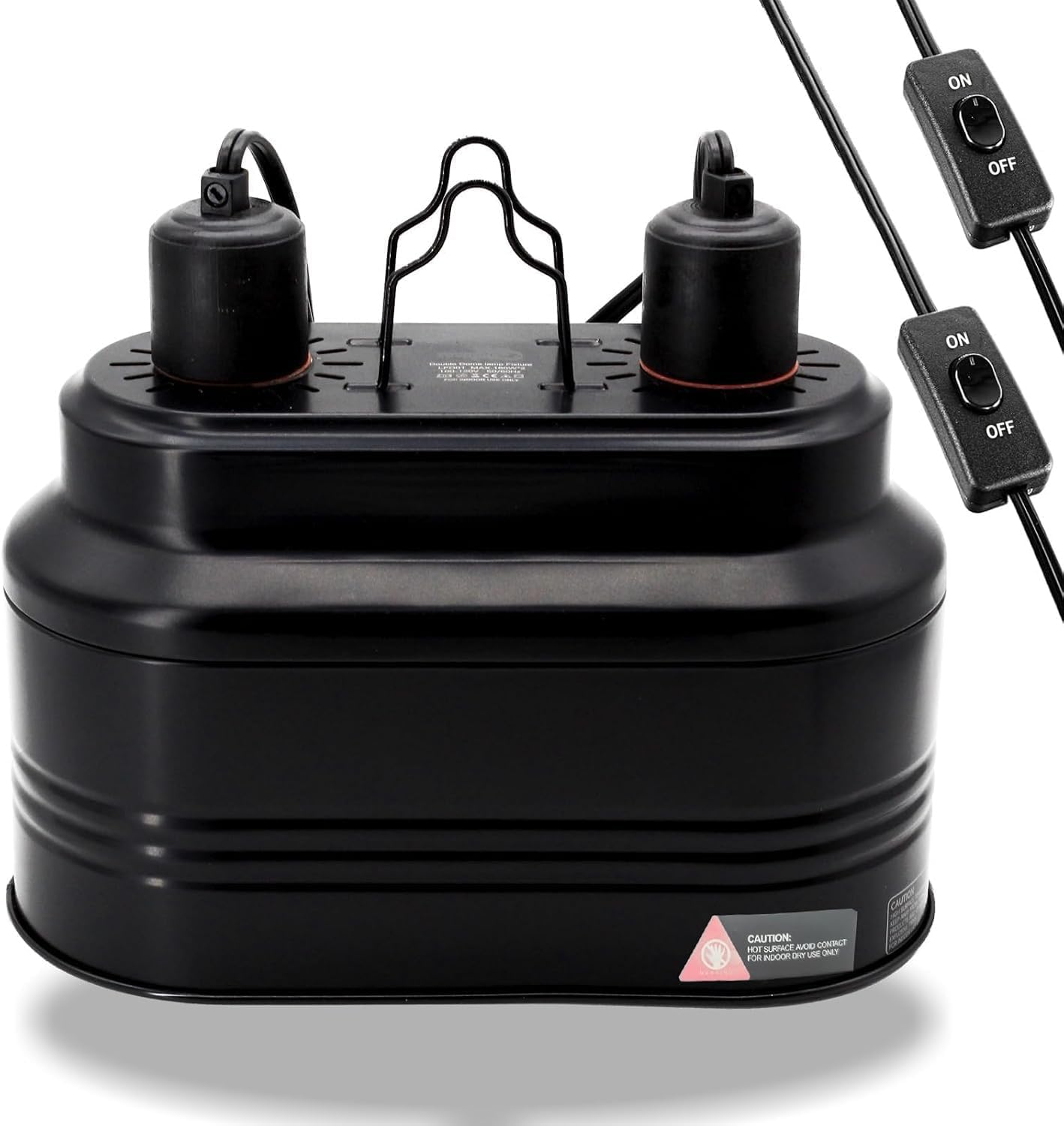
Two sockets, two switches, one fixture. That is the entire argument for the MECESOR dual fixture, and it is a humidity argument as much as a lighting one. On a damp morning you can run the basking bulb on its own and let the hot spot pull the moisture down, then switch the UVB side on for the middle of the day when the dragon is actually out and basking. With a single-switch dual fixture you cannot split those jobs, so you end up choosing between a warm, humid tank and a dry one that is lit all day whether the animal is under it or not.
The holders take standard screw-in bulbs, so the UVB bulbs below drop straight in, and the housing sits over a glass terrarium habitat without drilling or ceiling hooks. That matters more than it sounds. Heat is your main humidity tool, and a fixture that is easy to reposition is a fixture you will actually adjust when the seasons change. If you want the order of operations for the whole enclosure, the tank build walkthrough at Bearded Dragon Tank Setup Checklist covers ventilation and substrate before you ever hang a lamp.
Position matters as much as wattage. A heat source centered over the basking rock creates a hot, dry pocket exactly where the dragon spends its morning, while a water bowl at the cool end stays cool and does not push the whole-tank reading up. Watch the basking temperature with a probe or an infrared gun rather than trusting a dial, and set the fixture height once you know what the bulb actually does in your room.
Best Value: LUCKY HERP 2 Pack UVA UVB Reptile Light
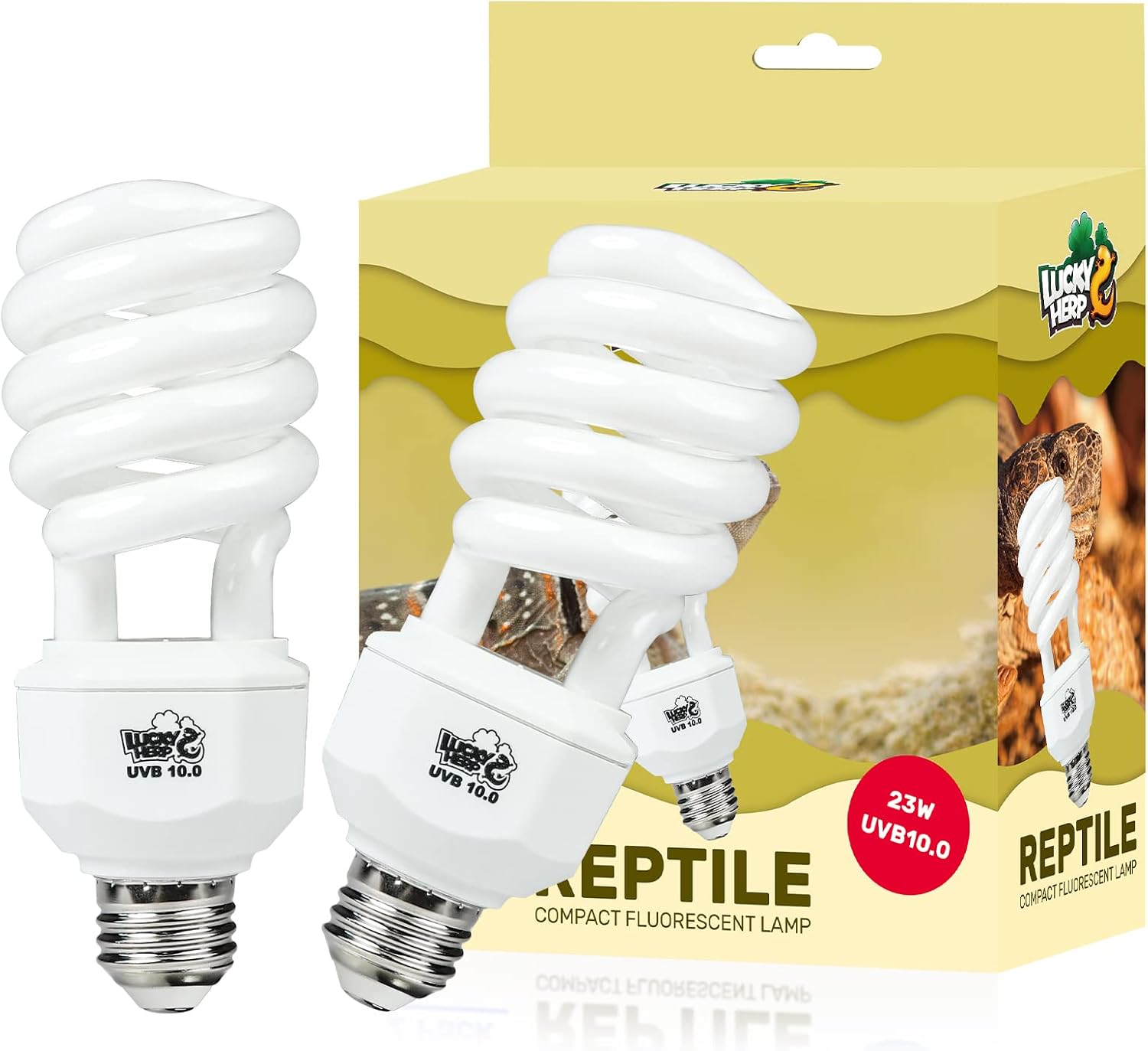
Two 23W 10.0 UVB compact bulbs in one pack. The 10.0 figure is the desert-species spec, which is the right neighborhood for a bearded dragon, and the spiral compact shape fits the standard screw-in sockets on both fixtures in this guide. Buying them as a pair is the practical part. UVB output fades long before the bulb stops glowing, so the bulb you cannot see failing is the one most likely to sit in service two months past its useful life.
Keep the spare on the shelf and date the one in the fixture. When you swap it, the fixture comes off the tank anyway, which makes it the natural moment to re-aim the basking side and re-check the gradient with your hygrometer. I treat a bulb change as a setup check, not a chore.
The compact design also fits a deep dome more easily than a long tube, which is why this is the pick if you run dome fixtures rather than a hood. In a taller enclosure, match the bulb to the distance from the fixture to the basking surface, because the same bulb puts out very different levels at ten inches and at twenty.
How I tested
Humidity is one of the few things in a reptile setup you can measure directly, so the method is simple and repeatable. Two digital hygrometers, one at the basking end and one inside the cool-side hide, both at the height where the dragon actually sits. Readings at lights-on, midday, lights-off, and an hour after lights-off, because the number climbs when the lamp goes out and the air cools, and a keeper who only checks at noon will miss that entirely.
Then I change one variable at a time: water bowl size and position, substrate depth, ventilation through the screen panel, and the heat source itself. Change two at once and you learn nothing, because you cannot tell which one moved the reading. I log the basking temperature with a probe at the same time as the humidity, since heat is the lever and the two numbers only make sense together.
For lighting gear, the checks are physical. Does the fixture hold a bulb at the angle I need without sagging? Does the socket stay cool enough to touch after an hour? Can I run one bulb without the other? Does a replacement bulb drop in without an adapter? Gear that fails those questions usually fails them in ways that surface as a humidity problem weeks later, when heat output has quietly drifted and the reading has crept up.
Analysis and test results
Warm air holds more moisture than cool air, so the same amount of water in an enclosure reads as lower humidity when the tank is hot. That is why chasing a number with a spray bottle is a losing game. You mist, the reading spikes, the lamp dries it out in twenty minutes, and you mist again. The lever is heat plus ventilation, not water, and the ideal bearded dragon terrarium humidity is a band rather than one magic number.
Three things separate a stable tank from a swinging one: tank size, substrate depth, and where the heat is aimed. A larger enclosure buffers every change, which is why a 4x2x2 holds a range far more easily than a 40-gallon breeder. A deep loose substrate releases moisture slowly instead of all at once, while a bare glass floor gives you nothing to work with. And a bulb aimed at a rock rather than into open air builds a localized dry pocket where the animal actually spends its morning.
Independent switches are worth paying for. On a humid day, the correct bearded dragon terrarium humidity is easier to hold when you can run the basking bulb alone and leave the UVB side dark, then flip it on during the hours the dragon is active. A heat source on a thermostat range that is too wide will also swing the reading, because every time the bulb cuts out, the air cools and the relative humidity climbs back up. Night is its own problem: temperatures drop, relative humidity rises, and a heat mat wattage that is too high will dry the hide out while the rest of the tank stays damp. Check hide size too, since an oversized hide collects warm moist air that the animal then sits in all day.
The bearded dragon terrarium humidity reference table
These are the bearded dragon terrarium humidity targets I work toward for an adult in a glass terrarium with a screen top. Treat them as a starting band and adjust with your own hygrometer, because a juvenile in a small tank swings faster than an adult in a large one.
| Zone | Target | Notes |
|---|---|---|
Whole tank, daytime | 30 to 40 percent | The working band for most adult setups |
 Basking rock, within a few inches | 20 to 30 percent | The dry pocket that keeps skin and lungs healthy |
| Cool-side hide | 40 to 50 percent | If it reads higher, check hide size before chasing the number |
| Night, lights off | 50 to 60 percent | Normal rise; a tight thermostat range keeps it from climbing further |
| Shedding window | 40 to 50 percent | A damper hide helps a stubborn shed; do not soak the whole tank |
| After a bath or a misting | Spikes, then settles within an hour | If it does not settle, ventilation is too low |
| Substrate surface | Holds moisture longer than bare glass | A depth of four to six inches releases water slowly |
UVB bulb service | Replace on schedule | UVB output fades before the glow does |
The number that matters most is the gap between the two ends of the tank. A tank that reads 35 percent everywhere is a tank with no gradient, and a dragon needs somewhere dry to warm up and somewhere damper to retreat to.
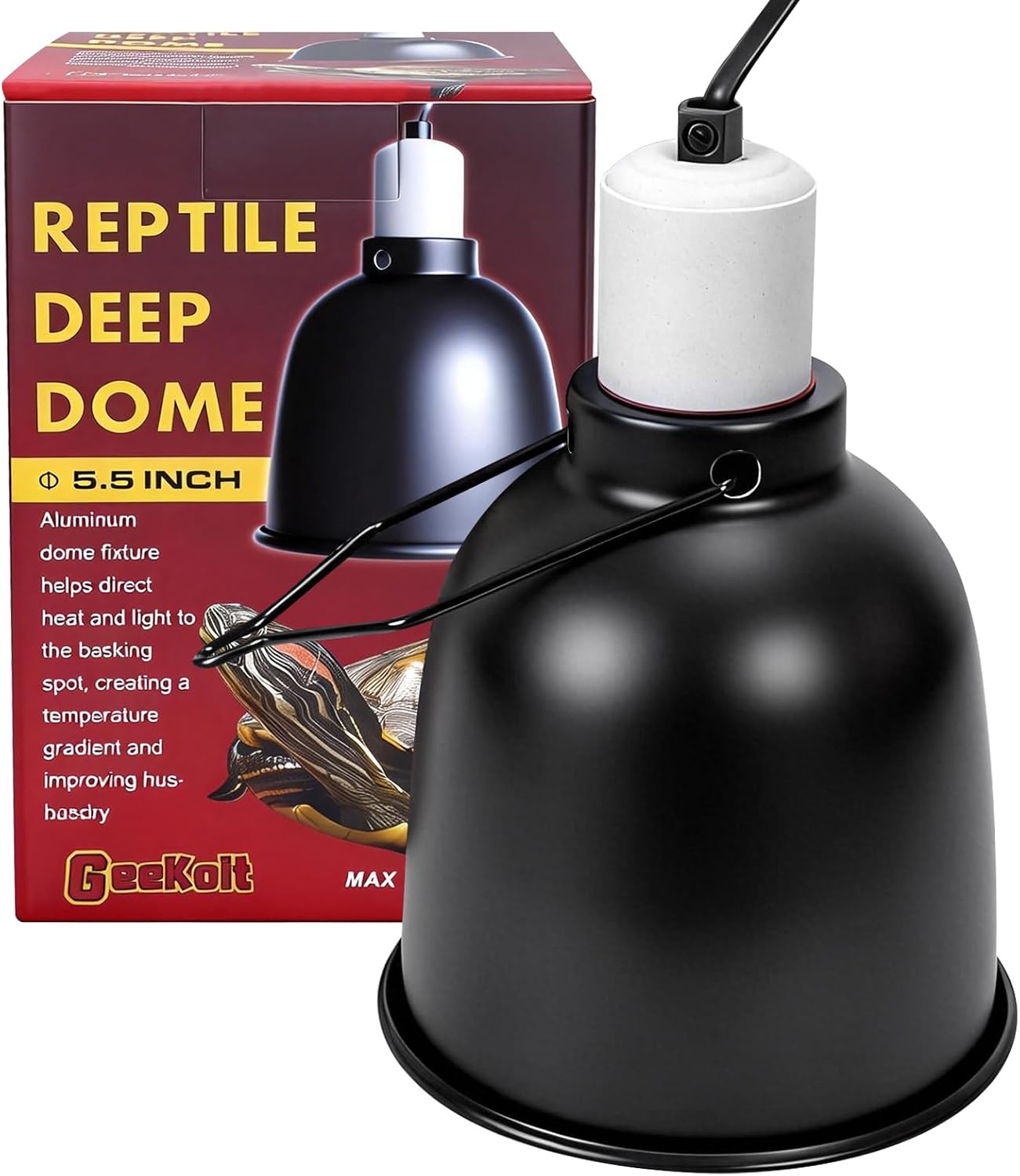
The 5.5 inch deep dome fixture as a dedicated heat lamp holder
If the dual fixture runs your UVB and your everyday basking bulb, a deep dome is what you add when you need more heat than one socket can give. The ceramic socket handles the heat that would cook a plastic one, the deep dome shape throws light and warmth down onto the basking rock instead of spilling it into the room, and the hanging hook lets you raise or lower the whole thing a couple of inches at a time. That hook is the cheapest way to tune basking temperature without buying a new bulb. The safety switch is a small thing that matters in a household with kids or a cat that likes to climb.
UVB bulbs, output, and replacement timing
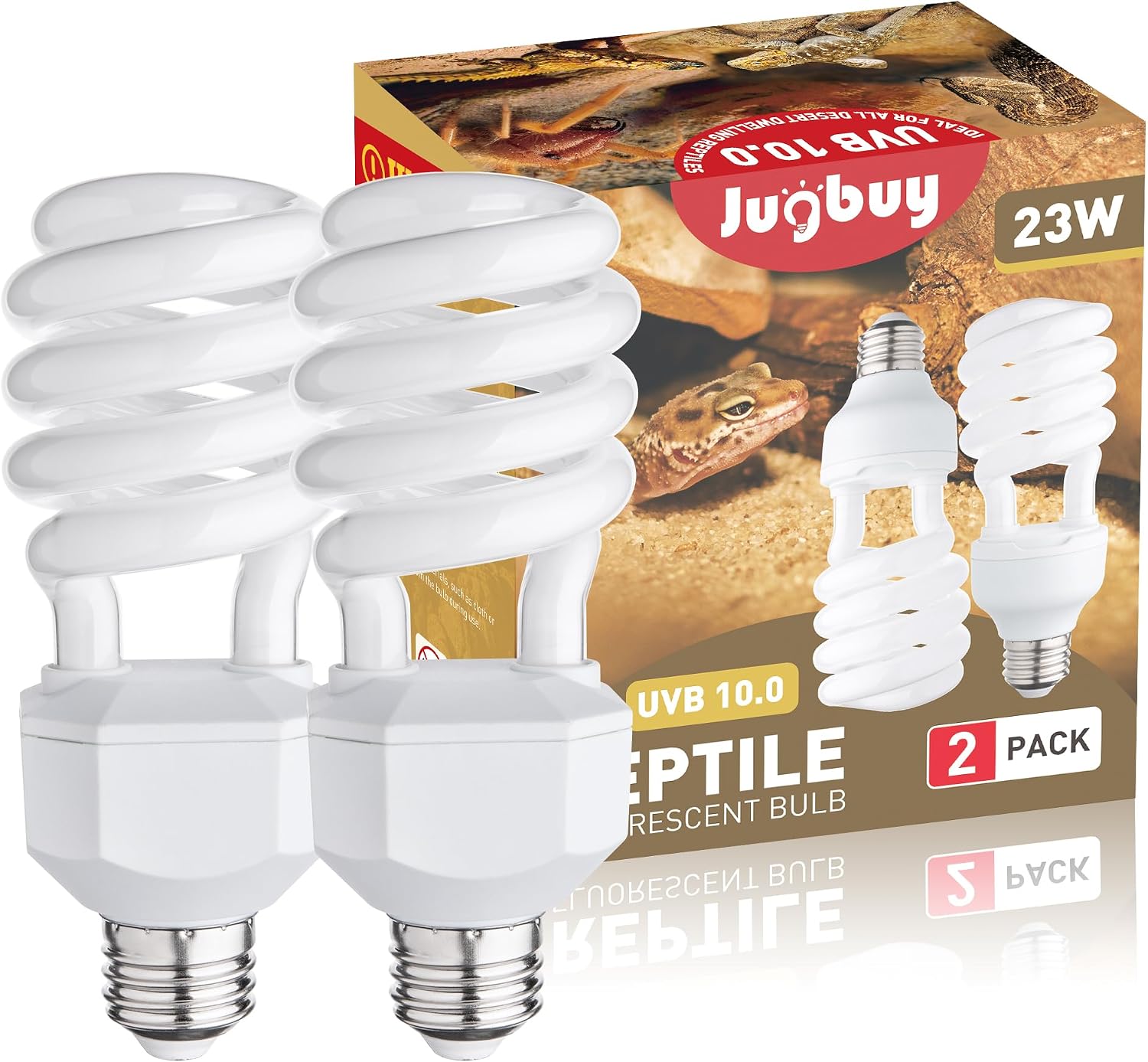
Both compact bulbs in this guide are 23W 10.0 spirals, and both fit the screw-in sockets above. The Jugbuy pair is the other two-pack worth keeping in the drawer, with the same desert-reptile 10.0 rating and the same spiral shape. Whichever pair you buy, treat the bulbs as consumables. Date the one in the fixture, keep the spare dry, and swap on schedule rather than waiting for a visible change. Matching UVB output to tank size is the other half of it: a bulb that is right for a shallow enclosure at a short distance is not right for a deep one.
Should you buy the MECESOR Dual Reptile Lamp Fixture?
Yes, if your humidity problem is really a heat-scheduling problem. Two independent switches let you run warmth without UVB, which is the whole trick on a damp morning, and the holders accept the standard screw-in bulbs you are already buying. It is the fixture that turns a fixed light setup into something you can actually steer through a humid week.
If you already run separate single fixtures and you are happy with them, you do not need to replace anything. This is for the keeper who wants one housing over the tank, two switches on the cord, and no reason to climb behind the enclosure to unplug a bulb.
Should you buy the LUCKY HERP 2 Pack UVA UVB Reptile Light?
Yes, if you run screw-in fixtures and you want a spare on the shelf. Two 23W 10.0 compact bulbs in one pack means you are never the keeper running a faded bulb for an extra season because the replacement has not arrived yet. They fit the dome and dual fixtures here without an adapter.
The one thing to check before you buy is fit. These are compact spirals, not tubes, so if your enclosure uses a long hood fixture, measure the socket and the clearance first. For everything else in a standard bearded dragon setup, this is the straightforward pair to keep on hand.