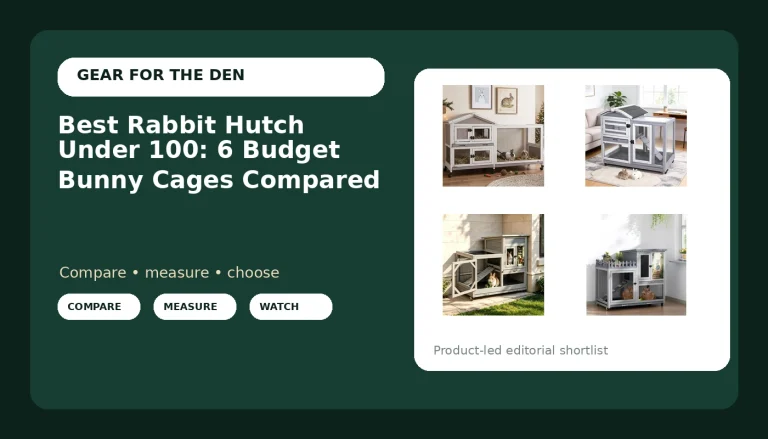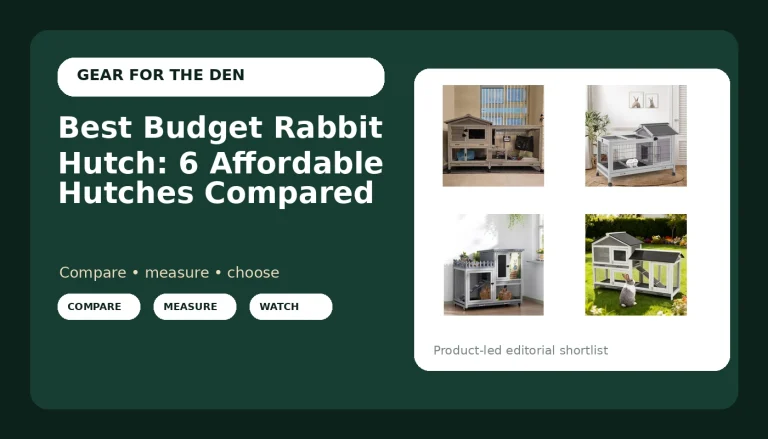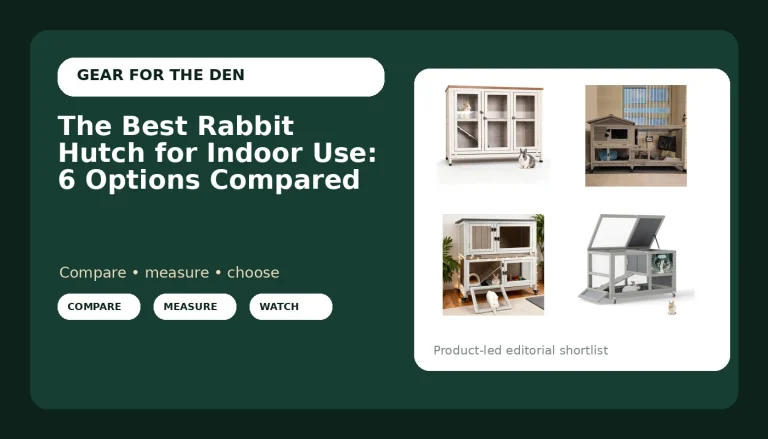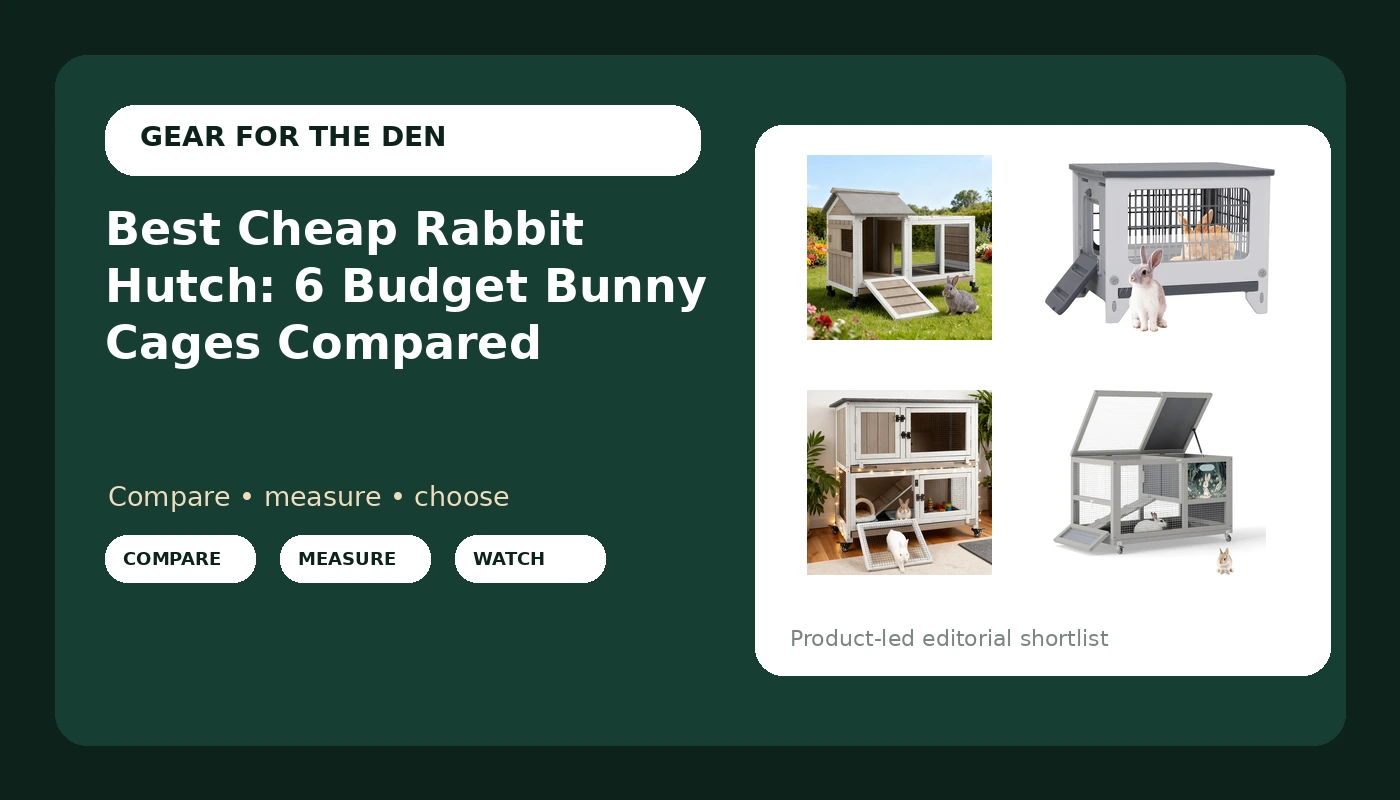
Rabbits are hard on housing. They chew, they dig at corners, and they urinate in the same spot every time, which is why the flimsiest hutches on a marketplace page are often the ones that need replacing within a season. This guide narrows the field to six hutches that keep the price down without giving up what matters: enough floor area for a rabbit to stretch out, a second level that adds usable space without adding footprint, and a tray or panel that comes out for cleaning. If you are shopping for a cheap rabbit hutch, the goal is not the smallest number on the page. It is the lowest price that still gets you a structure your rabbit can live in comfortably and that you can keep clean without a fight.
Quick answer
The 38" L Expandable Rabbit Hutch with Run, 2-Story Bunny Cage on Wheels is the strongest fit for a first hutch on a tight budget because it combines a two-level layout, an attached run, and casters in one package, and it is the least expensive hutch in this group. Choose the Plastic Rabbit Hutch for Indoor & Outdoor instead when you want molded walls that rinse down quickly and never need weatherproofing.
What to compare in a cheap rabbit hutch
Price is the easy part. The hard part is working out which corners were cut to reach it.
Floor area and cage size. A hutch that looks generous in a photo can be surprisingly tight once a hideout box and a litter corner are inside. Add up the floor area of both levels rather than trusting the overall length, and remember that a ramp eats into the upper level's usable space.
Materials and weather exposure. Wooden hutches need a dry spot or a cover, because untreated panels swell and stain. Plastic and resin enclosures handle rain and hose cleaning better, but they offer less insulation in direct sun.
Cleaning access. A pull-out tray or a removable lower panel turns a fifteen-minute job into a two-minute one. Check whether the tray slides out from the front or the side, and whether the hutch has to be lifted to reach it.
Bar spacing and openings. If you plan to attach a wire playpen or use a mesh door, narrower bar spacing keeps small rabbits and kits from squeezing through gaps.
Interior fittings. A hay rack, a bottle with enough bottle capacity for a full day, and a hideout sized to the rabbit all reduce the amount of loose bedding that ends up on the floor. Fine, dusty substrate also travels further in a drafty hutch, so bedding dust is worth thinking about when you choose what goes inside.
Mobility. Casters matter more than they sound. Being able to roll a hutch into shade or under cover before a storm is the difference between a hutch that lasts several seasons and one that does not.
Top pick
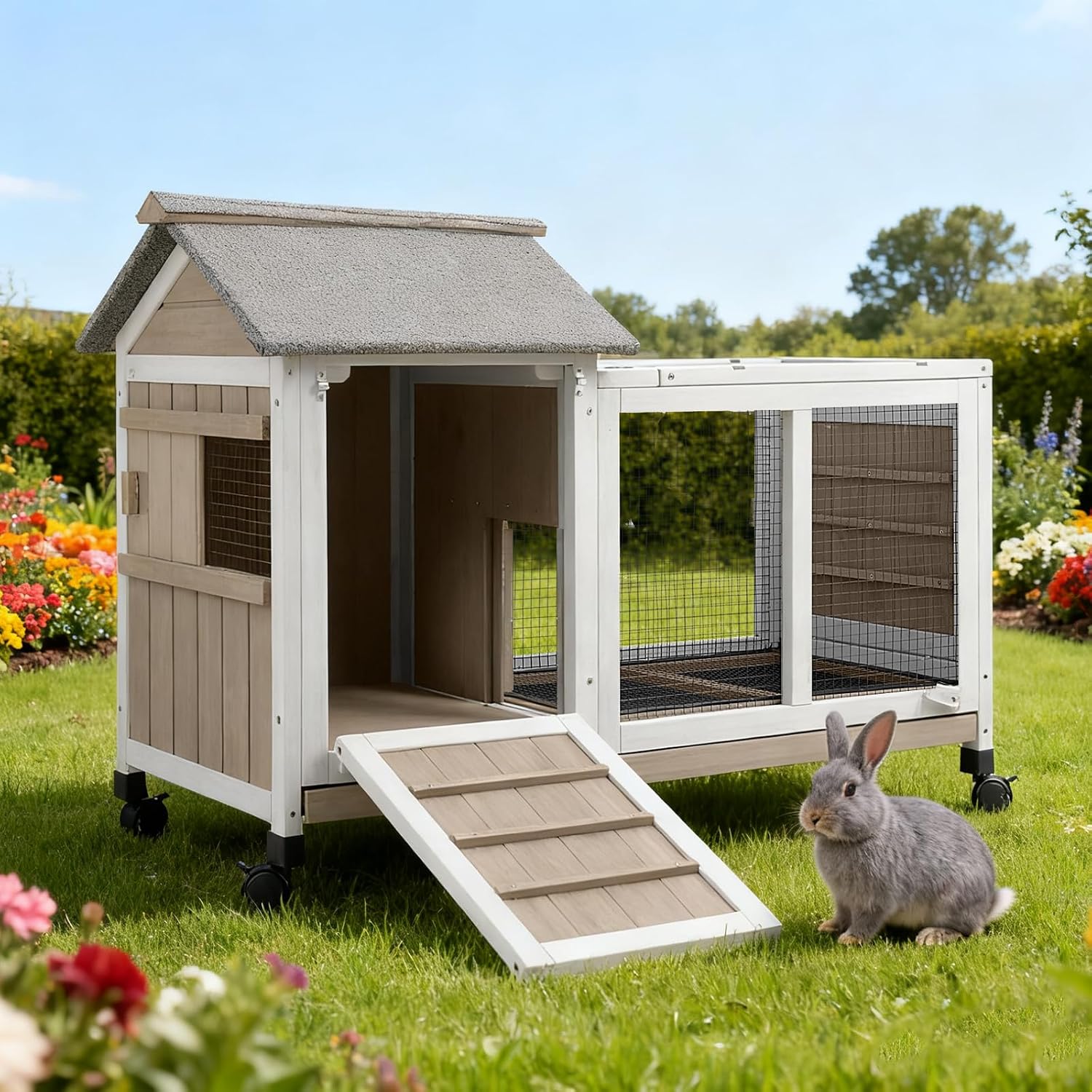
38" L Expandable Rabbit Hutch with Run, 2-Story Bunny Cage on Wheels
Two levels on casters with an attached run that extends the usable footprint. The expandable layout lets the enclosure grow as the rabbit does instead of forcing an early upgrade.
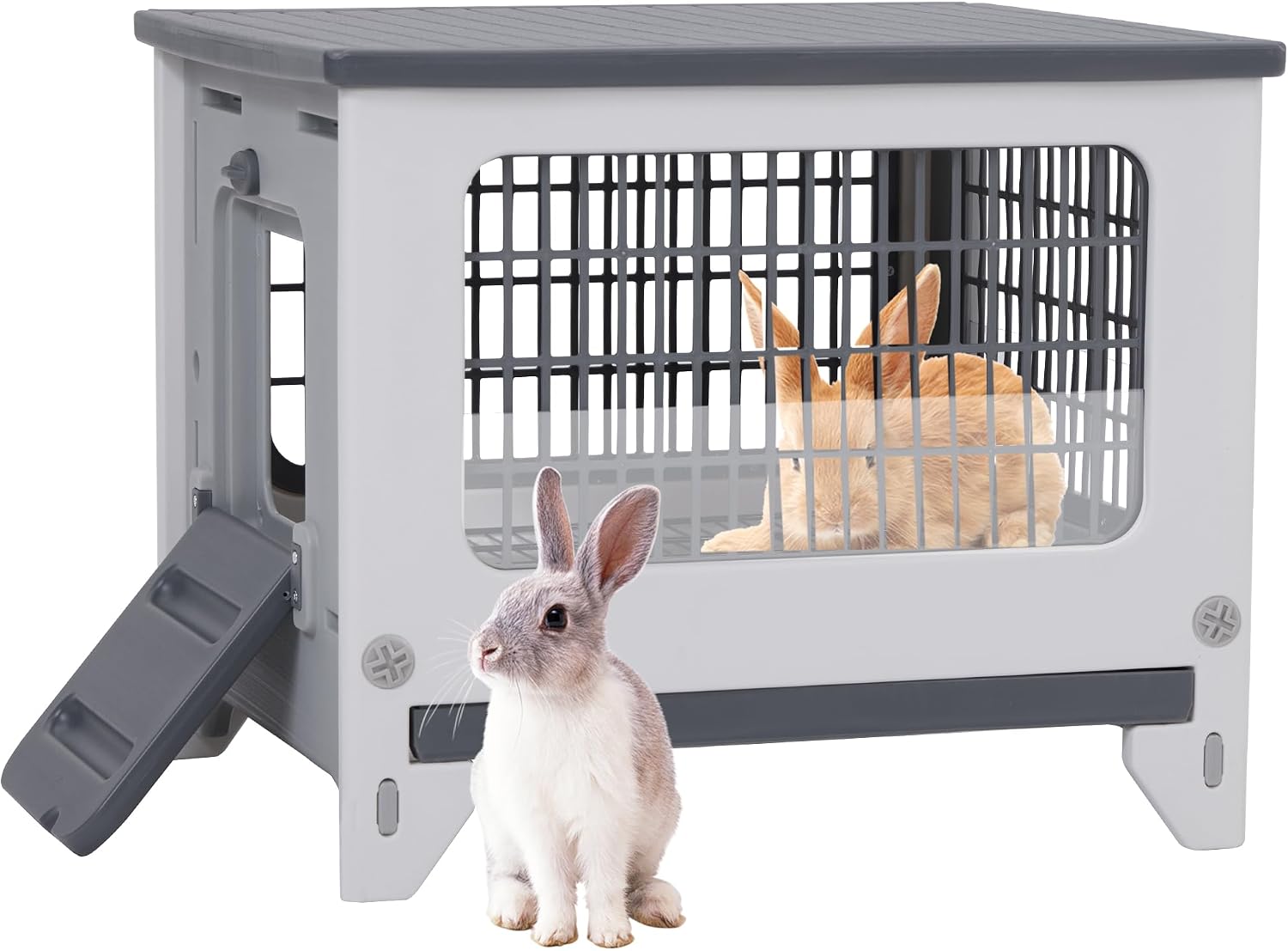
Plastic Rabbit Hutch for Indoor & Outdoor
Molded plastic walls that stand up to rain and rinse clean, with no wood to reseal each season. A straightforward choice for a covered patio or a utility room.
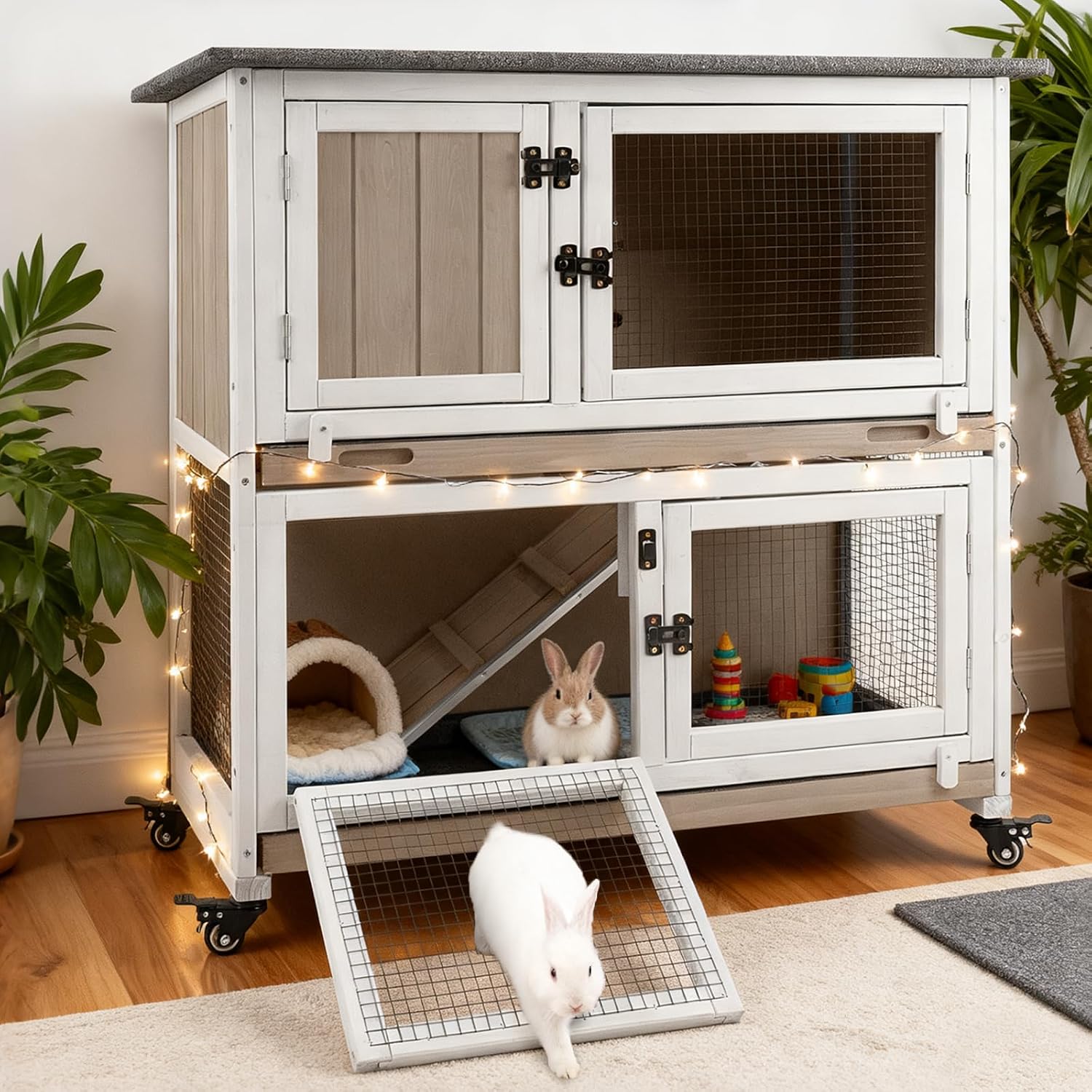
Gowoodhut 36" L Rabbit Hutch, 2-Story Bunny Cage on 4 Wheels
A 36-inch wooden two-story hutch on four wheels, with a ramp joining the levels. Compact enough for a balcony or the corner of a shed.
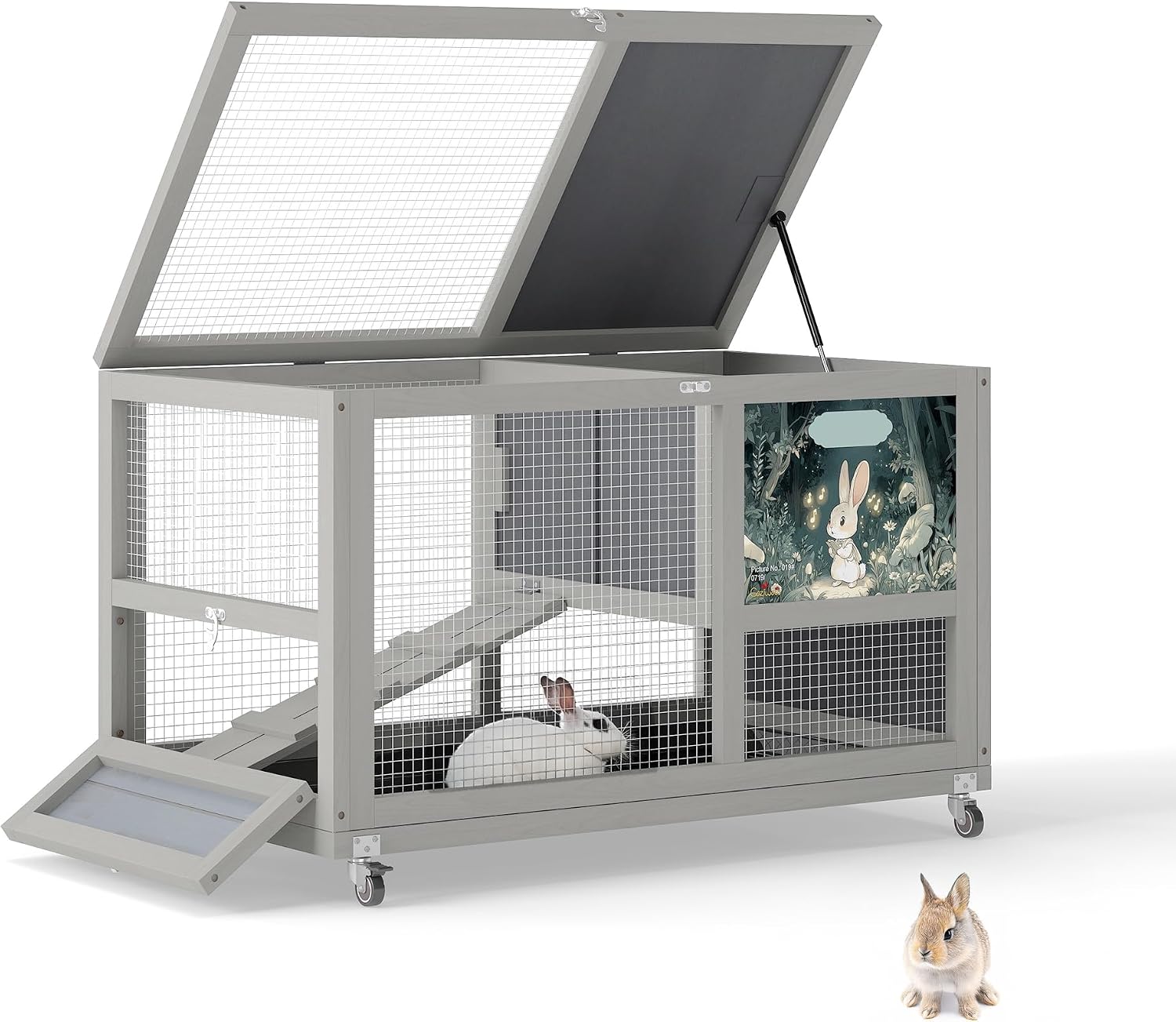
COZIWOW 36.5" Two‑Level Wooden Rabbit Hutch with Casters & Ramp
Two wooden levels at 36.5 inches long, mounted on casters with a ramp between floors. Suited to tighter spaces where a wider hutch will not fit.
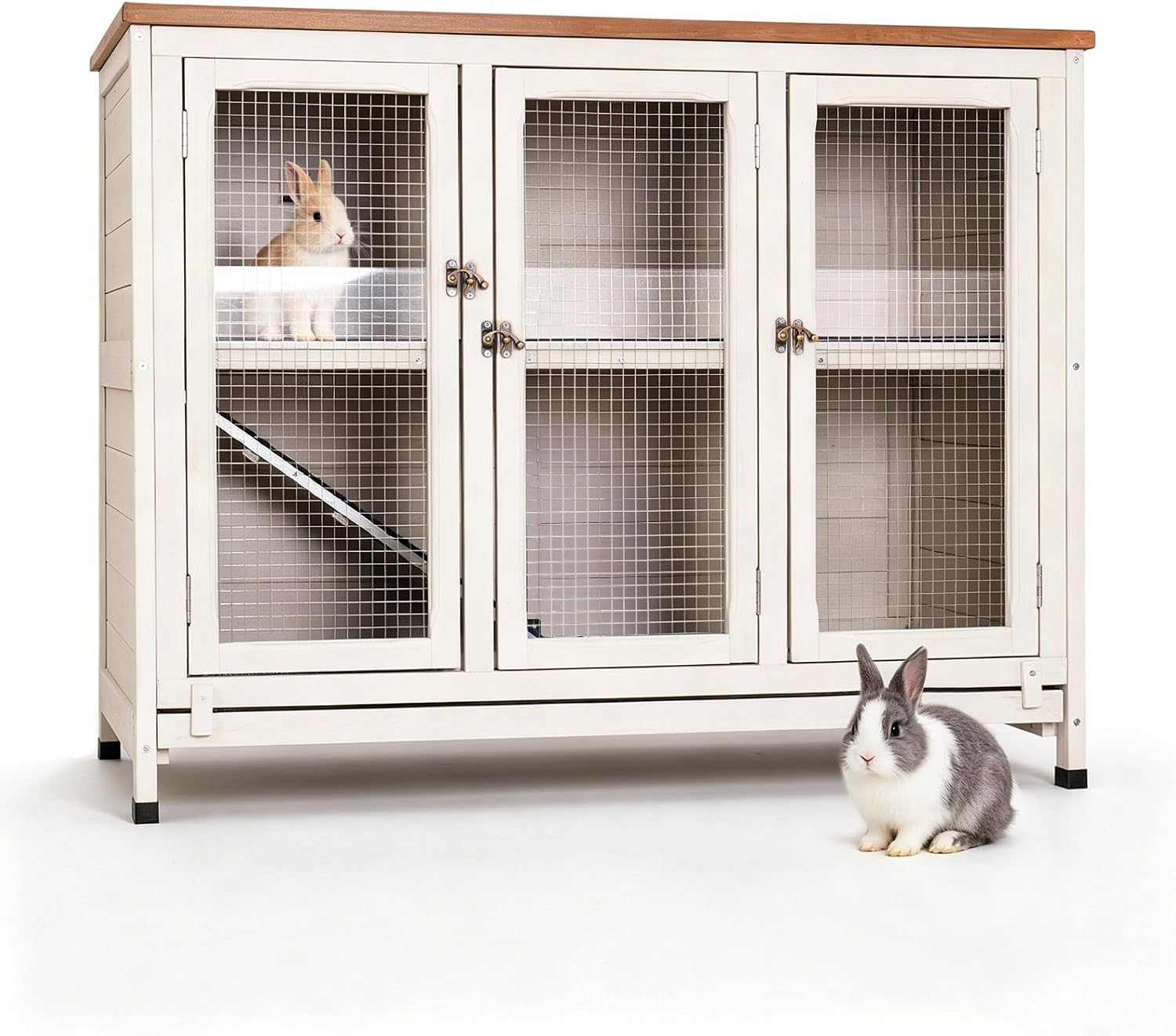
2-Story Indoor Rabbit Hutch with Pull-Out Tray & Clear Guard Panel
An indoor two-story hutch with a pull-out tray for cleaning and a clear guard panel that keeps bedding and droppings inside the cage.
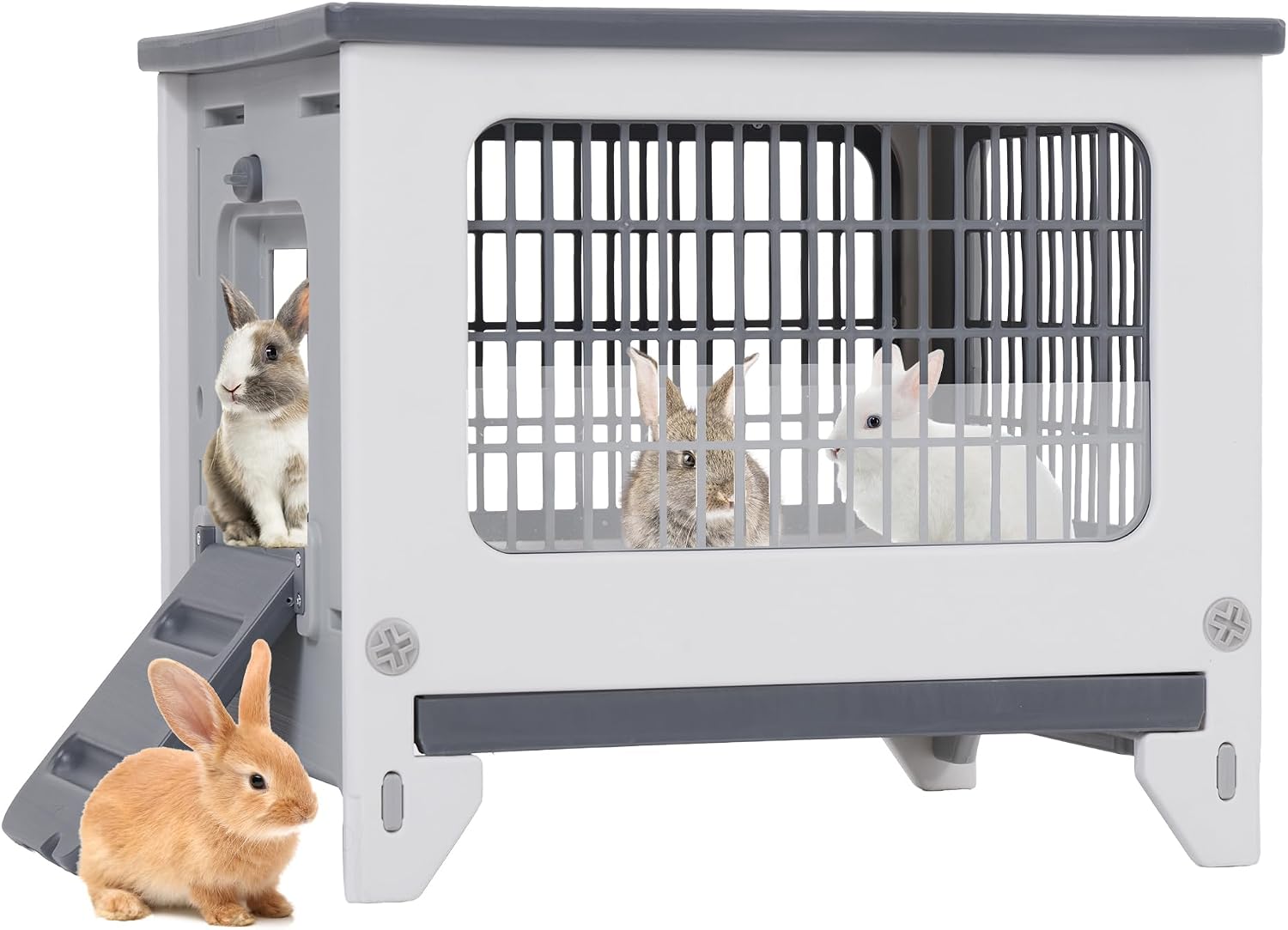
Rabbit Hutch Outdoor Indoor Plastic Waterproof Bunny Cage Enclosure
A waterproof plastic enclosure intended for outdoor placement, where wood would swell or rot in wet weather.
How these products were compared
This guide compares cage size and floor area, materials and weather exposure, cleaning access, mobility, and the accessories that come with each hutch, such as a ramp, a run, or a tray. Product names, images, and retailer links are matched by product code so that every card points to the product shown.
Nothing here is presented as hands-on testing. The descriptions come from the product names and the supplied specifications, and retailer prices move often, so confirm current details through the link on the card before buying.
How to choose the right cheap rabbit hutch
Finding the best cheap rabbit hutch starts with the position, not the price. An indoor hutch can give up weather resistance in exchange for a pull-out tray and a clear guard panel, and it will usually be the easier one to clean. An outdoor hutch has to handle rain, wind, and sun, which points toward a plastic or resin body or a wooden hutch that sits under cover. If the hutch will move between a patio and a lawn, casters and a modest footprint matter more than an extra few inches of length.
There is no single ideal cheap rabbit hutch, because a rabbit that lives indoors full time and a rabbit that spends its days outside have different requirements. What they share is a need for floor area, a dry sleeping corner, and a layout that lets you reach every part of the interior without dismantling the cage.
Then work through the interior. Measure the hideout size you need and check that it fits on the upper level without blocking the ramp. A hay rack mounted near the door keeps hay off the floor and out of the bedding, and a bottle with enough bottle capacity for a full day saves refilling. Bedding choice interacts with all of this: fine, dusty substrates coat the inside of a hutch quickly, so bedding dust is one reason a hutch with a solid lower tray is easier to keep tidy than one with a wire floor. If you are still deciding what goes inside, our guide to rabbit-safe bedding and litter covers the substrates that work in an enclosed hutch.
The correct cheap rabbit hutch for one small rabbit will look different from the correct cheap rabbit hutch for a bonded pair, and buying at the size your rabbits will reach as adults is almost always cheaper than buying twice.
38" L Expandable Rabbit Hutch with Run, 2-Story Bunny Cage on Wheels
The 38" L Expandable Rabbit Hutch with Run, 2-Story Bunny Cage on Wheels is the pick here because it addresses the two things that push people into a second purchase: space and position. The hutch is built as a two-story cage, so the upper level adds floor area for sleeping and hiding without widening the footprint, and the attached run extends the usable space further when the rabbit is active. Four casters mean the whole thing can be rolled under cover before a storm or moved to follow the shade, which is the practical advantage of a wheeled hutch over a fixed one.
The expandable design is the other argument for it. A hutch that can be extended is a hutch you do not have to replace when your setup changes, whether that means adding a second rabbit, moving to a bigger patio, or simply deciding the run needs more room. For a first-time owner shopping on a budget, that flexibility is worth more than a slightly larger fixed cage.
The trade-off is assembly and upkeep. A wheeled, expandable, two-story hutch has more panels, more joints, and more fasteners than a single-piece plastic enclosure, so setup takes longer and every joint is a place where bedding and droppings can collect. The run section is open to the ground, which is fine on grass or a hard surface but does not replace a secure exercise area if predators are a concern where you live. And because the whole hutch is designed to be moved, a sheltered position is worth arranging if your patio or yard is exposed to strong wind. None of that is a reason to skip it at this price, but it is the honest picture.
Alternatives to consider
The Plastic Rabbit Hutch for Indoor & Outdoor is better suited to a covered patio or an indoor corner where you want to rinse the enclosure out, while the Gowoodhut 36" L Rabbit Hutch, 2-Story Bunny Cage on 4 Wheels is a stronger fit when you want a wooden two-story hutch that can be rolled out of the way on a balcony.
The COZIWOW 36.5" Two‑Level Wooden Rabbit Hutch with Casters & Ramp, the 2-Story Indoor Rabbit Hutch with Pull-Out Tray & Clear Guard Panel, and the Rabbit Hutch Outdoor Indoor Plastic Waterproof Bunny Cage Enclosure cover the middle of the field: a slightly narrower wooden two-level on casters, an indoor hutch built around cleaning access with a clear guard panel, and a waterproof plastic enclosure for a fully outdoor position.
Day-to-day use and maintenance
Daily care in any of these hutches follows the same rhythm. Spot-clean the sleeping area each morning, remove soiled bedding, and check the water bottle, because bottle capacity is the specification people most often regret skimping on. A hay rack near the door keeps the main food off the floor and makes refills quick.
Once a week, pull the tray or open the lower panel and do a full change. Hutches with a slide-out tray take minutes; hutches with a fixed floor take considerably longer, and that difference is the main reason to think about cleaning access before you buy rather than after. Wipe plastic and resin surfaces with a pet-safe cleaner and let them dry fully before adding bedding, and check wooden panels for chewed edges, loose screws, and any soft spots where moisture has worked in.
Outdoor hutches need a weather check as part of the weekly routine. Confirm that the roof still sheds water, that the run section is not sitting in a puddle, and that the bedding in the sleeping compartment is dry. In cold or wet spells, a hutch cover or a move under a porch does more for a rabbit's comfort than any accessory inside the cage.
If your setup includes a play tunnel or a run connector, check the tunnel diameter against your rabbit's adult size and inspect the joints for sharp edges. Rabbits chew, so anything plastic or wooden that sits inside the enclosure should be inspected regularly and replaced when it is worn. None of these hutches should be treated as chew-proof, and no hutch is a substitute for supervised time out of the cage.
Buying checklist
- Measure the floor area you can spare, including the swing of a door and the room to pull a tray out.
- Choose a hutch size based on your rabbit's adult dimensions rather than its size today.
- Confirm that the exact model includes the ramp, run, tray, or casters you are counting on.
- Check bar spacing if you plan to add a playpen panel or a mesh door.
- Read the cleaning and weatherproofing instructions before assembly.
- Verify the current retailer price, availability, and return terms.
Final recommendation
Choose the 38" L Expandable Rabbit Hutch with Run, 2-Story Bunny Cage on Wheels when you want the least expensive hutch in this group, a two-level layout, and the ability to move the hutch as the weather or your space changes. Choose the Plastic Rabbit Hutch for Indoor & Outdoor when a covered patio or an indoor corner is the permanent position and you would rather rinse the enclosure out than reseal wood. The remaining four cover the in-between cases: a wooden two-story on wheels, a narrower wooden two-level on casters, an indoor hutch with a pull-out tray and a clear guard panel, and a waterproof plastic enclosure for a fully outdoor setup.
If two of these hutches look equally good on paper, the deciding factor is usually the cleaning method and the position, not the badge on the box. Confirm the current retailer price, availability, and return terms before you commit, and measure the space you actually have before the box arrives.