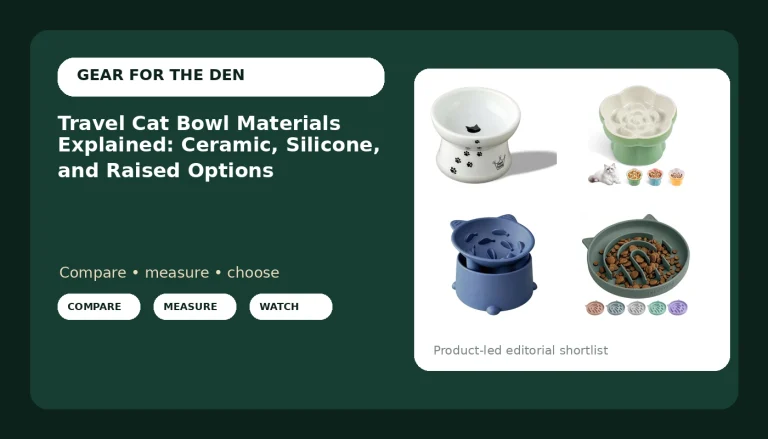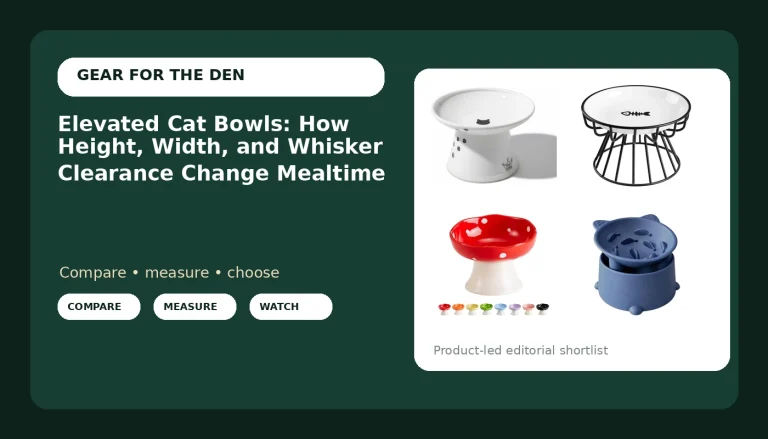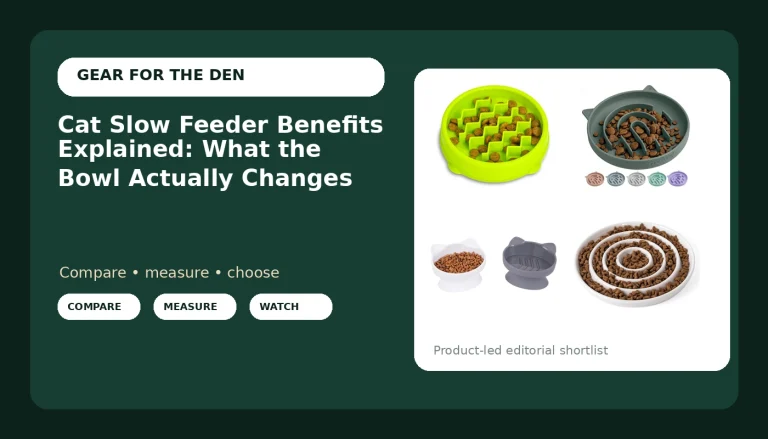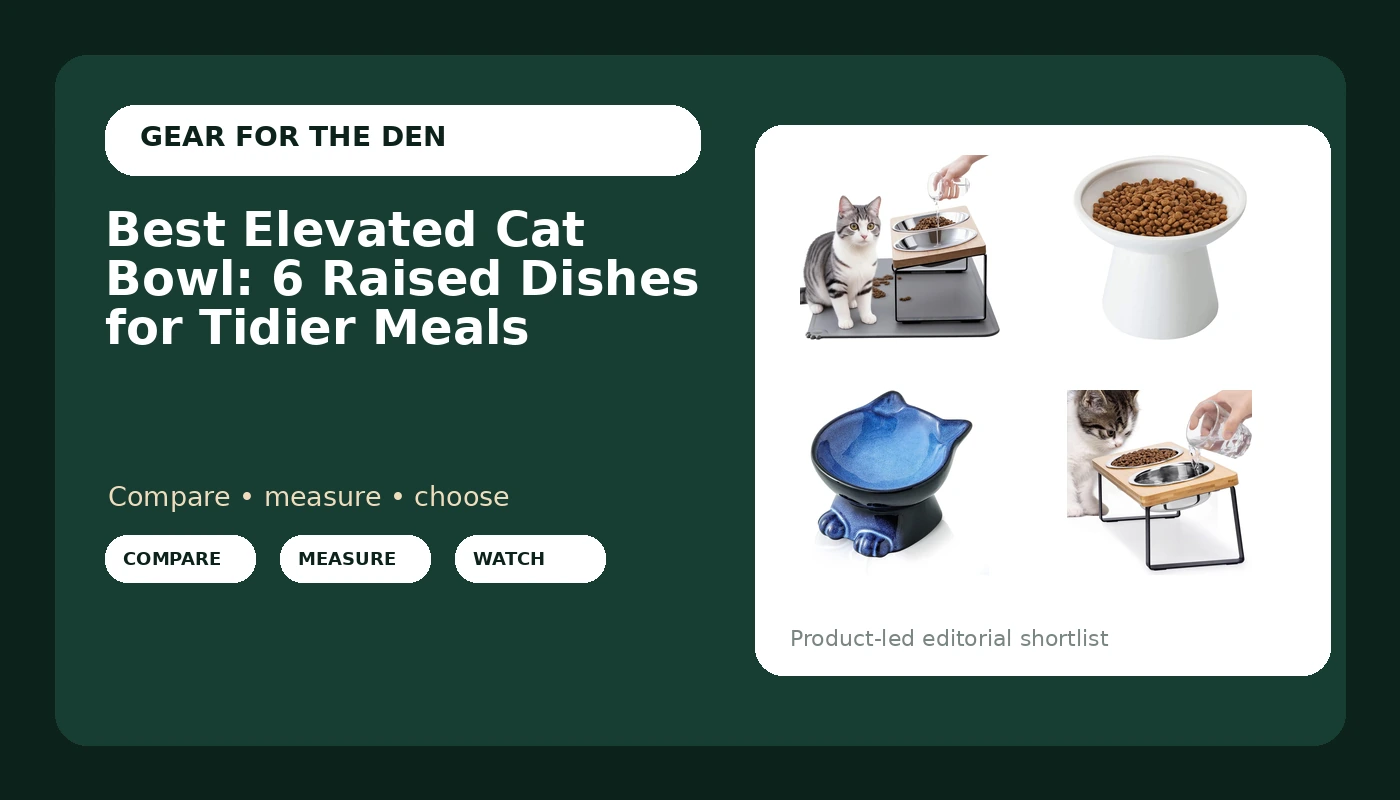
Feeding a cat from a dish that sits flat on the floor looks harmless, but it asks a lot of the neck and shoulders, and it drops the nose right into the food. A raised dish changes the geometry of the meal: the head stays higher, the throat stays straighter, and many cats eat with less gulping, less head bobbing, and less food pushed onto the floor. That is why so many owners start hunting for an elevated cat bowl, and why the category has grown from one plastic riser into ceramic, stainless steel, silicone, and tilted designs that each solve a slightly different problem.
The awkward part is that the word elevated says almost nothing about the dish itself. Two stands can sit at the same height and still differ in bowl width, depth, material, tilt, and how many dishes come in the set. This guide covers six raised cat dishes that are sold right now, compares what the listings actually describe, and points out which one suits which household. It is written for owners of adult cats, seniors, flat-faced breeds, kittens moving off a flat dish, and multi-cat homes where one stand has to serve more than one eater.
Quick answer
The Upgraded Elevated Cat Bowls with Food Mat is the best elevated cat bowl for most households because the set pairs a 15° tilted stand with two stainless steel bowls and a food mat, so food and water share one station and the floor around it stays tidier. Choose the CEEFU Extra Wide Elevated Ceramic 6.2" Shallow Cat Food Bowl instead when your cat has a broad face and does better with a shallow, wide dish, or when you would rather have one heavy ceramic bowl than a two-bowl setup.
What an elevated cat bowl is worth comparing
Height and elevation angle come first, because they decide whether the dish actually raises the head or just lifts the bowl a little. A stand that tilts the bowl toward the cat, such as the 15° designs in this roundup, changes the reach again, and some cats take to a tilt immediately while others prefer a level dish. Height and angle are not quality marks on their own. They are fit, and fit depends on the length of your cat's legs and neck.
Bowl width and depth matter just as much. A narrow, deep bowl forces the whiskers to press against the sides, and whisker clearance is one of the most common reasons a cat starts scooping food onto the floor or eating with its head turned. Wide, shallow dishes reduce that contact, which is why an extra wide 6.2 inch ceramic bowl shows up so often in advice for flat-faced cats.
Material is the next fork in the road. Ceramic is heavy, quiet, and easy to wipe, but it chips if it is dropped. Stainless steel is light, hard-wearing, and does not hold onto odors, which is why the two-bowl set here uses it. Silicone is flexible and gentle on teeth, and it is the usual choice for a slow feeder that has to bend and fold for cleaning. Portion size is a related question: a shallow dish that holds a normal meal is useful, but a dish with built-in obstacles changes how fast that meal disappears.
Finally, decide whether you are buying one dish or a station. Water capacity only matters if water is part of the purchase. If you want a fountain instead, the criteria shift to pump noise, filter type, and, on some smart feeders, microchip range, which is a different set of trade-offs from anything a ceramic dish can solve. For most cats the practical shortlist is a raised dish at the right height, a bowl wide enough to clear the whiskers, and a material you are willing to wash every day.
Top pick
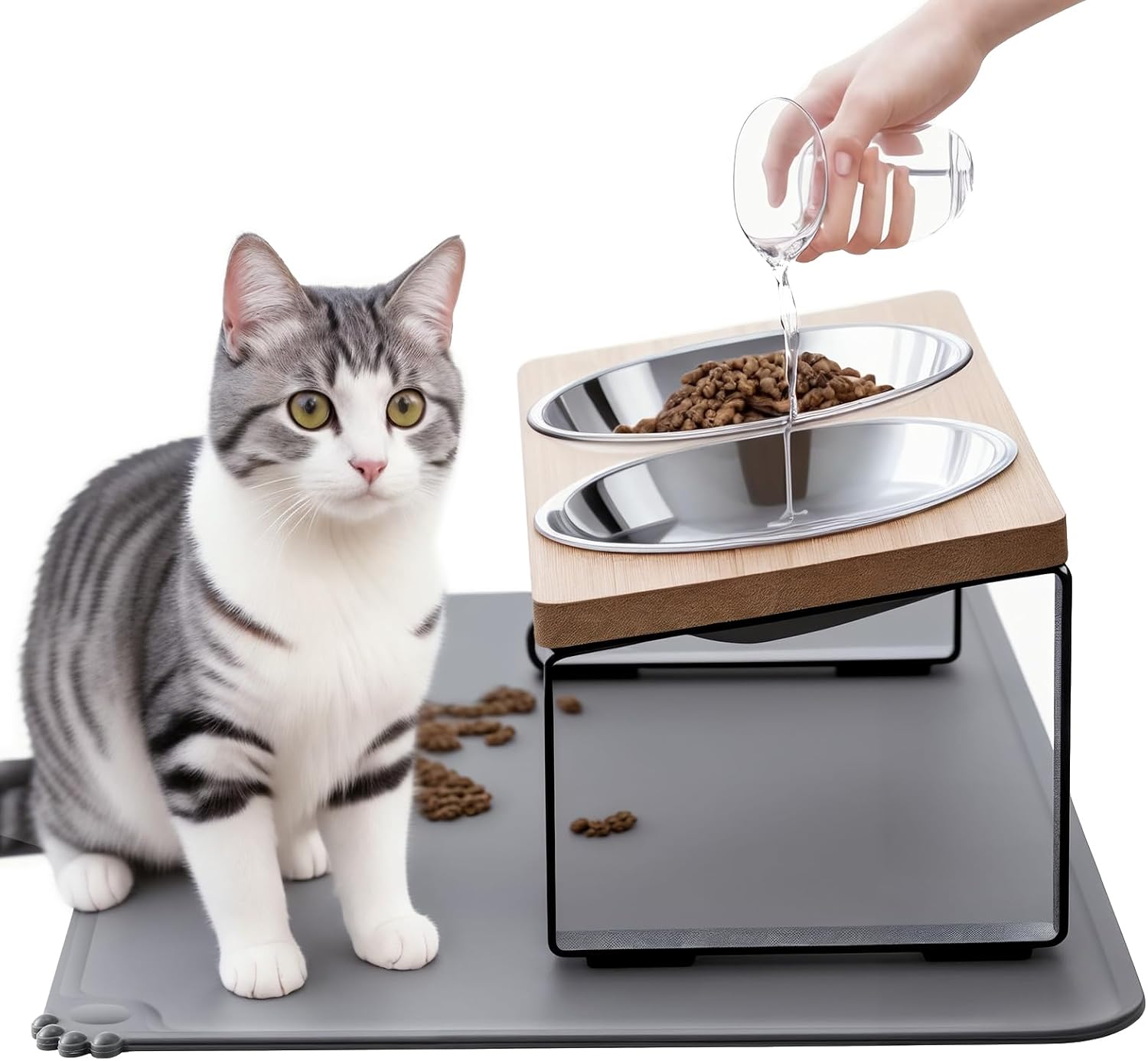
Upgraded Elevated Cat Bowls with Food Mat,15°Tilted Stand Anti Vomiting Raised Cat Dishes for Food and Water,2 Stainless Steel Bowls for Cats and Puppy
A 15° tilted stand with two stainless steel bowls and a food mat, sized for cats and small dogs so food and water can share one raised station.
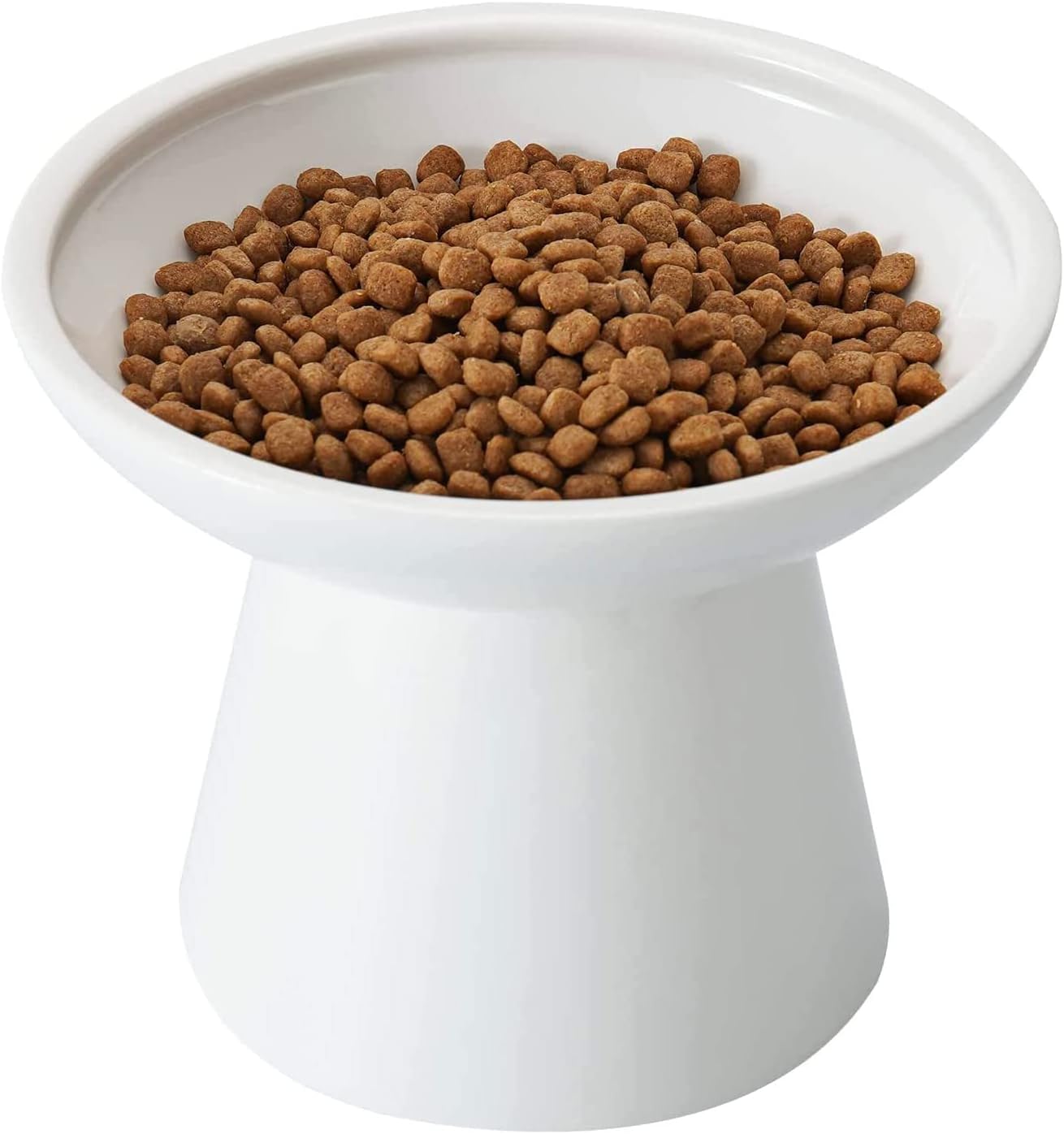
CEEFU Extra Wide Elevated Ceramic 6.2" Shallow Cat Food Bowl
An extra wide 6.2 inch shallow ceramic dish on a raised base, shaped to give broad-faced cats more clearance at the bowl edge.
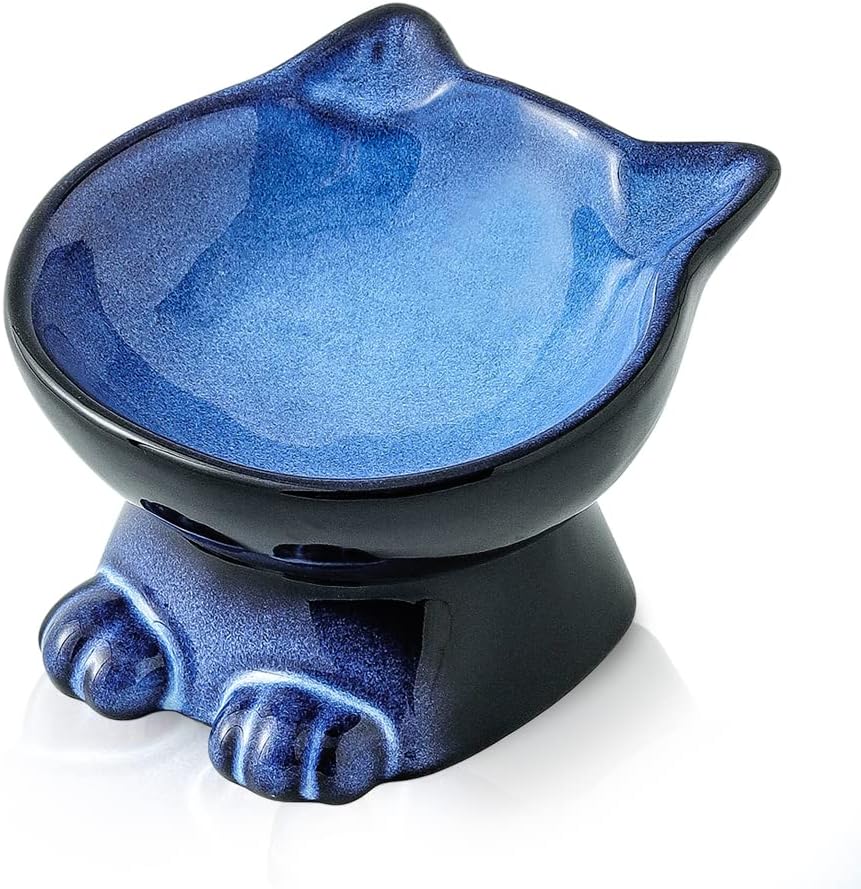
Nihow Elevated Cat Bowls,5 Inch Ceramic Raised Cat Food Bowl for Feeding
A 5 inch ceramic bowl on a raised feeder, a compact single-dish option for cats that eat from a level, heavier bowl.
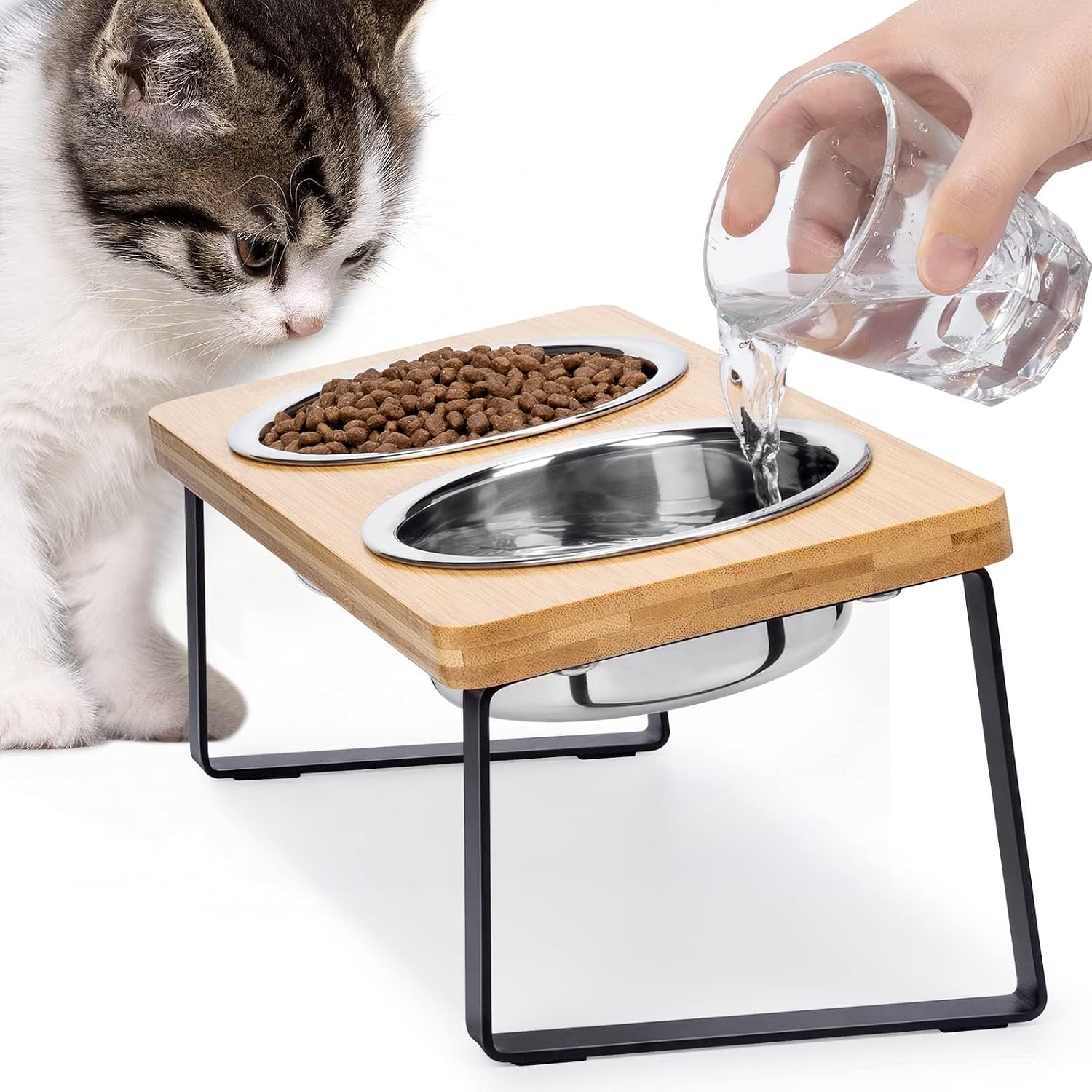
Elevated Cat Food Bowl for Indoor Cats, Raised Water Bowl Set for Kitten
A raised food bowl paired with a water bowl, aimed at indoor cats and kittens moving up from a flat dish.
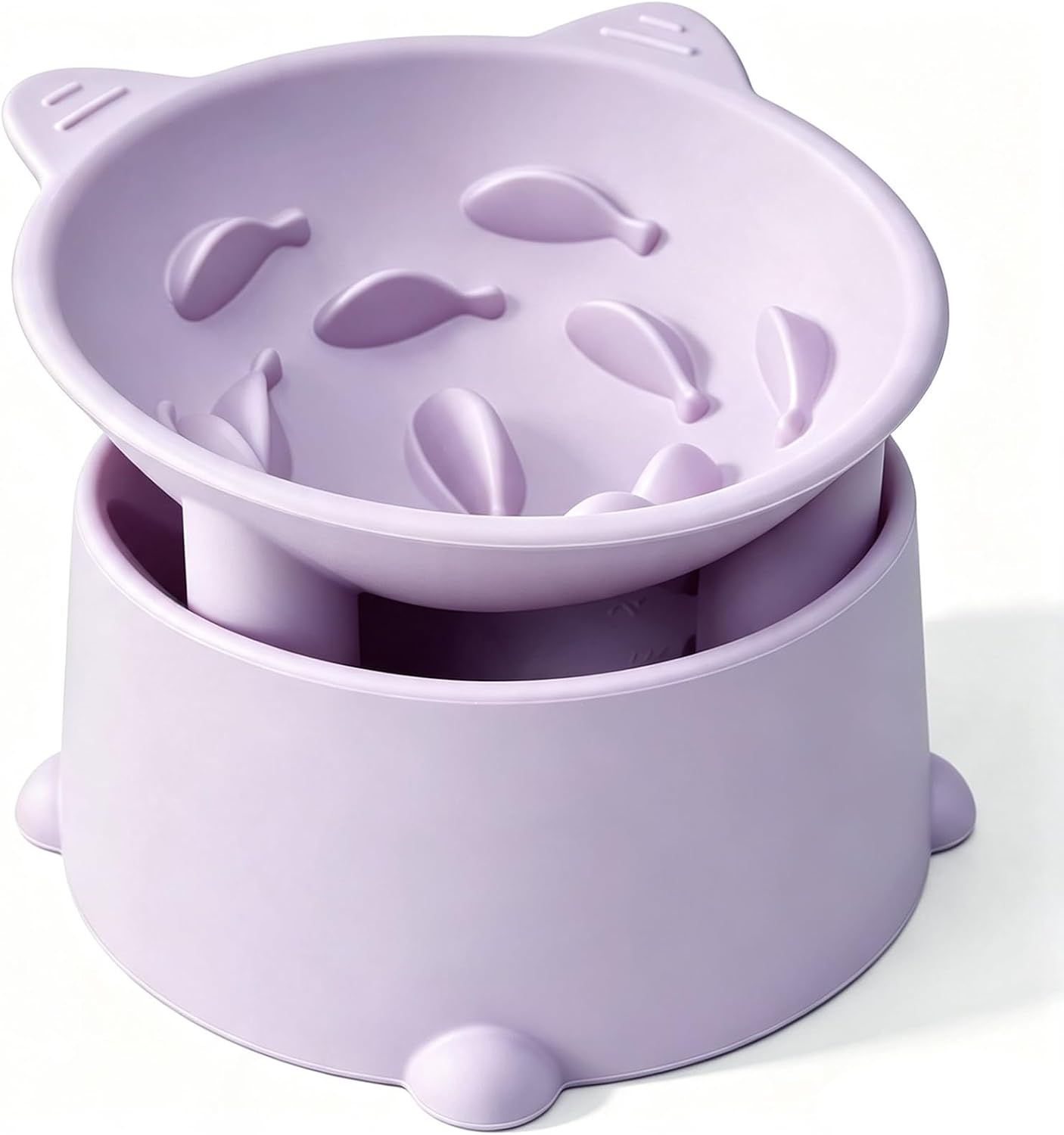
Raised Slow Feeder Cat Bowl, Silicone Elevated Tilted Cat Slow Feeder Bowl
A silicone slow feeder on an elevated, tilted base, built to stretch out a meal for cats that eat too quickly.
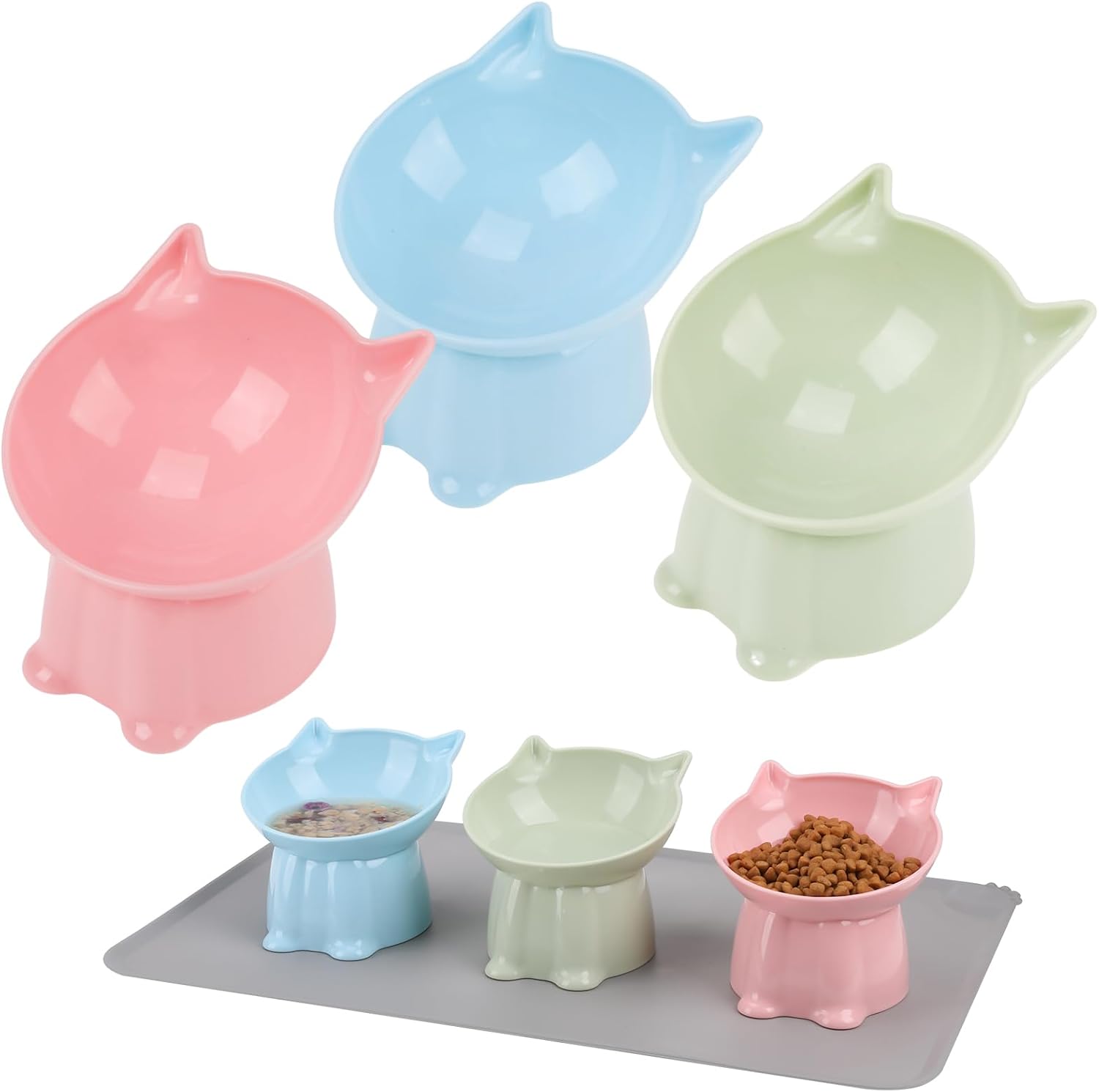
3 Pcs Raised Cat Bowl 15° Elevated Cat Food Bowl Tilted Cats Bowls,3 Colors
Three tilted bowls on 15° raised stands in three colors, a practical set for multi-cat homes that feed at the same time.
How these products were compared
This guide compares elevation angle, bowl width and depth, material and cleaning, how many bowls or accessories come in the set, and how clearly the listing describes its size and its intended cat. Product names, images, and retailer links are matched to the same verified listing so that every card points to the product shown.
Nothing here is presented as hands-on testing. The descriptions come from the product names and the details the listings provide, and where a listing is vague about a measurement, this guide says so rather than filling the gap. No current price is printed anywhere in the article, because prices move. Use the button on each card to confirm the current price, availability, and return terms before you buy.
How to choose the right elevated cat bowl
Start with your cat, not the shelf. Measure the distance from the floor to the bottom of your cat's chest while it stands, and treat that as a rough ceiling for the bowl rim rather than a target to beat. A dish that sits too high makes the cat reach up and swallow air; a dish that sits too low recreates the problem you are trying to solve. Then watch one meal. If your cat eats with its head tilted, hooks food over the edge, or leaves a ring of kibble around the bowl, the issue is more likely bowl width or whisker clearance than height.
Tilt is the second decision. A tilted stand, like the 15° models in this roundup, angles the dish toward the cat and can suit cats that already eat from a raised dish, cats with a sensitive neck, and flat-faced breeds that cannot easily reach the bottom of a deep bowl. A level dish is the safer default if you are not sure, because a tilt that is wrong for your cat is more annoying than no tilt at all. If you are also sorting out hydration, our cat water fountain buying guide covers water capacity, pump noise, and filter type, which are the three things that decide whether a fountain gets used or ignored.
Count the eaters before you count the bowls. A two-bowl set covers one cat's food and water, or two cats eating at once if they tolerate sharing a stand. A three-piece set covers a small multi-cat household or gives you a spare bowl for the dishwasher rotation. If your cat bolts its food, look at portion size and bowl shape together: a slow feeder with raised obstacles stretches a meal out, while a wide shallow dish does the opposite and makes a meal easier to finish.
Upgraded Elevated Cat Bowls with Food Mat
The top pick is a two-bowl station rather than a single dish. The listing describes a 15° tilted stand, two stainless steel bowls, and a food mat, and it names cats and puppies as the intended users, which makes it one of the few sets in this roundup that can move between a cat and a small dog without looking out of place. Stainless steel is the practical choice for daily feeding because it does not hold odors the way some plastics do, and the two bowls mean you do not have to choose between raising the food and raising the water.
The trade-off is that you get one height and one angle. A set like this is a good fit if your cat is an average-sized adult and you want food and water raised together, but it is a compromise for a very tall cat, a very small kitten, or a cat that has decided it hates a tilted dish. The food mat helps with the scatter that follows a fast eater, but it does not change the bowl itself. If you need a different height, or a dish your cat can lap from without a tilt, the single-bowl options below are the ones to weigh against it.
Alternatives to consider
The CEEFU Extra Wide Elevated Ceramic 6.2" Shallow Cat Food Bowl is better suited to broad-faced cats and to owners who want one heavy ceramic dish that stays put, since the extra wide, shallow shape is aimed squarely at whisker clearance. The Nihow Elevated Cat Bowls,5 Inch Ceramic Raised Cat Food Bowl for Feeding is a stronger fit when you want a smaller ceramic dish and a straightforward raised feeder without a tilt.
The Elevated Cat Food Bowl for Indoor Cats, Raised Water Bowl Set for Kitten, the 3 Pcs Raised Cat Bowl 15° Elevated Cat Food Bowl Tilted Cats Bowls,3 Colors, and the Raised Slow Feeder Cat Bowl, Silicone Elevated Tilted Cat Slow Feeder Bowl cover the rest of the field. The kitten set pairs a raised food bowl with a water bowl for a young cat that is outgrowing a flat dish. The three-piece tilted set gives a multi-cat home three bowls in three colors, which makes it easy to keep track of whose dish is whose. The silicone slow feeder is the one to look at if your cat inhales a meal in under a minute, because its raised obstacles are there to slow the eating down rather than to raise the head.
Day-to-day use and maintenance
Wash the bowls after wet food and rinse them after dry food, and check the stand for crumbs and water rings once a day. Stainless steel and ceramic both handle warm soapy water well. Silicone is flexible enough to turn inside out, which is the main reason it shows up in slow feeders, but it also picks up oils from wet food and needs a proper wash rather than a rinse. If the stand has a mat underneath, shake it out before you wipe it, because that is where the crumbs collect.
Check the stand itself every week. A raised dish takes more sideways force than a flat one, since a cat leaning on the rim pushes the whole thing rather than sliding a bowl across the floor. Look for wobble, cracks in ceramic, and feet that have stopped gripping. A chipped ceramic bowl should be retired rather than glued, because chips give bacteria somewhere to sit and can catch a tongue. If your cat is a head-down gulper, feed smaller portions more often rather than filling a deep dish, and give a new height a week before you decide it is wrong.
Buying checklist
- Measure your cat's standing chest height, then treat it as a rough upper limit for the bowl rim.
- Choose bowl width based on whisker clearance, not on how much the dish holds.
- Decide between a level dish and a tilted stand before you shop, and pick a set that matches.
- Confirm how many bowls come in the set and whether a mat is included.
- Check the material and the cleaning instructions, especially for silicone.
- Verify the current price, availability, and return terms at the retailer.
Final recommendation
Choose the Upgraded Elevated Cat Bowls with Food Mat when you want one raised station for food and water, a tilted stand, and stainless steel bowls that are easy to keep clean. Choose the CEEFU Extra Wide Elevated Ceramic 6.2" Shallow Cat Food Bowl when a wide, shallow ceramic dish is the better match for your cat's face and eating style.
If neither fits, the decision usually comes down to the shape of the meal rather than the height of the stand: a three-bowl set for a multi-cat home, a slow feeder for a cat that eats too fast, or a ceramic dish for an owner who wants weight and quiet over a mat and two bowls. The ideal elevated cat bowl is the one that matches your cat's height, whisker clearance, and eating speed, and the correct elevated cat bowl is the one your cat will actually use twice a day. Start there, and the rest of the shortlist sorts itself out.